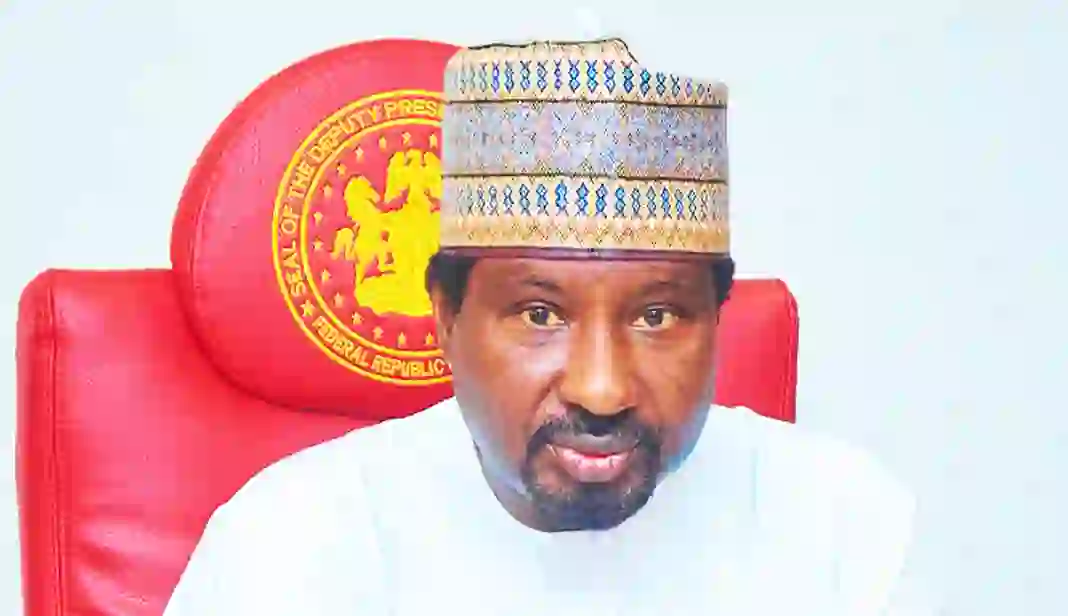
For allegedly making statements which can incite his supporters, and disparage his office, Deputy President of the Senate, Barau Jibrin, has sacked Rashida Adamu, popularly known as Rashida Mai Sa’ a.
Before her sack, Jibrin was a Special Assistant in the deputy senate president office, and will be second person to loose her job for similar office.
This was contained in a statement, by Shitu Madaki Kunchi, the Deputy Senate President’s aide on media and public relations.
The senator had earlier relieved one of his aides, Umar Alhassan, popularly known as King Indara, of his appointment following a controversial social media post targeting Kano State Governor, Abba Kabir Yusuf.
Deputy Senate President, Barau Jibrin
According to the statement, the latest decision followed allegations that Rashida made statements capable of inciting supporters, engaged in activities allegedly aimed at undermining the All Progressives Congress (APC), and made disparaging remarks against Senator Barau.
The statement explained that the sack followed a message issued by the office on Sunday, September 27, alleging that some individuals were attempting to undermine Senator Barau’s political interests in Kano State and within the APC.
It further alleged that some of those accused had previously benefited from appointments and other support provided by the senator, but later turned against him and the party.
The office described their alleged actions as attempts to undermine Senator Barau and weaken the APC.
The Management of Ikorodu United has stated the reason behind its deleting of the Welcome post of frontline Presidential Candidate at the forthcoming 2027 Election, Peter Obi of the National Democratic Congress, NDC, during the Nigeria Professional Football League, NPFL, Football Match between Ikorodu United and Rangers International of Enugu State.
The Club Management stated that supporters of Obi Movement were using the post to score political points. But public backlash and speculation point to political pressure.
The former Labour Party Presidential Candidate at the 2023 Polls had attended an NPFL Matchday 6 fixture between Ikorodu City FC and Enugu Rangers at the Mobolaji Johnson Arena in Lagos, where Ikorodu City won 2-0. The club shared a welcome post on X (formerly Twitter) featuring photos of Obi in the VVIP section alongside club President, Sanmi Doherty and Lagos Island Constituency II House of Representatives Candidate, Aisha Jimoh.
Surprisingly, hours later, the club removed the post, triggering widespread online debate and criticism from fans and journalists who viewed it as a missed opportunity to market the domestic league.
Olawale Quadry, an Official of Ikorodu United defended the decision, explaining that it was an internal move because followers were hijacking the post to turn the football club’s page into a political tool.
Many observers and fans believe the deletion was driven by outside political pressure or fear of backlash from the ruling party, given Obi’s status as a prominent opposition figure.
Football journalist, Olawale Adigun questioned the decision. He had argued that visits by prominent personalities could help generate more attention for the domestic league.
“Ikorodu City wan rage bait me this morning with that nonsense they did yesterday. But let me allow.
“You could Famz the Politician, then suddenly you had a brain fart moment and realised his audience were taking advantage of it, which is not even true.
“What happened to trying to help to grow the league by attracting people like him,” Adigun wrote on his X page.
He argued that the club could have used Obi’s presence to boost visibility for the NPFL. Instead, they removed the post.
He further criticized Lagos State Governor, Babajide Sanwo-olu, for postponing the first Lagos Derby of the NPFL season for a political event.
“The State Governor, as a matter of fact postponed your biggest Derby in decades because of a political prayer meeting, not one post expressing angst, especially for a “privately run club”, Adigun wrote
Olumide Olushola, 21, has narrated the circumstances which led to his grissly crushing a Police Sergeant to death after he had knocked him down.
Olumide, a phone seller crushed Sergeant, Johnson Okediji, to death in a most horrendous manner during a stop-and-search operation in the Egbeda area of Lagos State.
However, when paraded at the Lagos State Police Command headquarters in Ikeja on Monday, he vehemently denied that he deliberately hit the officer.
According to him, the brakes of the Lexus ES 350 which he was driving failed him.
During a press briefing, the Lagos State Commissioner of Police, Fatai Tijani, said the incident took place around 2.20pm on Saturday, September 26, 2026, along Olugbede Street, Egbeda.
The CP said that police officers on stop-and-search duty had flagged down the Lexus, with registration number FKJ 223 KX, driven by Olushola. However, the CP said, Olushola allegedly sped off when Sergeant Okediji approached the driver’s side, and knocked down the officer in the process.
The CP: “The driver initially stopped but suddenly sped off as Sergeant Johnson Okediji approached the driver’s side. The officer was knocked down and dragged underneath the vehicle for several metres despite repeated attempts by police officers and passers-by to make the driver stop.
“The driver was eventually chased and arrested. The officer sustained multiple fractures and serious head injuries.”
The Sergeant, the CP said, was rushed to a nearby hospital and later referred to the Lagos State University Teaching Hospital, where he was pronounced dead on arrival.
But speaking during his parade, Olushola vehemently denied that he deliberately knocked down the Sergeant, and insisted that the vehicle’s brakes failed.
According to him, he had seen the Policemen ahead and was preparing to stop when the Sergeant moved in front of his vehicle. It was then that the vehicle hit the officer and dragged him as he struggled to bring it to a halt.
He said: “I was trying to stop the vehicle. The vehicle didn’t stop. That’s when the vehicle hit another vehicle in front. That’s when I fell down with the person sitting next to me.
“I have been using the Lexus for about a month and had taken it to a mechanic a day before the incident after noticing problems with the brakes.
“I carried the vehicle to the mechanic the day before that day. I told the mechanic to change all the brake pads in the vehicle, and the mechanic told me he had changed all the brake pads.
“But I noticed that the brake was still slipping after buying fuel on the day of the incident. I planned to return the vehicle to the mechanic later that day.
“I have a lot of regrets in my mind about hitting an officer of the law. I am very pained about that.”
The vehicle, Olushola also said was his mother’s, who acquired it in August.
A Kenyan court has halted activities on the proposed $16 billion Dangote refinery project in Lamu, following a petition by 133 farmers and residents opposed to the development.
Justice Jane Onyango ordered that the “status quo prevailing” in Lamu be maintained pending further directions on October 14.
The order means construction activities at the site cannot proceed until the court reconvenes, according to George Wakahiu, counsel to the petitioners.
The petitioners alleged that the project would infringe on their property rights through the forceful eviction of residents and the destruction of their properties.
They also alleged that Dangote Group and the Kenyan authorities had failed to comply with the country’s environmental regulations, including the requirement for a mandatory environmental impact assessment before the implementation of major projects.
The residents further claimed that the project did not comply with Kenya’s constitutional requirement for public participation.
The court order came a day before the scheduled September 30 groundbreaking ceremony for the refinery, which is expected to help reduce East Africa’s dependence on imported refined petroleum products.
However, Dangote Group, in its response said the ruling would not stop the groundbreaking ceremony, although some activities at the project site could be affected.
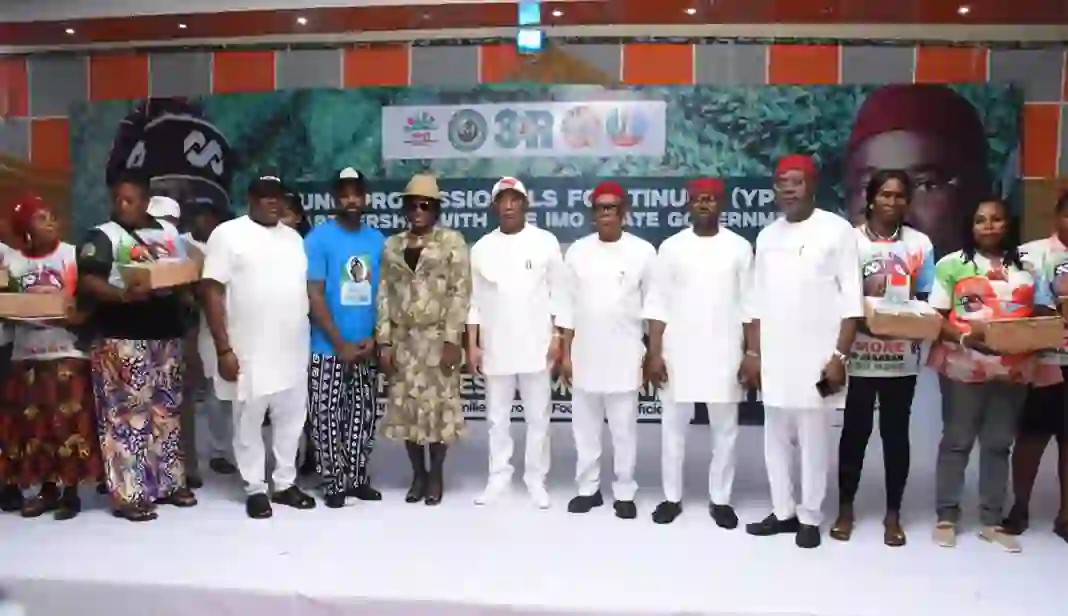
Imo State Governor, Senator Hope Uzodimma, has urged residents to embrace household farming and food production as part of efforts to address hunger and ease the impact of economic challenges.
Uzodimma made the call on Monday 28th September, 2026 at the Zero Hunger Agricultural Empowerment Programme held at Rockview Hotel, Owerri, where 1,000 households were presented as initial beneficiaries.
The governor said previous government interventions, including food distribution and financial assistance, were necessary to cushion hardship but stressed that sustainable food production remained the lasting solution.
“It is like giving somebody fish. Now we want to teach you how to fish,” Uzodimma said, urging beneficiaries to commence planting immediately.
He recalled that household gardens were once common in Imo communities, with families growing vegetables, tomatoes and other crops around their homes.
Uzodimma also encouraged civil servants and young professionals to cultivate gardens, saying, “There is no way Nigeria will move if we don’t grow what we eat and eat what we grow.”
The governor congratulated the beneficiaries and pledged continued support for initiatives aimed at improving food security and prosperity in the state.
The Special Adviser to the Governor on Sustainable Development Goals (SDGs), Chinenyenwa Owuamalam Esq. commended the initiative, saying it would strengthen food security and household resilience.
She said the programme targets 1,000 families with agricultural inputs, training and home-gardening support, adding that it would contribute to the achievement of the Sustainable Development Goals, particularly SDG 2 on Zero Hunger and SDG 17 on partnerships.
Zero Hunger Agricultural Empowerment Programme
Owuamalam also commended President Bola Ahmed Tinubu for prioritising food security, agricultural development, poverty reduction and economic empowerment under the Renewed Hope Agenda.
The Imo State APC Chairman, Chief Austin Onyedebelu, commended the empowerment of 1,000 farmers, describing it as an effort to boost food production, reduce poverty and improve livelihoods through modern farming techniques and high-yield seeds.
He urged beneficiaries to maximise the opportunity, stressing the importance of agriculture to economic diversification and food security.
Onyedebelu also appealed to the beneficiaries to support President Tinubu’s 2027 re-election bid and other APC candidates in the forthcoming general elections.
The Convener of Young Professionals for Tinubu (YP4T), Richmond Dayo, called for the adoption of improved hybrid seeds to increase agricultural productivity.
Dayo said the initiative was distributing hybrid seeds, including tomatoes, peppers, onions and okra, to farmers. He noted that poor-quality seeds contributed to low crop yields and stressed the need for improved farming practices.
Responding on behalf of the beneficiaries, Bridget Onwuasoanya and Obinna Egwu thanked the governor and organisers, saying the programme would support local farmers, create jobs for youths, promote agriculture and enhance food security.
The event was attended by Deputy Governor Lady Chinyere Ekomaru, Speaker of the Imo State House of Assembly Rt. Hon. Chike Olemgbe, members of the House of Assembly, APC national and state officials, Secretary to the State Government Chief Cosmas Iwu, members of the State Expanded Executive Council, executive chairmen of the 27 local government areas and other stakeholders.
Highpoint of the event was the symbolic presentation of seedlings to some beneficiaries.
Fr Oluoma is one of those Priests after my heart. I enjoy his deep sense of analysis, his intellectual confidence and, especially, his strong knowledge of exegesis. Another priest I admire greatly online is Fr. Kelvin Ugwu.
Fr. Oluoma’s physiognomy is amusing: a small head built to slip through barricades, cherished by burglars; pinholes for eyes that have seen more than their share; no useless ounces of flesh to burden him; and a countenance made effervescent by the flame of intellectual integrity. He possesses a suppleness of posture yet retains the clear, unclouded gaze of an honest observer, backed by a luminous gift for synthesis.
There is something particularly fascinating about Fr. Oluoma’s approach to complex theological questions. He has a merry, almost unserious manner of presenting them, often beginning in a way that leaves you wondering where he is going and even makes you apprehensive that he may eventually get himself into trouble. Yet beneath this playful exterior lies the exact structural mechanics of the Thomistic method. Just as St. Thomas Aquinas systematically laid out objections, weighed counter-authorities, delivered his resolution, and dismantled opposing arguments, Fr. Oluoma adopts this exact dialectical blueprint. He sets up positions with formal precision and structures his delivery as a disciplined exercise in inquiry – harnessing the step-by-step framework of medieval scholasticism. By the time he arrives at the end, the argument has somehow become clear, coherent, reasonable, and theologically sound.
I once suggested that theology students should study Fr. Oluoma’s presentations and make him the subject of their academic projects. I meant every word of it. He is, in the best sense of the expression, an unserious serious theologian.
Fr Oluoma is also very confident and sure of himself. I admire, too, his objectivity, which he tried to demonstrate in his recent intervention on Peter Abel Obi and Charles Cain Soludo. Thinking of the added names remind us of the story of Cain and Abel.
For those who may not have read what prompted this response, let me state Fr Oluoma’s position fairly. His argument is essentially that Peter Obi and Charles Soludo are both illustrious Igbo sons from Anambra State who have each governed the state and that their disagreement over national politics should not become a reason for their supporters to insult or disparage one another. He points out that Soludo is not enthusiastic about Peter Obi’s presidential ambition, just as other Igbo people support Atiku or Tinubu, while some non-Igbos, such as Dele Farotimi, strongly support Obi.
His appeal is therefore for restraint. In his words, one can “support Sir Peter Obi with all your heart without antagonizing, insulting and disparaging Soludo or anyone else that doesn’t.” He makes the same argument in reverse: those who support Soludo should be able to do so without antagonising Peter Obi. He argues that politics, like religion, can stir emotions and throw people into frenzy, and that Obi’s supporters should concentrate on securing votes and persuading others rather than insulting opponents.
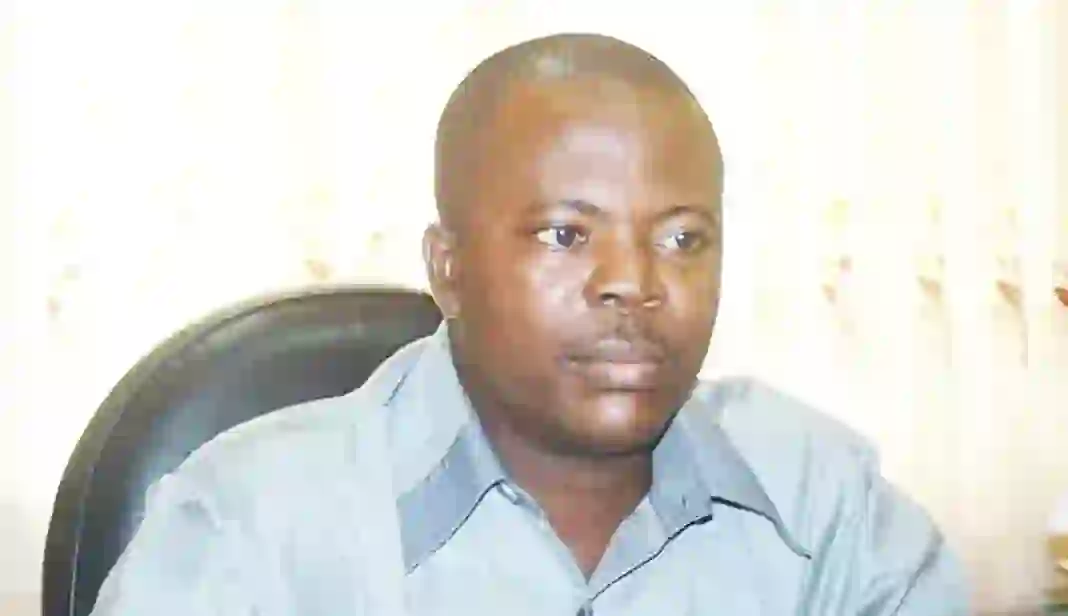
Valentine Obienyem
He goes further to condemn what he describes as the tendency of some Igbos to insult not only fellow Igbos but Yorubas, Hausas, Fulanis, Edos and others who support candidates other than Obi. His point, in summary, is that political opponents may become allies or even people one needs tomorrow, and that we should therefore avoid burning bridges.
I have no quarrel whatsoever with that principle. Indeed, I agree with much of it. Political disagreement should not become an excuse for personal abuse, ethnic hatred or the destruction of relationships. Nobody should be insulted merely because he supports another candidate.
Much as I can defend Fr Oluoma’s right to his position, however, I respectfully disagree with the way he frames the particular issue between Peter Obi and Soludo. He presents the matter largely as though Obidients are angry with Soludo simply because he does not support Peter Obi’s presidential ambition. That, in my view, misses the central issue.
First, who exactly are the Obidients? Although some people have been nominated or recognised as leaders of different Obidient platforms, the Obidient movement is not a formal, centrally organised political organisation whose members receive instructions from Peter Obi. It is largely a spontaneous aggregation of Nigerians who became exasperated by the direction of the country and found in Obi a political alternative. Indeed, many people who are Obidient do not belong to any organisation, have never attended an Obidient meeting and may not even know the names of those who lead the movement. So, when people criticise Soludo, it is too simplistic to say that they are doing so because he does not support Peter Obi.
Soludo can support President Tinubu. He can support Atiku. He can support Peter Obi. He can support whoever he chooses. That is his constitutional and political right. And he does not have to be a supporter of Peter Obi to command respect.
The argument goes beyond that. The anger against Soludo, particularly among many people in Anambra, is connected to his own conduct, statements, policies and relationship with the political legacy of Peter Obi. From conversations I have had with people in and around his administration, including some of his aides and appointees, there is considerable frustration with aspects of the way the government is being run. Whether every criticism is justified is another matter, but it is wrong to reduce all of this to a demand that Soludo must support Obi.
Lately, Soludo and his group have been scrambling to publicize “loans” tied to Mr. Obi, attempting to frame them as a contradiction of his well-known aversion to borrowing”a fiscal prudence that has long been his political hallmark. At its core, this is a petty bid to dim a public light. Soludo seems bent on extinguishing that beacon for no justifiable reason, holding Obi to a dishonest standard he refuses to apply to himself.
During his tenure, Obi participated, for example, in the NEWMAP initiative without incurring traditional debt, as those were concessional arrangements brokered between the federal government and international partners. Yet Soludo, who has paid counterpart funding of 500 million Naira for NEWMAP phase 11 programme and proudly boasts of not borrowing under the exact same logic, hypocritically turns around and classifies Obi’s NEWMAP obligations as “borrowing.” That glaring double standard is the crux of the matter.
There is also something about Soludo’s political style that continually provokes this reaction. He sometimes comes across as the “ezeonyeagwanan”- the man who knows everything. When a leader creates the impression that he knows everything, people naturally become reluctant to tell him what is actually happening around him. That is not merely an Obidient complaint; it is a broader question of governance.
Take even the matter of Peter Obi’s comment about being godparents to Soludo’s daughter. What Obi said, to my mind, was a mature recognition that politics should not destroy every personal and family relationship. He was essentially saying that whatever our political disagreements, families can remain cordial.
What followed from Soludo’s side, particularly the response attributed to his wife, was unnecessarily dismissive. The impression created was almost: do not mind this man; we are not friends. Why should a simple gesture of maturity have to descend into such pettiness?
And this brings me to something else. Many years ago, Quintus advised, in words recorded in Cicero’s “Commentariolum Petitionis”: “Be lavish in your promises”; men, he observed, often prefer a false promise to a flat refusal. He also advised creating new scandals against political rivals involving crime, corruption or immorality.
It appears that Soludo has literally taken political lessons from this ancient Roman manual of electioneering. The passage is striking because it describes an enduring feature of political competition: sometimes, destroying the reputation of a rival becomes almost as important as building one’s own.
This is where Peter Obi’s case is different. Obi’s strongest political asset is not merely that he is from Anambra or that he is Igbo. His appeal to millions of Nigerians rests substantially on a personal integrity and a political record that many people regard as unusually clean. This is what has led even people who once opposed him to speak of him in almost saintly terms.
I remember our last open encounter with Rev Fr Prof. Josephat Oguejiofor, my inimitable lecturer in Ethics and, to my mind, one of those priests who represent the intellectual tradition of Catholic priesthood. I am sure Fr Oluoma knows him.
Fr Oguejiofor spoke about how he once opposed Obi vehemently when Obi was governor. He was never a man afraid of expressing his opinion. Yet, after years of observing and studying other governors in Nigeria, he came to a striking conclusion. In his words: “I opposed Obi vehemently. However, after I had seen and studied other governors in Nigeria, I came to realise that he is a saint when compared to others.”
That statement is important, not because Peter Obi is a saint – he is not – but because it captures the extraordinary perception of integrity that forms the bedrock of his political capital. That perception is precisely why coordinated attempts to diminish it provoke such fierce pushback. When the public recognizes a politician who has established a genuine reputation for financial prudence and a different ethical standard, they will naturally resist efforts to redefine him through relentless caricature. Why else would critics dismiss substantial investments that directly and indirectly employed thousands of Anambra people as “next to nothing”? Why twist concessional credits into traditional debt to attack a leader who governed alone while contemporaries borrowed billions in commercial loans and bonds without matching his output – leaving behind over 75 billion Naira and 150 million dollars instead? If not for Obi’s robust defence, they are at the verge of even denying the dollar savings.
It is equally baffling to watch unexecuted contracts and uncompleted certificate payments wickedly bundled together and presented as his personal liabilities. What manner of partisan accounting practice is that? One must wonder: if applied to his immediate predecessor – who failed to complete even ten percent of the roads he awarded – would those total contract sums similarly be weaponized as liabilities?
So, yes, Fr Oluoma is right: Obidients should not insult Soludo merely because he does not support Peter Obi. They should not insult Tinubu supporters, Atiku supporters or anybody else. Political persuasion should be based on argument, evidence and the ballot, not abuse.
But there is another side to this conversation: criticism of Soludo should not automatically be classified as an attack on an Igbo man for refusing to support Peter Obi. Sometimes, people are simply responding to what they perceive as his own actions, words and record in government.
I therefore agree with Fr. Oluoma on the principle of civility, but I disagree with his diagnosis of the ailment. A proper diagnosis requires a rigorous textual analysis of the written and spoken words emanating from figures like Bayo Onanuga, Daniel Bwala, Fani-Kayode, Kenneth Okonkwo, and Reno Omokri. To that list must be added characters like Izuchukwu Adichie, Ejimofor Opara, Law Mefor, and Dr. Chukwuma Kpontus Okafor – the Omasi-born pervert with a sordid past. Behind them stand upwards of 30,000 other state-backed (federal and Anambra) media minders whose default mode is relentless character assault against one man rather than any engagement with facts.
And perhaps that is precisely what makes Fr Oluoma worth engaging: even when I disagree with him, I know I am dealing with a serious mind. His “merry frolicsome” manner may sometimes make the beginning of his argument look unserious, but by the time he reaches the end, you discover that the theologian was there all along.
With the arrest of Delta State Commissioner for Secondary Education, Dr. Kingsley Ashibogwu, the State Police has confirmed custody of five persons.
The Delta State Police Command has announced the arrest of three other suspects, as part of an ongoing investigation into the death of Mr Unity Ekpevbughe Adeda, a Deputy Director in the state Ministry of Secondary Education.
The development was contained in a statement by the Police Public Relations Officer, SP Bright Edafe.
According to the Command, the latest arrests bring to five the number of persons currently in police custody in connection with the investigation.
The Police also announced a manhunt for two key suspects, identified as Mrs Clementine Ufuoma, Director of Basic and Secondary Education, and Clement Apia, the driver to the Commissioner for Secondary Education.
The Command said their presence was required to further the investigation into the circumstances surrounding Adeda’s death.
The Commissioner of Police, Delta State Command, CP Samuel E. Erale, urged the two suspects to make themselves available to the Police without further delay, wherever they may be.
Erale assured the deceased’s family and members of the public that the investigation would be conducted thoroughly, impartially and professionally, stressing that due process would be duly followed.
The Police Command stated that anyone found culpable in the death of the Deputy Director would be brought to justice in accordance with the law.
The Command also expressed its condolences to the family of the deceased.
Reprieve has come for the Senior Advocate of Nigeria, (SAN), Joe Gadzama, as the Federal High Court sitting in Abuja overturned the three-year suspension imposed on him by the Legal Practitioners Disciplinary Committee (LPDC).
In a judgment, the court declared the enforcement of the disciplinary direction against him unconstitutional and raised fundamental questions about the treatment of professional disputes within Nigeria’s legal disciplinary system.
The Court granted the reliefs sought by Gadzama SAN, declaring the direction of the Legal Practitioners Disciplinary Committee delivered on 29 July as unconstitutional insofar as it affects Chief Gadzama.
The Court specifically declared that the implementation or enforcement of the LPDC direction against Gadzama, in the absence of an effective appellate mechanism, is inconsistent with Sections 36(1), 36(2) and 6(6)(b) of the Constitution of the Federal Republic of Nigeria and
is therefore unconstitutional and unlawful, further stating that the LPDC lacked jurisdiction in the matter.
The judgment follows Gadzama’s challenge to the disciplinary decision, in which he maintained that the proceedings has fundamentally misconstrued the nature of the underlying dispute and subjected him to professional discipline over circumstances arising principally from questions of representation, retainership and professional fees.
The original controversy arose from the administration and distribution of compensation arising from the Zaki-Biam litigation and involved competing claims concerning legal representation and professional fees.
Gadzama’s position throughout the proceedings was that he had never had a professional relationship with Chris Alashi, the complainant before the LPDC, and had never received instructions from him.
His case was that he has instead been separately instructed by some of the judgment creditors.
The disciplinary proceedings ultimately resulted in the LPDC directing that Gadzama be suspended from legal practice for three years, while Ocha P. Ulegede was separately suspended for two years.
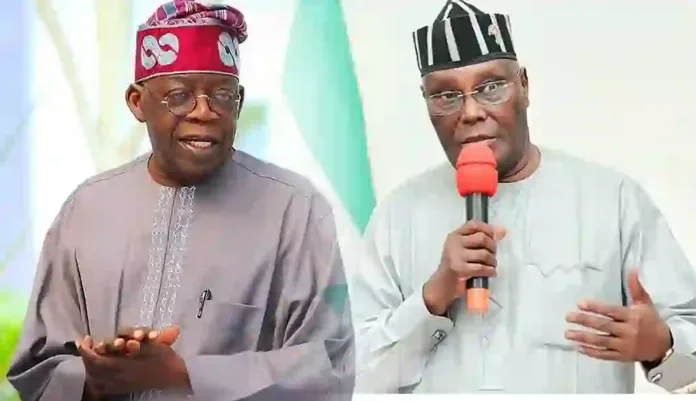
Former Vice President and African Democratic Congress (ADC) presidential candidate Atiku Abubakar has cried foul over latest move by President Bola Tinubu to seek a fresh loan of $1.5 billion from the World Bank.
He pointed out that with public debt at ₦166.79 trillion, Tinubu is now seeking another $1.5 billion from the World Bank.
Atiku accused President Tinubu of running a government that demands endless sacrifice from Nigerians, while endlessly reaching for fresh loans.
The former vice president maintained that the president must first account for the money already borrowed.
In a statement on Monday by the Director of Strategic Communications of the ADC Presidential Campaign Council, Phrank Shaibu, Atiku said Mr Tinubu’s record is an indictment of his economic stewardship: families are struggling to afford food, fuel and electricity, yet the debt continues to climb.
“Nigerians were promised that painful policies would free resources for development. They have felt the pain. Where is the development?
“If Nigeria’s public debt was divided among everyone, each person’s share would be ₦716,822 today. Three years ago, it was ₦383,442. That is an 87 per cent increase.
“Tinubu has made today difficult and tomorrow more uncertain. He cannot keep loading debt onto the country and expect Nigerians to applaud programme titles.
“What has this government built? Who has benefited? Why should Nigerians trust him with another term in office?”
The proposed $500 million facilities for climate resilience, social protection and early childhood development address real needs, adding that worthy programme names cannot stand in for a public account of how previous loans were spent or a clear plan for delivering measurable results.
“Before these loans are concluded, the government must publish the projects to be funded, the communities and citizens expected to benefit, the targets for each programme, the terms of borrowing and disbursement, and a timetable Nigerians can use to track delivery.
“Climate resilience must mean identifiable land restored, irrigation delivered and communities protected from flooding.
“Social protection must identify who receives support and when. Early childhood development must produce measurable gains in nutrition, healthcare and learning.”
Atiku also challenged the government to reconcile its appetite for borrowing with its repeated claims of higher revenue and savings from petrol subsidy removal.
“If more money is coming in, why does the debt keep climbing? If Nigerians have sacrificed so much, where are the results?
“A government cannot keep announcing savings, signing loans and asking the same struggling families to wait for relief.”
He said the question before Tinubu was no longer how many development programmes his government could name, but what Nigerians could see, use and independently verify.
“Show us the money already received. Show us what it built. Show us who benefited. Account for the debt already on Nigeria’s books before borrowing another dollar,” he said.
The Federal Government has been given a two- week ultimatum by the National Association of Resident Doctors, NARD, to resolve its outstanding welfare and professional issues affecting its members.
It has warned the FG that failure to comply and meet their demands could trigger industrial action.
NARD reached this conclusion after
resolutions reached at its 46th Annual General Meeting, AGM, in Calabar, Cross River State.
Dr Emmanuel Ogar, NARD National President read the resolutions which expressed concern over the slow pace of implementation of agreements reached between the association and the Federal Government, saying the prolonged delays had become unacceptable.
It demanded the immediate action on outstanding issues relating to remuneration, career progression, professional allowances, excessive workload, manpower shortages and the general welfare of resident doctors.
The association called for the immediate implementation of agreements reached with the Federal Government, particularly those relating to improved conditions of service and professional development.
It also urged the government to conclude the review of existing remuneration and professional salary structures for doctors, saying the current framework no longer adequately reflected prevailing economic realities.
The association demanded appropriate compensation for excess workload arising from manpower shortages in hospitals, noting that resident doctors were increasingly carrying additional responsibilities.
It called for standardised templates for compensation for excess workload and reliable data to justify payments to doctors performing duties beyond their normal responsibilities.
The association also expressed concern over attacks on health workers and called for the full implementation of policies and anti-assault measures designed to protect doctors and other medical personnel in hospitals.
It further raised concern over the continuing migration of doctors and other health professionals from Nigeria, saying the development had worsened manpower shortages and increased the workload on doctors who remained in the country.
NARD therefore urged the Federal Ministry of Health and Social Welfare to urgently address the factors responsible for the continued migration of medical professionals.
The association also called on state governments to prioritise the welfare of doctors and other health workers employed by their respective institutions and ensure the implementation of relevant welfare policies.
It demanded improved infrastructure, adequate medical equipment and better working conditions in health institutions to enhance patient safety and improve healthcare delivery.
The resolution urged the National Assembly to strengthen budgetary provisions for healthcare, stressing that adequate funding remained critical to addressing challenges in the sector.
The association demanded the prompt payment of salaries and other entitlements owed to house officers and called for their inclusion in relevant welfare arrangements.
As regards the electronic clocking systems in hospitals, NARD said it was not opposed to their deployment, provided they were properly implemented and used to support accurate data management rather than punish medical personnel.
It observed that several agreements and commitments reached with the Federal Government had remained unresolved despite repeated meetings and assurances.
The association therefore urged the government to use the two-week window to address the outstanding issues and avert a breakdown of industrial harmony in the health sector.
The resident doctors said resolving the disputes would improve their welfare, reduce burnout and ultimately enhance the quality of healthcare available to Nigerians.
The association also elected new national officers, with Dr Emmanuel Ogar emerging as President, alongside other members of the National Executive Council.
It urged the new leadership to pursue the implementation of the resolutions and sustain engagement with the government towards achieving improved conditions of service for resident doctors.