Home Blog Page 11

Police Rescue 75 Kidnapped Travellers Held In Mountain Cave

0
Kaduna Police Rescued 75 Kidnapped Victims

By Suleiman Anyalewechi


The Kaduna State Police Command on Friday, August 21, 2026, announced the rescue of 75 travelers were abducted by gunmen ,and held in a cave in a mountain  within Folwaya Community in Birnin Gwari local council of the state.


In a statement by Mansir Hassan, its spokesperson, the  police authorities said the victims, mostly Fulani men, women and children, were traveling in multiple commercial buses when they were ambushed and whisked away by several  armed men in Folwaya Village, Birnin Gwari at about 5:30 pm on Wednesday , August 19, 2026.


However, their rescue was sequel to intelligence-driven operations conducted by operatives between late Wednesday night and early Thursday morning.


According to the statement, actionable information was received by the police from the Birnin Gwari branch of the National Union of Road Transport Workers NURTW, which led the  operatives to storm the cave situated inside a mountain within Folwaya Village.


“The Kaduna State Police Command received credible information from the NURTW, Birnin Gwari branch, that some Fulani men, women and children traveling in commercial buses were abducted by unknown armed men wielding AK-47 rifles and other sophisticated weapons at Folwaya Village, near Birnin Gwari”, the statement noted.


Following the receipt of the intelligence, the Police stated that operatives were mobilised and deployed to the mountain area.


However, the armed men on sighting operatives fled, and abandoned  their victims.


“On sighting the well-armed police operatives, the abductors fled, abandoning their captives,who were successfully rescued unharmed”, the police added.


The State Commissioner of Police, Rabiu Muhammad, lauded the Birnin Gwari branch of  NURTW for providing timely and credible information which aided the operatives in their rescue efforts.


While commending officers for their swift and professional response, he called on residents to always remind vigilant, and volunteer useful information to assist security agencies in adequately protecting lives and properties of the people.

Obi To Nigerians: “Probe Into Records, Policy Proposals Of Candidates Before Voting In 2027”

0
Peter Obi
Mr Peter Obi

By Ayodele Oni


Presidential candidate of the Nigeria Democratic Congress (NDC), Peter Obi, has urged Nigerians to scrutinise the records and policy proposals of all presidential candidates before deciding who deserves their mandate in 2027.


He said the election provides an opportunity for citizens to assess competing visions for the country at a time of significant economic and security challenges.


“Any presidential candidate who lacks the resolve to travel across the country, meet the people, and respond to their questions lacks the capacity to govern it.”


Obi added that he was entering the 2027 contest with the conviction that Nigeria could overcome its challenges if its human and material resources were properly managed.

“Nigeria can work, and Nigeria must work.”


Obi, who spoke at a press conference in Onitsha, Anambra State, on Friday, said his campaign for the 2027 presidential election would focus on rebuilding the country and improving the living conditions of Nigerians.


He pointed out thats Nigeria must urgently move from a consumption-driven economy to a production-based one, declaring that no nation can import its way to prosperity.


He emphasized that the central question for Nigerians ahead of the election should be whether government policies had actually improved their lives, particularly in the areas of food, education, healthcare, employment and business opportunities.


“Our experiences differ, but our conclusion is clear: Nigeria must invest in its people and manage its public resources responsibly.”


He also challenged Nigerians to demand direct answers from political leaders on the state of the economy and their plans to address the country’s challenges, rather than relying on surrogates to defend their records.


According to him, Nigeria’s large population and expanding domestic market present enormous opportunities that must be converted into productive capacity.


“Nigeria cannot import its way to prosperity. We will produce more of what we consume, process more of what we produce, and compete more effectively in global markets.”


Obi said his administration, if elected, would seek to deploy experience from the public sector, private sector and civil service to transform Nigeria’s population into productive human capital and its natural resources into value-added industries.


He identified agriculture, manufacturing, technology, construction, energy, creative industries and services as key sectors capable of driving investment, production and job creation.


The former Anambra State governor also expressed concern over the country’s worsening poverty and humanitarian situation, saying millions of Nigerians remain unable to meet basic needs.


He cited estimates indicating that more than 140 million Nigerians live at or below the national poverty line, while millions more face food insecurity and displacement caused by conflict.


On insecurity, Obi said the crisis had disrupted agriculture, education, trade and investment, stressing that the next government must adopt a comprehensive approach to restoring security.


He proposed improved intelligence gathering and coordination among security agencies, stronger policing and border management, as well as greater deployment of technology in combating insecurity.


On unemployment, he said Nigeria must create an economy capable of absorbing the millions of young people entering the labour market each year by expanding productive sectors and supporting businesses.

Akasoba Zainab Duke-Abiola: A Formidable UN Secretary-General Candidate With A Global Mandate

0
Akasoba Zainab Duke-Abiola

At a defining moment for the international system, Akasoba Zainab Duke-Abiola, mni, is emerging as a formidable contender for the prestigious office of Secretary-General of the United Nations.

Duke-Abiola’s aspiration brings together an unusual combination of legal scholarship, public service, strategic policy expertise, diplomacy, security, mediation, arbitration, sustainable development and human-rights advocacy.

More importantly, she presents herself not simply as an African candidate seeking an African voice at the United Nations, but as an African stateswoman with a distinctly global outlook — a candidate capable of engaging Africa, Latin America, the Caribbean, the Global South, the Global North and the major centres of international power.


As the UN selection process enters a decisive phase, the central question surrounding Duke-Abiola is increasingly less about whether she possesses the credentials to compete and more about whether the international community is ready for the kind of diplomatic and institutional change her supporters believe she could bring to the global organisation.


The Candidate To Beat


Duke-Abiola’s strategic strength lies in the breadth of her professional and intellectual experience.

She is a British-trained barrister and jurist, a former senior official of the Nigerian Presidency, a strategic and legal adviser, diplomat, scholar and distinguished member of the National Institute for Policy and Strategic Studies.


Her career has traversed several areas that are central to the contemporary United Nations agenda: international law, governance, peace and

security, human rights, migration, sustainable development, diplomacy, mediation, arbitration and institutional reform.

This breadth gives her candidature an important advantage.

She understands institutions from the perspective of law, governance from the perspective of public service, conflict from the perspective of security and mediation, and development from the perspective of policy and scholarship.


She is, therefore, positioned as a bridge between disciplines, regions and competing international interests.

A Candidate Beyond Geographical Politics


One of the defining features of Duke-Abiola’s candidature is the attempt to move beyond the traditional conception of an African candidate.

Her supporters argue that Africa should not be presented merely as a geographical constituency seeking representation. Instead, Africa’s experience should become part of a broader global leadership proposition.


Duke-Abiola’s argument is that the challenges facing the international community cannot be divided neatly between North and South, East and West.

Wars, migration, climate insecurity, terrorism, pandemics, artificial intelligence, economic instability and humanitarian crises cross borders.


A Secretary-General, therefore, must be capable of finding common ground across those divisions.

The APRC Endorsement: An Intellectual And Policy Foundation


A major pillar of the campaign is the endorsement of Duke-Abiola by the African Policy and Research Consortium (APRC).


The significance of that endorsement, according to her numerous supporters, extends beyond a ceremonial declaration.

APRC brings together scholars, policy leaders, researchers, advisers, development practitioners and institutional actors working across African policy environments and beyond.


Its networks operate at the intersection of scholarship, government, institutional decision-making and development policy.

They are, therefore, positioned within important conversations about governance, development, security, institutional reform and Africa’s place in the international system.

The endorsement provides Duke-Abiola with an expanding Pan-African intellectual and policy constituency capable of carrying discussions about her candidature into different national and institutional environments.


From African Support To Latin American Outreach


The campaign is also seeking to broaden its international reach.

According to people familiar with the campaign, consultations have expanded beyond Africa, including outreach to supporters in several Latin American countries who are mobilising around Duke-Abiola’s candidature.

That development could prove strategically important.


A Secretary-General must ultimately command confidence across regions rather than depend exclusively on one geographical constituency.


The emerging African–Latin American connection consequently provides an opportunity to build a South-South diplomatic bridge that could extend into wider engagements with Europe, Asia, North America, the Caribbean, the Middle East and the Pacific.


Building A Coalition Across The Global South


The developing support base around Duke-Abiola is significant because it potentially creates a platform for conversations among countries whose interests are often underrepresented in the traditional centres of global decision-making.

Her candidature seeks to demonstrate that an African-origin candidate can speak credibly to the concerns of Latin America, the Caribbean and other developing regions while remaining capable of engaging the world’s major powers.

The objective is not to establish another geopolitical bloc.

It is to demonstrate that effective multilateralism requires communication across blocs.


The Global North: A Partner, Not An Adversary


Duke-Abiola’s philosophy does not define the Global South in opposition to the Global North.

Instead, she argues for a United Nations capable of identifying areas of mutual interest between both sides.

The challenges confronting humanity are too interconnected for the international system to remain trapped in rigid geopolitical categories.

Climate change requires cooperation between developed and developing economies. Artificial intelligence requires common standards. Migration requires shared responsibility. Global security requires dialogue between major powers and smaller states.

Her conception of multilateralism is therefore practical rather than rhetorical: the United Nations must become more capable of producing tangible outcomes in peace, development, human security and institutional trust.


The Human Cost Of Political Crisis


Duke-Abiola also brings a deeply personal understanding of political instability.

As the widow of the late Chief Moshood Kashimawo Olawale Abiola, she experienced, at close quarters, the political crisis surrounding Nigeria’s historic June 12, 1993 presidential election, its annulment and the subsequent detention and death of MKO Abiola.

That history exposed her to the consequences of democratic rupture, political confrontation and institutional instability.

But her candidature does not rest on personal association with that history.

She subsequently developed an independent professional career spanning law, government, strategic policy, diplomacy, arbitration, mediation, security, human rights, humanitarian advocacy and scholarship.

The combination of lived experience and institutional expertise forms an important part of the case her supporters are making for her.


From Conflict Experience To Conflict Prevention


Duke-Abiola’s philosophy can be distilled into three principles:


*Diplomacy before confrontation.

*Mediation before escalation.

*Prevention before catastrophe.


Her approach is rooted in the belief that lasting peace cannot simply be imposed.

It must be negotiated, supported by credible institutions, strengthened by justice and sustained through political engagement.


This philosophy could be particularly relevant to a United Nations confronted by increasingly complex conflicts in which military solutions alone have repeatedly failed to produce durable peace.


The Secretary General As A Global Mediator


Duke-Abiola’s conception of the Secretary-General goes beyond administration.

For her, the office must remain fundamentally diplomatic.


The Secretary-General must be willing to speak when others are silent, listen when adversaries refuse to listen to one another, preserve communication during periods of confrontation and create room for compromise without abandoning the principles of the UN Charter.

That role becomes particularly important when relations among major powers are strained and smaller states fear that their interests are being overshadowed by geopolitical rivalry.


A Rare Law, Security And Development Expert


Few leadership positions require such a wide intellectual range as that of UN Secretary-General.

Duke-Abiola’s supporters point to the convergence of her experience in several critical areas.

She is a constitutional jurist who understands institutions.


She is a governance and security thinker who understands peace-building.

She is a development scholar who understands the economic and social foundations of stability.

She is an internationalist who understands the concerns of the Global South without defining global leadership against the Global North.

And she is a diplomat who believes that dialogue must remain open even when political differences appear irreconcilable.


WOMAN, AFRICAN, NIGERIAN — BUT GLOBAL


Duke-Abiola’s candidature also carries considerable historical significance.

If successful, she would become the first Nigerian and the first African woman to lead the United Nations.


That symbolism would be substantial.

Yet her supporters insist that the strongest argument for her candidature should not be gender or geography.

It should be competence.

The proposition is that her African identity provides an important perspective, while her professional experience gives her the capacity to serve beyond regional interests.


Artificial Intelligence And The Next Era Of Governance


Duke-Abiola also recognises that the UN agenda of the coming decade will be shaped increasingly by emerging technologies.

Artificial intelligence presents extraordinary opportunities for development, productivity and scientific advancement, but it also raises questions about security, inequality, human rights, privacy, employment and the future of governance.

Her approach places human dignity at the centre of technological progress.


The international community, in her view, must encourage innovation while ensuring that emerging technologies remain subject to principles of responsibility, security and fundamental rights.

A Secretary- General For Every Nation

Duke-Abiola’s own description of her vision captures the central message of her campaign:


“It would be a profound honour to bring the experience and perspective of Africa to the leadership of the United Nations while remaining, absolutely and unequivocally, a Secretary-General for every nation and every people.”


She continues:

“The world does not need deeper divisions. It needs bridges. It needs dialogue where there is confrontation, mediation where there is deadlock and prevention before conflict becomes catastrophe.”


Her concluding commitment is equally emphatic:


“If entrusted with the opportunity to serve, my allegiance would be to the Charter, to peace and to humanity.”

The United Nations At A Crossroads


The next Secretary-General will inherit an organisation confronting an extraordinary accumulation of challenges: armed conflicts, humanitarian emergencies, geopolitical rivalry, migration pressures, climate insecurity, technological disruption and declining confidence in multilateral institutions.


The office will, therefore, require more than administrative competence.

It will require political courage, diplomatic credibility, intellectual breadth, negotiating skill and the ability to rebuild trust among countries that increasingly disagree about the direction of the international system.

This is the environment in which Duke-Abiola’s candidature is seeking to distinguish itself.


From Candidature To International Coalition


The immediate challenge for the campaign is to transform growing Pan-African policy support into a genuinely international coalition.

The APRC endorsement provides an important African foundation.


The developing mobilisation among supporters in Latin America adds a potentially significant cross-regional dimension.

Further engagement with governments, diplomats, international institutions, civil-society organisations, scholars and policy communities could broaden the coalition further.

The emerging proposition is consequently larger than one candidate or one country.


It is the proposition that an African-origin jurist, diplomat, mediator, arbitrator, policy strategist, scholar and stateswoman could provide the United Nations with a bridge across increasingly divided geopolitical worlds.


When Consensus Becomes The Greatest Qualification


At a time when consensus has become one of the world’s scarcest diplomatic resources, the ability to bring opposing interests into the same conversation may ultimately prove more valuable than allegiance to any single geopolitical camp.


That is the central proposition behind the Duke-Abiola candidature.

She brings Africa to the table, but does not seek to make the table exclusively African.

She understands the Global South, but does not reject the Global North.


She has experience with government and institutions, but also with law, diplomacy, mediation and scholarship.

And above all, she offers a leadership philosophy centred on dialogue, prevention, human dignity and the rule of law.

As the contest for the next Secretary-General enters a critical phase,


Akasoba Zainab Duke-Abiola is, therefore, being positioned by her supporters as more than a participant in the race — but as a formidable consensus candidate and, potentially, the candidate to beat.

“No Nation Can Import Its Way To Posterity” – Peter Obi

0
Peter Obi

“The Presidential Candidate of the Nigeria Democratic Congress (NDC), Peter Obi, has shared insights into the key message he intends to deliver to Nigerians during the upcoming campaign ahead of 2027. Addressing journalists at a press conference in Onitsha, Anambra State, on Friday, Obi suggested that his campaign will serve as a national dialogue focused on rebuilding Nigeria. Talking about each sector, Obi stated that he and his running mate, Rabiu Kwankwaso, come from diverse backgrounds and experiences but share a common goal—to improve the living standards of the impoverished among us.


Our experiences differ, but our conclusion is clear: Nigeria must invest in its people and manage its public resources responsibly. Regarding building an economy that works, Obi asserted that “Nigeria needs more than mere reactive reforms. The real questions are: Are Nigerians better off than they were four years ago? Can they afford food, education, and healthcare? Can businesses grow, produce, and generate jobs? Can young people secure productive employment? Can farmers work safely and get their produce to market? He urged citizens to seek direct answers from leaders, not through proxies or surrogates.


“This moment gives Nigerians the opportunity to evaluate the records, ideas, and plans of those seeking their mandate to lead their country at a time of significant uncertainty in our rapidly changing world. I consider myself quite privileged to be among those asking for your mandate to address these national challenges. I enter this contest with one firm belief: Nigeria can work, and Nigeria must work. Nigeria faces numerous serious challenges; some are indeed of existential importance.


“According to the IMF, 63%, or over 140 million Nigerians, live at or below the national poverty line, while humanitarian agencies estimate that 35 million people will require food aid during the 2026 lean season. About 3.6 million Nigerians remain internally displaced, largely due to conflict and insecurity. Each year, millions of young people join the labour market, yet many struggle to find meaningful opportunities.


On the theme of consumption to production, the NDC flagbearer said, “Nigeria, with a population now exceeding two hundred million and continuing to grow rapidly, has one of Africa’s largest domestic markets and labour forces. This is an opportunity we must capitalise on to transform our nation’s future. Nigeria cannot import its way to prosperity. We will produce more of what we consume, process more of what we produce, and compete more effectively in global markets.


“We will harness our collective experience in public funds management, the private sector, and the civil service to turn our population into productive human capital, our natural resources into value-added industries, and our domestic market into an engine for investment and enterprise. Agriculture, manufacturing, technology, construction, energy, creative industries, and services all have vital roles to play. On insecurity, Obi stated,


“Insecurity has displaced millions of Nigerians and continues to disrupt agriculture, education, trade, and investment. Our response must therefore be comprehensive. We need to improve intelligence gathering and coordination among security agencies, strengthen policing and border management, and make better use of technology. He also addressed several issues including healthcare, unemployment, and democracy, urging citizens to scrutinise their leaders, saying,


“Any presidential candidate who lacks the resolve to travel across the country, meet the people, and respond to their questions lacks the capacity to govern it.”

Tinubu Taunts Aregbesola, Says “Half Salary Regime” In Osun Will Return If Atiku’s Ignorance On Fuel Subsidy Is Adhered To

0
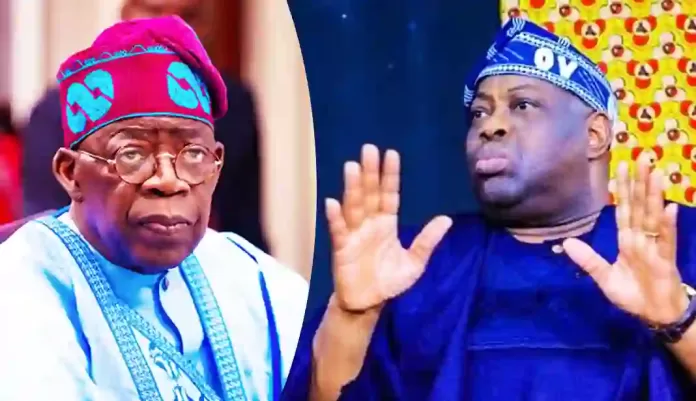
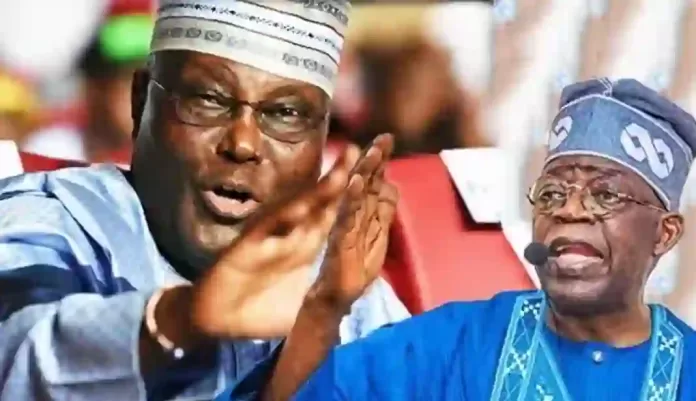
Rauf Aregbesola and President Bola Tinubu

By Ayodele Oni


President Bola Tinubu has cited the plight of workers in Osun state between 2010 and 2018, when former Governor Rauf Aregbesola’s administration was paying workers half salary as one of the evils of retaining oil subsidy.


In an apparent swipe at former Osun State Governor, Rauf Aregbesola, President Tinubu mocked the controversial “half salary” era in the state under him,  while attacking former Vice-President Atiku Abubakar’s promise to restore petrol subsidy if elected in 2027.


Tinubu made the veiled reference while receiving Osun State Governor Ademola Adeleke at the Presidential Villa in Abuja, following Adeleke’s victory in the August 15 governorship election.


The President was reacting to Atiku’s pledge to bring back petrol subsidy, describing the proposal as evidence of what he called “serious ignorance” of governance and the economy.


“I saw one of my opponents now say he will go back to subsidy. I read it. That is a demonstration of a serious ignorance on governance and economy.”


But as he sought to justify the removal of petrol subsidy, the President turned his attention to the financial crisis that once crippled many state governments, including Osun.


“Before I came here, 27 states are unable to pay salaries, not to even talk of pensioners, salary of workers.”


He then delivered what appeared to be a pointed reference to Aregbesola, who governed Osun between 2010 and 2018.


“I know a man in your state that I raised who is nicknamed ‘half salary’. They come to the federal, cap in hand, unable to do anything,” the President said.


The remark immediately evoked memories of the “modulated salary” regime introduced in Osun during Aregbesola’s administration amid the state’s financial crisis.


Workers on different grade levels were paid varying percentages of their salaries, with some senior civil servants receiving only half of their pay.


Contemporary reports show that the arrangement became a major source of tension between the government and organised labour.


Aregbesola’s administration defended the policy as a response to dwindling revenues and the inability of the state to meet its wage bill.


The state government explained that the arrangement was designed to prevent mass retrenchment, with lower-grade workers receiving full salaries while higher-grade workers received reduced payments.


The issue, however, remained one of the most politically damaging legacies associated with the former governor, with workers protesting and demanding a return to full salaries and payment of accumulated arrears.


Tinubu appeared to use that history to reinforce his argument that returning to petrol subsidy would recreate the type of fiscal pressure that left states struggling to meet basic obligations.


He argued that the benefits of his administration’s economic reforms should be measured not only at the Federal Government level, but also by their impact on states and local governments.


“Salary you pay for each family, they were at the local governments, they are in the states,” he said.


According to the President, the ability of governments to meet their wage obligations also translates into improved capacity to fund roads, schools, housing and healthcare.


He said the government had to focus on ordinary Nigerians and their families, stressing that workers’ salaries ultimately support households and sustain local economies.


Tinubu also used Adeleke’s re-election to preach reconciliation and responsible governance, urging the governor not to allow electoral victory to become a source of division.


“All for the reconciliation, expand your coast. That is the only way you can give thanks to our people,” he told Adeleke.


“Not the way you sang it or celebrated it. It’s the way you act it. Use me as an example, I got here. God put me here. Where you are today, God put you there.”


The President said Adeleke should see his victory as an opportunity to build a broader political legacy rather than settle scores with opponents.


“You are in a very, very unique position to make history, promote unity, peace and stability,” Tinubu said.


He further urged the governor to promote democracy, stability and the rule of law, while warning against victimising political opponents. Don’t stigmatise any of your opponents,” he said.


Tinubu also appealed to political actors to accept electoral outcomes and respect the democratic process.


“Anybody, any democrat, anybody in the political environment who cannot celebrate the joy of a free and fair election does not deserve the laughter and the happiness of democracy,” he said.


“Don’t make a single individual a victim of your campaign, not for you alone, not for the sake of us all alone, for the generations to come.”


The President congratulated Adeleke on his victory and urged him to use the mandate to unite Osun rather than deepen political divisions.


“You did not conquer anybody. You won the election. That is the essence of democracy,” Tinubu said.

Mamman Vatsa’s Execution: I Was Powerless, Couldn’t Save Him – IBB

0
Ibrahim Babangida

By Suleiman Anyalewechi


Former Military President, General Ibrahim  Babangida has described the presentation  by a Military Commission of Inquiry,  incontrovertible evidence linking Mamman Vatsa to the 1985 putsch  as one of the most difficult moments in his eight-year tenure as Nigerian leader.


Babangida, popular as IBB, said he was completely shocked and disappointed by the panel’s findings, and was deeply devastated by the grim, but unavoidable reality of having to watch his closet friend and school mate of many years, executed alongside other officers indicted by the military panel of plotting a violent overthrow of  his Government.


The source reports that, at the time,  not a few were shocked that IBB could allow Vatsa ,a close associate and school mate at Government College Bida ,Niger state ,both of whom had enlisted into the Nigerian Military School same period and year to be executed. An accomplished poet, Major General Vatsa was executed within an hour after Nigeria’s literary giants – Professors Chinua Achebe, Wole Soyinka, J.P. Clark – went to IBB to plead that his life be spared.


But defending himself in an interview with Badeggi FM radio Minna in commemoration of his 85th birthday celebration ,the former Military President insisted that he couldn’t have intervened to save his friend without compromising and undermining the country’s military laws, security architecture, and exposing his administration to unbridled and inordinate military adventurism


According to Babangida , when the report  on the alleged involvement of Vatsa, then Minister of the Federal Capital Territory FCT, and Major -General Gado Nasko in the planned coup reached him, he could not believe it owing to their close affinity.


“But while General Gado Nasko was cleared of any wrongdoing ,the Panel found evidence linking Vatsa to the coup plot.


“There was nothing I could do to exonerate him ( Vatsa) from the consequences prescribed by military law. My hands were tied. That was how I lost my brother, General Mamman Vatsa”, he  stated .


IBB said he had earlier on, when news about the planned coup reached him, invited the duo of Nasko and Vatsa to his office to ascertain the truth concerning their alleged involvement .


According to him, he could not believe the preliminary findings indicating that Vatsa was involved considering their long-term relationship and shared history.


“When they arrived, I asked them about the reports that they had been mentioned in a plot to topple my Government .


“Both of them denied any involvement. A Military Commission of Inquiry was, thereafter, set up to investigate the matter.


“While General Gado Nasko was cleared of any wrongdoing, the panel found evidence linking Vatsa to the plot”, Babangida added.

Atiku To Obasanjo: “North Made You President, You Have No Electoral Value”

0
Atiku Abubakar and Olusegun Obasanjo

By Akinwale Kasali


The renewed war of words between African Democratic Congress, ADC, Presidential Candidate, Atiku Abubakar and former President Olusegun Obasanjo is  getting more messier bh the day.


 Atiku, on Wednesday, took a swipe at Obasanjo, and reminded him of the  the pivotal role the North played in his emergence as President in 1999.


Atiku said tge North propped him up when it was seen that s

his former boss did not have the electoral strength to win even his own State, not to talk about the entire South-west during the 1999 Presidential election.


Atiku stressed that “In 1999, he (Obasanjo) could not even win his own State or the South-West; it was Arewa that made him President. He possesses no electoral value,” Atiku said.


The Adamawa State born politician made this assertion while speaking with journalists on Wednesday amid his untidy  political relationship with Obasanjo and their respective roles in the former president’s emergence in 1999.


The latest exchange is part of a renewed dispute between the former president and his former deputy. Both  have traded accusations over their political relationship and events surrounding the 1999–2007 administration.


Recall that Obasanjo had described his decision to choose Atiku as his running mate in 1999 as the “biggest mistake” of his presidency, while accusing the former vice president of disloyalty and involvement in an alleged attempt to impeach him.


Responding to Obasanjo’s submission,  Atiku rejected the former President’s account, accusing him of rewriting history and attempting to use the past for political advantage ahead of the 2027 elections.


He had also defended his role in the administration, saying he supported Obasanjo after his release from prison and helped build the political structure that facilitated their victory in 1999.


Highlighting his track  record of creating opportunities for young Nigerians during his tenure as vice president, Atiku stated that more of this is certain if he emerges as President in 2027.


He said some of those who benefited from such opportunities had gone on to become governors, ministers, directors, and other public officeholders.


Atiku promised that if elected president in 2027, his administration would continue to create opportunities for young Nigerians to serve and take up leadership positions.


The former Vice President is seeking the Presidency on the platform of the ADC ahead of the 2027 general elections.

Omo-Agege Alleges Attack On Campaign Venue; APC Says Ignore

0
Senator Ovie Omo-Agege

By Ayodele Oni


Coming few hours after he raised concern about his safety, former Deputy President of the 9th Senate and National Democratic Congress, ( NDC) Senatorial Candidate for Delta Central, Senator Ovie Omo-Agege, has alleged that more than 50 armed men attacked a campaign meeting venue in Uvwie Local Government Area of Delta State in the early hours of Thursday, destroying canopies and campaign materials.


 Omo-Agege, in a statement issued from his office alleged that the attackers were led by Mr Emmanuel Erube, whom he identified as the Disciplinary Committee Chairman of Jakpa.


He further claimed that the men threatened to kill him and the NDC Uvwie Campaign Coordinator, Olorogun Dr Esere Ejifoma Atumu, if he appeared at the campaign event.


 The Senator alleged that the incident occurred at about 5:30 a.m., describing it as a deliberate attempt to intimidate the opposition ahead of the 2027 elections.


 “This morning at 5:30am, over 50 armed men led by Mr Emmanuel Erube — the Disciplinary Committee Chairman of Jakpa — stormed the venue of our NDC campaign meeting in Uvwie, Delta Central.


 “They tore down canopies and destroyed every campaign material we had set up. This wasn’t random. It was planned,” Omo-Agege alleged.


 According to him, the attackers subsequently issued threats against him and his campaign coordinator.


 “In the middle of it, Erube and his men made it clear what they came to do. They vowed to kill me and my Uvwie Campaign Coordinator, Olorogun Dr Esere Ejifoma Atumu, if I show up in Uvwie for the event.”


 Omo-Agege accused Delta State Governor, Sheriff Oborevwori, of responsibe for the alleged attack, while claiming that the governor had previously made threats against him.


 “I hold Governor Sheriff Oborevwori directly responsible and culpable for this. My basis is unambiguous.”


Reacting, Delta State chapter of the All Progressives Congress (APC) dismissed  Ovie Omo-Agege’s latest allegation of threats to his life and that of his family, describing it as a desperate attempt to attract sympathy, distract the electorate and tarnish the image of Governor Sheriff Oborevwori


 In a statement signed by the State Publicity Secretary, Mr. Valentine Onojeghuo, Esq., the party said it was “highly irresponsible and reprehensible” for Omo-Agege to repeatedly link the governor, the Delta State Government and the APC to alleged threats against him without presenting evidence to the appropriate security agencies.


 The party categorically rejected any insinuation that Governor Oborevwori or the APC had any involvement in the alleged threats.


 “Delta APC categorically rejects any insinuation that His Excellency, Rt. Hon. Elder Sheriff Oborevwori, the Delta State Government or our party has anything whatsoever to do with any alleged threat against Sen. Omo-Agege or his family.’


 It added that, as the Chief Security Officer of the state, Oborevwori remained committed to protecting the lives and property of all Deltans, making it “unthinkable” for anyone to accuse him of sponsoring threats against a political opponent.


 The APC described Omo-Agege’s latest allegation as “nothing more than a cheap attempt to attract unnecessary attention, manufacture public sympathy and distract from the real issues before the people of Delta State.”


 The party also criticised what it described as the senator’s attempt to pre-assign responsibility to the governor for any unspecified future incident, warning that such allegations could create a predetermined narrative and prejudice the public against the governor.


 “Of particular concern is Sen. Omo-Agege’s reckless attempt to pre-assign responsibility to His Excellency for any unspecified future incident.


“This is a politically motivated insinuation designed to create a predetermined narrative and prejudice the public against the Governor.”


 It challenged Omo-Agege to submit whatever evidence he had concerning the alleged threats to the relevant security agencies for investigation.


 “If he genuinely believes his life or that of his family is under threat, he should immediately present whatever evidence he possesses to the appropriate security agencies for investigation,” the statement said, adding that “despite our repeated calls, he has failed to do so.”


 The APC further accused Omo-Agege and the Nigeria Democratic Congress (NDC) of lacking a credible campaign strategy to challenge what it described as the performance of the Oborevwori administration.

Presidency To Atiku: You Are Ignorant Of The Consequences of A Return To Fuel Subsidy Era

0
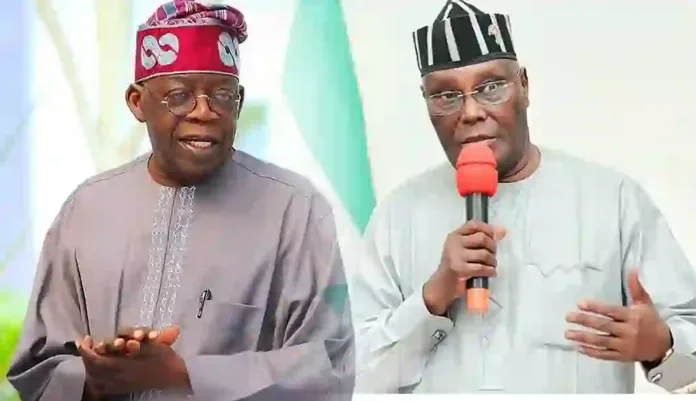
Atiku Abubkar and Bola Ahmed Tinubu
Atiku Abubkar and President Bola Ahmed Tinubu

By Ayodele Oni


The Presidency has informed that former Vice President and Presidential candidate of the African Deomcratic Congress, (ADC), Atiku Abubakar, that he will require a clear legal, fiscal and administrative framework before he can reverse the withdrawal of petrol subsidy.


Reacting to Atiku’s statement to restore fuel subsidy, the Presidency, in a statement signed by Bayo Onanuga, Presidential Spokesman stated that

“any proposal to restore petrol subsidy must be subjected to rigorous scrutiny, especially, regarding its cost, funding, legality and implications for the country’s emerging domestic refining industry.


The statement reads: “Alhaji Atiku Abubakar, former Vice President and presidential aspirant, has unveiled his economic prescription for Nigeria ahead of the 2027 general election, proposing, among other measures, a return to the fuel subsidy regime abolished under the country’s ongoing petroleum-sector reforms.


“The proposal has raised questions over its fiscal implications, particularly given the significant changes in Nigeria’s petroleum industry since 2023.


“Atiku is constitutionally entitled to canvass alternative policies and seek the support of Nigerians. He is also free to revise positions he previously held.


“But any proposal to restore petrol subsidy must be subjected to rigorous scrutiny, especially regarding its cost, funding, legality and implications for the country’s emerging domestic refining industry.


“The first issue requiring clarification is the meaning of ‘fuel subsidy’. Subsidy is not money simply waiting in government coffers to be distributed to Nigerians in order to make petrol cheaper.


 “Under the old arrangement, the government absorbed the difference between the regulated pump price and the actual cost of supplying petrol. That system imposed a substantial burden on public finances and contributed to accumulated liabilities within the petroleum sector.


“The Petroleum Industry Act established a new framework for the downstream petroleum market and provided for the eventual removal of petrol subsidy. President Bola Ahmed Tinubu accelerated the process in 2023, bringing an end to a system that had already become financially unsustainable.


“Consequently, restoring the old arrangement cannot be achieved merely through a presidential announcement.


“It would require a clear legal, fiscal and administrative framework, including identification of the funds required and the mechanism through which the subsidy would be administered.


“More importantly, Nigeria’s petroleum landscape has changed considerably since 2023.

For decades, the country depended heavily on imported petrol, while government bore the financial consequences of selling the product below its economic cost.


“Today, the emergence of substantial domestic refining capacity has begun to change that equation.


“The Dangote Refinery, alongside other emerging local refineries, has strengthened Nigeria’s capacity to refine petroleum products locally.


“The development presents an opportunity to conserve foreign exchange, deepen domestic industrial capacity and strengthen energy security.


“A return to a heavily subsidised market could undermine these gains and create fresh distortions in the downstream sector, with consequences for smaller domestic refineries, investment and employment.


“It is, therefore, important that the subsidy debate reflects the realities of Nigeria’s petroleum industry today rather than the conditions that prevailed several years ago.


“The financial burden of the former subsidy regime was enormous. Government financing arrangements, accumulated liabilities and obligations to suppliers placed considerable pressure on the Nigerian National Petroleum Company and the wider public finances.


“The question Nigerians should therefore ask is simple: If fuel subsidy is restored, who pays for it? If petrol is sold below its economic cost, the difference must be absorbed somewhere.


“The consequences could include reduced allocations to states and local governments, lower spending on infrastructure and social services, increased borrowing, higher public debt or a combination of these.


“There is no doubt that the rising cost of petrol has imposed serious pressure on Nigerian households and businesses. The hardship associated with higher transportation and energy costs is real, and government must continue to pursue measures that reduce the burden on citizens.


“One such approach is the promotion of Compressed Natural Gas, which offers a potentially cheaper alternative to petrol for vehicles, taxis, buses and distribution fleets. Several major companies have already begun incorporating CNG-powered vehicles into their operations.


“The objective should therefore be sustainable relief for Nigerians, not a return to a fiscal arrangement that could once again weaken public finances.


“Nigeria must take advantage of its growing refining capacity, improved petroleum-sector regulation and increased competition to achieve greater stability in energy supply and, ultimately, more affordable prices.

Political promises, however attractive, must be supported by credible fiscal arithmetic.


“If Atiku Abubakar intends to restore fuel subsidy, Nigerians deserve clear answers. How much will the programme cost annually? What revenue source will finance it? Will the government borrow to fund it? Will existing petroleum-sector legislation have to be amended?


“How will subsidy payments be monitored and protected against the abuses that characterised the old regime?


“And now that Nigeria has substantially increased domestic petrol production, what exactly would the proposed subsidy subsidise-the cost of local production, transportation, distribution or another component of the petroleum value chain?


“These questions cannot be wished away.

Nigeria cannot afford to return to policies whose immediate benefits are visible while their eventual costs emerge as debt, reduced public investment, pressure on the naira and diminished resources for development.


“The country deserves a robust debate on the cost of living and the direction of economic policy. But that debate must be anchored in the realities of Nigeria’s economy and petroleum sector today, rather than the conditions of yesterday.


“Atiku Abubakar has every right to propose a different economic direction. Nigerians, in turn, have the right to demand full disclosure of the fiscal, legal and economic implications of any plan to restore fuel subsidy.


“The choice before the country should not merely be between cheap petrol today and expensive petrol tomorrow.”

Gov. Okpebholo Intervenes As Workers Of Chinese Owned Company Protest Death Of Colleagues

0
Governor Monday Okpebholo

By Ayodele Oni


Edo State Governor, Monday Okpebholo, has intervened as workers of a Chinese company embarked on violent protest after five staff died within a month.


It was gathered that some of the deaths were caused by electrocution, while others died after falling from a crane at Rongtai Building Materials Nigeria Limited, in Utesi Community, Ikpoba-Okha Local Government Area of Edo State.


A section of the firm was reportedly razed by the protesters and over 20 vehicles and motorcycles  destroyed.


Following the violent protest by workers and some community youths over the death of a forklift operator at the company, the State Governor, Monday Okpebholo, was forced to visit the company.


Speaking during the visit, Governor Okpebholo called on the management of the company to strengthen safety measures to protect workers.


“What happened here came to me as sad news, and the incident is condemnable. An establishment of this nature should not be attacked like this.


“The protest was triggered by anger over the death of a young man who was a staff member of this company. Our culture values life and prosperity, and I advise you to ensure the safety of your staff.


“Security and safety measures should be put in place. If you had a clinic here, what happened would not have happened.”


Okpebholo who expressed satisfaction that the company was already building a clinic, has commenced the process of purchasing an ambulance, and was recruiting doctors, also urged the company to fulfill its Corporate Social Responsibility to the host community.


“For the sake of CSR [corporate social responsibility], just fix the bad road to discourage hoodlums from attacking vehicles coming into your company. Criminals take advantage of bad roads to cause havoc.


“As a government, we are sorry for the loss of lives and property. I am glad that you have over 8,000 workers here, and I believe you will employ more,” he added.


The Governor disclosed he had discussed with the Edo State Commissioner of Police, Patrick Daaor, on the need to establish a police post and provide accommodation for officers at the company.


“Let it be like a semi-barrack to protect the area because we have a whole community here. Having 8,000 workers here is no joke,” he stated.


Responding on behalf of the company, Huang Shibin, who commended the Governor for the visit, said the organization had been fulfilling its CSR but alleged that some community elders had received large sums of money from the company without allowing the benefits to reach other members.


Huang appealed to the Governor to help improve security around the company and create a conducive environment for business to thrive.