



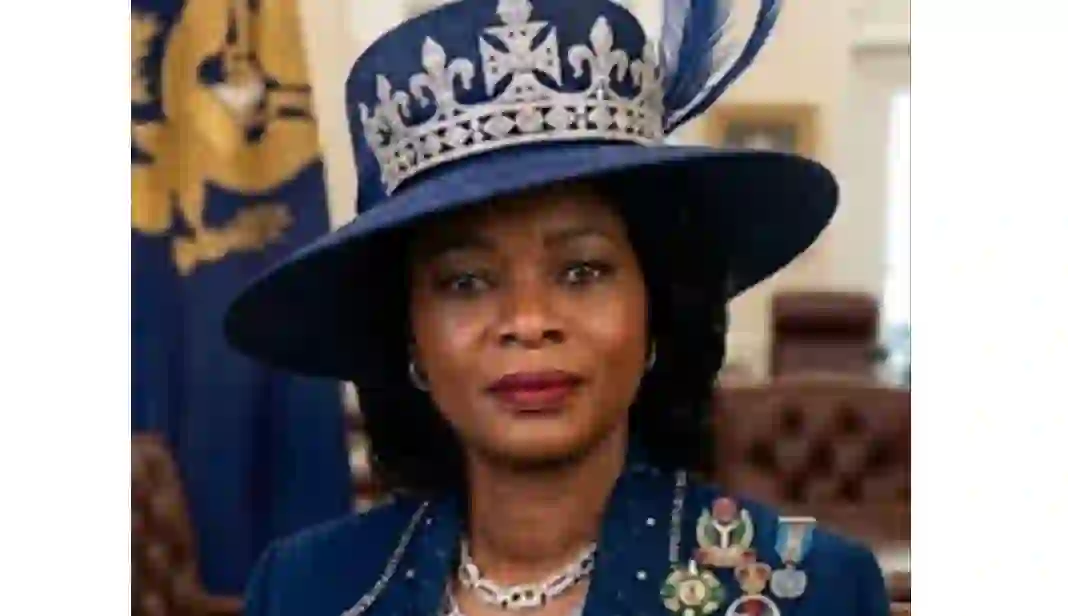

At a defining moment for the international system, Akasoba Zainab Duke-Abiola, mni, is emerging as a formidable contender for the prestigious office of Secretary-General of the United Nations.

Duke-Abiola’s aspiration brings together an unusual combination of legal scholarship, public service, strategic policy expertise, diplomacy, security, mediation, arbitration, sustainable development and human-rights advocacy.
More importantly, she presents herself not simply as an African candidate seeking an African voice at the United Nations, but as an African stateswoman with a distinctly global outlook — a candidate capable of engaging Africa, Latin America, the Caribbean, the Global South, the Global North and the major centres of international power.
As the UN selection process enters a decisive phase, the central question surrounding Duke-Abiola is increasingly less about whether she possesses the credentials to compete and more about whether the international community is ready for the kind of diplomatic and institutional change her supporters believe she could bring to the global organisation.
The Candidate To Beat
Duke-Abiola’s strategic strength lies in the breadth of her professional and intellectual experience.
She is a British-trained barrister and jurist, a former senior official of the Nigerian Presidency, a strategic and legal adviser, diplomat, scholar and distinguished member of the National Institute for Policy and Strategic Studies.
Her career has traversed several areas that are central to the contemporary United Nations agenda: international law, governance, peace and
security, human rights, migration, sustainable development, diplomacy, mediation, arbitration and institutional reform.
This breadth gives her candidature an important advantage.
She understands institutions from the perspective of law, governance from the perspective of public service, conflict from the perspective of security and mediation, and development from the perspective of policy and scholarship.
She is, therefore, positioned as a bridge between disciplines, regions and competing international interests.
A Candidate Beyond Geographical Politics
One of the defining features of Duke-Abiola’s candidature is the attempt to move beyond the traditional conception of an African candidate.
Her supporters argue that Africa should not be presented merely as a geographical constituency seeking representation. Instead, Africa’s experience should become part of a broader global leadership proposition.
Duke-Abiola’s argument is that the challenges facing the international community cannot be divided neatly between North and South, East and West.
Wars, migration, climate insecurity, terrorism, pandemics, artificial intelligence, economic instability and humanitarian crises cross borders.
A Secretary-General, therefore, must be capable of finding common ground across those divisions.
The APRC Endorsement: An Intellectual And Policy Foundation
A major pillar of the campaign is the endorsement of Duke-Abiola by the African Policy and Research Consortium (APRC).
The significance of that endorsement, according to her numerous supporters, extends beyond a ceremonial declaration.
APRC brings together scholars, policy leaders, researchers, advisers, development practitioners and institutional actors working across African policy environments and beyond.
Its networks operate at the intersection of scholarship, government, institutional decision-making and development policy.
They are, therefore, positioned within important conversations about governance, development, security, institutional reform and Africa’s place in the international system.
The endorsement provides Duke-Abiola with an expanding Pan-African intellectual and policy constituency capable of carrying discussions about her candidature into different national and institutional environments.
From African Support To Latin American Outreach
The campaign is also seeking to broaden its international reach.
According to people familiar with the campaign, consultations have expanded beyond Africa, including outreach to supporters in several Latin American countries who are mobilising around Duke-Abiola’s candidature.
That development could prove strategically important.
A Secretary-General must ultimately command confidence across regions rather than depend exclusively on one geographical constituency.
The emerging African–Latin American connection consequently provides an opportunity to build a South-South diplomatic bridge that could extend into wider engagements with Europe, Asia, North America, the Caribbean, the Middle East and the Pacific.
Building A Coalition Across The Global South
The developing support base around Duke-Abiola is significant because it potentially creates a platform for conversations among countries whose interests are often underrepresented in the traditional centres of global decision-making.
Her candidature seeks to demonstrate that an African-origin candidate can speak credibly to the concerns of Latin America, the Caribbean and other developing regions while remaining capable of engaging the world’s major powers.
The objective is not to establish another geopolitical bloc.
It is to demonstrate that effective multilateralism requires communication across blocs.
The Global North: A Partner, Not An Adversary
Duke-Abiola’s philosophy does not define the Global South in opposition to the Global North.
Instead, she argues for a United Nations capable of identifying areas of mutual interest between both sides.
The challenges confronting humanity are too interconnected for the international system to remain trapped in rigid geopolitical categories.
Climate change requires cooperation between developed and developing economies. Artificial intelligence requires common standards. Migration requires shared responsibility. Global security requires dialogue between major powers and smaller states.
Her conception of multilateralism is therefore practical rather than rhetorical: the United Nations must become more capable of producing tangible outcomes in peace, development, human security and institutional trust.
The Human Cost Of Political Crisis
Duke-Abiola also brings a deeply personal understanding of political instability.
As the widow of the late Chief Moshood Kashimawo Olawale Abiola, she experienced, at close quarters, the political crisis surrounding Nigeria’s historic June 12, 1993 presidential election, its annulment and the subsequent detention and death of MKO Abiola.
That history exposed her to the consequences of democratic rupture, political confrontation and institutional instability.
But her candidature does not rest on personal association with that history.
She subsequently developed an independent professional career spanning law, government, strategic policy, diplomacy, arbitration, mediation, security, human rights, humanitarian advocacy and scholarship.
The combination of lived experience and institutional expertise forms an important part of the case her supporters are making for her.
From Conflict Experience To Conflict Prevention
Duke-Abiola’s philosophy can be distilled into three principles:
*Diplomacy before confrontation.
*Mediation before escalation.
*Prevention before catastrophe.
Her approach is rooted in the belief that lasting peace cannot simply be imposed.
It must be negotiated, supported by credible institutions, strengthened by justice and sustained through political engagement.
This philosophy could be particularly relevant to a United Nations confronted by increasingly complex conflicts in which military solutions alone have repeatedly failed to produce durable peace.
The Secretary General As A Global Mediator
Duke-Abiola’s conception of the Secretary-General goes beyond administration.
For her, the office must remain fundamentally diplomatic.
The Secretary-General must be willing to speak when others are silent, listen when adversaries refuse to listen to one another, preserve communication during periods of confrontation and create room for compromise without abandoning the principles of the UN Charter.
That role becomes particularly important when relations among major powers are strained and smaller states fear that their interests are being overshadowed by geopolitical rivalry.
A Rare Law, Security And Development Expert
Few leadership positions require such a wide intellectual range as that of UN Secretary-General.
Duke-Abiola’s supporters point to the convergence of her experience in several critical areas.
She is a constitutional jurist who understands institutions.
She is a governance and security thinker who understands peace-building.
She is a development scholar who understands the economic and social foundations of stability.
She is an internationalist who understands the concerns of the Global South without defining global leadership against the Global North.
And she is a diplomat who believes that dialogue must remain open even when political differences appear irreconcilable.
WOMAN, AFRICAN, NIGERIAN — BUT GLOBAL
Duke-Abiola’s candidature also carries considerable historical significance.
If successful, she would become the first Nigerian and the first African woman to lead the United Nations.
That symbolism would be substantial.
Yet her supporters insist that the strongest argument for her candidature should not be gender or geography.
It should be competence.
The proposition is that her African identity provides an important perspective, while her professional experience gives her the capacity to serve beyond regional interests.
Artificial Intelligence And The Next Era Of Governance
Duke-Abiola also recognises that the UN agenda of the coming decade will be shaped increasingly by emerging technologies.
Artificial intelligence presents extraordinary opportunities for development, productivity and scientific advancement, but it also raises questions about security, inequality, human rights, privacy, employment and the future of governance.
Her approach places human dignity at the centre of technological progress.
The international community, in her view, must encourage innovation while ensuring that emerging technologies remain subject to principles of responsibility, security and fundamental rights.
A Secretary- General For Every Nation
Duke-Abiola’s own description of her vision captures the central message of her campaign:
“It would be a profound honour to bring the experience and perspective of Africa to the leadership of the United Nations while remaining, absolutely and unequivocally, a Secretary-General for every nation and every people.”
She continues:
“The world does not need deeper divisions. It needs bridges. It needs dialogue where there is confrontation, mediation where there is deadlock and prevention before conflict becomes catastrophe.”
Her concluding commitment is equally emphatic:
“If entrusted with the opportunity to serve, my allegiance would be to the Charter, to peace and to humanity.”
The United Nations At A Crossroads
The next Secretary-General will inherit an organisation confronting an extraordinary accumulation of challenges: armed conflicts, humanitarian emergencies, geopolitical rivalry, migration pressures, climate insecurity, technological disruption and declining confidence in multilateral institutions.
The office will, therefore, require more than administrative competence.
It will require political courage, diplomatic credibility, intellectual breadth, negotiating skill and the ability to rebuild trust among countries that increasingly disagree about the direction of the international system.
This is the environment in which Duke-Abiola’s candidature is seeking to distinguish itself.
From Candidature To International Coalition
The immediate challenge for the campaign is to transform growing Pan-African policy support into a genuinely international coalition.
The APRC endorsement provides an important African foundation.
The developing mobilisation among supporters in Latin America adds a potentially significant cross-regional dimension.
Further engagement with governments, diplomats, international institutions, civil-society organisations, scholars and policy communities could broaden the coalition further.
The emerging proposition is consequently larger than one candidate or one country.
It is the proposition that an African-origin jurist, diplomat, mediator, arbitrator, policy strategist, scholar and stateswoman could provide the United Nations with a bridge across increasingly divided geopolitical worlds.
When Consensus Becomes The Greatest Qualification
At a time when consensus has become one of the world’s scarcest diplomatic resources, the ability to bring opposing interests into the same conversation may ultimately prove more valuable than allegiance to any single geopolitical camp.
That is the central proposition behind the Duke-Abiola candidature.
She brings Africa to the table, but does not seek to make the table exclusively African.
She understands the Global South, but does not reject the Global North.
She has experience with government and institutions, but also with law, diplomacy, mediation and scholarship.
And above all, she offers a leadership philosophy centred on dialogue, prevention, human dignity and the rule of law.
As the contest for the next Secretary-General enters a critical phase,
Akasoba Zainab Duke-Abiola is, therefore, being positioned by her supporters as more than a participant in the race — but as a formidable consensus candidate and, potentially, the candidate to beat.
Discover more from The Source
Subscribe to get the latest posts sent to your email.