Home Blog Page 10

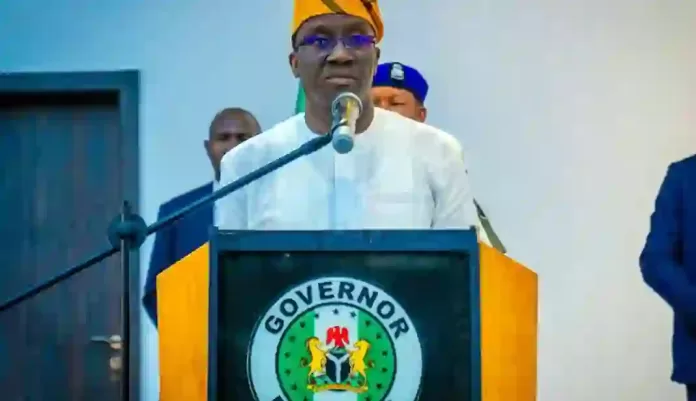
Gov Okpebholo Confirms Spiritual Attack After Pulling Down Cultist’s House

0
Governor Monday Okpebholo

By Ayodele Oni


Edo State Governor, Monday Okpebholo, has revealed how he was attacked spiritually after he ordered the demolition of a building which belonged to cult mrmbers.


The governor, who spoke on Friday also threatened that he will sign the death warrants of the four convicts in the Vegetable Market kidnapping case, if they fail to appeal their sentence within the stipulated 30 days.


According to him, many strange incidents linked to spiritual forces happened, after his administration pulled down a building associated with a cult group


“A black bird died in my office when I demolished their building. A vulture also died in my bed while contesting for governorship.”


A statement by his Chief Press Secretary, CPS, Patrick Ebojele, stated that the governor spoke during a fellowship at God’s People Worldwide Prayer Ministry.


While reviewing his administration’s efforts to curb kidnapping, cultism and other violent crimes in Edo State, the governor said insecurity was one of the biggest worries he met on assuming office.


He added that he raised the state of the roads and the security situation with President Bola Tinubu at their meeting.


The governor said that when the gunmen struck at the Vegetable Market, he called the President, who asked if he could handle it, and he said he could.


He said he then prayed for the kidnappers to be caught within 24 hours before calling the Commissioner of Police to demand their arrest.


“I told him I wanted these guys arrested because I already have an approval from God, and they were caught within that time.


“They are already sentenced to death, and I pray they don’t appeal the judgment. Even when they appeal the judgment, they are only delaying time. If within 30 days, they don’t appeal, I will execute them.”


An Edo State Special Criminal Court on September 29 2026 sentenced four suspects to death for the abduction of a woman at the Vegetable Market along Airport Road, Benin City.


The governor remarked that before he began the campaign against kidnapping and cultism, he met prominent traditional rulers across the state to warn them against interceding for anyone involved in the crimes.


Founder of God’s People Worldwide Prayer Ministry, Apostle Ehijele Umuahia, during the event urged church members to vote for the governor and his preferred candidates in the 2027 elections.


Citing Proverbs 29:2, he told the congregation that prayer for the governor should go together with active participation in the electoral process. Christians, he said, should come out in large numbers to vote.


Umuahia described Governor Okpebholo as a humble man whose commitment to the things of God predates his time as governor. He said he has known him for over 15 years, from the days of the late Chief Tony Anenih.


“Whenever Chief Tony Anenih came to visit me, he was one of those who accompanied him. That was how we came to know each other.”


He added that Okpebholo kept his devotion to God despite a demanding schedule before he became Governor.

State Police Amendment Bill Secures Required Endorsement Of 24 States

0
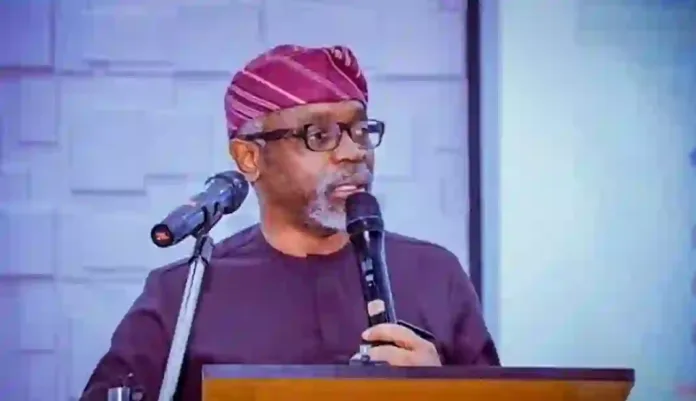
Femi Gbajabiamila

By Ayodele Oni


The Presidential Working Group on the National Policing Bill has announced that 24 states Houses of Assembly have passed constitutional amendment to the state police bill, thus securing the required two third requirement.


By this threshold, effort at creating state police has met the constitutional threshold of 24 state, being 2/3 ( two- thirds) of the 36 states required to amend the Constitution to take policing from the Exclusive List to the Concurrent list.


Matters under the Exclusive List fall directly under the control of only the Federal Government , while both state and federal governments have mandate to handle matters on the Concurrent List.


The attainment of the 24 states approval threshold takes the country closer to a dual policing system.


This development clears a major constitutional hurdle in the Federal Government’s efforts to decentralise policing and for states to establish state-controlled police formations alongside the existing federal police structure.


The Presidential Working Group on the National Policing Bill which announced the cheery development on Friday, described the approval as a significant milestone in reforming Nigeria’s policing architecture.


In a statement signed by its Chairman and Chief of Staff to the President, Femi Gbajabiamila, the group said the Constitution (Sixth Alteration) Bill, 2026, has received the endorsement of 24 of the country’s 36 State Houses of Assembly, thus meeting the constitutional requirement for passage.


The group commended the state legislature for supporting the reform, while also acknowledging the National Assembly for securing the passage of the amendment in both the Senate and House of Representatives.


According to the statement, the successful ratification by the required number of state assemblies means the constitutional amendment could now be returned to the National Assembly for onward transmission to President Bola Ahmed Tinubu for assent.


“In line with Section 9 of the Constitution, the amendment can now be returned to the National Assembly for transmission to Mr President for assent.”


The working group explained that, once the constitutional process was completed, the amendment would provide the legal foundation for the dual policing arrangement envisaged under the proposed National Policing Bill, 2026.


It noted that the constitutional breakthrough would strengthen efforts to establish a policing framework under which federal and state police institutions would operate within clearly defined constitutional and legal boundaries.


The group also revealed that work on the accompanying legislation was progressing according to schedule, with the draft National Policing Bill and related legislative proposals currently undergoing review and validation at the Federal Ministry of Justice.


 It said the Ministry was expected to conclude the exercise and return the draft bills to the working group on or before Friday, October 30, 2026.


“The Working Group’s efforts remain on track. The Federal Ministry of Justice is currently reviewing and validating the draft Bills and is expected to return them on or before Friday, 30th October 2026.


 “Thereafter, the Group will give them final consideration before presenting them to Mr President.”


The group called on  political leaders, security institutions, and other stakeholders to support the implementation process, stressing the importance of an orderly transition to a policing arrangement that could address the country’s security challenges more effectively.


 “The Working Group urges all stakeholders to support a smooth transition to a dual policing system.”

Borno Out Of School Children Stands At 800,000

0
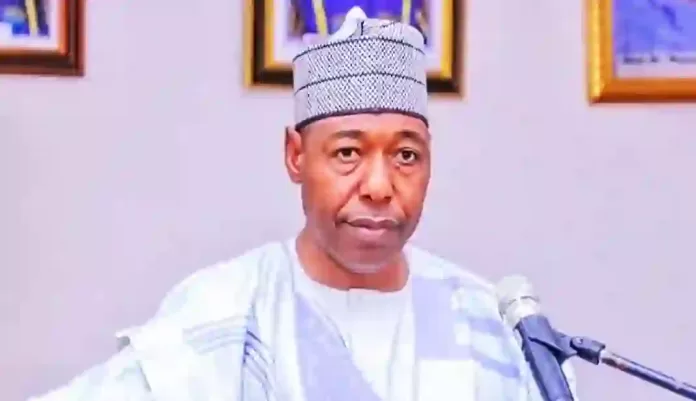
Professor Babagana Zulum

By Ayodele Oni


The number of out-of-school children in Borno State stands at 800,000, according to Governor Babagana Umara Zulum.


The governor has pledged to strengthen the state’s partnership with the African Union (AU) to expand access to education for  the about 800,000 out-of-school children.


Zulum made the pledge when he received a delegation led by the African Union Chairperson’s Special Envoy for Children Affected by Armed Conflict, Ambassador Jainaba Jagne, on a courtesy visit to Government House, Maiduguri.


The Governor revealed that the number of out-of-school children in Borno reduced from more than two million about seven years ago to approximately 800,000, and called for further support to sustain the progress and bring more vulnerable children into classrooms.


“Education is the bedrock for any meaningful development, and therefore one area that we need support from the African Union is to increase access for out-of-school children to be enrolled in schools.”


He explained that education remained central to Borno’s transition from humanitarian response to recovery, stabilisation and long-term development.


He added that his administration has invested in school reconstruction, teacher recruitment, and expanded learning opportunities, with particular attention to vulnerable children and girls.


“The protection of children is not merely a humanitarian obligation. It is a strategic investment in peace, security and sustainable development.”


Zulum identified education, psychosocial support, skills development, and community acceptance as essential to recovering and reintegrating children affected by conflict.


He reaffirmed the state’s commitment to safe, inclusive learning environments and the principles of the Safe Schools Declaration.


The Governor also sought support to strengthen primary healthcare in communities with limited access to tertiary health facilities.


He identified trained personnel, modern equipment, and nutritional services as priorities to improve children’s health and tackle malnutrition.


“Our children deserve better attention. The issue of malnutrition is also there among our own society.”


Zulum stressed that protecting children also required better economic opportunities for their mothers and families.


He called for livelihood support to help households meet children’s nutritional, educational and other essential needs.


“Enhancing the means of livelihood of the mothers will no doubt reduce the vulnerability of the children.”


He welcomed the AU’s education-focused interventions and reaffirmed Borno’s commitment to working with the Union, the Federal Government, the United Nations, and other partners on education recovery, youth empowerment, child protection, and peacebuilding.


In a remark, African Union Special Envoy on Children Affected by Armed Conflict, Ambassador Jainaba Jagne, commended Governor Babagana Umara Zulum’s administration for its efforts to rehabilitate and reintegrate children affected by insurgency, saying the experience offers lessons for other African countries.


The envoy said her engagements with the First Lady, Associate Prof Falmata Babagana Umara Zulum, and visits to the Bulumkutu Interim Care Centre and Muna Vocational Centre had allowed her to assess the state’s interventions.


“We have to take back to the African Union member states the amazing work that is being done here in Borno State.”


Ambassador Jagne said the delegation brought educational materials for more than 1,000 children, along with hygiene supplies for adolescent girls undergoing reintegration.

President Tinubu Appoints Bichi, Fmr. DG DSS, Chairman NISS Governing Board

0
Yusuf Magaji Bichi - DSS DG

By Adesina Soyooye


The immediate past Director General of the Department of State Services, the urbane Yusuf Bichi, has been appointed the Chairman of the Governing Board of the National Institute for Security Studies,

(NISS), Lower Usuman Dam, Abuja by President Bola Tinubu.


Bichi’s appointment was contained in a statement signed  by Lilian Omo-Odigwe, Director, Coordination and Liaison.


His tenure is for an initial four-year term, and took effect from October 22, 2026. This is  in accordance with Section 4 of the National Institute for Security Studies (Establishment) Act, 2019.


The former DG succeeds A.A. Gadzama as Chairman of the Governing Board of the high profile NISS.


Appointed DG DSS by former President Muhammadu Buhari, Bichi handed over the DGship of the DSS to the incumbent Director-General, Tosin Ajayi, in August 2024, after a glorious tenure which recorded a number of security breakthroughs.


A native of Kano State, Bichi, taciturn and very well respected in security circles within and outside Nigeria, started his career in the Security Division of the Kano State Cabinet Office. From there, he was transferred his service in 1984 to the then State Security Services.


His appointment as Chairman of the NISS Governing Board will bring “his extensive experience in intelligence, security administration, operational leadership and institutional training to the institute’s governance.”

Basiru, Sowore Dance Naked Over Political Relevance

0
Omoyele Sowore

By Ayodele Oni


National secretary of the All Progressive Congress, APC, Ajibola Basiru and Activist Omoyele Sowore are engaged in war of words with each of them digging into their past.


Basiru fired the first salvo when he stated that Sowore was a jester in reference to his presidential bid.


He challenged activist Sowore to prove his political relevance by winning a seat in a State House of Assembly before expecting Nigerians to regard him as a serious political figure.


Basiru made the remarks during an interview on Channels Television while discussing Sowore’s involvement in Nigerian politics.


The Senator argued that electoral success would demonstrate the level of support Sowore enjoys among voters, rather than relying mainly on activism and public criticism.


“Let him struggle to even get a seat in the House of Assembly, then people will begin to take him serious.”


Sowore who is the presidential candidate of the African Action Congress, AAC, blasted Basiru, revealing how he once helped him gain admission into the University of Lagos, UNILAG, after he was expelled from the University of Ilorin, UNILORIN.


Sowore replied on X on Thursday after Basiru called him a skit maker and comedian during an interview on Channels Television’s Politics Today on Wednesday.


Sowore presented a photograph he took with Basiru in 1998 when he led the Congress of Progressive Youths, COPY, during the fight against military dictatorship.

Senator Ajibola Bashiru

He said Basiru came to the University of Lagos after he was expelled from the University of Ilorin in 1992 for student activism.


“I received him alongside Kunle Adegoke, popularly known as K-Rad, who is now a Senior Advocate of Nigeria.


“We provided them with an enabling environment to apply to re-enter the university, gain admission, and study Law at the University of Lagos,” Sowore said.

He said both eventually graduated in flying colours.


Sowore faulted Basiru’s claim that because Bola Tinubu was declared winner by the Independent National Electoral Commission, INEC, in the 2023 presidential election, those who contested against him should be ashamed of losing.


According to him, the struggle for justice, democracy and freedom is not comedy.


“The struggle for justice, democracy, freedom and the preservation of human dignity is neither skit-making nor comedy.


 “Ajibola knows this because he was once part of that struggle and benefited from the solidarity of those who refused to surrender to military tyranny.”


The human rights activist said political appointments are temporary and that Tinubu’s regime will come and go like the military regimes they confronted in their youth.


“What is truly comical is watching yesterday’s beneficiaries of resistance become today’s defenders of the very oppression they once fought against,” he added.

Oyo Govt. Counters Soun, Reverses Suspension Of Adegbite As Balogun Of Ogbomoso

0
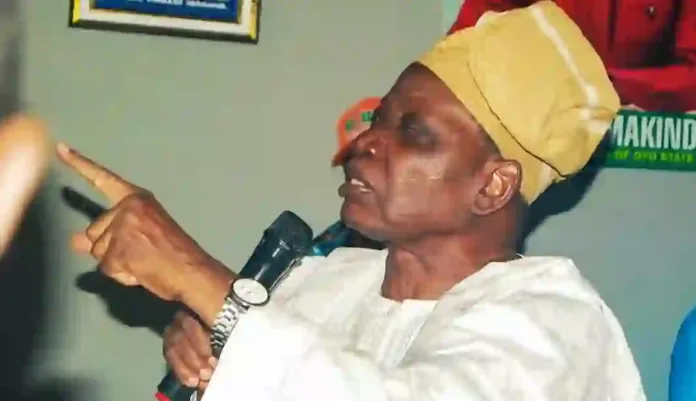
Saka Adegbite

By Ayodele Oni


A new dimension has emerged over the purported suspension of Saka Adegbite as Balogun of Ogbomoso by Soun, Oba Ghandi Oladoye, as the Oyo State Government  declared the order as null and void.


Oyo state government ruled on Friday that Dr Saka Adegbite remains the duly recognized Balogun of Ogbomosoland nullifying his removal by the Soun of Ogbomoso, Oba Ghandi Afolabi Oladoye.


This was contained in a press statement signed  by the Commissioner for Local Government and Chieftaincy Matters, Ademola Ojo and made available to newsmen.


The statement reads: “The attention of the Oyo State Government has been drawn to the media report concerning the purpoted removal of Dr. Saka Adegbite Balogun, the Balogun of Ogbomoso by His Imperial Majesty, Oba Ghandi Afolabi Olaoye, the Soun of Ogbomoso.


“By the virtue of the provision of CAP 28, Section 26(1) of the Chiefs Law of Oyo State (2000), the power to appoint, suspend and depose a part II Recognized Chieftaincy holder is vested exclusively on 🎭 Executive Governor of the State.


“Therefore, the purported removal of Dr. Saka Balogun, the Balogun of Ogbomoso land, a Part II Chieftaincy holder by HRM, Oba Ghandi Afolabi Olaoye, the Soun of Ogbomoso land is an aberration and unknown to the existing law that guides the Traditional Council operations in the State.


“In the light of this, Dr. Saka Adegbite Balogun is the duly recognized Balogun of Ogbomoso land. Members of public are hereby enjoined to disregard any such removal.


 Oba Olaoye, had suspended indefinitely the Balogun of Ogbomoso, Dr. Saka Adegbite from office.


The suspension, contained in a letter dated Tuesday, October 20, 2026 and personally signed by the monarch, was predicated on Dr. Balogun’s alleged persistent refusal to sign the prescribed Oath of Allegiance to the throne.


According to the letter, Dr. Balogun’s appointment was granted as an exceptional accommodation, following the intervention of Governor Seyi Makinde, on the clear understanding that he would execute the required Oath of Allegiance.


“The oath was neither optional nor ceremonial. It was a fundamental requirement for the proper assumption and exercise of the responsibilities and authority attached to the title,” Oba Olaoye stated.


The Soun further accused the suspended Balogun of showing no intention to fulfil the obligation, despite several reminders.


The monarch also cited what he described as public statements and conduct by Dr. Balogun, particularly an interview in which he allegedly threatened to drag the Soun’s stool to court.


“Of even greater concern are your public statements and conduct, particularly the interview in which you threatened to take the stool of the Soun to court.”

Another Nollywood Actor, Steven Echendu, Dies, Hours After Francis Duru Passed On

0
Steven Echendu

By Akinwale Kasali


Another Nollywood Actor, Steven Echendu has died.


Echendu death occurred hours after the passing of Francis Duru, his colleague, further throwing the Make Believe Industry into mourning.


The Nollywood Community were yet to get over the death of Duru when the news of Echendu’s death was shared in a Facebook post by a  fellow Nollywood figure, Wisdom Nwankwo.


Nwankwo had expressed deep anguish at learning of two losses within hours.


Recall that Austinfair Nwaulu, another Nollywood Actor had died last Saturday and was buried on Tuesday, before Duru and Echendu passed on in quick succession.


 Echendu, identified in the tribute as a key contributor to OJs Production, was remembered warmly as one of the industry’s dedicated hands during Nollywood’s formative years.


His colleague wrote of him as “one of the gladiators” of that era, underlining the role he played behind the scenes in shaping what the industry has become.


The colleague urged social media users to check in on friends who go quiet online, noting that the losses had made them reflect on how easily people can disappear from timelines without anyone noticing.


“Sometimes if you don’t see people on your timeline for a month or even less and they are regular in your list, please check on them”.


Nwankwo closed the message with a reminder that life is fleeting, urging people to live fully and intentionally, describing one’s time on earth as “a temporary assignment”.


The back to back loss has seen the Social Media awash with tributes, as followers of Nwankwo’s post shared their shock in the comments section of his FacebookTimeline.


@adephunmie wrote:

“Ok this is enough.”

@adoseofdee reacted:

“Ahhhh, it is well.”

@holuwa_folakemii said:

“Haaaaa what is happening?”

@beauty_rush_229 commented:

“Kilode ahhh”

@empress_arinola_tofunmi asked:

“What happened whats going on”.

How Politicians Paid Billions Of Naira To Emerge As Ministers In President Tinubu’s Govt – Hassan, APC Chieftain

0
Alwan Hassan

By Ayodele Oni


If the claim that some Ministers in President Bola Tinubu’s administration paid huge sums of money before securing appointments is verified to be true, the fight against corruption in the country may take time    to win.


Alwan Hassan, a spokesperson for the All Progressives Congress (APC) Presidential Campaign Council, stirred the controversy during an interview on Arise TV concerning the appointment of ministers under President Tinubu’s administration.


According to the claim attributed to Hassan, some ministers allegedly paid billions of naira to secure their appointments and are now seeking to recover the money they spent after assuming office.


The allegation has also sparked questions about the motivation behind some ministers’ support for Tinubu’s re-election bid.


The claim suggests that for those who allegedly invested heavily to secure their positions, losing the next election could mean losing the opportunity to recoup their money.


If substantiated, the allegation would raise serious concerns about the process of appointing public officials and whether personal financial interests could influence political loyalty and decisions in government.


The reported remarks have added another dimension to the ongoing debate over political appointments, accountability and the interests behind calls for a second term for President Tinubu.

OPINION: Nigeria Is Also Ours, Not Theirs Alone

0
Ikechukwu-Amaechi

By Ikechukwu Amaechi

Listening to some government officials speak these days, their mendacity, arrogance and the ‘you can hug the transformer’ bearing, it would seem that this country is their exclusive estate. The rest of us who they have reduced to ‘hewers of wood and drawers of water’ are to be seen, not heard. Even that, to them, is a privilege, for which we should be thankful. Their contemptuous ‘take it or leave it’ attitude has reduced governance to a zero-sum game where those with opposing worldviews are seen as existential threats to be crushed, even as our commonwealth is ruthlessly appropriated and deployed in securing personal power in a self-aggrandising manner that deals fatal blow to public good. Yet, the contrarians are citizens with nothing other than alternative, sometimes altruistic and even patriotic, viewpoints. We watch helplessly the brazen manipulation of our laws, rules and regulations even as institutions of state, including co-equal arms of government – legislature and judiciary – that ought to check the excesses of the executive are manipulated or weakened in order to prevent rivals from gaining a foothold.

As we inch closer to the 2027 elections, all we see is the ruling All Progressives Congress (APC) with unbelievable financial war chest, riding roughshod over an opposition that is gasping for breath, literally. Nothing illustrates the unfeelingness of the President Bola Tinubu administration and its disdain for longsuffering Nigerians more than comments made recently by both the president himself and his Minister of Finance, Taiwo Oyedele. As citizens continue to groan under the weight of the president’s voodoo economic reforms and beg for mercy, he told them point-blank that lessening their burden would be tantamount to going back to the Egypt. Speaking at a forum tagged ‘Together till 2027: An Evening with Original City Boy,’ organised by Seyi Tinubu’s City Boy Movement, the Lion of Bourdillon boasted of how fulfilled he felt and still feels removing fuel subsidy on his first day in office. Taking potshots at the presidential candidate of the African Democratic Congress (ADC), Atiku Abubakar, Tinubu likened any return to subsidy regime to going back to Egypt.

With zero regrets over the policy that many, including the Bretton Woods institutions that goaded him into trap, have agreed is at the root of the existential cost of living crisis, Tinubu thundered: “Nigeria will never go back to Egypt. No regrets.” He framed the 2027 polls as a battle for the soul of Nigeria, which is true. But the suggestion that his victory will not only be a win for Nigeria, but also a renewal of hope in a future of abundance cannot but be a very misleading proposition. But he was not alone in that disingenuous narrative aimed at wheedling the unwary. The foul-mouthed Vice President, Kashim Shettima, said Nigeria’s economy would have collapsed had Tinubu not taken ‘far-reaching decisions,’ that denied critics the pleasure of writing epistles on a collapsed economy from the comfort of their homes in Dubai, New York, “or in marriage with their young Moroccan wives.” As if choreographed, speaking on the same day at a press briefing of the International Monetary Fund and World Bank Annual Meetings in Bangkok, Thailand, Minister of Finance and Coordinating Minister of the Economy Taiwo Oyedele echoed the same message claiming that a return to subsidy could trigger capital flight, undermine investor confidence and push the naira to N4,000 per dollar.


This is sheer scaremongering. It is instructive that the pump price of petrol rose from about N180 per litre to N620 after Tinubu’s “subsidy is gone” declaration on inauguration day, and N1,200 a year later. Today, the price ranges from N1,370 to about N1,700. Before Tinubu took office on May 29, 2023, the official exchange rate was approximately N460 to N470 per U.S. dollar, while the parallel market traded around N760 to N770 per U.S. dollar. Today, $1 exchanges for N1,375 to N1,390.

Oyedele warned of imminent capital flight which could extend beyond foreign investors. But subsidy removal triggered capital flight. According to the Nigeria Employers’ Consultative Association (NECA), about 20 major multinational firms, including GlaxoSmithKline, Procter & Gamble, Sanofi, Unilever and most recently Uber, constrained by severe foreign exchange shortages, currency devaluation, and high operational costs, have either exited, scaled down their operations, or divested from Nigeria in the wake of Tinubu’s fabled economic reforms. And Oyedele knows that Nigerian big men, particularly politicians, are still seeking refuge in dollars particularly in this political silly season. He also knows that despite claims that over $50 billion in Foreign Direct Investment (FDI) pledges and commitments have been secured through Tinubu’s many foreign trips and 87 investment deals, only about 4% — paltry $2.06 billion — has actually materialised into real, long-term FDI on the ground, meaning that the FDIs that have exited are far higher than what the reforms have attracted unless he is mistaken the unpredictable hot money – short-term portfolio investments – for Foreign Direct Investment, which are long term/permanent capital commitments.

It is also ironic that Oyedele spoke in Thailand, a country that heavily subsidises its rice production and supports farmers through various state interventions though it is one of the world’s largest producers of rice – roughly 33 million metric tons of paddy rice per year – and ranks second globally in exports. A local newspaper – The Nation – announced on October 20 that Thailand’s Cabinet approved five rice support and production-reform schemes worth a combined THB58.91 billion (approximately $1.75 billion) aimed at easing pressure on paddy prices as large volumes of the 2026/27 main crop enter the market in October and November. The package, according to the deputy government spokesperson, Lalida Persvivatana, combines measures to stabilise paddy prices with longer-term production restructuring under the “New Rice Economy” concept. This includes a THB40.93-billion loan scheme designed to delay sales of up to 3 million tonnes of main-crop paddy, giving farmers the option of storing their harvest and waiting for more favourable prices. The programme will also provide support for storage and maintaining rice quality. The government will bear the interest costs for participating farmers and farmers’ institutions. This is subsidy, semplicità, and don’t forget rice is Thailand’s crude oil.

These measures were announced a day after Oyedele claimed that the international community frowns at subsidies. And, perhaps, to assuage the anxieties of those who only frown at subsidies with a Nigerian face, he promised, like his principal, Tinubu, that instead of going back to Egypt, the administration will inflict more pains on the people by introducing a 5% fuel tax “when economic conditions allow Nigerians to accommodate them.” That is a shame! Was Nigeria really in Egypt before messiah Tinubu, the saviour of our time, rescued her? The answer is a categorical no. Tinubu and his government have perfected scaremongering as a statecraft. If there was anyone who met Nigeria at Ground Zero, it was President Olusegun Obasanjo.

At the time he took office in 1999, Nigeria was a pariah state with 0.52 per cent GDP growth. But in just one year, he grew it to 5.52 per cent. By 2002, it was double digits – 14.60 per cent. Under Obasanjo, Nigeria’s nominal GDP grew from about $36 billion in 1999 to approximately $268 billion by 2007. The GDP per capita rose from roughly $482 to $1,563–$1,790 and external reserves increased dramatically from $7.11 billion in 1999 to $42.30 billion by 2007. Obasanjo led Nigeria’s biggest GDP per capita rise at 268 per cent in eight years. The short tenure of President Umaru Yar’Adua maintained the upward momentum, with the peak period coming in 2014 under President Goodluck Jonathan when GDP per capita climbed to $4,363.


In all these years, the subsidy regime was intact. Yet, the economy was buoyant with a thriving middle class and the country became the largest economy in Africa. This is an Egypt that many Nigerians would gladly go back to. Truth is that the decline started in 2015 with an APC government recording the longest decline in GDP per capita. And Tinubu’s government is an offshoot of the Muhammadu Buhari administration. In almost four years, he has made the bad situation worse with his “renewed hopelessness.” That is why January 16, 2027 matters because Nigeria is also ours, not theirs alone. It requires collective effort to extricate the country from the clutches of political buccaneers masquerading as statesmen.


CBN Fails To Curb N80bn Rise In Currency In Circulation

0
Naira Notes

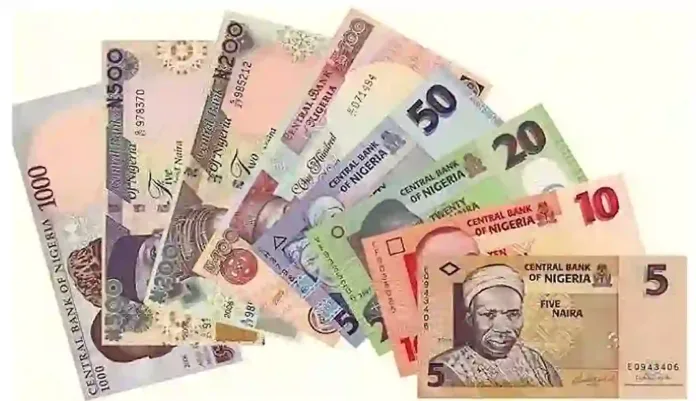
The Central Bank of Nigeria, CBN effort to ensure that more cash is kept out of circulation as much as possible has faced serious challenges with over N80 billion cash circulating in the economy in September alone.

The development comes despite the apex bank cashless policy, tighter withdrawal limits and efforts to promote electronic payments in the Nigerian economy.

According to the apex bank) September Monetary and Credit Statistics, currency in circulation increased from N5.44 trillion in August to N5.52 trillion in September.

Currency held outside banks also rose by N50 billion, from N4.87 trillion to N4.92 trillion during the same period.

The increase comes despite several CBN measures aimed at reducing Nigerians’ dependence on physical cash and encouraging electronic transactions.

These include weekly withdrawal limits of N500,000 for individuals and N5 million for corporate organisations under the revised framework effective January 2026.

To enforce this policy excess cash charges are applied to withdrawals above the prescribed weekly limits, while the CBN continues to promote bank transfers, debit cards, mobile banking and other electronic payment channels.

Also, the CBN has made regulation for the provision of infrastructure and initiatives supporting instant transfers, mobile money and agent banking which are designed to make electronic transactions more accessible.

Meanwhile, experts insist that the rising cash figures highlight the challenge facing the CBN in reducing dependence on physical currency, even as Nigeria’s money supply expands.

Broad money supply (M3) rose by 5.40 per cent to N146.60 trillion in September, from N139.09 trillion in August.

However, the increase in money supply, according to experts who spoke on the issue, does not necessarily translate into more funds available for productive lending, saying Private-sector credit actually declined by 0.64 per cent during the month to N83.93 trillion.

The figures underline the need to distinguish between growth in monetary aggregates and the availability of credit to businesses and households.