



By Ayodele Oni

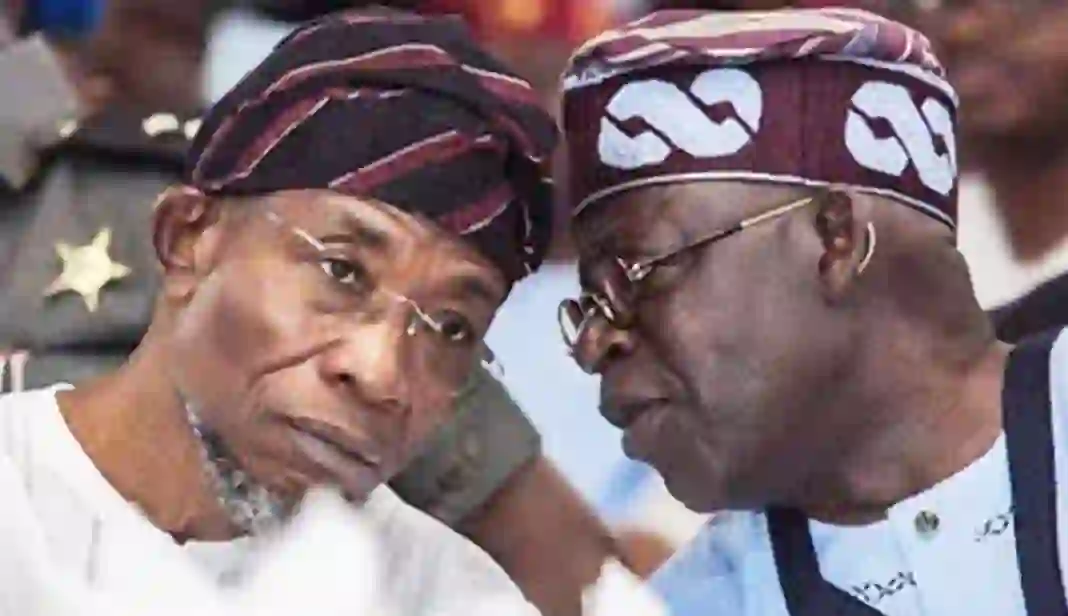
President Bola Tinubu has cited the plight of workers in Osun state between 2010 and 2018, when former Governor Rauf Aregbesola’s administration was paying workers half salary as one of the evils of retaining oil subsidy.
In an apparent swipe at former Osun State Governor, Rauf Aregbesola, President Tinubu mocked the controversial “half salary” era in the state under him, while attacking former Vice-President Atiku Abubakar’s promise to restore petrol subsidy if elected in 2027.
Tinubu made the veiled reference while receiving Osun State Governor Ademola Adeleke at the Presidential Villa in Abuja, following Adeleke’s victory in the August 15 governorship election.
The President was reacting to Atiku’s pledge to bring back petrol subsidy, describing the proposal as evidence of what he called “serious ignorance” of governance and the economy.
“I saw one of my opponents now say he will go back to subsidy. I read it. That is a demonstration of a serious ignorance on governance and economy.”
But as he sought to justify the removal of petrol subsidy, the President turned his attention to the financial crisis that once crippled many state governments, including Osun.
“Before I came here, 27 states are unable to pay salaries, not to even talk of pensioners, salary of workers.”
He then delivered what appeared to be a pointed reference to Aregbesola, who governed Osun between 2010 and 2018.
“I know a man in your state that I raised who is nicknamed ‘half salary’. They come to the federal, cap in hand, unable to do anything,” the President said.
The remark immediately evoked memories of the “modulated salary” regime introduced in Osun during Aregbesola’s administration amid the state’s financial crisis.
Workers on different grade levels were paid varying percentages of their salaries, with some senior civil servants receiving only half of their pay.
Contemporary reports show that the arrangement became a major source of tension between the government and organised labour.
Aregbesola’s administration defended the policy as a response to dwindling revenues and the inability of the state to meet its wage bill.
The state government explained that the arrangement was designed to prevent mass retrenchment, with lower-grade workers receiving full salaries while higher-grade workers received reduced payments.
The issue, however, remained one of the most politically damaging legacies associated with the former governor, with workers protesting and demanding a return to full salaries and payment of accumulated arrears.
Tinubu appeared to use that history to reinforce his argument that returning to petrol subsidy would recreate the type of fiscal pressure that left states struggling to meet basic obligations.
He argued that the benefits of his administration’s economic reforms should be measured not only at the Federal Government level, but also by their impact on states and local governments.
“Salary you pay for each family, they were at the local governments, they are in the states,” he said.
According to the President, the ability of governments to meet their wage obligations also translates into improved capacity to fund roads, schools, housing and healthcare.
He said the government had to focus on ordinary Nigerians and their families, stressing that workers’ salaries ultimately support households and sustain local economies.
Tinubu also used Adeleke’s re-election to preach reconciliation and responsible governance, urging the governor not to allow electoral victory to become a source of division.
“All for the reconciliation, expand your coast. That is the only way you can give thanks to our people,” he told Adeleke.
“Not the way you sang it or celebrated it. It’s the way you act it. Use me as an example, I got here. God put me here. Where you are today, God put you there.”
The President said Adeleke should see his victory as an opportunity to build a broader political legacy rather than settle scores with opponents.
“You are in a very, very unique position to make history, promote unity, peace and stability,” Tinubu said.
He further urged the governor to promote democracy, stability and the rule of law, while warning against victimising political opponents. Don’t stigmatise any of your opponents,” he said.
Tinubu also appealed to political actors to accept electoral outcomes and respect the democratic process.
“Anybody, any democrat, anybody in the political environment who cannot celebrate the joy of a free and fair election does not deserve the laughter and the happiness of democracy,” he said.
“Don’t make a single individual a victim of your campaign, not for you alone, not for the sake of us all alone, for the generations to come.”
The President congratulated Adeleke on his victory and urged him to use the mandate to unite Osun rather than deepen political divisions.
“You did not conquer anybody. You won the election. That is the essence of democracy,” Tinubu said.
Discover more from The Source
Subscribe to get the latest posts sent to your email.