




By Ayodele Oni

Ojukwu secretly pawned Biafra’s mineral wealth to the Rothschild banking family for approximately $10m in exchange for French-backed support
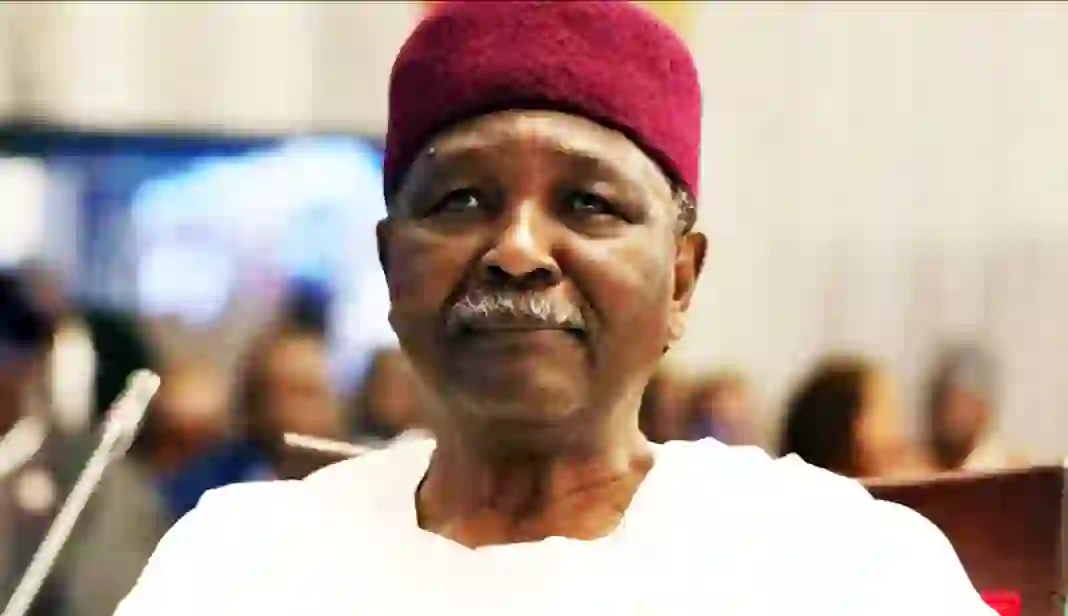
Former Head of State General Yakubu Gowon (retd.) has revealed how he managed command postings during Nigeria’s civil war.
Gowon disclosed that there was a standoff between Obasanjo and Murtala Mohammed which he said was playing out during the opening phase of the civil war.
According to Gowon, when a young officer, Olusegun Obasanjo, flatly refused to serve under Colonel Murtala Muhammed during the civil war, and declared that he would “never” take orders from his junior, he had to assert authority to enforce the order.
Gowon said he resolved the confrontation by invoking his authority as Commander-in-Chief and forced Obasanjo to stand down, before going on to serve as Obasanjo’s personal “guardian angel” through the war and beyond.
The revelations are contained in Chapter 14 of Gowon’s 859-page titled “No Going Back” in his autobiography, *My Life of Duty and Allegiance*. It was presented in Abuja on Tuesday before Nigeria’s who-is-who.
Gowon also disclosed that Biafra’s leader, Lieutenant Colonel Odumegwu Ojukwu, secretly pawned the mineral wealth of Biafra to the Rothschild banking family for approximately $10m, or an estimated N5 million at the time, in exchange for French-backed support for the secessionist effort.
Gowon said he first encountered Obasanjo at the Officers’ Mess in the United Kingdom in March 1958, when both men were undergoing officer training.
According to Gowon, he was short of money and unable to settle his bills on arrival in London, turned to two fellow Nigerian officers, Obasanjo and a Lagos-born officer named Foluso Sotomi, to assess who might help him.
“Whereas Obasanjo was a frugal person, Sotomi was a spendthrift and, as his nickname confirmed, a typical Lagos ‘Show Boy’ who looked smarter but was more of a bigmouth and certainly more bombastic than Obasanjo.”
When he approached Sotomi, the man had no money to spare.
“Obasanjo, on the other hand, was much different. He had more than enough money to pay for himself and to offset my initial bills. I saw that as a great display of a sense of responsibility,” the former Head of State said.
That first impression, Gowon wrote, converted into a sustained personal investment in Obasanjo’s career that would last through the civil war and into the post-war period.
He said: “That singular act made me take more interest in Obasanjo and what he did. I advised him to ensure that he remained on the right track in the Army.
“I became his informal guardian angel right up to the time I appointed him to take over the command of 3 Marine Commando from Adekunle.”
Gowon stated that he observed Obasanjo closely from the beginning, forming a clear-eyed assessment that is candid about his limitations as well as his strengths.
“Obasanjo was a quiet, respectable and intelligent officer, though not quite as smart as, for example, the younger Alani Akinrinade to whom I took instant liking whilst he was a cadet officer at my alma mater, the Royal Military Academy, Sandhurst,” he wrote.
The former Head of State had decided to create a Rear Command for the newly formed 2 Division under Murtala Muhammed, with Obasanjo, then Sector Commander in the Western State, serving as Rear Commander in Ibadan, helping to organise relief supplies, equipment and reinforcements.
The arrangement would technically place Obasanjo in a supporting role under Murtala. Obasanjo, Gowon wrote, did not take it well.
“He believed he was more senior and should not be expected to serve under his junior.
“His reaction made it obvious that he was not well disposed to any idea that appeared to present him as playing second fiddle to Murtala.
“As a result, he strongly stated that he would never serve under Colonel Murtala Muhammed for any reason,” he narrated.
Gowon pointed out that Murtala’s own reaction to the arrangement similarly revealed something important about the future head of state’s character.
“His reaction also clearly showed that Obasanjo would have serious misgivings about being 2-IC even to himself,” he recalled.
But the Commander-in-Chief held firm.
“I stood my ground that, as Commander-in-Chief, I reserved the right to send people to where I believe they could be most useful to the country at any material time
“I told him his main task was not to be Murtala’s deputy, but to ensure the general security of the Western Region. He relented and took on the role assigned to him.”
Gowon added that despite the inauspicious start, Obasanjo “indeed performed well to my expectations,” specifically by rebuffing a remarkable covert attempt by Nobel laureate Wole Soyinka to use the posting to open a passage for Colonel Victor Banjo to enter the West.
“He performed well to my expectations, especially by rebuffing Wole Soyinka’s attempt to get him to allow Colonel Victor Banjo to come to the West through Benin to Ibadan.
I deeply appreciate Obasanjo’s loyalty and sense of patriotism,” Gowon wrote.
Discover more from The Source
Subscribe to get the latest posts sent to your email.


 has revealed how he managed command postings during Nigeria's civil war)