



By Ayodele Oni

More fallouts from the Nigeria civil war have emerged from the memoir of Nigeria’s helmsman during the period.
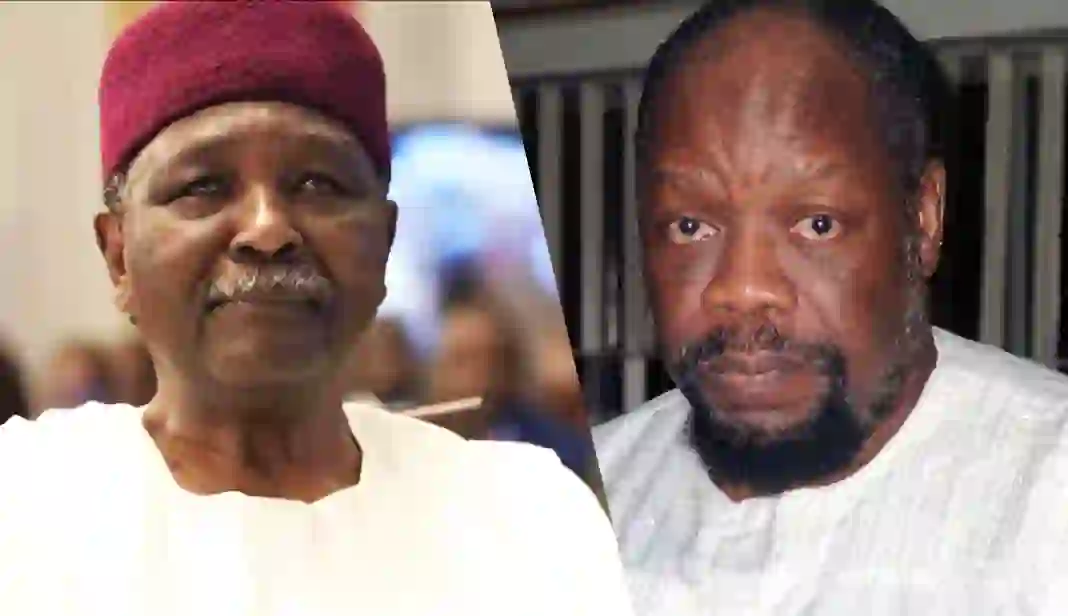
Nigeria’s Head of State at the time, General Yakubu Gowon has revealed that the then Colonel Chukwuemeka Odumegwu Ojukwu who later became leader of Biafra, opposed his emergence as Head of State after the July 1966 counter-coup. Ojukwu, Gowon wrote in his autobiography preferred Brigadier Babafemi Ogundipe, the most senior officer in the army hierarchy, to succeed the murdered Major General Johnson Aguiyi-Ironsi.
Gowon disclosed this in his memoir, “My Life of Duty and Allegiance,” presented in Abuja on Tuesday.
The former military ruler revealed that Ojukwu’s resistance to his emergence went beyond military protocol and reflected deeper tensions within the army, following the January 1966 coup and the bloody counter-coup that followed months later.
At the time Gowon assumed office, he was a lieutenant colonel and junior to several officers, including Ogundipe, Commodore Joseph Wey and Colonel Adeyinka Adebayo.
According to Gowon, Ojukwu maintained that military seniority should have determined succession after Ironsi’s assassination.
“Ojukwu refused my offer of friendship. By extension, he wilfully refused to recognise my leadership.
“He felt that the normal protocol of seniority in service should have been upheld in selecting General Ironsi’s successor under the new administration, regardless of the circumstances by which I assumed power.”
However, Gowon argued that the chaotic atmosphere created by the coup and counter-coup made Ogundipe’s emergence impractical.
“The case of Brigadier Babafemi Ogundipe was not straightforward because the course of the coup had made it obvious that he could no longer function effectively in the command-and-control structure of the Nigerian Army and the Armed Forces,” he stated.
Gowon explained that Ogundipe was later appointed Nigeria’s High Commissioner to the United Kingdom with the backing of the British government.
The former head of state also disclosed that many northern military officers believed Ojukwu was complicit in the January 1966 coup which led to the assassination of key northern political and military leaders.
Among those killed during the coup were Prime Minister Abubakar Tafawa Balewa, Northern Premier Ahmadu Bello, Western Region Premier Ladoke Akintola and Finance Minister Festus Okotie-Eboh.
Senior northern military officers, including Brigadier Zakariya Maimalari, were also killed, fueling anger among northern troops.
Gowon revealed that the suspicion against Ojukwu created a dangerous atmosphere after the July 1966 counter-coup, with some northern officers considering retaliatory action against the Eastern regional governor.
According to him, he personally intervened to stop any move against Ojukwu because he believed cooperation among the military leadership was necessary to stabilise the country.
“He failed to appreciate that he had been under serious threat because the young northern officers believed he was complicit in the January 15, 1966 coup.
“I pre-empted any attempt to move against him partly because of my respect for all the regional governors and because I believed we could work together to rebuild the army and restore normalcy.”
Despite Ojukwu’s refusal to recognise his authority, Gowon said he retained him as military governor of the Eastern Region in what he described as an altruistic decision.
“My decision to retain Ojukwu in office was altogether altruistic though subsequent events made it seem a huge mistake,” he wrote.
Gowon also suggested that he did not believe Ojukwu was supporting Ogundipe or defending the army hierarchy for altruistic reasons.
“Left unsaid at the time was Ojukwu’s strong view that I was junior to him in the hierarchy.
“He failed to appreciate that he had been under serious threat because the young Northern officers believed he was complicit in the January 15, 1966 coup,” he said.
Relations between both men later deteriorated as ethnic tensions escalated following reprisal killings of Igbos in northern Nigeria.
The crisis eventually culminated in May 1967 when Ojukwu declared the secession of the Eastern Region as the Republic of Biafra, triggering Nigeria’s civil war.
The war lasted for 30 months before ending in January 1970 with the surrender of Biafra and the reunification of the country.
Discover more from The Source
Subscribe to get the latest posts sent to your email.