Home Blog Page 115

APC Primaries: Desmond Elliot Withdraws From  Assembly Race, Cites Threats, Intimidation

0
Desmond Elliot
Desmond Elliot

By Akinwale Kasali

Before he withdrew, Eliot had lost woefully in the Ward of his estranged political godfather Femi Gbajabiamila, to his competitor

Hon. Desmond Olusola Elliott, representing Surulere Constituency 1, has withdrawn from the All Progressives Congress, APC, Primaries for the State House of Assembly Race.

The three term Lawmaker in Lagos State House of Assembly officially withdrew from the race, as his exit shifts momentum toward Barakat Odunuga-Bakare, a former aide to Governor Babajide Sanwo-Olu, who is reported to enjoy strong backing from influential Party leaders in Surulere, most especially, Gbajabiamila, Chief of Staff, CoS, to President Bola Tinubu.

Elliot announced his withdrawal in a video message, citing intimidation and political victimisation against his camp.

He alleged that his security aides were withdrawn and loyal local government workers removed from their positions ahead of the primaries.

“Intimidation, coercion, twisting and forcing people to follow their own candidate is what is existing today in Surulere,” he said, describing the atmosphere as hostile.

The withdrawal occurred on Wednesday during the APC primary election for the Lagos State House of Assembly seat in Surulere Constituency I.

Elliot said mounting pressure and concerns over fairness in the electoral process forced his exit, effectively clearing the way for other aspirants.

Insecurity: Ekiti Orders Closure Of Schools In Ilejemeje LG, As Council Vice Chair Is Abducted

0
Biodun Oyebanji - Ekiti State Governor

By Ayodele Oni

Ekiti State Government has ordered closure of some secondary schools in Ilejemeje local government area of the state following upsurge in kidnapping cases.

Students sitting for their final Senior Secondary School Examination, (SSCE) in the affected schools have been relocated to community halls to enable them continue with their examination.

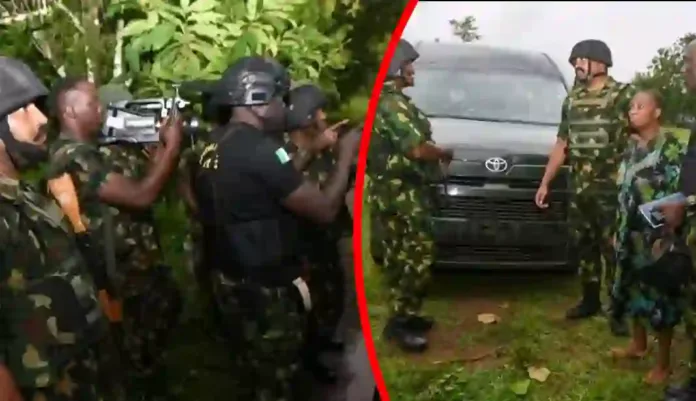
The measure is coming as the Vice Chairman of Ilejemeje Council Grace Ogunleye, was kidnapped Wednesday afternoon while returning home from a trip.

Report revealed that Ogunleye was abducted between Iludun, her hometown and Ipere, a neighbouring community by gun welding and masked bandits.

She was forced to abandon her official Toyota Corolla car and her bag, which contained some valuables and whisked away into the bush.

Falade Sunday, Director of Information and Civic Orientation,

Ilejemeje Local Government, in a statement confirmed that “The Vice Chairman of Ilejemeje Local Government, Hon. Chief Mrs. Grace Ogunleye, has reportedly been kidnapped along Ipere–Iludun Ekiti road.

“According to reports, her vehicle was later found abandoned while her whereabouts remain unknown.

“Her mobile phone has also been switched off as of the time of filing this report.

“She had earlier visited Ilejemeje this morning and was returning to Ido Ekiti when the unfortunate incident occurred. Security agencies have been alerted while efforts are ongoing to locate and rescue her safely.

Barely 22 days ago, worshippers at CAC , Eda Oniyo were abducted by gunmen and are yet to be released despite payment of N10.5 million and foodstuffs as demanded by the abductors.

Meanwhile, in Oyo state, children in Oko Town on Wednesday stayed away from their schools, following Tuesday’s rumours that bandits were planning to attack schools in the town and other neighbouring communities.

It was gathered that there was no presence of either the teachers or students in all the schools within Oko Town, as most of the parents did not allow their children to go to school.

Roads were equally deserted as only few vehicles and commercial motorcyclists were seen on the roads.

It was also observed that security agents were present on the roads particularly Oko – Ejigbo, stopping and searching of few vehicles plying various routes.

It would be recalled that police Spokesperson for Oyo State command, Mr Olayinka Ayanlade had during an interview with Radio Nigeria advised residents of Ogo Ilu and its neighbouring communities to go about their lawful business activities without fear of threat from any quarter.

He made it clear that more security personnel had been deployed across towns and villages in Surulere Local Government Area to ensure protection of lives and property.

Peter Obi Is NDC’s Sole Presidential Candidate As Party Clears Him  For Primary

0
Peter Obi - NDC presidential candidate

By Ayodele Oni

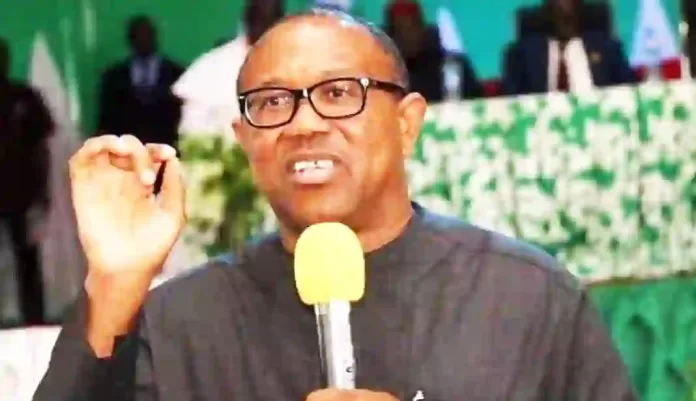
After over two hours of rigorous screening, former Labour Party Presidential candidate, Peter Obi, has been cleared to contest in the Presidential Primary of the Nigeria Democratic Congress, NDC, ahead of the 2027 general election.

Chairman of the NDC National Screening Committee, Senator Sam Egwu, announced Obi’s clearance in a video shared on the party’s official X account on Wednesday.

The screening exercise was conducted in Abuja on Tuesday. Obi is the sole candidate for the position.

Egwu said the committee was satisfied that Obi met all constitutional and statutory requirements to contest for the presidency.

“This is to certify that, following the screening of His Excellency Peter Obi by the National Screening Committee of the Nigeria Democratic Congress, and satisfied ourselves that he has complied with all the requirements of the constitution of the party.

“The Electoral Act, and the Constitution of the Federal Republic of Nigeria 1999 (as amended), dealing with eligibility to contest the presidential election, and having provided satisfactory answers to all questions put to him by members of the committee, he is hereby cleared to contest in the presidential primaries of the party for the 2027 presidential election on dates to be announced by the party,” Egwu stated.

Reacting via his official X account on Wednesday, Obi said the screening lasted more than two and a half hours, during which members of the committee examined his credentials and questioned him on his vision for Nigeria.

“We Are Not A United Nation; My Primary Goal Is To Bring Nigeria Together” – Obi

0
Peter Obi
Mr Peter Obi

Peter Obi, the presidential candidate of the Nigeria Democratic Congress (NDC), has expressed that uniting the country will be his foremost priority if he is elected President. He believes that good governance should ensure that mothers no longer live in fear regarding the safety of their children.

After completing his party’s screening process, Obi stated that the path to achieving this vision begins with fostering unity across the nation. He emphasised the importance of adhering to the Nigerian Constitution, which promotes federal character and inclusivity. According to him, a secure and united country is essential.

Obi remarked, “We want mothers to feel safe when their children head to school or work. We envision a Nigeria where travel throughout the country can be done without fear. Many Nigerians currently go to sleep uncertain about their next meal, and this situation must be transformed.”

He highlighted the need for a nation where public resources are not turned into private wealth, insisting that a strong fight against corruption is crucial for the benefit of all citizens. “Politicians are too focused on upcoming elections while the citizens are suffering. This has to change,” he added.

The former Governor of Anambra State also discussed the length of the screening process, clarifying that it reflects true democratic practices.

“The NDC is committed to doing things right. The purpose of the screening was to ensure candidates meet constitutional qualifications and can provide necessary documentation,” Obi explained.

Regarding his status as the sole candidate, Obi commented, “I don’t know if anyone else has submitted an application. Until the party officially names me as the only candidate, that remains to be seen.”

After the screening, Obi commended the screening committee headed by the former Governor of Ebonyi state Dr Sam Egwu for doing a thorough job and being very professional. He also commended the party’s leadership for upholding democratic principles.

El Rufai Revoked Gowon’s Only Plot Of Land, But For Interventions, Stopped Him From Owing Abuja Property

0
Mallam Nasir el-Rufai

By Ayodele Oni 


In his hey days as the Minister of the Federal Capital Territory (FCT), Abuja, former Governor of Kaduna State, Mallam Nasir El-Rufai stepped on powerful toes, using state machinery to humiliate them.


Among victims is former Military Head of State, General Yakubu Gowon, who had his only plot of land revoked by Rufai.


The Catholic Bishop of Sokoto Diocese, Matthew Hassan Kukah, revealed how El-Rufai, revoked a plot of land belonging to former Head of State, Yakubu Gowon, in Abuja.


Kukah spoke in Abuja while reviewing Gowon’s autobiography, “My Life of Duty and Allegiance,” published by  Havilah Group.


The Cleric, recounted some of the difficulties Gowon faced after leaving office, including his years in exile following the 1975 military coup that ousted him from power.


According to Kukah, Gowon initially had no property in Abuja after returning to Nigeria and managed secured a plot of land only after the intervention of senior military figures.


“He didn’t have a plot of land. And when he came back, it was just out of pity, let me put it that way, that General Babangida agreed. 


“Finally, they named one crescent after him, and after the crescent, they now gave him a plot of land, his first plot of land in Abuja.


“He mobilised resources to try and start building. He begins to build. Then El-Rufai, who was Minister of the FCT, revoked the land,” Kukah stated.


According to him, the intervention of retired General Theophilus Danjuma and others eventually helped Gowon recover the property.


The remarks formed part of Kukah’s extensive review of the autobiography, which he described as a voluminous account of Nigeria’s turbulent political history spanning about 900 pages and divided into 36 chapters.

Yakubu Gowon
Yakubu Gowon

Kukah disclosed that much of Gowon’s personal archives and records were lost in two separate fire incidents in Bakori and Kaduna, making the memoir largely dependent on the former military leader’s recollections.


“It’s important to underscore the fact that whatever you read in the book is the result of what the author was able to recall. You will find in the book evidence of excellent memory and details of things.”


The bishop structured his review around different phases of Gowon’s life, including military coups, exile, personal trials and his relationships with key actors in Nigeria’s political history.


He particularly highlighted revelations surrounding Gowon’s relationship with former President Olusegun Obasanjo, citing portions of the memoir suggesting deep trust between both men despite political tensions after Gowon’s overthrow.


Quoting from the book, Kukah said Gowon described Obasanjo as his “informal guardian angel” whom he trusted “more than any other soldier.”


Kukah also referenced accounts by former Chief of Staff, Supreme Headquarters, Allison Ayida, regarding debates within the military over whether Gowon should be allowed to return to Nigeria from exile.


According to him, Ayida recalled that some officials feared political backlash if Gowon’s planned return became public knowledge.


Beyond politics, Kukah devoted a significant portion of his review to Gowon’s wife, Victoria Gowon, whom he described as “the shield, the diplomat, who wore the trousers in the house.”


According to the bishop, the memoir detailed the extent of hardship the Gowon family endured in exile in the United Kingdom after the 1975 coup.


He said Gowon struggled to secure employment or even open a bank account, while his wife sustained the family by sewing bed sheets and making pillows for sale.


“He himself said in the book that he became what he called a kept man because she was the one looking after everything in the house,” Kukah noted.


The bishop further narrated how a domestic worker allegedly sent to assist the family by Nigerian officials was later discovered to be monitoring them for incriminating evidence.


“At the end of the day, the poor man could not find anything to report back home,” Kukah said.


Gowon, who ruled Nigeria from 1966 to 1975 and led the country through the civil war, remains one of Nigeria’s most consequential military leaders. 


His administration pursued the post-war policy of “no victor, no vanquished” and later established the National Youth Service Corps as part of national reconciliation efforts after the conflict.

APC Primaries: Bankole Ajigbotafe, Sanwo-Olu’s Commissioner, Matcheted, Blood Flows

0

By Akinwale Kasali 


Akinyemi Bankole Ajigbotafe, Lagos State Commissioner for Wealth Creation and Employment, was matcheted at the Lagos All Progressives Congress, APC, House of Representatives Primaries held on Monday by suspected political thugs.


Ajigbotafe, popular as AB Ajigbotafe in the Lagos State Political circle was reportedly left in critical condition after he was wickedly macheted. 


He was reportedly rushed to the hospital, and is presently hospitalised at the undisclosed hospital.


It was gathered that violence erupted in Alimosho Local Government Area where the Commissioner had gone for a meeting of APC Stakeholders, convened to resolve disagreements arising from the Party’s House of Representatives Primary Election in Lagos West when he was attacked.


According to sources, violence stemmed from lingering tensions generated during Saturday’s House of Representatives primaries involving supporters of former Mosan-Okunola LCDA Chairman, Olabisi Adebajo, popularly known as ABISCO, and incumbent lawmaker, Ganiyu Ayuba.


Yhe meeting held last week in Alimosho LG where consensus candidates were endorsed for elective positions did not augur well with some aspirants who disagreed with the consensus endorsement.


This led to crisis during the Primaries, as armed thugs allegedly stormed the venue wielding guns and dangerous weapons, triggering panic and sporadic gunshots.


Eyewitness account stated that Ajigbotafe had, allegedly, aligned with one of the rival political camps, a development believed to have intensified hostilities ahead of Monday’s reconciliation meeting.


The reconciliation meeting later degenerated into violence after suspected loyalists of an influential political figure allegedly descended on the Commissioner with machetes in what witnesses described as an assassination attempt.


“The assassination attempt on the Honourable Commissioner was unsuccessful; however, he sustained serious injuries, his vehicle was damaged and security personnel were severely wounded,” a party member who pleaded anonymity stated.


It was gathered that the attack on the Commissioner was severe, as he was said to have lost a lot of blood and had undergone multiple blood transfusions as doctors battled to stabilise him.


The development has left the APC Alimosho LG in  turmoil, putting into consideration the fact that Alimosho remain the most populous LG in Lagos State and also a political stronghold for the APC in the State.


The attack has sparked outrage among Party members and stakeholders, many of whom condemned the growing wave of violence, intimidation and hooliganism within the Party’s local structures.


In a strongly worded statement addressed to APC leaders in Alimosho, a concerned party member and Certified Protection Officer, Debo Awosheye, described the attack as dangerous and disgraceful.


“These incidents are unacceptable and capable of damaging the unity, reputation, and democratic values of our party.


“No political ambition or disagreement should ever justify violence, intimidation, harassment, or threats against party members”, 

Awosheye stated.

He warned the APC leadership that if urgent steps were not taken, the crisis could spiral further and damage the APC’s reputation ahead of future elections.


In the same vein, another APC member who pleaded anonymity described the incident as “barbaric” and called for urgent intervention by party leaders.


“How can you fight a sitting Commissioner publicly and injure him to the point of blood flow? This is not acceptable,” he stated.


Though, the APC Primaries has been marred with violence, disqualification and irregularities, this has further renewed concerns over increasing political violence within party Primaries in Lagos, with many members demanding investigations and prosecution of those responsible for the attack.

“My Emergence As Head Of State Was Not By Seniority – General Gowon

0
Yakubu Gowon
Gen. Yakubu Gowon

By Ayodele Oni 


General Yakubu Gowon has revealed in his autobiography that serious power play happened during his ascension to the seat of Nigeria’s military Head of State.


According to him, Joseph Wey, a Commodore, and Adeyinka Adebayo, a Colonel, were senior to him and got promoted to major-general and later full-star general within one year.


“The case of Brigadier Babafemi Ogundipe was, however, not as straight forward because the course of the coup had made it obvious that he could no longer function effectively in the command-and-control structure of the Nigerian Army and the Armed Forces.


“With the concurrence of the UK government, he was appointed Nigeria’s High Commissioner to the UK,” Gowon wrote.


“Ojukwu refused my offer of friendship. By extension, he wilfully refused to recognise my leadership. 


“He felt that the ‘normal’ protocol of seniority in service should have been upheld in selecting General Ironsi’s successor under the new administration, regardless of the circumstances by which I assumed power. 


“Admiral Wey effectively persuaded former Supreme Military Council members to take cognisance of the situation and support my leadership, highlighting my ability to command respect from junior officers and my willingness to lead during a difficult time.”


Gowon did not believe Ojukwu was supporting Ogundipe or defending the army hierarchy for altruistic reasons.


He wrote: “Left unsaid at the time was Ojukwu’s strong view that I was junior to him in the hierarchy. 


“He failed to appreciate that he had been under serious threat because the young Northern officers believed he was complicit in the January 15, 1966 coup.


 “I pre-empted any attempt to move against him, in part, because of my respect for all the Regional Governors and, more importantly, because I saw him primarily as a colleague and officer with whom I thought I had worked to restore normalcy in those early days of uncertainty. 


“I believed that, together, we could rebuild the army and allow the country to continue its course in history.”

Why I Put Obasanjo In Charge Of General Security Of Western Region During Civil War – Gen Gowon

0
Yakubu Gowon
Yakubu Gowon

By Ayodele Oni 


Ojukwu secretly pawned Biafra’s mineral wealth to the Rothschild banking family for approximately $10m in exchange for French-backed support


Former Head of State General Yakubu Gowon (retd.) has revealed  how he managed command postings during Nigeria’s civil war.


Gowon disclosed that there was  a standoff between Obasanjo and Murtala Mohammed which he said was playing out during the opening phase of the civil war.


According to Gowon, when a young officer,  Olusegun Obasanjo, flatly refused to serve under Colonel Murtala Muhammed during the civil war, and declared that he would “never” take orders from his junior, he had to assert authority to enforce the order.


Gowon said he resolved the confrontation by invoking his authority as Commander-in-Chief and forced Obasanjo to stand down, before going on to serve as Obasanjo’s personal “guardian angel” through the war and beyond.


The revelations are contained in Chapter 14 of Gowon’s 859-page titled  “No Going Back” in his autobiography, *My Life of Duty and Allegiance*. It was presented in Abuja on Tuesday before Nigeria’s who-is-who. 


Gowon also disclosed that Biafra’s leader, Lieutenant Colonel Odumegwu Ojukwu, secretly pawned the mineral wealth of Biafra to the Rothschild banking family for approximately $10m, or an estimated N5 million at the time, in exchange for French-backed support for the secessionist effort.


Gowon said he first encountered Obasanjo at the Officers’ Mess in the United Kingdom in March 1958, when both men were undergoing officer training.


According to  Gowon, he was short of money and unable to settle his bills on arrival in London, turned to two fellow Nigerian officers, Obasanjo and a Lagos-born officer named Foluso Sotomi, to assess who might help him.


“Whereas Obasanjo was a frugal person, Sotomi was a spendthrift and, as his nickname confirmed, a typical Lagos ‘Show Boy’ who looked smarter but was more of a bigmouth and certainly more bombastic than Obasanjo.” 


When he approached Sotomi, the man had no money to spare.


“Obasanjo, on the other hand, was much different. He had more than enough money to pay for himself and to offset my initial bills. I saw that as a great display of a sense of responsibility,” the former Head of State said.


That first impression, Gowon wrote, converted into a sustained personal investment in Obasanjo’s career that would last through the civil war and into the post-war period.


He said: “That singular act made me take more interest in Obasanjo and what he did. I advised him to ensure that he remained on the right track in the Army.


“I became his informal guardian angel right up to the time I appointed him to take over the command of 3 Marine Commando from Adekunle.”


Gowon stated that he observed Obasanjo closely from the beginning, forming a clear-eyed assessment that is candid about his limitations as well as his strengths.


“Obasanjo was a quiet, respectable and intelligent officer, though not quite as smart as, for example, the younger Alani Akinrinade to whom I took instant liking whilst he was a cadet officer at my alma mater, the Royal Military Academy, Sandhurst,” he wrote.


The former Head of State had decided to create a Rear Command for the newly formed 2 Division under Murtala Muhammed, with Obasanjo, then Sector Commander in the Western State, serving as Rear Commander in Ibadan, helping to organise relief supplies, equipment and reinforcements.


The arrangement would technically place Obasanjo in a supporting role under Murtala. Obasanjo, Gowon wrote, did not take it well.


“He believed he was more senior and should not be expected to serve under his junior.


“His reaction made it obvious that he was not well disposed to any idea that appeared to present him as playing second fiddle to Murtala.


“As a result, he strongly stated that he would never serve under Colonel Murtala Muhammed for any reason,” he narrated.


Gowon pointed out that Murtala’s own reaction to the arrangement similarly revealed something important about the future head of state’s character.


“His reaction also clearly showed that Obasanjo would have serious misgivings about being 2-IC even to himself,” he recalled.


But the Commander-in-Chief held firm.

“I stood my ground that, as Commander-in-Chief, I reserved the right to send people to where I believe they could be most useful to the country at any material time


“I told him his main task was not to be Murtala’s deputy, but to ensure the general security of the Western Region. He relented and took on the role assigned to him.”


Gowon added that despite the inauspicious start, Obasanjo “indeed performed well to my expectations,” specifically by rebuffing a remarkable covert attempt by Nobel laureate Wole Soyinka to use the posting to open a passage for Colonel Victor Banjo to enter the West.


“He performed well to my expectations, especially by rebuffing Wole Soyinka’s attempt to get him to allow Colonel Victor Banjo to come to the West through Benin to Ibadan. 


I deeply appreciate Obasanjo’s loyalty and sense of patriotism,” Gowon wrote.

I Regret Retaining Ojukwu As Eastern Region  Governor After 1966 Coup – Gen Gowon

0
General Yakubu Gowon and Chukwuemeka Odumegwu Ojukwu

By Ayodele Oni

More fallouts from the Nigeria civil war have emerged from the memoir of Nigeria’s helmsman during the period.

Nigeria’s Head of State at the time, General Yakubu Gowon has revealed that the then Colonel Chukwuemeka Odumegwu Ojukwu who later became leader of Biafra, opposed his emergence as Head of State after the July 1966 counter-coup. Ojukwu, Gowon wrote in his autobiography preferred   Brigadier Babafemi Ogundipe, the most senior officer in the army hierarchy, to succeed the murdered Major General Johnson Aguiyi-Ironsi.

Gowon disclosed this in his memoir, “My Life of Duty and Allegiance,” presented in Abuja on Tuesday.

The former military ruler revealed that Ojukwu’s resistance to his emergence went beyond military protocol and reflected deeper tensions within the army, following the January 1966 coup and the bloody counter-coup that followed months later.

At the time Gowon assumed office, he was a lieutenant colonel and junior to several officers, including Ogundipe, Commodore Joseph Wey and Colonel Adeyinka Adebayo.

According to Gowon, Ojukwu maintained that military seniority should have determined succession after Ironsi’s assassination.

“Ojukwu refused my offer of friendship. By extension, he wilfully refused to recognise my leadership.

“He felt that the normal protocol of seniority in service should have been upheld in selecting General Ironsi’s successor under the new administration, regardless of the circumstances by which I assumed power.”

However, Gowon argued that the chaotic atmosphere created by the coup and counter-coup made Ogundipe’s emergence impractical.

“The case of Brigadier Babafemi Ogundipe was not straightforward because the course of the coup had made it obvious that he could no longer function effectively in the command-and-control structure of the Nigerian Army and the Armed Forces,” he stated.

Gowon explained that Ogundipe was later appointed Nigeria’s High Commissioner to the United Kingdom with the backing of the British government.

The former head of state also disclosed that many northern military officers believed Ojukwu was complicit in the January 1966 coup which led to the assassination of key northern political and military leaders.

Among those killed during the coup were Prime Minister Abubakar Tafawa Balewa, Northern Premier Ahmadu Bello, Western Region Premier Ladoke Akintola and Finance Minister Festus Okotie-Eboh.

Senior northern military officers, including Brigadier Zakariya Maimalari, were also killed, fueling anger among northern troops.

Gowon revealed  that the suspicion against Ojukwu created a dangerous atmosphere after the July 1966 counter-coup, with some northern officers considering retaliatory action against the Eastern regional governor.

According to him, he personally intervened to stop any move against Ojukwu because he believed cooperation among the military leadership was necessary to stabilise the country.

“He failed to appreciate that he had been under serious threat because the young northern officers believed he was complicit in the January 15, 1966 coup.

“I pre-empted any attempt to move against him partly because of my respect for all the regional governors and because I believed we could work together to rebuild the army and restore normalcy.”

Despite Ojukwu’s refusal to recognise his authority, Gowon said he retained him as military governor of the Eastern Region in what he described as an altruistic decision.

“My decision to retain Ojukwu in office was altogether altruistic though subsequent events made it seem a huge mistake,” he wrote.

Gowon also suggested that he did not believe Ojukwu was supporting Ogundipe or defending the army hierarchy for altruistic reasons.

“Left unsaid at the time was Ojukwu’s strong view that I was junior to him in the hierarchy.

“He failed to appreciate that he had been under serious threat because the young Northern officers believed he was complicit in the January 15, 1966 coup,” he said.

Relations between both men later deteriorated as ethnic tensions escalated following reprisal killings of Igbos in northern Nigeria.

The crisis eventually culminated in May 1967 when Ojukwu declared the secession of the Eastern Region as the Republic of Biafra, triggering Nigeria’s civil war.

The war lasted for 30 months before ending in January 1970 with the surrender of Biafra and the reunification of the country.

175 Insurgents Killed By Nigeria/USA Joint Military Operations – Defence Headquarters

0
NAF Jet Crashes

By Suleiman Anyalewechi

The Defence Headquarters on Tuesday May 19, 2026, informed that Nigeria/United States of America  joint counter-terrorism operations in the North East region, have resulted in the elimination of 175 terrorist elements in the last couple of days.

At a media briefing to provide an update on the joint operations, Defence spokesperson Major General Samaila Uba, highlighted the significant impacts and progress so far made by the joint military efforts.

According to him, the operations have led to a significant decimation of the insurgents’ ranks, including the recent elimination of  Abu-Bilal al-Minuki, the second-in-command of the ISIS, as well as other senior Commanders.

“It will be recalled that the joint strikes started a few days ago. As of 19th May, 2026, assessments indicated that 175 ISIS terrorists have been eliminated from the battlefield.

“The joint strikes have resulted in the destruction of ISIS checkpoints, weapons, caches, logistical hubs, military equipment and financial networks used to sustain terrorist operations.

“The operations have also resulted in the elimination of several senior ISIS leaders including Abu-Bilal al-Minuki, one of the most significant ISIS operatives in the world”, Gen Uba stated.

The Defence Headquarters particularly emphasized that the elimination of al-Minuki represents a significant progress in the fight against insurgency in the region.

According to Uba, the death of  al-Minuki has severely disrupted the ISIS command structure, operational coordination and external combat operations.