



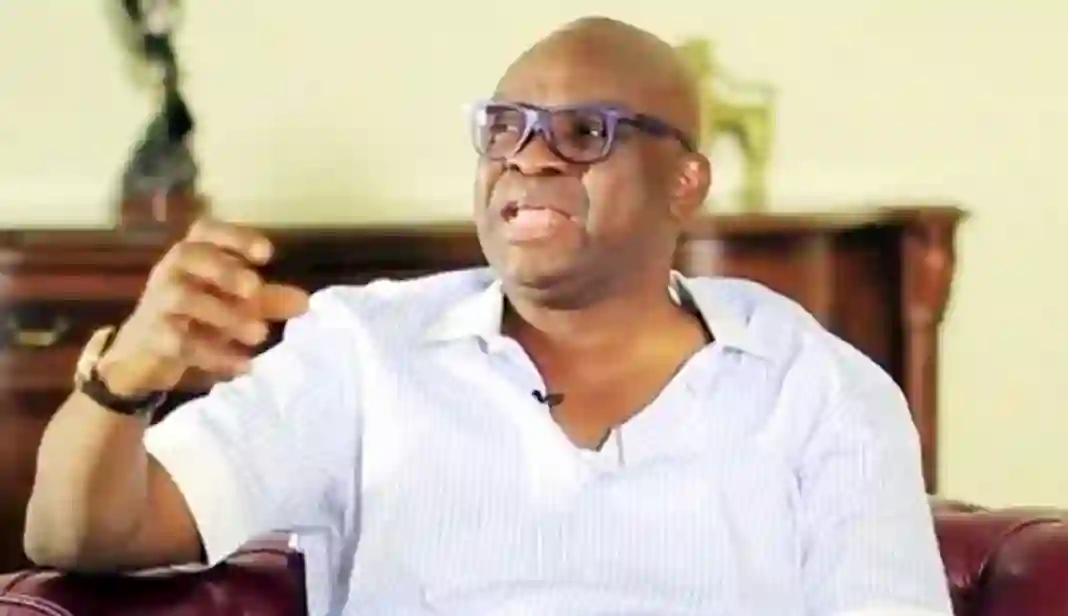

The appointment of former Ekiti State Governor, Ayodele Fayose, as Chairman of the Rural Electrification Agency, REA has sparked widespread debate, with many Nigerians asking one question: What changed?
The controversy stems from Fayose’s repeated insistence that he would not accept any appointment under the All Progressives Congress, APC-led administration of President Bola Ahmed Tinubu.
For many who have followed his political career, the development has raised questions about whether the outspoken politician can still be taken at his word. Fayose has consistently projected himself as a man who stands by his convictions, particularly on national issues.
On Monday, President Tinubu named the former governor among 26 new appointees to the boards of 10 federal agencies and commissions. According to a statement by the President’s Special Adviser on Information and Strategy, Bayo Onanuga, the appointments took immediate effect.
“President Bola Ahmed Tinubu has announced 26 new appointments into 10 Federal Government agencies and commissions, with former Governor of Ekiti State, Ayo Fayose, emerging as Chairman of the Rural Electrification Agency (REA), and Major General Junaid Bindawa as Chairman of the National Salaries and Wages Commission,” the statement said.
The Presidency said Fayose would chair the REA board alongside Alhaji Ahmadu Abubakar and Engineer Ilyasu Ibrahim Makinta as non-executive directors, while the agency’s Director-General, Abba Abubakar Aliyu, and three executive directors would complete the board.
The appointment immediately generated mixed reactions, including criticism from Fayose’s younger brother, Isaac, who urged him to reject the offer.
According to Isaac, the former governor is too politically significant for such an appointment, wondering why he was not considered for positions such as minister or ambassador.
Describing his brother as a “kingmaker,” Isaac jokingly suggested that Fayose should hand the appointment to his son instead.
“I know you will not take this. But if you take it, who am I? Who am I? Congrats on your appointment. You better give it to your son. Please do,” he said.
As of the time of writing, the former governor had not publicly indicated whether he would accept or reject the appointment.
Political analyst Folawari Benson believes Fayose was almost certainly consulted before the announcement.
“An appointment from the President is an offer; you either accept or reject it. I doubt, however, that the former governor will turn it down because he must have been informed before his name was announced,” Benson said.
He added that Fayose’s relationship with President Tinubu is “very strong,” arguing that there was no way the President would have announced his appointment without first seeking his consent.
The controversy is fuelled largely by Fayose’s own public statements.
A member of the opposition Peoples Democratic Party, PDP, Fayose has repeatedly declared that he had retired from active politics after serving two terms as governor and intended to devote his time to family life.
Last November, when asked whether he would accept an appointment from President Tinubu, Fayose claimed he had already declined such an offer.
“Have you seen me taking an appointment from the APC? Asiwaju asked me, ‘What would we give you?’ I said, ‘Nothing, sir.’
“At 65, I’d rather be at home, being more responsible and doing other things that I need to do.
“I’ve served well. Two-time governor, I’ve done well. Tomorrow will hold itself.”
Barely eight months later, critics say the latest appointment appears to contradict that position, reinforcing the perception that politicians often abandon earlier promises when circumstances change.
“If a politician tells you it’s daybreak, you had better look at the sky. They will promise to build a bridge where there’s no water. Anyone who believes Nigerian politicians does so at his own peril. Fayose is a typical Nigerian politician. Don’t expect him to keep his promise,” an Ekiti PDP member, who asked not to be named because of the sensitivity of the matter, said.

However, Fayose’s supporters see nothing wrong with the appointment.
They argue that the former governor openly supported Tinubu before and after the 2023 presidential election and deserves recognition for his loyalty. According to them, if others who contributed to Tinubu’s victory have been rewarded with appointments, there is no reason Fayose should be treated differently.
To them, the appointment is simply President Tinubu rewarding a political ally and long-time friend, making the controversy surrounding Fayose’s emergence as REA Board Chairman unnecessary.
Whether the appointment represents a change of heart or simply a pragmatic political decision is a question only Fayose can answer. Until then, the debate over whether he has abandoned one of his most emphatic public positions is unlikely to fade anytime soon.
Discover more from The Source
Subscribe to get the latest posts sent to your email.