




By Ayodele Oni

Two prominent Nigerians have come in defence of the General Overseer of the Redeemed Christian Church of God, (RCCG), Pastor Enoch Adeboye over his recent comments on the security situation in Nigeria.
Pastor Adeboye had recently faced renewed public attention after commenting on Nigeria’s worsening insecurity.
In his remarks during one of his sermons, he urged Service Chiefs to either intensify efforts against banditry or step aside, a statement that drew significant debate online, especially because he did not directly call on the Federal Government to take action
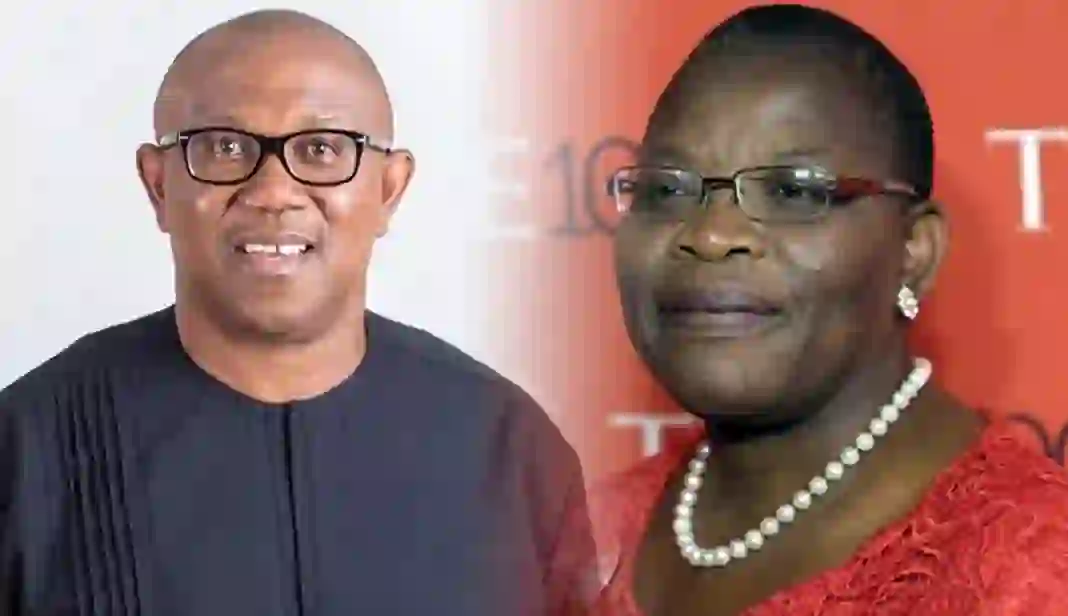
Reacting to some of the comments, Presidential candidate of the National Democratic Congress (NDC), Peter Obi advised Nigerian youths to stop attacking Pastor Adeboye over perceived silence of revered religious leaders on the worsening state of the nation.
In a statement posted on X, Obi warned young Nigerians against falling prey to ethnic and religious manipulations orchestrated by politicians and their agents.
Obi’s position follows growing criticism of the cleric by some Nigerians who accuse him of failing to speak out against the current administration of President Bola Tinubu as vocally as he did during the tenure of former President Goodluck Jonathan.
The critics attribute the perceived silence to ethnic and religious affiliations with the Tinubu family.
“In the period following the presidential election and leading up to the governorship election, we witnessed a troubling shift in public discourse.
“Conversations that should have focused on competence, governance, development, and the future of our nation were gradually diverted towards tribal sentiments, ethnic divisions, and unnecessary suspicion among citizens.
“Many sincere and well-meaning Nigerians participated in these conversations without realising that they were being drawn into narratives carefully designed by others,” Obi wrote.
He noted that history has shown that when politicians struggle to compete on ideas, performance, character, or vision, they often exploit the fault lines of ethnicity, religion, and identity to divide the people.
“Today, I see similar efforts emerging again, sometimes in more subtle and sophisticated ways.
“Narratives are planted, amplified, and circulated, often by individuals who genuinely believe they are defending a worthy cause, without recognising the broader agenda behind such campaigns,” he said.
The former Anambra State governor described Pastor Adeboye as one of Nigeria’s foremost fathers of faith, who for decades has preached peace, prayer, love, reconciliation, and national unity.
“At 84 years of age, it would be unfair for young and able-bodied Nigerians to transfer to him responsibilities that properly belong to them.
“The task of building a better Nigeria rests primarily on the shoulders of the younger generation.
“It is their duty to lead the conversations, champion the reforms, and drive the positive change our nation urgently requires,” he added.
Obi cautioned Nigerians against being used as instruments by those who secretly promote division while publicly preaching unity.
“Their target is not the individual being attacked; instead, it is the person who is attacking. Their real objective is to weaken the bonds that hold us together as one people and one nation.”
He concluded with a direct appeal to the youth, saying, “I therefore urge all young Nigerians: do not allow anyone to recruit you into hatred.
“Do not allow anyone to weaponize your ethnicity, your faith, or your admiration for respected leaders.
Also in a post on X, a former Minister of education, Obey Ezekwesili, maintained that Adeboye “isn’t Our Problem, He Chose Silence When Attacked Because He’s Wise.”
Ezekwesili suggested that the cleric’s decision not to respond aggressively to certain provocations reflects spiritual maturity rather than indifference.
She implied that his restraint should be understood as a product of wisdom and discipline.
Reacting to the controversy, Ezekwesili argued that the pastor’s approach should not be misinterpreted.
According to her, the complexity of the country’s security challenges is such that it often defies straightforward human solutions, making measured responses more appropriate.
She also described Adeboye as a figure she respects and has learned from, particularly in the area of maintaining composure and exercising what she described as dignified restraint in sensitive matters.
Discover more from The Source
Subscribe to get the latest posts sent to your email.




)