




By Ayodele Oni

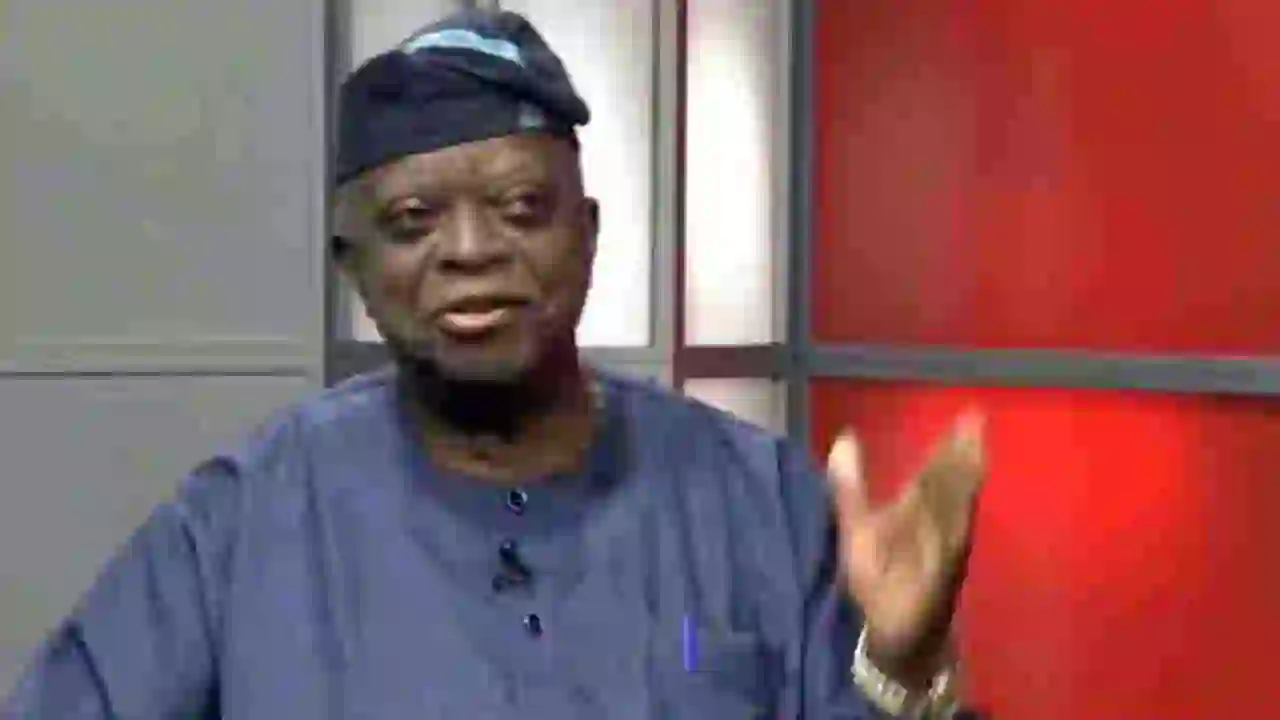
A Research Professor at the Nigerian Institute of International Affairs, (NIIA), has remarked that the proposed creation of state police, is a reform that is long overdue for Nigeria’s federal system.
Prof Olufemi Otubanjo made the position known on Friday, during an exclusive interview on _Frontline_, a current affairs programme on Eagle 102.5 FM, Ilese-Ijebu, Ogun State.
“State police is something that was long overdue. Long overdue because of the fact that it is a natural part of federalism to have state police and to have state control of the judiciary, and so on,” he said.
The comment follows the Senate’s passage on Wednesday of a constitutional amendment bill seeking to establish state police services across Nigeria.
The bill would also empower state governors to appoint Commissioners of Police for their states, subject to confirmation by State Houses of Assembly
Otubanjo argued that policing, judicial administration and correctional services are traditionally shared responsibilities in federal systems.
“It’s high time Nigeria has state police, because it is part of federalism. We are a federal system. Every federal system has division of labour.
“Just as we have the high court system at the state level, we have police at the state level. These are all state functions,” he said.
He lamented what he called excessive centralisation of powers at the centre, saying successive governments have “abused federalism” by holding on to functions that should be devolved.
“We have had this over-centralisation of the police to the point that a governor clearly does not have control of the commissioner under him,” he noted, citing a recent kidnapping in Oriire Local Government Area of Oyo State.
“The governor does not control the security situation. But the governor cannot tell the police to go there, not to talk of the military.”
The professor was of the view that state police would give governors and regional security outfits more flexibility to respond to crime.
“Federal police has been known to stop other paramilitary organizations, they don’t have power to do what they are doing. The state police grants that power, for flexible operations,” he stated.
He acknowledged potential “rough edges” at the start, including jurisdictional conflicts and the risk of governors misusing the police against opponents.
“There will be over zealousness on the part of governors to use the police against their opponents,” he said.
But he expressed confidence those issues can be managed through legal safeguards and constitutional provisions.
“So all those things will be captured gradually in legal restrictions and constitutional provisions, and gradually we will get used to it. We have to start,” Otubanjo added.
“Under his proposed structure, state police would handle crimes within state jurisdictions and be accountable to the governor, while federal police would focus on interstate and national security matters.
“When the governor is the chief security officer of the state, he is the chief security both in name and in deed,” he said.
He cited the United States, Germany and India as examples of federal countries with decentralised policing.
“The U.S. has police, even for university… and if they cannot handle an issue, they will go to the metropolitan, to the city police,” he said.
Addressing fears of politicisation, Otubanjo said sincerity and professionalism must guide appointments and operations.
“That DPOs will not be determined by political party affiliation. So, gentlemen, sincerity and politics… must not be allowed to get into the system.
“Sincerity must be the essence of the system,” he said. He added that public scrutiny and social media would help check abuses.
Responding to callers who said insecurity had worsened under President Bola Tinubu, Otubanjo urged caution. “How do you know that insecurity is increasing?
“People in Nigeria talk. Have you done any research?… Whether it has increased or decreased is a different problem.
“State police is an idea whose time has long been overdue. It has come. And I think that gradually we will work out all the rough edges,” he concluded.
Discover more from The Source
Subscribe to get the latest posts sent to your email.



, has remarked that the proposed creation of state)