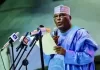





The Federal Government’s position on electricity subsidies has come under fresh scrutiny following renewed remarks by the Minister of Power, Joseph Tegbe, that the government can no longer sustain the financial burden of electricity tariff shortfalls.
Speaking at the Harvard Business School Association of Nigeria, HBSAN, Energy Conference in Lagos last week, Tegbe said the government could no longer continue to bear the difference between the actual cost of generating and supplying electricity and the tariffs paid by consumers.
His latest declaration has revived controversy over the future of electricity subsidies, particularly after he reportedly announced in July that the government planned to remove the subsidy in 2027, a position the Federal Government subsequently denied.
The earlier denial had raised questions about the government’s policy direction on electricity pricing. Tegbe’s latest comments, however, suggest that the financial burden of sustaining the current arrangement remains a major concern for the administration.
The minister identified poor revenue collection, inadequate metering and outstanding debts owed to electricity generation companies (GenCos) as some of the major challenges undermining the financial stability of the power sector.
According to him, the government is considering a transition from the Nigerian Bulk Electricity Trading, NBET, model to bilateral electricity agreements, under which power suppliers and buyers would negotiate commercial terms directly.
He said the proposed arrangement was expected to strengthen payment discipline and improve the financial sustainability of the electricity market.
Tegbe also disclosed that Nigeria has a metering gap of about 40 per cent, despite recent efforts to expand access to meters.
He said more than 700,000 meters had been deployed within six months, while the government plans to install 7.5 million meters over the next two to three years.
The metering programme is expected to improve billing accuracy, reduce disputes over estimated bills and strengthen revenue collection across the electricity value chain.
However, the minister’s position raises fresh concerns about the implications of reducing government support for electricity tariffs, particularly for households and businesses already struggling with high energy costs.
Electricity subsidies have helped bridge the gap between the cost of supplying power and the amount consumers pay. Where the government fails to cover the shortfall, the resulting financial pressure can affect electricity generation, distribution and payments to operators across the sector.
A transition towards bilateral electricity agreements could also reshape the relationship between power suppliers, distribution companies and eligible customers, depending on the terms and implementation of the proposed arrangement.
The central question remains whether the Federal Government intends to phase out electricity subsidies, restructure the system through market-based agreements or retain some form of support to protect consumers from the full cost of electricity supply.
Until the government clarifies its position, uncertainty over the future of electricity subsidies is likely to persist, with consumers and businesses watching closely for any policy changes that could further increase their operating costs.
Discover more from The Source
Subscribe to get the latest posts sent to your email.