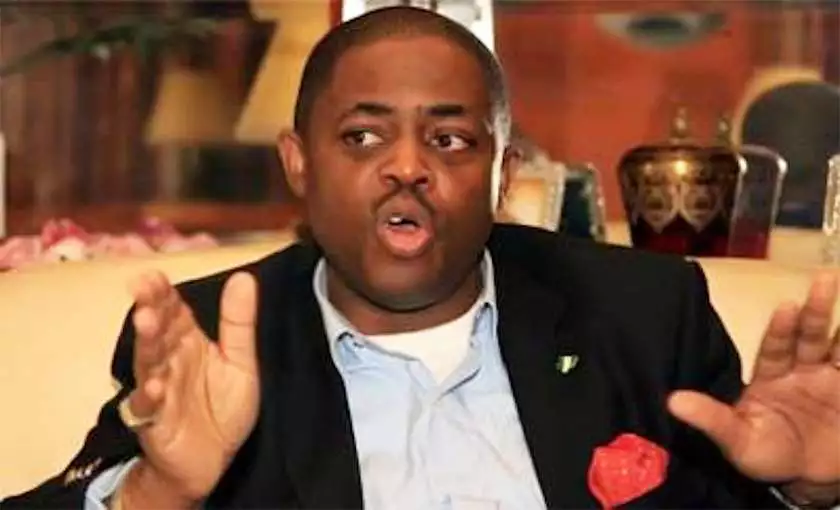
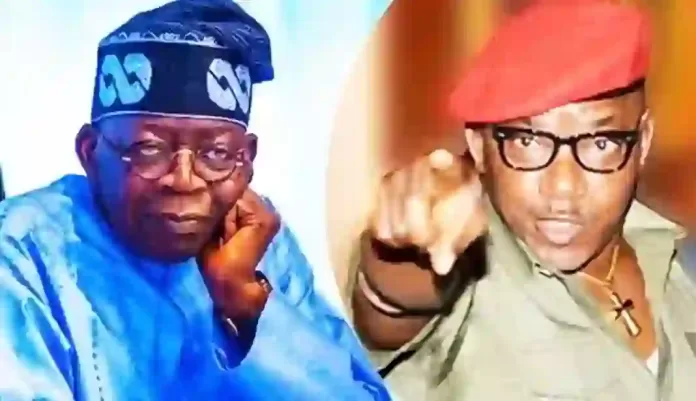
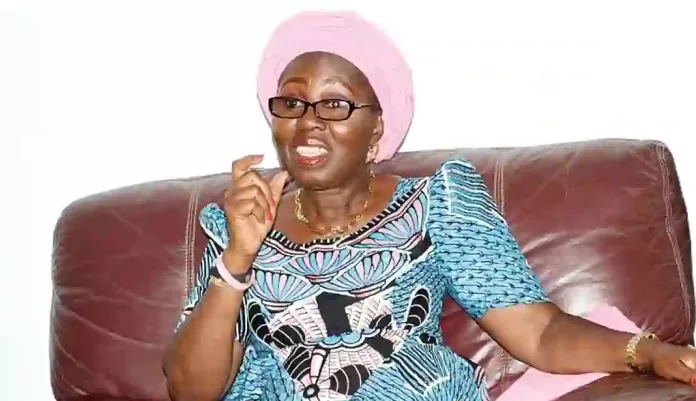
Former Minister of Aviation Femi Fani-Kayode, has slammed the opposition African Democratic Party, ADC as a group of ‘discredited’ and disgruntled individuals, saying the party has no capability to wrestle power from the ruling All Progressives Congress, APC.
The country is set for a fresh election next year and the ADC has been touted as a major force capable of posing a strong challenge to the ruling APC next year.
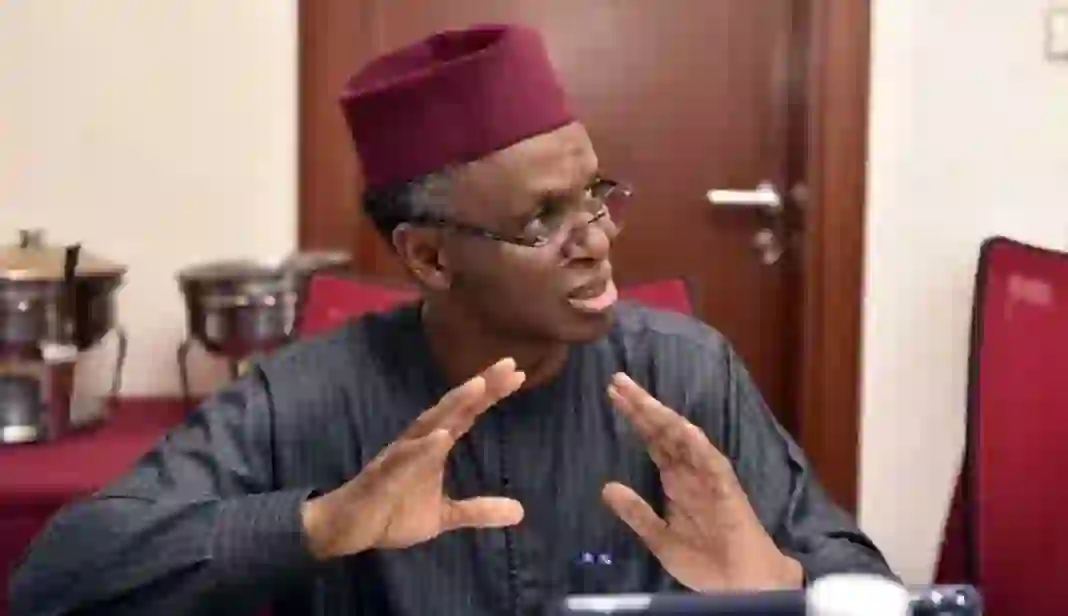
Top politicians in the ADC include, former Vice President Atiku Abubakar, Peter Obi, the 2023 Presidential candiadte of the Labour Party, LP, Rotimi Amaechi, a former Minister of Transportation, Nasir El Rufai, a former Governor of Kaduna state, and Babachir Lawal, a former Secretary to the Government of the Federation, SGF.
Others are former Senate President, David Mark, immediate past Minister of Justice and Attorney General of the Federation, Abubakar Malami, former governor of Osun state, Rauf Aregebsola, amonsgt others.
Not a few Nigerians insist that the ADC has what it takes to give APC a run for its money in next year’s election if its leaders can close ranks, citing the unpopularity of the ruling party and its non-performance since it took power in 2023.
But Fani-Kayode, an outspoken ally of President Bola Ahmed Tinubu who was recently appointed as Nigeria’s Ambassador Designate to Germany by the president said the ADC is not ready to dislodge Tinubu and APC from power.
Speaking on his Facebook page, Fani-Kayode said the ADC is not ready for power, saying the party has failed to play the rile of opposition successfully.
He said those in the party have no capacity to run the country, noting that opposition has effectively collapsed in the country, citing, for instance, that ADC and other opposition leaders have failed in their role to hold the government accountable, accusing them of in-fighting rather than presenting a common front against the ruling party.
Hitting hard on their lack of cohesion, the Ambassador Designate said there’s no chance for the party to dislodge if it continues in internal squabbles and bickering.
Fani-Kayode: “I don’t see ADC as an opposition party: I see them as an association of people that are desperate for power.
“Individuals that are discredited, individuals that have no hope in hell of moving this nation forward. The opposition has collapsed in Nigeria.
“There is no opposition because they don’t even know how to be in opposition. How can they keep the government on its toes when they are busy bickering amongst themselves, fighting amongst themselves and they are fast asleep in bed snoring.”
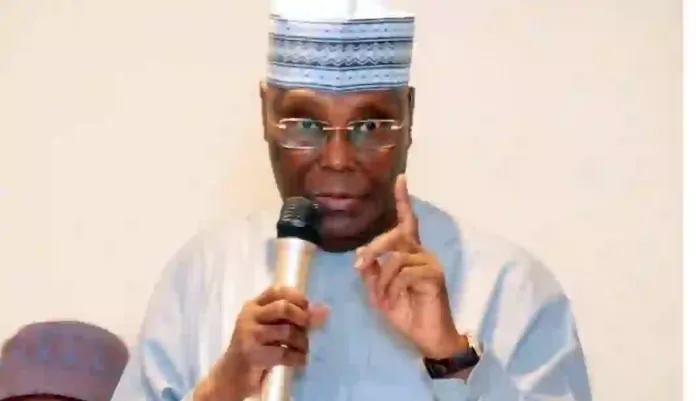
Former Vice President Atiku Abubakar, has met with some top leaders of the African Democratic Party, ADC in Adamawa state ahead the party congresses slated for April 7.
The meeting was held on Thursday night.
Apart from some leaders of the party who attended the meeting, some ADC coordinators, and other influential members of the party from the state, were also part of what some political analysts, has described as Abubakar’s consultations in preparation for the party’s congresses next month.
‘The former vice president is trying to ensure that his house is in order and not divied before next month, to ensure that those that matter in the state are with him. Politics is local, as they say,” a source privy to the meeting said on Friday.
Abubakar, who later wrote about the meeting on his verified X handle said he’s confident of his political prospect in the ADC, considering what is currently happening in the party.
He wrote: “We reviewed the current state of our party, particularly regarding the ongoing registration of members and mobilisation efforts.
“We are confident about where we stand now and enthusiastic about prospects.”
Abubakar told those who attended the meeting, the importance of strong organisational structures and active engagement with party members at all levels, across the country.
The former vice president, the magazine reports is one of the aspirants eyeing the ADC presidential ticket in the upcoming 2027 election. Other aspirants include, Rotimi Amaechi, an erstwhile Rivers state Governor and former Minister of Transportation under the Muhammadu Buhari’s adminsitration, Peter Obi, the 2023 Presidential candidate of the Labour Party, LP and former governor of Anambra state.
ADC and other political parties, according to INEC guidelines and in line with the Electoral Act are expected to pick their presidential candidates before the end of May.
A social media critic, VeryDarkMan, (VDM) has cast doubts over the claim by Blessing CEO that she is suffering from stage 4 cancer.
Blessing CEO, a self-acclaimed relationship expert, shocked not a few on Wednesday when in a viral video, she emotionally announce she is battling with stage 4 breast cancer.
In the video, she solicited for financial assistance from the public for treatment. She said she is putting up her expensive wigs, and cars and house for sale so as to fund her chemotherapy treatment. She said the Cancer is not only taking a toll on her finances, but on her physical appearance as she is fast losing her hair.
On her disclosure of battling stage 4 cancer, many
Nigerians, especially, celebrities reacted by encouraging her.
But reacting to Blessing CEO, VeryDarkMan, on Thursday, in a video he shared on his Instagram page on demanded proof. He asked a medical report from Blessing which backs up her claims.
VDM: “I just hope what Blessing CEO is saying is the truth. Because I hope it is not prank, clout chasing or something she wants to use to gather money because cancer is a very sensitive matter globally.
“Cancer is not something that someone should joke with because it has claimed many lives. And till tomorrow, there’s still no cure for it.
“I’m not convinced enough that Blessing CEO is saying the truth. Because you did not provide the report of the hospital that diagnosed you. You said a lot of resources has gone into your health. You did not put the receipt of the money you’ve been spending together for the public to see. You just came with emotional blackmail. Post the proof here.”
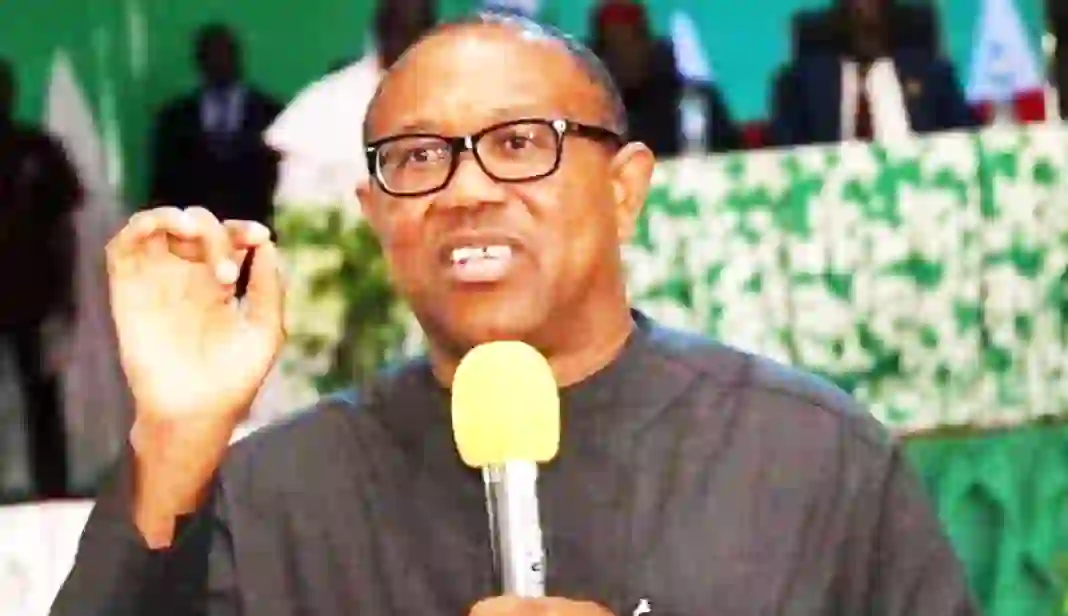
Friends, admirers, and the “Obidient” fanbase of the former Labour Party (LP) presidential candidate, Peter Gregory Obi, love to call him by the sobriquet “Okwute,” which in Igbo, Nigeria’s third-largest socio-linguistic group, means rock, boulder, or stone. Quite a nice alias – especially if you associate some doctrinal nuances of Obi’s faith with his first name, Peter.
The symbolism of the name Okwute, borne by males, signifies one who is strong, dependable and unyielding in Igbo cosmology. But a nice alias is not necessarily a fitting one.
The fluidity with which Obi moves around the political circuits has little, if any, resemblance to a rock, boulder or even a stone. Except, of course, if he’s a rolling stone, lacking in constancy, bereft of moss. A rock or a boulder is solid, come rain, come shine; it is constant in and out of season.
I’m not suggesting that Okwute should have remained in Onitsha or Aba. That would be absolutely ludicrous! After all, life is a journey.
Peter the Clay
I’m saying that this Obi is a Peter of Clay – malleable, confused, and lacking in staying power. He’s drifting, mistaking a jungle for a zoo. This should be a great source of worry for his troops, especially the social media-based avatars (without voter cards), who deify Obi and whose political signature tune is “the Obi-way or the highway.” His political history needs no retelling other than to record what a missed opportunity it represents.
After the tale of him winning the 2023 presidential poll – an election in which he punched above his political weight and won in 12 states – even if only with narrow margins outside his south-eastern enclave, Okwute fragmented like sedimentary rock thereafter. It would have been sufficient for him to build on his good showing at the poll, but claiming he won an election in which his party had no agents in about 54 percent of the polling centres was a stretch.
A Yiaga Africa Report on the 2023 elections said that while the APC deployed agents in 96 percent of polling units, the Labour Party deployed agents in only 46 per cent. Agent deployment is a critical factor in election performance.
Failed romance
The man who became the de facto and adopted candidate of the Nigerian Labour Congress and sundry trade unions – a substantial voting bloc, failed to seize the initiative after the poll. He went on throwing tantrums, wasting energy and resources in litigation, and missed the opportunity to consolidate and build the structure of the Labour Party – a convenient vehicle he had appropriated overnight, barely three days before the presidential primaries of his previous Peoples Democratic Party in May 2022.
Justice Ayo Isa Salami, a retired president of the Appeal Court and an eminent jurist, has criticised Obi’s midnight migration to LP as an illegality that would have excluded him from the presidential contest. Salami said Obi’s participation was the result of poor judicial diligence and perhaps a lack of experience on the bench.
Okwute’s jump also stirred speculations and gave credence to the claim that he was deliberately avoiding primaries in the PDP.
Missed opportunity
Yet his near-spontaneous entry into the LP created a political wave that came at high tide. Not only was it dynamic, but it was the stuff of legend. Sustaining it beyond the elections would have made a great difference because LP very much needed nurturing, growth and strategy. But Obi was not paying attention, focusing instead on the next election rather than rebuilding the party.
LP adapted to Obi rather than the other way around. It even accommodated Okwute’s capitalist credentials into its semi-socialist fold. Nothing really mattered so long as LP had a presidential candidate – an ‘Okwute’ in the race.
Without as basic a requirement as agents to represent it at the polling units, LP went into the general elections and performed barely short of a miracle, winning one governorship, six senatorial and 34 House of Reps seats in one go. It was a foundation on which any serious politician would have built an inspiring career.
But the momentum was left to waste, casting him in the light in which his former adversary-turned-friend, Governor Nasir El-Rufai, described: a Nollywood actor. Okwute watched the slow but sure unravelling of the LP, as it collapsed from factional crisis.
Mr Peter Obi
Rather than being the elder in the house and leading the LP to consolidate on its initial achievements, he bolted. He has now pitched his tent with the African Democratic Congress (ADC), an assortment of mostly aggrieved power-mongers, in whose company the former Obi might have been immensely uncomfortable.
The game in town
Yet, even in this temporary shelter, the only game is who takes the presidential ticket. While the ruling All Progressives Congress (APC) is preparing as if elections were tomorrow, collecting defectors, aggressively registering new members, and even testing its election situation room (all this despite its poor record in office), the opposition is missing in action. The opposition’s strategy appears to be to sufficiently discredit the process before elections to hide its own catastrophic incompetence.
Whether Okwute sees it or not, he has expended his store of political goodwill without reinvesting or making good capital of it. The man who won Lagos, the impregnable home of President Bola Ahmed Tinubu, and the Federal Capital, catchment area for the government in power, has by word and deed, proved that it was a fluke – an emotional response from the young and aggrieved and a bloc of Christian voters thirsty for change.
That Kano visit
On Sunday, Okwute visited Kano on a Sallah homage to Rabiu Musa Kwankwaso of the New Nigeria Peoples Party (NNPP). In 2023, an expected alliance between Okwute and Kwankwaso failed because Kwankwaso, with a wider political footprint but no less ambitious, would not be Obi’s vice presidential candidate.
Kwankwaso had said offering Obi the vice presidential slot under him was a “golden opportunity,” implying that Obi would be lucky to join his ticket rather than the other way around. For good measure, Kwankwaso said age, experience, and performance disqualified Obi from the presidency, hinting that the NNPP would collapse if he accepted a subordinate role to Obi.
With Obi now in ADC and Kwankwaso still nursing the remnants of his NNPP, it is a good time to ask who is gravitating toward whom. The ambitions of both men are well known, and the ADC’s presidential ticket is nearly foreclosed.
Obidients won’t accept anything less than an Okwute presidential ticket. Kwankwaso’s impressive crowd, more on the streets with their red caps than behind touchscreens, is no less vociferous. They won’t hesitate to tell Obidients that RMK is bigger politically, older, and a PhD holder with far superior performance as governor.
And the Kano crowd – especially at Sallah – was, as usual, huge and dramatic. They received the guest as they would a mascot. In Kano, every player thinks they have the crowd until they see a bigger one.
Obi has paid the price for a ticket to the zoo, but he’ll soon find that he’s in a jungle.
Ishiekwene is Editor-In-Chief of LEADERSHIP and author of the book, Writing for Media and Monetising It.
Former Minister of Youths and Sports Development, Solomon Dalung, has described the decision of the former Governor of Kaduna State Malam Nasir El-Rufai to submit himself to Government Security Agencies as a terrible miscalculation.
The Source reports that El-Rufai, had on Monday, February 16, 2026, voluntarily honoured an invitation from the Economic and Financial Crimes Commission, EFCC, after his return from Egypt.
El-Rufai has since February 18, 2026, been in the custody of the Independent Corrupt Practices and Other Related Offences Commission, ICPC, after he wA granted bail by the EFCC.
His bail application before a Federal High Court Kaduna, where he was arraigned on Tuesday, March 24, by the ICPC after over 30 days in custody, is billed for ruling on March 3I, 2026, by the presiding Judge, Honourable Justice Rilwan Aikawa.
Speaking in an interview with Trust TV, Dalung, a vociferous critic of President Bola Ahmed Tinubu’s administration disclosed that the Tinubu administration is so scared of El-Rufai that it can go to any length to keep him out of circulation.
According to him, it was a great error of judgment on the part of the former Kaduna State Governor, to have walked himself into the hands of security agencies.
“El-Rufai made a great mistake by turning himself in to security agencies.
Mallam Nasir el-Rufai
“The Government is really afraid of El-Rufai, which is why they decided to arrest him at the airport. But they (Government) equally knew that trying to arrest him could lead to some unintended consequences.
“So for El-Rufai to voluntarily submit himself was a great mistake for a comrade and a fighter.
“El-Rufai chose to downplay the whole thing by giving himself up which was the biggest mistake he made as a fellow comrade .
“Comrades don’t surrender. If you give up during a fight, you will end up feeling ashamed. It is an established principle in struggle. When they strive to achieve something, they become very careful”, Dalung stated
According to the former Sports Minister, the Government was apprehensive, and seriously jittery over what El-Rufai can do, hence its desperate attempt to arrest him at the airport immediately after arrival from Egypt.
” They (Government) attempted to arrest him at the airport and it failed, and after that it dawned on them that any attempt to arrest El-Rufai could lead to unrest
“But El-Rufai himself decided to downplay the whole thing and surrendered himself, and that decision has proven to be a serious mistake” he added.
However, he equally praised the decision, as according to him, by voluntarily turning himself in, El-Rufai succeeded in putting the Federal Government agencies in to qaungmire, trying to shop for offences to slam on him.
” You see, at the time they (EFCC, ICPC) took him into custody ,they did not have any ready-made charges. That was the main reason they kept him for that long, running up and down, shopping for charges against him.
” El-Rufai’s trial will not result to anything because the foundation of the charges against him is built on illegality and not law”, Dalung noted.
The Nigerian Bar Association, NBA, has strongly condemned the recent humiliation of Lawyers by Judges over frivolous issues.
In a statement signed by its President, Afam Osigwe, SAN, and General Secretary, Dr. Mobolaji Ojibara, the NBA expressed “utmost shock” over reports of the incident which happened at the Court of the Honourable Justice Chikwendu Nwogu who convicted a defence Counsel, Mrs Lovinah Ugbana Benjamin after he delivered a judgement in a suit which involved the Chief of Naval Staff and others.
The NBA accused some Judges of judicial bullying and abuse of contempt powers to intimidate, and thus, unlawfully detaining Lawyers.
The NBA, also, noted another incident which happened at the Federal High Court, Abuja, where Justice Rita Ofili-Ajumogobia ordered the detention of Martin Anyanwu, a legal officer, in the court’s holding facility on March 25, 2026.
The NBA regretted the worrisome incidents of lawyers being subjected to humiliating treatment in courtrooms, including being forced to kneel or face the wall under threat of contempt. The body warned that these actions undermine the dignity of the legal profession and erode trust in the justice system.
According to it, not every act of discourtesy amounts to contempt, and added that criticism of a Judge or Court, if made in good faith, does not justify punitive measures.
Misuse of contempt powers, the NBA, warned, creates fear in courtrooms and threatens the right of lawyers to represent clients without intimidation.
Where a lawyer’s conduct is questionable, the NBA argued, the proper course is referral to the Legal Practitioners Disciplinary Committee, not summary detention, and described the actions as “high-handed” and an abuse of judicial authority.
Finally, it demanded the immediate release of the affected lawyers, and called for investigations by the Rivers State Chief Judge and the National Judicial Council. The body threatened a seven-day boycott of proceedings before Justice Nwogu if the detained counsel is not freed within 24 hours.
NBA: “We wish to remind the judges that a Judge’s invocation of his power to punish for contempt of his court is an unwarranted exhibition of naked judicial power which puts counsel and their clients in fear of the court and erodes an important safeguard of fair trial.
“In deprecating these actions, we must also remind Judges that not every act of discourtesy to the Court by Counsel amounts to contempt, nor any conduct which involves a breach by Counsel of his duty to his client. Courts must distinguish between acts of discourtesy, incivility, uncouth behaviour, or rudeness.”
A factional National Chairman of the embattled Peoples Democratic Party, PDP, Kabiru Turaki, SAN, has been ordered arrested by a Federal Capital Territory High Court.
The order to arrest Turaki was issued on Thursday, March 26, by the Honourable Justice U.P. Kekemeke.
This stems from Turaki’s failure, according to the Judge, to appear before the Court, as ordered, in a case filed against him by the Inspector General of Police.
The IGP filed the one count charge against Turaki for, in October 2022, providing an alleged false information to the Police in a petition he wrote.
In ordering his arrest, Justice Kekemeke said Turaki had no justifiable reason not to appear before the Court.
Turaki was a former Minister for Special Duties under the administration of President Goodluck Jonathan.
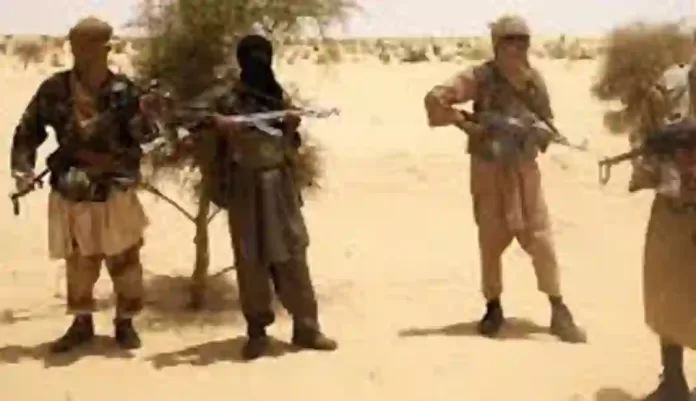
The onslaught against military personnel fighting terrorism in North East has continued. Nine soldiers and policeman were killed by Lakurawa bandits. Their operational vehicles, two in number, were set ablaze.
Report from Giron Masa Village in Shanga local government area of Kebbi State indicated that the Lakurawa bandits ambushed a vehicle conveying the military personnel.
The incident occurred Tuesday night when the joint patrol team were on duty to protect the lives and properties of people in the area.
Governor Nasir Idris on receiving the report of the incident, hurriedly visited the Federal Medical Centre, Birnin Kebbi, where the copses of nine deceased soldiers and one Policeman were deposited in the mortuary.
He also visited the ward where two other security personnel are receiving medical attention as a result of injuries they sustained following gunshots during the incident.
Idris described the incident as highly unfortunate and very painful, noting that it was a great loss not only to the security agencies but, also to the entire people of Kebbi State and the nation.
From the hospital, governor Idris proceeded to Giron Masa where the incident occurred and inspected the vehicles razed by the bandits.
Governor Idris is also expected to travel to Abuja to meet with the Chief of Army Staff to formally convey the condolences of the government and people of Kebbi State over the losses.
Former Ondo State First Lady, Dr. Betty Akeredolu, has revealed that her marriage to the late former Ondo state Governor, Oluwarotimi Akeredolu has further exposed and expand her experience.
She maintained that she has no regrets about her inter-tribal marriage to the late former Governor.
In a statement shared on her Instagram page, Betty emphasized that Imo State in the Southeast remains her home and that her roots are “not up for debate.”
As she prepares to contest a Senatorial seat in the upcoming elections, Betty highlighted that her marriage across the Niger provided her with broader experiences, but it has never diminished her connection to her origins.
She noted that her tenure as First Lady of Ondo State allowed her to engage deeply with grassroots politics, enhanced her understanding of community needs and strengthening her capacity to serve effectively.
Betty wrote, “I am proudly from Imo State, Owerri zone, Owerri West local government and Emeabiam – my small London.
“My marriage across the Niger, I do not regret. It has given me broader experience but it has not erased my roots.”
She further stated that her political ambition for the Imo East Senatorial seat is part of a larger mission to contribute meaningfully to her home state.
“Home is where you are valued and I believe where you can serve best,” she added
Justice Chukwujekwu Aneke of the Federal High Court, Lagos has scolded the Central Bank of Nigeria, CBN for sacking the Board of Union Bank, one of Nigeria’s first generation commercial banks.
The judge also quashed the CBN take over of the bank , after ordering the apex bank to restore its board.
Justice Aneke, while delivering the judgment on Wednesday, ruled that the CBN went beyond its statutory powers as a regulator to take such actions against the commercial bank, saying CBN’s action contravened the provisions of the Banks and Other Financial Institutions Act, BOFIA 2020.
“The actions of the respondent are ultra vires and not in compliance with the provisions of BOFIA 2020,” Justice Aneke ruled.
The court also said, “The respondents are hereby restrained from further interfering in the governance of the bank, including restructuring its share capital or altering its ownership structure.”
The judge added, ““They were sanctioned without being afforded an opportunity to be heard. This constitutes clear evidence of bad faith.”
The case against CBN was filed by Titan Trust Bank Limited, Luxis International DMCC, and Magna International DMCC, who claimed to be the ultimate beneficial owners of Union Bank.
Meanwhile, the CBN has reacted to the ruling saying there’s no immediate change to the status of the bank. The position, the magazine learnt has put the customers and investors of the bank in more confusion, as to what to do next.
In a statement released after the judgment by CBN spokesperson Sidi Ali, the apex said nothing has changed.
The statement read partly, “The CBN assures the public that UBN’s status is unchanged and that it remains fully capable of meeting its obligations to customers, depositors, and all stakeholders.
“The CBN will continue to provide the necessary regulatory oversight to ensure Union Bank operates in a safe, sound, and stable manner, while maintaining public confidence in the financial system.”
“Honestly, some of us don’t know what to do now because of the position of the CBN. May be they are trying to challenge the ruling in the appellate court we don’t know yet. We are just confused,” a customer said on Thursday.