


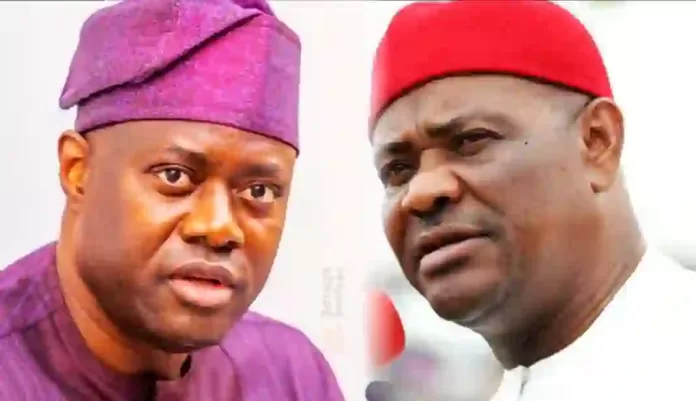
Federal Capital Territory, FCT, Minister, Nyesom Wike, has disclosed that President Bola Ahmed Tinubu gave Governor Seyi Makinde N50 billion to support the expansion of the Ibadan International Airport.
Wike made the revelation on Monday while speaking on TVC’s Journalist Hangout, saying the gesture was to compensate Makinde for supporting the president during the 2023 presidential election.
Recall that Wike and four other members of the Peoples Democratic Party (PDP) had broken ranks with their party to support Tinubu, then presidential candidate of the All Progressives Congress (APC), instead of Atiku Abubakar, the PDP candidate.
But following Tinubu’s victory, acrimony soon arose between President Tinubu and Governor Makinde, who claimed he was betrayed by the president, saying, for instance, that he was not compensated for supporting Tinubu.
Sources close to the Oyo State governor said only Wike, who was appointed FCT Minister, was the ultimate beneficiary of the support the G5 gave Tinubu in 2023, which, not a few said, contributed to the incumbent’s victory in the election.
Wike and Makinde have since fallen out, as their friendship hit the rock because the Oyo State governor believed he was betrayed by the minister and President Tinubu.
Speaking on Monday, Wike said Makinde did not get what he expected from the president, but that Tinubu still compensated him by supporting the upgrade of the airport with N50 billion.
According to the minister, Governor Makinde was expecting the president to nominate one of his associates as a minister, but the president explained to him that he could not do so because of some political realities in the state.
Apart from the N50 billion to support Makinde’s airport project, Wike said other members of the G5 were compensated by the president with different positions in the administration.
The minister stressed that only former Governor Samuel Ortom of Benue State refused to accept any position in Tinubu’s administration.
Wike: Tinubu Gave Makinde N50bn To Expand Ibadan Airport
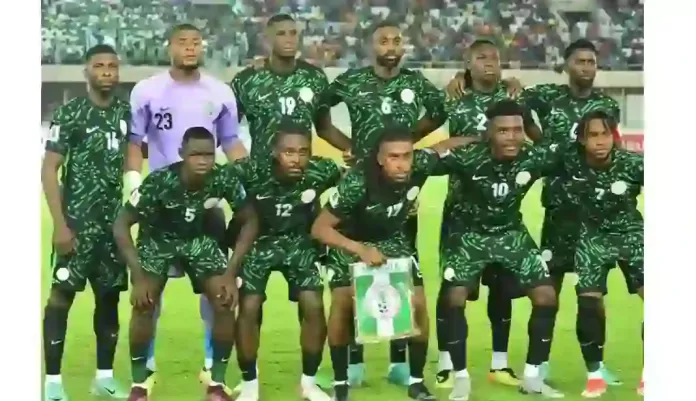
AFCON 2027: Awoniyi Replaces Osimhen In 24-Man Squad To Face Madagascar, Guinea Bissau
By Akinwale Kasali
Super Eagles Head Coach, Éric Chelle, has named Team Captain, Wilfred Ndidi, Goalkeeper Stanley Nwabali, defender Semi Ajayi, midfielder Alex Iwobi, forwards, Ademola Lookman and Moses Simon in his 24-man roster for the 2027 Africa Cup of Nations, AFCON, qualifying matches against the Barea of Madagascar and the Wild Dogs of Guinea Bissau, both within the next 12 days.
The Super Eagles will host Madagascar at the Godswill Akpabio Stadium, Uyo on Friday, 25th September, before flying to Bissau to take on the Wild Dogs in a day-two encounter on Tuesday, 29th September.
Chelle has also called Goalkeeper, Maduka Okoye, defenders Calvin Bassey and Bright Osayi-Samuel, midfielders, Frank Onyeka and Raphael Onyedika, and forwards Samuel Chukwueze, Akor Adams and Tolu Arokodare.
England-based defenders, Olaoluwa Aina and Benjamin Fredricks return to the fold, while Unity Cup revelations, goalkeeper Arthur Okonkwo and defender, Chibuike Nwaiwu will battle for shirts with more established names.
Portugal-based defender, Isaac James teams up with the three-time African champions for the first time, same for forwards George Ilhenikina and Moses Usor.
Taiwo Awoniyi was called up to replace injured Victor Osimhen in the Super Eagles Team.
24 SUPER EAGLES FOR AFCON 2027 QUALIFIERS VERSUS BAREA & WILD DOGS
Goalkeepers: Arthur Okonkwo (Charlton Athletic, England); Maduka Okoye (Udinese Calcio, Italy); Stanley Nwabali (Chippa United, South Africa)
Defenders: Bruno Onyemaechi (Olympiakos, Greece); Isaac James (Alverca FC, Portugal); Benjamin Fredricks (Brentford FC, England); Emmanuel Fernandez (Glasgow Rangers, Scotland); Oluwasemilogo Ajayi (Hull City, England); Calvin Bassey (Fulham FC, England); Chibuike Nwaiwu (Trabzonspor FC, Turkey); Bright Osayi-Samuel (Birmingham FC, England); Olaoluwa Aina (Nottingham Forest, England)
Midfielders: Wilfred Ndidi (Besiktas FC, Turkey); Alex Iwobi (Fulham FC, England); Raphael Onyedika (Eintracht Frankfurt, Germany); Frank Onyeka (Coventry City, England)
Forwards: Moses Simon (Paris FC, France); Taiwo Awoniyi (Coventry City, England); Akor Adams (Venezia FC, Italy); Samuel Chukwueze (AC Milan, Italy); Ademola Lookman (Atletico Madrid, Spain); Tolu Arokodare (Ajax FC, The Netherlands); George Ilhenikina (Al Ittihad, Saudi Arabia); Moses Usor (LASK FC, Austria)
Fuel: Labour Union Seeks Pump Price Reduction To N500

By Ayodele Oni
The National leadership of Joint National Public Service Negotiating Council, (JNPSNC), has demanded from Federal Government fresh palliatives for workers to cushion effect of fuel price increase.
The request wss contained in a letter, written to President Bola Tinubu on the need to urgently approve wage awards and upward review of salaries and allowances due to the effects of the ever increasing fuel prices in the country.
The labour leaders stated that they cannot continue to keep silent with the level of hardship being faced by workers.
The letter was signed by Comrade Gbenga Olowoyo, National Secretary,
Joint National Public Service Negotiating Council (JNPSNC), Trade Union Side.
Part of the letter reads: “It has dawned on the Nigerian workers that provision of palliatives such as bags of rice, indomie, vegetable oil, gaari among other edible foods are as good as weaponising Nigerians with poverty.
“This is because it is a phyrric intervention which is unsustainable, unaccessible to majority of Nigerians population and also it is limited to political cronies.
“Consequent upon the above, it is preferable that the Federal Government should provide intervention that will trickle down to all Nigerians by making fuel available with affordable amount as low as (N500) five hundred Naira, at the amount the fuel was been sold when subsidy was first removed in the year 2023.”
According to the labour union, “The Federal Government should look inward and stabilize the prices of fuel to an affordable minimum, being an essential commodity that determines the performances of both macro and micro Nigeria economy.
“As a matter of reality, the current hardship being faced by the hapless Nigerian workers is caused by the astronomical increase in the price of Premium Motor Spirit (PMS) to as much as N1, 430.00, or more per one litre (this is a killing amount).
“The continued increase in fuel prices unabated has had multiplier effects in all facets of life, hence, Federal government should provide an intervention fund to stakeholders in the oil sector in order to stabilize the fuel price to a benchmark and thereafter reduce the prices of fuel to (N500) five hundred Naira that will be affordable by average Nigerians.
“Federal Government may wish to use any name to describe the intervention fund, if “fuel subsidy” is a forbidden language to the Federal Government as well as, those in the oil and gas parlance
“The fuel intervention fund, will give the opportunity to every Nigerian to benefit from the intervention fund because it will have multiplier effect in the life of every Nigerian and will naturally trickle down to the downtrodden and all the remotest parts of the country.
“As part of practical efforts at ensuring that there is stability in the fuel prices on the strength of the above, the National leadership of Joint National Public Service Negotiating Council Trade Union Side wishes to stand on the side of the Nigeria Labour Congress on the statement duly signed by the National President of the Nigeria Labour Congress (NLC) Comrade Joe Ajaero.”
Ekiti: Supreme Court Affirms Eda Oniyo As Constitutionally Recognised HQ Of Ilejemeji
By Ayodele Oni
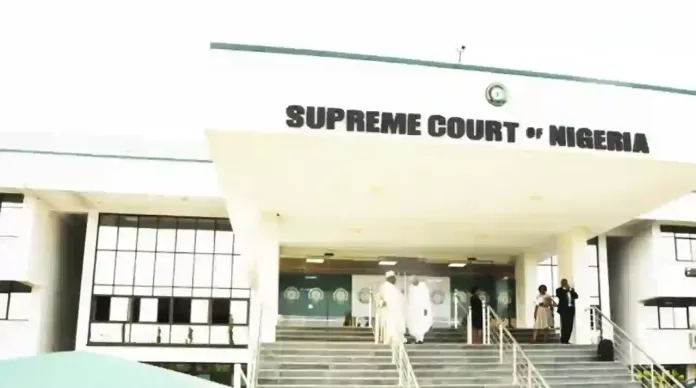
The Supreme Court has finally laid to rest the legal tussle surrounding the headquarter of Ilejemeje local government, affirming Eda Oniyo as the constitutionally recognised seat of government.
The court presided over by Justice Inyang Okoro, on Monday dismissed an appeal filed by Iye Ekiti to challenge earlier decision to relocate the headquarter back to Eda Oniyo by the state government, acting on order by the apex court.
The apex court had earlier in 2018 affirmed Eda Oniyo as the LG headquarter when it upheld an appeal filed by the community over relocation to Iye Ekiti.
Judgement on Monday, 21st September, 2026 in another appeal filed by Iye upheld the earlier position of the Supreme Court on the matter.
The Court frowned at the conduct of the Appellants’ counsel that he ought to have advised his clients on the futility of the appeal, instead of taking them through the stress of litigation over a matter that had been settled by the Supreme Court vide its judgment delivered on 14th December, 2018.
The apex court insisted that it could not invalidate earlier judgement it gave on the matter and that the decree which created the LG has become part and parcel of the law, except amended by the national assembly .
It added that since the state government had complied with the earlier judgement of 2018 by relocating the headquarter back to Eda Oniyo, there was no need for fresh litigation on the matter.
The court awarded N10 million cost in favour of Eda Oniyo.
Prof. Kayode Adetifa represented the Eleda of Eda Oniyo, who is the 3rd Respondent- in the Appeal, while Eniola Arogundade, Director of Appeals in the Ekiti State Ministry of Justice represented the State Government.
Appellants’ counsel is Taiwo Hassan, SAN who led other counsel.
Absence At UNGA: President Tinubu Is Busy With Domestic Affairs – Presidency
By Ayodele Oni
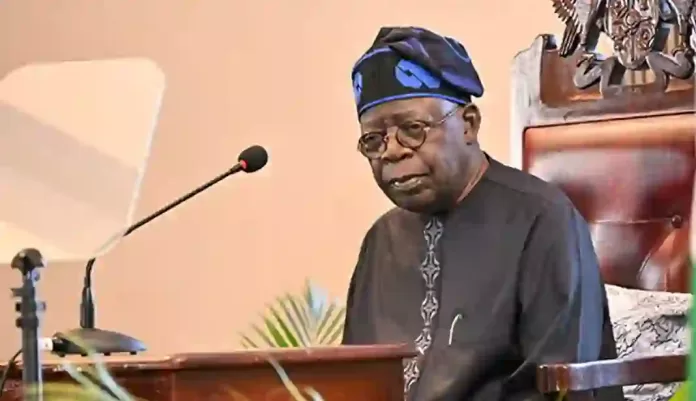
The Presidency has risen in defence of President Bola Tinubu’s decision to skip the United Nations General Assembly (UNGA) for the third consecutive year, saying there are more pressing issues at home which require attention of the president.
It doused claim that the absence is linked to any restriction on his travel to the United States.
The Senior Special Assistant to the President on Foreign Affairs and Protocol, Ademola Osodi, explained that Tinubu’s absence from the 81st UN General Assembly would not diminish Nigeria’s diplomatic standing or its role in African affairs.
Mr Osodi spoke on Channels Television’s Sunday Politics programme, shortly after the Presidency announced that Vice President Kashim Shettima would lead Nigeria’s delegation to the UNGA in New York.
He pointed out that the President’s attention was also required at home, particularly on the economy and security, while stressing that Nigeria engages through several regional and international platforms beyond the United Nations.
“President Tinubu is focusing on issues of domestic concerns like economy, security and even on other issues on other international forums which I believe equally is important.
“With or without his presence, there (it) will not change Nigeria’s role as giant of Africa, the leader of the economic resurgence of Africa.”
Osodi also rejected suggestions that Mr Tinubu was unable to travel to the US because of issues with American authorities.
“There’s absolutely no impediment,” describing the suggestion as an “old chestnut” and attributing it to politics.
The presidential aide cited his previous trips to the US with Mr Tinubu as evidence that the president had been able to travel to the country.
He recalled accompanying Mr Tinubu when the president attended the UN General Assembly in 2023, as well as a later trip in which the Nigerian delegation transited through Los Angeles before travelling to Yokohama, Japan, for engagements linked to the Japanese development agency.
“We were in America, I was there with them. So it is politics. We can talk about this every single election cycle, it is just politics,” Mr Osodi said.
Tinubu attended the 78th UN General Assembly in 2023, but did not attend the 79th session in 2024 or the 80th session in 2025. Mr Shettima represented him at both gatherings and is again leading Nigeria’s delegation to the 81st session.
The 81st UNGA general debate is scheduled to run from 22 to 28 September with Shettima expected to deliver Nigeria’s national statement and participate in high-level and bilateral meetings.
According to the Presidency, the delegation will use the meetings to advance Nigeria’s economic diplomacy and strengthen partnerships on issues including development, climate finance and reform of the global financial system.
The decision has nevertheless drawn criticism from former Vice President Atiku Abubakar, who demanded an explanation for Mr Tinubu’s third consecutive absence.
Atiku who is the presidential candidate of the African Democratic Congress (ADC), argued that although the vice president could represent Nigeria, repeated delegation could not fully replace the president’s personal participation at a major diplomatic gathering.
He said the UNGA provides an opportunity for heads of government to hold bilateral meetings, pursue investment and trade partnerships and engage on development financing.
Atiku also questioned whether Mr Tinubu’s past legal history in the US had any bearing on his repeated absence, although he acknowledged that the presidency had announced no legal restriction preventing the president from entering the country.
The presidency has rejected that suggestion through Mr Osodi’s comments, maintaining that there is no impediment to Mr Tinubu travelling to the US.
Nigeria’s Permanent Representative to the UN, Jimoh Ibrahim, has also defended the country’s representation at the General Assembly.
Mr Ibrahim said the absence of the president should not be interpreted as inadequate representation, noting that Mr Shettima and Foreign Affairs Minister Bianca Odumegwu-Ojukwu would participate in the diplomatic engagements.
He said it was not unusual for countries to delegate representation to senior officials when their presidents could not attend.
Mr Ibrahim also said Nigeria would retain its designated position at the UNGA, including its front-row seat, while Mr Shettima represents the president.
The Couple Who Hid Us From Abacha’s Men
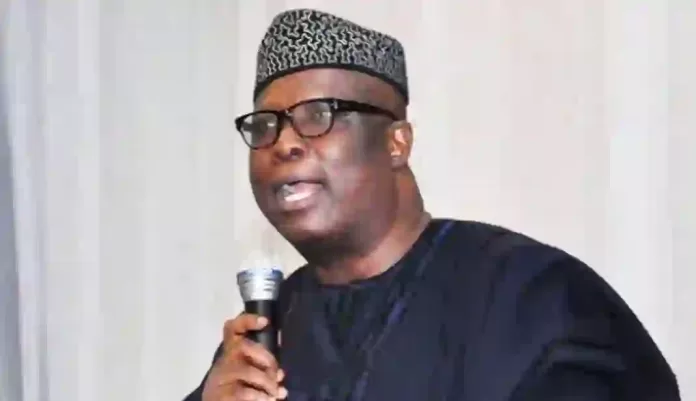
By Babafemi Ojudu
This morning, I feel compelled to write about a remarkable couple who stood by us during the perilous years of guerrilla journalism.
Those were years when even relatives were afraid to admit that they knew you. Friends avoided you like the plague. Merely offering you a meal, a bed or a place to sit could attract the attention of the security services. Yet this couple took the enormous risk of sheltering us in their modest home in Sagamu.
At the time, we were publishing TEMPO magazine—that irreverent battleaxe with which we confronted the military dictatorship.
Then came a tip-off: security operatives had been deployed from Abuja with firm instructions to get us by all means necessary. Nowhere in Lagos was safe—not our homes, not the innocuous shop we had rented in Ojota, and not the shop in Ogba where we installed computers and telephones and pretended to provide secretarial services. Unknown to the public, a small room at the back served as the production centre for P.M. News.
In the heart of bustling Isale Eko on Lagos Island, we had another shop that we secretly converted into the production centre for TheNEWS magazine. Nobody in the neighbourhood knew what we were doing. We slipped in and out, working quietly so that Nigerians could continue to learn about the atrocities of the military regime. It was my duty then to traverse these locations planning pages, editing and crafting crazy headlines and moving on.
I must pause here to pay tribute to the courageous woman , Mama Fatima (?) who supplied us with newsprint and provided that facility. People like her were the largely unacknowledged backbone of the struggle.
These were our clandestine operational bases, while Abacha’s security agencies kept submitting reports to him that we were printing from the basement of the American Embassy!
As the hunt intensified, our sources warned us that the security men were closing in and could pick up any one of us at any moment. Then Seye Kehinde said, “Let me speak to a couple I know in Sagamu. Perhaps they will agree to shelter us.”
The husband, Dr Sina Wilde, was a popular medical practitioner in Sagamu. His wife, Chief Mrs Olufunke Wilde, was the respected principal of Remo Secondary School, which Seye had attended. Even after leaving the school, he maintained a close relationship with them. They loved him dearly and admired his exceptional brilliance.
By the way, soon after leaving school Seye had once been selected to serve as personal assistant to Chief Obafemi Awolowo. Sadly, shortly after he was contacted and interviewed for the position, the sage passed away. It was later my duty to get him into African Concord magazine .
Seye eventually returned with the good news: Dr and Mrs Wilde had agreed to take us in.
And so Bayo Onanuga, Seye Kehinde and I proceeded to Sagamu. The couple received us warmly and quietly ushered us into a room in their home. Kunle Ajibade was hiding somewhere in Ibadan, while Dapo Olorunyomi was perpetually on the move. One could never be certain whether he was in Lagos, Ibadan, Kaduna, Abuja or Lokoja. Like Nelson Mandela during his years underground, Dapo was our own Black Pimpernel—appearing briefly in one city and vanishing before the security agents could determine where he was heading next.
The Wildes fed us, protected us and made us feel completely at home. Under their roof, I also witnessed a touching example of genuine love between husband and wife. You could feel the love between them. They were full of affection for each other and for others without any reservations.
One evening, we were sitting with them in their living room. Dr Wilde had a bottle of beer before him. Mrs Wilde called the house help and asked her to bring another beer mug.
One of us, surprised, asked, “Mama, you drink too?”
She replied, in effect: “I do not ordinarily drink, but I had to learn to save Sina from himself. He sometimes forgets that he is getting older and should no longer consume so much alcohol. So I help him by drinking part of what he would otherwise have consumed.”
We all laughed, but beneath the humour was something profound: devotion expressed not through grand declarations or haranguing but through companionship, vigilance and sacrifice—even if it meant sharing a bottle of beer she did not particularly want!
Dr Sina Wilde passed away a year ago, but Mama, Chief Mrs Olufunke Wilde, is still very much with us.
People like Dr and Mrs Wilde may not have appeared on the front pages. They did not write editorials, print magazines or march in the streets. But they opened their home to hunted journalists at a time when doing so could have brought the full weight of a brutal dictatorship upon them.
They were courageous without making a show of it. They risked their safety so that we could continue our work and Nigerians could continue to know the truth.
They are among the quiet heroes of our struggle.
We remember them. We honour them. And we must never forget them.
Senator Ojudu, an accomplished Journalist, was Political Adviser to former Vice President, Professor Yemi Osinbajo
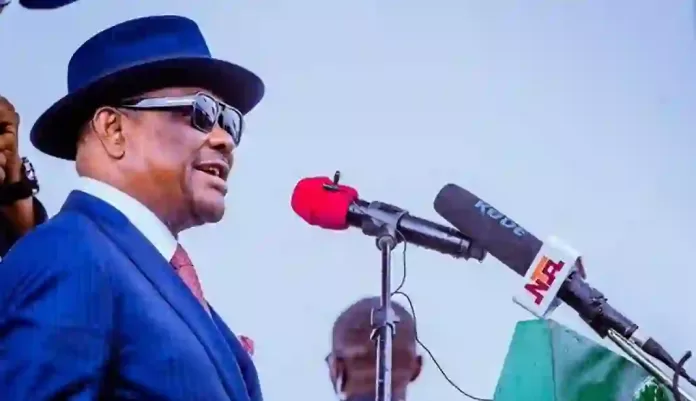
Tinubu Streamlines Campaign Council, Gives Specific Functions To Wike, Akpabio, Barau
By Ayodele Oni
President Bola Tinubu has moved to douse internal lingering crisis within the Campaign Council as he plans to streamline roles of some prominent politicians that will be useful for him as campaigns get intensified.
In the unfolding plan, the Federal Capital Territory (FCT) Minister, Nyesom Wike, is expected to get a clearly defined role in the 2027 re-election campaign, with the former Rivers state governor expected to emerge as coordinator of the campaign structure in Rivers State and the FCT, although he retains his membership of the Peoples Democratic Party (PDP).
The emerging arrangement, according to sources familiar with the developing campaign structure, is designed to harness Wike’s political network without formally placing him inside the hierarchy of the All Progressives Congress (APC), a party he has repeatedly said he does not belong to.
It also comes against the backdrop of a growing disagreement between the minister and several APC governors over how support for Tinubu should be organised ahead of the 2027 elections.
Wike has repeatedly insisted that he does not require membership of the APC or a position in the party’s Presidential Campaign Council (PCC) to work for Tinubu’s re-election.
He has also rejected suggestions that he was seeking the director general’s position in the campaign council, saying his concern was to deliver Rivers State and the FCT for the President.
THISDAY learnt last night that the arrangement would, in effect, give the minister a defined presidential campaign responsibility in two strategic territories where he has repeatedly claimed substantial influence.
But even as the campaign structure is being assembled, the sources said there would not be a single chain of command running through the entire council.
Former Zamfara State Governor, Abdulaziz Yari, will serve as Director General of the Presidential Campaign Council, but Senate President Godswill Akpabio and Deputy Senate President, Jibrin Barau, are not expected to report to him, according to sources familiar with the proposed structure.
The arrangement, THISDAY understood, reflects the political weight of the two presiding officers of the National Assembly and the desire to accommodate the different power centres expected to participate in Tinubu’s re-election campaign for next year.
Rather than a conventional military-style structure in which every senior campaign official reports to the director general, the emerging framework is expected to give some of the party’s most influential figures distinct spheres of responsibility.
Although Yari is expected to coordinate the day-to-day operations of the presidential campaign council as director general, Akpabio and Barau will operate independently of him and are expected to have direct lines of responsibility within the bigger campaign structure.
The arrangement, according to highly placed sources, is part of the effort to accommodate the various political blocs and influential figures expected to play prominent roles in Tinubu’s 2027 re-election campaign without creating unnecessary overlaps in authority.
According to a very reliable source, that same logic underpins the proposed role for Wike, who will be in charge of the FCT and River as Tinubu plans to ensure that clashes do not happen among the key drivers or top echelon of his campaign.
Only this month, Wike described himself as the “General Commander of the Political Infantry” and declared that he remained in charge of political structures in Rivers and the FCT.
“You do not need to be governor before you can be in charge. I am the General Commander of the Political Infantry; therefore, I am in charge. So also in FCT. I owe the President to give these two,” he said.
That assertion, however, brought him into direct conflict with politicians within the APC who believe elected governors should retain control of their respective party structures.
The disagreement has become particularly pronounced in recent weeks, with Wike accusing some APC governors of working against him, specifically naming Imo State Governor Hope Uzodimma and Kwara State Governor AbdulRahman AbdulRazaq.
Wike has also promoted the “Rainbow Coalition”, a cross-party political arrangement designed to mobilise support for Tinubu beyond the formal APC structure.
His argument is that politicians should be free to support the President at the presidential level while backing candidates of their choice in state and other elections.
However, that proposition has proved difficult for APC governors to accept.
Reading the resolutions of the Progressives Governors Forum a few days ago, the Imo State Governor and Chairman of the Forum, Uzodimma, declared that the governors unanimously resolved not to have anything to do with the Rainbow Coalition.
“The forum unanimously resolved that its members won’t participate in, support or endorse any alliance or political arrangement capable of undermining the reelection of Mr President, weakening the APC or adversely affecting any candidate of the party at all levels.
“In other words, the forum has no intention of supporting anybody at any level, that’s not an APC candidate because our candidates are being sponsored by our party.
The governors affirm that commitment is exclusively to all APC candidates.
“Any arrangement that can create confusion, divided loyalty or competing interests will not be entertained.
All levels of the party campaign architectures must align with the expectations of Mr President and objectives of the APC,” the APC governors’ bloc maintained.
However, Wike has reiterated that his support for the reelection of President Tinubu remained sacrosanct, saying he never promised that the PDP will not field candidates in governorship, National Assembly and States House of Assembly elections.
He also said that Tinubu knew about the rainbow coalition. But the position exposed a central fault line between Wike and the governors.
While the minister’s immediate political objective appears to be Tinubu’s re-election, he does not appear willing to subordinate his wider political network to the APC’s candidates in every state.
According to the source, it is this brewing chaos that Tinubu is seeking to nip in the bud by quickly streamlining the role that Wike, who has become his close ally, should play in the upcoming presidential polls.
The former Rivers governor’s relationship with Tinubu dates back to the 2023 election, when he and four other aggrieved PDP governors refused to support the party’s presidential candidate, Atiku Abubakar.
The group, popularly known as the G5, demanded that the PDP resolve its internal zoning and power-sharing disputes before the election. Wike subsequently supported Tinubu, despite remaining in the PDP.
Since Tinubu assumed office, the relationship has deepened. The President appointed Wike as FCT minister, making him one of the most prominent opposition-party politicians serving in the federal cabinet.
Wike has since defended the administration’s policies, promoted federal projects in the FCT and repeatedly campaigned for Tinubu’s re-election.
In Rivers, he has also argued that Tinubu has demonstrated sufficient commitment to the state to deserve the support of its people.
But his growing proximity to Tinubu has not translated into an uncomplicated relationship with the APC establishment.
Similarly, the proposed campaign coordination role is expected to navigate an unusual arrangement in which the current governor of Rivers, Siminalayi Fubara and his predecessor are members of ‘different’ political parties but are both aligned with the same presidential candidate.
Sources said the proposed structure was intended to reduce this ambiguity by defining Wike’s responsibility around Tinubu’s presidential vote rather than handing him control of the APC’s wider state organisation.
As the minister responsible for the federal capital, Wike has developed a highly visible political and administrative profile there and has already declared that he would personally coordinate efforts to secure Tinubu’s victory in the territory.
Although it has become a tradition that ruling parties lose the seat of power during presidential polls, Wike has promised to reverse the trend in the coming presidential election.
Meanwhile, the Minister of Aviation and Aerospace Development, Festus Keyamo, is being tipped for a prominent spokesperson role in the campaign. A versatile campaigner whose experience in presidential campaign remains second to none in the landscape.
He has been a thorn in the flesh of opposition figures, describing them as lacking direction, coordination and the gravitas to oust Tinubu.
Keyamo brings considerable campaign communication experience to the emerging structure. He served as a spokesperson and Director of Public Affairs in Tinubu’s 2023 presidential campaign and previously played a senior communications role in Muhammadu Buhari’s 2019 re-election campaign.
His experience has also extended beyond electioneering into government, having served as Minister of State for Labour and Employment under Buhari before becoming the current Minister of Aviation and Aerospace Development under Tinubu.
Keyamo’s possible return to the frontline campaign communications team is therefore expected to provide continuity with the President’s previous campaigns, while putting one of the administration’s most experienced political communicators at the centre of the campaign’s public messaging, it was gathered.
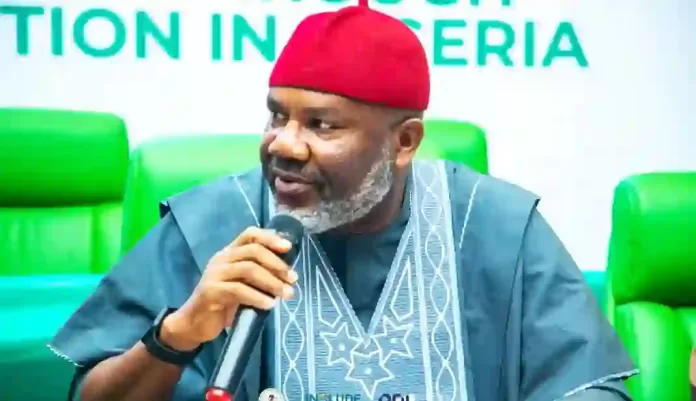
El-Buba: Obi ‘s Political Movement Receiving More El-Bubas Ahead 2027 Polls – Reps Member, Afam Ogene
By Ayodele Oni
House of Representatives member and Peter Obi ally, Hon. Victor Afam Ogene, has revealed that Peter Obi’s political movement is attracting more followers despite the departure of a couple of prominent individuals.
Obi is the presidential candidate of the Natiinal Democratic Congress, (NDC) in the 2027 general elections.
Reacting to the withdrawal of Prophet Isa El-Buba’s support, he maintained that it will not weaken Obi’s political movement ahead of the 2027 election.
Speaking during an interview with SYMFONI TV, Ogene reacted to El-Buba’s decision to withdraw his support for Obi and back the Social Democratic Party (SDP) candidate.
Ogene said that several other influential supporters have joined Obi’s camp, arguing that the movement was attracting more followers despite the departure of prominent individuals.
“For every El-Buba lost, there are about probably five El-Bubas that have now joined the Obi train.”
He also referenced the Kwankwasiyya movement, noting that it did not support Obi during the previous election cycle.
Ogene said videos of large crowds supporting Obi in other states indicated that his political appeal extended beyond Kano.
The lawmaker added that some new supporters had chosen to remain anonymous until the appropriate time.
Ogene’s comments provide further insight into his assessment of Obi’s support base as political activities intensify ahead of 2027.
CBN Cardoso: We’ re Strengthening Cooperation With MoF
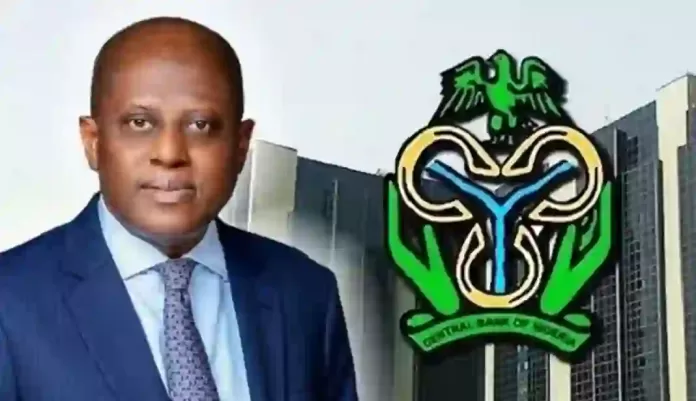
The Central Bank of Nigeria, CBN, Governor, Yemi Cardoso and the Minister of Finance and Coordinating Minister of the Economy, Taiwo Oyedele have signed a Memorandum of Understanding, MoU, to strengthen the monetary and fiscal policies in the managment ofthe economy.
Speaking at the event, Cardoso said the agreement would provide a structured framework for regular consultation, information sharing and policy coordination between the two institutions.
He said the MoU was designed to strengthen collaboration in critical areas including government cash management, debt issuance planning, liquidity forecasting, macroeconomic analysis and periodic policy consultations.
According to Cardoso, the agreement would also enhance policy coherence and improve the effectiveness of economic management.
He explained that the MoU did not establish a new relationship between the CBN and the ministry, noting that both institutions had worked together for decades on issues ranging from inflation management and debt sustainability to budget financing, exchange-rate stability and economic reform programmes.
“The difference now is that the MOU provides a clear framework for the type of consultation and information sharing between the two parties,” Cardoso said.
He added that the relationship would no longer be left to the discretion of individual office holders, but would be anchored by clear processes and enduring institutional commitment.
The CBN governor said the timing of the agreement was significant as the apex bank advances its transition towards an inflation-targeting framework.
He noted that successful inflation targeting required not only effective monetary policy but also a supportive fiscal environment.
Cardoso said regular dialogue and coordinated policy assessments would enable both institutions to better align their actions, minimise policy trade-offs and respond more effectively to emerging economic challenges.
On his part, Oyedele stressed the importance of closer cooperation between the fiscal and monetary authorities while maintaining their respective independence.
“Good economic management requires independent institutions, but independence does not mean isolation. Fiscal and monetary authorities have distinct mandates, but we serve the same economy.
“Our mandates are distinct, but our outcomes are interconnected. That is the philosophy behind this MOU. We are institutionalising coordination now,” Oyedele said.
“Oluremi mi, Through Every Mile, My Heart Has Always Remained At Home With You” – President Tinubu To Wife
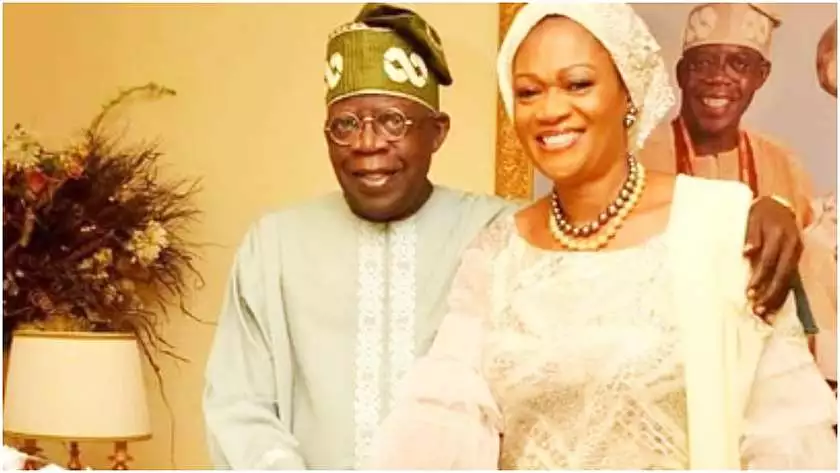
In a 15-paragraph statement personally signed by him, President Bola Tinubu, pays tribute to his wife, Nigeria’s First Lady, on her 66th Birthday.
Following the full text of his tribute.
“Oluremi mi, today, I celebrate the woman who has walked beside me with patience, grace and uncommon courage.
“Àwọn àgbà sọ pé, “Ìyàwó rere ni adé ọkọ rẹ̀.” A good wife is her husband’s crown. The Book of Proverbs, which you know far better than I do, also speaks eloquently of the worth of a virtuous woman.
“You have given these words true meaning in my life. You have stood by my side through every season.
“The burdens that were mine to bear often found their way onto your shoulders. The thoughts I could not put into words somehow found their way to you.
“In difficult times, when the future was uncertain, you stayed calm beside me and prayed with me. Through all these years, you have remained the one who truly understands me.
“More often than not, you sense when I need counsel before I ask. There have been nights when your presence alone was counsel enough. I call you my truest friend and confidante because you speak the truth plainly, even on the days I would rather not hear it.
“After a demanding day, you wait until we are alone before telling me what I need to hear. I have always cherished you for that honesty.
“Our home bears the lasting imprint of your devotion. Our children and grandchildren have grown beneath the shelter of your prayers. They carry your values of faith and kindness wherever life takes them.
“Nigerians know you for your compassion, kindness, generosity of spirit and steadfast faith. I have watched you touch lives quietly and consistently, offering hope and support to those in need.
“From the New Era Foundation during our years in the saddle in Lagos to the Renewed Hope Initiative today, your care has reached many young boys and girls, widows, elderly citizens. and women farmers across the country.
“Those affected by tuberculosis or any disease at all have found in you a compassionate advocate and a determined champion. I know the prayers you offer for people whose names you may never know.
“I also know many whom you have helped without ever meeting them. For you, compassion has never recognised the boundaries of tribe, region or religion.
“A long journey teaches a man the true value of a good partner. We have travelled a long road together. I think of the difficult decisions we talked through for hours and the sacrifices no one else saw. Laughter and prayer carried us through many of them.
“If life returned me to the beginning, I would choose the same road that led me to you. Through every mile, my heart has always remained at home with you.
“I thank you for the life we have built and the love that has held it together. Happy 66th birthday, my darling Oluremi. I pray that God Almighty will grant you many more years in good health and joy.
“May the years ahead bring you the same comfort and happiness you have so freely given to me and many others.
With all my love.”