Home Blog Page 29

Osun Gov. Adeleke Sacked Adeniyi Adeyemi, As Aide For Alleged Forgery – Report

0
Ademola Adeleke - Osun State Governor
Governor Ademola Adeleke

By Ayodele Oni 


The ongoing alleged fraudulent activities of the self-style Director-General of fictitious agency, Presidential Foreign Intervention Promotion Council, (PFIPC), Prince Adeniyi Adeyemi is not the first as

more facts emerged on his past activities, this time from his home state in Osun.


Report disclosed that Adeyemi was once an aide of Osun State Governor Ademola Adeleke and reportedly sacked for fraudulent act.


The PFIPC, which he claimed to head was disowned by the presidency, while he levelled allegation of bribery against the Chief of Staff to President Bola Tinubu, Femi Gbajabiamila.


Subsequently he has come under prosecution, with the police accusing him of forgery and impersonation among others.


It was gathered that Prince Adeyemi once served as Senior Special Assistant (SSA) on Protocol to incumbent Osun Governor for four months.


A top government source in Osun stated that : “It is true that His Excellency appointed Adeyemi in 2023. But his appointment did not last for five months as he was sacked because of his shady deals.


“He was saddled with the responsibility of handling visa and travelling documents for the governor and other government officials.


“He was not really based in Osun State at that time.

Adeniyi Adeyemi
Adeniyi Adeyemi

 “After four months of his appointment, the governor received a letter from the French embassy seeking clarification on an issue earlier raised by His Excellency. 


“We were confused because the government had never raised any letter to that embassy.


“We investigated further and discovered that Adeyemi had used his office to write to the French embassy and forged the signature of Governor Adeleke and others for the purpose he was fraudulently pursuing at that time.


“When we discovered the shady deal he was into, we informed the Chief of Staff and also the governor, who directed the Secretary to the State Government to sack him immediately.


“Governor Adeleke had warned us that he would not tolerate corruption in his cabinet when we were appointed, so he did not even entertain any plea from him or those he sent to beg for mercy.”

Embattled DG Adeniyi Adeyemi Alleges Invasion Of Parents Home By Security Agents

0
Adeniyi Adeyemi

By Ayodele Oni


Speaking from undisclosed location,  embattled Director General of Presidential Foreign Intervention Promotion Council, (PFIPC) Prince Adeniyi Adeyemi Mathew has confirmed the invasion of his mother’s house.


Prince Adeyemi, who is involved in an imbroglio with the Chief of Staff to President Bola Tinubu, Femi Gbajabiamila claimed the security agents numbering over 20 invaded his parents house in search of him.


He did not disclose where the house was located or the security agents involved, but said the incident happened on Friday night.


Prince Adeyemi was accused by the Federal Government of setting up a fake government parastatal.


Investigation so far has revealed that the agency received a budget allocation of over N1.3bn in the 2026 budget.


It also has an established office at the Federal Secretariat Abuja and recruited over 300 Staff, which Prince Adeyemi claimed was approved by the Presidency.


He also made other allegations against the person of the Chief of Staff.

‘Fake’ FPIPC: Police Arrest Father Of DG, Prince Adeniyi Adeyemi, Mother In Distress

0
Adeniyi Adeyemi
Adeniyi Adeyemi

By Ayodele Oni


There is a twist in the controversy trailing the ‘fake’ Presidential Foreign Intervention Promotion Council (PFIPC), as personnel of the Nigeria Police  arrested the father of Prince Adeniyi Adeyemi, who claims to be the Director-General of the disowned council.


The police had earlier announced that Adeyemi has been taken to court.


Officers reportedly stormed the family’s residence in Ogbomoso on Monday in search of Adeyemi.


In his absence, Adeyemi’s father was arrested alongside a family friend who had visited the home on Monday morning, leaving Adeyemi’s elderly mother in distress.


Human rights lawyer Femi Falana (SAN) confirmed the arrest, questioning its legality and describing it as a case of substituted arrest.


“The father has been arrested. There is no legal basis for substituted arrests.

“The young man has promised to show up in court, so why arrest his father?” Falana said.


The incident has sparked concerns over due process, with legal observers expected to closely monitor developments in the case.

No CBN Accounts For Controversial Presidential Council – OAGF Insists

0
Shamseldeen Babatunde Ogunjimi - AGF

By Suleiman Anyalewechi


The Office of the Accountant General of the Federation, OAGF,  has debunked claims that the controversial and phantom Presidential Foreign Intervention Promotion Council PFIPC owned and operated a  Central Bank of Nigeria CBN domiciliary accounts.


The Presidency, in the wake of the scandal over the status of the non-existent agency, had in a statement from Presidential Adviser, Bayo Onanuga, noted that the PFIPC Director General, Prince Adeniyi Adeyemi misled the AGF into opening CBN account for the agency.


According to Onanuga ,the police in the course of its inquest into the circumstances surrounding the status of the agency, discovered that Adeyemi used documents he allegedly fraudulently obtained from the  office of the AGF to open account with the Country apex financial institution.


However, responding to the ongoing controversy, the OAGF insisted that although steps were started for the purpose of opening CBN accounts by the PFIPC, the processes were never concluded.


Bawa Mokwa, the Director of Public Relations in the OAGF, informed that the account opening processes were initiated shortly after the convener of the agency, Adeyemi presented a purported letter of appointment as the DG of an already existing Government body.


He emphasized that the processes later got stalled  following the inability of the progenitors of the phantom interventionist agency to present names of the would-be signatories to the accounts .


“The account has not seen the light of the day. It has also not received one Kobo because it was never fully opened and activated.


“The Accountant General has not released any money to the agency because there is no operational account for such payments”, Mokwa submitted.


While admitting that the agency may have had  budgetary allocations to its name, Mokwa however, noted that provisions in the Appropriation Act does not automatically translate into official release of funds.


He emphasized that there must be certain minimum acceptable standards and variables that have to be met before a Government body receives budgetary allocations and other entitlements.


This is as the OAGF debunked claims suggesting that salaries were also paid to staff of the agency.


It will be recalled that the office of the Head of Service of the Federation, HoSF, was reported to have greenlighted the PFIPC to source and recruit about 300 staffers for the operations of its offices across the country.


But according to Mokwa, all federal agencies are not permitted to recruit staff without the expressed approval of relevant authorities, including the Federal Character Commission FCC, the Budget Office, and the Federal Civil Service Commission, FCSC .


He noted that such procedures must be strictly adhered to before such staff are enrolled on the Integrated Payroll and Personal Information System IPPIS.


He explained that despite an agency being granted a waiver to recruit, an approval from all relevant bodies must be obtained before the commencement of the process.


The status of the PFIPC, and its supposed DG, Adeyemi, as well as the alleged involvement of Government officials, especially the President’s Chief of Staff, Femi Gbajiabiamila, has continued to occupy public discuss, with not a few calling for an independent probe to unravel the actual circumstances surrounding the unfortunate development .

The Fake Agency Scandal: A Nation Must Now Ask Who Gave a Phantom Institution Official Life

0
Abraham Amah
Abraham Amah

By Abraham Amah


The controversy surrounding the alleged fake presidential agency has moved beyond the personality of Prince Adeniyi Adeyemi Matthew and the denial issued by the Presidency. It has now become a national integrity test. The Presidency says the so-called Presidential Foreign Intervention Promotion Council cum Presidential Economic Advisory Council is fictitious, and that Adeyemi allegedly forged documents, impersonated a government appointee, and opened a CBN account by misleading the Office of the Accountant-General of the Federation. It also states that no government money was transferred into the account.   But even this official explanation raises deeper questions than it answers.


If the agency was fake, who gave it address, access, administrative space and bureaucratic appearance? Reports say Adeyemi allegedly operated from an office at the Federal Secretariat Complex in Abuja, where he reportedly held meetings while presenting himself as a government official.   That single fact, if fully established, should disturb every serious Nigerian. A fake agency operating from a federal government environment is not ordinary fraud. It suggests possible institutional negligence, internal compromise, weak verification, or the frightening possibility that unofficial actors can walk into the corridors of government and wear the garments of authority without immediate detection.


The first probe must therefore determine the physical and administrative identity of this alleged agency. Where exactly was its office located? Who allocated the office? Was there an official tenancy, room allocation, access pass, security clearance, signage, letterhead, staff register, utility record or visitor log? Which ministry, department or agency controlled the premises? Who approved the use of the office? Were cleaners, drivers, clerks, protocol officers, security personnel or dispatch riders attached to it? Were any serving federal civil servants deployed, seconded, borrowed, paid or informally instructed to work with it? If yes, by whom and under what authority?


The second probe must focus on personnel and payroll records. If this council had people parading as staff, Nigerians deserve to know whether any of them were genuine federal workers. Were names captured on IPPIS or any personnel platform? Were allowances processed? Were duty tour allowances, local travel claims, foreign mission requests, office imprests, procurement memos or consultancy fees prepared in the name of the alleged agency? If the Presidency insists that the agency does not exist, then every name connected to it must be exposed, not necessarily for public humiliation, but for institutional accountability.


The third probe must interrogate the budget trail. The most embarrassing part of the scandal is the report that a body described as non-existent by the Presidency allegedly appeared in the 2026 Appropriation Act with a ₦1.3 billion allocation.   Other reporting has also noted public concern over the budgetary provisions linked to the disputed council, with legal voices calling for an independent probe rather than executive self-clearance.   If a non-existent agency can find space in a national budget, then the issue is not just forgery; it is budgetary contamination.


The National Assembly, especially the Senate and House Committees on Appropriation, must explain how such an entry passed through scrutiny. Was there a budget defence? Who appeared for the agency? Which committee handled the line item? Was the agency listed under the Presidency, SGF, Foreign Affairs, Finance, Budget and Economic Planning, or any other institutional head? Was its enabling law requested? Was its establishment circular verified? Was its mandate cross-checked against the official list of federal ministries, departments and agencies? If nobody appeared to defend the budget, why was the allocation approved? If somebody appeared, under whose authority did that person appear?


The fourth probe must examine the relationship with the Office of the Secretary to the Government of the Federation. No presidential council or federal intervention body should exist outside the knowledge of the SGF’s office. The SGF is central to the coordination of federal government structures, committees, councils, boards and special agencies. Therefore, the investigation must determine whether any file ever existed in the SGF’s office for this alleged council. Was any establishment memo processed? Was any appointment routed through the SGF? Was any inauguration planned? Was any circular issued? Was any inter-ministerial correspondence exchanged? If the answer is no, then the Budget Office and National Assembly must explain how a structure unknown to the SGF found its way into public finance records.


The fifth probe must focus on the Office of the Accountant-General of the Federation. The Presidency itself has said the police found that Adeyemi allegedly opened a CBN account by misleading the Office of the Accountant-General, while also stating that no public funds were transferred into the account.   That explanation is important, but it must be independently verified. Who processed the account opening request? What documents were submitted? Who certified them? What due diligence was carried out? Was there a letter from the Presidency, SGF, Budget Office or Ministry of Finance? Was the account captured on TSA? Was it active, dormant, restricted or transactional? Were any inflows attempted? Were any payment mandates raised and blocked?


The sixth probe must bring in the Auditor-General for the Federation. This is not only a police matter; it is also a public accounts matter. The Auditor-General should review whether any expenditure, commitment, procurement, personnel cost, overhead, capital item or contingent liability was recorded in the name of the alleged council. If the agency appeared in budget documents, the audit question is simple: did the appearance remain only on paper, or did it generate financial movement, administrative action or liability against the federation?


The seventh probe must examine legislative oversight records. Every agency that receives public allocation should fall within some oversight jurisdiction. Which committee claimed oversight over this alleged body? Were oversight visits conducted? Were invitations issued? Were reports received? Were performance documents submitted? Were procurement plans, quarterly implementation reports or budget performance records filed? If there was no oversight, then the scandal reveals a failure of legislative diligence. If there was oversight, then those records must be produced immediately.


The eighth probe must look at the foreign affairs and diplomatic angle. The Presidency has alleged that Adeyemi falsely solicited a note verbale from the Ministry of Foreign Affairs to enable himself and his staff to obtain United States visas.   That allegation carries reputational consequences for Nigeria. Which desk handled the request? Was any note verbale issued? Were any foreign missions contacted? Were diplomatic privileges, protocol support or visa facilitation requests made? Were foreign nationals, embassies, multilateral institutions or development partners engaged under the name of this alleged agency? This is where fraud, if established, becomes not just local deception but potential diplomatic embarrassment.


This is why the matter must not be reduced to “Gbajabiamila versus Adeyemi.” That would be too narrow. The Chief of Staff has denied involvement, and the Presidency says his office first alerted security agencies to the alleged fraud.   But in a matter of this magnitude, denial is not enough. The proper institutional response is an open, independent and multi-agency inquiry involving the Police, ICPC, EFCC where necessary, the Budget Office, SGF, Accountant-General, Auditor-General, CBN, National Assembly and the Office of the Head of Service.


The central question is no longer whether one man allegedly forged a letter. The central question is whether Nigeria’s public administration has become so porous that a ghost institution can secure office space, claim staff, seek diplomatic recognition, open financial channels and reportedly appear in the national budget. If that is possible, then the scandal is bigger than the accused person. It is a warning that the machinery of government may have gaps wide enough for organised imposture to pass through.


The Presidency must now publish a clear status report. The National Assembly must open a public hearing. The Budget Office must identify the source of the budget entry. The SGF must confirm whether any establishment record exists. The Accountant-General must disclose the account-opening trail. The Auditor-General must audit all related transactions and commitments. The CBN must clarify the status of any account. The security agencies must identify every insider, facilitator, staff member, consultant, aide or public officer connected to the affair.


Until these answers are provided, Nigerians will be entitled to ask: who created the phantom? Who housed it? Who staffed it? Who budgeted for it? Who approved it? Who supervised it? Who hoped to benefit from it? And most importantly, who in government failed to stop it before it became a national scandal?


Amah, a frequent commentator on national issues, writes from Umuahia

Ondo Gov. Aiyedatiwa Celebrates Olowo, Oba Ogunleye On 60th Birthday

0
Governor Lucky Aiyedatiwa and Ajibade Gbadegesin Ogunoye III

By Ayodele Oni


Ondo State Governor,  Lucky  Aiyedatiwa, has described Oba (Dr) Ajibade Gbadegesin Ogunoye III, the Olowo of Owo and Chairman of the Ondo State Council of Traditional Rulers, as a royal father of wisdom, integrity, and remarkable foresight


The was contained in the governor’s message to celebrate the Owo Monarch on his 60th birthday.


In a message, Governor Aiyedatiwa noted that the monarch has over the years provided purposeful leadership to the people of Owo Kingdom and making invaluable contributions to the peace, unity, and development of Ondo State.


The Governor also acknowledged Oba Ogunoye’s wealth of experience as a legal practitioner, accomplished administrator, retired Permanent Secretary, and Chancellor of the Federal University of Technology, Babura, Jigawa State, noting that it has continued to enrich his service to humanity.


He stated that : “On behalf of the Government and the good people of Ondo State, I heartily congratulate His Imperial Majesty, Oba (Dr) Ajibade Gbadegesin Ogunoye III, the Olowo of Owo and Chairman of the Ondo State Council of Traditional Rulers, on the joyous occasion of his 60th birthday.


“This milestone is a celebration of a life devoted to service, leadership, and the preservation of our rich cultural heritage.


“Over the years, Kabiyesi has distinguished himself as a royal father of wisdom, integrity, and remarkable foresight, providing purposeful leadership to the people of Owo Kingdom and making invaluable contributions to the peace, unity, and development of Ondo State.


“As Chairman of the Ondo State Council of Traditional Rulers, Kabiyesi has continued to foster harmony among our revered monarchs, while strengthening the partnership between the traditional institution and government in our collective quest for sustainable development.


“His wealth of experience as a legal practitioner, accomplished administrator, retired Permanent Secretary, and Chancellor of the Federal University of Technology, Babura, Jigawa State has continued to enrich his service to humanity.


“On this special occasion, I join your family, the sons and daughters of Owo Kingdom, friends, and well-wishers in thanking Almighty God for His faithfulness over your life.


“It is my prayer that He grants Your Imperial Majesty many more years in sound health, renewed strength, divine wisdom, and a peaceful, prosperous, and impactful reign.”

23-Year Old Nigerian Killed By Russian Airstrike Days To Her Graduation Ceremony

0
Nnani Adaobi Marian

By Akinwale Kasali


The family of Nigerian born, Nnani Adaobi Marian has been thrown into mourning following the death of the promising young Medical Graduate, who was killed by a Russian Airstrike.


The 23-year-old died days to her Graduation Ceremony after sustaining severe injuries in a Russian airstrike on the eastern Ukrainian city of Kharkiv.


It was gathered that the final year Student at Kharkiv National Medical University was preparing for the Graduation and was full of life before the unfortunate incident happened, leaving her critically injured on June 29, 2026, when Russian forces launched an aerial bombing on the Kholodnohirskyi District.


She was initially treated in Kharkiv before being transferred to Germany for advanced medical care. Despite the efforts of doctors in both countries, she succumbed to her injuries on Sunday, July 5, 2026.


Her death was confirmed by Kharkiv National Medical University, which in a statement described Adaobi as an exceptional student whose compassion, intelligence and dedication left a lasting impression on those around her.


“Nnani Adaobi Marian was a bright, sincere and kind-hearted person. She easily found common ground with people and was distinguished by her thirst for knowledge, hard work and sincere desire to help others,” the University stated.


The institution added that following the attack, she suffered life-threatening injuries and received treatment first in Kharkiv before continuing her care in Germany.


“Everyone sympathized, helped and hoped for her recovery, but unfortunately, her life could not be saved,” the statement added.


The Kharkiv Regional Prosecutor’s Office also confirmed the incident, stating that medical personnel fought tirelessly to save Adaobi’s life until the very end.


According to the prosecutors, the June 29 airstrike left at least 12 people injured.


The late Adaobi was said to have been studying medicine at Kharkiv National Medical University since 2020 and was on the verge of completing her medical education.


It was gathered that deceased during her studies undertook internships at the University of Cambridge and Biruni University, reflecting her commitment to academic excellence and professional development.


Reports indicated that at the time of the attack, Adaobi and her friend, Fatima Huseynova, were on their way to a graduation photoshoot when the bombs struck.


Fatima was killed instantly at the scene, while Adaobi was rushed to hospital in critical condition.


Her death has sparked an outpouring of grief among fellow students, lecturers and members of the Nigerian community, as many mourn the loss of a promising young doctor whose life and career were cut short by the ongoing war in Ukraine.

Group Calls For State Police In Abuja, Counters FG

0
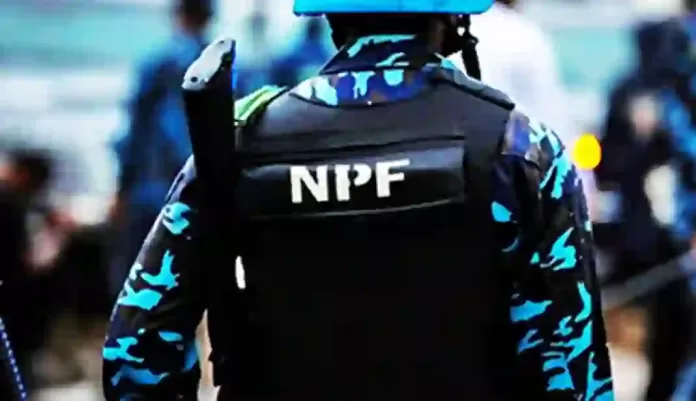
Police Officer

By Akinwale Kasali


The Network of Journalists on Indigenous Issues, NEJII, has faulted the Federal Government’s exclusion of Abuja in its planned establishment of State Police.


The Group said Abuja deserves to have local Police drawn from indigenous people in the area whose ancestors owned the land.


The group made this remarks while responding to the statement credited to the Presidency that Abuja, the Federal Capital, would not have State Police.


The Presidency said the FCT will be under the jurisdiction of the Nigeria Police Force which would be renamed the Federal Police Service.


NEJII in a statement signed by its official, Fred Ojinika, said Abuja, though, not a state capital, should not be denied the territory of local Police drawn from Abuja Original Inhabitants, AOIs.


NEJII said security is tied to territorial sovereignty, physical and economic ancestry adding that the position of the Federal Government negates the United Nations Declaration on the Rights of Indigenous Peoples.


“The idea of not having State Police in Abuja is wrong. There are some 2.5million indigenous people in the Federal Capital Territory. There should be State Police in Abuja which should be constituted by indigenous people in the FCT”, NEJII stated  in the statement issued on Sunday.


The group howevet called on the Presidency and the National Assembly to reject any proposal that excludes indigenous people from State Policing.


“The Nigerian Government should learn from the police structure in Washington, London and New York.


“The global best practice is for State Capitals to have their own police usually, largely drawn from original inhabitants of the capital city. In the case of Abuja, there are some nine indigenous ethnic groups in the FCT. They should not be denied of this historic opportunity”.


It also stated that the proposed State Police should recognise Abuja Metropolitan Police drawn from indigenous inhabitants of the FCT.


It argued that Abuja Original Inhabitants  form the majority of the people in the FCT. They own the land. They are attached spiritually, emotionally and sociologically to the land.


“It is their ancestral home. Having been denied the status of a state, they cannot again be denied of being stakeholders in the policing of Abuja. In fact, the Abuja Original Inhabitants are the first nation, they are the first stakeholders that should be considered in Abuja Policing”.


The network said it was unfortunate that Abuja original inhabitants are denied the right to vote for State House of Assembly members and Governors and now that will not be involved in State Police, a critical aspect necessary for the protection of indigenous values, culture, heritage and forest resources.


NEJII said across the 36 states, Police will be recruited mostly from indigenes of the states.


“With the lack of State Police in Abuja, the implication is that some 2.5million representing nine ethnic groups will be denied and marginalised from involvement in state policing. This is a conscious way to further marginalise and isolate Abuja Original Inhabitants, AOIs”.

SERAP Demands Explanation From Akpabio, Abass On N1.3bn Allocation To Alleged Fictitious PFIPC

0
Godswill Akpabio

By Akinwale Kasali


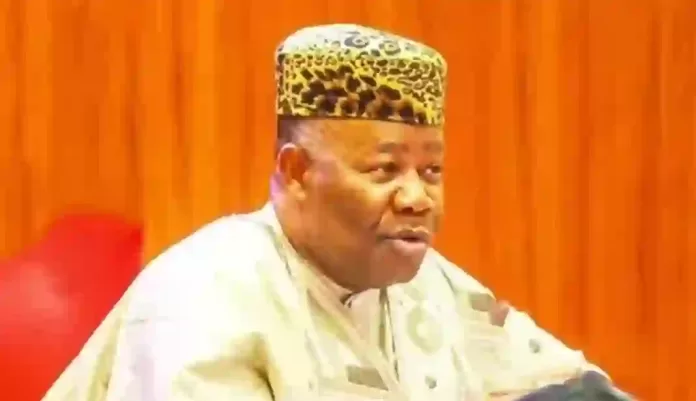
Senate President, Godswill Akpabio and Speaker of House of Representatives, Rt. Hon. Tajudeen Abbas have come under scrutiny from the Socio-Economic Rights and Accountability Project, SERAP.


SERAP has challenged the principal officers of the National Assembly to “urgently disclose certified copies of all documents relating to the consideration and approval of the allocation of over ₦1.3 billion (₦1,302,978,784) to the Presidential Foreign Intervention Promotion Council (PFIPC)/Presidential Economic Advisory Council in the 2026 Appropriation Act.”


It urged Upper and Lower Chamber of the NASS “to promptly exercise the National Assembly’s constitutional powers under sections 88 and 89 of the Nigerian Constitution to investigate the circumstances surrounding the allocation to ‘a fictitious presidential council’ in the 2026 Appropriation Act and to identify anyone responsible for any irregularities.”


It also urged them to “provide certified copies of records identifying the members of the National Assembly committees that considered the allocation and the names and official designations of all public officers or representatives who appeared before those committees to defend the proposed allocation.”


SERAP further urged them to “clarify whether the allocation formed part of the Executive’s original Appropriation Bill or was introduced or amended during the appropriations process and whether any lawmaker raised concerns or sought clarification regarding the legal status, establishment or operational mandate of the ‘fictitious body’; and the action taken by the National Assembly in response.”


According to reports, the Presidential Foreign Intervention Promotion Council (PFIPC)/Presidential Economic Advisory Council was allocated over ₦1.3 billion in the 2026 Appropriation Act. However, the Presidency has publicly stated that the body is fictitious and was never established by the Federal Government.


In a Freedom of Information request dated 4, July, 2026, and signed by SERAP’s deputy director Kolawole Oluwadare, the organisation said, “These conflicting accounts raise serious concerns regarding the integrity of Nigeria’s appropriations process, legislative oversight, public financial management and accountability.”


SERAP said, “Nobody has a more sacred obligation to obey the law than those who make the law. The National Assembly ought to keep an eye on what the Executive is doing and to keep the Presidency and agencies of government in check including before and during the appropriation process by thoroughly scrutinising Executive’s budget proposals before any authorisation.”


According to SERAP,  “The Nigerian Constitution 1999 [as amended] places significant responsibilities on the National Assembly in relation to the appropriation process. These constitutional duties require the National Assembly not merely to approve the Executive’s budget proposals, but to scrutinise, debate and authorise public expenditure in line with the Constitution”.


The FoI request, read in part: “Nigerians have a right to know whether public funds were appropriated for an entity that was not lawfully established and, if so, how this occurred.


“Providing the requested information would enable Nigerians to assess whether the National Assembly discharged its constitutional responsibilities under sections 80, 81, 88 and 89 of the Constitution in scrutinising and approving the allocation.


“We would be grateful if the recommended measures are taken within seven days of the receipt and/or publication of this letter. If we have not heard from you by then, SERAP shall take all appropriate legal actions to compel you and the National Assembly to comply with our request in the public interest.


“Disclosure of the requested information would strengthen public confidence in the credibility of the National Assembly and the integrity of the appropriations process, promote transparency in the management of public resources, and enable citizens to meaningfully scrutinise the exercise of parliamentary oversight.


“The requested records concern matters of exceptional public importance. They relate directly to the integrity of Nigeria’s budgetary and appropriations process, the lawful establishment and funding of public institutions, the expenditure of public funds, and the effectiveness of legislative oversight.


“The National Assembly has a clear obligation to disclose the requested information, particularly where there are credible allegations of governmental impropriety and possible misuse of public resources. The basic purpose of the Freedom of Information Act is to ensure an informed citizenry, enabling citizens to check corruption and hold public officials and institutions accountable.


“The United Nations Human Rights Committee has affirmed that Article 19 of the International Covenant on Civil and Political Rights to which Nigeria is a state party guarantees a right of access to information held by public bodies and requires governments to proactively place information of public interest in the public domain while responding promptly to requests for information.


“The African Commission on Human and Peoples’ Rights has consistently interpreted Article 9 of the African Charter on Human and Peoples’ Rights as requiring maximum disclosure of information held by public authorities and recognising access to information as fundamental to transparency, accountability, democratic governance and public participation.


“The internationally recognised Tshwane Principles on National Security and the Right to Information further provide that no public authority should be categorically exempt from disclosure obligations and recognise an overriding public interest in the disclosure of information concerning corruption, abuse of public office and the use of public funds.


“The Nigerian Constitution, the Freedom of Information Act and Nigeria’s international legal obligations rest upon the fundamental principle that public institutions are accountable to the people and that citizens are entitled to information concerning the conduct of public affairs.


“The disclosure of the requested information and documents would advance these constitutional and statutory objectives by promoting openness, strengthening legislative accountability and enhancing public confidence in the management of public resources.


“According to widely reported allegations, the Presidential Foreign Intervention Promotion Council (PFIPC)/Presidential Economic Advisory Council was allocated over ₦1.3 billion [₦1,302,978,784] in the 2026 Appropriation Act.


“However, the Presidency has publicly denied that the body exists. In a statement issued on 1 July 2026, the Presidency stated that the Presidential Foreign Intervention Promotion Council (PFIPC)/Presidential Economic Advisory Council is a fictitious body that was never established by the Federal Government.”

CSOs Hold Anti Terrorism Rally  In Edo

0
Anti Terrorism Protest

By Ayodele Oni


A coalition of Civil Society Organisations,(CSOs) in collaboration with the Department of State Services (DSS), has urged Nigerians to take a more active role in safeguarding the nation’s security by promptly reporting suspicious activities and criminal movements to security agencies.


This is as Nigeria battles rising cases of kidnapping, cult-related violence, terrorism, banditry, and other forms of violent crime.


The appeal was made during an anti-terrorism and anti-social vices awareness rally organised by the CSOs in partnership with the DSS in Benin City.


The coalition maintained that timely, credible intelligence from members of the public remains critical to preventing attacks, disrupting criminal networks, and strengthening security across the country, stressing that effective policing cannot succeed without citizens’ cooperation.


Speaking with journalists on the sidelines of the rally, one of the participants, Dr. Bright Oniovokukor, said the fight against insecurity should not be left to the government and security agencies alone but must be embraced as a collective responsibility of all Nigerians.


According to him, the awareness campaign was designed to sensitise residents to the vital role they play in combating kidnapping, cultism, banditry, armed robbery, terrorism, and other security threats through vigilance and the timely sharing of credible information with relevant authorities.


“We are saying no to terrorism in all its forms.


“When we talk about terrorism, we are referring to cultism, kidnapping and every other social vice that threatens the peace and security of our communities,” Oniovokukor said.


According to him, criminals are not invisible, but often operate within communities.


“Kidnappers, terrorists and bandits are not ghosts. They are people who either live among us or move around our communities.


“When we notice strange behaviour, unusual movements or suspicious activities, we must report them to the appropriate security agencies.


“Our security agencies need intelligence to do their work effectively, and that intelligence comes from citizens. If you see something, say something. When you do, the government and security agencies can act.”


Dr. Oniovokukor stressed that the campaign was designed to encourage families and community members to become more vigilant and take ownership of the nation’s security.


“Fathers, mothers, brothers and sisters all have a role to play. Every Nigerian must stand up and contribute to making our communities safer,” he said.


Explaining the reason for organizing the rally, he said the growing wave of insecurity and emerging trends such as self-kidnapping and the spread of false information made it necessary to raise public awareness.


“Enough is enough. We are witnessing too many disturbing developments, including cases of self-kidnapping and misinformation.


“We felt it was important to come out and remind Nigerians that those committing these crimes are not strangers, they are people we know, our friends, relatives, brothers and sisters.


“We are calling on everyone to keep their hands off kidnapping, cultism and every other form of social vice. Together, we can build a safer Nigeria”, he said.


Also speaking, Comrade Solomon Idiogbe stated that security agencies cannot tackle the nation’s insecurity alone, stressing that ensuring security is a collective responsibility.


“We believe the time has come for everyone to join forces with the security agencies and speak out.


“We want to remind the public that when you see something, you should say something. Landlords must also be vigilant about the kind of tenants they accommodate.


“Everyone has a role to play in supporting the security agencies to combat terrorism and other forms of criminality across the state. The security agencies are not spirits.


“They rely on credible information and the cooperation of the people to carry out their duties effectively.


“This conscientization rally is aimed at encouraging the public to work closely with the security agencies and the government to tackle the hydra-headed menace of terrorism, kidnapping, banditry, armed robbery, and cultism.


“These crimes cannot be curbed by the security agencies alone. Security is everyone’s responsibility,” Idiogbe said.