Business mogul, Femi Otedola has revealed how former military President Ibrahim Babangida gave former President Goodluck Jonathan the confidence to take over power from late President Umaru Yar’adua after the protracted illness of the late president which created political tension in the country between 2009 and 2010.
Yar’Adua, had at the time traveled out of the country to treat himself without handing over power to his deputy, Jonathan.
His long absence had left a power vacuum and sparked a constitutional crisis with pressure on Jonathan to take over power.
Amid the confusion that rocked the country then, Otedola said Babangida sent a message through him to President Jonathan “to seat on Yar’Adua’s Chair’ during the federal Executive Council, FEC meeting.
Otedola disclosed this in his yet to be released book
The Businessman said “Worried by the tension and uncertainty, I decided to do something on my own,” Otedola wrote.
“In the first week of February 2010, I went to Minna, Niger state, along with Hajia Bola Shagaya, to commiserate with General Ibrahim Babangida over the death of his wife, Maryam.
Jonathan Took Over From Yar’Adua
“At his Hilltop residence, we spoke on a wide range of issues, but I told him I needed to discuss an urgent and vital issue. He took me to his study, where two of us were alone. I told him that the state of the nation had been agitating my mind.
“Your Excellency, how can we get out of this logjam? The political heat is too much,” Otedola asked Babangida, in which the former military leader said “Femi, advise your friend that when he gets to the Council Chambers next week for the Federal Executive Council (FEC) meeting, he should go and sit on Yar’Adua’s chair.”
After delivering the message to Jonathan, the former president asked Otedola ‘What do you think?’ to which the businessman told him ‘Be a man, Your Excellency. Go and sit on that chair!’
According to him Jonathan “looked at me for some time and responded that he would think about it.
“A week later, on Tuesday, February 9, the National Assembly adopted the famous ‘Doctrine of Necessity’ to make Dr Jonathan the Acting President pending the return of President Yar’Adua from his medical leave. Behind-the-scene moves by prominent Nigerians preceded this decision. The legislative resolution was unprecedented, but the nation had been tensed up, and the fault-lines so stoked that an unusual solution was needed to address the unique situation.
“With Jonathan now legally empowered to act as President, there remained the critical optics: would he stand-in for the President confidently and authoritatively? Or would he try to maintain a subdued outlook?
“The following day was the FEC meeting. As Dr Jonathan entered the Council Chamber, he made to sit on the chair of the Vice President—his usual seat.
“As the protocol officer pulled out the VP’s chair, Dr Jonathan marched towards the seat reserved for the President. And he sat on it! That was the moment Dr Goodluck Jonathan took control of power. By that act, he sent a strong signal to all Nigerians that he was now in charge. The same day, Jonathan even reshuffled the cabinet,” Otedola said.
Taliban fighters take control of Afghan presidential palace after the Afghan President Ashraf Ghani fled the country, in Kabul, Afghanistan, Sunday, Aug. 15, 2021. (AP Photo/Zabi Karimi)
By James Orji
President Muhammadu Buhari has disclosed that the fall of Kabul to Taliban forces has grave implications for Africa. The president in an article with Financial Times of London said the United States miscalculated by withdrawing its troops from Afghanistan.
Kabul fell to the Taliban on Sunday amidst growing concerns of worsening terrorist’s activities across the world, particularly in Africa where Boko Haram and ISWAP terrorists have taken over some swathes of lands.
The situation will even get worse now that the Taliban have declared an Islamic Republic, Buhari said, though he said it’s possible to defeat terror by creating jobs in the continent.
According to him “Though some believe the war on terror winds down with the US departure from Afghanistan, the threat it was supposed to address burns fiercely on my continent. Africa is the new frontline of global militancy.
“Yet few expect the outlay expended here to be as great as in Afghanistan. The fight against terrorism begun under the George W. Bush administration was never truly global.
“Despite rising attacks across Africa in the past decade, international assistance has not followed in step. Mozambique is merely the latest African state in danger from terrorism.
“The Sahel remains vulnerable to Boko Haram, 20 years after its formation, and other radical groups. Somalia is in its second decade fighting the equally extreme al-Shabaab. Many African nations are submerged under the weight of insurgency.
He said Nigeria and the entire Sahel have been battling Boko Haram for more than 20 years, while al-Shabab continue to battle the government of Somalia.
According to him “As Africans, we face our day of reckoning just as some sense the west is losing its will for the fight. It is true that some of our western allies are bruised by their Middle Eastern and Afghan experiences.
He further explained that if extremist groups were able to hold territory, it could inspire disillusioned people living in the west to commit heinous acts of terror in their own countries, he stressed.
He pointed out, however, that military force alone cannot defeat terrorism, adding that Africa must confront terrorism on their own, rather than fully relying on the United States and its allies to deal with the problem.
“We must not complacently assume that military means alone can defeat the terrorists. If Afghanistan has taught us a lesson, it is that although sheer force can blunt terror, its removal can cause the threat to return.
“The US and its western allies cannot be expected to underpin the security of others everywhere and indefinitely. Africa has enough soldiers of our own,” Buhari said.
36 state governors under the aegis of the Nigeria Governors’ Forum, NGF has condemned the barbaric killings of 23 travelers at Rukuba Road in Jos North Local Government Area of Plateau.
The travelers were killed while returning from a religious programme from Bauchi on Saturday.
The Special Task Force, Operation Safe Haven, OPSH in Plateau, has arrested over 20 suspects, over the early morning killings at Rukuba Road, Jos North Local Government Area of the state.
OPSH is responsible for maintaining peace in Plateau and its environs.
Reacting to the tragic killing, the governors, in a statement issued by its Head, Media, and Public Affairs, Abdulrazaque Bello-Barkindo, in Abuja on Sunday, said the killing was barbaric and senseless, adding that Nigerians should be able to traveled anywhere in the country without molestation.
The governors said “These dastardly actions of Nigeria’s once peaceful locals which have resulted in unwarranted and needless deaths diminish us all as a people and pulls our country down to the deepest recesses of the absence of civilization.
“They also cause all kinds of reprisal killings and injurious interactions that do nobody any good.
“The Forum views with extreme disgust the horrible and thoughtless loss of precious lives and declare unequivocally that it must stop forthwith.”
According to them the country’s security organisations to fish out all those involved and bring them forward to face the full wrath of the law to serve as a deterrent to those who are contemplating similar action.
They added that no human life deserves to be wasted on any ground; be it religious or ethnic, or even on the frivolous altar of mistaken identity, hoping that Nigerians would desist from taking the law into their own hands so that the country could once again become a safe place for all.
They also called on all aggrieved ethnic nationalities and their militia to avoid needless killings by always seeking law enforcement assistance and legal redress, noting that peace is required for development to take place.
President Muhammdu Buhari has already directed security forces to fish out the killers, warning that his government will not allow wanton killings of innocent citizens.
As Jambites and prospective students of tertiary institutions are desperately looking for placements for the next academic year, the Nigeria Universities Commission, has for the umpteenth time, warned them against running to fake Universities, Polytechnics and Colleges of Education.
A good number of admission-seeking students fall into the hands of these institutions and their unscrupulous owners. By the time they find out, it has become late.
They can neither go to National Youth Service Corp or get a job. Worse, they stand the risk of prosecution for parading fake certificates.
Following are the list of such fake institutions as released by the NUC.
There are 58 of them.
*1.University of Accountancy and Management Studies, operating anywhere in Nigeria
*2. Christians of Charity American University of Science and Technology, Nkpor, Anambra State or any of its other campuses
*3. University of Industry, Yaba, Lagos or any of its other campuses
*4. University of Applied Sciences and Management, Port Novo, Republic of Benin or any of its other campuses in Nigeria
*5. Blacksmith University, Akwa or any of its other campuses
*6. Volta University College, HO, Volta Region, Ghana or any of its other campuses in Nigeria
*7. Royal University, Izhia, PO BOX 800, Abakaliki, Ebonyi State or any of its other campuses
*8. Atlanta University, Anyigba, Kogi state or any of its other campuses
*9. United Christian University, Macotis campus, Imo State or any of its other campuses
*10. United Nigeria University College, Okija Anambra State or any of its other campuses.
*11. Samuel Ahmadu University, Makurdi, Benue State or any of its other campuses
*12. UNESCO University, Ndoni, Rivers State or any of its other campuses
*13. Saint Augustine’s University of Technology, Jos, Pleateu State or any of its other campuses
*14. The International University, Missouri USA, Kano and Lagos studies centres or any of its other campuses in Nigeria
*15. Collumbus University, UK, operating anywhere in Nigeria
*16. Tiu International University, UK operating anywhere in Nigeria
*17. Pebbles University, UK operating anywhere in Nigeria
*18. London External Studies, UK, operating anywhere in Nigeria
*19. Pilgrims University operating anywhere in Nigeria
*20. Lobi Business School, Makurdi, Benue State or any of its campuses in Nigeria
*21. West African Christian University operating anywhere in Nigeria
*22. Bolta University College, Aba or any of its campuses in Nigeria
*23. JBC Seminary Inc. (Wukari Jubilee University) Kaduna illegal campus
*24. Western University, Esie Kwara State or any of its campuses in Nigeria
*25. St. Andrews University College, Abuja or any of its other campuses in Nigeria
*26. EC-Council USA, Ikeja Lagos Study Centre
*27. Atlas University, Ikot Udoso Uko, Uyo, Akwa Ibom State or any of its other campuses in Nigeria
*28. Concept College/Universities (London) Ilorin or any of its other campuses in Nigeria
*29. Halifax Gateway University, Ikeja or any of its campuses in Nigeria
*30. Kingdom of Christ University, Abuja or any of its other campuses in Nigeria
*31. Acada University, Akinlalu Oyo state or any of its other campuses in Nigeria
*32. Filfom University, Mbaise, Imo State or any of its other campuses in Nigeria
*33. Houdegbe North American University campuses in Nigeria
*34. Atlantic Intercontinental University, Okija Anambra State
*35. Open International University, Akure
*36. Middle Belt University (North Central University) Otukpo
*37. Lead Way University, Ugheli, Delta State
*38. Metro University, Dutse/Bwari Abuja
*39. Southend University, Ngwuro Egeru (Afam) Ndoki, Rivers State
*40. Olympic University, Nsukka, Enugu State
*41. Federal College of Complementary and Alternative Medicine, Abuja
*42. Temple University, Abuja
*43. Irish University Business School, London, operating anywhere in Nigeria
*44. National University of Technology, Lafia, Nasarawa State
*45. University of Accountancy and Management Studies, Mowe, Lagos – Ibadan Expressway and its annex at 41, Ikorodu road, Lagos.
*46. University of Education, Wenneba Ghana operating anywhere in Nigeria
*47. Cape Coast University, Ghana operating in Nigeria
*48. African University Cooperative Development (AUCD) Cotonou, Benin Republic operating anywhere in Nigeria
*49. Pacific Western University, Denver Colorado, Oweri study centre
*50. Evangel University of America and Chudick Management Academic, Lagos
*51. Enugu State University of Science and Technology (Gboko campus)
*52. Career Light Resources centre, Jos.
*53. University of West Africa, Kwali Abuja, FCT
*54. Coastal University, Iba Oku, Akwa Ibom State
*55. Kaduna Business School, Kaduna
*56. Royal University of Theology, Minna, Niger State
*57. West African Union University, in collaboration with International Professional College of Administration, Science and Technology, Nigeria operating anywhere in Nigeria
*58. Gospel Missionary Foundation (GMF), Theological University, 165 Isolo road, Cele bus stop, Egbe Ikotun, Lagos.
In a space of a week, Nigerian Movie Industry popularly known as Nollywood has lost three from its best actors and players.
First it was Rich Oganiru, followed by Stanley Okoro, now it is Kunle Agboola, Nollywood Actor and Producer, a Record Label Executive and Presenter of a Yoruba Nollywood Programme, titled “Idan Irawo”.
Agboola was said to have died of Kidney Disease, after a long battle with the ailment before succumbing to it at the Intensive Care Unit of the NYU Langone Hospital, Brooklyn, New York, United States of America.
The late Agboola’s Nollywood-themed show ran for several years on DSTV.
The family of the media guru through his brother, Lanre Agboola, broke the news of the death of the producer in a statement.
The thoroughbred session-man who produced and mastered notable musical artistes such as Daddy Showkey, Tope Alabi, Sunny Neji, Azeezat via his record label, HITMAN and (his wife) Tee Campbell’s soon-to-be released album under KAMP RECORDS.
The deceased was the Sound Engineer and Media Officer of the Redeemed Christian Church of God (RCCG), ICB Parish in Brooklyn.
He is survived by aged parents, wife, children and siblings.
Lanre disclosed that announcement of the burial arrangements will be made soonest.
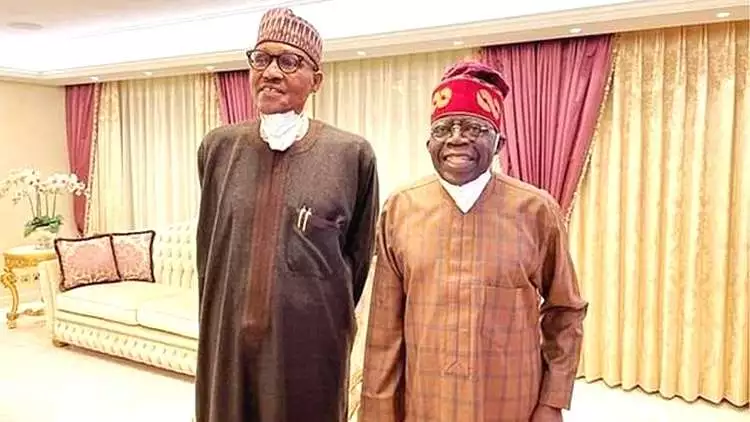
“Last week, when that unsettling photograph of Buhari and All Progressives Congress (APC) National Leader, Asiwaju Bola Tinubu, issued from their UK convalescent home, majestically colonized the social media space, like ants gradually constructing an anthill, Al Jazeera’s Martine Dennis constructed a profiling of Buhari in my mind. In different postures, Buhari and Tinubu, two very consequential Nigerian leaders who, like any other mortal, are rumoured to be battling life’s unkind health cudgel, smiled resplendently in the photograph. This was apparently to cushion whatever pain emanating from whatever ails them. And simultaneously, three persons crept into my subconscious – New York’s departing governor, Andrew Cuomo; Helen Zille and ex-President Jacob Zuma of South Africa.
Why would Buhari and Tinubu choose to hibernate in a UK infirmary to look up their health at a time when Nigeria’s health, literally and figuratively, is gasping for breath? Why flaunt such sickening pictures of them seeking bailout from their own sicknesses, in the face of a sick Nigeria?”
There was this conversation between President Muhammadu Buhari and Al Jazeera television held in Quatar in March, 2016. That interview explains the imperialness, the Kabiyesi-ness in Buhari and his feudal reasoning which often clashes with the constitutional requirements of his office as President of Nigeria.
It also rubbishes Nigerians’ hoopla against the president’s oft recourse to medical exile in the United Kingdom at the drop of a hat.
The conversation came at the height of a foreign exchange crisis that the Buhari government sank Nigeria into. Sitting regally like the Emir of Daura on a gold-plated chair, in the front of Martine Dennis, his Al Jazeera interviewer, she had asked him how parents whose wards were schooling abroad would cope with the then scarcity of forex and its huge worth.
Boldly, Martine had asked: “What about those who are slightly more privileged like yourself… You’ve got children studying abroad. There are parents in Nigeria with kids in universities and schools abroad, who are now facing the possibility of having to pull their kids out. They can actually no longer afford to pay for school fees?” And Buhari replied:
“If the country cannot afford it, so be it.”
Fazed by the scant human feeling in the reply and unsatisfied with the curt reply, Martine further pursued, cheekily: “But your children will continue their studies, no doubt?” Buhari then replied: “Those who can afford it can still afford it. But for those who can’t, Nigeria cannot afford to allocate foreign exchange for those who decided to train their children outside the country. We can’t just afford it.” Cheekily again, Martine blurted, “So it’s tough luck?” And the General’s last word, indicative of finality on that unconscionable questioning was, “Well, that’s the true situation we are in.”
As if Martine was a seer, many Nigerian parents actually withdrew their wards from those foreign schools.
Apart from the feudal nature of the Daura where he grew up, Buhari was, for decades, a military man, nurtured on the maxim that might is right. Democracy and constitutionalism were alien constructs in the barracks. The military officer was always right and woe betides any subaltern who queried his judgment. So why these disgruntled noises all over the place? Like Buhari, in The President Is A Sick Man: Buhari’s Secret Therapy Inside the ‘Oneida’ (April 4, 2021) I detailed African leaders who have made the west their infirmary.
Last week, when that unsettling photograph of Buhari and All Progressives Congress (APC) National Leader, Asiwaju Bola Tinubu, issued from their UK convalescent home, majestically colonized the social media space, like ants gradually constructing an anthill, Al Jazeera’s Martine Dennis constructed a profiling of Buhari in my mind.
In different postures, Buhari and Tinubu, two very consequential Nigerian leaders who, like any other mortal, are rumoured to be battling life’s unkind health cudgel, smiled resplendently in the photograph. This was apparently to cushion whatever pain emanating from whatever ails them. And simultaneously, three persons crept into my subconscious – New York’s departing governor, Andrew Cuomo; Helen Zille and ex-President Jacob Zuma of South Africa.
Dr. Festus Adedayo.
Why would Buhari and Tinubu choose to hibernate in a UK infirmary to look up their health at a time when Nigeria’s health, literally and figuratively, is gasping for breath? Why flaunt such sickening pictures of them seeking bailout from their own sicknesses, in the face of a sick Nigeria?
In its literal representation, Nigeria’s health sector is manifesting some sickening features. This is a time cholera is ravaging Nigerians, having unofficially killed about 700 people. The Delta variant of dreaded COVID-19 pandemic also seems to be ramping up enough energy to ferry more Nigerians to the morgue.
Yet, about 19,000 medical doctors in Africa’s most populous nation are on strike, the fourth since the outbreak of the pandemic.
Ravaged by non-payment of salaries and allowances which in some cases have mounted up to 16 months, anyone with a sick patient at this time will understand the purport of the prayer, “may Nigeria never happen to you.” Martine Dennis’ words came ringing in my mind. It is tough luck for Nigerians who died due to the parlous state of Nigeria’s medicare and tougher luck for those who cannot Andrew like Buhair and Tinubu to treat their ailments abroad.
At its metaphoric best, Nigeria is sick at all levels, the most bothersome being the ailment that has afflicted its leadership.
Nigerian leaders exhibit acute sickness of mind. Some are so sick that the disease of mind reflects in their acquisitory thirst, while others’ sickness is manifest in that they are incapable of stemming the drift in Nigeria. Yet, some others’ is that they cannot replicate in Nigeria the order and finesse they daily see in their junkets abroad.
That Buhari, who campaigned to be President on the promise of reforms of the collapse that has ripped through Nigeria’s public health architecture, was in London to straighten the rough edges of his own health, while Nigeria’s health sector is going through worse stasis than when he became president, six years ago, is the greatest indicator of a Nigeria that is sick. Nothing could be as sickening as the fact that, though Nigeria is footing the huge foreign exchange bill of his convalescence, Nigerians don’t know what ails President Buhari.
In a piece penned by Helen Zille, most of these issues were analyzed. Born Otta Helene Maree, Zille is a South African politician who served as Mayor of Cape Town from 2006 to 2009, among other positions. Written immediately South African ex-president, Jacob Zuma, was jailed for fifteen months for contempt by SA’s Constitutional Court, a piece which subsequently went viral, using the aid of personal acquaintance and in-depth examination, Zille analyzed how Zuma transitioned from a traditionalist to constitutionalist.
As a traditionalist, she said, his province of operation was borderless but in the South African Presidency he occupied, Zuma was circumscribed round constitutionalism and alien tenets of democracy, whose his understanding of their concepts was at best meager and theoretical. Zille called the route Zuma had to travel a total “misalignment” and “unfamiliar” to him.
It was a forensic examination of Zuma. Zille beautifully explains the complexity of the dual circumstances of many African leaders.
The piece explains why Buhari talked on top – apologies to General Ibrahim Babangida – Nigerian parents in 2016 because of the majesty of his privileged position as Kabiyesi of Nigeria; it also explains his and Tinubu’s junkets to London for medical vacation, as well as Isa Pantami, minister of communications and digital economy’s continued presence in office, as against the ease of New York Governor, Andrew Cuomo’s resignation.
This is where the reality of Zille’s tragic observation of the enormous complexity existing in the clash between leadership in traditional and modern society comes to the fore.
Now, you must have heard the very un-African story of Cuomo. Buffeted on all flanks by charges of serial harassments of women and violation of state laws, last week, Cuomo publicly announced that he would be “stepping aside” from his exalted position in a fortnight. He had been indicted in a report made by New York’s Attorney-General, Letitia James.
The report detailed how eleven women fell to Cuomo’s randy inclination. President Joe Biden, House Speaker Nancy Pelosi, as well as a third of New York state senators, joined the moving trolley of calls for his resignation. And he did.
In Africa, kings don’t vacate their exalted monarchies as Cuomo did. A couple of months ago, a seismic scandal raged through Nigeria’s Ministry of Communications. Frightening heaps of debris were heaved out from the odious babanriga of Pantami, who also doubled as a renowned Muslim cleric.
You would think al-Qaeda’s Osama bin Laden or Boko Haram’s Shekau authored the blood-dripping statements attributed to Pantami. In a speech he delivered in 2006, Cleric Pantami publicly offered condolences to the “Islamic world” on the death of Abu Musab al-Zarqawi, al-Qaeda’s Iraq leader. In another audio clip denouncing Nigerian army’s relentless war against Boko Haram, tearfully and passionately, Pantami mourned decimated insurgents who he described as “our Muslim brothers” being “killed like pigs.”
Hot lava volcanic calls for his removal whooshed all over the Nigerian firmament. But not to worry, in Nigeria, chiefs in a monarchy cannot be disgraced out of the palace by common, ordinary citizens.
Anyway, not to worry. Presidency’s most voluble legman, Garba Shehu, has cleared the airs. President Buhari “stands behind Minister Pantami,” he said, as “The Minister has, rightly, apologized for what he said in the early 2000s.” And Pantami lives happily ever thereafter.
“At the heart of it,” writes Zille, “this tragedy is rooted in the enormous complexity of our collective decision to impose a modern constitutional democracy on what is largely a traditional, African feudal society.” Zille submitted that Zuma, throughout his terms in office, saw corruption as a “Western thing.” Labeled one of Africa’s most corrupt leaders, Zuma couldn’t connect with why there should be hoopla that he was spending “his” money as president of South Africa. Doesn’t Misuzulu Sinqobile kaZwelithini, King of the Zulu nation, oldest surviving son of King Goodwill Zwelithini kaBhekuzulu and his Great Wife, Queen Mantfombi Dlamini, spend the Zulu nation money the way he wanted? What is this noise from western democratic theory that there should be distinction between private and public purses?
As Deputy to Thabo Mbeki from 1999 to 2005, Zuma was dismissed when his financial adviser, Schabir Shaik, got enmeshed in soliciting for bribe, racketeering and corruption. He was apparently fingered to have a hand in them. As President, he was accused of funneling state funds into the upgrade of his rural Nkandla homestead and “benefited improperly from the expenditure.” Zuma’s presidency was alleged to have inappropriately burrowed into the South African economy to the tune of R1 trillion (approximately US$83 billion).
Nepotism, favouritism, cronyism which western democracy and constitutionalism frown at, are the linings that underpin the African feudal society. An ancient Yoruba wise-saying, rather than excoriate judicial favouritism, tepidly justifies it in its saying that if one doesn’t have a representative in a decision-making conclave, even if he is right, he would come out wrong – b’eyan o l’eni ni’gbimo, bo ro’jo are, ebi lo ma je. So when Buhari stuffs national appointments to the brim with his Hausa/Fulani people, he is merely behaving true to type of a typical African feudal leader.
Zuma and many other African leaders cannot understand the constitutional idea “that people are born with inalienable rights that no-one can take away from them, and that elected leaders are there to protect and defend these rights.”
To Zuma, this is a “Western thing.” Zille herself, while she was Mayor, could not understand how a constitutionally elected office holder like herself had to kowtow “under the control of a Chief” from whom she was “obliged to go and seek permission… (and) bring a gift to seek his favour.” Indeed, Zille quoted Zuma to have once been shocked while attending an extended Cabinet meeting at an incongruent situation where judges dictated to him what to do. “I was elected. The Judges weren’t. How come they are in a position to tell me what to do?” he was said to have wondered.
Those examining poor human rights records of governments of so-called military-turned-democrat leaders must have gathered enough empirical data to confirm that their intolerance is borne of their long association with khaki.
The lingo of our reference to these feudalists-turned democrats is also a borrowing from feudal African language register. While Americans willfully referred to President Donald Trump as “silly” and no offence was made, this is almost treasonable in many of Africa. Needless superlatives like “His Excellency,” “Executive Governor,” “Honourable,” “Distinguished” and the like are some of the feudal trappings that have made the transition from traditional to constitutional governance very difficult.
Attitude of Nigerians and their leaders to corruption also mirrors this irreconciliation of where we are and where we are coming from.
Professor Peter Ekeh’s Colonialism and the two publics in Africa: A theoretical statement does much justice to this dissonance. While the two publics – private and public – are similar in the west’s, they are not available in post-colonial Africa. Morality, which is the foundation of the two realms in western world, is absent in Africa as well. We have our different standards of morality which reflects in our government and politics.
Now, if the above was tragic, it cannot be as tragic as the partisanship the photographs of Buhari and Tinubu on medical exile in the UK generated. Analyzed based on political party, religion and regional divides, the impression I got from their analyses on social media was “long live the king!” Yes, Tinubu isn’t occupying any government office but that is the man many Nigerians have stupidly asked to be their President after the calamity of Buhari must have ended. Some comments on the photograph even said of Tinubu, who held a walking stick, “that’s our president in 2023!”
Absent from all the analyses above is the complicity of every one of us in the kinds of leaders we get to rule us. Our situation is akin to a man who puts a heavy load on a knock-kneed carrier who Yoruba call the amunkun, and who wants the load to be balanced. It is not possible. If we want good governance, we must insist on good people. Not only must we insist on good leaders, we ourselves must begin to defrost our minds of the feudal, “long reign the king” mentality that encrusts them. The road to good Nigeria cannot be one laced with the contours of party partisanship, religious bigotry and executive oraisa (“All right, sir!,” lingo of miscreants) that we flaunt on our leaders.
Adedayo, PhD, a commentator on Current and National issues, is a Columnist with the Sunday Tribune
In its reaction to the gruesome murder of 22 people (Muslims) who were on their way back to Ondo and Ekiti States after performing religious rites in Bauchi, the Presidency said it was pre-meditated.
The reaction brimming with anger, religious and ethnic bias, and stripped of all diplomacy, was signed by Garba Shehu, President Muhammadu Buhari’s Senior Special Assistant on Media and Publicity. In it, the President extended its condolences to the families of the victims, condemned the inexplicable action in strong terms, and ordered the immediate arrest of every single person connected to the heinous crime.
The Statement reads in part:
“The Presidency condemns the attack earlier Saturday on travellers from a religious event in Bauchi, passing through Jos, the Plateau State Capital, and regrets the reported death of at least 22 persons with several others injured in that ambush on their travelling party.
“It is widely known that Plateau State has been one of the States affected by herder- farmer clashes, which have in a significant way, been curtailed following the intense peace-building efforts of the administration of Governor Simon Lalong.
“However, to be clear, this is not an agriculturist-on-pastoralist confrontation – but rather, a direct brazen and wickedly motivated attack on members of a community exercising their rights to travel freely and to follow the fate of their choosing.
“With the evident preparedness of their attackers, it is clear this was a well-conceived and pre-arranged assault on a known target, location, and religious persuasion of the travellers not an opportunists”
And in order to restore calm and arrest the perpetrators of the evil act, the Inspector General of Police, IGP Usman Alkali Baba, has ordered the immediate deployment of Police Intervention Team to Plateau State to carry out on-the-spot assessment and ensure enhanced, coordinated response to protect the community and boost public confidence in the affected area(s) of the State.
This was disclosed in a statement by Force Spokesperson, CP Frank Mba on Sunday.
The deployment, he said, “follows the unfortunate attack on innocent citizens in Rukuba Community in Jos North Local Government Area of Plateau State on Saturday 14th, August, 2021.
“The Police Intervention Team is led by DIG Sanusi N. Lemu, mni, the Deputy Inspector General of Police in charge of Finance and Administration who is also the coordinating DIG, North-Central geo-political zone. The Team comprises personnel of Police Tactical Units – the Police Mobile Force (PMF), Counter Terrorism Unit (CTU), Police Special Forces, amongst others deployed to protect the communities, prevent further attacks and bring the perpetrators to justice.
“Also deployed are investigators and covert operatives from the Force Criminal Investigations Department (FCID) and the Force Intelligence Bureau (FIB). The operatives are expected to provide additional investigative, intelligence and forensic support to the Plateau State Police Command in the ongoing investigations and rescue operations.
The IGP, while condemning the incident, has called for calm and assured victims and relatives of the attack that the Police are working with the military, other security forces and the State Government to ensure that all perpetrators of the unfortunate incident are brought to book.
Meanwhile, the IGP noted that twenty (20) suspects have been arrested in connection with the attack while thirty-three (33) victims have been rescued.”
Gov Lalong Imposes Curfew
Meanwhile, to curtail the continued spread of violence, which claimed life of 22 travelers in Plateau state on Saturday, the state Governor, Mr Simon Lalong, has announced imposed 24 hours curfew in three local council areas.
A statement on Sunday named the affected local governments as Jos North, Jos South, and Bassa.
The Government action is coming just as identities of those that were killed on Saturday were being revealed.
It was gathered that the deceased persons were mainly Fulanis that had been resident in Akoko area of Ondo State for several years.
They were said to have hired three buses which conveyed them to Bauchi, where they had gone to attend an islamic festival and ran into an ambush of protesters in Jos while returning.
The Plateau State Government statement, signed by director of press to the Governor, Dr Makut Macham stated that “Hours after announcing a dusk to dawn curfew in three Local Government Areas of Jos North, Jos South and Bassa, Plateau State Governor Simon Bako Lalong has directed the imposition of a 24-hour curfew in Jos North to contain further security threats.
“In the directive, the Governor said from 2pm of today, Sunday 15th August 2021, a 24-hour curfew will come into effect in Jos North Local Government Area.
“This is necessitated by security reports which indicate rising threats to the safety of lives and properties within the Local Government.
“The Governor therefore urges citizens to abide by the curfew and remain indoors to allow security agencies maintain law and order and deal with those bent on causing chaos.
“The Governor says the 24 hour curfew in Jos North Local Government will remain in force until further notice.
“Again, citizens are to note that the 24 hour curfew in Jos North will take effect from 2pm today 15th August 2021.”
Shehu Sani Condemns Attack
Reacting to the gruesome murder of 22 Muslims in the State who were on their way back from the annual “Zikr Prayers” held in Bauchi State, Senator Sani Shehu, former Lawmaker, representing Kaduna Central Senatorial District, condemned the action of the perpetrators and urged the state and Federal Governments to take action immediately.
According to him: “The gruesome killings of twenty two Muslim faithfuls in Plateau State by Hoodlums while on their way back from the ‘Annual Zikr prayers’ in Bauchi state stands unreservedly condemned.
“It’s an unprovoked cold murder of innocent citizens.The Governor of the state and the FG must take an immediate action to ensure the culprits are apprehended and brought to book,” he said.
Meanwhile, a Muslim group has accused Christians of deliberately killing the Muslim faithfuls in cold blood. But the Christian Association of Nigeria, CAN, has condemned the attack in very strong terms, and urged the FG to arrest anybody and everybody, anywhere, connected with the killings.
The 22 innocent victims of the unprovoked attack were buried in Jos on Sunday.
A once peaceful and united Communities in Ekiti state are being torn apart by the recently created Local Council Development Areas, (LCDA).
A report monitored on Progress FM, an arm of Federal Radio Corporation of Nigeria, (FRCN) indicated that three communities are protesting against the sudden relocation of the headquarters of the LCDA from their domain.
The communities, Ikoro, Ipoti and Ilasa, expressed surprise about the sudden replacement of their names, accusing the committee saddled with the responsibility of midwifing the take off of the new councils of being responsible.
When signing into law, the bill for the creation of the LCDAs, Governor Kayode Fayemi announced a committee, headed by the attorney general, Mr Olawale Fapohunda to midwife the take off of the new councils.
According to the report, the issue of Ikoro and Ipoti in Ijero Local Government is about being resolved between the two communities, following a meeting by the committee with the two towns.
However, in Ekiti East Local Government,where Ekiti South East was created with headquarter at Ilasa, as stated in the law, a new name, Isaya, appeared on the list in custody of the committee.
This led to a peaceful protest on Sunday with the People of Ilasa blocking free flow of vehicles and preventing worshippers access to churches.
The President of Ilasa Development Union, Barr. Tajudeen Ahmed accused the Chairman, LCDA implementation committee, who doubles as the Attorney General and Commissioner for Justice in Ekiti State of being unjust and unfair.
“Contrary to what was in the draft copy of the Creation of Additional Local Government Areas in Ekiti State (Second Amendment) Law 2021: No 9 of 2021, which was a law meant to amend the Creation of Additional Local Government Area in Ekiti State (Amendment) Law, 2014; the purported Press Release of the Chairman LCDA Implementation Committee made Isaya Ekiti the headquarter of Ekiti South East LCDA wondering the sudden change.
“Members of our community and other well-wishers were thrown into jubilation when an online version of the 2021 LCDA Law became surfaced and the name Ilasa Ekiti was appropriately reflected as the headquarter of Ekiti South East LCDA.
“But our joy was shortlived and shattered when the contents of the purported Press Release of the Hon. Attorney General and Commissioner for Justice, who doubles as the Chairman, Ekiti State Committee for the Implementation of LCDA was made public on 12th August 2021, wherein Isaya Ekiti was named as the headquarters of Ekiti South East LCDA.
“From the very beginning, Ilasa Ekiti has been the head of the entire axis that constituted the newly created Ekiti South East LCDA, noting that Isaya Ekiti, a recently created community, couldn’t and would never be headquarter of an LCDA that would include the ancient town of Ilasa Ekiti.
“When Government decided to carve constituency II out of the existing Ekiti East Local Government Area and constitute same into Ekiti South East LCDA in 2014 vide Creation of Addition Local Government Areas in Ekiti State Law 2014, No 8 of 2014; Isokan – a non-existing community was named as the headquarter, but the LCDA was appropriately situated in Ilasa Ekiti.
“As at that time, Isaya Ekiti was yet to be an independent community. As matter of fact, Kota Ekiti where Isaya was later carved out was a year old as an independent and autonomous town.
“It is on the basis of such that Ilasa Ekiti community shouted to high heavens and beseech the authorities to amend the headquarter of Ekiti South East LCDA to read the real host community of the LCDA, which is Ilasa Ekiti.
Barrister Ahmed insisted Ilasa Ekiti was not willing to concede the headquarter of Ekiti South East LCDA to any other community other than Ilasa, because it has been the natural head of the communities in the LCDA for ages.
Besides, the Alasa of Ilasa Ekiti is the only grade A monarch in the whole of the LCDA while other Obas are in grade C category.
The community leader added that everything would be done to resist the citing of headquarters of both Ekiti East Local Government and Ekiti South East LCDA at Omuo-Ekiti, saying the purported location of Ekiti South East LCDA at Isaya Ekiti amounts locating both the headquarter of Ekiti East Local Government and Ekiti South East LCDA in the same Omuo Ekiti.
The Nigeria Union Journalists (NUJ) Plateau State Council has condemned Saturday’s violent attack in Jos in which 22 travelers from Ondo state were killed.
Describing the incident as unfortunate in a statement, the NUJ noted that the incident is capable of worsening the volatile security situation in Plateau State and Nigeria in general.
The NUJ statement, signed by chairman and secretary, Paul Jatau and Peter Amine respectively is coming just as the University of Jos announced the suspension of the ongoing second semester examination due to the tense security situation.
NUJ stated that “The Council urges security agencies to do their best to apprehend the perpetrators of the dastardly act and bring them to justice so as to serve as deterrent to anyone contemplating unleashing violence in the state.
“The Council however, wishes to advice security agencies that in trying to discharge their responsibility of containing the situation and dousing the palpable tension, they should avoid statements that would further polarized the society, pitching a religion or an ethnic group against the other(s).
“It is regrettable that a statement credited to a credible security outfit named a tribe as being responsible for the attack. It is also worrisome that a religion was also identified as the victims of the attack.
“Journalists on their part, must tow the path of caution, and exercise high level of professionalism in order not to worsen an already bad situation.
“Journalists must avoid stories that are capable of inciting a section of the society against the other.
“We must bear in mind that nobody would be spared if the state and nation is plunged into anarchy, chaos or lawlessness.
“We must be professional, cautious and verify our stories before going to press.
“The NUJ sympathize with families of those who lost their loved ones. While praying for the repose of the soul of those killed, we pray for the fast recovery of those that were injured.”
In a statement by the deputy Registrar, Information of the university, Abdullahi Abdullahi announced that the management of the University has suspended the ongoing second-semester examinations for the 2019/2020 academic session with immediate effects following security threats in Plateau State.
The statement added that “Following the unfortunate security breach that occurred in some parts of Jos Metropolis, which has led the Plateau State Government to impose a 24-hour curfew in Jos North Local Government Area, the management of the University of Jos has approved the suspension of the ongoing second semester Examinations for the 2019/2020 Academic Session.
“Consequently, all examinations earlier scheduled between Monday 16 and Saturday 21 August 2021 have been suspended until further notice.
“All Students of the University residing in the various hostels are hereby strongly advised to remain within their hostels of residence and avoid unnecessary movements as Management has been working round the clock in close collaboration with the security agencies and the Plateau State Government to ensure that the lives and properties of members of the University Community especially Students are adequately protected.
“Students that are resident outside the Campuses are also advised to remain at home during this period.”
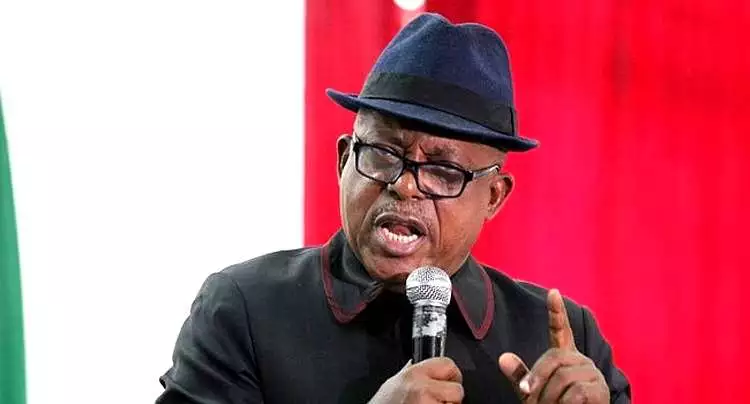
The National Chairman of the Peoples Democratic Party, PDP, Prince Uche Secondus has raised alarm that underhand rigging of 2023 general elections by the ruling All progressives Congress, APC, may have begun.
In a Press Release signed on his behalf on Sunday by his Media Adviser, Ike Abonyi, Prince Secondus said that every indication points to the unfortunate fact that President Muhammadu Buhari and his party, APC, are not working towards conducting free, fair and transparent elections in 2023.
The National Chairman was reacting to a media report at the weekend showing that the Independent National Electoral Commission, is halting its procurement of E- voting machines ahead of 2023 because of the rejection of e-mode of transmission of results by the National Assembly.
Prince Secondus noted that since the existing Electoral Act and the Constitution gives unilateral powers to INEC to conduct credible elections in Nigeria, it does not need National Assembly position to do its legitimate duties.
“From all indications, INEC is trying to abdicate its constitutionally assigned responsibilities of conducting free, fair and transparent elections hiding under the cover of delayed amended Electoral Act or rejection of e-transmission of results.
“Nigerians and democratic observers globally are watching INEC ahead of 2023 and it will be disastrous if the Independent electoral body dances to the antics of the ruling party.
Prince Secondus said that if this electoral commission was able to conduct governorship elections in Edo and Ondo states in September and October last year respectively without the amended Electoral Act, it can still be done all over the country
He said that his party the PDP is worried at the development and would do everything legal to ensure that the will of the people of Nigeria is not thwarted again in 2023.
Prince Secondus then charged all lovers of democracy within and outside the country to do everything possible to ensure that credible elections are conducted in the country in 2023 as anything short of that will gravely undermine our democracy and indeed Nigeria.