The killing of a traditional ruler, Igwe Emmanuel Mba in Enugu state by the newly formed Special Weapons and Tactics Team, SWAT is causing great panic in the state, as youths in the area have now risen in anger.
The monarch is the traditional ruler of Oruku community in the Nkanu East Local Government Area and was killed during a town hall meeting by SWAT operatives, allegedly led by one Inspector Danladi, according to Punch.
Sources in the community, said a combined team of soldiers, policemen, and personnel of the Nigeria Security and Civil Defence Corps had been deployed in the community to restore calm, even the rampaging youths had following the event, unleashed mayhem, burning several buildings and houses.
According to eyewitnesses, the policemen, who stormed the community in two vehicles, and in mufti wielding AK-47 rifles, invaded the venue where some leaders of the community were holding meeting.They were said not to have disclosed their mission but rather sought to see the monarch.
The sources said they were escorted to the town hall by three natives of Oruku identified as Emmanuel Nwobodo, Onyema Edeh, and Sunday Onunze, who also left with the cops in the same vehicles.
The source stated, “The traditional ruler was presiding over the meeting and the three natives pointed at him; immediately one of the policemen shot him on the thigh and he fell down and was bleeding.
“There was confusion after the monarch was shot. Everybody in the hall ran for safety as the armed men started shooting in all directions. Amidst the confusion, they made attempts to arrest some of those at the meeting.”
The monarch later died at the National Orthopaedic Hospital, Enugu and his corpse has now been deposited in the National Orthopaedic Hospital mortuary. Mba was elected by his community on December 26, 2019.
President Donald Trump of the United States of America, on Sunday, approved a $900 billion coronavirus relief package for all Americans which brought to end the spat between his presidency and Congress on the issue.
The initial threat by the US leader to veto the Congress on the matter had triggered panic in Washington, particularly after Trump failed to sign the legislation for days. The government was expected to shut down on Tuesday if the president had not signed the bill yesterday. .
The measure extends the expanded jobless benefits into March, but millions are expected to lose a week of benefits covering these people due to Trump’s delay in signing the bill. Unemployed Americans eligible to receive a $300 weekly supplement will also get the additional money later than they could have.
The government would have shut down Tuesday during a deadly pandemic if Trump did not approve the legislation.
The president had described the bill a “disgrace” claiming he opposed the bill because it fell short of his expectation. Trump said he preferred $600 rather than $2,000 direct payments to most Americans, and because the $1.4 trillion government spending portion of the package included foreign aid money.
A statement by the White House said the Senate would also “start the process for a vote that increases checks to $2,000,” while most Republican Senators opposed larger direct payments.
Meanwhile, United States’ Speaker of the House of Representatives, Nancy Pelosi, said President Trump needed to speak with top Republicans if he’s sure of pushing the COVID 19 package beyond $900 billion.
The package includes a 3-month $300 per week financial assistance for some unemployed Americans. Other categories of Americans will also get $600, while $600 has been added to every child’s package.
The People’s Democratic Party (PDP) has again reiterated that Nigeria is on autopilot with nobody in charge,
This was contained in a statement on Sunday by the PDP spokesman, Mr Kola Ologbondiyan, released via social media in Abuja.
Reacting to the response of the Federal Government to a report by the Financial Times of London, the PDP asserted that the Presidency’s conceited response to Financial Times editorial on the sorry state of affairs in our nation under President Buhari further confirmed PDP’s position that there is a complete leadership failure in Nigeria.
The party said it was sad that the Buhari Presidency preferred to rebuff wise counsel and continue to drive our nation to the precipice instead of seeking help for the sake of millions of traumatized Nigerians.
“Indeed, the editorial by Financial Times is only stating the obvious, as our nation under President Buhari has presented all the trappings of a failed state including having a rudderless government with a dysfunctional command structure that cannot guarantee security, manage our economy or even perform very simple tasks of governance.
“Our great nation now tends towards a leaderless society where terrorists, bandits, kidnappers, marauders and vandals have taken the lead, running riotous across our land while those who promised to protect lives and property have gone into hiding in Aso Presidential Villa.
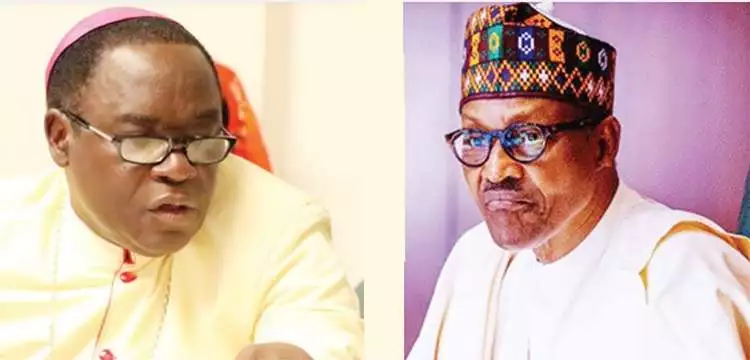
President Muhammadu Buhari
“Under President Buhari, life is fast tilting towards Hobbesian state of nature; driven by the combined negatives of an incompetent and unconcerned Presidency and a reckless, kleptomaniac and dysfunctional ruling party that is more interested in power-grabbing instead of governance.
“President Buhari has badly failed in governance to the extent that over 600 students could be kidnapped by bandits in his home state, Katsina, a few hours after his security machinery took over the state, where he had gone to holiday.
“Under Buhari’s watch, our command structure has become extremely weak that government officials now patronize bandits and rationalize acts of terrorism to the extent of blaming victims for not obtaining permission before living their normal lives as was the case in the 43 farmers beheaded by terrorists in Borno state.
“It now takes Presidents of neighboring countries like Chadian President Idris Derby to personally lead his troops into our territories to rout out insurgents and free Nigerian communities and our soldiers held captive by terrorists.”
The Financial Times of London, in its stinging Editorial, bemoaned the state of affairs in Nigeria, insisting that the country is on its way to becoming a failed state.
Let me paraphrase the holy prophet Isaiah who said: “For Jerusalem (Nigeria’s sake), I will not be silent until her vindication shines forth like the dawn…..No more shall people call you forsaken, or your land desolate, but you shall be called my delight and your land espoused.” (Is. 62:1,4).
Against the backdrop of our endless woes, ours has become a nation wrapped in desolation. The prospects of a failed state stare us in the face: endless bloodletting, a collapsing economy, social anomie, domestic and community violence, kidnappings, armed robberies etc. Ours has become a house of horror with fear stalking our homes, highways, cities, hamlets and entire communities. The middle grounds of optimism have continued to shift and many genuinely ask, what have we done to the gods? Does Nigeria have a future? Where can we find hope? Like the Psalmist, we ask; from where shall come our help? (Ps.121:1).
Whatever the temptations to despair, we cannot give up. When the Psalmist asked where help shall come from, he answered that it will come from the Lord. Therefore, like Zachariah, the father of John the Baptist, we Priests must stand before the mercy seat of God and plead the cause of our great country (Lk. 1:8). Like Abraham, we must plead for the Lord to save our nation because we have more than ten righteous men (Gen. 18: 16ff). Like Moses, we believe that as long as our hands are held up in prayer, the Lord will be on our side ( Ex. 17:11). These are trying but life changing moments in the history of our nation. Politics and Economics alone will not resolve our problems. There is enough hate and bitterness to go around. We need to pause, reflect, pray, be honest and courageous in facing tomorrow.
Yes, our dreams have been aborted. Yes, our commonwealth has been stolen. Yes, our cancer of corruption has metastasized. Yes, we have been guilty of patricide, fratricide and attempted even suicide. Yes, we are hungry, angry, thirsty and starving. Yet, we stand firmly with the unshaken belief that no matter the temptations, the world has known worst times. These may be the worst of times, but for men and women of faith, they could be the best of times. We must stand firm and resolute because, our redeemer liveth (Job 19:25).
2: Annus Mirabilis or Annus Horribilis?
The roads to the graveyards are busier than those to the farms. Amidst the wails and laments, I hear the congregants saying; the world is coming to an end, it has never been so bad. Yes, people are dying, but they are not dying more now than they did in recent years. It is the social media and its connectivity that has given us a sense of greater urgency and added to our seeming despair with the way things are. The social media is value neutral. It depends on what we make of it. Its instantaneous impact is often times dizzyingly traumatic, but the other benefits more than compensate. In a way, the choices we make will help us decide whether this year is our annus mirabilis or annus horribilis.
When Isaac Newton, at the age of 23, made the spectacular discoveries in the areas of Calculus, Motion, Optics, and Gravitation, the year of those discoveries, 1666, was referred to as, annus mirabilis, the year of joy. On the other hand, in 1992, when the marriages of three of her children collapsed, Queen Elizabeth in her Christmas address referred to that year as her annus horribilis, the year of horror. As such, notwithstanding all the earth shaking impact of the Covid-19, our own individual, communal and national tragedies, it is not just a choice between annus mirabilis and annus horribilis. At various levels, there have been grey areas of hope, flickers of light, achievement and so on. It to these flickers of hope that we must cling tenaciously. For our son, Anthony Joshua, the loss of his title to Andy Ruis on June 1, 2019 after 25 fights without a loss, that year was his annus horribilis. When he pummeled Kubrat Pulev, this year became his annus mirabilis. Things change and, joy or sorrow, we must know that nothing lasts forever. What matters is how we handle failure.
3: Another Christmas in Cloud of Doom:
Not unexpectedly, this Christmas is again coming against a backdrop of so much pain, sorrow and uncertainty in our land. We all seem to have become sedated and inured to pain. Tragedy has been standing as our gate keeper. For over ten years now, at almost each Christmas, a dark pall of horror, sorrow and death has consistently hung in our horizon threatening to eclipse the promises of the joy of Christmas. Recall the bombing of St. Theresa’s Catholic Church, Madalla on Christmas day in 2011. In the wake of the Christmas day bombing, I issued a statement titled, An Appeal to Nigerians. In the statement which enjoyed a wide circulation, I stated: All of this should cause us to pause and ponder about the nature of the force of evil that is in our midst and appreciate the fact that contrary to popular thinking, we are not faced with a crisis or conflict between Christians and Muslims. Rather, like the friends of Job, we need to humbly appreciate the limits of our human understanding. Terror is a product of hate, but while hate tries to divide us, terror and death should pull us together.
4: Is Government in Suspended Animation?:
As our country drifts almost rudderless, we seem like people travelling without maps, without destination and with neither Captain nor Crew. Citizens have nowhere to turn to. After he assumed708 power, a delegation of the₩Catholic Bishops’ Conference had audience with President Buhari. In the course of our discussion, the President shared with us his frustration over the state of decay and rut that he had met. In frustration, I vividly recalled him saying that, from the decay and neglect, it seemed as if preceding governments had been doing nothing but just eating and going to the toilet! Looking back, one might conclude that those were happy times because at least there was food to eat and people could go to the toilet. Now, a journey to the toilet is considered by the poor an extra luxury. Our country’s inability to feed itself is one of the most dangerous signs of state failure and a trigger to violence.
5: Breaking the Ice: From Chibok through Dapchi to Kankara:
The sleepy town of Kankara, just 130 kilometers outside Katsina, like Chibok and Dapchi before it, has leapt into prominence not because they now have potable water, electricity or any dramatic improvement in the quality of their lives. Rather, it is because of large footprints of the evil men who have passed through their terrain. As always, we were unsure of how many children were missing: 80, 820, 800, 500, 520, 333, 320,no one knew. The numbers kept changing between the government and Boko Haram. The story of Chibok and Dapchi was for some time, a metaphor that exposed the vulnerability of the girl child. Kankara has added to the mix and now we have to face the mortal dangers of the Nigerian child in northern Nigeria. The Almajiri is the poster child of the horrible and inhuman conditions of the northern child. It is a best kept secret that the region refuses to confront but it has now exposed its underbelly. Now, what next for the children of the north? In another ten or twenty years, these children will be leaders in their communities. What will they remember and how will they remember? Their fate and future are a dream deferred, a nightmare that will be ignited by the fire next time.
We thank God that the children have been returned safely. This is the easy part. The challenge now is how to deal with the scars inflicted by a derelict nation which is still unable or unwilling to protect its citizens. Yes, we commend the federal and state governments for the rescue operation. The larger issues now are whether the federal government understands the evil web of intrigues into which Boko Haram has tied it. Will the federal government continue to reward and fund Boko Haram by playing its game? How long can this circle of deceit last for given that every kidnap merely strengthens their arsenal? The men of darkness have shown far greater capacity to shock and awe a forlorn nation by constantly blindsiding us all. When will it all end?
6: A Nation in Search of Vindication:
This government owes the nation an explanation as to where it is headed as we seem to journey into darkness. The spilling of this blood must be related to a more sinister plot that is beyond our comprehension. Are we going to remain hogtied by these evil men or are they gradually becoming part of a larger plot to seal the fate of our country?
President Buhari deliberately sacrificed the dreams of those who voted for him to what seemed like a programme to stratify and institutionalise northern hegemony by reducing others in public life to second class status. He has pursued this self-defeating and alienating policy at the expense of greater national cohesion. Every honest Nigerian knows that there is no way any non-Northern Muslim President could have done a fraction of what President Buhari has done by his nepotism and gotten away with it. There would have been a military coup a long time ago or we would have been at war. The President may have concluded that Christians will do nothing and will live with these actions. He may be right and we Christians cannot feel sorry that we have no pool of violence to draw from or threaten our country. However, God does not sleep. We can see from the inexplicable dilemma of his North.
7: Nepotism and the Worship of False Gods:
It is curious that President Buhari’s partisanship and commitment to reinforcing the foundations of northern hegemony have had the opposite consequences. For a long time, beyond the pall of politics, very prominent northerners with a conscience have raised the red flag, pointing out the consequences of President Buhari’s nepotism on national cohesion and trust. With time, as hunger, poverty, insecurity engulfed the north, the President’s own supporters began to despair and lament about the state of their collective degradation. Was this not supposed to be their song? The north that the President sought to privilege has become a cauldron of pain and a valley of dry bones. Today, the north itself is crying the most and why not? No one has suffered as much as they have and continue to. The helplessness is palpable and the logic is incomprehensible.
One Northern Imam after the other have posted videos of lamentation on the social media asking why, with all the cards of power in the hands of northern Muslims, everything is bursting in the seams. How come our region has become a cesspool of blood and death? Why did President Buhari hand over a majority of the plum jobs to Northern Muslims? Was it for efficacy and efficiency? What was the logic? President Buhari must pause and turn around because his policy of nepotism has been rejected by the gods.
During the Endsars Protests, the north pretended that it was ensconced from the pain that was driving the protests and that they had nothing to complain about. The northern elites claimed that the protests were part of a plot by Christians to overthrow a northern, Muslim government. Their sentiments false, but understandable. However, it turned out to be the lull before the storm. The dam soon broke as the bandits tightened their grip on the region as the spiral of kidnappings, abductions and killings of innocent citizens intensified.
The North spurn into denouement: the idea of a united north seems to have ended. The northern Governors’ Forum has split into the three zones. With the killings, kidnappings and abductions of Emirs and other traditional rulers in the north, the signals have gone out that no one is safe and nothing is sacred. In the wake of the Endsars protests, the traditional rulers across the country assembled to express solidarity with the President. Then it all changed. The Emir of Katsina, the President’s home state, only recently said; We cannot continue to live like animals. I have not seen this type of country. His Eminence, the Sultan of Sokoto, Alhaji Sa’ad Abubakar said that the north has now become the worst part of the entire country. The Senate whose leadership is almost totally dominated by Northern Muslims has raised alarm. The Northern Elders’ Forum has called on the President to resign. Has the politics of nepotism run its course? Perhaps, the spirit of Christmas should offer us an answer.
8: A People that Walked in Darkness has Seen a Great Light.
The rut and decay in our country today is evidence of a people who have not yet seen the light. The experience of northern Nigeria is evidence that nepotism is a counterfeit currency. The nation must therefore now pull together. It is not enough to blame the military. After all, they neither run the economy or the bureaucracy. It is not enough to blame even the political class or even the President alone. We found our way here by the choices we have made as a nation over time.
Indeed, the colonialists claimed that they were bringing light to a dark continent. In a way, despite the cost, we could see ingredients of their light; good education, running water, relatively good roads, security, among others. We finally accepted Democracy as the platform for actualizing these. However, today, there is evidence that we have literally returned to the cave, those times when life was brutish, nasty and short. Each and every one of us has contributed to the darkness of our nation. The light of Christ which we all received at baptism calls on us to act in the mind of Christ. To be a follower of Christ is to be in his footsteps. This moment calls on us as Christians to celebrate the simplicity of Christ represented in Christmas. Joy to the world, the Lord has come, the song says. Jesus has offered us a roadmap. We are challenged to bring light into the darkness of our society.
Darkness has its own logic. St Paul reminds us without Chris, our lives are characterised by; immorality, filthy and indecent actions, worship of idols and witchcraft. People become enemies and they fight, they become jealous, angry, and ambitious. They separate into parties and groups, they are envious, get drunk and have orgies (Gal. 5: 19-21). When it is dark, we cannot see our way and we stumble. Nigeria has stumbled so much. It is time to for us to turn on the light of the torch. Each of us can make a change.
9: Wailers and Redeemers:
Finally, today, amidst the pains and the trials, we can say with the Psalmist: Our tears have become our bread (Ps. 43:2). We have no reason to doubt that at the fulfilment of time, in His own time, the Lord will dispense justice to our nation. It will come as day follows light.
Our brother Femi Adesina, a Pastor of the Four Square Gospel Church, was right when he referred to those who were calling attention to our situation as Wailers. The wailing started quite early in the day. To the herdsmen across Nigeria whose cattle have been lost to rustlers, bandits, or lightening, the Prophet Zechariah said: There is a sound of a shepherd’s wail for their glory has been ruined (Zech 11:3). To the thousands of widows left to mourn their husbands or children across our country, the Prophet Jeremiah is saying; Send for the wailing women, that they may come! Let them make haste and take up a wailing for us, that our eyes may shed tears and our eyelids flow with water (Jer. 9: 17). For our hapless nation overrun by bandits? Prophet Jeremiah still says; A voice is heard in Ramah, mourning and great weeping, Rachel weeping for her children and refusing to be comforted, because they are no more (Jer. 31:15).
So, Pastor Adesina was right. On the sad situation in Nigeria, the United Nations has wailed. The Pope has wailed. Cardinals, Archbishops, Bishops, Priests, Pastors have wailed. Emirs have wailed. Politicians have wailed. The Sultan has wailed. Surely, it is time for the Lord to hear the wailer as they have sung their redemption songs. With St. Paul, I say: The hour has come for you to wake up from your slumber because our salvation is nearer now than when we first believed. The night is nearly over the day is almost here, so let us put aside the deeds of darkness and put on the armor of light. (Rom. 13:11-12). Let us unite and seek the Lord in sincerity because the Lord will vindicate the righteous.
Happy Christmas to you all.
Dr Kukah the Catholic Bishop of Sokoto Diocese, delivered this message on Christmas Day
The Peoples Democratic Party, PDP, has slammed the All Progressives Congress, APC, Governors of non-performance.
The PDP said that APC and its leaders are bitter over the sterling performance of governors elected on the platform of the PDP, which has further endeared Nigerians to its party.
This was contained in a Press statement signed by Kola Ologbondiyan, the National Publicity Secretary of PDP, who further asserted that the APC, whose structures have collapsed, has been discomfited by the stability and unanimity in the PDP as well as the resilience of its leaders, despite the attempts by the APC and its government to plant seeds of discord in its fold.
“Nigerians can see the frustration in the APC leadership, which has now resorted to vicious smear campaign and media attacks on our governors and leaders, having failed in all their sneaky plots to lure them to look the way of the defunct APC.
“It is therefore not strange to us that the Secretary of APC’s illegal national caretaker committee, Senator James Akpanudoedehe, has been detailed, as new APC spokesperson, to commence a coordinated attack on our governors.
“We are aware that this is part of the desperate bid to distract and drag down our performing governors to the level of their APC counterparts, who have become a collective symbol of failure in our contemporary political history.
“It is laughable that the APC caretaker secretary is challenging the Rivers State Governor, Chief Nyesom Wike, to name APC leaders attempting to lure our governors, whereas he, Akpanudoedehe, is aware of how the APC leadership, to which he belongs, have been going round our governors and leaders genuflecting for audience, only to receive mere photo opportunities.
“We caution the APC caretaker secretary to be more circumspect in challenging anybody to call out names, as such could put him in very indefensible situation as his own roles and itinerary in the APC leadership are not hidden to us.
“In any case, APC leaders should know that there is nothing left in their party and that nobody wants to associate with a failed association masquerading as a political party; plagued with internal wrangling and illegal leadership; and whose legacies are corruption, treasury looting, turning our nation into a failed state, instituting poverty and hardship, and supporting terrorists, bandits and kidnappers ravaging the people.
“It is on record that our governors have shown capacity and deliverables in projects and programmes in all critical sectors including human capital development, manufacturing, industrialization, road infrastructure, agriculture, healthcare, education, housing, aviation, power, telecommunication, water resources, urban and rural development among others, to the shame of the APC.
“It is therefore imperative to state that our governors, by all rating and ramifications, cannot be in the same class with non-performing APC governors.”
The PDP said that in this regard, it counsels the APC Caretaker Committee, as the new undertakers of the APC to steer clear of our party and concentrate on their task of winding down the APC, which it began with the collapse of its structures nationwide.
“After that, the APC caretaker committee should be ready to answer and restitute for all atrocities committed by the APC against our nation”, Ologbodiyan stated.
The Federal Government has accused the Catholic Bishop of Sokoto Diocese, His Lordship Mathew Kukah of inciting the public against President Muhammadu Buhari.
Kukah had, in his Christmas message, accused Buhari of brazen nepotism. He said if any non-Muslim President had done even half of what the President did, he could have been overthrown. The Bishop also accused the President of Northernising Nigeria to the detriment of others.
But in a swift response, Minister of Information and Culture, Lai Mohammed, urged religious leaders in the country to refrain from stoking the embers of hatred and disunity, warning that resorting to scorched-earth rhetoric at this time could trigger unintended consequences.
“While religious leaders have a responsibility to speak truth to power, such truth must not come wrapped in anger, hatred, disunity and religious disharmony”.
He said it is particularly graceless and impious for any religious leader to use the period of Christmas, which is a season of peace, to stoke the embers of hatred, sectarian strife and national disunity.
“Calling for a violent overthrow of a democratically-elected government, no matter how disguised such a call is, and casting a particular religion as violent is not what any religious leader should engage in, and certainly not in a season of peace,” Mohammed said, adding that instigating regime change outside the ballot box is not only unconstitutional but also an open call to anarchy.
Mohammed said that while some religious leaders, being human, may not be able to disguise their national leadership preference, they should refrain from stigmatizing the leader they have never supported anyway, using well-worn and disproved allegations of nepotism or whatever.
He said whatever challenges Nigeria may be going through at this moment can only be tackled when all leaders and indeed all Nigerians come together, not when some people arrogantly engage in name-calling and finger-pointing.
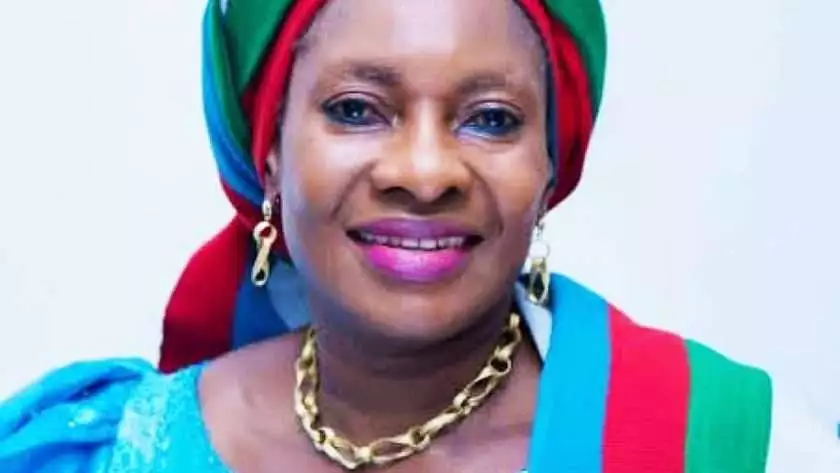
The Minister of Women Affairs, Dame Pauline Tallen, has tested positive for Covid 19.
The Minister had undergone a test along with members of her family and was confirmed to be positive while other members tested negative.
A statement explained that the Minister, who is asymptomatic, has gone into isolation, and would remain so during the period of treatment.
The Minister’s office is in charge of distribution of Palliatives to Nigerians since the virus entered into the country in March.
She appealed to Nigerians to stay safe and observe all COVID-19 protocols as the country grapple with this pandemic and take responsibility for themselves and family in order to protect the country even more at this critical time.
The Virus has hit many high profile Nigerians, including Governors, Ministers, Senators and industrialists. Recently, ir took the life of Billionaire businessman Chief Harry Akande. On December 24, it killed former Military Administrator of Akwa Ibom State, Air Commodore Indogesit Nkanga. Earlier President Muhammadu Buhari’s Chief of Staff, Abba Kyari had died from it, and so did two Senators.
Two anecdotes have been used to justify the controversial pulpit tirades of Senior Pastor of Citadel Global Community Church in Lagos, Tunde Bakare, whose video went viral last week.
One is that famous Obinde proverb, popularized by former Governor of Lagos and Osun States, Olagunsoye Oyinlola. Second is one I stumbled into during the past week, a rationalization of ancient Yoruba treatment of their warriors and the morality of their warfare.
Bakare had shot artillery fires at opponents of All Progressives Congress (APC) leader, Bola Ahmed Tinubu. The anecdotes, spun and spearheaded by some leading Yoruba, also crucified my own piece of last week entitled Tinubu, run! Please, run! and likened it to the anticlimax of the proverbial man who used the blade of his cap to decapitate an elephant.
“I have a word for some Yoruba people whose stock in trade is nothing but a rancorous noise characterized by bitterness and resentment about the ancestry of the former two-term governor of Lagos state, Bola Ahmed Tinubu. Carry your stone… those Yoruba rancorous elements, noisemakers who have not achieved much as Tinubu has achieved, but are always querying and worrying themselves about his ancestry,” Bakare had said.
Tunde Bakare
In 2014, at the grand finale of the second term campaign programme for Rauf Aregbesola, his predecessor as Osun governor, Oyinlola had regaled the campaign audience with the Obinde. I was there. While submitting that the Peoples Democratic Party (PDP) at the centre had been unfair to Yorubaland, Oyinlola likened the injustice and unfairness to the maltreatment of Obinde, an unfortunate widow. He called it iyanje Obinde (the cheating of Obinde).
Obinde was a quintessential Yoruba housewife in matters of fate and endurance. She saw in their very raw forms, ‘the fiery flames of fire and the searing glare of the sun.’ She suffered immensely in the home of her husband through multiple child-bearing and slaving to take care of her children.
When her husband took ill, she was again the one who ran helter-skelter to procure a cure for what ailed him. Then the man eventually died and that was when her suffering got elevated. The husband’s extended family needed funds to bury him. They went out to borrow money and what was the collateral? The bereaved woman herself. Obinde was pawned in a system called Iwofa.
The Iwofa institution in Africa, a system of pawnship which thrived from 17th to 18th century, was such a cruel arrangement which secured individuals as collaterals for debts incurred by others, most usually their relatives and acquaintances. Such pawned individual worked in the house or commercial venture of the money lender, in exchange for loaned money. Their release is only secured when the money is paid.
It was this grueling system that Obinde was made to face, after serial sufferings in the home of her husband.
Those sneaking this story into the 2023 political narrative are saying, if a longsuffering someone is denied the presidential seat, it would mean he has laboured in vain for the Yoruba people.
The second anecdote used to justify Bakare’s tirade was a hypothetical conjecturing of the disposition and psychology of war in Yorubaland. When Yoruba go to war, do they moralize or put morality in abeyance? When they return from such wars, how do they treat their warriors? What then is the place of their highly burnished moral code if adversity and peace sway how they moralize? The anecdote claims that Yoruba don’t moralize the past of their warriors and it is in tandem with Bakare’s claims in Tinubu’s defence.
The man who told me the story, an older friend of mine, is an ally of a foremost Yoruba civil war hero and retired General whose name I do not have the permission to reproduce here. The General, he said, authored this psychology of war narrative. Let me begin from its summation, its kernel being that, Yoruba do not despise their heroes, no matter their pre-heroism baggage, even if such heroes hitherto waddled in the sewage with the swine.
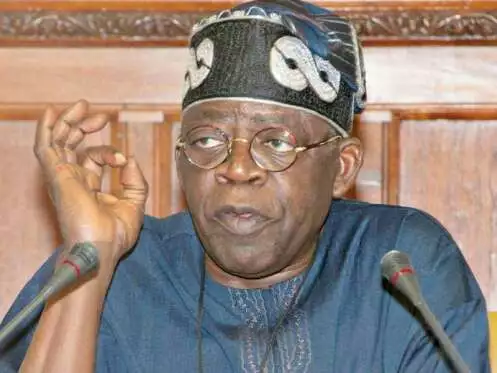
Bola Tinubu
This particular hypothetical story situated a war situation and how Yoruba fought such in traditional Africa.The atmospheric that birthed the story goes thus:
The older friend of mine and the retired General, at the thick of the guerilla war by the National Democratic Coalition (NADECO) against General Sani Abacha, lived in the United States of America. My friend had, one bright morning, walked up to the General and challenged him. “General, I have known you all these years for your uprightness, righteousness and as a strong stickler for excellence,” he began. Why then did the General become obsessed with Bola Ahmed Tinubu who, he alleged to the General, was perceived to be the converse of all that the war hero stood for?
Like an old man telling a moonlight tale of prowess and conquest to impressionable children, the General reportedly began the war hypothesis, the narrative of which I paraphrase in my own words here:
“Let us imagine a situation of turmoil in traditional Yoruba society. Wailing and crying oozing from suckling mothers and children in their diapers; the town in turmoil, running from pillar to post. All townspeople then rush to the palace of their king, shouting that the town had been besieged by murderous enemies.
The king frantically sends for the town’s warriors and their leading Generalissimo. He is however shocked when told that they had all bolted out of town. Nobody is prepared to face the rampaging and advancing enemies. All of a sudden, a young rascal, despised by the generality of the people for his waywardness, comes forward and tells the king that he is capable of stopping the advancing army.
Looked down upon and perceived with odium by the people of the town, the king reluctantly gives the rascal the go-ahead to rescue the people from the blood-sucking enemies. If, at the end of hostilities, that rascal wins the war and comes back home with the head of the enemies, in Yorubaland, such rascal is a hero and Yoruba would clothe him, in spite of his nakedness,” the General reportedly told his guest.
The third narrative I encountered in the last one week is that it would be amoral, wicked and incongruent for a dog to kill a snake that threatens to kill a people, only for that selfsame dog to be driven away from sharing in the meat on allegation that its saliva is irritating.
These three narratives were spun by people around me, in defence of Tinubu to justify Bakare’s denunciation of his enemies who continue to harangue him because of, in Bakare’s words, “Tinubu’s ancestry and rough beginning.”
In that pulpit fury, Bakare escalated what had hitherto been hushed up in whispers in Nigeria about Tinubu. The preacher, while delivering the homily to his congregants, plunged headlong into the dirty, murky waters of politics. He likened Tinubu to the biblical Jephthah, so as to adumbrate the thesis that, the fact of his birth notwithstanding, Tinubu rose to power.
Why Bakare alluded to Biblical Jephthah is unclear, or rather, intriguing, because the most renowned bit about this biblical character was that he was a judge and warrior who, on going to a war, pledged that if he won, whoever met him upon returning home would be sacrificed to God. His daughter ran out to meet him and Jephthah sacrificed her.
So, is Tinubu really a Jephthah who had pledged or would pledge and sacrifice anyone around him to get whatever he wanted – like Oluronbi in folklore who pledged her only son to the gods of the village?
“Like Jephthah the Gileadite, he (Tinubu) has fought many battles on behalf of the Yoruba people and won despite his rough beginning and God does not need anybody’s permission to put such in his hall of fame despite their past deeds and ancestry…Despite his growing up challenges, the dents and the detours of his life, he like Jephthah delivered Lagos State and nearly all the southwest states from the onslaught of the PDP from 1999 to 2007,” Bakare said.
The most fitting comparison of Bakare’s Tinubu analogy is that anecdote from the Yoruba retired General about how Yoruba rate their Generalissimo, especially why, in spite of the cruel and condemnable offering of his daughter as sacrifice, Jephthah still remained a hero among the Gileadites for his valour and coming to the rescue of his people.
Bakare has come under huge flaks for the above statements. What was worrisome to people was that the voluble Pastor had attacked Tinubu a short while ago. In a vitriolic sermon, he had charged at Tinubu thus:
“That’s why potholes are killing you… you can’t drive now anymore because what is meant for road has been stolen since democracy began, they are living larger than life, having jets here, having jets there, having house in Bourdillon… You will not go without vomiting what you have stolen…” he had said, among other things.
Both the Yoruba war narrative and the travails of Obinde seek to state that, when Tinubu was in the struggle to rescue Yoruba people from the manacles of Abacha, where were the moralists who now see him as belonging to the sewage? When he sold his property abroad to finance NADECO, where were we? Those pushing this line have not told us if it is also right and acceptable for a warrior to come back from battle and then plunder his villagers’ straws to roof his private residence?
I disagree with both the Yoruba General and Bakare. First, in all Yoruba literature I have read and serial bonding with elders from whom I mopped up the mores, lore and culture of the Yoruba people, I am not sure I ever came out with any indication that Yoruba relegate morality to second fiddle in any consideration. Especially when it comes to their leadership.
Yoruba are a very proud, self-respecting and moralistic people who value name and honour above valour. Yes, they keep rascally children for hot days of attack from outside infiltrators but they don’t present such children when it comes to the question of who leads them.
In those moments, they filter for purity, they comb for quality and honour. They look for morals and use uncompromised scanners to pick leadership candidates.
The facts of Tinubu’s intervention for the Yoruba people during the NADECO war against military despots are well noted and documented. He, alongside other greats’ exploits, can never be over-emphasized and will forever be in the annals of our history. The facts of his Governorship of Lagos are also documented, especially how many leaders have been hatched from his incubator. But there is also the question, what manner of leaders are some of those birthed by his machine?
He has his pluses, but his unexplained past and even the present are there too as listed by Bakare.
Our case is like that of an airplane passenger. He assumes he is not being flown by a pilot with a tainted flying history. It is one of the reasons why Tinubu should not be the candidate of the Yoruba.
Babagana Zulum, words are eggs
Borno State governor, Babagana Zulum has, in the last couple of years, risen to become a poster of what Nigerian governors must be and how elected government officials must always intervene on the side of the people. Rather than sit in the comfort of the Government House, shooting out orders, Zulum goes to the theatre of conflicts and becomes a participant in the resolution of crises in his state. He has thus received kudos across board for being a government official who knows his onions.
However, like every man who has their price, Zulum’s Achilles’ heel seems to be flippancy. When he flips his words, Zulum overshoots.
A few weeks ago, the Governor yielded to the mundane push of party-ism and got Nigerians shocked to their marrows.
Zulum had told a disappointed world that the rate of insurgency during the Peoples Democratic Party (PDP) reign was far higher than now. He gave the shocking comparative analysis while playing host to some northern elders of the Arewa Consultative Forum in Maiduguri who, incidentally, had paid him a visit in respect of the over 40 rice farmers who were beheaded.
“From statewide statistics on affairs in the 27 local government areas since 2011, the fact is that despite the recent happenings in Borno State, the security situation in Borno State and indeed that of the Entire North East Sub-region is still far better under Buhari and this is based on records,” he said.
Why the governor would yield to the incubus of political party divide, at a time when insecurity had become second nature of his state bothered the people.
The comparatives had yet to subside when Zulum again visited Jakana, a major town along Maiduguri-Damaturu highway, last Monday. He had visited the town as a result of the abduction of 30 travelers in the state. In Jakana, the governor was quoted to have said that he was disappointed that majority of attacks within the last two years were as a result of the military’s inability to properly secure the people. He went further to state that he had discovered that routine attacks on the people took place between Auno and Jakana which was a distance of about 20 kilometres and wondered why the army was unable to secure this short stretch of distance.
“And incidentally, the majority of Boko Haram’s attacks along this Maiduguri-Damaturu-Kano Road, keeps happening between Auno and Jakana. So, if the military cannot secure 20 kilometres, how can they keep us with the hope they will defeat the Boko Haram?” he had wondered.
There is no doubting Zulum’s proactive disposition to governance, as stated above. His unusual courage is manifested in the number of times he had escaped death while embarking on his peripatetic voyages in and out of Maiduguri. These voyages are embarked upon to safeguard the welfare and security of his people.
However, Zulum failed woefully on the comments emanating from this visit to Jakana. This is as a result of his failure to acknowledge that those soldiers who secure Borno and the rest of the volatile parts of the Northeast, are made of flesh and blood, like every mortal. Someday, we will have the benefit of knowing the actual casualties of the Boko Haram war and we will all realize, to our utter shame, that these poor soldiers deserve every support, every encouragement we can muscle up in their favour. It is only families of the fallen soldiers who understand or feel the calamity that is currently afoot in that troubled war area.
With the above in mind, Zulum should not have made a sweeping condemnation of those fighting compatriots. I imagine how downcast, how miserable, with their humanity diminished and ego punctured, those soldiers were after the Chief Security Officer of Borno State defoliated them and rendering them naked, with the flipping of his lips. While the governor had every reason to feel for his people, especially against the backdrop of the recent incident of the 30 kidnapped passengers, he ought to have taken cognizance of the emotive implication of his words. He should rather have left such reviews to journalists and public analysts and let the military establishment handle the punitive aspect of whatever inadequacy he noticed. But he spoilt everything with his verbal attacks.
All of us owe our fighting forces, from commander to the rank-less rifleman, due duty of care. We must not do anything that will demotivate or discourage them. Some of them have been on that tour of duty for three, four years. Rain and sun, they are there, dodging bullets and bombs, shooting at the enemy and the enemy shooting back at them.
While governors and the governed savoured the sumptuousness of Christmas on Friday, they were there in the trenches, warding off the evil of the enemy. Happy New Year will meet them again on January 1. We must not compound their woes with such bad words as uttered by Zulum. He can do better.
Leaders are often advised to be taciturn in their presentations because words are like eggs; the moment they are broken, they become irretrievable mess for the speaker to grapple with. That is the lesson of Zulum’s unfeeling attack against patriots inside the trenches fighting to keep the enemies of Nigeria – Boko Haram – at bay.
While Boko Haram insurgents fire salvoes against them to break their morale and splinter their resolve, their own governor also fires rockets of indiscretion at them, thus making of them victims of double assaults. It is a bad one that should not happen again
The Bishop of Sokoto Catholic Diocese, Mathew Kukah, has accused President Muhammadu Buhari of nepotism.
He also said that if a Northern Muslim had not been the President, there could have been a Military Coup.
Kukah who disclosed this In his Christmas message on Friday, said if a non-Northern Muslim President had done even a fraction of what Buhari did, there could have been a coup.
Kukah said President Buhari has institutionalized Northern hegemony by “reducing others in public life to second-class status.”
Kukah: “This Government owes the Nation an explanation as to where it is headed as we seem to journey into darkness.
“The spilling of this blood must be related to a more sinister plot that is beyond our comprehension. Are we going to remain hogtied by these evil men, or are they gradually becoming part of a larger plot to seal the fate of our country?
“President Buhari deliberately sacrificed the dreams of those who voted for him to what seemed like a programme to stratify and institutionalise northern hegemony. He has pursued this self-defeating and alienating policy at the expense of greater national cohesion.
“Every honest Nigerian knows that there is no way any non-Northern Muslim President could have done a fraction of what President Buhari has done by his nepotism and gotten away with it.
“There would have been a military coup a long time ago or we would have been at war. The President may have concluded that Christians will do nothing and will live with these actions.
“He may be right and we Christians cannot feel sorry that we have no pool of violence to draw from or threaten our country. However, God does not sleep. We can see from the inexplicable dilemma of his North.”
Akwa Ibom State Governor, Mr. Udom Emmanuel has confirmed that former Military Governor of the State, Air Commodore (rtd), died of COVID-19.
Declaring a seven day mourning period for the first indigenous Military Administrator of the State, Emmanuel said Nkanga died at an Isolation Centre where he was being treated, on December 24, 2020.
In a statement signed on his behalf by the Secretary to the State Government, Dr. Emmanuel Ekuwem, on Saturday, the seven-day mourning would start from Saturday, 26th December, 2020. Flags would fly at half-mast for the mourning period.
The statement noted that requisite protective protocol and contact tracing have been activated.
The statement reads in part,
“The Government of Akwa Ibom State hereby formally announces the death of a former Military Governor of our state, Air Commodre Idongesit Nkanga, who died at night on 24th December,2020.
“The information from the isolation center where he was admitted and managed indicates that the first indigenous Military Governor of our state and leader of Pan Niger Delta Elders Forum (PANDEF) died from complications resulting from COVID-19 infection.
“Requisite protective protocol and contact tracing have been immediately activated.
“Otuekong Nkanga was the Director-General of Governor Udom Emmanuel’s Divine Mandate Campaign organization 2015 & 2019. He was also the Chairman of the Ibom Airport Development company and Ibom Air.
“The Governor, HE Udom Emmanuel, is greatly saddened by the news of his passing and condoles with the bereaved family.
“Consequently, the Governor has declared a seven-day period of mourning effective Saturday, 26th December 2020. Flags are to be flown at half-mast for the entire duration of the mourning in the state.”