Home Blog Page 2546

Controversy Trails Olu of Warri’s Death |The Source

0

By Fola James

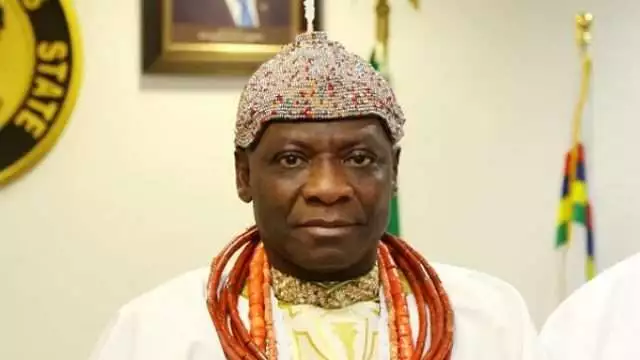
Barely 48 hours after reports of death of the Olu of Warri Ogiame Ikenwoli his palace said news that the monarch has joined his ancestors, is false.

The reports that the monarch died first broke on Monday, barely one week after the grand finale of his fifth coronation anniversary celebration.

According to Chief Clement Maleghemi, the palace Administration Director is only “indisposed and currently receiving medical care.”

Maleghemi who spoke at a news conference in Warri on Tuesday, said reports of the first-class monarch’s passage is false with no iota of truth in it, adding that the palace would brief the public subsequently on further developments.

The statement issued by the palace reads: “The attention of the Palace of His Majesty, Ogiame Ikenwoli, the Olu of Warri, has been drawn to news/social media speculations announcing the sudden demise of His Majesty.

“We wish to notify the general public that His Majesty is indisposed and currently receiving medical attention by a team of qualified medical specialists.

“Any further information on the subject would be made known to the general public by the office of the Traditional Prime Minister of Warri kingdom, Chief Ayirimi Emami, the Ologbotsere of Warri Kingdom.”

Meanwhile, The Nation quoting sources close to the palace, reported that the first class monarch had indeed joined his progenitors on Sunday.

The source said that the statement debunking reports of the Olu’s death merely conformed with the Itsekiri tradition of not announcing a monarch’s death immediately it occurs.

He said: “I am not even aware that the Olu is not dead. In fact, he can never die; he merely transits from one form to the other.

“Having said that, let me state that you do not announce the passage of a monarch of the Olu of Warri’s status like that of an ordinary person. There are processes, rites and methods that must be deployed before this can be done officially.”

He explained that it could take up to three months before the death of Ikenwoli would  be announced. By then, the face of his successor would be known and all the traditional rites would have been performed or at the process of being performed. This will culminate in the breaking of the hearten pot at Ode-Itsekiri (Big Warri).”

The paper quoted another source who said plan is ongoing to chose the monarch successor

He said  “The general family will sit down and pick any of his children, who is qualified as his successor. If his first son is qualified by birth, he stands a good chance, but it is not automatic,”  the source added.

“Even after that, the candidate must be acceptable by the oracle before the family presents him to the Ologbotsere and Ojoye-in-Council (council of chiefs), who on their own, would also consult the oracle to ascertain his acceptance.

“It is a very painstaking process that requires patience and care. This is why you do not announce a successor until everything is in place. You  cannot announce the death until the family and oracle have chosen a successor.”

Fayemi Assents To Budget 2021 |The Source

0

By Ayodele Oni

Ekiti State Governor Dr Kayode Fayemi, on Wednesday, assented to the 2021 appropriation bill of over 100 billion naira.

The budget proposal scaled the final passage on Tuesday at the state house of assembly.

At a brief ceremony at the Governor’s office, Ado Ekiti Governor Fayemi pointed out that the budget would cater for ongoing infrastructural project  across the state.

Titled “The Budget of Recovery and Economic Restoration”, the Governor explained that it was basically dedicated to improve the lives of the people and as well deliver on his administration’s promises.

He commended the patriotic zeal and commitment of the lawmakers and urged them to sustain the continued harmonious relationship between the executives and legislative arm.

The Speaker of the house, Mr Funminiyi Afuye, while presenting the budget, stressed the need for the executives to ensure its full implementation.

The Speaker also gave assurance that the lawmaker would ensure proper monitoring of the projects executed with the money through budget tracking.

BOOK REVIEW: An Open Letter to Goodluck Jonathan |The Source

0
Goodluck Jonathan

By Reuben Abati Ph.D

Bonaventure Philips Melah, Dear President Goodluck Jonathan (An Open Letter), no imprint.

The writing of books, commentaries, essays on executive political leaders, focusing especially on the efforts and the place of Presidential figures in history, popular culture and social imagination is an established tradition, and a major enterprise in Western democracies. It is comparatively still a growing field among African writers and public intellectuals, given the scope and richness of available primary material. Nonetheless, such studies provide an opportunity for recording, analyzing and contextualizing the contributions, the persona, the policies, the impact, the strengths and failures of particular Presidents or Heads of State, in relation to the writer’s own understanding or purpose or the larger objective of defining the legacy of a particular leader.

The tone could range from friendly to bitter, scholarly or affective, reflective or opinionated or just simply cold, journalistic, reportage. Presidential ranking is a favourite sport in this regard: who is the greatest President or the weakest? Who is the statesman, or the most polarizing? And how do the leaders, in a particular context, over time rank in accordance with varied criteria or expectations? The intense scrutiny to which state leaders are often subjected – from Amenhotep III, the Sun King (Pharaoh of Egypt) to Alexander the Great, all the way through history to Sanna Marin, the 35-year old, incumbent Prime Minister of Finland, iterates the importance of actors in institutional roles, and their impact on policy, politics and statehood. They remind of us of the role of leadership and power in the formation and evolution of global development and social processes: the living history of countries and communities in relation to the management of power and opportunities by specific individuals.

The political history of world leadership further offers a vehicle for holding those who occupy the highest positions in their countries accountable, and hence, a growing focus on social history in relation to leadership: how do leaders relate with ordinary people, how do they transform or worsen their lives, unite them or polarize them, rather than a narrow consideration of their own relationships with other elites in power, with whom they jostle for attention and opportunities. But whereas no single author or piece of writing can offer a whole view of the truth, every new contribution certainly provides a new perspective. The only danger in this area of enterprise is the error of generalization, the potential for bias, and the limitations of historical context.

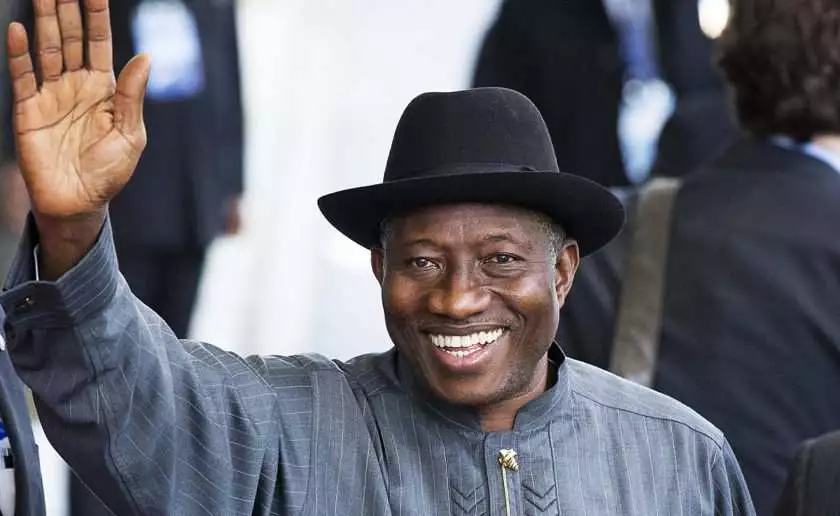
This is a book review, not an essay on the intersection between power and history, but I have given this background to prepare the reader’s mind for the subject we are dealing with, which is the latest book on Nigeria’s former President, Dr. Goodluck Ebele Jonathan, a piece of political commentary, delivered in an epistolary style in 35 chapters and 185 pages. The book is titled accordingly, Dear President Goodluck Jonathan (An Open Letter) by Bonaventure Philips Melah. There is a growing body of writings on the tenure of President Goodluck Jonathan as Nigeria’s President from 2010 – 2015. The persistent scrutiny of that tenure that we have seen, and the seemingly rich harvest thereby, would seem to be an indication of the controversial nature of the events and episodes before, during, and after that Presidency, and the issues and ideas that defined it.

In my estimation, writings on President Jonathan and the Jonathan administration fall into three categories so far: one, the documentation of the efforts of his administration by Ministries, agencies and departments, political associates and the President’s media and public communication team while he was in office; two: post-mortem reflections on the Jonathan administration and accounts of individual involvement by former Ministers and aides, and three: writings by independent observers – and this category is the most variegated, including post-mortems by scholars, journalists, political opponents, haters and admirers with the titles ranging from the friendly to the not-so-friendly. One book in this category is even tantalizingly titled Jonathan: The Squandering of Goodluck (2015, 604 pp) by Margie Marie Neal and Moshood Fayemiwo. Political leaders have no control over how they are assessed or remembered by the public. Even when the more organized ones among them make an effort to write their own story, the ultimate control over their narratives is in the hands of a mass, indefinite, global audience. It is part of the price of leadership. Any leader who worries himself sick over praise or condemnation does so in vain, because the judgment of time and history is a function of a long chain of events in the people’s memory and experience.

Bonaventure Melah’s Dear President Goodluck Jonathan (An Open Letter) falls into the third category identified above. A journalist, editor and public affairs commentator, Melah worked, for brief periods, on the sidelines of the Jonathan administration either as an aide to a political appointee or as a resource person to the media team at the secretariat of the then ruling People’s Democratic Party. His writing shows a more than casual familiarity with Nigerian politics and the ways of political figures and the Nigerian state. But he is essentially a Jonathan admirer and supporter, one of those loyal supporters of the President who were once labelled “Jonathanians” by the opposition.

Melah has chosen as the title of his book, a phrase that has a familiar, contemporary ring to it.  The phrase “Open Letter” is almost a personalized, if not “patented” phrase in Nigeria’s political culture today, for the simple reason that many political observers associate it majorly with one person – none other than Chief Olusegun Obasanjo, Nigeria’s former Head of State and former President whose “Open Letters” to his successors in office deserve a rigorous inquiry with regard to what those letters” say about other elites in power and their performance. Bonaventure Melah’s “Open Letter” is the friendly effort of an admirer, who is unapologetic in stating his objectives: (a) to congratulate President Goodluck Jonathan on his 63rd birthday; (b) to commend him for his leadership and contributions to Nigeria’s human and infrastructural development; (3) to update President Jonathan on some current economic and socio-political developments in Nigeria since he left office as President, and (4) to thank him for the courage that he demonstrated when he willingly conceded defeat after the 2015 Presidential election, precisely on March 31, 2015. Melah celebrates him. He salutes his courage, and recreates that unforgettable moment in Nigerian history.

The epistolary style adopted by the author allows him to cover a broad range of topics from the past, to the present and even, recent, topical issues, as he interweaves many issues from episodes during the Jonathan administration, with other issues of topical interest –  security, corona virus, international politics, fake news and electoral promises, and the challenges of leadership. This is essentially the work of a journalist with a hard nose for the news, and who in the course of his career has learnt to pay keen attention to news behind the news, and use that as an advantage to place issues in perspective. Each of the 35 chapters in this book is interspersed with expressions such as “My dear President, “Dear Sir”, or more frequently “My President”, lending the book a relaxed, conversational and intimate tone.  What Melah has written is for the most part “a love letter” to President Jonathan, but the love that he expresses is not blind love. He tells President Jonathan quite early: ‘Many Nigerians and others from around the world believe that you are a great leader; indeed one of the best leaders Nigeria and Africa has ever had. I am one of them.”  Nonetheless, he would also in another breath tell President Jonathan: “As a leader, you had your faults, your weaknesses…” and he provides a few of these in a Chapter 22 titled “Our Expectations you didn’t meet.” This does not in any way, however subtract from the author’s conviction that President Jonathan is a hero of democracy, a global citizen, a great leader and a good man. Melah is very defensive of his hero and he does not pull the punches in that regard.

The book can be conveniently divided into three major parts. Part One in my view should comprise Chapters 1-12, and here to borrow a common parlance is the “hottest part of the book.” Melah defines his premises already outlined above, and provides facts to defend his position. He is convinced for example that President Jonathan lost the 2015 election because of the envy of those who no longer wanted him in power and the treachery of persons within his own party, the PDP who played bad politics”, including fair weather friends and together, those who no longer wanted him in power formed an unholy alliance. Melah tells President Jonathan that those who formed that alliance are today living in shame and regret: “Today in Nigeria, those women who rained abuses at you while you were President are hiding in one corner”. (p. 18). Readers of this book will find most interesting, Chapter 5 titled: “One major reason PDP lost the 2015 Presidential election”.

The author’s main argument in subsequent chapters is how what he calls Karma has befallen those who conspired against President Jonathan. From Chapters 6 to 12, he names those persons and offers a series of profiles of elites in the corridors of power that can best be described as provocative and controversial. Melah identifies good friends, and those he calls traitors and he reports to the President how each one of them has fared since his hero left office. While he praises Senator Olusola Saraki, Governor Nyesom Wike, Hon. Ahmed Gulak,  he delivers devastating blows on those he calls “The Elite Conspirators of 2015”, who he argues deployed in his view the three Ms (MMM) – the Media, Money and the Military as his narrative builds up to a climax in Chapter 11 titled “My President, you can forgive, but Karma is at work here”.

And who are these victims of Karma?  – Olisa Metuh, former spokesperson of the PDP, Professor Yemi Osinbajo, the Vice President of Nigeria, HRH Sanusi Lamido Sanusi, Comrade Adams Oshiomhole, Malam Nasir el-Rufai, and Asiwaju Bola Ahmed Tinubu.  While the average reader may jump to the conclusion that the author of this book is adopting that common principle: the enemy of my friend is my enemy”, that principle would not seem to apply here, because the author himself had repeatedly stated that President Jonathan is quick to forgive and move on, but he needs to be reminded that nemesis has since caught up with those who plotted against him. His interpretation of events, and his conclusions could be disputed and even fetch him charges of defamation.

While I understand the author’s moral argument about loyalty as the primary code of human relationships, as demonstrated in his deliberate review of “The Story of Jonathan and Soludo” (Chapter 12),  I find his portrait of the former spokesperson of the PDP, Olisa Metuh, rather harsh. His labelling of Comrade Adams Oshiomhole as “one of the most corrupt political office holders in Nigeria” ((p. 72) is not backed by concrete evidence. His impolite characterization of the former Emir of Kano, Lamido Sanusi in contrast to his justification of the politics of Governor Abdullahio Umar Ganduje is also somewhat overdone. Melah makes no serious effort to hide his bias and prejudices. His letters to President Jonathan are coloured by his own emotions, but isn’t that what we do when we write letters?

In what I classify as the Second Part of the book, that is Chapters 13 – 18, he deals basically with topical issues: security challenges in Nigeria, the establishment of security networks like Amotekun, COVID-19 and the international politics around it. Melah’s accounts here are descriptive and reportorial. He writes about regional security outfits, and mentions restructuring but what does he think about specific issues: state police for example or the protest against police brutality as represented by the #EndSARS which falls within the time-frame of the letters published here. Conceptually, the author runs into troubled waters in Chapter 18 when he dabbles into the field of science, and cure for Corona virus. He praises Stella Emmanuel, the US-based Nigerian doctor, who joined others to promote Hydroxychloroquine as a preventive cure for COVID-19. In future reprints of this book, this is a chapter that I would recommend for excision or review. Both the World Health organization and stakeholder organizations have since established that those who prescribed hydroxychloroquine for CoVID-19 got it all wrong. Dr. Stella Emmanuel is definitely not “a rare gem and heroine” ( p. 107) that Bonaventure Melah says she is.

The rest of the book, Chapters 19 – 34 should constitute the Third Part of the book. It starts on a strong note with the author’s notable argument that “false electoral promises are fake news and should be criminalised” (p. 109). The remaining pages are devoted to issues of governance: President Jonathan’s major achievements as President, his words on marble, what he failed to achieve, Nigeria since 2015, including some achievements of the Buhari administration so far restructuring and the future of Nigeria. The book is brought to a close with photographs.

It is an engaging read. The author’s prose is crisp, unvarnished and exact. He may well get an open or a private response to some of his views and conclusions from President Jonathan, that in itself may require the writing of another memoir by the subject,  but now that Melah’s letters are in the public domain as “an open letter”, he should be prepared for an open discussion of his interpretation of Nigeria’s recent and contemporary political history, and his projections into the future.  In the final Chapter in the book (Chapter 35), Melah writes for example as follows: “Talks are ongoing among politicians and other concerned citizens, that you, Dr. Goodluck Jonathan is the right person to take over government from President Muhammadu Buahri in 2023. Those who share this view are saying that Nigeria needs both healing and reconciliation; and that you are the ideal person that can stand in the gap for the nation, this time. Even though I do not know the underbelly motive of those behind this turn-around, what I think personally, is that you leave the doors of your spirit open, in order that you may hear clearly what the Spirit of God will say eventually. This is true because as the saying goes: When God says NO, nobody can say YES; when God says YES, nobody can say NO”. (pp. 165 -167).

I have enjoyed reading this book very much. It is possible to start reading the book from any part or chapter, and yet get a full dose of the author’s impression about the particular topic under consideration.  But it could have been better published and edited. These days, the content of a book is as important as its overall design and aesthetics. There is no imprint for example. The only clue we have about the date of publication is provided on page 168, where the author writes: “Abuja, December 15, 2020”. There is also no index to guide the reader as is standard practice. There are also proof-reading and spelling errors as in the repeated misspelling of hydroxychloroquine in Chapter 18. However, these omissions do not detract from the overall value of this book.  This is by every measure, a worthy contribution to the conversation about political leadership in Nigeria, legacy and prospects and a most befitting tribute to a man whose humility, courage, wisdom and heroism provide strong lessons in leadership.  It is hereby recommended for your attention and readership.

Insecurity: Buhari Says Only God Can Supervise Nigeria-Niger Republic Border |The Source

0
President Muhammadu Buhari

By Akinwale Kasali

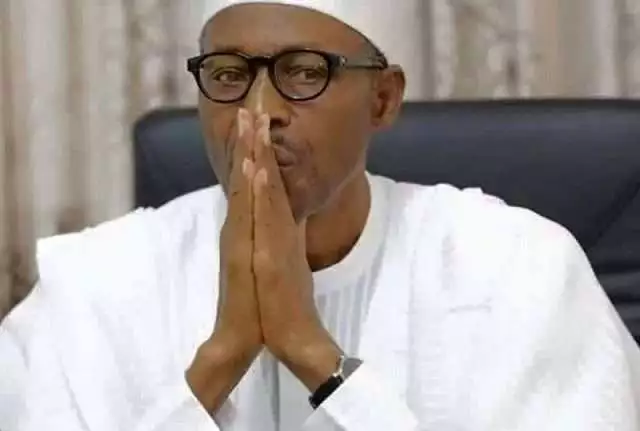
President Muhammadu Buhari seems to have given up on the frightening insecurity ravaging the Nation, especially the porous Nigeria borders with its neighbour, Niger Republic.

The  President of said only God can effectively “supervise” the border Nigeria shares with the Republic of Niger.

A statement by his Special Adviser on Media and Publicity, Femi Adesina, said the President  spoke while receiving in audience former Vice President Namadi Sambo, who heads ECOWAS Election Mission to the Republic of Niger.

Buhari said, “I come from Daura, few kilometers to Republic of Niger, so I should know a bit about that country.

“The President is quite decent, and we are regularly in touch. He is sticking to the maximum term prescribed by the Constitution of his country.

“Also, we share more than 1,400 kilometers of border with that country, which can only be effectively supervised by God.

“I will speak with the President, and offer his country our support. We need to do all we can to help stabilise the Sahel Region, which is also in our own interest.”

Not a few Nigerians have criticised the unprecedented porous border between the two countries, and have alleged that Buhari seems to have an uncanny interest in anything that could develope Niger Republic.

Ondo PDP Suspends Members For Endorsing Fayose As Zone’s Leader, Dissolves Elders Committee |The Source

0

By Ayodele Oni

For being part of a delegation which visited former Ekiti state Governor, Ayo Fayose, in Lagos, the People’s Democratic Party, (PDP) in Ondo state has clamped suspension order on five of its members.

The party also dissolved the Elders Committee, with a promise to constitute a new one.

A delegation had, on Monday, visited Fayose in Lagos during which members declared him the leader of the PDP in the South West.

The former Governor too described Oyo state Governor, Seyi Makinde as a pupil Governor.

A statement in Akure on Tuesday, by the party’s spokesman, Kenedy Peretei, explained that the action was in pursuant to Section 58(1)(a)(b)(f)and (h)of the Peoples Democratic Party Constitution.

“The under listed persons are hereby suspended indefinitely from the party for anti-party activities and gross misconduct: Chief Oyedele Ibini, Lad Ojomo, Ayo Fadaka, Rasheed Elegbeleye and Ebenezer Alabi.

“By this decision, they are expected to stop parading themselves as  members of the party. All organs of the  party are to take note in this regard.

“They stand suspended until the outcome of the report of the State Disciplinary Committee.

“In another development, the State Working Committee has dissolved the State Elders Committee. In accordance with the provisions of our constitution (2017 as Amended), another State Elders Committee will be constituted in due course.

“We also want to put it on record that, the State Executive Committee of the PDP in Ondo State did not send any delegation to anywhere to represent the Party.

“Whoever lays claim to such is an impostor and does not represent the opinions of our teaming supporters in the State.”

Oyo State Governor, Seyi Makinde, and Fayose have been in a battle of wits over whi exactly is the leader of the party in the Zone. Fayose insists that he is, to the consternation of most party members who back Makinde. They back it up by saying Makinde is the only PDP Governor in the South-West.

Last week, Mankinde accused Fayose of being on a deliberate  mission to destabilise the party for fear of the EFCC. He alleged that by doing that, Fayose thinks the FG would soften his prosecution by the EFCC for alleged corruption. The Governor reminded Fayose of those who walked that path before him, but still ended up in jail.

Uzodimma Signs 2021 Budget Into Law, Says It Will Drive Imo’s Economy |The Source

0
Governor Hope Uzodinma of Imo State

Imo State  Governor,  Hope Uzodimma, on Tuesday, signed the 2021 budget of N346.2 billion into law. Tagged “Budget of Wealth Creation”, Uzodinma was optimistic that it would drive the economy of the State positively.

The ceremony which took place at the Executive Chambers on Tuesday at the Government House Owerri was witnessed by the Deputy Governor, Prof. Placid Njoku, the Speaker Imo State House Assembly, Rt. Hon. Paul Emeziem and Principal Officers of Imo State House of Assembly and members of the Imo State expanded executive.

Putting the official seal on the 2021 appropriation bill as passed by the House of Assembly, the Governor informed that the Executive presented an estimate that was “a realistic thinking of what will drive Imo State to the next level, if fully implemented.”

The Governor reiterated the tag of the budget which is “Budget of Wealth Creation” and emphasised that if well implemented will address the unemployment problems in the State, provide infrastructure, provide counterpart funding to the State’s global partners and bridge the gaps that exist to both the State local economy and other economies.

He noted that the Executive Arm of Government has the responsibility to “drive the appropriated revenue, generate the revenue through her MDAs, spend the revenue as appropriated and ensure that the performance profile of the budget, as passed into law, is reasonable and such that will impact on the lives of the State and her citizenry.”

He thanked the leadership and members of the Imo State House of Assembly for their prompt and timely passage of the appropriation bill which, saying it is a reflection of a strong and cordial partnership between the Executive Arm and the Legislature.

A number of people from opposition parties had criticised the House for not subjecting the Budget through rigorous scrutiny, saying nobody was invited for any defence or clarification. They alleged it was passed within three days.

But apparently in response, Speaker Emeziem, while presenting the Budget for the Governor’s assent  said  the House has “done justice to the appropriation bill,” saying the budget passed through the due process  of First, Second and Third reading.

CNPP Cries Foul Over Withdrawal of Police Attached to 16 Political Parties, Says It Leaves Them Vulnerable; Warns IGP |The Source

0
Chief Willy Ezugwu

The Conference of Nigeria Political Parties (CNPP), has accused the Inspector General of Police, IGP, Mohammed Adamu, of giving Business men Police protection while withdrawing those attatched to 16 Political Parties. It has, therefore, described as “unjust, partial and anti-democratic” the withdrawal of police officers attached to 16 out of 18 registered political parties, which by their own special circumstances, are susceptible to kidnappings and assassinations.

The IGP had recently ordered the withdrawal of Police  personnel  attached to  Very Important Persons (VIPs) across the country with immediate effect, but retained those attached to Government Houses, President of the Senate and Speaker House of Representatives.

However, in a statement signed by its Secretary General, Chief Willy Ezugwu, the CNPP said, “In case the Inspector General of Police is not aware just as they applied to stop the #EndSARS probe without his knowledge, we hereby draw the attention of his office to this ugly development where 16 political parties which are statutorily entitled to police protection were left vulnerable to all forms of attacks by criminal elements.”

“For us in the political parties’ leadership, we will not be worried if the withdrawal of police officers attached to all VIPs is universally implemented, with government houses, President of the Senate, Speaker House of Representatives, and businessmen denied security.

“But a situation where Government Houses, President of the Senate, Speaker House of Representatives, businessmen, and two of the 18 registered political parties, specifically, the All Progressives Congress (APC) and the Peoples Democratic Party (PDP) have police officers attached to them, while 16 political parties were left without police protection is unacceptable.

“As the umbrella association of all registered political parties in the country, we believe that the action of the police authorities is unjust, partial and anti-democratic, exposing the leadership of 16 registered political parties to attacks by hoodlums.

“For avoidance of any doubt, let it be known that all the registered political parties are equal before the law and must be treated as such by all institutions of government, including the police force.

“Why would the police authorities prefer to be dealing with businessmen rather than institutions recognized by law like the political parties, who have the right to ask for police protection?

“Is it asking for too much for political parties who are entitled to be protected to request for police personnel to be attacked to them at this time of gross insecurity?

“Why is the Inspector-General of Police approving the attachment of police to businessmen but is quick to deny 16 registered political parties the same treatment? Is it because the businessmen have money to pay?

“What justification does the Police authorities have to exempt 16 political parties out of 18 registered parties in Nigeria from police protection? Is it because the APC and PDP are very rich?

“When has security become an enterprise? Has it become a matter of cash to be secured?

“The CNPP wonders why the approving Police authorities chose to monetize security of lives and properties of 16 political parties who are equally entitled to be protected.

“We therefore call on the Inspector General of Police to urgently redress this anomaly and ensure that all political parties get equal police protection in view of the precarious security situation in the country”, the CNPP stated.

DSS Alleges Plans To Bomb Public Places |The Source

0

The Department of State Services, DSS, has alleged  that there are plans to bomb  public places by mischief makers in a bid to destabilise the country during the yuletide period.

The Service says the violent attack is being planned by criminal elements in the society. But it says that along with other Security Agencies, it is on top of situations.

In a release by the DSS Spokesperson, Dr Peter Afunanya, the Service asked members of the public to be vigilant, and provided members of the public with numbers to call, in case of any emergency.

The DSS did not disclose where the attacks would come from, or the group planning them.

Following is the DSS statement:

“The Department of State Services (DSS), wishes to inform the public about plans by some criminal elements to carry out violent attacks on public places including key and vulnerable points during the yuletide seasons.

“The planned dastardly acts are to be executed through the use of explosives, suicide bombing and other dangerous weapons.

“The objective is to create a general sense of fear among the people and subsequently undermine the Government.

“Against this backdrop, citizens are called upon to be extra vigilant and report strange movements and indeed, all suspicions around them to security and law enforcement agencies.

“On its part, the Service is collaborating with other sister agencies to ensure that adequate measures are put in place for protection of lives and property.

“To further achieve this purpose, the Service has provided these emergency response numbers 08132222105 and 09030002189 for urgent contacts.  It is also using this opportunity to unveil its interactive website www.dss.gov.ng for public communication support.

“Everyone is encouraged to take advantage of these platforms and similar ones provided by related agencies to timely reach and avail them (security agencies) of required information.

“However, the Service advises those planning to cause chaos and damage to public peace to desist from such as it will stop at nothing to apprehend and bring them to justice.

While assuring citizens and residents of their safety during and after the festive periods, the DGSS, Alhaji YM. Bichi fwc, with his Management and Staff, wishes all, Happy Celebrations and a Prosperous 2021.”

Ekiti Highways Deserted As Kidnappers Reign |The Source

0
Ekiti Highway

By Ayodele Oni

Anxiety has enveloped communities in Ekiti state over insecurity occasioned by the increasing wave of kidnapping and killing of travellers along the highways.

Investigations accros the state revealed that travellers along major highways are no longer safe as suspected herdsmen turned kidnappers now lay siege on the roads.

It has become a daily occurrence along some roads such as Ikere/Ise/Emure, Ado/Ijan/ Agbado and others for travellers to fall victims of kidnapping and robbery.

The deployment of men of Amotekun security outfit to the local government areas did not help matters, as kidnappers strike at will and abduct their victims to unknown locations.

It was gathered that despite the visit of the Inspector General of Police, (IGP) to state Commands to boost the morale of officers after the endSARS protest, they are yet to return to highways.

During the protest, policemen were brutalized, with several stations set on fire including the two stations in Ikere Ekiti.

Residents of communities are now at the mercy of vigilantes, some of whom were hired and being paid by the people through monthly levy to secure them.

The Elemure of Emure Ekiti, Oba Emmanuel Adebayo called for deployment of more security personnel, especially along Ikere/Emure highway during the yuletide to curb increasing wave of kidnapping.

Oba Adebayo, a retired Commissioner of Police, said communities in the area will be playing host to the General Overseer of the Redeemed Christian Church of God, Pastor Enoch Adeboye, during the period and hence the need for security beef up.

In the interim, many people have resolved not to travel during the yuletide to avoid falling victims of kidnapping, following insecurity along the highways.

Battle For The Soul Of PDP In South West Rages |The Source

0

By Ayodele Oni

The Congress of the People’s Democratic Party, (PDP) in the South West is becoming more interesting by the day as the battle of wits between Governor Seyi Makinde of Oyo state and former Governor Ayo Fayose of Ekiti state thickens.

Just on Monday, some PDP Chieftains in Ondo state threw their weight behind Fayose describing him as the recognized leader of the party in south west.

Ondo state is sponsoring a candidate, Chief Eddy Olafeso, for the Vice Chairmanship  of PDP in the zone for the second time.

While addressing the Ondo state delegation in his Lagos home, Fayose had described Governor Makinde as a toddler in politics.

But in a swift reaction, a faction of the PDP in Ekiti state loyal to Governor Makinde distanced its members from Fayose’s outburst.

A statement by the factional  Chairman, Mr Kehinde Odebunmi dissociated the party from the statement credited to the former Governor Ayo Fayose’s faction, attacking Governor Seyi Makinde of Oyo State.

The party expressed displeasure over what it described as the distabilisation tendencies of the former Governor, saying it was necessary for Fayose to acknowledge the fact that the party is not his private business where he gives order to the party’s exco to attack his perceived enemies.

It reminded the former Governor that the party, has only one sitting Governor in  the six states in the zone and could no longer afford distabilisation engagements among its members, ochestrated by individuals who assume ownership of the party.

“We are using this medium to appeal to all our leaders across the Southwest Zone, especially those who are aggrieved for one reason or another, to please give peace a chance in the best interest of the party and the populace.”

The party said there was no controversy regarding who is the leader of the party in the Southwest Zone. The Constitution and the convention of the party has conferred this  on Gov. Seyi Makinde.

The statement advised former Governor Ayo Fayose to support Makinde’s leadership and allow peace to reign in the zone, instead of leading another group to oppose him.

“Gov. Seyi Makinde is the leader of PDP in Southwest and the Ekiti State Chapter is solidly behind him.

“This is not to say that former Governor Ayo Fayose can be wished away in the scheme of things as one of the party leaders in the zone, but he should understand that he does not own the party and as such, should respect the existing political organogram/arrangements which he once benefitted from, as the only elected PDP Governor in the zone between 2014 and 2018.”