

Home Blog Page 25

23 Years After, Stakeholders Move To Strengthen Child Rights Act

0
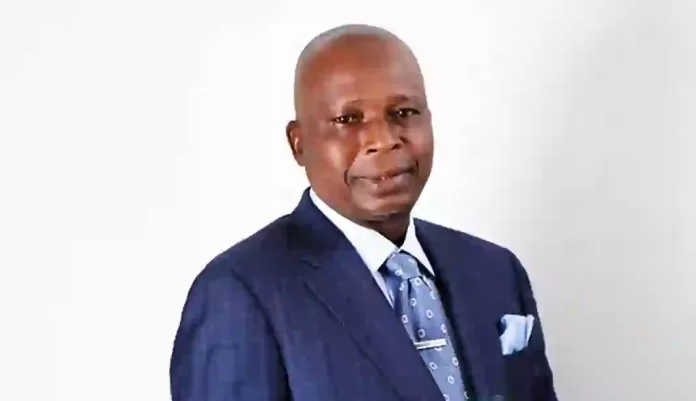
Lateef Fagbemi - AGF

By Ayodele Oni


After 23 years of enactment, stakeholders in the justice sector have commenced moves to strengthen legislation on the protection of the welfare and rights of Nigerian children.


The stakeholders, including policymakers, legislators, judges, law enforcement agencies, civil society representatives and international organisations, pushed for appropriate, implementable and enforceable legislation to enhance the development and welfare of Nigerian children.


They spoke at the opening of a three-day National Stakeholders’ Engagement on the Review and Amendment of the Child Rights Act (CRA) 2003.


The review is coming 23 years after the Child Rights Act was enacted by the Nigerian government in response to the call of the United Nations, (UN).


The event was organised by the Federal Ministry of Justice in collaboration with UNICEF and International IDEA.


Speaking at the Opening g ceremony, the Attorney-General of the Federation (AGF) and Minister of Justice, Prince Lateef Fagbemi, SAN, said the development of Nigerian children was inseparable from the development of the country.


Fagbemi, who was represented by the Solicitor-General of the Federation and Permanent Secretary, Federal Ministry of Justice, Mrs Beatrice Jedy-Agba, revealed that the administration of President Bola Tinubu has placed human capital development, social inclusion and the wellbeing of Nigerians at the heart of the Renewed Hope Agenda.


“Investment in the Nigerian child is an investment in the future workforce, leadership, innovation, peace and prosperity of our nation.


“Every child who is protected from violence, given access to quality education, provided with adequate healthcare, nurtured in a safe family environment and given an opportunity to participate meaningfully in society represents an investment in Nigeria’s future.”


The AGF added that child rights should not be regarded as peripheral social issue, noting that they are fundamental to human capital development, national security, social stability and sustainable development.


He urged participants to understand that the engagement was not merely to commemorate the existence of the Act, but to address the gap between rights guaranteed by law and those enjoyed by Nigerian children in reality.


“Consequently, child rights should not be regarded as a peripheral social issue. Child rights are fundamental to human capital development, national security, social stability and sustainable development.”


Also speaking, the Co-Chair of the Review Committee, Justice Suzzette Nyesom-Wike, who represented the President of the Court of Appeal, commended stakeholders for their efforts towards the review of the Child Rights Act.


She urged participants to bring their wealth of experience to bear on the process to ensure a successful outcome, assuring that the judiciary was ready to play its part.


Similarly, the Chief Judge of the Federal High Court, Justice John Tsoho, represented by Justice James Omotosho,

called on participants to consider the prevailing circumstances affecting the development and welfare of Nigerian children.


Tsoho, pointed out that more than two decades had passed since the enactment of the Child Rights Act in 2003, during which Nigerian children faced challenges that the framers of the law could scarcely have anticipated.


He identified the pressures of the digital age, insecurity, child labour and child marriage, as well as the lack of uniform domestication and enforcement of the Act across the states, as some of the challenges requiring attention.


He assured participants that the courts were ready to enforce whatever protection the law affords children, provided such laws were properly enacted, domesticated and given practical effect.


“It is my hope that this engagement will produce recommendations that close the gaps between legislative intent and judicial enforcement; as well as recommendations on clearer definitions, stronger enforcement mechanisms, adequate provision for child-friendly court procedures.”


 He also hoped for “closer coordination between the Judiciary, law enforcement, social welfare structures, and traditional and religious institutions that shape the everyday lives of our children.”


The Chief Judge also stressed that justice for Nigerian children went beyond legislation, noting the need for accessible courts, procedures that protect children from further trauma and a judiciary sensitised to the particular vulnerabilities of children.


“The Federal High Court, within the limits of its jurisdiction, remains committed to playing its part in this regard,” he added.

Deceased’s Family Should Not Bear Cost For Autopsy, Medical Examinations – Ondo AG

0
Kayode Ajulo SAN

By Ayodele Oni


 Ondo State Attorney-General (AG) and Commissioner for Justice, Dr Olukayode Ajulo (SAN), has called for an end to the practice of requiring families of homicide victims to bear the cost of autopsies and other medical examinations needed for criminal investigations.


The attorney-general said the measure forms part of the broader reform of criminal justice administration contemplated by the Administration of Criminal Justice Act ( ACJA) and corresponding state legislation.


Ajulo pointed out that bereaved families should not be made to shoulder the financial burden of establishing the cause of death where a person has died under suspicious, unnatural, or potentially criminal circumstances.


According to him, where a death is being investigated as homicide, an autopsy is a necessary component of the investigation and should not depend on the family’s ability to pay.


He explained that the procedure is an important investigative process for establishing the cause and circumstances of death and obtaining evidence that may be crucial to prosecution.


The attorney-general pointed out that his position is consistent with the philosophy and objectives of the Administration of Criminal Justice Act (ACJA) and the applicable Administration of Criminal Justice Law (ACJL), which seek to promote an efficient, humane, and victim-sensitive criminal justice system while safeguarding the rights of accused persons.


“It is the responsibility of the relevant government and investigative authorities to ensure that the examination is conducted promptly and the medical report made available to investigators and prosecuting counsel.


“A citizen, who has suffered a crime, should not be required to purchase justice before the state will investigate that crime,” Ajulo said.


He noted that the absence of an autopsy or other medical evidence had, in some cases, created difficulties in the prosecution of homicide offences, saying that prosecuting counsel may diligently present a case only to encounter an evidentiary gap because the necessary examination was not conducted or the report was unavailable.


The commissioner maintained that the responsibility for investigating suspected criminal conduct should not be transferred to bereaved families, stressing that financial circumstances must not determine whether essential medico-legal evidence is obtained.


Ajulo, therefore, called for closer coordination among the police, medical practitioners, the judiciary, and other relevant institutions to ensure that autopsies in suspected homicide cases are conducted promptly.


He also called for clear procedures covering the preservation of evidence, post-mortem examinations, and the transmission of medical reports to investigators and prosecuting counsel.


He further notef that modern criminal justice must recognise not only the rights of defendants, but also the dignity and legitimate interests of victims and their families.

Osun Passes State Police Amendment Bill

0
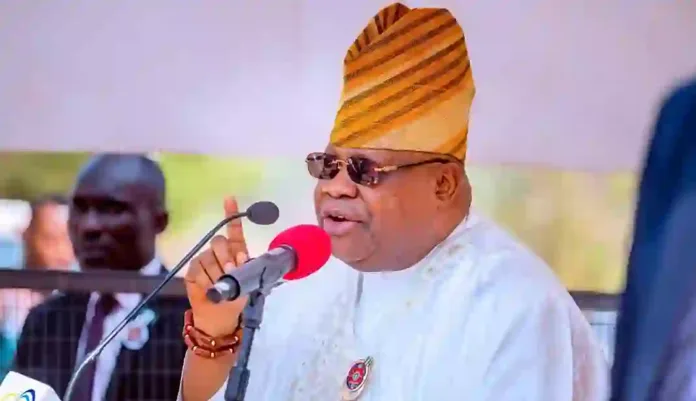
Governor Ademola Adeleke


By Ayodele Oni


Osun State House of Assembly has become the first legislative house to approve the constitutional amendment bill, seeking to establish State Police.


The lawmakers reached the decision during plenary on Tuesday following a motion moved by the Majority Leader, Hon. Kofoworola Babajide Adewunmi, and seconded by Hon. Tajudeen Adeyemi.


The House subsequently considered and approved the proposal to amend the 1999 Constitution to provide a legal framework for State Police Service to operate alongside the Federal Police.


National Assembly transmitted the Constitution of the Federal Republic of Nigeria, 1999 (Sixth Alteration) Bill, 2026, to the 36 state Houses of Assembly on September 16 for consideration and approval.


The transmission marked the next stage in the constitutional alteration process.


Speaking after the Osun Assembly’s approval, Speaker Adewale Egbedun directed that the resolution be communicated to the National Assembly in accordance with the constitutional amendment procedure.


 Under Section 9 of the 1999 Constitution, a constitutional amendment requires approval from at least two-thirds of the 36 state Houses of Assembly.


This means at least 24 state legislature must endorse the proposal before the process can advance to the subsequent stage.


State Police is designed to introduce a dual policing structure, operating alongside the existing federal policing system.


The National Assembly’s version provides for state-level policing responsibilities while retaining a federal police structure for matters within its constitutional jurisdiction. The proposal has advanced through both chambers of the National Assembly.


The House of Representatives approved the State Police constitutional amendment in June, while the Senate subsequently passed the bill before it was transmitted to the state legislatures.


The proposed framework also contains provisions concerning the appointment and oversight of state police commissioners, the relationship between governors and state police commands, and safeguards intended to regulate the exercise of policing powers.


National Assembly officials have said state lawmakers are expected to communicate their decisions within 30 days of receiving the bill.

Ondo Cautions Traders Against Use Of Chemicals To Preserve Food

0
Food Stuffs in the Market

By Ayodele Oni


Amidst ongoing investigation by the Ondo State Government of the cause of  death of 48 persons after consuming suspected poisonous local herb drink, it has been discovered that some traders in the state apply formalin to preserve consumable products.


Government raised the alarm over what it described as the abuse of formalin in preserving food items, warning residents to be wary of food products that remain unusually fresh for prolonged periods.


The Commissioner for Environment, Dr. Tob Loko, gave the warning while speaking on environmental and public-health concerns in the state, alleging that formalin was being abused by some people as a cheap means of preserving food.


According to him, formalin, which is associated with formaldehyde, is being obtained through various channels and allegedly being used to keep vegetables and other food materials, to look fresh for longer than they ordinarily should.


Loko further alleged that some individuals were sourcing formalin-related liquid from factories and even mortuaries for use in preserving food.


He advised residents to be particularly cautious of food items that maintain an unusually fresh appearance for an extended period, urging consumers not to mistake unnatural freshness for quality.


The commissioner warned that consumption of food treated with formalin could expose residents to serious health risks, particularly to vital organs such as the kidney and liver.


He stated that the state government was already intensifying surveillance and public sensitisation as part of efforts to protect residents from environmental and public-health hazards.


Loko’s warning came against the backdrop of an ongoing investigation by the state government into environmental concerns affecting parts of Ondo State.


However, he treated the alleged misuse of formalin in food preservation as a separate public-health concern requiring greater vigilance from residents.


The commissioner urged residents to pay closer attention to the condition and appearance of food before purchase and consumption, stressing the need for caution where food appears to remain unnaturally fresh.


He said the government would continue to monitor environmental and public-health threats while sensitising residents on practices capable of endangering their health.


The commissioner also raised concerns about prolonged exposure of sachet water to sunlight, warning residents against leaving packaged drinking water under intense heat for extended periods.


According to him, substances from plastic packaging could migrate into the water under prolonged exposure, potentially creating health concerns over time.


Loko stressed that the responsibility for protecting public health was not solely that of government, urging residents to remain vigilant and avoid practices that could expose them to preventable health risks.


He added that government would continue to investigate environmental hazards and take necessary steps to safeguard residents across the state.

“I Feel Relieved I’m Not On Wike’s List Of APC Governors Fighting Rainbow Coalition” – Nasarawa’s Gov. Sule

0
Governor Abdullahi Sule of Nasarawa

By Ayodele Oni


Nasarawa State Governor, Abdullahi Sule, has expressed the view that the position of the Progressive Governors Forum on Rainbow Coalition, being sponsored by the minister of the Federal Capital Territory, ( FCT), Nyesome Wike may have been misunderstood.


Sule, however, expressed relief after his name was not included among the All Progressives Congress (APC) governors that Wike, accused of opposing the Rainbow Coalition.


 Sule made the remarks during an interview with TVC, while reacting to the political disagreement between Wike and some APC governors over the coalition ahead of the 2027 general elections.


Wike had earlier identified Imo State Governor Hope Uzodimma, Kwara State Governor AbdulRahman AbdulRazaq and Ogun State Governor Dapo Abiodun as APC governors he said were fighting his political coalition.


Reacting to the development, Sule said he was grateful that he was not among those named by the FCT Minister.


The Nasarawa governor also questioned the basis of the political alliance being promoted by Wike, noting that the minister is not a member of the APC despite serving in the administration of President Bola Tinubu.


Sule suggested that the position of the Progressive Governors’ Forum (PGF) may have been misunderstood, adding that the disagreement could have stemmed from differing interpretations of the forum’s message.


He said, “Thank God I’m not on that list. I feel relieved that I’m not on Wike’s list of APC governors fighting the Rainbow Coalition.


“Wike is one of the ministers in this administration, and if he says he wants to support President Tinubu from another party, remember he’s not an APC member.


“What’s the whole essence of an alliance? I think the Governors’ Forum message was misunderstood.”


The APC governors had vowed not to have anything to do with the Rainbow Coalition, asking Wije to limit activities of tge coalition to Rivers state.


Wike, reacted to the position of the governors of the All Progressives Congress (APC), on Rainbow Coalition, reiterating that his support for the reelection of President Bola Tinubu remains sacrosanct.


Wike maintained that he never promised that the Peoples Democratic Party (PDP) will not field candidates in governorship, National Assembly and States House of Assembly elections.


The Minister pointed out that the rainbow coalition does not have anything to do with the All Progressives Congress (APC), describing the coalition as a platform for other political parties that are pleased with the good works of the President and are supporting his reelection.

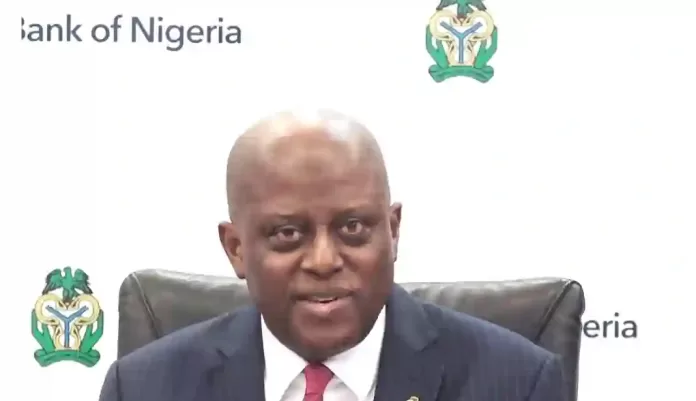
Cardoso Explains Interest Rate Cut Amid Skeptism

0
Yemi Cardoso - CBN Governor

The Central Bank of Nigeria, CBN, has reduced the Monteary Policy Rate,MPR to 23 percent from 26.5 percent. The MPR  is the benchmark interest rate in the country, which commercial banks use to set their own interest rate for  loans.

Yemi Cardoso made the disclosure on Tuesday following a meeting by the Monetary Policy Committee, MPR, its 307th in Abuja, the nation’s capital. The commitee had earier in August set the MPR at 26.5 percent from 27 percent.

Speaking yesterday,Cardoso stated that the reduction is in conformation with the current economic relites in the country, saying the inflationary trajectory has slighly subsided.

According tohim, the Commitee also considered the trends in the domestic and global economy before taking the decision to ”reset the monetary policy rate at 23 per cent is aimed at strengthening monetary policy transmission and enforcing the primacy of the rate.

The latest reduction comes after the MPC kept the rate unchanged at its two preceding meetings, following a 50-basis-point cut in February 2026.

Cardoso stated that the committee also agreed to recalibrated the standing facility corridor to +50 and -300 basis points around the MPR, while retaining the Cash Reserve Requirement, CRR, at 45 per cent for deposit money banks, 16 per cent for merchant banks, and 75 per cent for non-TSA public sector deposits, adding that the operational reset will enhance the effectiveness of monetary policy and support the transition to an inflation targeting framework, noting that the decision will not contradict its ongoing efforsts to tackle inflation in the country.

“The MPC emphasized that the duration of the corridor does not constitute a change in the current monetary policy stance, but rather an operational reset to enhance the effectiveness of monetary policy and support the transition to an inflation targeting framework.

“Members are of the view that the macroeconomic environment remains supportive of such a recalibration without undermining the disinflation process,” Cardoso said.

Reacting, Ayodele Akinwumi, Chief Economic, United Capital Plc said the CBN decision to lower the rate was unexpected, saying he was ”plesantly surprised” at what he also described as a ”bold decision” by the apex bank.

Though unexpected, Akinwumi stressed that the commitee may have taken the decision to lower the MPR, by considering other economic factors, which are not visible  to other stakeholders in the sector.

He noted that the trajectory of the economy, in the next few days, will determine whether the CBN has taken the right decision to reduce the rate.

2027: LP Vows To Scrap N70,000 Minimum Wage

0
Nenadi Esther Usman - Labour Party Chairman

The Presidential candidate of the Labour Party, LP, Dr Chibuzo Okereke, has promised to scrap the minimumwage, saying what Nigerian workers really need is a living wage, and workable social system that make their lives easy to live.

Okereke made the assertion while speaking with the Nigerian Tribune, noting that the minimumwage does not,among other things, consider the inflationary factors, which reduce what such wage award can buy as soon as it’s decalred by the government, adding that other broader social-econmic factors should be considered.

Acording to the LP presidential candidate,  a living wage should not be reduced to fixing a particular monetary figure, arguing that workers’ welfare must encompass decent pay, housing, healthcare, food security, job security, social protection and a safe working environment.

He said his government, if elected next year, will push for a living-wage-law toreplace the current minimum-wage-law currenlty operation in the country, where the government has pegged the monthly minimumwage of a Nigerian worker at N700, 000.

“When we have a living-wage law, you will see that the question of when we come to negotiate will disappear,”he  said.

He stressed that the irreducible minimum for Nigerian workers should be “equal opportunity, functional social welfare and a fair reward system” adding that workers’ take-home pay must also be capable of responding to changes in the cost of living, because rising commodities prices could quickly erode the value of any fixed wage.

“If somebody bought this phone for ₦20,000 today and tomorrow the phone is ₦50,000, already the cost of things is rising. There should be different ways to make consequential adjustments,” he said.

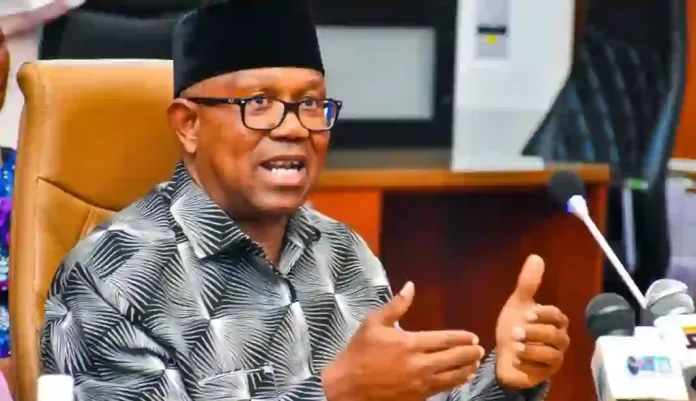
Obi’s Office Challenges Claims on Water Corporation Arrears, Workers’ Deaths

0
Peter Obi
Mr Peter Obi

Peter Obi’s media office has challenged claims concerning alleged arrears owed to workers of the Anambra State Water Corporation and reports that as many as 200 workers died during his tenure as governor.


In a statement issued by Chief Barr. Jeo-Martins Uzodike, Commissioner for Information to Peter Obi, the former governor’s office said the allegations were part of renewed attempts to discredit Obi’s record in office.


The statement urged those making the allegations to provide verifiable records, particularly on the number of Water Corporation workers who allegedly died during Obi’s administration, the Corporation’s total workforce during the period, and comparable figures under previous and subsequent administrations.


“Are Water Corporation workers uniquely susceptible to death under one administration and not under others?” the statement asked, insisting that such claims should be supported by official records rather than allegations.


On the issue of the Corporation’s finances and workers’ welfare, the statement said the matter should be understood within the framework of the Anambra State Water Corporation Law (Cap. 150).


It cited Sections 4(1) and 26 of the law, which assign the Corporation responsibility for developing, providing, conserving and distributing water, while requiring it to generate sufficient revenue from its operations to meet its working expenses.


According to the statement, Obi did not ignore the Corporation’s challenges. It said he held discussions with its management on several occasions and requested a viable blueprint for improving water supply, while offering government support, including financial assistance or guaranteed borrowing, within the limits of the enabling legislation.


The statement said that when the Corporation’s management failed to produce actionable solutions, the Obi administration partnered with the European Union to rehabilitate major waterworks in Nnewi, Onitsha and Awka.


The rehabilitation programme, it said, was still ongoing when Obi left office in 2014.


The administration also provided boreholes in more than 300 schools as part of efforts to address water supply in vital public institutions, according to the statement.


The statement further disputed claims that Obi left substantial liabilities to Water Corporation workers.


It recalled that in 2014, following court proceedings and subsequent administrative actions, government statements and paid advertisements announced that claimed salary arrears and other financial liabilities owed to Water Corporation workers had been settled.


It therefore questioned the re-emergence of the same alleged arrears in current public discourse.


The statement also addressed broader allegations concerning Obi’s financial record as governor, reiterating his position that he did not borrow from commercial banks or raise a bond during his tenure.


It said he left office without outstanding obligations to contractors and suppliers for completed and certified work, or arrears of pensions and gratuities, and left funds in the state treasury.


According to the statement, attempts to portray Obi’s administration as heavily indebted had involved describing concessionary development financing secured between financial institutions and the Federal Government as conventional borrowing.


It further alleged that some of the same funding arrangements were subsequently utilised by other administrations that now maintain that they did not borrow.


Uzodike said the renewed allegations against Obi should be assessed against documentary evidence and the relevant legal and administrative records.


“Mr Peter Obi is on the move, ready and prepared to serve his country at the highest level,” the statement said.

APM Presidential Candidate, Makinde, Calls For Devolution Of Power To Allow States Control Mining Sector

0
Seyi Makinde

By Ayodele Oni


Presidential candidate of the Allied Peoples Movement, (APM), Seyi Makinde, has advocated for Devolution of power to make states control mining sector.


In his opinion, the Federal Government should retain the oversight function only.


He was of the view that greater control of Nigeria’s mining sector by state governments, will  be more effective under a devolved arrangement.


Makinde, who is also the Oyo State Governor, made the proposal on Tuesday at the Makinde/Daura 2027 Presidential Town Hall meeting in Katsina.


His call came against the backdrop of the death of 37 suspected illegal miners while in the custody of the Nigeria Security and Civil Defence Corps in Niger State.


The Federal Government has constituted an independent committee to establish the identities of the deceased, examine the circumstances surrounding their arrest and detention, and determine the cause of their deaths.


Speaking on his proposed approach to the mining sector, Makinde noted that mining is currently under the Exclusive Legislative List of the Constitution, giving the Federal Government primary responsibility over the sector.


“Right now, the issue of mining is on the Exclusive Legislative List in our Constitution. Devolve that responsibility to the states and let there be oversight only at the federal level. They will do better.”


The APM candidate also questioned the circumstances surrounding the deaths of the 37 suspected miners, saying the incident highlighted broader issues of poverty, unemployment and survival confronting young Nigerians.


“A few days ago, we all woke up to learn about the 37 young souls who were lost in Niger State. Is it their fault that they were born in Nigeria? Is it their fault that they were looking for means of surviving? No, sir. The answer is no.”


Makinde argued that tackling illegal mining required attention not only to those carrying out the activities, but also to the demand side that sustains the illegal trade.


“People may not want to take responsibility, but from what has been done so far and the actions that have been taken, we can see that we are focusing on the supply side of things.


“For every 10,000 illegal miners, you have perhaps another 10,000 on the demand side, legitimising the operation,” he stated.


He said his proposed administration would review the distribution of responsibilities among the different tiers of government, particularly on matters that directly affect citizens.


The Oyo governor also pledged to comply with constitutional provisions on the transfer of presidential powers whenever the President is unavailable to discharge the functions of office.


Makinde cited Section 145 of the 1999 Constitution, which provides for the President to transmit a written declaration to the Senate President and Speaker of the House of Representatives when proceeding on vacation or otherwise unable to perform the functions of office.


“I promise you that, as your President, I will follow the Constitution to the letter. If I am not going to be available, if I am on vacation, I will transmit power to the Vice President. Record this and hold me accountable,” he said.


He added that the constitutional provision should also apply in situations where the President is unable to function because of circumstances including illness or medical treatment.


President Bola Tinubu is currently on three weeks vacatiin, wguch has been extended without transmitting power to tge vice president, Kassim Shettima.


Makinde urged Nigerians to obtain their Permanent Voter Cards and support his proposed “Reset Agenda”, saying his campaign would focus on creating a country that works for citizens regardless of ethnic, religious or regional differences.


He also said the 2027 election should not be viewed simply as a contest between political parties.


“And for the election, I maintain and repeat it: it won’t be APC versus APM, or APM versus ADC, or ADC versus NDC. It will be APC versus Nigerians,” Makinde said.


Speaking at the town hall, the APM vice-presidential candidate, Lawal Daura, said the meeting was organised to demonstrate support for Makinde and underscore the party’s campaign for political change ahead of the 2027 elections.


Daura identified insecurity and poverty as major challenges confronting the North-West, promising that the party would unveil details of its proposed solutions as the campaign progresses.


Also speaking, the APM National Chairman, Yusuf Dantalle, said security and the restoration of normalcy would be priorities under a government led by Makinde.


Dantalle stated that the proposed administration would introduce measures aimed at enabling Nigerians to make informed political choices and see elected leaders as representatives of the people.


He urged Nigerians to trust the party’s commitment to the 2027 election, describing its political journey as genuine and focused on delivering the change it seeks

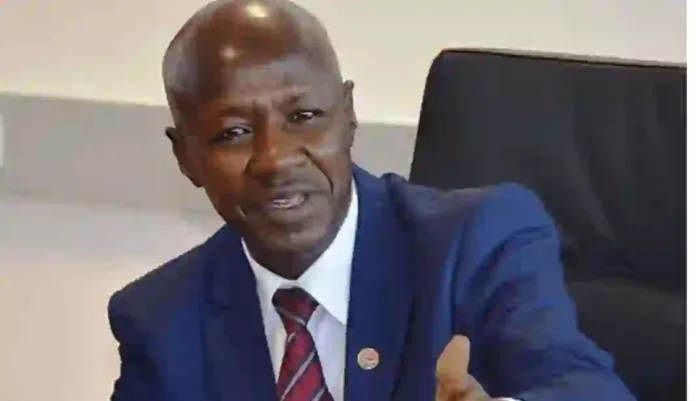
Court Of Appeal Declares Magu’s Prolonged Tenure As EFCC Acting Chairman Illegal

0
Ibrahim Magu

By Ayodele Oni


Six years after his removal from office, the court of appeal in Abuja has ruled that Ibrahim Magu’s prolonged stay as acting chairman of the Economic and Financial Crimes Commission (EFCC) was illegal.


The appellate court declared Magu’s tenure as unlawful, overturning a federal high court judgement that upheld his continued retention in office.


Ibrahim Magu served as the acting chairman of the Economic and Financial Crimes Commission (EFCC) from November 9, 2015, until his suspension on July 7, 2020.

President Muhammadu Buhari appointed him on November 9, 2015, following the removal of Ibrahim Lamorde.

The Senate declined to confirm his nomination as the substantive chairman in December 2016 and March 2017, but he continued to serve in an acting capacity.

He left office in July 2020 after his suspension and subsequent investigation by a presidential panel.

A three-member panel of the appellate court delivered the judgement in an appeal filed by Johnmary Jideobi, a lawyer, who had challenged Magu’s continued stay in office after the senate twice rejected his nomination as substantive EFCC chairman.


The respondents in the appeal were the senate, the attorney-general of the federation, the EFCC and Magu.


The appeal arose from a judgement delivered by Ijeoma Ojukwu, a judge of the federal high court in Abuja, on December 4, 2019.


Jideobi had instituted the suit before the federal high court in March 2017, arguing that Magu could not remain indefinitely as acting chairman after the senate had rejected his nomination.


In the 2019 judgement, the judge dismissed suit challenging Magu’s continued stay as acting chairman.


She held that the EFCC Act, especially section 2(3) did not restrict the powers of the president to retain Magu as acting chairman of the commission.


The judge had noted that the lacuna in the law handed the late former President Muhammadu Buhari the “proverbial yam and the knife to do as he pleases, being that there is no specific time stipulated for acting capacity”.


She stated that Order 1(2)1 of the Senate Rule cited by the plaintiff applies only to ministerial appointees and cannot be enforced on the position of the acting chairman of the EFCC.


The judge also added that the plaintiff lacked the locus standi to institute the suit.


However, dissatisfied with the decision, Jideobi appealed the lower court’s verdict, where he argued that the chairman of the EFCC has a four-year tenure, renewable once, and that Magu had exceeded the stipulated period without senate confirmation.


He further argued that Magu’s acting appointment had ended by operation of law after the senate rejected his nomination.


Jideobi asked the appellate court to set aside the federal high court judgment and grant the reliefs sought in his original suit.