Home Blog Page 244

OPINION: The Igbo Blueprint For Equity In Nigeria

0
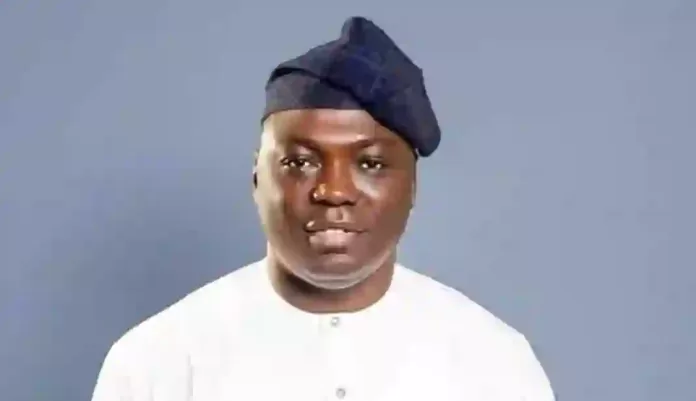
Senator John Azuta Mbata

By Sam Onuigbo

When the Global Igbo Foundation Initiatives invited me to deliver a keynote address recently, they framed a tricky, but simple title: “Igbo Yesterday, Today, and Tomorrow.”

The invitation came at a moment of quiet reflection.

However, as I got ready, I realised  that the title did not envisage a linear chronology, but a diagnosis of a persistent condition. Our yesterday is not a buried past; it is the bedrock upon which our present uncomfortably rests. Our tomorrow is not a distant prospect, but an urgent negotiation waiting to be honoured.

The venue was a modern conference hall in Abuja, Nigeria’s purpose-built capital, a city that often feels like a grand experiment in neutrality. Yet, there is no neutral ground when discussing the place of the Igbo in the Nigerian project. The December air was thick with Harmattan dust, blurring the sharp lines of the building. Inside, the atmosphere was different—clear, focused, charged with a collective understanding that we were about to engage in more than a ceremonial speech. We were to attempt an act of historical cartography, mapping the soul of a people onto the contested terrain of a nation.

I began with pleasantries, commending the organisers. Such gatherings are vital. But, civility must not become a cage for difficult truths. So, I stepped into the heart of the matter, a story that begins with a fundamental misunderstanding.

European colonialists, armed with the tidy logic of monarchies and centralised states, looked upon the intricate, republican societies of the Igbo and saw chaos. In their reports, they labelled us “stateless,” “argumentative,” and “ungovernable.” What they failed to comprehend was a civilisation that had perfected a demanding form of participatory democracy long before it became a global ideal. Our governance was woven through village assemblies (Ama Ala), councils of elders, robust age-grade systems, and powerful women’s councils (Umuada). Leadership was earned, debated, and constantly held to account. This was not anarchy; it was a sophisticated social contract.

This intrinsic resistance to autocracy is not an abstract concept. It has faces. One is King Jaja of Opobo.

Born MbanasoOkwaraozurumba in Amaigbo, sold into slavery as a youth, he rose through sheer will and commercial genius to found a powerful city-state, Opobo, and dominated the palm oil trade. His crime was refusing to let British trading interests dictate terms to African producers. For that defiance, he was lured onto a British warship under a purported truce, kidnapped, tried in Accra, and exiled to Barbados, the West Indies. He died in 1891 in the Spanish Island of Tenerife on his journey home. His story is not a footnote: it is a central parable of Igbo enterprise and the price of resisting injustice and exploitation.

Then came the women of Oloko, in what is now Ikwuano, my own local government area in Abia State. In 1929, tens of thousands of Igbo women rose in what was glibly termed the ‘Aba Women’s Riot.’ It was a profound, meticulously organised revolt against colonial taxation and the corruption of warrant chiefs.

It reshaped the political consciousness of southern Nigeria. To the colonial mind, however, it was further proof of an innate, troublesome rebelliousness. In truth, it was the logical eruption of a culture with a low tolerance for injustice. What was branded as stubbornness was, in fact, a deep-rooted ethos of communal accountability, best encapsulated in the proverb Onyeaghalanwanneya — “let no one abandon his brother.”

This philosophy would fuel our most remarkable transformation. Geographically insulated, the Igbo encountered Western education later than some coastal societies. But when we did, we pursued it with a ferocious, collective hunger. Families sold parcels of ancestral land; communities pooled resources to sponsor their brightest children. Education was not a private luxury but a communal investment. The returns were staggering.

Driven by this ethic, the Eastern Region under Premier NnamdiAzikiwe, conceived the idea of establishing a university–the law for the university was passed by the Eastern House of Assembly in 1955. It was not based on crude oil revenue. Under Premier Michael Okpara, the University of Nigeria, Nsukka commenced on 7th October, 1960–Nigeria’s first indigenous university, funded from the region’s agricultural revenues.

Before the dark clouds gathered, the Eastern Region was an economic dynamo. Some scholars, like Paul Anber argued, it was among the world’s fastest-growing economies in the mid-1960s, investing a staggering 45% of its revenue in education. The momentum was palpable, tangible.

Then, the deluge.

The Nigerian Civil War (1967-1970) was a cataclysm. The suffering and loss are well-documented. But the war’s true legacy for the Igbo was forged in the so-called peace that followed. The Federal Military Government’s promise of “Reconciliation, Rehabilitation, and Reconstruction”—the famous “3Rs”—proved, in our experience, to be a cruel phantom. Reconciliation was a hollow slogan. Rehabilitation was tokenistic. Reconstruction was deliberately selective.

The infamous policy of offering a flat £20 compensation to Igbo with bank accounts, regardless of their previous holdings, was not an act of economic policy; it was an act of engineered pauperisation. It was followed by the Indigenisation Decree of 1972, which transferred major commercial enterprises to Nigerian hands. A financially prostrate Igbo population could only watch from the sidelines as national assets were acquired by others.

Most crippling, however, was the geopolitical surgery that came later. The Justice Mamman Nasir Boundary Adjustment Commission of 1975 did not simply redraw administrative lines; it performed an amputation. It severed entire Igbo communities from their kith and kin, ceding them to neighbouring states. The deadly surgery eventually solidified the reduction of the Igbo-majority zone to only five states in a federation where other major zones had six, or in one case, seven. This was not an accident of demography.

It was structural marginalisation, engineered directly into the architecture of the Nigerian state. Our political weight was diluted, our access to the federation’s resources systematically constricted.

And yet, here we are!

Today, against every engineered obstacle, the Igbo are arguably Nigeria’s most potent entrepreneurial force. This is not a stereotype to be romanticised; it is a hard, observable fact of resilience. We rebuilt from ash. The bustling markets of Aba and Nnewi are engines of indigenous, often improvised, manufacturing. The IgbaBoi apprenticeship system remains one of the world’s most effective models of venture capital and commercial mentorship, seeding business empires across Lagos, Accra, and beyond.

Our contributions to the modern Nigerian identity are inextricable. From the foundational statesmanship of NnamdiAzikiwe to the global economic leadership of NgoziOkonjo-Iweala; from the literary universes of Chinua Achebe and ChimamandaNgoziAdichie to the cinematic revolution sparked by Living in Bondage; from the technological foresight of Philip Emeagwali to the sporting brilliance of KanuNwankwo and ChiomaAjunwa. We have invested, quite literally, in every corner of Nigeria, often at greater risk and with more tangible bricks-and-mortar commitment than any other group. Our belief in the Nigerian idea is demonstrated in commerce, infrastructure, and culture.

But, this belief is now a wearying faith, strained by a persistent, unignorably arithmetic of injustice. As I told the audience in Abuja, the South-East remains the only geo-political zone in Nigeria with five states. This is not a minor administrative detail.

It translates, daily and inexorably, into fewer governors, fewer senators, fewer members in the House of Representatives, fewer local government chairpersons, fewer federal appointments, and less voting power in constitutional matters. It is a concrete ceiling placed on a people’s political aspiration. How does one pledge full-throated allegiance to a union where one’s seat at the table is permanently, deliberately smaller?

This brings me to the core of my message, the blueprint for tomorrow. The Igbo future in Nigeria must be negotiated. It cannot be a plea. It must be a principled, clear-eyed, and strategic engagement for equity.

The recent establishment of the South East Development Commission (SEDC) by President Bola Ahmed Tinubu is a significant and welcome gesture. It is, at long last, a tangible mechanism to address the deferred “Reconstruction” of a region devastated by war and neglect. For this, we offer sincere appreciation to the President. But, it cannot be the final destination. It should be the first step on a longer road to redress.

The logical, necessary, and just next step is the creation of a sixth state in the South-East. This is not a request for special favour. It is a demand for the correction of a foundational anomaly that has poisoned the well of national unity for nearly five decades. It is the minimum prerequisite for a genuine sense of belonging.

During a recent family thanksgiving service that I hosted at St. Paul’s Methodist Church in Obuohia Obi-Ibere, Ikwuano Local Government Area, I publicly expressed my confident assessment that President Bola Tinubu will secure re-election in the 2027 presidential election.

This projection was based on the administration’s implementation of consequential policy decisions aimed at the structural repositioning of Nigeria for sustained prosperity, economic growth, and enhanced national security. While cognizant of prevailing national challenges, I maintain that the President has demonstrated capable stewardship in piloting the nation’s affairs during this initial tenure.

In substantiating this outlook, I referenced encouraging macroeconomic indicators, including the statistically documented decline in food prices, a reduction in the inflation rate, and the successful unification of foreign exchange windows.

Furthermore, the marked absence of fuel scarcity throughout the festive period was a tangible indicator of improved economic stability. Collectively, these positive trajectories form the foundation of my conviction regarding the administration’s electoral prospects.

Our blueprint for tomorrow rests on several pillars: transforming our legendary apprenticeship system into a formalised engine for youth employment and modern entrepreneurship; catalysing a technology-driven industrial revolution in our cities; a vigorous, deliberate revival of our language and culture, which are the vessels of our identity; and, most critically, intelligent pan-Nigerian coalition-building. Our politics must evolve beyond defensive reaction and into the art of strategic, bridge-building negotiation.

As I concluded my address, the room was silent, the weight of the recounted journey pressing down. The path forward is clear. The Igbo destiny is inextricably linked to Nigeria’s. We have done the hardest part: we survived, we thrived against engineered odds, and we contributed relentlessly to the national development. We did so through communal grit (igwebu-ike), through an unwavering belief in education, and through an entrepreneurial spirit that refuses to be extinguished.

Now, the contract must be renewed on fair terms. The Nigeria we have believed in, often against the evidence, must believe in us enough to rectify its own structural injustices. Our shared tomorrow depends on a Nigeria courageous enough to embrace true restructuring and equitable federalism. This is not an Igbo agenda; it is a Nigerian imperative. Only when this negotiation is honestly engaged can the full, formidable potential of the Igbo—yesterday’s republicans, today’s builders, tomorrow’s indispensable partners—be fully unleashed for the sake of one, just, and prosperous Nigeria.


-Onuigbo, is a former member of Nigeria’s House of Representatives

Terrorism: Sokoto Prays Amid Bello Turji’s Threats

0
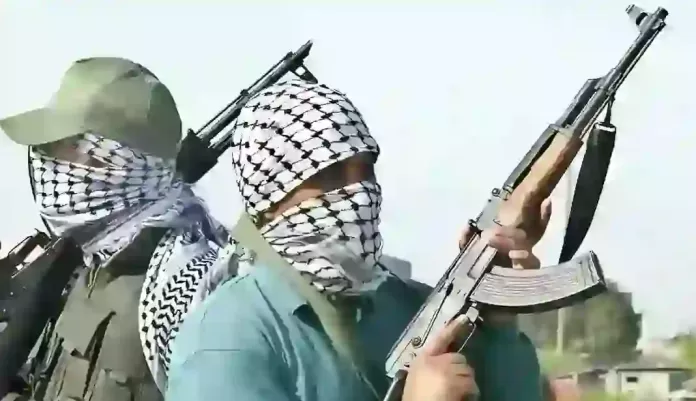
Bandits Leader Bello-Turji

The Sokoto State Government has convened a special prayer session for peace, unity and development in the country.

On Friday, the state government sponsored a prayer session at the Sultan Bello Jumu’at Mosque shortly after the weekly Jumu’at service, which attracted prominent Islamic leaders leaders and top state government officials, The Punch newspaper report.

According to sources in the state, the prayer was led by the Chief Imam of the mosque Sheikh Malami Akwara, who sought for divine intervention on the many challenges facing the country, particularly the current security problems in which the state is seriously affected.

The state is one of the epicenters of terrorism in the country, as many communities are under the attacks terrorists and bandits. The situation has forced many persons in the affected communities to flee their homes to escaped being attacked by the criminals.

Few days ago, hundreds of people from Tidibale community part of the state were forced to flee their homes after notorious bandit leader, Bello Turji threatened to attack.

Turji, according to sources had blamed some people in the community for tipping off security agencies, which led to the attack on his groups recently. Many bandits were killed during the onslaught.

Recall also that President Donald Trump, had on December 25, 2025 ordered an air strike on the state, after he accused some members of ISIS operating in the state. The US attack was launched from its AFRICOM Command in Djibouti.

The US attack was said to have neutralised many bandits even though officials figures on how many terrorists killed, has yet to be release by the federal government, which claimed the operation was agreed upon by the Nigerian and US government.

But, despite the sustained military operations against the terrorists, the security situation in the state has left many residents in fear.

Praying for peace to be restored to the state and country at large, Sheikh Malami Akwara and other Islamic clerics asked for  divine intervention, God Almighty’s to  guidance on  Nigerian leaders on how to find solutions to the current challenges facing the country.

He further prayed for Governor Ahmad Sokoto, asking Allah to strengthen his efforts to transform the state.

Governor Aliyu, Deputy Governor Idris Mohammed Gobir, former Deputy Governor Mukhtar Shagari, Speaker of the State Assembly Tukur Bala Bodinga, the Wazirin Sokoto Prof. Sambo Wali Junaid, top traditional title holders, lawmakers, commissioners, political leaders, and other dignitaries were in attendance.

Family Loses Twin Sons After Immunisation In Lagos Primary Healthcare Centre

0
Samuel Alozie'Family

By Gideon Njoku

Mr. Samuel Alozie’s family is in great pains. While Christendom marked Christmas, he and his family were in pains.

In a heartbreaking incident which has yet to be thoroughly explained, he lost his identical twin sons 24 hours after an Immunisation. The twin boys – Testimony and Timothy, were aged nine months when they inexplicably lost their lives after a routine Immunisation at a Government-owned Primary Health Care Centre in Lagos.

In a heartbreaking video on Tik Tok where he showed Testimony and Timothy in body bags, Alozie said his twins suddenly  became weak after they were given the immunisation, even after they adhered to all the instructions given to them by the Nurse who administered the injection on them. The Immunisation was given to them on December 24, 2025, and both of them died on December 25, 2025. Nothing was wrong with them. The Immunisation was routine, Alozie wept.

His words: “They were strong and sound. I took them for immunisation, not because they were sick, but because it was the right thing to do.

“They were very weak after the injection. We gave them paracetamol as instructed but nothing changed. By the next morning, they were gone.”

He is seeking justice for his  late sons and vehemently disputes the claims by the Primary Health Care Centre  which alleged that the deaths were caused by food-related bacteria.

Even though an investigation has started, but there is no official statement yet from the  Lagos State Ministry of Health and  the Primary  Health Care Board. The autopsy result is not yet released. But Mr Alozie has no trust in the system. He fears a compromised investigation. He fears the outcome may be manipulated because the Health Centre involved is Government-owned. So, he is appealing for legal and public support.

“I cannot afford to pursue justice alone, and I am also scared I may not get justice. I need justice for them.”

FG: Tinubu Taking Bold Steps, Nigeria Recovering From Economic Crisis

0
Mohammed Idris - Minister of Information and National Orientation

The federal government has rebuffed claims that the administration of President Bola Ahmed Tinubu is faltering and has nothing to offer the country.

The Minister of Information and National Orientation, Mohammed Idris made the assertion on Friday, when members of the Grassroots Advocacy For Tinubu, GAT, paid him a courtesy visit in his office in Abuja, the nation’s capital, the News Agency of Nigeria, NAN reports.

The administration is struggling to put the economy on the right part amid growing criticism among not a few Nigerians that it has no solutions to the many challenges facing the country.

On Friday, the opposition African Democratic Congress, ADC gave a damning verdict on the administration, saying it has failed. The party’s spokesman, Bola Abdullahi while speaking on a popular television programme said Nigerians are seriously disappointed with the APC -led government of President Tinubu.

“Nigerians have concluded that “ the APC government has failed, Abdullahi stated.

But asserting that the the administration is on the right part, the minister stated that President Tinubu is taking hard decision and steps to ensure that the country’s future is better, noting that the results of the decisions being taken by the president have started manifesting in key areas of the economy, which he said are showing signs of improvement. .

Idris: “The administration has taken bold and sometimes difficult decisions to place Nigeria on a more sustainable path.

”Early signs of recovery are becoming evident across key sectors of the economy.

“These steps were taken to stabilise the economy and restore confidence.

“What we are seeing today are the foundations for long-term growth and shared prosperity.

“As a result, Nigeria’s improving economic outlook must be protected through unity, responsible communication, and collective support for national policies.

“I want to warn that distorted narratives about the country hurt investors’ confidence and slow development. We must speak positively and truthfully about Nigeria.

”When we project stability and unity, we attract investments and create opportunities for our people,” he stated.

Minister Umahi’s Son For Ebonyi LG Chairmanship, Picks Form

0
Dave Umahi Son for Ebonyi LG Chairmanship

By Charles Igbo

.

Osborne Umahi, a son of the Minister of Works, Engr. Dave Umahi, is set to be the Chairman of Ohaozara Local Government Area, Ebonyi State.

To make good his aspiration, he, on Friday, January 16, 2026, went to Abakiliki,  the Headquarters of the All Progressives Congress in the State, and picked the contest form at a cost of N30 million.

Umahi junior did not go alone. He was accompanied by a sizeable number of supporters and well-wishers. Given the status of his father, it is a done deal. One can take it to the bank that he is already the Chairman of Ohaozara Local Government Area. The election, they say, will be a no-contest.

For the records, Umahi junior was one of the aspirants recently endorsed by the Governor of Ebonyi State, Francis Nwifuru, for the office of an LGA Chairman.

Osborne’s endorsement by the Governor did not come as a surprise. The Governor is a political godson of the Minister of Works, who literally, single-handedly, picked him as his successor. Umahi is the immediate past Governor of the State. And, unlike the Minister of the Federal Capital Territory, Nyesom Wike, who is at daggers drawn with his political godson and successor, Governor Siminalayi Fubara of Rivers State, Umahi enjoys a very robust relationship with Nwifuru.

Ebonyi State’s Commissioner for Housing and Urban Development, Francis Ori, who was present when at the Party Secretariat when Osborn picked the form endorsed him and said he would be a good representative of the people.

“He is a chip of the old block and will replicate his father’s wonders in Ebonyi as a former Governor and as Minister in Nigeria.

“The people are solidly behind him and would further demonstrate such support at the polls”, the Commissioner declared.

Often referred to as Ebonyi’s youngest billionaire, Osborne is a businessman, investor and philanthropist.  He holds a Master’s degree  in Financial and Investment  Management from the University of Aberdeen, United Kingdom.

He was born on March 14, 1998, and so is 27 years old.

OPINION: Tinubu Has Not Earned A 2nd Term

0
Steve Osuji
Steve Osuji

By Steve Osuji

Scratching Their Brows:

Were we in climes where critical leadership positions are earned, President Bola Tinubu would not contemplate a second term in office. After almost three years as the president of Nigeria, he has convinced everyone –  even his supporters – that he’s not cut out for the job.

In such climes, his party would have been locked in deep deliberations to ensure that incumbency factor doesn’t trounce party survival and corporate imperatives.

Once it has been determined that he could never win the next election, a more viable successor is immediately tapped for the job.

As it is, the All Progressives Congress (APC) doesn’t need political strategists to advise it that President Tinubu could never win a free and fair election in 2027.

First, he was never a great presidential prospect ab initio. Recall that his mandate was pulled out of the mire of Nigeria’s worst electoral heist.

Though he sits on a wonky mandate, nearly three years down the line, he still hasn’t been able to prove he can lead Nigeria.

He is fast turning out to be the most abysmal leader Nigeria ever had at the top.

Today, Tinubu’s supporters and even his diehard ethnic jingoists are now scratching their brows in utter despair and disappointment at his lack of capacity and compass.

Bola Ahmed Tinubu
President Bola Ahmed Tinubu.

Not Fit To Lead: It’s common knowledge that President Tinubu is ailing. And it doesn’t seem to get much better. Overtly, he takes health holidays abroad, especially in Paris. Covertly, he virtually sneaks out of Nigeria every other fortnight to augment his health.

This explains why in 2025, he was out of Nigeria for more days than he was in Nigeria (190 days out of 365). Therefore, on health grounds alone, the APC hierarchy should have wrought a replacement already if it were not a shambolic contraption instead of an organic political organisation. But what we have seen is a choir of endorsements by fawning sycophants at every turn.

Person Of Particular Concern: While Nigeria has been labeled a Country of Particular Concern (CPC) by the US, her president may equally be considered to be a person of particular concern (PPC).

The President of Nigeria in this age, cannot freely travel to the US and the UK. That immediately confers on him, a certain pariah status.

In the course of his legal tussles over certificate forgery and drug dealings in the US, it also came out that he is a bonafide ‘asset’ to the CIA and FBI. This is not a conjecture, it came out of an open court proceeding in the US. President Tinubu didn’t deny this open declaration by personnel of these US agencies.

Confounded By The Economy: Tinubu has clearly been confounded by the economy. He doesn’t seem to understand nary the basics. Neither does he have any economic philosophy or vision of his own.

Much unlike his immediate predecessor, Mohammadu Buhari, who was stubbornly nationalistic and refused to dance to the beat of the West, Tinubu is seemingly wind-tossed. He fawningly genuflects to the dictates of the  Bretton Wood system.

He doesn’t seem to give a hoot about his people’s interests nor does he pause to ponder over the outcomes of his policies.

This explains why he would impulsively yank off subsidies, float the currency and tax the very pants off the people without a thought.

President Tinubu even hands over Nigeria’s tax data backbone to France!

Reform Without Results: President Tinubu has made a sing-song of economic reforms from inception yet there’s no structured approach to it nor are there stated targets, deliverables and timelines.

What we have had so far are uncoordinated actions, ad-hoc measures, propaganda and lies.

Hardly any sector of the economy can be held out as a model of success after years of Tinubu’s so-called reforms. Inflation remains high in spite of the underhand shenanigans with national database. Prices of goods and services have gone up by over 200 percent since President Tinubu’s inception and may never come down.

Nigeria Being Degraded And Depreciated: Manufacturing has shrunk; in fact production has not been prioritised. Agriculture has been abandoned. Unemployment has worsened as new jobs are not being created. This has increased poverty exponentially as Tinubu dawdles with his harebrained reforms.

In fact, the economy is near-comatose, budgets remain static and unfunded in the face of unmitigated debts. MDGs are starved of funds for capital projects. The economic situation is indeed dire.

Unbridled Sleaze And Corruption; Bloated Government: Corruption has become the order under this administration. Each day comes with a new tale of odious sleaze. Just a few  days ago,  news broke that the FG paid out about $9 million dollars to some lobbyists in the US over the ‘Christian genocide’ debate. Meanwhile, the revelation over the Presidential Air Fleet shenanigans is mind-bending.

The government is oversized from the outset and gets bigger by the day.

Yet government officials live  in opulence and ostentation. They engage in fruitless junkets abroad while hunger stalks the land.

Nigeria May Collapse Under The Weight Of Tinubu’s Growing Ineptitude: The reform, yes, yes, the reform! Even the government may have forgotten about its much-vaunted reform as no positive achievement is recorded so far. Since it was  more as brainwave than an articulated change programme, the lies and propaganda have run out of steam.

Worse, there is no arrowhead driving Tinubu’s economy. The country may well be grounding to a halt under the heavy weight of ineptitude and vacuous leadership. Also, there’s a scant regard for merit and excellence.  The  executive council is thus a huge lumbering mass with little substance.

There are indeed, a thousand and one reasons President Tinubu must not return to power in 2027, he hasn’t earned a second term.

LAST LINE: AFTER BARRISTER CHIGBO, WHO’S NEXT? The gruesome murder of Barr. Nwamaka Mediatrix Chigbo in Abuja is a signpost of the anomie that Nigeria has virtually become.

That the renowned lawyer and activist could be grabbed in broad day light and gruesomely extinguished in the federal capital city signposts the quality of life in the Nigerian state.

No one is safe in any corner of the land; we are utterly devoid of security cover … And life is increasingly brutish and short! Who’s next?

May Barr Chigbo’s great soul find repose. Amen.

ADC: Nigerians Have Declared Tinubu Govt A Failure

0
Bolaji Abdullahi and Bola Tinubu

Bolaji Abdullahi, National Publicity Secretary of the African Democratic Congress, ADC, says Nigerians have passed a verdict on President Bola Ahmed Tinubu’s administration: it has failed.

The ADC spokesman made the remark  on Channels Television’s programme Politic Today amid growing anger among Nigerians over the state of the nation under his administration.

Not a few Nigerians have also expressed their outbursts that the president is currently in the country to address its myriads of problems.

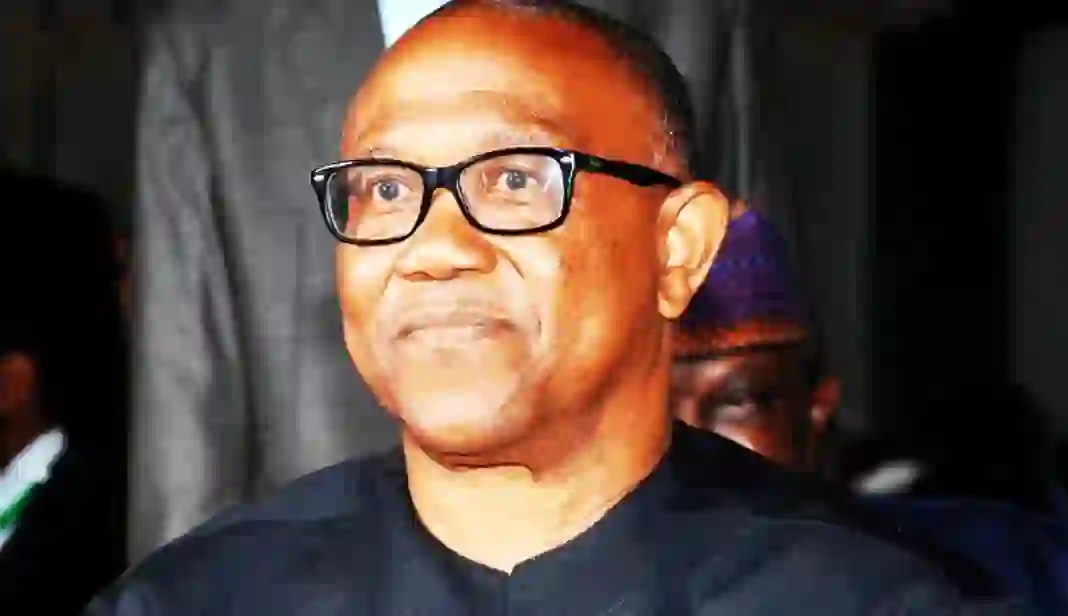
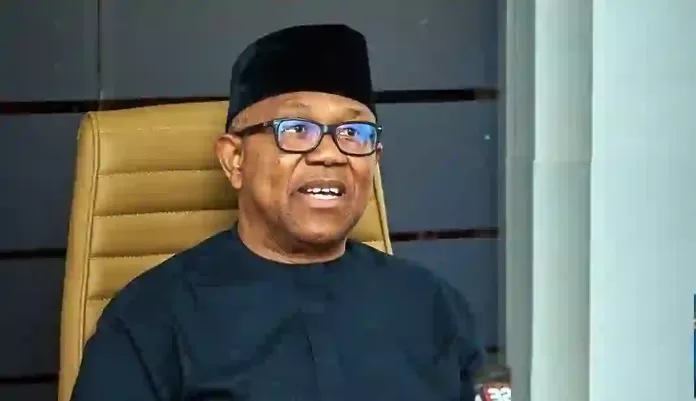
For instance, a presidential hopeful and former Governor of Anambra state, Peter Obi, few days ago accused President Tinubu of abandoning Nigerians despite its many challenges, he said the president’s frequent foreign travels had become a matter of grave concern.

Speaking yesterday on the popular television programme, Abduhllahi accused the president of travelling out of the country at a time the country is in a dire need of him. Tinubu has been out of the country for over three weeks.

Responding on whether the country is better off under Tinubu, the ADC spokesman said it has never been so bad. “The jury is closed that,’” Abdullahi said adding that no amount of efforts to launder the image of the administration will yield results.


According to him, “There’s no debate,” that the administration has failed.  Adding that “The jury has closed on that, right? And what did they close on? That this administration has failed.

“And what we are saying is that I see all kinds of adverts they are putting out, saying they have done this and that. They’re counting numbers.

“But what explains that they don’t get to mark their own report or their own results sheet? Nigerians will mark it, and Nigerians have marked their script. Nigerians have concluded that they have failed.”

Where’s Our President- Obi

“In the midst of this chaos, where has our President been? Spending 196 days abroad in 2025 alone—more than he has spent within his own country, at a time when we face profound crises. Since December 2025, Nigerians have not heard a word from their President.

“Reports indicate he opted for a holiday in Europe while the nation was plunged into a New Year marked by hunger, anxiety, and uncertainty. There was no New Year address, no national broadcast, no leadership voice to provide reassurance or guidance.

“This lack of presence starkly contrasts with what we see in comparable developing nations where leaders step up in times of crisis. In Nigeria, following US military strikes on our soil, our President remained silent. Instead of directly addressing the nation, Nigerians learned about these critical events from foreign media, American officials, and the vague communications from the Presidency’s aides known for their propaganda, rather than from their own leader.

“This is not governance; it’s neglect. The President was seen abroad yet again for another summit while remaining absent from his own country when he is needed the most. Earlier this year, he even sent an AI-generated image to the nation instead of addressing his people face-to-face,” Obi emphasised.

Stressing that leadership is not simply issuing press releases, but about standing before the people, engaging with them, and offering clarity, Obi stated that Nigerians were not asking for perfection, but we’re demanding presence.

He argued that Nigerians are eager to hear from their President through direct media briefings and deserve to understand the state of their country. Obi pointed out that Tinubu cannot run Nigeria like a personal business or a private club, stressing that it was imperative to rebuild and grow the economy through unity and clarity.

“Progress is impossible without unity and consensus, and it begins with strong leadership that sets the tone. No policy, reform, economic plan, or security measure can thrive in a divided nation. When leadership withdraws, unity falters, and the fabric of our society unravels under the weight of mistrust and division.

“In a time of crisis, the absence of leadership is not just troubling; it is perilous. Silence in the face of crisis is the loudest form of failure,” Obi stated

WAFCON 2026: Super Falcons Draws Zambia, Egypt And Malawi

0
Super Falcons

By Akinwale Kasali

The Super Falcons of Nigeria has been grouped alongside, Zambia, Egypt and Malawi for the 2026 Women African Cup of Nations, WAFCON, Championship to be hosted by Morocco in two months time.

At the last tournament, also hosted by Morocco, the Super Falcons came from Two goals down to defeat the Atlas Lionness of Morocco 3-2 in a pulsating football encounter.

This tournament is however different as the number of teams have increased from 12 Countries to 16 Countries, with the top two teams qualifying for the Quarter Finals.

The last four teams will qualify for the 2027 FIFA World Cup to be hosted by Brazil.

In Group A, host, Morocco will battle their North African neighbours, Algeria, Senegal and Kenya, while  the Bayana Bayana of South Africa will play Cote d’Ivoire, Tanzania and Burkina Faso in Group B.

In Group D, the Black Queens of Ghana will play the Indomitable Lionness of Cameroon, Mali and the Female Blue Sharks of Cape Verde.

It would be recalled that since the emergence of Female World Cup in 1991, the Super Falcons have not missed out of the World Championship.

At the last World Cup Co hosted by Australia and New Zealand, the Super Falcons made it to the last 16, losing to England via Penalties.

The team will also be hoping to defend the WAFCON Title having failed to win it thrice since inception in 1998.

The Super Falcons only fail to win the WAFCON Title in 2012, 2014 and 2022.

Lagos Expresses Shock Over Collapse Of Odokekere High School Building

0
Odokekere high school building collapse
Odokekere High School Building Collapse in Lagos

By Akinwale Kasali

The Lagos State Government has expressed shock over the unfortunate collapse of Bungalow housing Odokekere High School in Ikorodu, Lagos, saying it is highly regrettable.

The LASG which made this statement through the Special Committee on Rehabilitation of Public Schools, SCRPS, said it

regretted the unfortunate incident. It made clarifications that the affected classroom block had earlier been identified and officially marked for demolition.

According to a classified information from the SCRPS office, the structure was slated for removal to pave the way for the construction of a modern classroom edifice designed to accommodate the school’s growing student population.

The government also confirmed that no casualty was recorded in the incident, and stressed that all students are safe and in good condition.

In response, Lagos State Governor, Babajide Sanwo-Olu, has directed the immediate relocation of students to nearby schools to ensure that academic activities continue without disruption.

Meanwhile, a team of officials from the Special Committee on Rehabilitation of Public Schools is scheduled to visit the school today for an on-the-spot assessment of the incident.

This assessment will enable the government to finalise modalities for the immediate commencement of construction of an ultra-modern classroom block that will adequately serve the needs of the school community.

Defection: Atiku’s Son Has Punctured His Credibility – Lagos APC Taunts Fmr VP

0
Abba Atiku Abubajar and his father Atiku Abubakar

By Adesina Soyooye

Former Vice President, Atiku Abubakar, has been reduced to a laughing stock by the Lagos State Chapter of the All Progressives Congress, APC, over the defection of one of his sons, Abubakar Atiku Abubakar, popular as Abba, from the Peoples Democratic Party, PDP to the APC.

Abba had ruffled political feathers when he not only defected to the APC, ordered all the coordinators of his political group to defect but pledged to work for the re-election of President Bola Tinubu in 2027.

He chose the National Assembly on Thursday for the venue of his defection. He was warmly received by the Deputy Senate President Barau.

But reacting to the defection, the APC Lagos Chapter,  described the decision of Atiku’s son to reject the ADC and align with the APC as a major blow to his father’s political credibility.

Seye Oladejo, the Lagos Chapter’s Spokesperson, in a statement issued on Thursday titled, “You Can’t Trust Atiku More Than His Son,” said the younger Atiku’s  defection to the APC has punctured the political credibility of his father.

Oladejo said the party noted “with unmistakable clarity the political earthquake” triggered  by Atiku Abubakar’s son’s decision to abandon the “pretentious ADC contraption” and pitch his tent with the APC.

He continued: “This singular act has said more than a thousand press conferences ever could.

“When a man’s own son deserts his political judgment, repudiates his choices, and embraces an alternative path, Nigerians are entitled to ask what deeper indictment of credibility is required. If those closest to you are unconvinced by your political convictions, how do you expect an entire nation to suspend disbelief?”

He accused the ADC chieftain of decades of ideological inconsistency, and described his political career as “a restless odyssey defined by serial defections, transactional alliances, and an obsession with the Presidency.

“From the PDP to the AC, to APC, back to the PDP, and now to the ADC, his politics has been nothing more than a nomadic ambition in search of a party willing to mortgage its soul.”

 Atiku’s son’s decision to join the APC, he said was “not a coincidence but a confession,” and  described it as a generational rejection of “recycled politics, expired ambitions, and leadership without conviction.”

Oladejo further said that the defection represented an endorsement of the APC’s record of governance and the Renewed Hope Agenda of President Bola Ahmed Tinubu.

“Let it be said without equivocation: when credibility collapses at home, it cannot be rehabilitated in the marketplace of national politics.

 Any leadership, he said, which cannot inspire loyalty within its immediate constituency cannot command confidence among Nigerians.

He welcomed Abubakar Atiku Abubakar’s decision and urged Nigerians to “read the political handwriting on the wall.”

“The era of political tourism, moral inconsistency, and ambition without ideology is gasping for relevance.

 “If Atiku’s son has moved on, Nigeria certainly should”, Oladejo said.