Home Blog Page 15

Ekiti Gov. Poll: Defeated PDP Candidate, Oluyede Presents Demands To Victorious Oyebanji

0
Wole Oluyede during Ekiti Election

By Ayodele Oni


The candidate of the Peoples Democratic Party (PDP) in the just concluded Ekiti State governorship election, Dr. Wole Oluyede, has made public details of visit of Governor Biodun Oyebanji to his residence, a day after the Saturday poll.


The governor who had pleaded for cooperation from other candidates in his first reaction to the election, was accompanied to Oluyede ‘s residence at Ikere, by Senate leader, Opeyemi Bamidele.


The PDP candidate revealed that he requested from the flagbearer of All Progressive Congress (APC) and winner of the election, Governor Oyebanji release of his supporters arrested in the wake of preparation for the election.


Earlier, Oluyede had rejected the outcome of the election as declared by the Independent National Electoral Commission (INEC), citing a systemic compromise of the electoral process, ranging from technical failures to open financial inducement.


The Returning Officer for the election, Prof. Adenike Oladiji declared Oyebanji of All Progressive Congress (APC) winner of Saturday’s governorship poll after he secured 319,224 votes to defeat his closest rival, Dr. Wole Oluyede of the Peoples Democratic Party (PDP), who polled 40,543 votes, while the candidate of the African Democratic Congress (ADC), Ambassador Dare Bejide, came a distant third with 12,872 votes.


Addressing journalists in Ado-Ekiti on the outcome of the surprise post-election visit by Governor Oyebanji, Oluyede noted that Oyebanji claimed to be unaware of the arrests of his supporters, but gave a firm commitment to look into the actions of the security agencies.


He said the release of his members was the only request he made from him, noting that democracy can’t thrive if individuals are not allowed to thread the path of their convictions.


His words, “If I lost in a free, fair and credible contest, I would have no difficulty accepting the outcome.


“However, if there was widespread negligence, misconduct, intimidation, or disregard for established electoral procedures, then we must confront those realities honestly.


“I am not leaving politics. There is no personal conflict between Governor Oyebanji and myself.


“Politics should not be viewed as warfare. but I am equally committed to principles, accountability and the continuous improvement of our democracy.


“Concerning reports that some of my supporters have been arrested or harassed, I raised the matter directly with Governor Oyebanji during his visit. It was, in fact, the only request I made of him.


“He assured me that he was unaware of the incidents and promised to investigate the matter. I have reasons to believe steps are already being taken to address these concerns.

Xenophobic Attacks: Airline Chief, Onyema Urges Economic Sanctions Against South Africa

0
Allen Onyema - Airpece MD

By Ayodele Oni 


As Nigerians count loses over continued attacks by South Africa’s nationals, the founder and Chief Executive Officer of Air Peace Airline, Allen Onyema, has advised the Federal Government and Nigeria’s business community to take concrete action to protest xenophobic attacks targeting Nigerian nationals.


Among suggestions he canvassed is the stoppage of investment by Nigerians in South Africa. He also urges a boycott of the country by Nigerians.


Speaking on the recurring violence against Nigerians living in South Africa, Onyema condemned the attacks and said the situation has reached a point where economic action was necessary.


 He urged citizens, business leaders, and the Nigerian Government to take a stand by cutting economic ties until South African authorities guarantee the safety of Nigerians.


“We cannot continue to watch our people being killed, harassed, and having their businesses destroyed while we keep investing billions in a country that does not protect us.


 “If our lives and property are not safe, then our money should not be safe there either.”


Onyema, whose airline gained national praise in 2019 for evacuating Nigerians free of charge during a wave of xenophobic violence in South Africa, insisted that economic pressure remains one of the strongest tools Nigerians have. 


He called on entrepreneurs to halt expansion plans into South Africa and asked consumers to boycott South African brands operating in Nigeria.


“Nigeria is a big market. South African companies make huge profits here. If we withdraw our patronage, they will feel it.


“Maybe then their government will take decisive action to protect foreigners, especially Nigerians,” he added.


The Air Peace boss also appealed to the Federal Government to engage South African authorities more firmly and to prioritize the protection of Nigerians in the diaspora. 


He stressed that while diplomacy is important, it must be backed by concrete action that shows Nigeria will not tolerate the continued killing of its citizens abroad.


Xenophobic attacks in South Africa have flared up repeatedly over the years, with Nigerian-owned shops and businesses often looted or burnt. 


Several Nigerians have lost their lives, sparking outrage and diplomatic tensions between the two countries.

Who Parceled And Delivered Live Ammunition To First Bank GMD/CEO?: Lagos Police Command Investigates For Answers

0
First Bank CEO Alebiosu

By Ayodele Oni


Forensic and intelligence-driven investigations have been intensified as the Lagos state police command unravels mystery behind a parcel containing live ammunition delivered to the Managing Director of First Bank, Oluwasegun Alebiosu.


Commissioner of Police, Lagos State Police Command, CP Fatai Tijani, who disclosed this during a press briefing at the Command headquarters, said detectives had commenced investigation to unravel the circumstances surrounding the delivery


The suspicious parcel containing live ammunition was delivered to the Managing Director of FirstBank, Oluwasegun Alebiosu.


The incident, according to the police boss, was reported on May 7, 2026, after the First Bank MD discovered two rounds of 7.62mm live ammunition concealed inside a package delivered to him.


CP Tijani said the parcel was initially received by the executive’s security guard before it was handed over to him.


The Command boss said: “The Managing Director reported the matter to the police after discovering two rounds of 7.62mm live ammunition in a parcel collected on his behalf.


“The case is still under investigation, and we are treating it with the seriousness it deserves,” he said.


It was gathered that the delivery came shortly after the bank intensified internal reforms aimed at improving efficiency in financial transactions and stepped up efforts to recover outstanding loans from customers who had allegedly defaulted on repayment obligations.


Sources within the financial institution alleged that the parcel was delivered to Alebiosu’s residence in the Ikoyi area of Lagos Island through a dispatch rider.


The parcel, sources said, was marked confidential and bore only the name and address of the recipient, with no details to assist in identifying the sender.


The motive behind the delivery remains unclear, as police investigators are expected to determine whether it was intended as a threat or linked to any criminal activity.


The CP disclosed that no arrest had been made in connection with the incident, adding that investigators were pursuing several leads, including information provided by the complainant on persons who might have knowledge of or involvement in the matter.


He said forensic and intelligence-driven investigations were ongoing to establish the circumstances surrounding the delivery and bring anyone found culpable to justice.


CP Tijani assured residents that updates would be provided as the investigation progresses.

US Govt: Agege Lagos-Based Bureau De Change Owner Sponsoring ISIS

0
Lakurawa terrorists

The United States government has named a Lagos based bureau de change owner, Mukhtar Adamu as one of the sponsors of  the Islamic State of Iraq and Syria, ISIS.

The development comes few weeks after a joint military operations of US and Nigerian armed forces killed ISIS number 2, Abu-Bilal al-Minuki in Borno state.

Adamu, who operates three buraeu de change companies in the country was named as one of three major facilitators of terrorism activities globally , particularly ISIS in West Africa.

Other individuals blacklisted as ISIS financial facilitators by the U.S. government are France-based Miloud Abderrahmane, aka Abderrahmane, who aided the terrorist group with information on the use of explosives; and Abdelhakim Boukich, who operates a Syria-based money service business and transfers funds for ISIS supporters through cryptocurrencies to Norway, Belgium, the Netherlands, South Africa, and the U.S.

According to a statement released by the Department of State spokesperson Thomas Pigott, the US government said the Nigerian and three other individuals, as well as three separate entities in Europe and the Middle East, facilitated the transfer of money across countries to fund ISIS attacks.

The state Department accused Adamu of using three BDCs firms, allegedly owned or controlled by him,  to funnel funds to the terrorist organisations around the world.

The BDcs, according to the statement include Generation Currency Bureau De Change Limited in Lagos; Manhattan Bureau De Change Limited in Kano; and Nine to Nine Exchange Bureau De Change Limited in Lagos.

Adamu, born on August 2, 1990, and residing in the Agege area of Lagos, was designated by the US as “having materially assisted, sponsored, or provided financial, material, or technological support for, or goods and services to or in support of, ISIS-WA”.

“Nine Exchange, Manhattan Bureau, and Generation Currency are being designated pursuant to E.O. 13224, as amended, for being owned, controlled, or directed by, or having acted or purported to act on behalf of, directly or indirectly, Mukhtar Adamu Muhammad,” the government said.

The US Department of State spokesperson said the terror network receiving funding from Adamu and cohorts spread across Nigeria,  France and Syria to Türkiye, saying efforts are being made to cut off the source of finances of the terror organization and bring their sponsors to justice, as part of the “United States’ unrelenting pressure on ISIS, and to end its global activities.

“We are cutting off the financial lifelines from around the world that enable ISIS to fund attacks, support its regional affiliates, and threaten civilians, including religious minorities,” Piggot said.

President Trump had in May disclosed that the killing of

Abu-Bilal al-Minuki was part of US’ efforts to dismantle terror cells in Nigerian and West Africa.

The ISIS kingpin was described by US leader as the “second in command of ISIS globally” and “the most active terrorist in the world”.

Insecurity: Edo To Invoke Ancestral Spirit – Oba Of Benin

0
Oba of Benin - EwuareII

By Ayodele Oni


For the records, this is not the first time Ancestral Spirits will be invoked in the State. The first time, it did not work


The revered Oba of Benin, Oba Ewuare, has rallied traditionalists across the Edo South Senatorial District to join in the war against banditry and other violent crimes by invoking curses on such activities.


He issued the directive during a palace meeting in Benin City with traditional practitioners, including native doctors, priests, and priestesses.


The monarch expressed the hope that the move, which he attributed to guidance from God and ancestral authority, was in response to Nigeria’s worsening security situation and aimed at complementing government efforts to curb criminality.


He also ordered the traditionalists to begin a week-long spiritual intervention to pray against the spread of banditry in parts of the country.


He said the spiritual exercise will climax at 6 a.m. at the Oba’s palace on Thursday, July 2, 2026, when they will lay curses against evil doers and their collaborators, assuring that God Almighty and his royal ancestors will not allow the machinations of the wicked to prevail in any part of Nigeria.


“This message is from the ancestors. That is what we want Edo people at home and in the diaspora to hear.


“They (criminals) are aware that God Almighty and our ancestors will not allow their evil work to prevail against Edo State.


“The past Obas in Benin will not allow their wishes to prevail. They (criminals) have been causing confusion. It is time they give up on their activities,” Oba Ewuare said.


Speaking on behalf of the groups, Chief Osaigbovo Osamwonyi, the Akenuwa of Benin, reaffirmed Oba Ewuare’s directive and encouraged traditionalists to remain committed to their spiritual duties.


He added that the Benin Palace has stepped up spiritual consultations and behind-the-scenes coordination to strengthen ongoing traditional efforts in that direction.

Nigeria, Safe Haven For Foreign Investors – EU Envoy

0
Gautier Mignot - EU Ambassador to Nigeria

By Ayodele Oni 


Nigeria is becoming a safe haven for foreign investors as they are making strong returns on their investments, despite lingering challenges.


The foreign investors are increasingly seeing Nigeria as a profitable destination, with the European Union’s top envoy in the country confirming that many businesses already operating in Africa’s largest economy are doing well.


Speaking on ARISE News ahead of the Nigeria–EU Business Forum, the EU Ambassador to Nigeria and ECOWAS, Gautier Mignot, revealed that Nigeria remains highly attractive to investors because of its vast economic potential and improving business environment. 


He noted that recent reforms have helped strengthen investor confidence.


“We think that there is a huge untapped potential in terms of investment,” Mignot said, adding that the EU is looking at Nigeria with optimism. 


According to him, many foreign investors already operating in the country are satisfied with their investments and continue to generate profits.


The envoy said the EU, through its Global Gateway Strategy, is working to mobilise private-sector investment and support critical sectors of the Nigerian economy. 


He identified digital infrastructure, energy, healthcare, agriculture, transportation, and manufacturing as key areas where investment opportunities remain strong.


Mignot, however, acknowledged that challenges still exist. 


He pointed to issues such as inadequate power supply, skills shortages, connectivity gaps, and bureaucratic hurdles, saying these remain concerns for businesses seeking to expand operations in Nigeria. 


Despite these obstacles, he expressed confidence in the country’s long-term economic prospects.


His comments come as the administration of Bola Ahmed Tinubu continues to pursue economic reforms aimed at attracting investment, increasing productivity, and driving growth. 


Mignot expressed the hope that the upcoming Nigeria–EU Business Forum will deepen partnerships between Nigerian and European businesses, helping unlock new investment opportunities and strengthen economic ties.

Oyo Imposes Curfew On 10 LGAs – 4.00pm to 8.00am

0
Seyi Makinde
Seyi Makinde

By Ayodele Oni 


As rescue efforts of abducted school children and teachers in Oyo state intensify, the state government has imposed a dusk-to-dawn curfew on 10 local government areas surrounding the Old Oyo National Park.


Government explained that the decision was part of intensified efforts to curb insecurity, kidnapping and other criminal activities in the affected communities.


The directive was contained in a statement by the state Commissioner for Information, Dotun Oyelade, and made available in Ibadan, the state capital.


According to the statement, the curfew will take effect from 4pm to 8am daily, beginning on Wednesday, and will remain in force for an initial period of 48 hours.


“The affected local government areas are Oriire (headquarters: Ikoyi-Ile), Orelope (headquarters: Igboho), Irepo (headquarters: Kisi), Saki West (headquarters: Saki), Saki East (headquarters: Ago-Amodu), Atisbo (headquarters: Tede/Ago-Are), Itesiwaju (headquarters: Otu), Iseyin (headquarters: Iseyin), Olorunsogo (headquarters: Igbeti), and Atiba (headquarters: Offa-Meta, Oyo),” the statement read.


The government pointed out that the measure was part of ongoing operations to flush out criminal elements allegedly using forest reserves around the Old Oyo National Park as hideouts.


It added that security agencies had been directed to intensify surveillance and enforcement operations within the affected areas during the curfew hours.


The statement urged residents to comply fully with the directive, noting that the restriction was necessary to restore peace and ensure the safety of lives and property across the communities.


The curfew imposed by the Oyo State Government on 10 local government areas around the Old Oyo National Park is directly linked to the recent mass abduction of schoolchildren and teachers in the state’s Oriire axis.


In May 2026, armed men attacked schools in communities within Oriire Local Government Area, including Yawota and Ahoro-Esinle, abducting dozens of pupils and teachers in coordinated raids that also left at least one teacher dead.


Subsequent updates from the Oyo State Government confirmed that the abducted victims were taken into and are being held within the Old Oyo National Park corridor, a vast forest reserve spanning about 2,500 square kilometres across multiple local government areas, including the affected Oke-Ogun axis.


Security agencies have since intensified search-and-rescue operations in the forest, which has become increasingly difficult terrain due to its size and its use as a hideout by armed groups operating across parts of Oyo State.

Bauchi Graduates Forest Guards, As Ondo Sets Templates For Recruitment

0
Nigeria Forest Guards - Bauchi

By Ayodele Oni


Ondo State is set to commence recruitment of personnel into the State forest guards.


This is just as the Bauchi State government graduated forest guards as Nigeria Expands community security push against banditry.


Governor, Lucky Aiyedatiwa, announced plans to recruit 1,000 youths into the State Forest Guard as part of efforts to strengthen security across the state.


Governor Aiyedatiwa disclosed this  during a courtesy visit by members of the Ondo State Youth Parliament in Akure, noting that it is a Federal Government initiative.


The governor said prospective recruits must be below 39 years of age, noting that individuals above 40 may not be able to withstand the rigours of the training required for the assignment.


He assured that those recruited would be adequately protected and would not be exposed to unnecessary risks in the course of duty.


Governor Aiyedatiwa stated that since the establishment of the Ondo State Security Network Agency, otherwise known as the Amotekun Corps, no operative had lost his life in active service.


While acknowledging that some operatives had sustained injuries in the line of duty, he said they received quality medical care and support.


The governor urged the Youth Parliament to recommend only responsible and trustworthy individuals for the recruitment exercise, warning that those engaged must not become threats to the communities they are expected to protect.


He also charged members of the parliament to remain good ambassadors of the state and stay vigilant on security issues, stressing that youths have a crucial role to play in safeguarding their communities.


“Whenever you see something, say something,” he said.


Responding to requests presented by the youth lawmakers, the governor approved the provision of a utility bus to enhance the activities of the parliament.


He also pledged to receive members of the national body of the Youth Parliament during a proposed visit to the state and assured them of government support for the completion of the Youth Policy Document being developed by the parliament.


The governor further promised to appoint more youths into positions of responsibility in his administration.


In his remarks, the Deputy Speaker of the Ondo State Youth Parliament, Aliu Moshood Abiodun, said members would continue to promote the achievements of the administration across their constituencies.


He appealed to the governor to support the completion of the Youth Policy Document, describing it as essential to the parliament’s operations and long-term objectives.


Describing Aiyedatiwa as a youth-friendly governor, he said the parliament would continue to seek greater opportunities for youths across the state.


Meanwhile, Bauchi State has graduated the first batch of its Nigerian Forest Guards, marking a major step in efforts to strengthen security across rural communities and forest areas often used by criminal groups.


The ceremony comes as governments at different levels intensify measures to combat banditry, kidnapping, and other violent crimes in parts of the country.


State officials said the newly trained Forest Guards will support existing security agencies through intelligence gathering, surveillance operations, and rapid response activities in vulnerable communities.


The initiative is designed to improve security coverage in remote locations where criminals frequently exploit difficult terrain to evade law enforcement.

OPINION: When Resignation Becomes Anathema

0
Valentine Obienyem
Valentine Obienyem

By Valentine Obienyem


When Mr. Bayo Onanuga, despite having access to all the security apparatus required to verify the source of a post alleging that the President’s voice had been cloned, went on air and falsely accused VDM as the source, he demonstrated rash judgment. In reaction, VDM  – young enough to be his son – publicly described him as “stupid.” Lest anyone accuse the youth of irreverence, the dictionary meaning of stupidity he referenced aligned squarely with Onanuga’s conduct. In VDM, Bayo met extremes with extremes.


Having watched Bayo over the years, all I can say is that he is fast deteriorating in every index of good spokesmanship. I see a certain conserving indolence of body and mind that keeps him inert until Mr. Peter Obi makes a statement, and then you see him coming up with thoughtless responses marked by unrecorded pertinacity. He was in a hurry to react without taking the necessary steps, which remains the hallmark of his conduct as a spokesman.


Even in their own variant of public commentary, and while equally being guilty of what VDM complained about, figures like Daniel Bwala, who has demonstrated that most men are purchasable; Kenneth Okonkwo, who suffers the dangerous delusion of having found fame; Adams Oshiomhole, who takes sardonic pleasure in turning against his friends and exceeds in the licentiousness of life; Dave Umahi, who speaks with manacles on his arms and fetters on his feet (slavishly), and whom an extremist called a Judas, a Satan for whom hell can never provide adequate punishment; Reno Omokri, whose invectives and political thunderclaps he mistakes for sublime thoughts, making us question when he would become mature in mind; and Femi Fani-Kayode, the old turncoat, at least make an effort at basic research.


This same pattern is at play in his response to Mr. Peter Obi’s call for the resignation of President Ahmed Tinubu. In restricting the concept of resignation strictly to parliamentary systems of government, Bayo Onanuga was at his weakest. An experienced spokesperson would first have checked the meaning of resignation, how it is deployed in constitutional practice, and whether it is contemplated within the Nigerian constitutional framework and the reasoning behind it. In his rush to roast any dissenting voice in a pot of acidic ink, he attacks impulsively, creating openings for counterarguments that continuously expose his own lack of depth. He makes us remember the golden and more mature era of the likes of Reuben Abati, Segun Adeniyi, and Femi Adesina.


Across the entire history of organised governance, one consistent preoccupation has defined political systems: how to control, constrain, or remove bad leadership when it becomes harmful to the public good. Whether in ancient societies or modern constitutional democracies, governments have always developed mechanisms – formal or informal – to ensure that leadership remains accountable and does not degenerate into tyranny, incompetence, or a loss of public trust. These mechanisms broadly fall into two categories: voluntary exit by the office-holder and structured removal processes defined by the system itself. Together, they represent humanity’s long-standing attempt to balance authority with accountability.


Voluntary exit, commonly understood as resignation or abdication, is the most direct form of leadership correction. It relies on the moral judgment of the office-holder or the political pressure surrounding them. In ancient and modern contexts alike, leaders have stepped down when they recognised a loss of legitimacy, declining public confidence, or an inability to govern effectively. This form of exit is rooted in the idea that power ultimately depends on consent, and when that consent weakens significantly, continuation in office becomes untenable. It is a rarefied moment where a leader recognises that the preservation of the state, or their own humanity, matters more than the perpetual grip on power.


Alongside this voluntary principle, societies developed institutionalised mechanisms of removal. One of the earliest structured examples is the Athenian practice of ostracism involving figures such as Aristides of Athens. In this system, citizens could vote to exile a public figure for ten years without a criminal conviction. Ostracism functioned not as a punishment for wrongdoing, but as a democratic safety mechanism designed to neutralise individuals whose growing influence, wealth, or political dominance threatened the balance of the state. It was, in essence, a preventive tool used to protect the political order from the concentration of power and potential authoritarian drift.

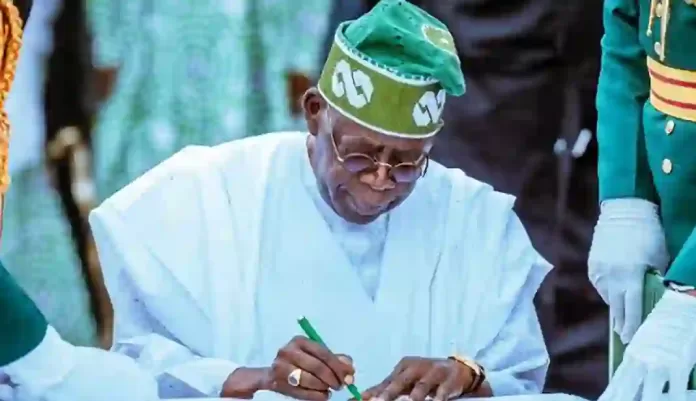
President Bola Tinubu

In modern constitutional systems, this logic evolved into more formal and legally defined procedures, most notably impeachment. While ostracism removed individuals through popular civic judgment without a criminal trial, impeachment introduces a structured judicial and political process for removing public officials accused of misconduct, abuse of office, or gross incompetence. Both mechanisms share the same underlying purpose: to provide a lawful pathway for removing leaders who have lost the trust or confidence required to govern.


In presidential democracies, impeachment serves as the institutional counterpart to ostracism. It transforms what was once a direct popular vote in ancient Athens into a constitutional process carried out by legislative and judicial institutions. Yet the principle remains unchanged: no leader is beyond removal when governance fails or public trust collapses.


Complementing impeachment is the mechanism of resignation, which represents the voluntary acknowledgment of political reality. It is the least disruptive form of exit, allowing a leader to step aside before institutional processes are triggered. In functioning democracies, resignation is often encouraged as a stabilising option when political pressure, ethical concerns, or governance failures become overwhelming.


Modern examples within presidential systems reinforce this framework of accountability. In the United States, Richard Nixon resigned in 1974. In Brazil, Fernando Collor de Mello resigned. In Peru, Pedro Pablo Kuczynski resigned under mounting political pressure. These cases demonstrate that presidential systems are not rigid structures immune to leadership exit but flexible constitutional orders with built-in correction mechanisms.


Taken together, resignation, ostracism, and impeachment represent different expressions of the same democratic instinct: the need to control bad leadership and preserve the integrity of governance. They differ in form but not in purpose. Each reflects a society’s attempt – across time and systems – to ensure that leadership remains accountable to the people it serves. It is therefore conceptually flawed to treat calls for resignation as foreign or hostile to presidential democracy. Whether through voluntary exit, legislative removal, or popular exclusion in ancient systems, the central principle remains constant: governance must retain the capacity to correct itself when leadership fails. Ultimately, no system of government is designed to preserve individuals in office at all costs. Every system, ancient or modern, carries within it the recognition that power is conditional and that accountability is essential to its legitimacy.


Now, on the specific question of the call for Tinubu to resign, what do we say about it?


Was the call ethical? Yes. In a democratic society, citizens are entitled to assess leadership performance and express dissatisfaction when governance outcomes fall short of public expectations. Ethical public discourse is not about remaining silent in the face of hardship; it is about demanding accountability, especially where economic distress, insecurity, and declining public confidence are widely experienced.


Was the call legal? Yes. It is legally recognised under the Nigerian Constitution. Section 39(1) of the 1999 Constitution of the Federal Republic of Nigeria (as amended) provides that: “Every person shall be entitled to freedom of expression, including freedom to hold opinions and to receive and impart ideas and information without interference.” This constitutional guarantee protects political speech, including criticism of government and calls for resignation. Furthermore, no provision of the Constitution criminalises or prohibits a citizen from calling for the resignation of an elected president; resignation itself is a political remedy within democratic practice, not a legal obligation imposed by courts.


Was the call constitutionally inconsistent with presidential democracy? No. Presidential systems are not insulated from accountability mechanisms. While presidents serve fixed terms, constitutional democracies still recognise impeachment, resignation, and other forms of leadership exit when legitimacy or governance effectiveness is questioned. Specifically, Section 306 of the Nigerian Constitution outlines the framework for resignation from office.


Was the call timely? Yes. National conditions are currently marked by crushing economic hardship, widespread insecurity, a rising cost of living, and deep public dissatisfaction. In such contexts, democratic pressure naturally increases, and calls for accountability—including resignation—become a vital part of legitimate civic engagement. Did you not witness how almost all Nigerians thrilled at having found a voice that called for the President to resign?


Was the call justified in democratic principle? Yes. Democracy is not merely a ritual of quadrennial elections; it requires continuous accountability. When citizens perceive a widening gap between governance promises and their lived reality, they are expected to demand corrective action, up to and including a reconsideration of leadership.


Was the call consistent with comparative democratic practice? Yes. Even within presidential systems, resignation remains a recognised and honourable outcome in moments of existential crisis. This reinforces the principle that leadership legitimacy is not only legal but also moral and political. When that legitimacy is broken, resignation remains a valid democratic path.


To view a call for resignation as an act of subversion or an alien concept is to misunderstand the very fabric of democratic governance. Resignation is not an admission of weakness, nor is it exclusive to any political system; it is an expression of political accountability and responsibility to the people. When a media team resorts to petulant insults instead of addressing the stark realities of a struggling nation, it reflects the intellectual weakness within the corridors of power. Nigeria cannot be governed by excuses, nor can the hardship and insecurity faced by millions be dismissed through press statements. True leadership listens, evaluates, and knows when the burden of failure requires stepping aside. Until the handlers of the Presidency understand this historic truth, they will continue to treat legitimate accountability as anathema, while the nation bears the consequences of that denial.


What Nigeria needs today is the resignation of PBAT. Intellectually and morally, he is not the best. He has proved that he is not made to be a pilot in Nigeria’s leadership storm. The condition of Nigeria justifies the call for resignation.

Obi’s Media Office tackles Presidency On Resignation: Says Seat Of Power Chasing Shadows

0
Peter Obi
Mr Peter Obi

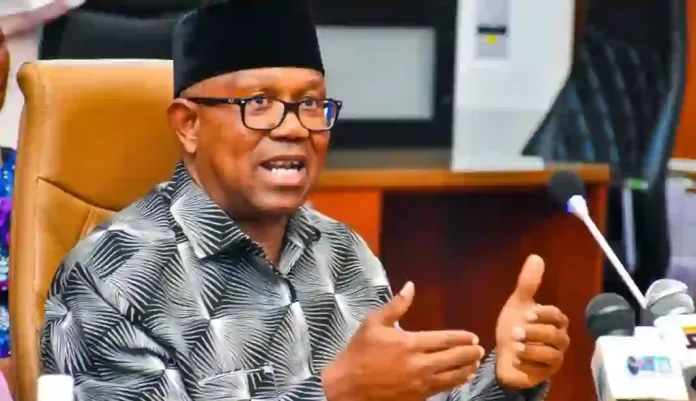
Peter Obi’s Media Office, has responded to the Presidency’s reaction to its Principals call on President  Bola Tinubu to resign from office for failing Nigerians.


Recall that Obi, the Presidential Candidate of the Nigeria Democratic Congress, had, on the heels of the resignation of the British Prime Minister, Keir Starmer on Monday, June 22, called on President Tinubu to tow same line and save Nigerians pains, having, according to Obi, performed woefully.


In a swift response, however, the Presidency, in release signed by Presidential Spokesperson, Bayo Onanuga, dismissed Obi’s call as childish and undemocratic.


It pointed out that Britain and Nigeria do not operate the same system of Government explaining, as if anybody was forgetting, that Britain practices the Parliamentary system of Government, and Nigeria, Presidential.


But a statement signed by Idris Zekeri Jnr, Spokesperson for Obi’s Media dismissed the Presidency’s response as chasing shadows and accused it of attempting “to personalise the discussion by attacking Obi’s record as governor of Anambra State, which he leaves to history and objective records to judge.


The full text of Obi’s Media Office reads:


“The innocuous call by the presidential candidate of the Nigeria Democratic Congress (NDC), Peter Obi, on President Bola Ahmed Tinubu to resign from office, having failed to improve the living conditions of Nigerians in recent years, has generated a lengthy reaction from his media aides but has failed to address the issue.


“Obi’s call was based on the very obvious failure of governance, which is apparent with Nigerians living below the poverty line rising from 87 million when the President came to power to 140 million.


“Rather than address the issue of leadership and accountability, the presidency embarked on shadow chasing, talking about the weekend’s charade election and the types of government, whether presidential or parliamentary. Meanwhile, they forgot that Nigeria was not running a parliamentary system when the President mobilised Nigerians to demand the resignation of the then-President Goodluck Jonathan.


“Our principal’s call was for President Bola Tinubu to learn a lesson from the action of the British Prime Minister, who chose to resign after acknowledging that his government had failed to sufficiently improve the living conditions of its citizens.


“Obi’s intervention was neither personal nor partisan. It was a reflection on leadership and accountability. Unfortunately, rather than engage with the substance of the argument, the presidency chose to respond with insults, distortions, and self-congratulatory rhetoric.


“We would like to state clearly that our principal’s comments were not about whether Nigeria operates a presidential or parliamentary system. They were about a fundamental principle of leadership: accepting responsibility for outcomes.


“The British Prime Minister did not resign because of the nature of the British political system. He resigned because he understood that leadership comes with responsibility and accountability.


“It is also important to correct the misleading suggestion that resignation is alien to presidential systems or is somehow anti-constitutional. Comparative democratic practice shows otherwise. In several presidential systems, leaders have resigned under different circumstances. In the United States, Richard Nixon resigned in 1974 over the Watergate scandal.


“In Brazil, Fernando Collor de Mello resigned on account of corruption allegations. In Peru, Pedro Pablo Kuczynski resigned, while in Argentina, Fernando de la Rúa stepped down during a severe economic and social crisis. These examples demonstrate that resignation is not incompatible with presidential systems but remains a recognised, though rare, feature of accountability in presidential democracies.


“Ironically, when President Tinubu himself made similar calls on President Goodluck Jonathan, Nigeria was operating the same presidential system it operates today.


“Tinubu then mobilised Nigerians and repeatedly demanded Jonathan’s resignation during the fuel subsidy protests and following the Chibok schoolgirls’ abduction.


“At that time, neither he nor his supporters argued that Nigeria’s constitutional structure prevented such demands. Leadership standards should not change depending on who occupies the office.


“The Peter Obi Media Office would therefore like to reiterate that his advice to the President is based on the reality that the last three years have been among the worst in Nigeria’s history. The number of Nigerians living in poverty has risen from about 87 million to approximately 140 million. The debt burden accumulated under this administration is unprecedented, yet it has not been matched by a corresponding improvement in the lives of ordinary citizens.


“No amount of political rhetoric and grandstanding can conceal the fact that millions of Nigerians are enduring unprecedented economic hardship. Businesses are shutting down. Manufacturers face unbearable production costs, while warehouses are filled with unsold goods because of weak consumer demand. Unemployment and underemployment remain widespread. These are not opposition narratives; they are the daily realities confronting ordinary Nigerians and evidence of failed governance.


“The presidency boasts of GDP growth, increased revenue, and stock market gains. Yet these claims only reinforce the concern that, despite such indicators and the removal of fuel subsidies, conditions in critical areas of development have worsened. Economic growth that does not translate into improved living standards is merely statistical growth. The true measure of economic success is not the performance of the stock market but the well-being of the average citizen.


“A government must ultimately be judged not by the figures it publishes but by the improvements in the lives of its citizens.


“The presidency’s response to security is equally troubling. While acknowledging isolated operational successes, it ignores the painful reality that insecurity has become more widespread than ever before. What was once largely confined to certain parts of the country has now spread across virtually every region. Kidnapping, banditry, violent crime, and attacks on communities have become national concerns rather than regional challenges. Farmers are unable to cultivate their lands safely, businesses operate under constant fear, and citizens increasingly feel vulnerable regardless of where they live. Leadership requires honesty about challenges, not selective celebration of isolated victories.


“The presidency also attempts to personalise the discussion by attacking Obi’s record as governor of Anambra State, which he leaves to history and objective records to judge. When Obi assumed office in Anambra State, he promised to restore civility to governance, reduce the cost of government, improve education, healthcare, and infrastructure, provide access to remote areas of the state, strengthen security, and leave savings for the future of the people. He achieved over 80% of those promises. Indeed, Anambra ranked first in the implementation of the Millennium Development Goals (MDGs) and recorded significant improvements in healthcare and education. These facts remain verifiable.


“What is particularly disappointing is the attempt to portray concern for Nigeria as political grandstanding. Patriotism demands that we speak when things are going wrong. Silence in the face of suffering is not loyalty to country; it is complicity.


“The presidency cites the outcome of the weekend elections as evidence of public endorsement of its performance. Nothing could be further from the truth. It is disheartening that what many Nigerians viewed as a deeply flawed electoral exercise is now being presented as proof of good governance.


“If the electoral shortcomings witnessed during the weekend elections are a preview of what Nigerians should expect in future elections, then our democracy is in grave danger. Elections are supposed to strengthen public confidence in democratic institutions, not weaken it. They are meant to reflect the freely expressed will of the people, not generate widespread concern about the integrity of the process. If such elections become the new normal, then Nigerian democracy is indeed in peril.


“Even more disturbing is the nation’s distorted sense of priorities. It is only in Nigeria that a country can budget approximately ₦298 billion for primary healthcare—the foundation of any meaningful healthcare system—while allocating about ₦873 billion, nearly three times that amount, for elections. Such a situation demands urgent national reflection.


“Obi did not call for resignation out of malice or political calculation. He sought to draw attention to a leadership culture that must evolve if Nigeria is to make meaningful progress. Across successful nations, leaders understand that public office is a sacred trust and that accountability is not a sign of weakness but of strength.


“Rather than expend energy attacking critics, the government should focus on addressing the urgent issues confronting Nigerians: unity, insecurity, unemployment, poverty, power shortages, declining productivity, and the erosion of public confidence in governance.


“Nigeria deserves leadership that listens more than it lectures, serves more than it celebrates itself, and accepts responsibility rather than constantly searching for excuses.


“It is time to end this deceit. The task before us remains the same: to build a united, secure, productive, and prosperous Nigeria where every citizen can live with dignity and hope. A New Nigeria is Possible.”