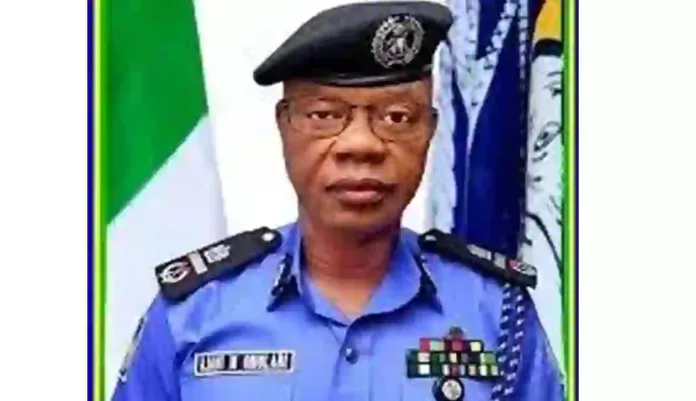
Retiring of the Assistant Inspector-General of Police, (AIG) in charge of Zone 17, Akure, Musbau Omolabi Ajani has counselled serving police officers to uphold the highest standards of professionalism, discipline and integrity
He particularly warned against corruption and other acts of misconduct, emphasising that any officer found culpable of corrupt practices should be made to face the full weight of the law.
Ajani, spoke at his passing out parade, after 35 years of dedicated and meritorious service to the Nigeria Police Force and the nation.
The ceremony, held at the Police Arcade, Akure, attracted an array of dignitaries, including senior police officers both serving and retired, Government functionaries, heads of sister security agencies, traditional leaders, members of the Police Community Relations and well wishers.
According to him, the importance of accountability in building public confidence and preserving the integrity of the Nigeria Police Force cannot be underestimated.
The retiring AIG also called on members of the media to maintain objectivity, fairness and balance in their reportage of police activities. He noted the critical role of the media in informing the public, promoting mutual understanding and strengthening the relationship between the Police and the communities they serve.
AIG Ajani, who until his retirement, was the Assistant Inspector-General of Police in charge of Zone 17, comprising Ondo and Ekiti States, formally bowed out of active service after an illustrious career spanning three and a half decades.
The colourful parade featured a series of ceremonial activities, including the inspection of the parade by the retiring AIG, a spectacular march past by officers and men of the Force and the symbolic pulling-out ceremony.
In his valedictory address, AIG Ajani Musibau Omolabi psc (+) expressed profound gratitude to Almighty God for granting him the grace to complete his 35 years of service and retire in good health.
He described his successful retirement as a blessing and a privilege, particularly for being able to bow out honourably without being incapacitated by illness or cut down by death.
In his remarks, the Commissioner of Police, Ondo State Command, Felix Ohagwu, congratulated AIG Ajani on the successful completion of his 35 years of service to the nation.
He commended the retiring senior officer for his dedication and contributions to the Nigeria Police Force and wished him a peaceful and fulfilling retirement.
The Commissioner further reaffirmed the Command’s unwavering commitment to sustaining the fight against crime and criminality through proactive policing, intelligence-led operations, professionalism and strengthened collaboration with other security agencies and members of the public.
He assured residents of Ondo State that the Command would continue to consolidate on existing security strategies to ensure the protection of lives and property.
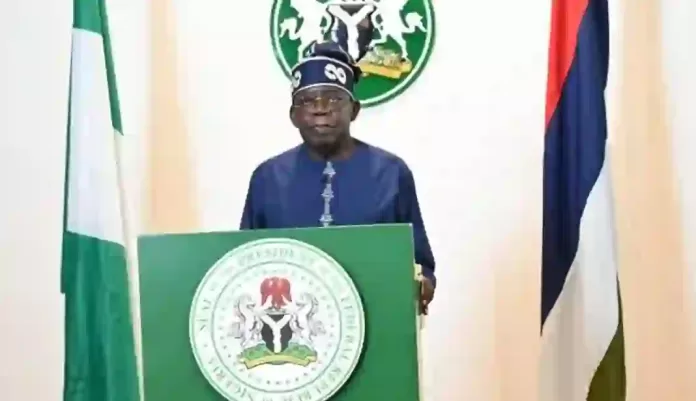
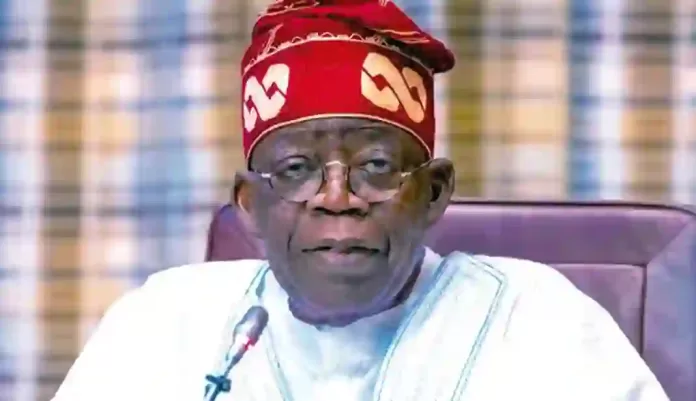
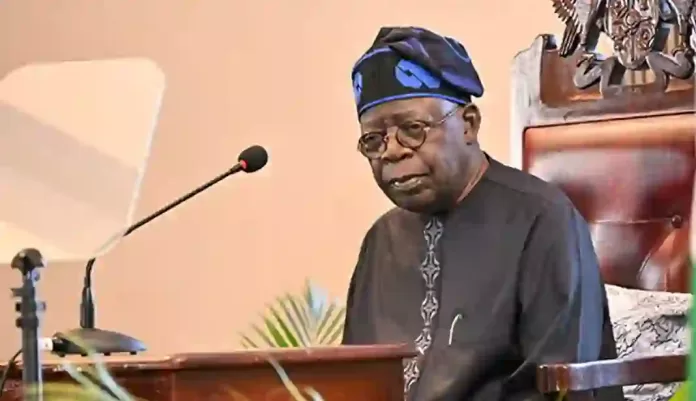
As part of the celebrations to mark Nigeria’s 66th Independence Day, President Bola Ahmed Tinubu has delivered a nationwide broadcast, where he detailed his plans for a prosperous Nigeria.
In his statewide broadcast on Thursday morning, the president said his administration has laid a solid foundation for the nation’s future prosperity, saying all his government has done in three years was to put the country on the right “course.”
“My fellow Nigerians, we have reached a turning point. The emergency treatment is over,” he said.
The president also outlined his administration’s plans for a better Nigeria, to include economic, social and political development, which he said is more than merely “a larger economy, abstract numbers or better statistics.”
“I mean a Nigeria in which the farmer can cultivate his land safely, produce more at lower cost, and earn a decent return for his labour. A Nigeria in which factories have reliable power, businesses can obtain credit, and young people can find productive work. A Nigeria in which food and transportation are affordable, education is within reach, and hard-working families can look towards the future with confidence,” Tinubu said.
He stressed that things are already looking good for the country, saying the focus now is to bring down the cost of living and ensure that the nation is self-sufficient in the production of goods for the consumption of Nigerians, adding that there are abundant human and natural resources to transform the plans to reality.
Tinubu: “We have the land and people to feed ourselves. My government is therefore focused on expanding mechanised irrigation and dry-season farming, improving access to seeds and fertiliser, holistically increasing mechanisation, and investing in storage and transportation. We are building and completing the roads, railways and ports that connect farms and factories to markets.
“Our logic is simple. When a farmer produces more cheaply, when fewer crops are lost between the farm and the market, when a manufacturer spends less on electricity, when a truck reaches its destination faster, and when the business environment fosters fair competition, all those savings will ultimately find their way into the price of goods in the market.
“But prosperity requires more than cheaper goods. It requires productive work.
“Nigeria is a young country. Millions of young Nigerians enter adulthood every year with talent, energy and ambition. Our responsibility is to ensure that this great demographic strength becomes an engine of production rather than a source of despair.
“We are therefore placing jobs, enterprise, and industrial growth at the heart of our government’s policies,” he said.
Opposition parties are intensifying consultations ahead of the 2027 presidential election, on how to forge common front with a view to defeat the ruling All Progressives Congress (APC).
To this end, a fresh round of consultations are still ongoing after a closed-door meeting between African Democratic Congress,( ADC) presidential candidate Atiku Abubakar and coalition leaders at his Abuja residence on Tuesday night.
The meeting was attended by National Chairman of the Peoples Redemption Party, Hakeem Baba-Ahmed, as well as other political figures involved in efforts to bring opposition parties together.
Members of Atiku’s campaign council were also said to have attended.
PRP National Publicity Secretary, Muhammed Ishaq, confirmed the meeting in a statement and said the engagement was part of broader consultations among opposition parties and political leaders.
“Leaders of coalition parties, as well as others interested in joining, recognise the need to broaden and strengthen the coalition’s capacity to defeat the APC in 2027 and give Nigeria a new lease on life,” Ishaq said.
Other opposition figures and groups have also been discussing ways to reduce the number of presidential candidates who may contest the 2027 election separately.
The Movement for Credible Elections, MCE, led by Prof Pat Utomi’s Political Commission, has commenced consultations with opposition presidential candidates and political parties as part of efforts to facilitate the emergence of a common opposition presidential candidate.
Among those identified for consultations are Atiku, Peter Obi of the Nigeria Democratic Congress, Adewole Adebayo of the Social Democratic Party, Seyi Makinde of the Allied Peoples Movement, Donald Duke of the Peoples Redemption Party, Sandy Onor of the PDP, Peter Agada of the Young Progressive Party and African Action Congress candidate Omoyele Sowore.
Another initiative, known as G100, has also been consulting with opposition parties and political leaders over possible cooperation ahead of the election.
G100 released what it called the “Doctrine of a Necessary Democratic Opposition” and urged opposition parties to consider working around a single presidential candidate, a common programme and a coordinated strategy.
The consultations involving the ADC, APM, NDC, PDP, PRP and SDP are taking place as opposition politicians weigh different approaches to the 2027 contest.
President Bola Ahmed Tinubu has recalled that Nigeria was in state of hopelessness when he took over government in 2023, saying the country, was at the time ”like a sick patient who receives terrible news that he has cancer.”
The president said there were two choices before him when he became president; to immediately tackle the problem, which can lead to discomfort for many Nigerians, or gloss over it and allow it to continue, like his predecessors in government who he accused of failing to take the bullby the horns.
‘Nigeria was like a sick patient who receives the terrible news that he has cancer. His doctor explains that the treatment will be difficult and painful, but that it offers a strong prospect of recovery. The patient has a choice. He can begin treatment, endure its discomfort and fight the disease. Or he can ask only for morphine, dull the pain and leave the cancer to spread,” he said.
Tinubu made the remark on Thursday in his nationwide broadcast to Nigerians in commemoration of the nation’s 66th independence day celebration.
Nigeria gained independence from the British Colonial government on October 1, 1960, and successive adminstrations have ruled the country since then, trying to find solutions to the nation’s many problems.
According to the president, past leaders in the country, from the time of independnce refused to deal with the nation’s many challenges, waiting ”for the miracle that never came” saying their wrong choices made the country to go from bad to worse instead of getting better, by refusing to tell Nigerians the ”truth” he said, they allowed the problems to fester from one generation to to another.
He said he chose to do things differently when he assumed office over three years ago by implementing reforms which he said were necessary to deal with the ”disease” affecting the country.
Part oft he reforms he implemented, according to him,is the fuel subsidy removal, which has been strongly condemned by his critics who are demanding the policy to be reverse. He,however,stated that three years down the line the economicoutlook in the country has proven that he made the right decision by dealing with the problemhead on.
Tinubu: ”’When this Administration assumed office, we resolved to do things differently. We chose to excise the cancer. The reforms that followed were difficult. The side effects were real. Yet, we must never confuse the medicine with the disease.
”Our reforms did not create the weaknesses in our economy. They confronted them. Now, as certain influential but regressive voices would have us abandon the treatment and return ourselves to the abuse of addictive subsidies, we must resist their siren song. We must remember why we began this journey and how far we have already come.
”Three and a half years later, the evidence that Nigeria’s economic outlook has improved is undeniable. Our economy has grown by over 4 per cent this year. Both oil and non-oil sectors have contributed to the renewed period of stable growth,” the president noted.
The alleged refusal of the Vice-Chancellor of PAMO University of Medical Sciences, Prof Smith Jaja, to appear before the Rivers State House of Assembly has received legal backing as the State High Court stopped the police from effecting his arrest.
The court, sitting in Port Harcourt, issued an order restraining the Inspector-General of Police, (IGP) and the state Commissioner of Police from arresting, detaining, or forcing the Vice-Chancellor of PAMO University of Medical Sciences, to appear before the Rivers State House of Assembly.
Justice F. Onyiri granted the interim injunction on Wednesday in a suit filed by Jaja against the Assembly, its Speaker, the IGP, and the state Commissioner of Police.
The order comes days after the Assembly resolved to issue an arrest warrant for Jaja over his repeated failure to appear before an ad hoc committee investigating scholarship funds released to PAMO University by the state government.
In her ruling, Justice Onyiri restrained the police and other security agents from acting on the Assembly’s resolution to arrest or compel Jaja’s appearance before the committee or any other Assembly-constituted panel, pending determination of the substantive case.
She also granted Jaja permission to serve court documents on the Assembly and its Speaker through substituted means, either by dropping them at the Assembly’s main gate on Aba Road or publishing them in a newspaper, and to serve the IGP and Commissioner of Police through the state police command headquarters on Moscow Road.
The case has been adjourned to October 9, 2026, for hearing of the substantive application concerning the enforcement of Jaja’s fundamental rights.
The legal battle stems from a report by the Assembly’s Ad Hoc Committee investigating scholarship disbursements to PAMO University.
According to the committee, chaired by Maol, the university received more than N29 billion from the state government without a corresponding number of enrolled scholarship students.
The House subsequently moved to issue an arrest warrant after Jaja allegedly ignored several invitations to explain how the funds were used.
It also recommended that the state government set up a committee to recover any unaccounted funds and return them to the State Consolidated Revenue Account.
According to a statement from the Speaker’s Special Assistant on Media, Martins Wachukwu, the investigation drew on documents from the Ministries of Finance and Education as well as the Office of the Accountant-General.
Speaker Martin Amaewhule said the scholarship programme was well-intentioned, but poorly implemented, noting that the documents reviewed contained conflicting figures and showed only about N5 billion of the more than N29 billion disbursed had been properly accounted for.
Earlier this month, the House had also rejected a proposed N6 billion allocation for PAMO University scholarships in the state’s 2026 budget.
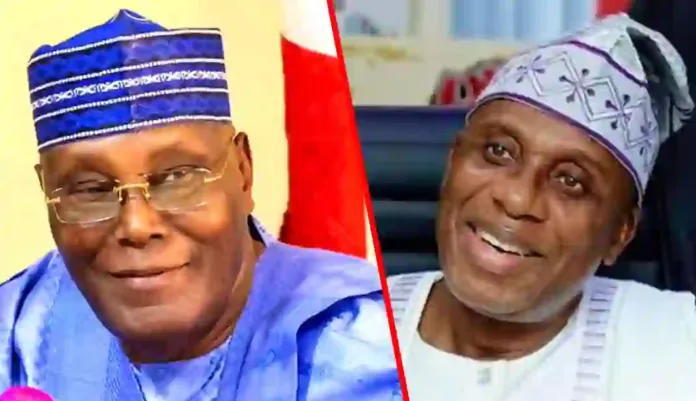
Wife of the presidential candidate of African Democratic Congress (ADC), Titi Atiku Abubakar, Vice-Presidential candidate of the the party, Rotimi Amaechi, have rallied women on how to vote out the ruling All Progressives Congress (APC), ahead 2027 polls.
They both spoke in Abuja, while addressing ADC-National Women League Conference.
Amaechi pointed out at the forum that leaders of the opposition party will be retired from politics if President Bola Ahmed Tinubu is re-elected.
Citing example of how the All Progressives Congress (APC) defeated the Peoples Democratic Party (PDP) at the center in 2015, Amaechi charged the women to go to their states and wards and bring in votes, saying that is the only way ADC will be able to defeat APC.
“If you are not from FCT, go home and campaign, me I am going on Wednesday, I will not wear suit, I will dress like a young man.
“Let me tell you what will happen. We the crop of leaders you see here. If APC wins 2027 elections, we are retired from politics. So if you don’t want us to retire from politics, we must go home.
“If you bring two thousand votes per ward, don’t win your ward. Just bring two thousand votes we have won the election.
“Men are controlled by their wives don’t let your husbands sleep, because if we win, you have won.
“We will not take any election lightly, you will see me in Kebbi, Yola, Rivers, Delta fighting for the governorship elections, because the Presidential candidate cannot govern without the governors.”
Amaechi, a former governor of Rivers and minister of Transportation, said the APC used women to defeat the PDP.
“When we were in APC and we wanted to remove your government, you saw what we did. We brought out the women, in every state we went to, women were in front.
“We spoke to them, we met with them at night, and we made sure that we told them that if they did not come out to vote, we would not win. And they came out. We fought the war, and we won.
“That time, Nigeria was not as hungry as it is now. Nigeria could afford some food, right? Now, how many of you can afford the food?
“How many of you can pay school fees without texting, texting to Dino (Senator Dino Melaye) or somebody else to give you some money for school fees.
“Every week, 10 Nigerians move into poverty. If they tell you how many Nigerians have died, you’ll be shocked.
“By the time I left government in APC, I’m giving you figures now: 10 and 12 million out of school children.
“Today there are 20 million out of school. That means every day Tinubu is taking Nigerians, 20 million Nigerians, 80% from the north, into poverty.
“If you’re a northerner and you’re sitting here, you shouldn’t even be singing at all. Reason Tinubu is taking you more every day into poverty.
“The thing you need to do is to take the battle in your hands. If all the women in the north come out to vote, Tinubu cannot announce any result.”
Hajiya Titi Atiku Abubakar, in her remarks, told the gathering that the time has come to work for the betterment of Nigeria, charging the women not to be intimidated.
She urged them to go out and convince their friends, neighbours and others to vote for the ADC.
“If you go to the market, you cannot buy anything, even medicine. Yesterday I sent them to buy medicine for me. Medicine that we used to buy for 400. It is now a thousand. I couldn’t believe my eyes.
“So where is the money? And we are in a cashless society, that even all the monies are being taken away.
“People work, the contractors work, they refuse to give them money. Because of ADC, because they don’t want people to support us. We, ADC, don’t have money. Let me tell you, we have to get it by force. We have to get it.
“Most of our children are not in schools because the cost of living is so expensive. So, women, I implore you. Women, I beg you.
“Don’t let them come and buy you food. And we have to go to all the corners of this Nigeria, especially to the people in the villages,” he said.
My fellow Nigerians,
Sixty-six years ago today, our flag was raised, for the first time, over a free and sovereign nation. Since then, we have journeyed together as one nation, bound by our collective trust in the great promise of Nigeria: that a country of our size, our bountiful resources, our cultural diversity and, above all, our extraordinary people can build a giant in Africa; that in this blessed and fertile land we can build a united, strong and prosperous nation; a land of regional authority and global consequence.
Our journey has not always been easy. In truth, it has generally been too hard for too many. We have known moments of great hope and periods of profound disappointment. We have endured war, military rule, economic crises, insecurity and political upheaval. Yet through it all, Nigeria, with the indomitable spirit of its people, has endured.
It has endured through the efforts of the farmer who rises before dawn to work his land. The trader who opens her shop each morning, hopeful for a productive day. The teacher who believes in the children entrusted to her care and the young entrepreneur who refuses to surrender ambition to circumstance. We are grateful for the men and women of our Armed Forces and security services who place themselves in harm’s way so that the rest of us may live in peace.
Through every difficulty, generations of Nigerians have continued to believe in one thing: that this country of ours will be better.
This faith, which sustains us all, is the inheritance of independence. Our founding fathers did not struggle merely for a flag, an anthem or a place among the nations of the world. Independence carried a larger promise: that Nigerians would have the freedom to shape their own destiny and build a nation capable of providing opportunity, dignity and a better life for its people. Sixty-six years later, Almighty God has made it our responsibility to deliver that promise.
Today, as we celebrate our independence, we must speak honestly about the journey so far, the choices we made, and the country we are determined to build from here.
For too long, the promise of Nigeria was undermined by choices that postponed difficult decisions and allowed deep economic distortions to grow.
By 2023, poverty was rising, and hope was nearly gone. The country’s situation was darker than ever. We had no choice but to act.
Nigeria was like a sick patient who receives the terrible news that he has cancer. His doctor explains that the treatment will be difficult and painful, but that it offers a strong prospect of recovery. The patient has a choice. He can begin treatment, endure its discomfort and fight the disease. Or he can ask only for morphine, dull the pain and leave the cancer to spread.
For too long, Nigeria’s leaders chose morphine while praying for a miracle that never came.
They focused on symptoms while allowing the disease to take hold deep within the fabric of our society. We spent enormous sums sustaining inefficient arrangements that were never intended to last. We hid from difficult truths and passed the consequences from one generation to the next.
When this Administration assumed office, we resolved to do things differently. We chose to excise the cancer. The reforms that followed were difficult. The side effects were real. Yet, we must never confuse the medicine with the disease.
Our reforms did not create the weaknesses in our economy. They confronted them. Now, as certain influential but regressive voices would have us abandon the treatment and return ourselves to the abuse of addictive subsidies, we must resist their siren song. We must remember why we began this journey and how far we have already come.
Three and a half years later, the evidence that Nigeria’s economic outlook has improved is undeniable. Our economy has grown by over 4 per cent this year. Both oil and non-oil sectors have contributed to the renewed period of stable growth.
Oil theft is down. Inflation has fallen substantially from its peak. Our foreign reserves have been rebuilt, our foreign exchange market has stabilised, and in 2025 this country recorded its highest revenue from non-oil exports in its history, exceeding $6 billion. This is real money being made by real Nigerian businesses.
These are not idle claims. International observers, journalists, NGOs and multilateral institutions can see the change. Each has concluded that our reforms have strengthened Nigeria’s economic stability and resilience. The private sector has long since delivered its verdict, and foreign direct investment continues to rise each year.
My fellow Nigerians, we have reached a turning point.
The emergency treatment is over. The foundation has been repaired. The central economic task before us has changed. For three years, our overriding purpose was to correct our nation’s course.
Now, our purpose is simple: shared and widespread prosperity.
When I speak of prosperity, I do not speak merely of a larger economy, abstract numbers or better statistics. I mean something much more personal.
I mean a Nigeria in which the farmer can cultivate his land safely, produce more at lower cost, and earn a decent return for his labour. A Nigeria in which factories have reliable power, businesses can obtain credit, and young people can find productive work. A Nigeria in which food and transportation are affordable, education is within reach, and hard-working families can look towards the future with confidence.
This is the promise we must now fulfil.
Our priority is to bring down the cost of living. We will achieve this by lowering the cost of producing and moving the things Nigerians consume.
We have the land and people to feed ourselves. My government is therefore focused on expanding mechanised irrigation and dry-season farming, improving access to seeds and fertiliser, holistically increasing mechanisation, and investing in storage and transportation. We are building and completing the roads, railways and ports that connect farms and factories to markets.
Our logic is simple. When a farmer produces more cheaply, when fewer crops are lost between the farm and the market, when a manufacturer spends less on electricity, when a truck reaches its destination faster, and when the business environment fosters fair competition, all those savings will ultimately find their way into the price of goods in the market.
But prosperity requires more than cheaper goods. It requires productive work.
Nigeria is a young country. Millions of young Nigerians enter adulthood every year with talent, energy and ambition. Our responsibility is to ensure that this great demographic strength becomes an engine of production rather than a source of despair.
We are therefore placing jobs, enterprise, and industrial growth at the heart of our government’s policies.
We will use our gas to power new industries. We will support businesses that work to bring factories back to life in our great industrial centres. We will expand digital connectivity into communities that have waited too long to participate in the modern economy. We will invest in the skills employers demand and support Nigerian businesses with the infrastructure and finance they need to grow.
I want to see more Nigerians making things. I want to see more Nigerian farms feeding our cities and supplying our factories. I want to see Nigerian businesses selling Nigerian goods to the whole world. I want young Nigerians building unicorns and creating opportunities for others here at home.
I am also conscious that millions of our fellow citizens cannot wait for tomorrow. Some Nigerian families still struggle today for the next meal, the next school fee, the next medical bill, or simply enough money to get to work. Their circumstances did not begin with the reforms of the last three years. Their struggle is the accumulated consequence of decades of low productivity, inadequate infrastructure, insufficient opportunity and institutions that too often failed those who needed them most.
We cannot erase in four years what accumulated over generations. But we can change its course. We can build an economy that steadily lifts people out of poverty while ensuring that those who remain vulnerable are not abandoned along the way.
That is why we are strengthening direct support for the poorest households and improving the National Social Register so that assistance reaches those who genuinely need it.
It is why the Nigerian Education Loan Fund is ensuring that the child of a low-income family need not surrender the dream of higher education simply because his parents cannot afford the fees.
It is why CREDICORP is giving working Nigerians access to consumer credit, allowing people to acquire vehicles, solar systems, digital devices and other essential assets without first having to accumulate years of savings.
That is why, working with our states and local governments, we will continue to strengthen primary healthcare, basic education, and the essential public services poorer Nigerians depend on most. Since 2023, we have paid salaries and pensions on time and in full. We have reformed the national pension programme to benefit retirees and the vulnerable.
These programmes are not substitutes for prosperity. They are a bridge to aid our nation’s citizens on their path towards it. Our objective is not to manage poverty more efficiently.
We will defeat it.
It will take time. It will require discipline. It will require sustained growth year after year and the creation of millions of productive opportunities across our country.
But for the first time in decades, we embark on this task from a position of strength, with an economy whose fundamental direction has been corrected. We confronted the difficult choices we faced and have laid the foundations for lasting prosperity. Rather than fail the promise of a better future for our children, the time has come for us to build that future.
The age of reform has done its work. Now begins the age of prosperity. An age in which the promise of this great nation must finally become the lived experience of Nigerians from all walks of life.
We have travelled through difficult years together. We have made hard decisions together. And now, still together, we must build the country those decisions have made possible.
I believe deeply in what lies ahead.
I believe in the millions of ordinary men and women whose work, courage and determination have always been the true strength of our country. The road ahead will still demand much from us. But we now travel it with firm footing, a clear direction, and renewed hope in our collective future.
Nigeria has corrected its course. We have passed through our own Red Sea. This is not the time to look back. Let us go forward together, with faith in ourselves, faith in our country, and faith that the sacrifices we have made will yield their reward.
The Promised Land before us is a Nigeria of abundance and opportunity; a nation where prosperity is broadly shared, where every child can dream beyond the circumstances of his birth, and where our country’s immense promise is finally reflected in the lives of our people.
Our destination is in sight. Our foundations are strong. Our direction is clear. So let us go forward. No looking back.
Happy Independence Day, my fellow Nigerians. God bless you all, and God bless the Federal Republic of Nigeria.
Bola Ahmed Tinubu, GCFR
President and Commander-in-Chief of the Armed Forces of the Federal Republic of Nigeria
President Bola Tinubu has observed that for too long, the promise of Nigeria was undermined by choices that postponed difficult decisions and allowed deep economic distortions to grow.
In a nationwide broadcast on Thursday to mark Nigeria’s 66th independence anniversary, President Tinubu pointed out that by 2023, poverty was rising, and hope was nearly gone, while the country’s situation was darker than ever. “We had no choice but to act.
“Nigeria was like a sick patient who receives the terrible news that he has cancer. His doctor explains that the treatment will be difficult and painful, but that it offers a strong prospect of recovery.
“The patient has a choice. He can begin treatment, endure its discomfort and fight the disease. Or he can ask only for morphine, dull the pain and leave the cancer to spread.
“For too long, Nigeria’s leaders chose morphine while praying for a miracle that never came.
“They focused on symptoms while allowing the disease to take hold deep within the fabric of our society.
“We spent enormous sums sustaining inefficient arrangements that were never intended to last. We hid from difficult truths and passed the consequences from one generation to the next.
“When this Administration assumed office, we resolved to do things differently. We chose to excise the cancer.
“The reforms that followed were difficult. The side effects were real. Yet, we must never confuse the medicine with the disease.
“Our reforms did not create the weaknesses in our economy. They confronted them.
“Now, as certain influential but regressive voices would have us abandon the treatment and return ourselves to the abuse of addictive subsidies, we must resist their siren song. We must remember why we began this journey and how far we have already come.
“Three and a half years later, the evidence that Nigeria’s economic outlook has improved is undeniable.
“Our economy has grown by over 4 per cent this year. Both oil and non-oil sectors have contributed to the renewed period of stable growth.
“Oil theft is down. Inflation has fallen substantially from its peak. Our foreign reserves have been rebuilt, our foreign exchange market has stabilised, and in 2025 this country recorded its highest revenue from non-oil exports in its history, exceeding $6 billion. This is real money being made by real Nigerian businesses.
“These are not idle claims. International observers, journalists, NGOs and multilateral institutions can see the change.
“Each has concluded that our reforms have strengthened Nigeria’s economic stability and resilience. The private sector has long since delivered its verdict, and foreign direct investment continues to rise each year.
“My fellow Nigerians, we have reached a turning point. The emergency treatment is over. The foundation has been repaired. The central economic task before us has changed. For three years, our overriding purpose was to correct our nation’s course.
“Now, our purpose is simple: shared and widespread prosperity.
“When I speak of prosperity, I do not speak merely of a larger economy, abstract numbers or better statistics. I mean something much more personal.
“I mean a Nigeria in which the farmer can cultivate his land safely, produce more at lower cost, and earn a decent return for his labour.
“A Nigeria in which factories have reliable power, businesses can obtain credit, and young people can find productive work. A Nigeria in which food and transportation are affordable, education is within reach, and hard-working families can look towards the future with confidence.
“This is the promise we must now fulfil.
Our priority is to bring down the cost of living. We will achieve this by lowering the cost of producing and moving the things Nigerians consume.
“We have the land and people to feed ourselves. My government is therefore focused on expanding mechanised irrigation and dry-season farming, improving access to seeds and fertiliser, holistically increasing mechanisation, and investing in storage and transportation.
“We are building and completing the roads, railways and ports that connect farms and factories to markets.
“Our logic is simple. When a farmer produces more cheaply, when fewer crops are lost between the farm and the market, when a manufacturer spends less on electricity, when a truck reaches its destination faster, and when the business environment fosters fair competition, all those savings will ultimately find their way into the price of goods in the market.
“But prosperity requires more than cheaper goods. It requires productive work.
“Nigeria is a young country. Millions of young Nigerians enter adulthood every year with talent, energy and ambition.
“Our responsibility is to ensure that this great demographic strength becomes an engine of production rather than a source of despair.
“We are therefore placing jobs, enterprise, and industrial growth at the heart of our government’s policies.”
“Atiku is full of himself. He wants to be called Mr President. You Must Call Him Mr. President”
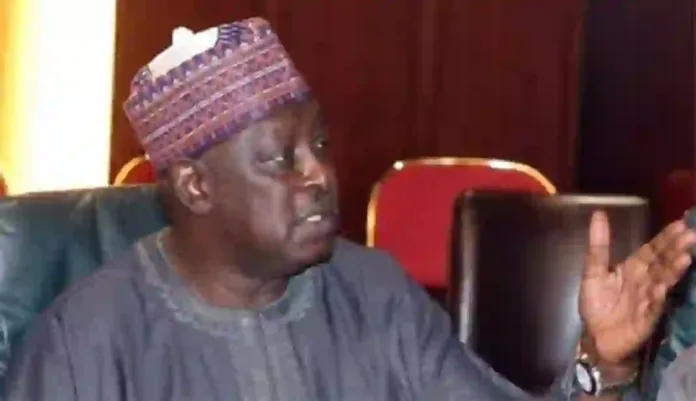
Former Secretary to the Government of the Federation, Babachir Lawal, in continuation of his criticisms of former Vice President, Atiku Abubakar has described him as a man full of himself, that wants people to address him as president despite never having occupied the office.
Lawal made the claim while speaking about his experience with Atiku, whom he criticised as a person who expects others to recognise and defer to him.
“I was even hoping at one time I’d be able to work with him…. It’s impossible to work with him, with my own type of person. It’s not possible. He’s a man full of himself.
“Everything must be him. He must give it to you at his own wish. It must be in his house. You must call him Mr. President, even though he’s not. Even though he will never be one. That’s who he is, full of himself.”
The former SGF recently defected to the Nigeria Democratic Congress (NDC) , where he is expected to support the presidential ticket of Peter Obi and Rabiu Kwankwaso.
His movement to the NDC followed a meeting with the party’s National Leader, Senator Henry Seriake Dickson, at Dickson’s residence in Abuja.
Lawal had previously been a member of the African Democratic Congress (ADC), but resigned from the party on June 1 after Atiku emerged as its presidential candidate.
Lawal had openly opposed Atiku’s emergence during the ADC presidential primary and alleged that the process was manipulated to favour the former vice president.
In his resignation statement, Lawal said, “I am exiting the ADC because its just concluded primaries were at all levels massively rigged in favour of Abubakar Atiku.”
He further alleged that results were altered to favour Atiku and that some candidates who won their contests were subsequently replaced.
“Results were just written or rewritten to favour him and his coven. Even where they allowed some semblance of election to hold, the winners were simply replaced with members of his syndicate. In the real sense, it was a disgraceful charade,” he alleged.
Atiku’s camp rejected the allegations and maintained that his emergence was a legitimate reflection of the outcome of the ADC presidential primary.
Atiku was declared the winner of the primary after receiving 1,846,370 votes, ahead of former Rivers State Governor Rotimi Amaechi and businessman Mohammed Hayatu-Deen.
Lawal had also argued that supporting Atiku could strengthen President Bola Tinubu’s chances of securing another term in office, a prospect he said he opposed.
“For me, working for Atiku means giving Tinubu an automatic ticket to a second term, which gives me nightmares,” Lawal said.
However, Lawal subsequently said that if Nigerians were left with a choice between Tinubu and Atiku, he would support the incumbent president despite his criticisms of the administration.
“I have said it before: if the choice must be between Atiku and Tinubu, then despite the shortcomings of Tinubu’s administration, he would still be a far better president compared to what Atiku would bring Nigeria into,” he said.
He added, “When you are faced with choosing between two devils, you pick the lesser one. Even among devils, there are different categories.”
Lawal’s latest comments also build on his previous criticism of Atiku following the ADC primary. In June, he explained why he repeatedly referred to Atiku as “Kachalla,” a term he associated with the leaders of Fulani bandit groups.
Speaking during an interview on Channels Television’s Politics Today, Lawal questioned Atiku’s response to insecurity in the country.
“Have you seen Atiku condemning bandit attacks?” Lawal asked.
He had used the expression in a resignation statement titled “The Kachalla Series Part 1,” in which he criticised Atiku’s emergence as the ADC presidential candidate and said he would not participate in Atiku’s campaign for the 2027 election.
Lawal had previously supported Obi during the 2023 presidential election, when the former Anambra State governor contested under the Labour Party.
“I remember accompanying Obi one early morning to see Umahi in Abakaliki. The meeting culminated in Obi handing Umahi a bag after which he (Umahi) rattled off the names of four other individuals who, he said, deserved similar packages.”
It is customary for some critics to argue conveniently that the movement known as the “Obidients” is wont to abuse anyone who does not support Mr Peter Obi. To this, we must clarify: the Obidients are not defined by partisan pedigree, but by a shared revulsion against the systemic ills of Nigeria and a fervent desire for national redemption. Obi happens, by circumstance and record, to be the candidate they see as uniquely equipped to midwife a new Nigeria.
A careful survey of our political landscape reveals that the Obidients do not attack individuals simply for opposing Obi. Rather, they go after those whose political conduct appears devoid of reason and steeped in malice – those who, instead of engaging within the limits of civilised opposition, resort to unprincipled warfare. A prime example in the South East is Governor Charles Cain Soludo, who appears perpetually bent on cutting down his younger brother, Mr Peter Abel Obi. Closely allied to him in temperament, though far more crude and unrefined, is Engr Dave Umahi.
There is not a method by which the emotions of the people can be aroused or inflamed that Umahi is not prepared to employ. He has perfected the politics of emotional provocation, ethnic insinuation and calculated grievance, deploying each whenever it suits the political moment.
In any civilised polity, a man of Umahi’s current standing should be busy answering serious questions arising from controversies that have surrounded his political career, including the young lady that recently died in his house. Instead, he surfaced a few days ago to proclaim that Ebonyi people should not vote for Igbos originating from outside Ebonyi State. He singled out Peter Obi, ridiculously challenging him to name a single Ebonyi indigene he employed during his tenure as governor. He also accused Obi of maintaining silence when a street in Anambra State was renamed from Abakaliki Street to Club Road. I remember that I personally wrote against it, describing it as a harebrained act by Gov. Willie Obiano, probably borne out of his obsession with clubs, which he himself visited with abandon.
Could one witness a more breathtaking display of pettiness? This is precisely the malaise Obi laments daily: how desperate politicians weaponise religion, ethnicity and tribalism to fracture the Nigerian polity whenever it serves their fleeting ambitions. Whenever it seems to the oppressors that the people are coming together, they resort to such narratives to divide them and usually end up wounding those fabrics that hold us together.
The pertinacity with which Umahi sometimes speaks unadulterated nonsense is rivalled only by Soludo. Governor Hope Uzodimma may harbour bigger political ambitions in the coming dispensation, but the difference lies in the need to study his maturity, composure and political restraint. Ambition, after all, is not merely about how loudly one announces oneself; it is also about the discipline with which one carries oneself when power is within reach.
When figures like Obi act, they do so on the bedrock of humanity, justice and fairness – never on the parochial calculus of geographic origin. As governor, he did not favour his native town of Agulu. He treated the entire state with equitable balance. He was perhaps the rare governor who refused to populate his government with blood relatives. The late Chief Nwobu-Alor, whom critics occasionally cite as his uncle in government, was actually appointed by Dame Virgy Etiaba during Obi’s brief impeachment. As governor, with Agulu having already claimed its large share of representation, it received no other portfolio in his cabinet – a sharp departure from the nepotistic norm. This is precisely one of the reasons Nigerians believe in his ability to unity the fractured polity. Have you seen PBAT appointments? Over 98% of grade one appointments went to his tribe and friends. Is this how to rescue the country?
Today, by contrast, Professor Soludo maintains a cabinet heavily populated by indigenes of Isuofia. Birds of a feather flock together; and, true to form, Umahi’s administration was frequently criticised for the prominence given to members of his family and close associates. Reports have even placed his son at the helm of a local government council. Can anyone honestly miss the chasm between such political instincts and those of Peter Obi? No wonder that, even as the people of Ebonyi State have rejected both him and his statement, it is only Soludo’s aides that are defending him with such vehemence as seen in Izuchukwu Adichie and Ejimofor Opara. These characters appear willing to even estrange their own wives should they support Obi.
As governor, Obi was entirely blind to ethnic provenance. In fact, some of his senior security details, including the head of his DSS detail, hailed from Ebonyi State. Out of respect for protocol, I withhold their names, though I have no doubt that Umahi’s present posturing must strike many of them as deeply hypocritical.
During the height of COVID-19, Obi constituted a high-powered team – comprising Prof Chinyere Stella Okunna (the leader), Prof Patrick Obi and myself – to tour hospitals nationwide distributing palliatives. We visited every single state in the South East, including Ebonyi. Obi himself has personally visited educational institutions in Ebonyi, such as the Mater Misericordiae College of Nursing Sciences in Afikpo, offering them generous financial support. How else does Umahi expect him to demonstrate goodwill? Or did Umahi expect him to issue formal proclamations over the renaming of Abakaliki Street? By that skewed logic, Umahi might one day demand that Obi intervene personally in a brawl between rival street urchins from Ebonyi state and Anambra at an Anambra motor park or risk being classified as anti Ebonyi State.
I recall vividly that in 2019, when Obi was chosen as the running mate to Alhaji Atiku Abubakar, Umahi led the opposition to the choice. When Atiku insisted against all odds, Umahi put on a theatrical display of support. I remember accompanying Obi one early morning to see Umahi in Abakaliki. The meeting culminated in Umahi being handed a bag, after which he rattled off the names of four other individuals who, he said, deserved similar packages. Disturbed and deeply uneasy, I later told Obi that I expected someone of Umahi’s supposed stature to independently sponsor the Ebonyi campaign as a genuine sign of solidarity. Little did I know then that the man was a dangerous undertaker, merely waiting for the opportune moment to deliver a knock-out blow to Obi.
Valentine Obienyem
The warped mindset that governs Umahi’s approach to fellow Igbos is the same mindset with which he governed Ebonyi State. In a frantic, breathless rush to make Ebonyi outpace its peers, he engaged in vanity projects borne out of “ajo obi”. He invested heavily in projects such as an airport whose utility and economic justification became subjects of considerable public debate. What a man; what a stunted philosophy of governance!
Umahi has passed through virtually every conceivable form of political controversy, intrigue, alliance and liaison. Yet he seems perpetually imprisoned by the heritage of grievance he himself has helped to construct. Always looking backwards, always searching for an enemy, always finding another group of people to blame.
He is a Judas to every truth that stands in the way of his immediate calculation; and, in his more destructive moments, he resembles the proverbial mad dog that bites everyone within reach. Such politics may generate headlines, but it cannot build the fraternity that the Igbo nation – and indeed Nigeria – desperately needs.
Have you ever watched Dave Umahi closely? His public interventions often carry the unmistakable impression of a man permanently engaged in political combat. With his ceaseless antics, divisive actions and inflammatory pronouncements, one is tempted to ask whether some politicians have forgotten that public office is ultimately an instrument of service rather than a permanent theatre of personal warfare.
Nigeria cannot be rebuilt on such incestuous reasoning. A country of more than two hundred million people cannot afford leaders who tell citizens that the accident of birthplace should determine whom they may support, employ or regard as their brother. Peter Obi’s record in Anambra offers a different proposition: that public office should enlarge the circle of citizenship rather than shrink it, whereas Umahi’s latest intervention seeks to reduce that circle to the narrow boundaries of birthplace. That is not statesmanship; it is the politics of fear, grievance and exclusion. And at a time when Nigeria needs leaders capable of rising above such narrow calculations, what the country needs is not more politics of division, but the kind of inclusive, humane and nationally minded leadership that Peter Obi has consistently represented.