



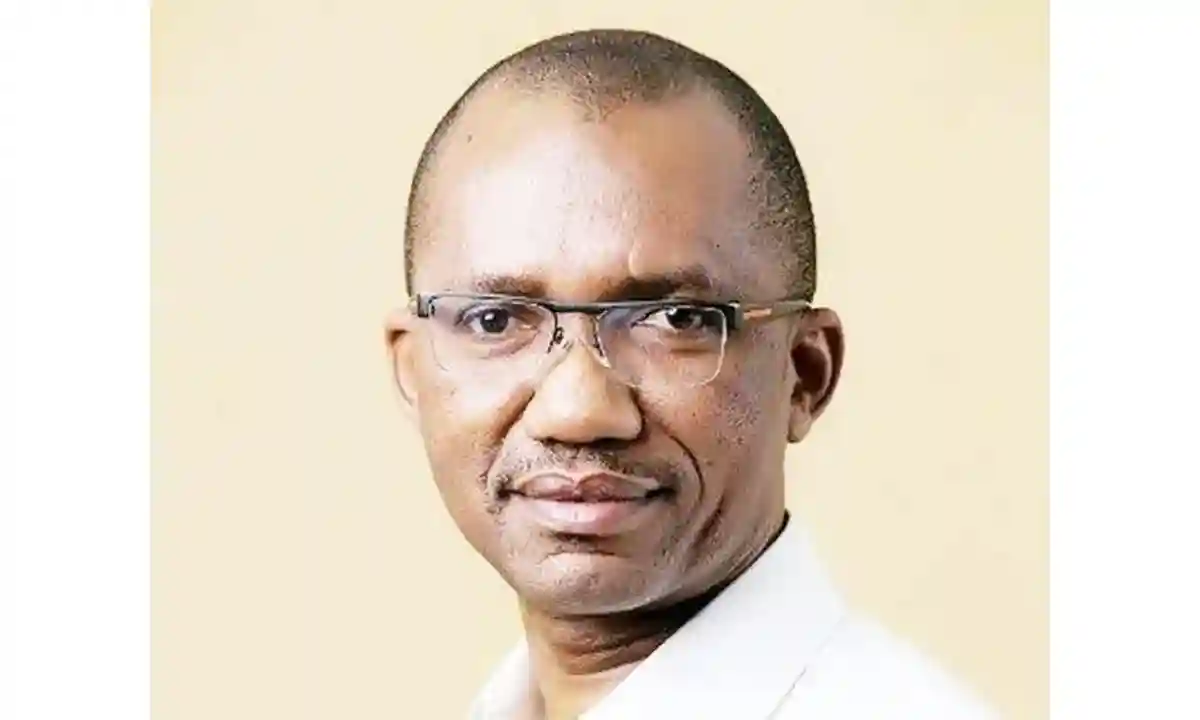

By Azu Ishiekwene

Vice President Kashim Shettima cannot be blamed for having doubts about whether President Bola Ahmed Tinubu would renominate him as his running mate for a second term.
As governor of Lagos State for eight years, Tinubu used three deputies: Kofoworola Bucknor-Akerele, Femi Pedro, and Abiodun Ogunleye. Only Senate President Godswill Akpabio (as Akwa Ibom governor) matched this record in the last 27 years. Whether it was a matter of style, chemistry or vision, Governor Tinubu always had a reason to change his deputies. In Shettima’s case, history was not the only reason for concern.
Some desperately wanted his job from the start. A few were party stalwarts, like embattled former Governor Nasir El-Rufai, who sources said thought it fair compensation for weighing in on Tinubu’s behalf when President Muhammadu Buhari was wavering about who would succeed him.
Of course, National Security Adviser Nuhu Ribadu, who smelt trouble a million miles away, blocked El-Rufai soon enough, just as Shettima also launched his own simultaneous independent attack.
A deadly controversy
Perhaps the most sustained anti-Shettima pushback was from the opposition and Christendom in the run-up to the 2023 election. Despite lacking any constitutional basis, the Tinubu-Shettima combination was framed as a Muslim-Muslim ticket to achieve what no former Nigerian leader has done – to Islamise Nigeria.
Tensions ran so high that Candidate Tinubu and his handlers were compelled to frequently parade his wife, Oluremi’s, pastoral credentials to establish his liberalism. If he’s married to a pastor and has pursued policies with equal opportunities for all faiths, what more evidence of broadmindedness did the opposition need?
That was obviously not enough. If Shettima thought the worst was over after he and the President were elected in 2023, he probably underestimated the tenacity of the opposition. The government’s policies and appointments have since been scrutinised not only through ethnic lenses, but also for their religious motives. The most widely implicated are the farmer-herder clashes that have led to hundreds of deaths, especially in Nigeria’s north-central states.
Long shadow of the past
These deadly clashes have haunted Nigeria for over two decades, claiming an estimated 35,000 lives, and ruining the future and livelihoods of millions more. Even though the crisis predate the Tinubu-Shettima government, some have created a fairy tale about Shettima’s extremism to undermine his possible re-emergence as a running mate.
They have tried to link him to the early stages of Boko Haram, when he was governor of Borno State, alleging that if he weren’t complicit, he would have done more to quell the rise of the group into the monster that it later became and its mutation to deadly franchises.
If the opposition relied on resources from the malicious local mill for its grist, what it needed to go ballistic was the direct involvement of the US President Donald Trump, who threatened last year to descend into Nigeria with blazing guns as the defender-in-chief of Nigerian Christians, whom he claimed were facing a genocidal threat.
The US lobby, local politics
Multiple sources said a US lobby group that had Trump’s ear strongly suggested to the President that he should lean on Tinubu not to tap Shettima for his second term. It claimed that if not the reality, then at least the perception of a Muslim-Muslim presidency could have been fuelling the indiscriminate attacks on Christians.
Replacing Shettima, the lobby argued, would be one of the strongest messages yet that America meant business. It’s not certain that Trump pressed the point, or that, if he did, Tinubu weighed it in making his choice this week. But the pressure to drop Shettima was real.
I’m told that it took a toll on the VP at some point. “His office deliberately scaled back some activities,” a source told me. “He not only did the best he could to prove his loyalty, but he also went the extra mile to be seen to be loyal. You remember that among the things that were said to have worked against Vice President Yemi Osinbajo was the rumour that some people were organising prayer sessions for him (to take over) when Buhari was ill in London.”
Shettima himself recently told a similar story of how some people from Borno visited the President after their election and warned him about the Zanna caps he had received as gifts from the vice president. These were charmed totems, they told Tinubu, meant to kill him so that Shettima could take over.
He narrowly escaped another trap during the tax reform debate. The criticism of the reform by his protégé, Borno State Governor Babagana Zulum, was read as a proxy attack by Shettima, warranting punishment.
Dogara and Lalong touted
Even if Shettima avoided controversy with a ten-foot pole, some were dedicated to compounding his misery.
In the last few months, some names have been mentioned in circles around the President as possible replacements for the vice president. I’m told that at one point, some insiders pushed for former Speaker Yakubu Dogara. Others suggested former Plateau State Governor, Simon Lalong, both Christians – a move that may have been coordinated with the US lobby group opposed to the repeat of the Muslim-Muslim ticket in Tinubu’s second term.
The Kwankwaso angle
Perhaps one of the most dramatic pushes to replace Shettima was by the former Kano State Governor, Rabiu Kwankwaso. In the early days of the Tinubu administration, sources told me that the former governor had several public and private meetings with the President, at least two of which were in Paris, France.
Kwankwaso wanted two things: 1) an opportunity to avenge his former deputy and mortal enemy, Abdullahi Ganduje, who was the Chairman of the ruling APC, and 2) a key ministerial position.
As the negotiations dragged on, forces within the government who suspected that Kwankwaso could be aiming for something more – a staging post to become Tinubu’s running mate in 2027 – frustrated progress in his talks with the president.
To assuage the President’s concern that losing Kwankwaso could affect his chances in Kano, the Northwest’s largest vote bank, the forces, including key Shettima allies, coaxed Governor Abba Kabir Yusuf to abandon the NNPP and join the ruling APC, draining Kwankwaso’s tank in Kano and leaving him an empty barrel.
The clincher!
It’s hard to say what single overriding factor tipped the scales in Shettima’s favour, or if it was simply a matter of better the devil you know. He has not only played his cards well, but he also seems to enjoy the support and confidence of key Tinubu allies in political and business circles. Above all, Shettima seems to have mastered the art of being present without being noticed, a fundamental requirement of all successful vices, including vice presidents.
His nomination and renomination are, in a way, ironic. The main reason President Muhammadu Buhari rejected Tinubu as his running mate in 2024 was because of pressure from the APC that the party could not afford a Muslim-Muslim ticket.
Buhari was portrayed as a bigot, and it was feared that having another Muslim on his ticket would doom the party’s chances. Yet, about 10 years later, Tinubu not only chose a Muslim as running mate but also renominated him for a second term. Is this an indication that religion is losing its salience in Nigeria’s politics, or perhaps politicians are in denial?
Depending on the outcome of the January 16, 2027, presidential election, it would not be long before the Vice President faces his next test. Should that point come, Shettima will not need to look far for resources to weather the storm. The odyssey of Vice President Atiku Abubakar under President Olusegun Obasanjo is a living guide.
Ishiekwene is the Editor-In-Chief of LEADERSHIP and author of the book, Writing for Media and Monetising It.
Discover more from The Source
Subscribe to get the latest posts sent to your email.