



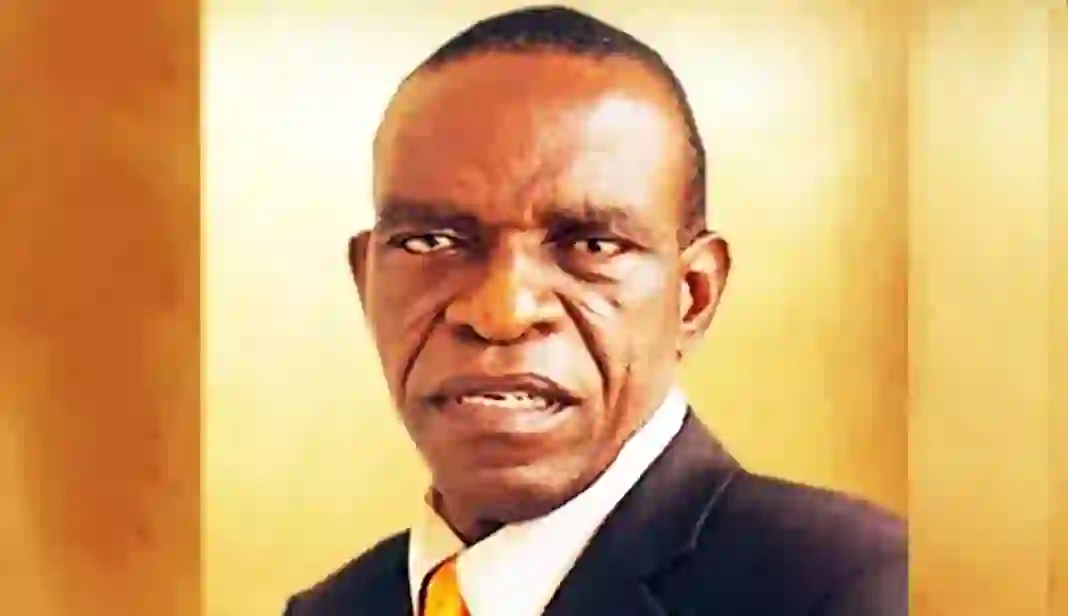

By Ike Abonyi

Over the weekend, as public discussion focused on who was joining or abandoning the Nigeria Democratic Congress (NDC), Presidential candidate Peter Obi and those close to him became susceptible to the compelling offers of the ruling party and certain opposition parties. Amid this atmosphere, something particularly significant occurred: Obi’s longtime political opponent and current running mate, Dr Rabiu Musa Kwankwaso, articulated the strongest case for Peter Obi. He stated, “One thing I noted in the last few months that we have been working together is that Peter Obi is incorruptible. He’s not somebody that you can go and start thinking of corruption around him, and that is very key in governance in this country.”
When Rabiu Kwankwaso made these comments at the 5th convocation of Skyline University Nigeria in Kano, saying that Peter Obi is “not somebody that you can go and start thinking of corruption around him,” he was not offering routine campaign praise.
He was presenting the central case for the Obi-Kwankwaso ticket, and he did so in the most compelling manner possible: as someone who had observed the candidate firsthand, not merely as a supporter.
It Comes From a Rival Who Became His Running Mate.
This is what gives the statement its significance. Kwankwaso is not an insignificant politician seeking attention or relevance. He is a former two-term governor of Kano, a former minister of defence, a former senator, and a man who ran for president himself in 2023. He governed a state larger than many African countries and occupied rooms where corruption in Nigeria takes shape—where contracts are inflated, budgets are padded, and governors are presented with inducements. When someone with that experience works closely with Obi for months and concludes that “this man cannot be compromised,” the statement carries a significance that a supporter’s chant at a rally does not. It is the testimony of an insider. Kwankwaso observed Obi at close range—in strategy sessions, negotiations, financial matters, and dealings with donors and stakeholders. Corruption in Nigerian politics is seldom defined by public speeches. It is revealed through private compromises. Kwankwaso’s point is that, in private, Obi does not yield.
Integrity as a Governing Philosophy, Not a Slogan.
Kwankwaso also made a point that many overlooked: “personal integrity is essential for governing Nigeria.” That is the central diagnosis of Nigeria’s crisis. Nigeria is not poor because it lacks resources, ideas, or capable people. It remains poor because public office at every level has become a license for theft. A corrupt president cannot effectively combat corruption, because the ministers, governors, contractors, and security chiefs serving under him will simply follow his example. Kwankwaso’s point is that Obi’s frugality should not be mistaken for miserliness; it represents a governing philosophy. The same man who, as Governor of Anambra, preserved public funds rather than plundering them, travelled economy, and scrutinised every kobo would be the president who asks: Why does this road contract cost N50 billion when it ought to cost N15 billion? Why is this ministry spending so much on “logistics”? In a country where the presidency has become the principal facilitator of corruption, an incorruptible president is not a moral indulgence. It is an economic necessity.
The Kano Setting Matters.
Kwankwaso made this statement not in Lagos or Onitsha, where Obi already enjoys strong support, but in Kano — at the centre of the North and within Kwankwaso’s own political base. The choice was both strategic and symbolic. For years, the prevailing narrative has been that Obi is a Southern, Christian, Igbo candidate incapable of making inroads into the North. By appearing alongside Obi in Kano at a university convocation — an occasion centred on education, young people, and the future — and affirming his character, Kwankwaso is lending Obi the benefit of his own political credibility. He is telling the North: “I have examined this man on your behalf. You can entrust Nigeria’s money to him.” In northern politics, where personal trust and testimony carry greater weight than billboards, such an endorsement reaches farther than any manifesto.
Why Others Echoing It Matters.
The fact that Prof. The fact that Pat Utomi and representatives of local movements are expressing the same view is not accidental. It reveals a broader pattern. People from different regions, ideological traditions, and generations are reaching the same judgment about one man: they may disagree with Obi’s politics or challenge his policies, but they cannot credibly claim that he has stolen. In Nigerian politics, that is exceptionally unusual. Nearly every prominent politician carries some combination of EFCC cases, unexplained wealth, or alleged “settlements.” Obi’s record—eight years as governor without a corruption conviction, a scandal involving diverted funds, or a mansion financed with state resources—stands apart precisely because such a record is so uncommon. Kwankwaso is merely giving a name to what has become Obi’s greatest political advantage: integrity within a corrupt system.
The Contrast With The Present Suffering.
That is why the comment resonates so powerfully in 2026. Nigerians are experiencing the consequences of leadership that has treated public funds as personal property: increasing poverty, insecurity, impunity, and a country that seems to be on an operating table. When Kwankwaso calls Obi incorruptible, Nigerians hear a stark contrast with their present reality: a leader who would not use the presidency to enrich himself, his family, or his cronies. The Obi-Kwankwaso tour — spanning Zaria and Kano, the commissioning of campaign offices, and an emphasis on education, healthcare, and economic relief — is thus more than an electoral campaign. It advances a different moral vision: that Nigeria can be governed by leaders who do not regard the public treasury as their personal spoils.
Conclusion:
Character as Policy. Ultimately, Kwankwaso’s statement presents Nigerians with a challenge as the country approaches 2027. Nigerian elections are frequently shaped by tribe, religion, money, and godfatherism. Kwankwaso is seeking to shift the contest onto another terrain: character. If corruption is Nigeria’s greatest problem — and it is, because corruption destroys hospitals, schools, roads, security, and jobs — then incorruptibility must be the foremost qualification for the presidency. By that standard, according to his own running mate, who has served alongside him, Peter Obi meets the test.
Abonyi is Editor@Large
Discover more from The Source
Subscribe to get the latest posts sent to your email.


, Presidential)