




By Gideon Njoku

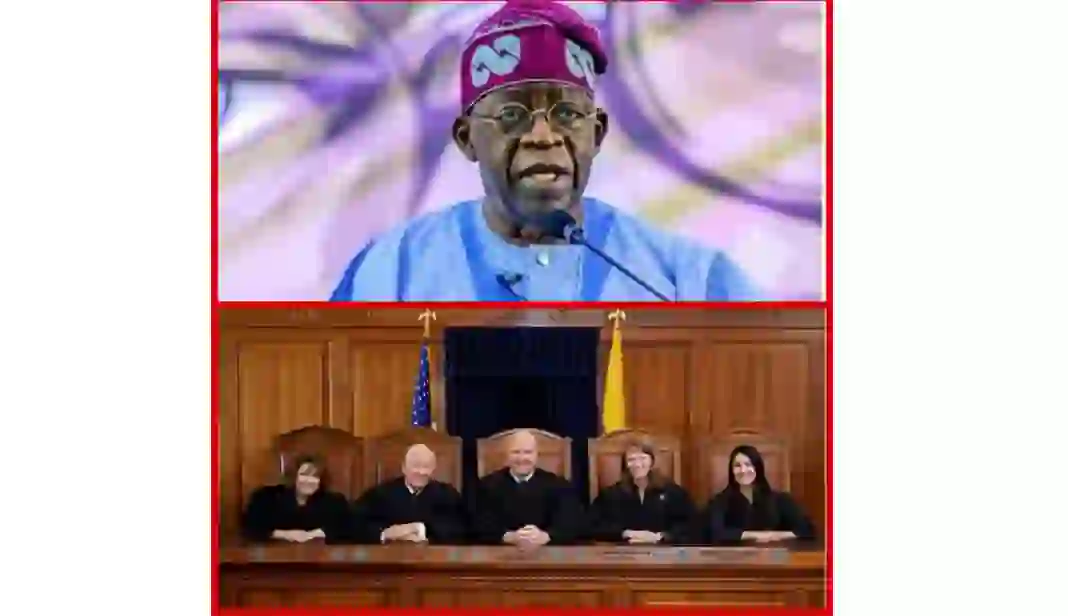
Nigeria’s President Bola Tinubu is fighting hard to block United States of America’s Agencies to release any records which connect him to alleged filed a challenge in a US court to drug trafficking.
The Agencies he is fighting hard to stop from releasing the records are the U.S. Department of Justice, FBI and the DEA.
His action was triggered by American transparency Activist, Aaron Greenspan, who filed a Freedom of Information Act (FOIA) lawsuit against these US government agencies in a bid to get the documents relating to investigations involving Tinubu.
His requests include the release of FBI’s entire file on Tinubu and FBI Form 302 interview records which concerns the months between 1992 and 1993.
It, also, includes alleged record connected to a 1993 civil forfeiture proceeding in the United States involving about $460,000 linked to Tinubu.
President Tinubu, since 1999 when the case became public, has consistently, strongly, denied any wrong doing. He vehemently denies involvement in any drug trafficking.
But according to a 16-page court document his lawyer and legal team, Christopher W. Carmichael, Victor P. Henderson, and Oluwole O. Afolabi, shared with Channels Television on Saturday, President Tinubu argued that the release of the records would amount to an infringement on his privacy.
“Submitted in that proceeding, did not reveal the details of a possible criminal investigation (or its results) involving Intervenor. Other than by speculation or labels, Plaintiff does not point to an existing public record that contains details of a governmental criminal investigation or findings about Intervenor. (DE 85-3, No. 16.)
“The purpose of Plaintiff’s motion is to obtain such information because it is not public. Moreover, Plaintiff’s argument that the limited disclosures in connection with the forfeiture negates all privacy interests is not consistent with precedent. The Supreme Court explained that an individual retains a privacy interest in an entire file or document being produced, even where there are “scattered” disclosures of information from that same file. See Reporters Committee, 489 U.S. at 764-67 (“our cases have recognized the privacy interests inherent in the non-disclosure of certain information even where the information may have been public at one time.”).
“While some information may appear in portions of public records, an individual still retains a privacy interest in the details that remain undisclosed. Applying Reporter’s Committee, this Court explained that an individual retains a privacy interest even if they were previously publicly associated with criminal activity. Judicial Watch, Inc. v. United States Dept. of Justice, 898 F.Supp.2d 93, 104-05 (D.D.C. 2012).
“Other decisions have likewise described the fact someone was under investigation as “distinct” from the contents of the investigative files. See Electronic Privacy Info. Center v. United States Dept. of Justice, 18 F.4d 712, 719 (D.C. Cir. 2021) (“Although the names of – 6 – Case 1:23-cv-01816-BAH Document 98 Filed 08/28/26 Page 7 of 16 Trump campaign officials appear in public portions of the Report, they retain a privacy interest in ‘avoiding disclosure of the details of the investigation.’”)
“Regardless of the prior disclosure in the forfeiture proceeding, Intervenor retains a privacy interest in potential disclosure of the investigative files sought by Plaintiff.”
“Plaintiff’s motion critiques the FBI’s search efforts, the DEA’s Vaughn Index, segregability, document specific withholdings, and the applicability of exemptions to deceased individuals and confidential sources. All of Plaintiff’s other critiques should be viewed in the context of Plaintiff’s overarching goal.
“Plaintiff’s filings, overwhelmingly, demonstrate that his singular focus is obtaining documents with Intervenor’s “name on them.” (See supra pgs. 1-3, 10, and 11.) Any other issues should – 14 – Case 1:23-cv-01816-BAH Document 98 Filed 08/28/26 Page 15 of 16 not allow Plaintiff to access documents that should otherwise be withheld or redacted under Exemption 7(C) or the Privacy Act.
“If this Court finds that Plaintiff cannot use FOIA to mine information in government files about a private individual, he should not be able to access documents with Intervenor’s “name on them.”
“Conclusion For all the foregoing reasons, Intervenor requests that the Court deny Plaintiff’s motion for summary judgment and allow the redactions or withholdings made by the FBI and DEA to stand”, argued Tinubu’s legal team.
Discover more from The Source
Subscribe to get the latest posts sent to your email.