



By Ayodele Oni

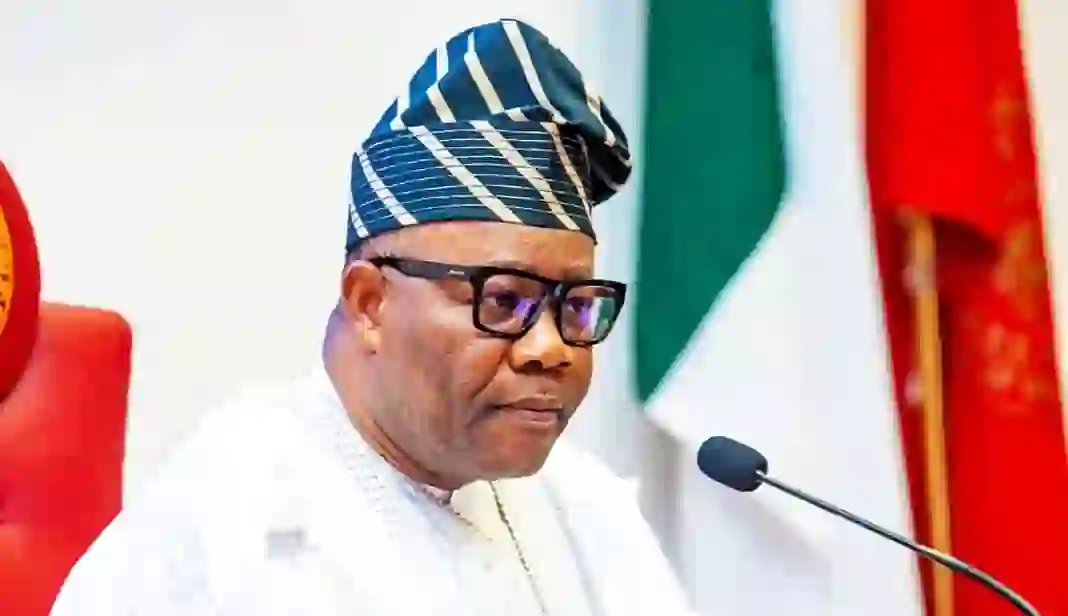
Senate President, Godswill Akpabio, has insisted that Nigeria has little choice but to take loans to fund critical infrastructure amid dwindling resources.
Akpabio’s position came on the heels of President Tinubu’s fresh request to the Senate seeking approval for a $516.3 million external loan, aimed at financing parts of the ambitious Sokoto–Badagry Superhighway project.
The request, read during plenary by the Senate President, adds to the administration’s growing borrowing profile, which has now exceeded $30 billion since Tinubu assumed office in 2023, alongside over N1 trillion in domestic loan proposals.
The proposed superhighway, stretching about 1,000 kilometres, is designed to link key economic corridors from the North-West to the South-West, boosting trade and easing transportation across several states.
According to the Federal Government, the loan facility is to be arranged through Deutsche Bank, with backing from the Islamic Corporation for the Insurance of Investment and Export Credit to provide risk cover.
The Emir of Kano, Muhammadu Sanusi II, had raised concerns over the Tinubu-led federal government’s continued reliance on borrowing, despite the removal of petrol subsidy.
The former governor of the Central Bank of Nigeria (CBN) warned that weak fiscal discipline could undermine the gains expected from recent economic reforms.
However, defending the move, Akpabio told lawmakers that borrowing for infrastructure is a necessary path for a country grappling with revenue challenges.
“In these difficult times when we don’t have money, it is better to borrow for projects and infrastructure so that at the end of the day, we can pay through the infrastructure,” he declared.
The Federal Government maintains that the highway project is a key pillar of Tinubu’s Renewed Hope Agenda, expected to stimulate economic growth, reduce transport costs and open up new commercial opportunities.
However, the development has reignited concerns among economic experts and citizens over Nigeria’s mounting debt burden and sustainability.
Critics argue that the persistent resort to borrowing highlights deeper economic weaknesses, including poor revenue generation, rising inflation, and worsening living conditions.
Many Nigerians, already burdened by high cost of living and unemployment, question the tangible impact of past loans, warning that continued borrowing without accountability could mortgage the nation’s future.
As debate intensifies, stakeholders insist that transparency, prudent spending, and measurable economic returns must guide any further borrowing to prevent Nigeria from slipping deeper into a fiscal crisis.
Discover more from The Source
Subscribe to get the latest posts sent to your email.