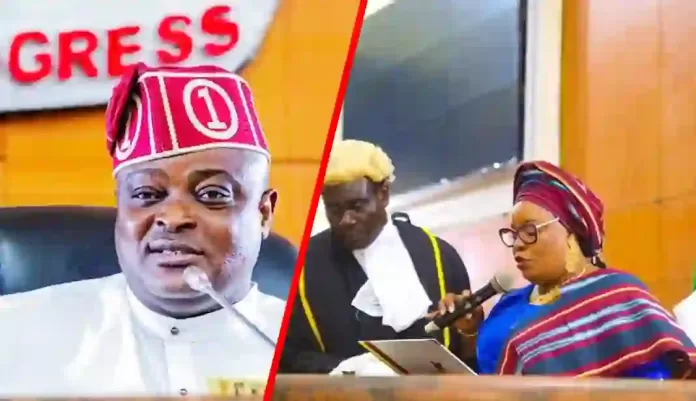
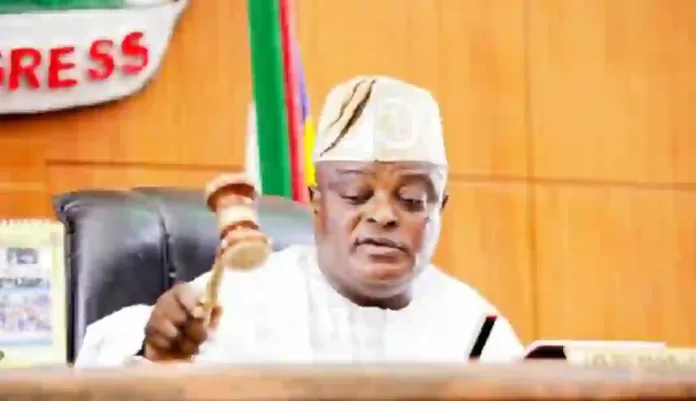
While a number of Nigerians, including former Vice President, Atiku Abubakar and a chieftain of the All Progressives Congress, APC, Joe Igbokwe, have expressed outrage at the brazen audacity displayed by the impeached Speaker, Lagos House of Assembly, Mudashiru Obasa, on Thursday when he stormed the Assembly complex and declared himself “still the Speaker”, Obasa has let it be known that Speaker Mojisola Meranda, willingly resigned last weekend.
Obasa spoke on Thursday in interview with Reporters while defending his action.
He was on January 16, 2025, impeached by his colleagues, overwhelmingly for high-handedness, arrogance and alleged corruption.
On return from his trip overseas, he rejected the impeachment and proceeded to Court. But while the Court case was still active and solutions being scrambled together by Party Leaders, Obasa, in an obvious connivance with Security Agencies, forced himself into the Assembly Chambers and held plenary with four Lawmakers, only. The other 36 members rejected him and stood by Meranda who they elected as his successor.
Explaining the situation, Obasa disclosed Meranda’s alleged voluntary resignation.
He said Speaker Meranda resigned during a peace meeting held at Lagos House Marina.
His words: “There was a meeting that took place in Marina where we had in attendance all the party leaders and all the members of Lagos Assembly and openly, Meranda herself made a statement that she has stepped down and she has resigned.
“So, when you resign from an office, you know, the paraphernalia of office will be taken away, now.
“I’ve never been removed. Impeachment or removal is democratic and constitutional but in doing that, you must follow the due process. I am not against that. If I do that, then I am not democratic.”
Meranda has not said a word since Obasa’s action.
Earlier on Thursday, while Obasa’s security details were restored, her’s were withdrawn. They were later restored later same Thursday after a lot of eyebrows were raised. Lagos State Commissioner of Police said they were withdrawn for an audit. There was no ulterior motive, CP Moshood Jimoh explained.
Former President Muhammadu Buhari has relocated from his Daura, Katsina home to Kaduna, a neighbouring state that have been described my many political buffs as the political capital of Nigeria’s North.
Buhari, who departed Katsina on Thursday according to one of his formeraide Bashir Ahmad, was accompanied on the journey by some political leaders from the northern part of the country, including Vice President Kassim Shettima, Governors Babagana Zulum, Uba Sani of Borno and Kaduna states amongts others, thereby raising posers among political analysts on whether the relocation is significant for the 2027 race, which appeared to have started in earnest, considering the recent re-alignments of political forces in the country.
Announcing Buhari’s relocation on Thursday, Ahmad said the former Nigerian leader received a warmth welcome on his arrival in Kaduna by the people of the state.
“Today, former President Muhammadu Buhari has returned to his Kaduna residence after spending two years in Daura, Katsina State, since leaving office in May 2023. After completing his tenure, he opted for a quiet life in his hometown and largely stayed out of active political discussions, focusing on private engagements.”
Ahmad added, “President Buhari was accompanied by Vice President @KashimSM Shettima and high-profile dignitaries, including the Governor of Borno, @ProfZulum, and his counterpart, the Governor of Kaduna, @UbaSaniUS, current and former Deputy Governors of Katsina State, a former Inspector General of Police, former ministers, and several of his personal aides.”
The development is coming amidst the ongoing re-alignment of political forces in the country, particularly from the northern part of the country, against President Bola Ahmed Tinubu’s return to office in 2027.
Some key northern political leaders are believed to be united against Tinubu’s, and have been speaking openly against his government in a manner that suggest that he no longer have their support unlike during the 2023 Presidential election when he received massive support from the region.
The immediate past Governor of Kaduna state has openly declared that Tinubu will not be re-elected.
Even though Buhari has not openly criticised the incumbent, sources insist that he may not be entirely happy that Tinubu is the commander-in- chief. The former leader, the magazine recalls did not support Tinubu’s ascension to power. His candidate for the Presidency was former Senate President Ahmad Lawan.
After leaving office on May 29, 2023 Buhari had moved into a quiet life in Kaduna where he has been living for close to two year, in spite of his decision to stay out of politics after he left power, his home has become a Mecca of sort as political leaders across the country- from the ruling All progressives Congress, APC Peoples Democratic Party, PDP- have continued to pay him homage.
Analyst insist that the development may not be unconnected with the respect the former president still commands across the country, including suggestions in the political arena in the country that his opinion is being sought by those aspiring to political offices, particularly in the next political dispensation in 2027.
Prominent individuals who have visited the former president lately included Nigeria’s First Lady Oluremi Tinubu, former Vice President Atiku Abubakar, former Senate President Ahmad Lawal Senator Ibikunle Amosun, former Governor Nasir El Rufai, amongst others.
“From the look of things, the 2027 elections is gradually gathering momentum, from the looks of things and with the manner some politicians have been carrying themselves. Therefore, it’s safe to say the former president is also preparing for the next election. don’t’ forget that he’s still well respected among the political leaders in the country who would like to hear what he will say concerning the next election, particularly the presidential election,” an analyst said on Friday.
According to the source who said his name should not be mentioned because “all of these still remains in the realm of speculations,” Buhari, reading from what has been happening recently concerning the Presidency “ will have a say” on who becomes the next Commander-in-chief.”
He may be right. This is because some of those who had visited him recently are either members of the ruling APC, who appear not happy with the governing style of President Tinubu, and PDP leaders trying to solicit the support of the former leader to snatch power in the next presidential election.
In June 2024, former Vice President Abubakar, who is among the 2027 presidential hopefuls visited Buhari in Daura, a move that ruffled feathers in the ruling party, even though the host and his visitor did not say whether the meeting was because of the next election.
Also in December 2024, the Ooni of Ife, Oba Adeyeye Ogunwusi led some traditional rulers to the home of the former president, the details of their discussion, however, still remains sketchy more than three months after.
In January 2023, few months to the end of his eight years maximum term President Buhari said he planned to “retire in peace” from the nation’s politics.
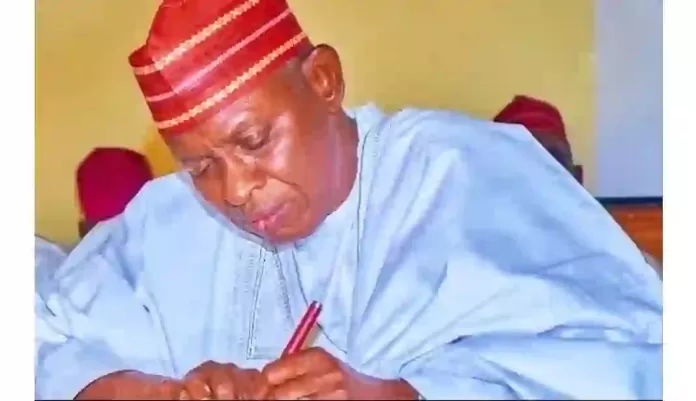
In compliance with his pledge to get to the root of illegal salary deductions which has raised tension among civil servants, as a first casualty of the act, Kano State Governor, Abba Kabir Yusuf, has suspended with immediate effect the acting Head of Service and Permanent Secretary, Establishment, Salisu Mustapha.
Report revealed that the official is being punished for alleged salary deductions and non-payment of some civil servants’ salaries.
This is even as the committee set up to investigate the matter has just commenced work.
According to findings, some have had their salaries slashed by as much as 30 to 40%, while some have not been paid at all since October last year.
The unexplained deductions and salary cuts, are believed to have seriously affected the workers, most of whom are finding it difficult to adequately prepare for the Ramadan fast .
A statement issued on Thursday by the governor’s spokesperson, Sunusi Dawakin-Tofa, which announced the suspension, further directed Mustapha to step aside as Permanent Secretary, Establishment, under the Office of the Head of Service, to allow for an unhindered investigation.
To ensure administrative continuity, the governor has approved the appointment of Umar Jalo, the Permanent Secretary, REPA, as the new acting Head of Service, pending the outcome of the ongoing probe.
Governor Yusuf reaffirmed his zero-tolerance stance on financial malpractice, warning that anyone found guilty will face severe consequences.
The Abdulkadir Abdussalam-led investigative committee, inaugurated on Thursday, has been given seven days to uncover the root of the irregularities and submit its findings.
Mustapha was appointed acting Head of Service earlier this month, following the medical leave granted to the substantive Head of Service, Abdullahi Musa, who is currently receiving treatment in India.
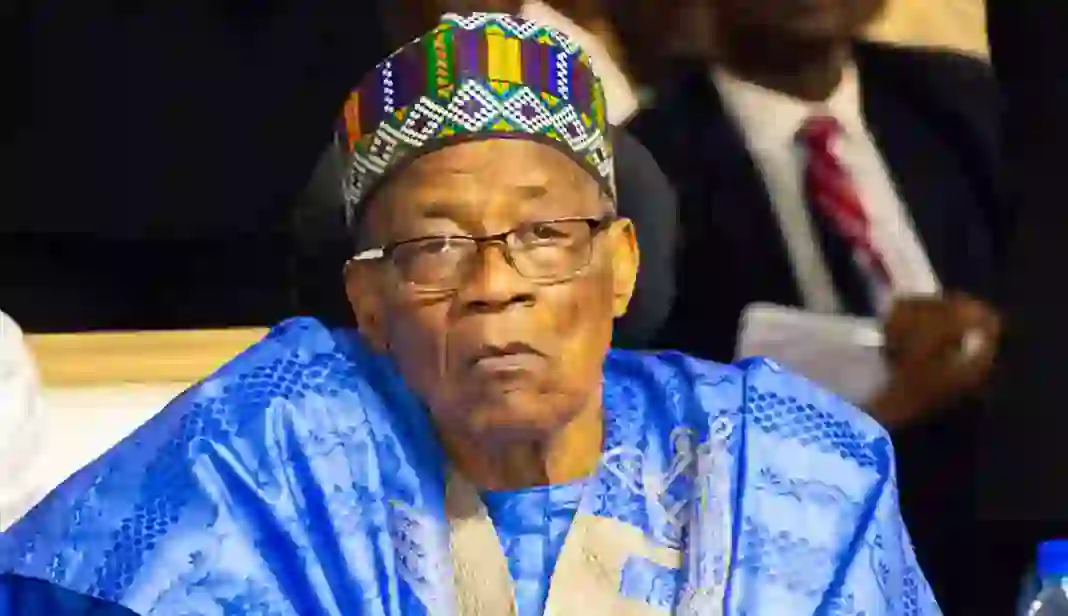
You cannot quarrel about how a man tells his story. It is his business. However, the pseudo-autobiography of the former military president, General Ibrahim Babangida, is more than the retired general telling a story of his own life. A Journey in Service is a long, tortuous journey to penitence, which arrives at its destination, if it does at all, leaving its memory behind.
After 32 years of deflecting, dissembling, dodging and denial, the former military president finally gets as close as possible to remorse, then stops short of saying sorry for his betrayal of his country by blaming several dead and a few feeble living.
And yet, Babangida, being Babangida, reserved the best part of his book for himself. He left the worst for those who might have challenged his account and others he believes should have forgotten by now. Babangida will not change, but that’s okay. He shouldn’t also make the mistake of thinking we have all forgotten.
Whitewash
The prologue says the book is “not about finding blame, inventing excuses or whitewashing known facts.” However, apart from chapters 1 and 2 on his early childhood, chapters 11 and 13 on his home front and retirement, and perhaps one or two other chapters in between, where he struggled to restrain himself, nine of the 12 chapters of the 440-page book are filled with blame, inventions, and whitewashing.
I start with his relationship with the press. In chapter 6, entitled, “Mounting the Saddle, Defining a Military President,” after throwing Major General Muhammadu Buhari and Brigadier Tunde Idiagbon under the bus for miscarrying their “initial rescue mission,” he praised his government for abolishing Decree 4, passed by Buhari, and granting state pardon to two journalists, Nduka Irabor and Tunde Thompson of The Guardian, who had been sentenced under the decree.
Babangida said his heroic act of press redemption warmed his relationship with the media.
The other side of the story
That’s one side of the story, done, like many things Babangida did, with a hidden agenda. Here’s what a report by the media watchdog Media Rights Agenda (MRA)said: “The regime of General Ibrahim Babangida (August 27, 1985 to August 26, 1993) has the dubious distinction of having closed down or proscribed more newspapers and magazines than any other government in Nigeria’s history.
“Forty-one newspapers and magazines were victims of this practice under the administration; some closed down or proscribed on two different occasions. Twenty-five newspapers and magazines were shut down or proscribed by the Babangida administration in 1993 alone following public agitation for a return to civil democratic rule…”
The clampdown
The clampdown didn’t start in 1993. It began in 1987, roughly two years after Babangida came to power. The first target of this press saviour in shining armour was Newswatch magazine, which was banned for six months for publishing a report deemed injurious to the government’s political bureau. This was barely one year after one of the founders of Newswatch, Dele Giwa, was killed in a parcel bomb.
Press freedom went downhill from then on, with the government shutting down PUNCH, Concord, Guardian, and Sketch, among others. Another matter is how the military president, even out of office, manipulated the election of newspaper publishers.
MRA reported that three newspapers owned by John West publications were shut down for publishing the Jennifer Madike stories that “embarrassed the president’s wife.” And when William Keeling, a British journalist with the Financial Times, dared to publish a story alleging that about $5 billion windfall from Gulf War 1 was diverted, Babangida’s government wasted no time bundling him out of the country.
Seduced by power
Those too young or indebted to Babangida to see clearly may believe what they choose. But it would be defamatory ofreptiles to call the man a chameleon. When General Yakubu Gowon said in the Foreword that being a soldier and a politician was a virtue in Babangida, the old man was being economical with the truth. As Marshal Davout, one of Napoleon’s most outstanding soldiers, said, the best soldiers abhor politics. They take a professional stand. Many who are seduced lose their way.
A Journey in Service reminds us of how Babangida sucked in the crème de la crème of the academia to boost the legitimacy of his regime. Regrettably, this handshake across the Ivory Tower, which later extended to the judiciary, labour and sections of civil society, became a deadly stranglehold. Babangida’s book doesn’t contain a hint of the poisonous liaison.
We read nothing, for example, about how Babangida inflicted further damage on academia. Under Gowon, the field was already dented by awful interference as military administrators began appointing university visitors.
Our Gorbachev?
But it got even worse. In 1988, Babangida, who framed himself as Nigeria’s answer to Mikhail Gorbachev, ordered the deportation of Patrick Wilmot, a sociology teacher at the Ahmadu Bello University, for teaching “what he was not paid to teach.”
Yet, if you think Babangida’s attempt to rewrite history was limited only to the press and academia, then you underestimate the disservice of the book. Chapter 12, “Transition to Civil Rule and the June 12 Saga,” is at the heart of the book: it reveals Babangida for who he is– duplicity, the milder version of which is an evil genius. However, anyone remembering this trying period in Nigeria will pinch himself at Babangida’s convenient attempt to take responsibility by shifting the blame.
In this chapter, he blamed the Association for Better Nigeria (ABN) for goingto court on the eve of the election. Then, he blamed Justice Bassey Ikpeme, an agent of his own Attorney General and Minister of Justice, Clement Akpamgbo, for granting the order to stop the election.
Then, heblamed the National Electoral Commission (NEC) chairman,ProfessorHumphrey Nwosu, for stopping the announcement of the election result. He blamed Nduka Irabor for announcing the annulmentof the election from a rough sheet of paper, claiming it was without the knowledge of Admiral Augustus Aikhomu, his second-in-command.
Abacha as scapegoat
Finally, he blamed General Sani Abacha for leading the fifth columnists in his government to sabotage the process. This comprehensive blame account indicts everyone around the boss. Still, it leaves the boss a generous latitude to accept responsibility for the glaring and monumental lapses without apologising to the country he had betrayed.
“These nefarious ‘inside’ forces opposed to the elections have outflanked me”, Babangida said he remembers saying on Page 275. He didn’t say to whom he was speaking. A whitewash by the whitewasher-in-chief never looked whiter.
What did he do to “outflank” the “nefarious forces?” By his own account, he convened the Armed Forces Ruling Council (AFRC) after he claimed announcements stopping the elections were being made without his authority.
He admitted knowing when Nwosu stopped announcing the result without his approval and when Irabor made the so-called unauthorised announcement. Even before that, his minister Akpamgbo, at whose behest he insinuated that Justice Ikpeme may have acted, attended the AFRC meeting with him. Yet, the commander-in-chief present amidst the chaos lacked the courage to call the shots.
Ibrahim Babangida – IBB
He did something, though. He yielded to the law of self-preservation, the love of self, and then, only later, like a scoundrel, claimed he was stepping aside for the love of country. He left behind the Interim National Government, a contraption he knew wouldn’t last.
More questions than answers
Writing off the book as a triumph of cowardice and dissembling would be harsh. There are a few strands of consistency. For example, Babangida admitted that Dele Giwa was his friend but didn’t say and has never said what became of the multiple investigations into how Giwa was killed by a parcel bomb decades after the tragic event. Yet, Giwa was his friend.
Babangida said 159persons, mainly middle-level military officers, were killed in the C-130 NAF aircraft crash in Ejigbo, Ikeja, because of poor aircraft maintenance, but failed to say whose responsibility it was to maintain the aircraft or what happened to the negligent officers in charge.
His Mamman Vatsa coup story was also conveniently consistent. Vasta had always envied him from secondary school, even though they sometimes shared bed spaces and clothes. He wasn’t surprised Vatsa would bribe soldiers—one of them with N50k—to put his head on a plate despite the consequences of such a treasonable act.
Plea for Vatsa
Why didn’t he commute the death sentences on Vatsa and others despite the cloud of suspicion around their sentencing and his promise of a review after strong appeals by many, includingNigeria’s leading literary lights, Wole Soyinka, Chinua Achebe and JP Clark? Again, he was conveniently consistent. It’s an elementary fact, he says, that plotters don’t live to tell the story, except if, like him, they succeed.
But Babangidaconveniently forgot at least two notable exceptions of commutation: Kukoi Samba Sanyang’s failed coup against Gambia’s President Dawda Jawara in 1981 and Olusegun Obasanjo/Shehu Musa Yar’Adua failed coup against Abacha in 1995.
Perhaps the book’s most surprising accounts included his admission that his friend MKO Abiola won the June 12, 1993, election hands down and his rare praise of Buhari for cleaning up his mess by acknowledging Abiola as “a former head of state” 25 years later.This is surprising because when I interviewed him nine years ago, he said the presidential election result was “inconclusive. ”He knew he was lying at the time.
The five-letter word
It would be remarkable if Babangida took responsibility for his mistakes and apologised. He is right that life can only be understood backwards. However, to complete the quote by the Danish philosopher and existentialist Soren Kierkegaard, whom he did not name but quoted in part, honesty in living forward is essential for understanding life backwards.
Instead of the five-letter word – sorry – Babangida tried vainly to use 111,281 words to exorcise the demon within. He failed. In his book On Writing, Stephen King, one of my favourite authors, said honesty is necessaryfor good writing. Babangida’s pseudo-memoir fails that test.
A heartfelt thank you…
My profound thank you to President Bola Ahmed Tinubu, a man of all seasons, and all who sent messages and prayers on my 60th birthday. I’m overwhelmed. May your kind wishes and prayers return to bless you and yours.
Ishiekwene is the Editor-in-Chief of LEADERSHIP and author of the book Writing for Media and Monetising It.
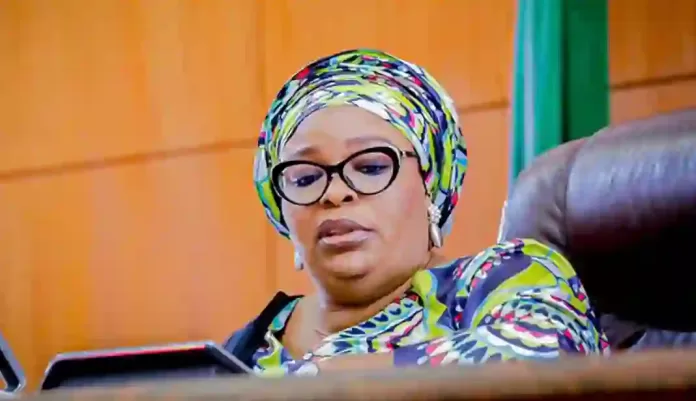
The embarrassment suffered by the Speaker of the Lagos State Assembly, the Rt. Hon. Mojisola Meranda, Thursday morning, has been addressed and rectified.
Addressing the Press at the Lagos State Police Command Headquarters Thursday afternoon, the Commissioner of Police, Moshood Jimoh, confirmed the restoration of her Details.
Early Thursday morning, all the Security Details attached to her were withdrawn, which left her, according to an aide of hers, vulnerable.
Conversely, as if in preparation for the takeover of the Speaker’s seat same Thursday, (which he eventually did), the Security Details of the impeached Speaker, Mudashiru Obasa, who were withdrawn weeks earlier, were restored.
With the help of his restored Details, Obasa stormed the Assembly complex, declared he remains the Speaker, and had come back to his office. But 36 members of the Assembly, in a swift reaction, rejected him, and pledged their loyalty to, and support for, Meranda. Obasa was forced to hold plenary with only four members out of the 40-member Assembly.
Clarifying the reason Meranda’s Security Details were initially withdrawn when, in the eyes of the Law, he is still the Speaker, CP Jimoh said they were withdrawn for audit purposes, and insisted it was not because of any ulterior motive.
Meanwhile, the situation in the House of Assembly remains fluid. Speaker Meranda has said nothing so far, but 36 Lawmakers say they are solidly behind her. She was not at the Assembly Complex when Obasa stormed it.
Amidst strident opposition from locals against the resumption of oil exploration activities in Ogoni, the Rivers State Governor, Siminalayi Fubara, on Thursday February 27, 2025, approved the donation of the Kira, Tai Local Government Campus of the Rivers State University for the take-off of the Federal University of Environment and Technology, Ogoni
President Bola Tinubu had recently approved the sighting of the University in Ogoniland as an appeasement measure to the aggrieved locals over past years of environmental degradation and general neglect by both the Federal Government and oil exploration companies.
But the gesture appears not to be resonating with the people as opposition continues to mount against Federal Government’s planned resumption of oil exploration activities in the area .
The Federal Government had, about two months ago, signaled its intentions to resume oil extraction in Ogoni to shore up the Country’s daily output.
But the people insist on the resolution of some past issues before they would allow the come-back bid .
Only on Wednesday February, 26, a coalition of Ogoni Women warned against any attempt by the oil companies to resume operations in Ogoniland without the resolution of the issue of how to clean up past oil spills .
The women, in a statement, vowed to hit the streets of Rivers towns and cities, naked, should their demands be ignored.
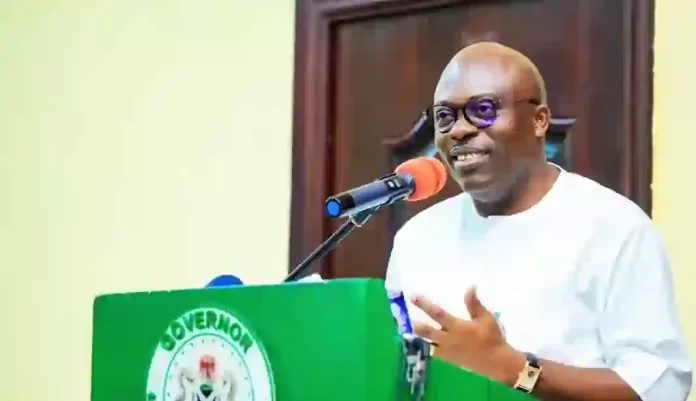
On an inspection tour of the Kira Campus of the State University, Governor Fubara, expressed satisfaction that existing infrastructural facilities and the available land will be adequate for the commencement of the Federal University.
Governor Fubara, according to a statement issued by Nelson Chukwudi, his media aide, informed that the decision to give out the Campus for the Federal Institution was sequel to a request in that regard by the National Security Adviser Malam Nuhu Ribadu .
“This is one of the campuses of the Rivers State University, and we received a request from the National Security Adviser NSA, appealing to the State Government to release this facility for the take-off of the newly approved Federal University of Environment and Technology”, the Governor stated .
Before the tour ,Governor Fubara noted that the State Government had, officially, written to the State University management requesting to know the conditions of existing structures on the Campus.
The Governor emphasized that the facility being the property of the State Government, will be released to the Federal Government through the Rivers State University.
“We want to assure all stakeholders, especially President Bola Ahmed Tinubu, who approved this University, and the National Security Adviser, who facilitated the process, that we have released it .
After this visit, we will officially transmit a letter of release for the take off of the University”, the Governor assured .
While appreciating all those who, in one way or the other, facilitated the project, Governor Fubara also expressed the optimism that the presence of the Federal Institution will spur and fast-track development in the host communities and Rivers state in general.
Particularly, he is of the strong view that the University will play a pivotal role in addressing issues relating to environmental degradation and other related problems.
Lawmakers pledge loyalty to Meranda say they are tired of Obasa’s high handedness and autocratic disposition
Members of the Lagos State House of Assembly, have decried the return of Mudashiru Obasa as Speaker. Obasa was impeached on January 13, 2025, by over 2/3 of the Constitutional-required Members who then went ahead and elected his Deputy, Mojisola Meranda as Speaker.
Surprisingly, however, Obasa stormed the Assembly Premises Thursday, February 27, with hoards of security operatives, and took over the Speaker’s office after the door was forced open.
The House had, in the past two weeks, adjourned Plenary indefinitely over the crisis which engulfed it since Obasa’s impeachment.
On return on Thursday without a Court order or an official notification from the Assembly, Obasa declared that he was back and remained the Speaker. Shortly after, his loyalists, in buses, swarmed the Assembly premises like bees in celebration of his return.
However, majority of the members have rejected his return, and described it as an insult thrown at them and their Consttuencies. They insisted on his ouster, and pledged support and loyalty to Speaker Meranda.
The Chairman of the House Committee on Information, Security and Strategy, Steven Ogundipe, who spoke for 36 members of the Assembly insisted that Meranda remains the Speaker and that they remain committed to her leadership. Obasa’s impeachment, he said, stands. He called on the Leadership of the APC in the State to urgently wade into the crisis.
His words: “We were approached by our Leaders that we should remain calm and take things easy. But we are surprised to see what is happening here today.
“We won’t take laws into our hands, just as we told the staff not to take laws into their hands. But we all belong to different consequences, and we have our mandate. Whatever has to happen, the leadership should speak to us and not this charade that we are seeing.
“We are not happy. We have been law abiding. We have not gone out of our way against the State. We, also, want to be respected and given our dignity; to be shown that we are elected. I am appealing to the leadership of our Party that we cannot continue this way.”
Meanwhile, Obasa presided over Plenary on Thursday, with only four members of the Senate. He was accompanied into the Assembly Complex by the two members representing Mushin State Constituencies 1 and 2 – Ayinde Akinsanya and Noheem Adams respectively.
The remaining 36 Lawmakers were present at the Assembly Complex but refused to enter the Chamber for Plenary. Instead, they chose to stay at the Assembly’s garden.
A confident Obasa in response to their absence said he cannot force anybody to join in Plenary, but assured that he would not victimise any of them as they had been working as brothers. But it is a claim the members put a lie to and said they were tired of his high-handedness and autocratic disposition.
The stage was set for Obasa’s return when all his Security Details were restored while that of Meranda was withdrawn without her prior knowledge.
As both Ramadan and the Lenten period draw close, the National Agency for Food and Drug Administration and Control, NAFDAC, has warned Fruit Dealers and Nigerians alike against using chemicals to ripen fruit.
It also advised consumers to be cautious and vigilant against consuming such fruits.
This warning was made by Gonzuk Bedima, NAFDAC’s Coordinator in Adamawa, during an interview with the News Agency of Nigeria, NAN, in Yola on Thursday.
Bedima highlighted that the most commonly used chemical for ripening fruits, particularly, bananas and oranges, was calcium carbide, which is mainly used in welding.
He disclosed that this chemical can cause cancer in any part of the body, noting that NAFDAC had previously sensitised the leadership of fruit sellers and plans to continue this campaign, especially with the approach of fasting season, when many people purchase fruits for their homes.
He further urged consumers to be vigilant and avoid buying fruits ripened with chemicals due to the health risks.
He explained that fruits treated with calcium carbide often appeared very ripe on the outside but were not ripened inside.
“If you suspect such fruits, avoid buying them, as they are dangerous to your health,” he said. He encouraged the public to report such fruits to NAFDAC to prevent others from consuming them.
The Kano State Governor, Abba Yusuf, on Thursday February 27,2025, ordered a comprehensive inquest into the circumstances surrounding revelations that civil servants in the State have, for some months, gone without their full salaries.
This is just as he vowed to visit the full weight of the law on those found to be culpable in the condemnable act.
The Source reports that since October, 2024, there has been a deafening ,outcry from many workers over a massive deduction in their monthly salaries .
According to findings, some have had their salaries slashed by as much as 30 to 40%, while some have not been paid at all.
The situation, which is said to have entered the third month, has greatly created tension within the system, thereby threatening to disrupt industrial harmony.
The unexplained deductions and salary cuts, are believed to have seriously affected the workers, most of whom are finding it difficult to adequately prepare for the Ramadan fast .
This Magazine gathered that the unusual salary deductions, surfaced with the commencement of the payment of the N70,000 new minimum wage .
An obviously exasperated Governor Yusuf has set up a seven-member panel to get to the root of the matter which he described as an “unacceptable violation of workers rights as well as a betrayal of public trust.”
In a Statement issued by Sanusi Bature Dawakin Tofa, his Media Aide Governor Yusuf, warned that his adminstration will not condone any act of injustice against the state workforce
“This administration will not tolerate any acts of injustice against our workers. Anyone found complicit in this reprehensible act will face the full wrath of the law”, Governor Yusuf stated.
According to the statement, in a decisive move to stem the ugly development, a high-powered investigative committee has been inaugurated to uncover the root cause of the observed discrepancies in the salary payments.
The Seven-member committee which is headed by the Commissioner for Rural and Community Development, Hon Abdulkadir Abdulsaalam, is to, among other things, establish if the discrepancies were as a result of technical errors or deliberate act of human sabotage.
“The Committee has been directed to conduct a thorough audit of the State’s payroll from October 2024 to February 2025, identify affected workers, determine the financial impact and recommend corrective and punitive actions .
“The seven-member committee chaired by Hon Abdulkadir Abdulsaalam ,the Commissioner for Rural and Community Development ,and the immediate past state Accountant General ,is made up of top Government officials and financial experts with deep knowledge of payroll systems.
“The committee has been given just seven days to complete its findings and submit a comprehensive report outlining those responsible ,the extent of the financial malpractice ,and lasting solutions to ensure the problem never reoccurs”, Nature noted.
Consequently, Governor Yusuf assured the workers that his adminstration is unwaveringly committed to justice ,transparency,and the prompt payment of salaries warning that anyone found guilty of exploiting workers will face severe consequences.
“The era of shortchanging our workers is over. This is a Government of accountability, and no one will be spared if found guilty”, Governor Yusuf noted.
Disturbed by the indiscriminate increment in its subscription price within nine months, the Federal Competition and Consumer Protection Commission, FCCPC, has summoned MultiChoice Nigeria, the operator of DStv and GOtv, to provide justification for the increments.
According to MultiChoice, a proposed subscription price increase is set to take effect from March 1, 2025.
There is public outcry over the company’s recurrent price adjustments and concerns about potential anti-competitive practices in Nigeria’s pay-TV industry, and the insensitivity of the Company to the plight of Nigerians as the economic situation continues to worsen.
Ina statement FCCPC announced that it had invoked its authority under Sections 32 and 33 of the Federal Competition and Consumer Protection Act, FCCPA, to summon MultiChoice’s Nigeria’s Chief Executive Officer to an investigative hearing. The hearing is scheduled to take place on Thursday, February 27, 2025, at the Commission’s headquarters in Abuja.
The Commission expressed concerns that MultiChoice’s frequent price hikes and said it may constitute an abuse of market dominance and unfair pricing strategies.
“The FCCPC is deeply concerned that Nigerian consumers continue to face frequent price increases, amid accusations that MultiChoice applies different pricing strategies in other markets, heightening questions about fairness and market abuse,” the statement read.
Director of Corporate Affairs at the FCCPC, Ondaje Ijagwu, stressed that the Commission would not hesitate to take regulatory action if MultiChoice fails to provide a satisfactory explanation for the price adjustment.
The FCCPC also revealed that it is working alongside sector regulators and other relevant agencies to ensure fair competition and consumer protection in Nigeria’s pay-TV market. The Commission’s intervention reflects a broader effort to address long-standing concerns about affordability and transparency in subscription-based television services.
“Should MultiChoice fail to provide satisfactory explanations or be found in violation of fair market principles, the FCCPC will be left with no other option than to impose regulatory penalties, sanctions, or other corrective measures to protect Nigerian consumers,” Ijagwu stated.
MultiChoice Nigeria, which holds a significant share of the country’s pay-TV market, has faced repeated backlash from consumers over its pricing structure. Many subscribers argue that the company’s frequent price increases are not justified by improvements in service quality, while others accuse it of exploiting its market dominance to impose arbitrary charges.
It is believed that the upcoming investigative hearing could set a crucial precedent for regulating the pay-TV sector in Nigeria, potentially leading to more competitive pricing and improved service standards.
As the March 1 deadline for the price hike approaches, consumers across the country are keenly awaiting the outcome of the FCCPC’s intervention. Many hope that the regulatory scrutiny will lead to fairer pricing and greater accountability within the pay-TV industry.
“Should MultiChoice fail to provide satisfactory explanations or be found in violation of fair market principles, the FCCPC will be left with no other option than to impose regulatory penalties, sanctions, or other corrective measures to protect Nigerian consumers,” Ijagwu stated.