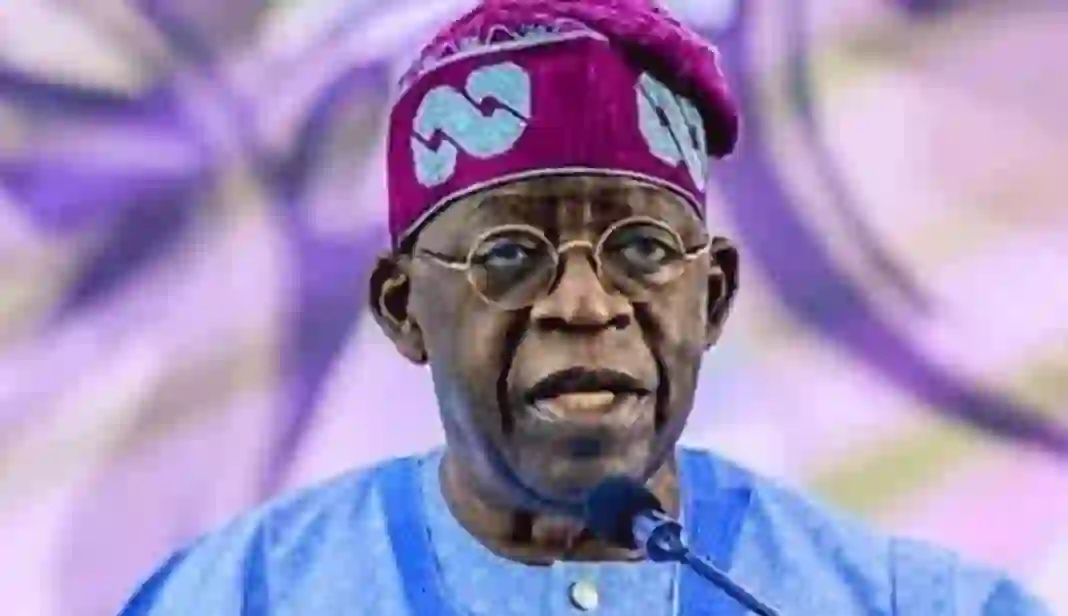
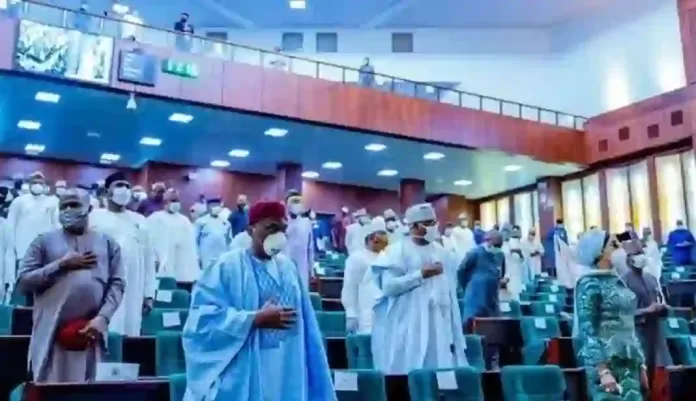
President Bola Tinubu on Wednesday, in Abuja, met with the visiting President of Germany, Frank- Walter Steinmeier assuring him that moves are being made to return Mali, Burkina Faso and Niger Republic back to the West African regional body, ECOWAS.
Tinubu pointed out that the interest and welfare of the citizens in the three countries remain priority for leaders of ECOWAS, assuring that wisdom and diplomacy will make the difference in reintegrating the countries into the commission.
Receiving the President of Germany, Frank–Walter Steinmeier, in a State Visit at the Presidential Villa, President Tinubu, who is the Chairman of ECOWAS, noted that the leadership of the three countries had been reluctant in bringing out transition programmes with clear dates.
“Our relationship of mutual respect will continue as we reappraise the situation in the three countries. What I can assure is that we will not give tolerance to unconstitutional government.
“We will continue to lead by example. We have innocent citizens who are victims of the military. We will continue to explore diplomatic channels to navigate without punishing the innocent people.
“We will continue to allow free movement and trade. Though the transition programme is not sure or certain, we will not punish the innocent citizens; they are not in possession of power.”
President Tinubu told the German leader that the regional body would leave the door open for the return of democracy in the countries.
“This is what ECOWAS will stand for. Whatever is happening in the countries, we are mindful of the wellbeing of the citizens. I don’t want to personalize issues as ECOWAS Chairman. We will leave the door for collaboration,’’ the President added.
In his response, the German President said the re-integration of the three countries will have significant impact on the economy and security of the West Coast.
“We will talk bilateral and regional issues. We just had a meeting with the President of ECOWAS Commission. We know how important it is to have regional cooperation. We are part of the European Union.
Though Seyi Tinubu, son of Nigeria’s President, Bola Ahmed Tinubu has neither formally confirmed nor denied his alleged Lagos gubernatorial ambition, this magazine can confirm that a Think Tank sort of has been commissioned by promoters of his governorship project and charged to come out with the best approach to actualise it.
Before Seyi’s ambition berthed on the media space, a number of Lagos APC chieftains including President Tinubu’s staunch loyalists had been linked with the same ambition. These include the incumbent Lagos state Deputy governor, Femi Hamzat, Chief of Staff to the president and immediate past Speaker of the House of Representatives, Femi Gbajabiamila, the President’s Private Secretary, Hakeem Muri- Okunola, Speaker of Lagos state House of Assembly, Mudashiru Obasa, among others.
With the exception of Obasa who made a veiled declaration of his ambition penultimate week during the presentation of Lagos budget for 2025 by Governor Babajide Samwo-Olu to state Assembly, other individuals mentioned above are yet to either give a hint about their alleged guber ambition or react to Seyi’s
Meanwhile, despite muted opposition from a section of the Lagos chapter of the ruling All Progressives Congress, APC and some critical members of the Lagos political establishment to the Seyi Tinubu’s governorship ambition, the project, impecable sources told the magazine, will in the coming months proceed with vigour as it will receive endorsements from critical stakeholders in the party in Lagos.
Ambode: Returning to office?
The Source Magazine was further informed that, “Seyi’s governorship project will ultimately result in his emergence as Governor Samwo-Olu’s successor in a such a manner that will leave opponents to his ambition as well as other aspirants to the Lagos number one political seat bemused and overwhelmed”
However, there are now a section of the Lagos political stakeholders who feel that Seyi’s governorship should not happen immediately after Sanwo-Olu on the grounds that it would be misinterpreted as the president using his official position to install his son in Lagos an then perpetuate the Tinubu political dynasty in the state.
Consequently speculations are rife that a search for a candidate stop-gap candidate, one that will do one term and leave the stage for Seyi in 2031, is afoot with former governor Akinwunmi Ambode featuring prominently in many discourses as fitting the bill.
The idea is to draft in Ambode, hand him the APC ticket and have him finish his eight year term which was cut short in 2019 following the godfather of Lagos politics and now President, Bola Tinubu’s insistence that he would not be re- elected.
“At least, in 2031, President Tinubu will be on his way out of power and the accusation of using his position to make a way for his son in Lagos will carry less weight”, one of the stakeholders told The Source.
Meanwhile, the Seyi governorship project think tank, the magazine learnt, is saddled with fashioning out less acrimonious ways to actualise the President’s son’s guber ambition has allegedly come up with a number of recommendations that will see him grab the APC Lagos gubernatorial ticket effortlessly and subsequently go ahead to win the election itself.
To get the APC ticket without rancor or upsetting his father’s political structure in Lagos, sources claim that the Think Tank will be recommending that other aspirants should be prevailed upon to stand down for Seyi in exchange for juicy federal political appointment.
And should they insist on pursuing their ambitions to a logical conclusion, the Think Tank, it was gathered, will be recommending a gubernatorial primary election, which on the surface, will present a semblance of an open, competitive and transparent exercise but behind the scene heavily skewed to produce Seyi.
Said an insider conversant with the unfolding intrigues: “It will be a case of carrot and stick. They will be cajoled, they will be informed the implication of proceeding with their ambition and insisting on an open primary election; those who opt to stand down for Seyi will be rewarded with juicy federal appointments, including ministerial positions, diplomatic postings and National Assembly membership. However, those who stubbornly pressed ahead will face political siberia.
“In any case, I don’t expect any contest against Seyi for the APC ticket; I believe that in deference to the President, others will announce their withdrawal from the race days before the primary”
And for the governorship election proper, given the outcome of the 2023 Presidential election in Lagos and the cosmopolitan nature of Lagos, Seyi is allegedly favourably disposed to a unique electioneering campaign and government where non- Yorubas will play critical roles.
To this end, the Think Tank is mulling a non- Yoruba running- mate for Seyi, preferably someone from the Southeast and a campaign DG of either a Middle Belt or South South extraction.
“You can’t wish away the peculiar nature of Lagos. The truth is that Lagosians of non- Yoruba extraction wield enormous electoral strength in Lagos and this reflected in the outcome of the last presidential election in the state.
“The grim reality is that if election is strictly held on the basis of one man one vote, any governorship candidate non- Yoruba voters support, particularly the Igbos with a significant voting strength, will win with a landslide.This is why Seyi, whose wife is from the Southeast state of Anambra, will be packaged as a pan- Nigerian candidate with his ticket and campaign line up reflecting so; our intention is to harvest all the non- Yoruba votes in Lagos” , the source stated.
Like a hurricane, rumours of Seyi’s gubernatorial ambition has been sweeping Lagos’ political space as a melange of groups and associations daily saturate the social and traditional media space with endorsements. Critics however, say the pro- Seyi groups are mere collection of mercantile, procured supporters who are only after their pockets.
The endorsement gale began with a press statement in Owerri, the Imo state capital by a hitherto unknown group, the Coalition of Nigerian Youth Leaders, CONYL, made up of youth leaders from the six geo-political zones. While endorsing the younger Tinubu as the next governor of Lagos, the leaders of the group including its President, Goodluck Ibem, the Secretary Comrade Junard Abubakar, Public Relations Officer, Comrade Iniobong Sampson and the Publicity Secretary Comrade Adeyemo Adewale argued that Seyi has the capacity and competence to replicate his father’s legacies in Lagos when he ruled state between 1999 and 2007.
“Nigerians youths came to this conclusion because Lagos State has been a home for all Nigerians and who becomes the governor of the state is pivotal given the role the state has played since the inception of the country.
“Seyi Tinubu is gifted, qualified, experienced, well-read and capable to lead Lagos State to the promised land come 2027”, CONYL said.
Further highlighting Seyi’s credentials, the group recalls that “when there was flooding in Borno State, Mr Seyi and his team were there to sympathize and show support to those Nigerians whose property, homes and means of livelihood were destroyed by the flood. He gave a lot of gift items, food, home utensils, drugs and money to the affected persons during that period when the sad even took place”
Other groups that has since followed in the footsteps of CONYL include the Lagos branch of the Middle Belt Youths. Addressing a press conference in Lagos Eko Hotel, Dr Stanley Augustine Kavwam, Deputy National Publicity Secretary of Middle Belt Forum and other leaders of the Forum not only endorsed Seyi Tinubu but urged him to take over as governor of Lagos State in 2027 to continue building on political structure and legacy and of his father.
Another youth group which claims to be an advocate of progressive leadership and youth development, The Nationwide Tinubu Connect Associate (NTCA), has also endorsed Seyi.
NTCA in a statement by its South West Zone Coordinator Mr. Olusegun Nelson emphasized that “Seyi Tinubu, a dynamic and dedicated individual, has made significant strides in youth empowerment and community development across Lagos State and the Southwest region of Nigeria.
“His contributions have spanned various sectors, including education, entrepreneurship, and social services, reflecting his deep commitment to fostering growth and opportunities for young people”
In the same vein, Friends of Seyi Tinubu (FOST), has equally endorsed Seyi as next governor of Lagos State come 2027.
A statement by FOST President, Comrade Adejorin Tai Manuel, stressed that “Lagos State deserves a leader who embodies innovation, altruism, and strategic foresight. Seyi Tinubu has consistently demonstrated these qualities, making him uniquely qualified to steer Lagos into an era of unprecedented advancement”
Meanwhile, the younger Tinubu’s guber ambition which is increasingly assuming octane dimension is not without opposition. No sooner did CONYL stage its Owerri outing than a coalition of Lagos Indigenous Youths stated its determination to scuttle Seyi’s dream and those of non- indigenous Lagosians to rule the state come 2027.
Joe Igbokwe: Seyi is a “boy”
Reacting to the endorsement of Seyi by CONYL which it described as a faceless group, the indigenous Lagos youths urged the President’s son to go to Osun, his state of origin or Imo state where CONYL issued its statement endorsing him to actualise his governorship dream.
“Our attention has been drawn to the recent endorsement of Seyi Tinubu for Lagos governor by a group known as Coalition of Nigerian Youth Leaders (CONYL) and the group is described as the the umbrella body of all the youth groups drawn across the six geopolitical zones in Nigeria.
“The said Coalition sat in Owerri, Imo State and publicly issued the statement on endorsement. While we know Mr Seyi Tinubu has his democratic rights as a Nigerian, we condemn the ill-fated endorsement and describe it as anti-democracy and a deliberate move by some faceless individuals to deny indigenes of Lagos State right to govern themselves in 2027.
“It is no longer news that since 1999 no true blood indigenes of Lagos State have taken over the mantle of leadership in the state (except one), the marginalization which underscores the essence of democracy and an outright denial of indigenes of Lagos State the right to govern themselves.
“We know as a fact that there will soon be vacancy in Osun State where Mr Seyi Tinubu can best exercise his democratic rights unhindered. And if the people of Owerri in Imo are also interested in benefiting from the experience Mr Seyi Tinubu has acquired in recent times, they can push him to succeed Governor Uzodinma.
“As for us there is no vacancy for non indigenes in Lagos State in 2027. The marginalization is too much and the marginalization has led to the underdevelopment in the state.
“It’s unbelievable that since 1999, our hinterlands are not developed, no good roads, Lagos State is in debts and our traditional system distorted by successive governments.
“We are also aware of the moves by some non-indigenes to penetrate our traditional rulers in getting endorsements and ratifications from them.
“We are hereby calling on the Oba of Lagos to beware of persons who will soon seek indigenship of Lagos State because of 2027…We will fight dirty if the Oba of Lagos allows such anti- Lagos Indigenes move,”, the group’s president, Abdul Kareem Whyte said in a press statement.
Surprisingly, a staunch royalist of the president and Chieftain of the APC in Lagos, Joe Igbokwe, is also opposed to Seyi’s governorship drive, describing him as “a boy”.
Igbokwe who had held numerous strategic political appointments in Lagos at the behest of Tinubu wrote on his facebook wall: “Who are these faceless people pushing Seyi Tinubu for Lagos Governor? This is a needless distraction.
“To pull PBAT down is their target. Please allow PBAT to do his very engaging and tasking job. Ruling Lagos is not the job of boys”.
Seyi’s supporters have however, dismissed Igbokwe’s opposition, suggesting it was borne out of frustration.”Can’t you see that the man is frustrated? Governor Samwo-Olu did not consider him for any position and his main benefactor, President Tinubu appears to have completely forgotten and sidelined him, so Mr Igbokwe is doing everything possible to be noticed and remembered for appointment. Nobody should take him seriously”, Akinola Adigun, one of those pushing Seyi’s guber ambition told the magazine.
The West African Elders Forum (WAEF) led by former Nigerian President, Dr. Goodluck Ebele Jonathan has congratulated the President-elect of Ghana, Mr. John Mahama, and commended Ghanaians for the largely peaceful and orderly conduct of the December 7, 2024 Presidential and Parliamentary Elections.
The Elders whose mission left Ghana on Wednesday following the official announcement of the election results by the Electoral Commission of Ghana described the election as transparent, stressing that Ghana has once more “demonstrated its unwavering commitment to democracy, peace, and stability, reaffirming its position as a beacon of democratic governance in West Africa.”
In a statement issued in Accra on Wednesday, Dr. Jonathan also commended Dr. Mahamudu Bawumia, Vice President of the Republic of Ghana and Presidential Candidate of the New Patriotic Party (NPP), for conceding defeat and congratulating the president-elect, even before the official declaration of results, describing the action as the reflection of “true statesmanship, exemplary display of patriotism and a commitment to Ghana’s peace and democratic progress.”
In the statement, WAEF further said: “The Forum extends its heartfelt congratulations to the people of Ghana for the peaceful and orderly conduct of the December 7, 2024 Presidential and Parliamentary Elections. We are pleased that, once again, Ghana has demonstrated its unwavering commitment to democracy, peace, and stability, reaffirming its position as a beacon of democratic governance in West Africa.”
While felicitating Mahama, the Forum stated: “We congratulate President-Elect, H.E. John Dramani Mahama as well as the leadership, and supporters of the National Democratic Congress (NDC) on his victory at the polls. We note that this victory is a reflection of the will of the Ghanaian people, expressed through a peaceful and transparent electoral process. It is for this reason that we call on the President-elect and his supporters to attend to the victory with magnanimity, humility, and respect for all.”
While acclaiming the concession of defeat by Dr. Bawumia as a good development for democracy in Africa, WAEF stated: “The continuing trend in West Africa of candidates conceding defeat ahead of official announcements of results, which also happened earlier this year in Liberia and Senegal, marks a significant step toward democratic consolidation and the entrenchment of a culture of peaceful political transitions in the region.
The Elders also extended “deep appreciation to the incumbent President, H.E. Nana Addo Dankwa Akufo-Addo, for his leadership throughout this process. We equally appreciate him for creating an enabling environment that allowed the Forum and other election observation groups to conduct their missions freely and effectively in Ghana.”
The Forum further commended the Electoral Commission (EC), the Joint Security Task Force, political parties, and civil society organisations for their professionalism, vigilance, and commitment during the electoral process.
The Forum however condemned the violent incidents that led to the tragic loss of lives and the destruction of electoral materials, including the burning of the Electoral Commission’s office in the Domingo District, Savannah Region.
“Elections must never be approached as a war or a ‘do-or-die’ affair. They are opportunities for citizens to peacefully express their will and determine their collective future. We reiterate that no political ambition is worth the blood of innocent citizens. Violence undermines the very essence of democracy and erodes the hard-earned peace and stability that Ghana is renowned for.”
WAEF’s charge to the leadership, presidential candidate and supporters of the New Patriotic Party (NPP), who lost to the opposition is to see the outcome as a victory for Ghana and an opportunity to restrategise before the next election.
“The next elections offer yet another opportunity to try again—to refine strategies, strengthen institutions, and reconnect with the aspirations of the people. Democracy is a continuous process, and each election provides a chance to learn, grow, and come back stronger.”
“We call on all stakeholders, particularly political leaders, to restrain their supporters and embrace dialogue and lawful means of addressing grievances. We urge security agencies to swiftly investigate and hold accountable those responsible for these incidents while ensuring the safety of all citizens and electoral materials.”
POST-2024 GHANA GENERAL ELECTIONS STATEMENT BY THE WEST AFRICAN ELDERS FORUM (WAEF), ACCRA, GHANA, 11TH DECEMBER 2024
The West African Elders Forum (WAEF) is pleased to have been on ground in the Republic of Ghana during the period of the 2024 Presidential and Parliamentary Elections which held on Saturday, December 7, 2024, in line with its mandate of conducting regular interface with stakeholders in the sub-region in the interest of peace, especially at election time.
The Forum extends its heartfelt congratulations to the people of Ghana for the peaceful and orderly conduct of the December 7, 2024 Presidential and Parliamentary Elections.
We are pleased that, once again, Ghana has demonstrated its unwavering commitment to democracy, peace, and stability, reaffirming its position as a beacon of democratic governance in West Africa.
We extend deep appreciation to the incumbent President, H.E. Nana Addo Dankwa Akufo-Addo, for his leadership throughout this process. We equally appreciate him for creating an enabling environment that allowed the Forum and other election observation groups to conduct their missions freely and effectively in Ghana. This demonstration of openness and respect for democratic processes reflects the President’s commitment to fostering peace, dialogue, and stability during this critical period.
We congratulate President-Elect, H.E. John Dramani Mahama as well as the leadership, and supporters of the National Democratic Congress (NDC) on his victory at the polls.
We note that this victory is a reflection of the will of the Ghanaian people, expressed through a peaceful and transparent electoral process. It is for this reason that we call on the President-elect and his supporters to attend to the victory with magnanimity, humility, and respect for all.
We note with admiration the concession of defeat by Dr. Mahamudu Bawumia, Vice President of the Republic of Ghana and Presidential Candidate of the New Patriotic Party (NPP), even before the official declaration of results. This reflects true statesmanship, exemplary display of patriotism and a commitment to Ghana’s peace and democratic progress.
The continuing trend in West Africa of candidates conceding defeat ahead of official announcements of results,which happened earlier this year in Liberia and Senegal, marks a significant step towards democratic consolidation and the entrenchment of a culture of peaceful political transitions in the region.
We appreciate the work of the Electoral Commission (EC), the Joint Security Task Force, political parties, and civil society organisations for their professionalism, vigilance, and commitment to upholding Ghana’s democratic values.
WAEF commends all political parties and their candidates for their active participation in the elections and, most importantly, for respecting the electoral process and the will of the people.
To the leadership, Presidential Candidate and supporters of the New Patriotic Party (NPP), we understand the disappointment that comes with this development, but we encourage you to see the outcome of the recent elections as a victory for Ghana.
The next elections offer yet another opportunity to try again—to refine strategies, strengthen institutions, and reconnect with the aspirations of the people. Democracy is a continuous process, and each election provides a chance to learn, grow, and come back stronger.
We deeply regret the violent incidents that led to the tragic loss of lives, injuries to voters, and the destruction of electoral materials, including the burning of the Electoral Commission’s office in the Domingo District, Savannah Region.
Elections must never be approached as a war or a ‘do-or-die’ affair. They are opportunities for citizens to peacefully express their will and determine their collective future. We reiterate that no political ambition is worth the blood of innocent citizens. Violence undermines the very essence of democracy and erodes the hard-earned peace and stability that Ghana is renowned for.
We call on all stakeholders, particularly political leaders, to restrain their supporters and embrace dialogue and lawful means of addressing grievances. We urge security agencies to swiftly investigate and hold accountable those responsible for these incidents while ensuring the safety of all citizens and electoral materials.
The West African Elders Forum remains committed to supporting Ghana and other West African nations in their democratic journeys. We encourage ongoing dialogue, peaceful conflict resolution, and institutional strengthening to ensure continued stability in the region.
Together, let us celebrate this milestone and work towards a future of peace, progress, and prosperity for Ghana and West Africa.
Signed,
Dr. Goodluck Ebele Jonathan
Chairman, Goodluck Jonathan Foundation (GJF)
Head of WAEF Election Mission to the 2024 Ghana General Elections
Thursday December 11, 2024
Concerned about the health hazards Deekins Amoxycillin 500mg Capsules may cause consumers, the National Agency for Food and Drug Administration and Control, NAFDAC, has announced the recall of one of its batches.
The drug manufactured by Ecomed Pharma Ltd and marketed by DevineKings Pharmaceutical Ltd, has been a major concern to NAFDAC, prompting it to swiftly inform Nigerians that the affected batch, with lot number 4C639001, is being withdrawn following reports of serious adverse drug reactions.
According to Ecomed Pharma Ltd, the recall follows three reported cases of severe adverse reactions in patients who were administered this batch of the antibiotic. Amoxicillin commonly used to treat bacterial infections such as tonsillitis, bronchitis, pneumonia, and urinary tract infections.
NAFDAC has emphasized that these adverse reactions could be life-threatening, leading to hospitalization, prolonged illness, significant disability, or even death in fatal cases. The product details for the affected batch are as follows: Manufactured by Ecomed Pharma Ltd, with a manufacturing date of March 2024, expiry date of February 2027, and batch number 4C639001.
The agency is urging distributors, healthcare providers, and patients to be vigilant, ensuring that the recalled product is not distributed, administered, or used. It has advised that anyone in possession of the affected batch immediately cease its sale or use and return the stock to the nearest NAFDAC office.
NAFDAC also urges individuals who have used this product or have experienced any adverse reactions to seek medical advice from a healthcare professional. Consumers and healthcare providers are encouraged to report any suspected substandard or falsified medicines to NAFDAC via its contact details or online reporting platform.
The debacle between legal luminary, Afe Babalola, and Human Rights Activist, Dele Farotimi gets messier by the day.
Babalola, a Senior Advocate of Nigeria, SAN, has approached the Federal High Court in Abuja, and got a Court Order halting the production and distribution of a book authored by the embattled Farotimi, ‘Nigeria and Its Criminal Justice System’.
For weeks now, the book has stirred heated debates over its damning allegations of judicial manipulation, leading to the incarceration of Farotimi following the legal tussle that the issue has generated.
The book, however, is currently ranked as a global bestseller in the politics category on Amazon.
The order sought by Babalola, demanded the cessation of sales and distribution of both physical and digital copies of the book, and also a directive for the seizure of royalties generated from its sales.
The case is filed under suit number CV/5372/24 by Kehinde Ogunwumiju, SAN, the Head of Afe Babalola’s law firm, the application was dated December 6, 2024.
The court granted an interlocutory injunction restraining Farotimi and all affiliated parties from further distributing the book.
The injunction read, “An order of interlocutory injunction restraining the defendant/respondent, whether acting by himself, his staff, employees, servants, privies, representatives, agents, publishers, distributors, sellers, re-publishers, re-sellers, or any other person however described including Amazon Online Bookstore, Rovingheights Bookstore, Booksellers Bookstore, Jazzhole Lagos Bookstore, Glendora Bookshop, Quintessence Lagos Bookstore and Patabah Books Limited from further publishing, selling, circulating, advertising, or distributing the physical/hard/digital/soft copies of the book authored by the defendant/respondent titled: ‘Nigeria and Its Criminal Justice System’, online.
“An order of interlocutory injunction directing the seizure of all physical copies of the book authored by the defendant/respondent titled, ‘Nigeria and Its Criminal Justice System’ wherever they may be.”
The book accused Babalola of manipulating the judiciary to secure favourable rulings for his clients. The allegations have not only attracted significant public interest but have also put the veteran legal icon in the spotlight.
The legal move to block the book’s distribution came amid its soaring global popularity, with critics and readers alike praising its bold exposé of Nigeria’s criminal justice system.Nigeria cultural tours
As the legal battle unfolds, Farotimi’s supporters argued that the injunction posed a threat to free speech and accountability within the judiciary, while others saw it as a necessary step to protect reputations.
Opay, one of Nigeria’s top fintech company has debunked reports that it was fined by the Central Bank of Nigeria, CBN, over issues relating to regulatory compliance.
Previous reports had claimed that Opay, Moniepoint and some fintechs were hammered by the CBN for breaching operational and regulatory guidelines.
The companies were forced to pay N1 billion each for the violations in the second quarter of the year, according to Techcabal, which quoted sources in the apex bank.
The penalties followed a routine CBN audit of the fintech sector, which revealed compliance issues, the sources said, saying regulatory checks are standard procedures by the apex bank for banks and financial institutions in the country.
Reacting, Opay said in a statement on Tuesday that the reports were “false” as the company was not fine for regulatory non-compliance by the apex bank.
We categorically refute the claims that OPay Digital Services was fined by the Central Bank of Nigeria to the tune of N1 billion for regulatory infractions. These claims are entirely false,” OPay said in the statement.
Other fintechs reportedly fined by the Yemi Cardo-led CBN have yet to refute the claim.
The Kano State Police Command has announced the arrest of members of a counterfeit currency syndicate.
At a media parley on Tuesday, December 10, 2024, the Command informed that over N129 billion fake currencies were also recovered from the group’s members .
According to the statement by the Command’s Spokesperson, Abdullahi Haruna Kiyawa, SP, the criminals were apprehended sequel to the availability of actionable intelligence which led to the ultimate arrest of the ring leader, Ahmad Abdullahi, a Borno state indigene, but resident in the Hotoro area of Kano.
The counterfeit currencies recovered include USA dollars, CFA franc and the Naira.
“Following credible information received from a good Samaritan on the activities of a notorious fraudster around Gwale LGA, Kano State, one Ahmad Abdullahi ,”m”, 30 years old, of Kaga LGA Borno state, the Commissioner of Police, CP Kano State, Command CP Salman Dogo Garba directed the Divisional Police Officer DPO Gwale Division Kano, SP Abdurrahim Adamu, to lead a team of detectives and ensure the arrest of the suspect.
“On 1st December, 2024, the team succeeded in arresting one Nura Ibrahim ,”m” 26 years old, of Sharada Quarters ,Kano .
“Further investigation led to the arrest of another suspect, Mohammed Muktar “m” 35 years old of Hotoro Quarters .Discreet investigation conducted at the Command’s Criminal Investigation Department CID led to the arrest of the principal suspect Ahmad “m” 30 years old of Kaga LGA Borno state ,but relocated to Hotoro Quarters Kano.
“During the course of the investigation counterfeit currencies equivalent to a total sum of One Hundred and Twenty Nine Billion ,Five Hundred and Forty Two Million ,Eight Hundred and Twenty Three Thousand Naira ( N 129, 542 ,823 ,000.00) were recovered with descriptions as follows: Three Million,Three Hundred and Sixty Six Thousand Counterfeit Dollars ( $ 3,366 000.
“Fifty One Million, Nine Hundred and Seventy Thousand Counterfeit Ceca (CFA 51,970,000).
“One million, Four Hundred and Forty Three Thousand Naira (N1, 443 000)”, the Police statement reads.
The Command assured that the suspects will be arraigned as soon as investigations are concluded.
Governor Agbu Kefas of Taraba State is bereaved. He lost his sister, Atsi Kefas, following gun shot wounds she sustained after a violent Robbery attack.
The 44-year-old succumbed to death at a private hospital in Abuja, where she had been receiving treatment following the attack.
It was gathered that last Thursday, suspected bandits targeted a vehicle that was transporting both the Governor’s mother, Jummai Kefas, and Atsi along Kente Road in Wukari Local Government Area.
During the incident, Atsi sustained gunshot wounds and was initially treated at the Federal University Teaching Hospital in Wukari before being transferred to Abuja for specialized care.
Dauda Samaila Agbu, the Chairman of the Wukari Council, confirmed the attack and expressed his sorrow over the incident.
He described the situation as “deeply troubling” and noted that Atsi’s injuries required her transfer to Abuja for further medical treatment.
Although the Taraba State Government and the Kefas family have not officially announced her passing.
Her death has led to an outpouring of grief on social media, with many individuals sharing their condolences.
Rival criminal groups clashes have claimed the lives of two residents in the densely populated Kofar Mata and Yakassai quarters of Kano metropolis, according to the Police.
The two victims and several injured persons were part of the clashes between rival thugs, a familiar incident in the areas.
A statement from the Kano State Police Command Spokesperson, Abdullahi Haruna Kiyawa, SP, on Tuesday, December 10, 2024, said that security has been enhanced in the affected areas to avoid further breakdown of law and order.
The Source reports that clashes had, between Sunday and early Monday, erupted among rival thuggery groups within the areas, leading to the destruction of properties, aside the death of two people.
The Police statement noted that the State Commissioner of Police, CP Salman Dogo Garba, on Monday, paid an on the spot assessment of the scenes of the clashes in the areas .
The Police Spokesperson noted that the visit was to acquire first hand information about the clashes with a view to addressing the ugly situation.
The Command, while warning would-be trouble makers, also reaffirmed its zero tolerance for any acts capable of disrupting the fragile peace of the State.
“The Command will not tolerate thuggery and any forms of criminal activities and will deal decisively with anyone who disrupts the peace in the state”, Kiyawa noted
He stated that the Police Commissioner, during the visit to the flashpoints, interfaced with the local leaders and Police personnel on the real situation on ground.
The Command’s Spokesman assured that findings from the visit will form part of the wider security framework to control criminal activities in the affected areas .
“The Command will implement robust security measures in the affected areas to prevent further occurrence and restore peace and order”, Kiyawa stated
The Source further reports that violent thuggery and related criminal activities have been on the rise in Kano, a development that has equally become a matter of concern for the authorities.
Earlier this year, Governor Abba Kabir Yusuf had constituted a Panel of Inquiry to look into cases of thuggery induced violence ,destructions and death between 2015 and 2019.
However, the limiting of the inquest to only the period covering the tenure the immediate past Governor of the state,and current National Chairman of the All Progressive Congress APC ,Dr Abdullahi Umar Ganduje, has since rob the panel of its credibility.
The ongoing Value Added Tax , VAT, debate serves as a microcosm of the broader challenges within the country’s federal structure and economic framework. While the push for fiscal federalism underscores the need for equity, any solution must balance constitutional realities, economic interconnectedness, and the imperative for sustainable development. The issue is not merely a fiscal matter but a pivotal test of our ability to balance regional aspirations with national unity. The complexities surrounding derivation—especially in the context of VAT as a consumption-based tax—highlight the need for systemic reforms and a departure from parochial and ethnic sentiments.
This article continues my discourse on the critical challenges facing Nigeria’s federal structure, building on my earlier publications, “The Nigerian Tax Reform Bill: A Slap in the Face of Federalism” and “VAT Debate, Oyedele’s Hypocrisy, and the Future of Nigeria’s Federalism.” In those articles, I emphasized the need to respect our federal principles as enshrined in the constitution and to confront the systemic issues undermining equity and sustainability in our nation.
Here, I delve deeper into the complexities of VAT allocation, highlighting why our approach must be firmly rooted in the principles of true federalism.
Revisiting the VAT Debate: The Federalism Lens
As highlighted in my earlier publications, the Nigerian federal structure is under siege. The push for derivation-based VAT allocation raises fundamental questions about the cohesion of our federation. While derivation is constitutionally recognized, its application is limited to natural resources. Attempting to extend it to VAT—a consumption tax—poses practical and systemic challenges.
VAT reflects Nigeria’s economic interdependence, with goods and services often originating in one state but consumed in another. The current revenue-sharing formula (15% to the Federal Government, 50% to states, and 35% to local governments) recognizes this interconnectedness. However, the growing clamour for derivation threatens to destabilize this balance, particularly for economically weaker states.
RMAFC’s Position and the Complexity of Derivation
The Revenue Mobilisation Allocation and Fiscal Commission (RMAFC), given its constitutional mandate, has reinforced the need for caution. Their memorandum underscores the impracticalities of applying derivation to VAT, given its consumption-based nature and the absence of robust mechanisms for tracking goods and services across states. Key complexities include:
Consumption vs. Point of Sale: VAT collected in Lagos on goods consumed in Kano challenges the derivation logic.
Without comprehensive tracking systems or digital infrastructure, determining the rightful allocation is unfeasible.
Infrastructure and Economic Disparities: States with better infrastructure naturally generate more VAT, creating inherent inequalities if derivation is prioritized.
Complexity in Taxpayer Residence Determination: Challenges arises when:
Goods are purchased in one location and consumed in another.
Sellers and buyer operate across state boundaries.
VAT reporting systems fail to track the end-use location effectively.
Significance of VAT Revenue: VAT is a critical revenue source for Nigeria’s three tiers of government, contributing substantially to the VAT pool Account.
Oyedele himself acknowledges this, noting its absence from the 1999 constitution.
Leaving less economically developed states struggling to generate sufficient revenue.
A balanced approach is essential to support weaker economies and ensure harmonious functioning of the federation
Constitutional Mandate of RMAFC:
Section 162 (2) of the 1999 Constitution assigns RMAFC the arbiter of revenue allocation among the three tiers of government, a responsibility not envisioned for any Act of Parliament, such as the VAT Act.
These issues were central to my critique of the Nigerian Tax Reform Bill, where I argued that the bill undermines our federal principles by prioritizing sectional gains over national cohesion.
The Oyedele Hypocrisy and Regional Inequities
In “VAT Debate, Oyedele’s Hypocrisy, and the Future of Nigeria’s Federalism,” I highlighted the contradictions in arguments that seek to localize VAT derivation while ignoring the constitutional provisions and systemic inequities that disadvantage hinterland states. These inequities result from decades of underinvestment in infrastructure, particularly in transportation and logistics.
Beyond Parochialism and Ethnic Jingoism
The VAT debate transcends regional interests and ethnic sentiments. Nigeria’s federal structure must evolve to address systemic challenges while fostering national unity. The principle of derivation, while constitutionally recognized, must be applied thoughtfully to ensure sustainable development and equity.
It is deeply offensive when discourse around these reforms is reduced to divisive rhetoric about one region opposing progress. This perspective ignores the broader systemic and historical realities that must guide policy. The issue at hand is not about North vs. South but about creating a framework that works for all Nigerians. It is about:
Ensuring that economically disadvantaged states are not further marginalized.
Balancing derivation with redistribution to promote national cohesion.
Building an infrastructure of fairness and opportunity across all regions.
To those who propagate these reductive narratives: rise above petty sentiments. Addressing Nigeria’s challenges requires intellectual honesty, empathy, and a commitment to federal principles, not ethnocentric jingoism.
Infrastructure Deficits and Economic Disparities
The VAT debate also exposes deeper issues of economic imbalance. Infrastructure deficits, particularly in transportation networks, have concentrated industries and investments in coastal and urban areas. Hinterland states, lacking access to efficient infrastructure, remain economically marginalized.
Investing in infrastructure is non-negotiable and should be central to tax reform, if we are to create a level playing field. This must include:
Expanding road and rail networks to link all states.
Promoting industrial development in landlocked regions.
Promoting import substitution and export growth.
Broadening the tax base and increasing per capita incomes.
Facilitating equitable income redistribution and regional development.
Leveraging public-private partnerships to fund large-scale infrastructure projects.
The Broader Imperative for Constitutional Review
True federalism requires a constitutional framework that reflects Nigeria’s realities. As I previously argued, the ongoing VAT reform must be accompanied by a comprehensive constitutional review to:
Clarify revenue-sharing principles, balancing derivation and equity.
Strengthen institutional mechanisms to track and manage VAT effectively.
Addressing systemic barriers to tax reform, such as infrastructure deficits and regional disparities.
Ensure that less economically developed states are not left behind.
This aligns with my position in “The Nigerian Tax Reform Bill: A Slap in the Face of Federalism,” where I called for a transparent and inclusive process to redefine Nigeria’s revenue-sharing model.
Recommendations for a United Path Forward
Nigeria’s tax reform must transcend regional and ethnic divides, focusing on systemic solutions that promote equity and unity. The following steps are critical:
Constitutional Amendment: Establish a revenue-sharing framework that respects our federal structure while addressing economic disparities.
Systemic Infrastructure Investment: Commit to nationwide infrastructure development as the foundation for equitable economic growth.
Legislative and Policy Reforms: Develop policies that balance derivation with equity, ensuring no state is left behind
Economic Diversification: Encourage states to broaden their economic base, reducing reliance on VAT and federal allocations.
A National Dialogue: Convene a stakeholders’ summit to deliberate on systemic reforms beyond sectional interests.
Conclusion: A United Vision for Nigeria
The VAT debate is not just about taxation; it is a defining moment for Nigeria’s federalism. As I have consistently argued, respecting our federal structure is the only path to sustainable growth and unity. By addressing the systemic challenges that have been ignored for too long, we can chart a course toward a prosperous and equitable Nigeria.
As the discourse continues, I urge policymakers and stakeholders to embrace a long-term vision—one that transcends parochial interests and prioritizes the collective good of our nation. Only then can we build a federal system that truly works for all Nigerians.