Home Blog Page 80

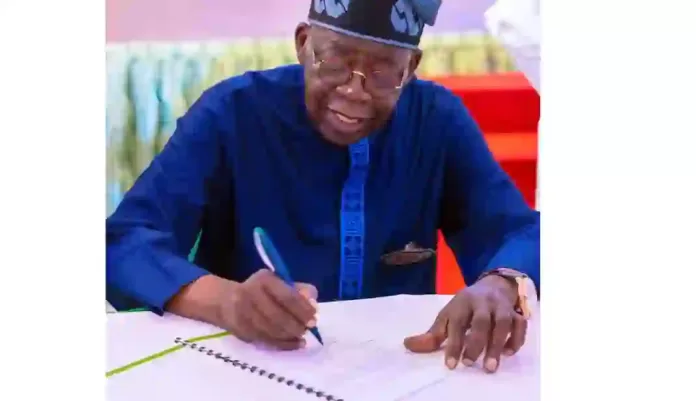
2027: Tinubu Writes “00000” Under Primary And Secondary School As INEC Releases CVs Of Presidential Candidates, Running Mates

0
Bola Ahmed Tinubu

By Ayodele Oni


In line with the provisions of the Electoral Act, 2026, the Independent National Electoral Commission (INEC) has commenced the public display of the personal particulars, academic credentials and other nomination documents of presidential candidates for the 2027 general election,


The exercise, which began on Saturday includes documents submitted by President Bola Ahmed Tinubu, the Presidential candidate of the All Progressives Congress (APC), and his running mate, Vice President Kashim Shettima.


The documents are contained in Form EC9, the statutory nomination form completed by candidates seeking elective office.


Also on display are those of Nigeria Democratic Congress (NDC) candidate Peter Obi and his running mate, Rabiu Kwankwaso, as well as the African Democratic Congress (ADC) candidate, Atiku Abubakar.


The published documents contain candidates’ academic certificates and other supporting credentials filed with the commission as part of the nomination process.


According to the documents on display, President Tinubu submitted his Bachelor of Science (B.Sc.) degree in Business Administration from Chicago State University, United States.


His academic transcript indicated that the degree was awarded “with honours” on June 22, 1979.


The nomination papers also include his National Youth Service Corps (NYSC) discharge certificate, showing he served in Oyo State between December 1982 and November 1983.


Tinubu’s employment history, as contained in the form, lists Mobil Nigeria Limited, where he worked from 1983 to 1992 before leaving for “advancement,” the Lagos State Government, where he served as governor from 1999 to 2007 until the legal end of his tenure, and the Federal Government of Nigeria, where he has served as President since 2023.


His personal details list his date of birth as March 29, 1952, his birthplace as Lagos, his residential address as No. 4 Queen’s Drive, Ikoyi, and his occupation as “politician.” The years for his primary and secondary school attendance were entered as “0000,” while only his university qualification was dated.


Vice President Shettima’s nomination documents provide a detailed academic history beginning with his primary education at Lamisula I Primary School, where he attended between 1972 and 1978.


His Certificate of Primary Education shows he graduated second in a class of 22 pupils, with English, History and Religious Knowledge listed among his strongest subjects.


His West African Examinations Council (WAEC) certificate from Government Secondary School, Potiskum, recorded six credits and passes, including distinctions in Religious Knowledge and Economics.


 The documents further show that he obtained a Second Class Upper Division degree in Agriculture from the University of Maiduguri in August 1989 before earning a Master of Science (M.Sc.) in Agricultural Economics from the University of Ibadan.


 His NYSC discharge certificate indicates he completed national service between October 1989 and October 1990.


INEC stated that the display of Form EC9 is a statutory requirement under Section 29(3) of the Electoral Act, 2026, which mandates the commission to publish the credentials, personal particulars and affidavits submitted by candidates within 21 days of receiving their nomination forms.


The commission noted that the documents are available for public inspection at its offices nationwide, including state headquarters and Local Government Area offices.


The Electoral Act also empowers members of the public to apply for certified true copies of candidates’ nomination documents and to seek legal redress where there are allegations of false declarations or forgery.


Meanwhile, campaigns for the presidential and National Assembly elections are scheduled to commence on August 19, while campaigns for governorship and state assembly elections will begin later in accordance with INEC’s revised timetable.

INEC Assures Osun Governorship Election Will Be Peaceful

0
Professor Josiah Amupitan INEC Chairman
Prof Joash Amupitan, INEC Chairman.

By Ayodele Oni


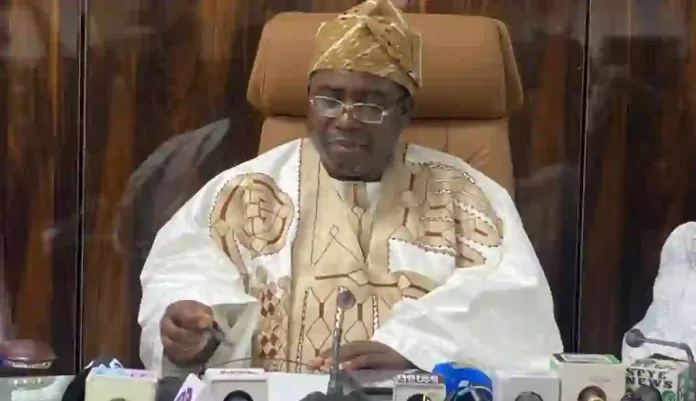
As the August 15 Governorship Election in Osun State gathers momentum, the Chairman of the Independent National Electoral Commission (INEC), Prof. Joash Amupitan, (SAN), on Saturday declared the Commission’s readiness for the election, assuring voters that the democratic process would not be undermined by violence or intimidation.


Prof. Amupitan gave the assurance during a media briefing at the end of a five-day readiness assessment tour of the state, following the commission’s statewide mock accreditation exercise conducted across selected polling units in the three senatorial districts.


The INEC chairman revealed that the exercise, which tested the functionality of the Bimodal Voter Accreditation System (BVAS), confirmed the commission’s technological and operational preparedness for the election.


According to him, the mock accreditation demonstrated improved voter verification, with most accreditations completed through facial recognition within seconds, while technical issues identified during the exercise were promptly resolved by the commission’s ICT team.


“The mock accreditation exercise is our quality control protocol. What we saw today confirmed that our technological defence against identity theft and result manipulation is robust and fully operational.”


To strengthen election-day operations, the INEC chairman disclosed that the commission had increased the number of BVAS devices for the election from 4,427 to 5,130, while backup devices had been doubled from 664 to 1,328 to ensure quick replacement in the event of malfunction.


He confirmed that 2,339,233 eligible voters would participate in the election across 3,763 polling units in 332 wards spread across the state’s 30 local government areas, adding that the training of 16,374 ad hoc staff was nearing completion.


Amupitan noted that all 14 political parties contesting the election had signed the Peace Accord facilitated by the National Peace Committee,


On security, he said INEC had adopted a proactive approach through the Inter-Agency Consultative Committee on Election Security (ICCES), with intelligence-led deployments planned for identified flashpoints across the state.


The commission, he added, had also intensified collaboration with security agencies to tackle vote buying and other electoral offences.


He added that the commission’s readiness assessment also included engagements with traditional rulers, including the Ooni of Ife and the Ataoja of Osogbo, who pledged to mobilise their subjects for peaceful participation in the election.


He further stated that meetings were held with transport unions to finalise logistics arrangements, while inspection visits to local government offices confirmed that non-sensitive election materials had been deployed ahead of the poll.


Calling on journalists to support credible elections, Amupitan urged the media to verify information before publication and avoid spreading misinformation capable of creating unnecessary panic among voters.


In another development, Stakeholders and concerned residents of Osun State have expressed worry over the inability of candidates in the August 15, 2026 governorship election to participate in a debate that would highlight their agenda ahead of the poll.


The people of the state had looked forward to the Osun 2026 Governorship Debate scheduled for Saturday, August 1, 2026, in Osogbo. But, the organisers announced the cancellation of the debate owing to “security concerns and reluctance of candidates to participate.”


According to the organisers of the debate which comprise of some private media organisations in the state, the decision was unanimously reached “following unfavourable security reports and the reluctance of some of the leading governorship candidates to participate under the prevailing circumstances.”


It was expected to feature the governorship candidates of the All Progressives Congress, African Democratic Congress, Accord Party.

Ambassadors: Reno Omokri Remains Uncleared By Mexico As 65 Others Receive Letters Of Credence

0
Reno Omokri
Reno Omokri

By Ayodele Oni 


The Federal Ministry of Foreign Affairs has disclosed that necessary steps are being taken to ensure that two of the 69 Ambassadors appointed few months ago secured acceptance in their countries of posting.


The Ministry announced that 65 of the 69 ambassadors appointed by President Bola Tinubu have received diplomatic acceptance from their respective host countries, representing a 97 per cent success rate in the ongoing posting of Nigeria’s envoys abroad.


The Ministry made this known in a statement issued on Saturday by its spokesperson, Kimiebi Ebienfa, who said the high acceptance rate underscores the smooth progress of the diplomatic process.


According to the ministry, two of the four outstanding appointments resulted from unforeseen circumstances. Grace Bent, who was nominated as Nigeria’s ambassador-designate to Togo, declined the appointment, while Mohammed Mahmud Lele, the ambassador-designate to Algeria, died before assuming office.


Lele passed away on April 19 in Ankara, Turkey, following a prolonged illness. The ministry said the process of appointing a replacement for the late diplomat is already underway.


Although the ministry did not officially identify the two countries yet to grant diplomatic consent, it was gathered that one of them is Mexico.


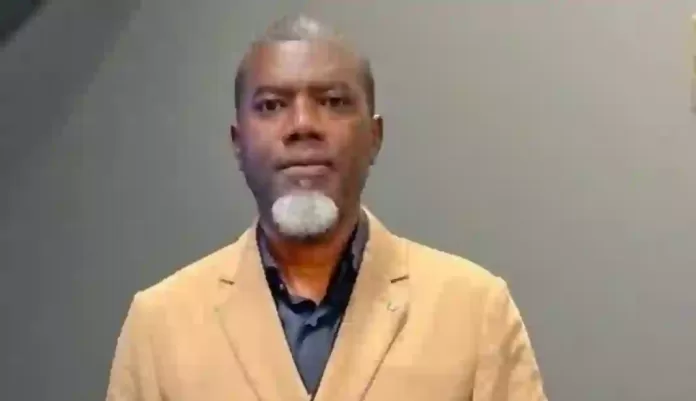
Former presidential spokesperson, Reno Omokri, was nominated as Nigeria’s ambassador to Mexico,


 Ebienfa, however, expressed optimism that the remaining approvals would soon be secured, noting that the Ministry has received positive assurances from both countries.


He said the two friendly nations had indicated that their formal consent would be conveyed in due course, adding that the diplomatic engagement has continued to progress smoothly and successfully.


“The Ministry of Foreign Affairs wishes to assure Nigerians and the international stakeholders that it is actively engaging the relevant authorities in the two countries and is confident that the outstanding a.greements will be conveyed in due course,” the statement read.


The ministry further revealed that the majority of the ambassadors whose appointments have been accepted have since arrived in their respective host countries and presented their letters of credence, formally commencing their duties as Nigeria’s principal diplomatic representatives.

National Christian Elders Forum To Tinubu: Don’t Seek Reelection In 2027; Restructure Nigeria Now

0
President Bola Ahmed Tinubu
President Tinubu

By Ayodele Oni


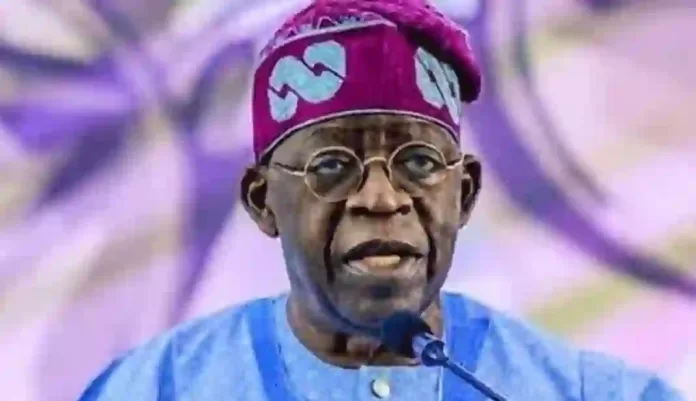
In a rather belated advice, a Group, National Christian Elders Forum (NCEF),  has an advice  for President Bola Tinubu ahead of the 2027 general elections. “Don’t participate in the Presidential Election.


President Tinubu is seeking a second term in office along with his Vice President, Kashim Shettima.


But NCEF thinks otherwise. The body is of the opinion that President Tinubu should not seek reelection in 2027; that he should, instead, opt to be a statesman with an eye on history and posterity, and, commit the rest of his first tenure to restructuring Nigeria and giving it a new Constitution.


The organisation also said the demand for a new Constitution for Nigeria before the 2027 elections should be jointly spearheaded, forthwith, by the ethnic nationalities under the socio-cultural groups and other relevant interest groups.


These were some of the resolutions contaibed in a communique issued at the end of the July meeting of the Christian elders which deliberated on the state of the nation, and reviewed the ongoing preparations for another cycle of elections in 2027.


The communique was signed by its chairman and former Deputy Governor of Taraba State, Dr Samuel Danjuma Gani.


Apart from Gani, other members of NCEF are Pastor Bosun Emmanuel (Secretary), Dr. Saleh Hussaini, Vice Chairman (North); Elder Shyngle Wigwe, Vice Chairman (South); Mrs. Osaretin Demuren, Hon. Treasurer; Prof. Joseph Otubu, Dr. (Mrs) Kate Okparaeke, Dr. Ayo Abifarin, Gen. Zamani Lekwot (rtd), Hon. Justice James Ogebe, JSC (Rtd); Elder Moses Ihonde, Hon. Justice Kalajine Anigbogu (Rtd), Elder Nat Okoro, Solomon Asemota (SAN) and Elder Matthew Owojaiye.


Others are DIG P. L. Dabup, Sir John W. Bagu, Dame Priscilla Kuye, Prof. (Mrs) Deborah Enilo Ajakaiye, HRM Oba Dokun Thompson, Dr. Taiwo Idemudia (Diaspora), Elder Minso Gadzama, Apostle Bulus Musa Kewa, Admiral Peter Adeniyi (Rtd), Hon. Justice Goddy Anunihu (Rtd) and Chief Sir Ferdinand Anikwe.


The communique reads, “That the Tinubu-led Federal Government’s performance in the critical areas of national security, economic development and the wellbeing of the citizenry has been hugely sub-optimal and manifestly disappointing vis a vis the unequivocal specification of Section 14(2)b of the Constitution of the Federal Republic of Nigeria which states that the security and welfare of the people shall be the primary purpose of government.


“That the direction in which the nation is being led by the Tinubu presidency offers increasing apprehension rather than hope and this state of affairs has left all patriots with no option but to call on President Tinubu to please desist from seeking re-election for a second term, but instead like a statesman with an eye on history and posterity, to earnestly commit the rest of his tenure to restructuring Nigeria and giving her a new constitution.


“That his Muslim-Muslim Presidency ticket is tone-deaf and grossly insensitive particularly at a period, like now, when Islamist terrorists are ravaging the country and Christians are at the receiving end of the widespread violence, unabated killings and unspeakable atrocities.


“That the call for a new constitution for Nigeria before the 2027 elections be jointly spearheaded forthwith by the ethnic nationalities under the socio-cultural groups and other relevant interest groups.


“That the judiciary be put on notice that the nation is now at a tipping point and can no longer afford any semblance of judicial bias in their handling of electoral matters.


“That the Independent National Electoral Commission (INEC) should remind itself that it is not an arm of any political party but a federal institution that must stay independent, neutral and beyond reproach to henceforth always deliver credible, free, and fair elections in Nigeria.


“That the North/South rotation of the Presidency is not a written constitutional clause, but it is good and effectual for national stability, equity and inclusivity and for that reason, patriots are urged to support a Southern candidature in 2027 for the four remaining years of the South’s current turn.


“That flagrant compromise of national institutions by the current administration is reminiscent of the dark days of the General Babangida’s military administration and this is unacceptable and must be brought to the quickest halt.


“That the Presidential Foreign Investment Promotion Council (PFIPC) scandal is an indictment of the Tinubu administration and an urgent in-depth, independent enquiry into the scandal is mandatory.


“That Nigerians obviously want a change for the better and the continued patience of the long-suffering public must no longer be taken for granted.”


The President’s Political Party, All Progressives Congress, APC, has already renominated him and Shettima for a second term. And, the Independent National Electoral Commission, INEC, has already cleared the ticket against the 2027 election.

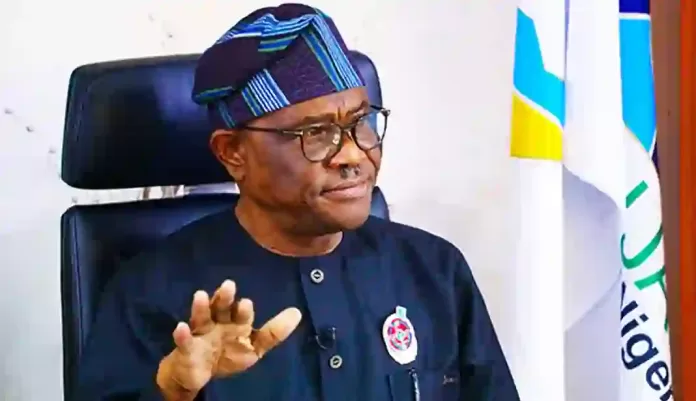
Feel For Fubara, He Is The Biggest Loser In The Long Drawn Rivers Political Battle” – Wike Names Those Who Misled Governor

0
Nyesom Wike - FCT Minister
Nyesom Wike.

By Suleiman Anyalewechi 


The Federal Capital Territory (FCT) Minister, Nyesom Wike, has singled out the quartet of Edison Ehie ,Chijioke Ihunwo ,Victor Oko Jumbo and Ankio Briggs for blame over the political misfortune that has befallen Governor Siminalayi Fubara.


The Source reports that the Governor of Rivers State who, since October 2023, battled his predecessor, Wike, for the purpose of asserting himself in office, and the control of the soul of the state politics, finally capitulated penultimate week, declaring alliance to the Rainbow Coalition of his estranged political godfather.


Before then ,he had been made to remain on the sideline for six months following the proclamation of a state of emergency in Rivers state by President Bola Tinubu. He was also forced to withdraw his re-election bid by Wike over same political disagreement.


Speaking at an interactive session with the Media on Saturday, August 1, 2026, in Port Harcourt, the FCT Minister described Governor Fubara as “the  greatest loser” in the long drawn political acrimony in the state.


Wike expressed regret that after toiling against all odds to railroad Fubara to the Bricks House Port Harcourt, he unfortunately allowed himself to be deceived by some inconsequential political jobbers.


According to Wike ,Hon Ehie former Chief of Staff to Fubara, Oko Jumbo, the Speaker of the State House of Assembly faction loyal to the Governor, Ihunwo a former Council chairman of Obio/Akpor Local Council, and activist  Briggs jointly and severally led him into the political wilderness and destruction.

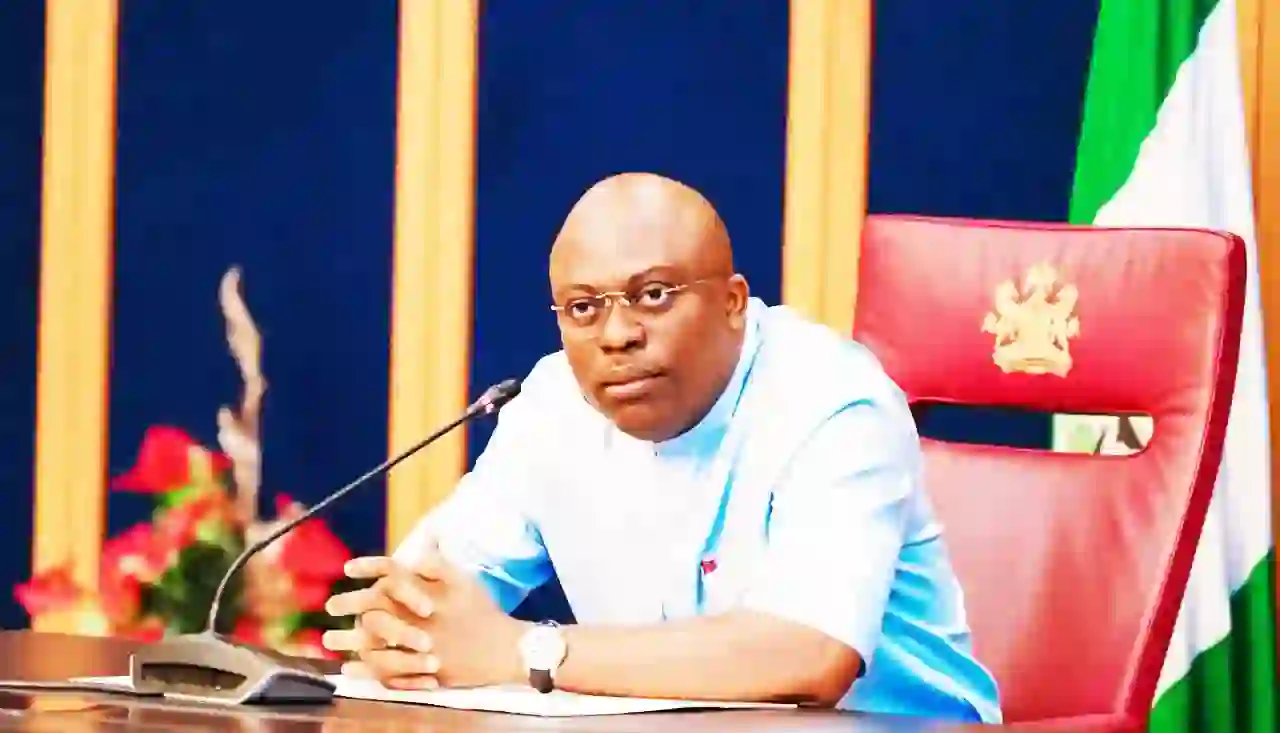
Siminalayi Fubara - Governor of River State
Governor Similanayi Fubara

The FCT Minister accused the four of being behind Fubara’s repeated failures to honour agreements brokered by the President.


He blamed them for the escalation and prolonged nature of the political crisis in the state .


“I feel for Governor Siminalayi Fubara because as it is, he is the biggest loser”, Wike stated. 


He emphasized that from all ramifications, the Governor has been made to bear the brunt of the political crisis as he has suffered serious political set back as a result.

Court Orders JAMB To Pay Female Candidate N10 Million Over Forced Removal Of Hijab

0
Law and Court

By Suleiman Anyalewechi


An Oyo State High Court has ruled that the Joint Admissions and Matriculation Board, JAMB, has no powers to prevent female Muslim candidates from putting on their Hijabs to sit for examinations.


Justice Y. S. Adekunle while delivering judgment on a motion on notice filed by Mrs Basirat Ojo Oba, on behalf of her teenage daughter, Miss Lawal, also ordered JAMB authorities and co-defendent PEFTI CBT to pay the claimant the sum of N10 million in general damages


The defendants were similarly ordered to issue a written apology to be published in at least two national newspapers.


The Claimant had, in the suit filed by her counsel Qousim A Opakunle, claimed that the defendants ( JAMB and PEFTI CBT ) had made the removal of her Hijab a necessary pre-condition for her participation in an examination conducted by both parties.


She contended that the defendants, by their action, infringed on her fundamental rights to freedom of religion and thought.


Consequently, she prayed the court for an order declaring the action of the defendants as  null and void, including a declaration that any policy requiring female candidates to remove Hijabs for religious purposes is unlawful and unconstitutional.


She had also prayed the court for an order compelling the defendants to issue a public apology, as well as compensate her for the infringement on her constitutionally guaranteed rights.


Justice Adekunle in his ruling, while granting all the reliefs sought by the claimant, held that the defendants’ insistence on the candidate removing her Hijab before participating in the examination is inconsistent with the spirit and letters of the Nigerian Constitution, and therefore, null and void.


The Court similarly ruled that the defendants, by compelling the claimant to remove her Hijab, violated her fundamental rights to freedom of religion as guaranteed by the 1999 Constitution as amended..

OPINION: Obasanjo’s Dilemma

0
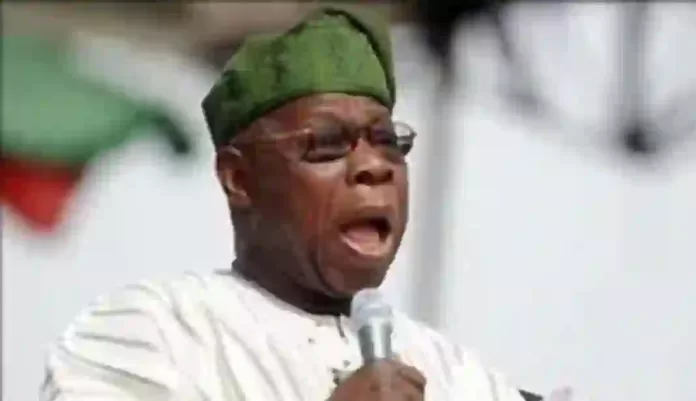
Olusegun Obasanjo
Chief Olusegun Obasanjo

By Muazu  Elazeh


Former President Olusegun Obasanjo’s legacy is frequently reprehended for being overly vindictive, impulsively despotic, and notorious for holding petty  political grudges. His actions during and after his presidency smack of personal malice that often supersedes national interest.


Obasanjo has once again ignited political controversy, this  time with a familiar target: his former vice president, Atiku Abubakar. In his latest vituperation, Obasanjo claimed that Atiku gave the late Ghali Umar Na’Abba, a former Speaker of the House of Representatives, N5 million to facilitate his impeachment while they served together.


The timing of Obasanjo’s accusation seems more suspicious. Coming over twenty years after the alleged bribery related to impeachment (Na’Abba served as Speaker from 1999-2003) and nearly three years after Na’Abba’s death, it raises more questions than it answers. Our law is clear. Any man charged with a crime is presumed innocent until proven guilty. Atiku has not even faced charges. Yet Obasanjo wants us to believe he is corrupt.

Between Obasanjo and Atiku, Nigerians know who the corrupt individual is. 


We remember today, as we will always do, the report of the Ndudi Elumelu committee on power. Who was President between 1999 and 2007 when, according to the committee, 13.2 billion dollars were said to have been spent on power? Where is the power? Who has questions to answer? Certainly not Atiku. Another reason why we must emphasise the teaching of history in our schools.


To understand why Obasanjo continues to level accusations against Atiku, one must look back to the defining political battle of their relationship: the failed third-term agenda. Many Nigerians today, particularly Gen Z, who constitute more than 45 percent of the country’s population, know very little about that episode. Some were too young to remember it, while others had not yet been born.

Yet, it remains one of the most significant moments in Nigeria’s democratic history. 


A President elected for two constitutionally permitted terms attempted to remain in office beyond the eight years allowed by law. Constitutional amendments were proposed to achieve that. Nigerians of conscience opposed the move, and the plan failed.


That defeat bruised many egos, but none more than Obasanjo’s. Ironically, this was a man whose political career had been revived after surviving imprisonment under the late General Sani Abacha. 


Following Abacha’s death, Obasanjo was given the presidential ticket of the newly formed Peoples Democratic Party (PDP) and subsequently became Nigeria’s democratically elected president in 1999. Having returned to power, however, he seemed unwilling to relinquish it.

Through proxies, efforts were made to amend the constitution and create space for tenure elongation, which many Nigerians described as a third term. 


However, the National Assembly refused to yield. The House of Representatives, under Speaker Aminu Bello Masari, and the Senate, led by Senator Ken Nnamani, remained resolute. They were supported by many distinguished Nigerians, including Vice President Atiku Abubakar, whose opposition became one of the defining moments of that struggle. The attempted tenure elongation failed.


Obasanjo never forgave those who obstructed it.

Masari paid the political price. Despite being the leading contender for the PDP governorship ticket in Katsina ahead of the 2007 election, he was denied the nomination. Instead, Ibrahim Shehu Shema emerged as the party’s candidate after Obasanjo reportedly persuaded his chosen presidential successor, the late Umaru Musa Yar’Adua, to withdraw support for Masari.


Atiku suffered even more. The relationship between the President and the Vice President deteriorated after they secured a second term and worsened further following the third-term controversy. 


Atiku brought several court cases against the government as institutions were deployed against him. When he defected to the Action Congress, his office was controversially declared vacant, a decision later overturned by the courts.


Many Legislators who opposed the third-term agenda also paid a heavy price. Several were denied return tickets by the PDP. It is against this backdrop that Obasanjo’s qlatest allegation should be viewed. Why did he wait until Ghali Umar Na’Abba was no longer alive before making such a grave accusation? Why remain silent for over twenty years if, indeed, the alleged bribery took place?


Those questions cannot simply be tt. As I said earlier, the timing is equally curious. With the 2027 presidential election drawing closer and Atiku once again emerging as one of the leading contenders, Obasanjo’s allegation appears more like another attempt to damage the  political reputation of the man he believes frustrated his greatest political ambition.


Let me digress. Had the third-term amendment been introduced under the current national assembly, it would have sailed through effortlessly. Thankfully, it happened when Nigeria had a legislature that understood its constitutional responsibility and was prepared to defend it.

It is evident that Obasanjo’s repeated criticisms of Atiku reveal a man who has never truly moved past the defeat of his third-term initiative. His autobiography, My Watch, devotes several pages to criticising Atiku, accusing him of disloyalty, corruption, and poor judgment. Nearly every allegation of corruption against Atiku is traced back to that same book.


Curiously, however, the man who had the Economic and Financial Crimes Commission (EFCC) at his beck and call and was never reluctant to deploy state institutions against perceived political opponents did not prosecute Atiku.


If Obasanjo had credible evidence of corruption against Atiku, would he have hesitated to use it? I doubt it. The fact remains that, despite years of accusations, no court has convicted Atiku, nor has any anti-corruption agency initiated or successfully prosecuted him for the allegations repeatedly made by Obasanjo.


Atiku has consistently challenged anyone with evidence against him to present it in court. No one, not even Obasanjo – who has accused Atiku of corruption – has done so.


This reality makes Obasanjo’s latest accusation even more difficult to accept without scepticism.

igeria’s laws are unambiguous. Offering or receiving a bribe to facilitate the impeachment of a sitting president constitutes a serious criminal offence. If Obasanjo truly believed such a crime had been committed, why did he not invoke the law against either Atiku or Ghali Umar Na’Abba?


Obasanjo has often positioned himself as Nigeria’s moral conscience, writing open letters to successive presidents whenever he believes the nation is heading in the wrong direction. Curiously, despite the severe economic hardship Nigerians face today, he has remained largely silent on the Tinubu administration and seems more preoccupied with Atiku.


The economy continues to struggle. Poverty is worsening. Unemployment remains high. It is now July 2026, yet the country is debating the implementation of the 2025 budget despite repeated claims of improved government revenue and ongoing borrowing. These are issues that require the attention of statesmen.

Contrary to the perception in certain quarters, I do not believe Obasanjo is trying to assist President Tinubu. He does not like Tinubu, and that is undisputed. I also believe his occasional endorsements of Peter Obi are a ruse. Obasanjo knows the 2027 presidential race will be between Atiku and Tinubu, both men he dislikes.

Just as in 2019, when he faced the choice between President Buhari and Atiku—two men he clearly disliked—Obasanjo again finds himself approaching another election with leading contenders he does not like. His latest allegation is less about Ghali Umar Na’Abba or an alleged N5 million bribe and more about a political wound that refuses to heal. Over two decades after the defeat of the third-term agenda, Obasanjo continues to nurse the pain. That, above all, remains his real dilemma.


Elazeh is the GMD of LEADERSHIP Newspaper

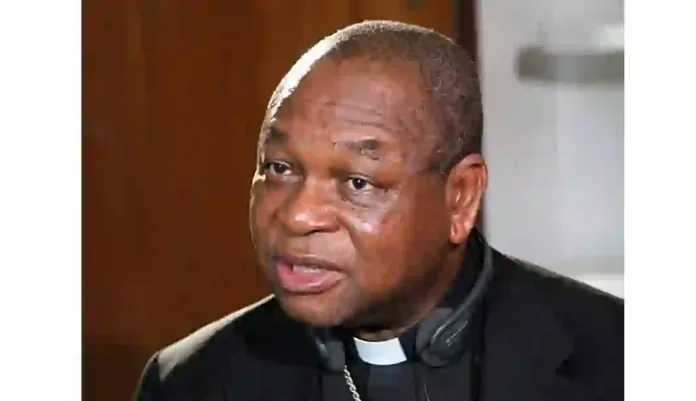
Cardinal Onaiyekan On His Own, Represents Only Catholics – Presidency

0
Cardinal John Onaiyekan

By Ayodele Oni


In a swift response to Cardinal John Onaiyekan’s stinging criticism of President Bola Tinubu’s alleged authoritarian administration, the  Presidency has said the respected Cleric, was expressing his personal and political opinion, and pointed out that “his opinion does not represent that of Christians in Nigeria.”


Daniel Bwala, Special Adviser to the President on Policy Communication, stated this in a post on his X account on Saturday.


Onaiyekan’s remarks followed the Catholic Bishops’ Conference of Nigeria, CBCN’s recent visit to the President.


The Cardinal, after the meeting, accused President Tinubu’s government of prioritizing winning elections “by all means” over tackling the country’s challenges.


He accused the President  of deploying every available means at his disposal to ensure his victory in 2027 general election.


According to the Catholic Archbishop Emeritus of Abuja, Tinubu is not ready for free, fair election, as shown in his desperation to remain in power.


Speaking during an Arise News interview the cardinal stated that the government possesses extensive means and is actively deploying them in ways that could render the will of the people irrelevant even under conditions of a free and fair poll.


In his response, Bwala said Onaiyekan was speaking for the Catholic Church, not the entire Christian community.


He claimed the Catholic institution largely backed Labour Party candidate Peter Obi in the 2023 election.


“Cardinal Onaiyekan wasn’t speaking for Christians, he was speaking for Catholics, the very institution rooting for Peter Obi,” Bwala wrote.


“In fact, likely the institution where Peter Obi also said in 2022 ‘take back your country.’ Therefore, Cardinal is more political than spiritual.


Bwala also noted that not all Catholics voted for Obi, and said President Tinubu was right to disagree with the  assessment of the economy by the Bishops.


According to him, the administration’s position is supported by “facts, stats and numbers factored into context.”


The presidential aide further accused the Clergy of double standards, alleging that the same Priests who criticize government would tell their members to say “we are doing great” even amid hardship.


“There is a body comprising all Christians including the Catholics and Catholic Bishops Conference and that body’s position is neutral and should be so, otherwise it is political,” he added

Edo Police Command Dismisses Five Officers, Demotes One

0
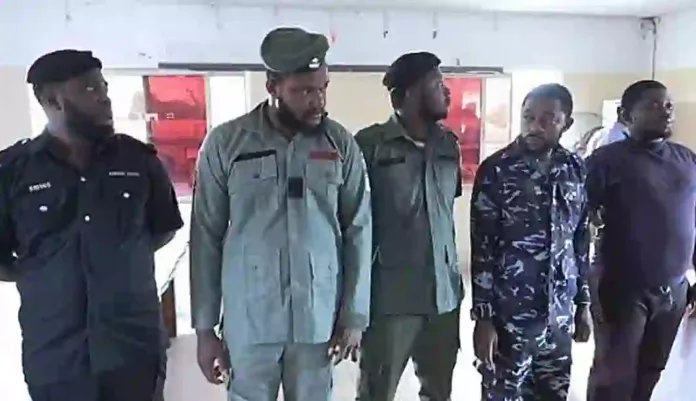
Edo Dismissed Five Police Officers

By Ayodele Oni


For alleged involvement in operations of illegal road blocks, the Edo State Police Command has dismissed five officers from service while one other was demoted in rank.


The Command said in a statement that they were sanctioned for their alleged roles in a criminal syndicate in the state.


They were also accused of harassing, abducting, and extorting innocent citizens in Benin City, the state capital.


According to the Command, the operation followed months of complaints and undercover investigations.


Police authority say the dismissed personnel would also face prosecution in court.


The Command described the syndicate’s activities as “a betrayal of public trust” and vowed that no officer found culpable will be shielded.


Residents of Benin had long raised concerns about illegal checkpoints and harassment by rogue officers.


The Police said this action is part of efforts to restore confidence and rid the force of bad elements.


The Commissioner of Police urged members of the public to keep reporting cases of extortion and abuse, promising that complaints would be treated with urgency.


A special complaints desk has also been set up for victims of police misconduct.


The command assured that investigations are still ongoing and more arrests could follow as they track other members linked to the syndicate

Nenadi Usman Hails Jang @80, Says Nigeria Must Rise Above Bitter Politics

0
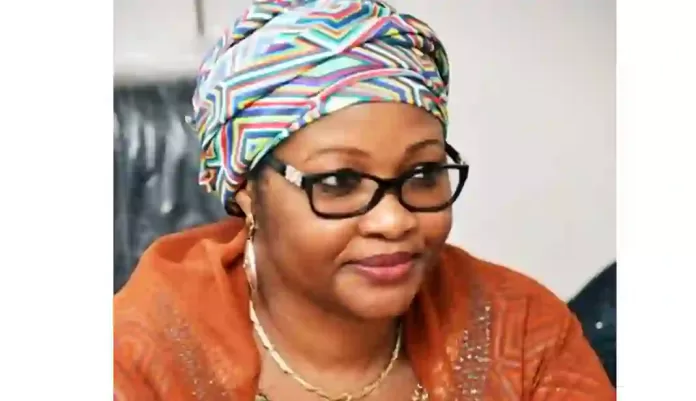
Nenadi Esther Usman - Labour Party Chairman

The National Chairman of the Labour Party, Senator Nenadi Usman, has called on political leaders across the country to embrace patriotism, tolerance and issue-based politics as Nigeria gradually prepares for another electoral cycle.


Speaking with journalists on the sidelines of the 80th birthday celebration of former Governor of Plateau State and former Governor of old Benue State, Senator Jonah David Jang, held in Jos on Friday, Senator Usman said the nation’s progress would largely depend on the willingness of its political class to place national interest above personal and partisan considerations.


According to her, while political competition remains an essential ingredient of democracy, it must never be allowed to degenerate into bitterness, hatred or the destruction of the country’s social fabric.


She said: “The next election should not be a battle against fellow Nigerians. It should be a contest of ideas, competence and character. When elections are over, we must all return to the same Nigeria. That is why patriotism must always be greater than politics.”


The Labour Party National Chairman stressed that Nigerians deserve leaders who unite rather than divide, inspire hope instead of fear, and build bridges across political, ethnic and religious lines.


She continued:

Jonah Jang
Jonah Jang

“Our political parties may be different, but our country is one. We owe future generations the responsibility of conducting politics without destroying the bonds that hold our nation together.”


Calling for greater civility in the nation’s political space, Senator Usman, according to Ken Asogwa,  National Publicity Secretary of the LP, urged politicians and their supporters to reject inflammatory rhetoric and embrace mutual respect.


“History does not remember those who shouted the loudest. It remembers those who built the strongest institutions, protected democracy and put their country first.”


She further observed that no democratic system can flourish where intolerance replaces dialogue, adding that disagreements should strengthen democracy rather than weaken national unity.


“We must disagree without becoming enemies. Democracy flourishes where there is tolerance, respect for differing opinions and an unwavering commitment to peace.”


Reflecting on the significance of Senator Jonah Jang’s 80th birthday, Senator Usman described the elder statesman as a patriot whose decades of service in both the military and democratic governance have earned him a respected place in Nigeria’s history.


She noted that Jang’s career exemplifies discipline, courage, sacrifice and dedication to national service, first as a distinguished military officer and later as Governor of Plateau State and Senator of the Federal Republic.


“At 80, Senator Jonah Jang represents a generation of leaders whose lives remind us that public office is ultimately about service, honour and legacy. We celebrate not only his longevity but also his enduring contributions to nation-building.”


Senator Usman prayed for God’s continued blessings upon the former governor, wishing him sound health, strength and many more years of impactful service to Nigeria.