Home Blog Page 618

LP Reps Caucus: Obi Must Not Be Harmed Anywhere In Nigeria

0
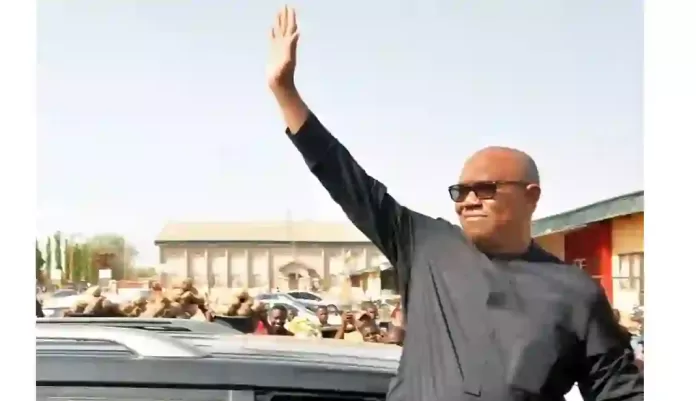
Peter Obi waving his supporters

… Urges President Tinubu to call Edo Governor to order over inflammatory comments

The Labour Party Caucus in the House of Representatives has condemned the recent open threat to the life and security of Mr. Peter Obi, the Presidential candidate of the party, by the Edo State Governor, Senator Monday Okpebholo, describing the action as outrageous, shocking, uncouth and disappointing.

At a public event on Friday, July 18, Governor Okpebholo warned that Peter Obi should not visit Edo State without prior permission and security clearance, warning that his safety cannot be guaranteed otherwise.

“That man who says he has no ‘shishi’ came and dropped N1.5 million(sic)…₦15 million. Where did he get it from? After he left, three people were killed. For this reason, Obi must not come to Edo without security clearance,” said the governor.

The LP caucus emphasized that Mr. Peter Obi, like any other Nigerian citizen, has “the constitutional right to visit any part of the country without fear of molestation, threat to life, or harm, as guaranteed under a democratic system.”

The LP lawmakers, in a statement by their leader, Hon. Afam Victor Ogene, issued in Awka, strongly rebuked Governor Okpebholo, describing his remarks as “Uncivil, unconstitutional, undemocratic, and unbecoming of a public servant in such a high office.

“Mr. Peter Obi’s philanthropic efforts nationwide embody his humanity and empathy for the people, transcending political affiliations, ethnicity, and other divides. Rather than being vilified or incited against, he should be commended for supporting human capital development in the nation. As a champion of democracy, nation-building, and sustainable development, Peter Obi deserves protection and support from all who share these values.”

Rep Ogene further stated, ‘It’s bewildering to hear such an outrageous outburst from a state governor, particularly one with a background as a senator of the Federal Republic of Nigeria. The level of conduct, reasoning, and delivery displayed is shocking, especially from a supposedly democratically elected official and chief security officer of a state.

“What manner of example do we set for the younger generation, especially as regards public conduct, civility, respect for human rights and the rule of law, as enshrined in the constitution of the Federal Republic of Nigeria? How do we fight violence in the land, if as leaders we openly encourage intolerance, bigotry and anti-democratic tendencies, like the Edo State governor has publicly exhibited?

“If Governor Okpebholo could make such inflammatory remarks in a public setting, one wonders what kind of inciteful rhetoric he might be using behind closed doors against opposition party members or perceived enemies of his party.

“Politics ought not be a game of life or death. And no one deserves to be harmed on account of his or her political beliefs or association. Politics of bitterness, pettiness and violence should never be encouraged in a democracy, or by people that claim to be democrats.

“It is instructive that Governor Okpebholo uttered his infamous and satanic verses against Peter Obi at the defection ceremony of Hon. Marcus Onobun, a House of Representatives member who he had only days before threatened with the demolition of his house, for allegedly harbouring cultists.

“It would be interesting to ask Governor Okpebholo if he would still go ahead to pull down Hon. Onobun’s country home – which he had marked for demolition – now that he has forcefully coerced him into his political party?

“In fact, it is only in these climes that a governor would glibly boast about insecurity in his state, as well as lie about the death of citizens, without providing any shred of evidence.

“We, therefore, urge President Bola Tinubu to call the Edo State governor to order. And hasten to warn that no harm should come to our leader, Peter Obi, anywhere in Nigeria or beyond. The other day, it was Governor Hyacinth Alia of Benue state; today it is Okpebholo of Edo. If the ruling All Progressives Congress, APC, thinks it can use scaremongering to halt the ever-growing popularity of Mr. Peter Obi, they better think again.

“Ensuring the security of lives and property is a fundamental responsibility of government, and Nigeria should be no exception,” Rep Ogene said.”

Nigeria May Disintegrate – Patriots (For The Records)

0
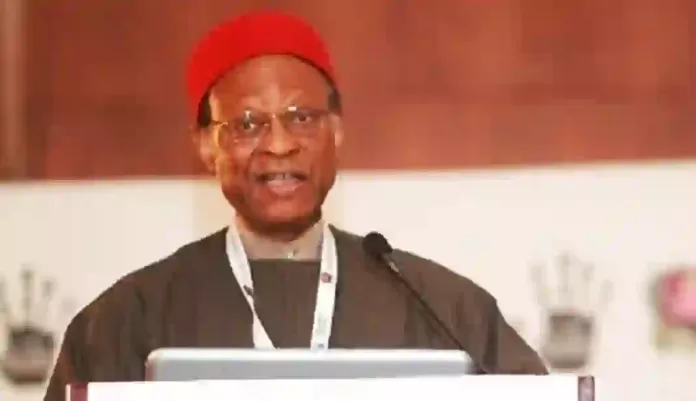
Emeka Anyaoku

COMMUNIQUE PRESENTED AT THE END OF THE NATIONAL SUMMIT ON THE FUTURE OF NIGERIA’S CONSTITUTIONAL DEMOCRACY HELD ON WEDNESDAY, 16TH AND THURSDAY, 17TH JULY, 2025 AT THE TRANSCORP HILTON HOTEL AND NICON LUXURY HOTELS, ABUJA.

BACKGROUND

The 2025 National Summit on The Future of Nigerias Constitutional Democracy was convened by THE PATRIOTS, Nigerias foremost group of elder statesmen and women, intellectuals and civic leaders, under the distinguished leadership of Chief Emeka Anyaoku, GCON, former Secretary-General of the Commonwealth, in collaboration with the Nigerian Political Summit Group (NPSG).

Delegates at the National Summit held between 16th and 17th July, 2025 at the Congress Hall of the Transcorp Hilton Hotel, Abuja and the Nicon Luxury Hotel, Abuja, respectively were drawn from the civil society groups, women, the academia, ethnic nationalities, Nigerians in Diaspora, professional groups, faith-based organisations, traditional rulers, religious leaders, youth groups, market men/women, security experts, student leaders, the private sector and persons with special needs across the country. The National Summit examined and responded to the deep-rooted and systemic challenges confronting Nigeria and its diverse peoples. Deliberations at the National Summit touched on the urgent need to reposition the country through a new, inclusive democratic peoples Constitution of the Federal Republic of Nigeria.

PREAMBLE

Guided by the aspirations of the Nigerian people for fairness, social justice, equity, security, and sustainable development, and confronted with the present systemic structural and governance failures and dysfunction under the current 1999 Constitution (as amended).

Realizing that the 1999 Constitution did not derive its legitimacy from popular participation and approbation of the Nigerian people, the National Summit therefore affirmed the inherent flaws and consequences in the existing constitutional frameworks which manifest in the decline into unitary system (rather than fostering genuine federalism), poor leadership and weak delivery of governance arising from weak political structures and institutions; declining sense of citizenship and patriotism; an increasing multi-dimensional poverty and inequality that threaten peace, unity and development; widespread fear, anxiety and an increasing feeling of hopelessness; acute corruption and lack of accountability/transparency; insecurity across regions; sectional, ethnic, and religious conflicts with various dimensions and scope that have further weakened national unity and mutual distrust; poor infrastructure; poor management of the economy manifesting in disconnection from human capital development as well as environment mismanagement; and poor adaptation strategy resulting in increasing vulnerability of Nigeria and Nigerians to climate change.

Convinced that Nigeria as a political entity needs holistic restructuring and comprehensive overhaul of the existing constitutional framework and governance architecture, the National Summit resolved to chart a new course for enduring future through renewed and unflagging commitment to demanding a new inclusive; democratic peoples Constitution of the Federal Republic of Nigeria on the basis of the following resolutions.

RESOLUTIONS

The following resolutions represent consensus reached at the National Summit, offering clear, constructive and principled remedies for Nigerias pressing constitutional and governance crises:

Urgent need for new a Constitutional order

The Summit agreed that the 1999 Constitution (as amended) is deeply flawed and unrepresentative in that it was not made by the people and is inadequate for addressing the countrys pluralism and the various challenges confronting Nigeria as a nation. Therefore, delegates agreed that there is the need for a new people-driven, inclusive, democratic Constitution anchored on true federalism. For stability and maximal development, the Constitution must address Nigerias plurality and diversity.

Demand for Constituent Assembly

In order to actualise the above and other reforms agreed to at this Summit, the delegates agreed that the President be requested to introduce an Executive Bill to the National Assembly to empower the Independent National Electoral Commission (INEC) to organise elections to a national Constituent Assembly. This Assembly shall be made up of delegates elected on non-partisan basis as well as representatives of special interest groups

  1. Referendum

The Constituent Assembly shall be responsible for actualizing a peoples democratic Constitution that will be subjected to a referendum of the Nigerian people before it is assented to by the President to midwife a peoples democratic Constitution that will be subjected to a referendum of the Nigerian people before it is assented to by the President.

  1. Return to genuine federalism

The Summit calls for an immediate constitutional framework that will return Nigeria to a truly federal system of government where the federating units will enjoy their autonomy as obtained in the First Republic and other genuine democracies of the World.

  1. Federal System of government

The Summit agreed that the current presidential system of government is too expensive, prone to abuse; constitutes a hindrance to peoples welfare and a major threat to the future of democracy in Nigeria.

  1. Geographical restructuring

Flowing from the above resolutions, the Summit resolved that the present six geopolitical zones should be restructured in such a way as to ensure a truly federal system of government.

  1. Devolution of Federal powers

The current political reality is that too much power is concentrated at the centre. Quite enormous powers are currently concentrated in the presidency. The reduction of the enormity will discourage autocratic tendencies and encourage inter-institutional checks and balances. The patriot therefore recommends the devolution of powers from the center to the federating units.

  1. Legistature

The Summit agreed that a two-chamber federal legislature is unsustainably expensive for Nigeria to maintain. The Summit therefore recommends a more appropriate cost-effective system.

  1. Administration of justice

Justice delayed is justice denied. The centralized court system has impacted the administration of justice so negatively that congestion of court registries with cases has become a problem that may never be solved unless there is a decisive Constitutional intervention. Therefore, the summit delegates recommend that there is the need for each federating unit to have its court hierarchy up to the Court of Appeal, thereby leaving the Federal Supreme Court to deal with heavy Constitutional matters, interstate disputes, and disputes between the Federal and subnational governments. The summit also recommends the creation of special courts to manage special offenses such as electoral matters, corruption and terrorism cases amongst others.

  1. Appointment of Non-politically Partisan Attorney-Generals

The Summit recommends that the office of the Attorney-General of the Federation and that of the Minister of Justice as well as the office of Attorney-General and Commissioner for Justice at the state level should be separated to enable the appointment of non-politically partisan Attorneys-General.

  1. Electoral reforms

Free, fair and credible elections are the real pillars of democracy. The current reality is a democracy that has been taken away from the control of voters. Elections are too costly and prone to fraud. Billions of Naira are spent on recruitment of electoral officers, security agencies and logistics while the courts have become the real electors of leaders. Among other reforms, the summit resolved therefore, that all elections be conducted in a single day, as this is cheaper, time saving and less prone to fraud. Brazil and Ghana are good examples of countries that have adopted single-day elections. The Summit demand amendment to the Electoral Act and the relevant sections of the 1999 Constitution (as amended) for Bimodal Voter Accreditation System (BVAS) and electronic transmission of results real time to be made mandatory.

INDEPENDENT CANDIDATURE

The new Constitution should include provision for independent candidacy for aspirants who do not wish to run for elections on party basis.

CROSS CARPETTING

The summit recommends that once a person is elected on the platform of a political party, he or she shall not defect to another political party till the tenure is over. Where this takes place, such seat shall automatically and unconditionally be declared vacant and such person shall forthwith seize to hold the office.

  1. Cost of governance

Cost-cutting is a time-tested solution to bankruptcy. The present pseudo-federal system is too large and unmanageable. It takes so much to run while the result is over-bloated bureaucracies and political structures at both state and federal levels.

  1. Number of Ministers and Political Appointees

The Constitution should set caps on the number of ministers, commissioners, special advisers and such officers to reduce bloated government structures. Ministries at federal and regional levels should not be more than 15 while departments and agencies should be reduced to one quarter of the existing number.

  1. Corruption & breach of public trust

Pervasive corruption and impunity remain symptoms of governance failure in Nigeria. These are enabled by the inherent contradictions and inadequacies in the 1999 Constitution which was imposed on the country by the military and all of which now manifest in centralised leadership structure. These flaws in the Constitution have been consistently and systematically exploited by political actors and government bureaucracies to institutionalise corruption.

The Summit agreed that for these deficiencies to be effectively tackled, there must be enough deterrence for offenders. Certainty of arrest, an uncompromised judiciary and severity of punishment which are guaranteed deterrence to criminality are currently circumvented with impunity in Nigeria. The Summit demand comprehensive restructuring of the police and the court system for effective, corruption-free justice delivery.

  1. Citizens rights/Empowerment initiatives

The United Nations has said that there are currently over 20 million Nigerian children out of school while over 130 million Nigerians wallow in multidimensional poverty. There is also an acute state of infrastructure decay and deficit. With over 50% infrastructure deficit that covers roads, transport, electricity, housing, water and sanitation (World Bank 2024), real development requires a dedication to system and structural overhaul much of which a peoples Constitution can direct.

  1. Women and Other Groups

The Summit therefore recommends that the new Constitution should entrench robust provisions for the protection of the peoples socio-economic and political rights such as education, security and employment. Summit recommends the inclusion of women, youths, people with special needs and minorities in political participation, governance and nation building. The new Constitution should ensure gender equity in determining citizenship by marriage and the explicit provisions that protect women and the girl child against all forms of abuse and discrimination in the society.

  1. Nigerians in Diaspora

Nigerians in the Diaspora have over the years complained of disenfranchisement and exclusion from the voting process. Currently, statistics put the figure of Nigerians in the Diaspora at over 15 million, yet these Nigerians are excluded from the voting process, despite their huge contributions to economic development through diaspora remittances. The Summit recommends the establishment of a legal framework that will guarantee the civic rights of this class of Nigerians to participate in the democratic process.

  1. National security architecture & strategy

The virtual collapse of security infrastructure has led to the continuing death of thousands of Nigerians and the displacement of over 3 million from their homes. More than 10 million Nigerians have fallen victims of attacks by non-state actors. All these tragically impact lives, livelihood and business. Data from the National Bureau of Statistics (NBS) shows that from May 2023 to April 2024 alone, 614,937 Nigerians were killed.

Furthermore, the porosity of Nigerias borders have contributed immensely to the worsening insecurity in the country. It enables the trafficking of weapons from as far as North Africa via Niger to Nigeria. The United Nations Office on Drugs and Crime (UNODC) reports that there are over 350 million arms and ammunition illegally circulating in Nigeria, making the country the biggest trans-border market for illicit arms in Africa.

Summit therefore recommends a broad range of measures, one of which is that there should be establishment of border/coastal security guards to support the conventional security forces. There should be enactment of statutes that will lead to the introduction of a community-based border policing model to the nations security systems.

Summit also affirmed the need for equity in statutory rotation of headship of national security agencies among the sub-nationals.

  1. Secularity/Religion

The Summit agreed that given her pluralism, Nigeria shall in perpetuity remain a secular state. Both the central and the sub-national governments shall do nothing to detract from this secularity.

  1. Sub-national Police

The Summit recommends the urgency of a legislative framework that would enable the creation of state police to tackle the pervasive internal security issues across the geopolitical zones.

  1. Federal/Sub-national Constitutions

The federating units should enjoy a great measure of constitutional autonomy in a federal system. The three (later four) regions of the First Republic had their individual constitutions in addition to the Federal Constitution. This is a provision which the Summit agreed should be part of the new Constitution as part of measures to reclaim the country from the vice grip of unitarism.

  1. True Fiscal Federalism

The summit recommends that the new Constitution should make provision for the restoration of fiscal federalism and resource control given the fact that all parts of Nigeria are well endowed with Natural resources.

Conclusion

The Summit leadership thanks all delegates from all the states of the federation and Nigerians in the Diaspora who attended virtually, for believing in this cause. The Summit salutes the resolve of all patriots to make Nigeria work. The current gush of enthusiasm and commitment from Nigerians of all classes across the globe is a further demonstration of the urgent need for a new nation governed by a new democratic, and inclusive constitution. With sustained action and unflagging support for the resolutions reached at this submit, it is our belief that the dawn of a new, just, equitable and peaceful Nigeria is nigh. Together, we shall live to see that new, prosperous Nigeria where no child is left behind and where no man and woman is oppressed.

We thank you.

Chief Emeka Anyaoku, GCON

Convenor, National Constitutional Summit

Peter Obi at 64: Revisiting ‘Obimentalism’

0
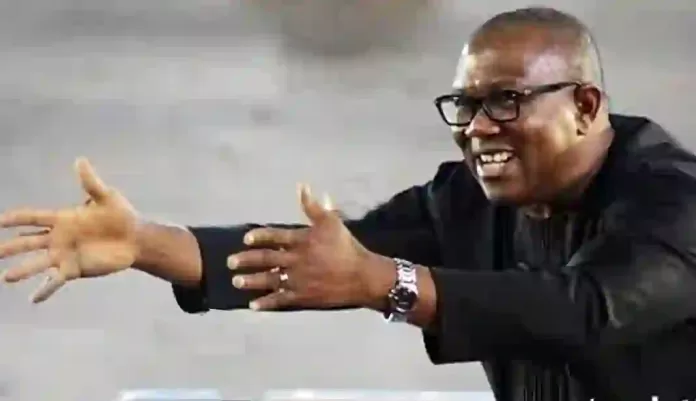
Peter Obi
Peter Obi

By Valentine Obienyem

1.1 Introduction

Today, July 19, 2025, marks the sixty-fourth year in the life of Mr. Peter Obi – a man whose name, with each passing season, takes deeper root in the chronicles of Nigerian history. To speak the truth of him, even at the risk of exhausting an ocean of ink, is to acknowledge that he has emerged, quietly yet unmistakably, as the most beloved and enduringly popular figure in the annals of the nation since its inception.

For popularity, in its truest and most lasting sense, is not merely a measure of fleeting applause or the roar of crowds; it is the affection of a people distilled over time, the celebration of a life that mirrors their nobler aspirations, and the propagation of ideals that echo their hunger for justice, prudence, and moral clarity. In Peter Obi, the people have not only found a leader, they have embraced a conscience.

For 15 years now, I have, perhaps rashly, taken it upon myself to mark his birthday each year with an article. Last year, I wrote on a concept I coined as Obimentalism, which I described as follows: “Coined from Obi and development, Obimentalism is a philosophy that aims to inspire and guide individuals to become active participants in building a better society – one in which everyone has access to opportunities and resources needed to thrive.”

After the article was published, a lecturer in philosophy – always animated by the spirit of Obimentalism – called me and accepted the challenge. He told me he would gladly contribute to popularising Obimentalism, not necessarily because of Obi himself, but because the political philosophy it embodies ought to be embraced by Nigerians, especially politicians, as a guide to shaping their politics in the direction of genuine service, for the good and progress of society.

I also discussed Obimentalism with seasoned philosophy lecturers across the country. A professor at the University of Ibadan expressed interest in expounding its tenets. Prof. Okey Ikechukwu, my mentor whom I call the polymath, who had earlier promised to produce a detailed treatise on the subject, may have forgotten that commitment. He had told me that his approach would be critical and scholarly, involving a thorough distillation of the philosophy and an examination of some of its components through the lens of pragmatism.

For instance, we would raise questions about the meaning and limits of the popular slogan “We no de give shishi.” Should shishi be given in certain circumstances? What is the place of consensus building in Obimentalism? How does Obimentalismaccommodate critical and structured opposition within its framework? How does it distinguish between principled frugality and strategic investment? What role does empathy play in decision-making under the banner of fiscal discipline? Is there a tension between idealism and political pragmatism in Obimentalism, and how is it resolved? What ethical guidance does it offer for navigating alliances with morally ambiguous actors in pursuit of the greater good? Does Obimentalismprovide an ethical framework flexible enough to address moral dilemmas in real politics? What kind of political reality does Obimentalism assume or bring into being – is it merely a moral stance, or does it constitute a distinct mode of being in governance? Does Obimentalism propose a new theory of the state, or is it a reformist model within existing structures? How does it reconcile individual freedom with collective responsibility? Is it compatible with liberal democracy, or does it lean towards communitarian ideals?

These are the kinds of inquiries his proposed work was meant to address, questions that must be asked, if Obimentalism is to evolve into a serious political and philosophical tradition rather than a passing campaign ethic.

For one seasoned academic in a Nigerian university, Obimentalism represents a timely and necessary intervention in the nation’s political discourse. He views it not merely as a personalist ideology centred on any single figure, but as a framework capable of reorienting political leadership towards ethical responsibility, fiscal discipline, and people-centred governance. In his view, Obimentalism deserves rigorous academic interrogation, as it offers a moral compass in a polity often adrift in opportunism and transactional politics.

A year after my initial proposition, and to the best of my knowledge, four higher institutions – one university, a major seminary, a federal polytechnic to my knowledge have begun introducing the concept to their students. While this development is encouraging, much more still needs to be done to deepen its academic engagement and institutional adoption.

On the 23rd of February, 2025, a lecturer in the Department of Philosophy forwarded to me a question that had been set for students in a Social and Political Philosophy course. The question read: “Can ‘Obimentalism’ be systematised as an original African contribution to contemporary political philosophy? A study of Peter Obi’s political thought and praxis.”

Curious – given how dear the subject is to me – I made further inquiries and discovered that the question was set by the lecturer himself. I reached out afterwards, and he was surprised to learn that I had found out. I told him he should have mentioned it to me, but he responded: “Val, it is not about you or about Peter Obi. It is about using whatever tools are available to promote good governance across Africa.”

I later learnt that he had shared the article on Obimentalism with his students and engaged them in a full discussion of its core ideas during class.

What the lecturer has done – and what I have sought, through this article, to gently yet persistently cajole my mentor, Prof. Okey Ikechukwu, into doing– is precisely what I now earnestly enjoin all lecturers in the fields of philosophy, political science, and other allied disciplines to consider.

We have among us a golden fish, one of a kind seldom witnessed in African political history. What we owe to humanity, and to posterity, is to make him better known and to critically articulate his political philosophy for the greater good of society.

This task should not be left solely to his close associates and apostles, such as Prof. Chinyere Stella Okunna, Prof. Patrick Obi, Chief Joe-Martins Uzodike, Mr. Fidel Okafor, Barr. Okoli Akirika, and Barr. Ugochukwu Ezeani, among others. The burden– and the honour – must be shared by all who believe in the power of ideas to shape a more just and enlightened future.

Today, in the disciplines of philosophy and political science, the political thoughts of African luminaries such as Nnamdi Azikiwe, Kwame Nkrumah, Léopold Sédar Senghor, Julius Nyerere, ObafemiAwolowo, Amílcar Cabral, Thomas Sankara, Nelson Mandela, and Frantz Fanon are studied with the reverence reserved for those who helped shape the moral and intellectual contours of modern Africa. To this evolving canon, Peter Obi’s philosophy – Obimentalism – ought to be meaningfully added.

The Obi we speak of is not merely a politician, but a thinker. As a student of philosophy himself, he chose Steve Biko, a fearless prophet of Black consciousness, as the subject of his academic project. That early intellectual curiosity foreshadowed a lifelong commitment to the ethics of public service, marked by fiscal responsibility, social equity, and principled governance.

As he turns 64 this year, and because Obimentalismremains dear to our hearts as a homegrownframework for rethinking governance, I have taken the liberty of republishing the article under reference, unedited. It is my hope that it continues to provoke inquiry, inspire scholarship, and invite deeper engagement with the ideals he embodies – ideals that may yet prove vital to the political renewal of our continent.

2.1 Obi at 63: Introducing Obimentalism

Over the years, I have written about Obi on his birthdays, a tradition stemming from my annual tribute to Dim Chukwuemeka Odumegwu-Ojukwuwhile he was alive. I celebrate individuals deserving of recognition, those who understand that a person’s worth is not measured by wealth amassed but by the positive impact left on the world. This encapsulates our subject, who turns sixty-three today and is making a huge impact on society in diverse forms.

Because of his recognised impact, he is the major topic of discussion among serious and even unserious minds that irritatingly use his name to chase clout on social media platforms. Last month, I had an unexpected encounter with a lecturer in philosophy who teaches at a Nigerian university and seminary. Our discussion centred on the philosophy of Mr.Peter Obi. He shared that he had devoted time to studying Obi and found his philosophical insights compelling. He emphasized the importance of studying Obi’s political and existential philosophies, not just for Nigeria but for humanity as a whole. As a lecturer, he had already begun incorporating Obi’s philosophy into his teachings, urging his students to analyse and expound.

The lecturer was absolutely right, and I concurred with him. Just as we discuss Thomism for St. Thomas Aquinas, Aristotelianism for Aristotle, Confucianism for Confucius, and Cartesianism for René Descartes, Obi’s philosophies, variously described as “Obism,” “Obinometricism,” and “Okwuteism,” should be distilled into a single term and actively introduced to students, taking on a life of its own in society. Before concluding, he analysed the names ascribed to Obi’s philosophy and noted that “Obinometricism” sounded more like economics than philosophy and should be ceded to economists. The fact is that Father is at work and beckoned others to set out to work as well. I am at work as well. I therefore propose that we term the corpus of Obi’s philosophy Obimentalism. We shall come back to that.

The lecturer clarified that his promotion of Obi’s philosophy had nothing to do with Peter Obi as an individual but everything to do with the enduring impact of his life and philosophy on society. “Val, we do not know Plato or Aristotle personally, yet we still study them because their thoughts continue to function actively in society. Peter Obi deserves similar adulation,” he  concluded, while bursting with energy.

Now, who is Peter Obi? If we subject his actions to critical analysis, what philosophy can be gleaned from them? Can we distil a consistent political, ethical, and economic philosophy from his engagements? At sixty-three, how do we define him? Who among us is equipped to dissect such a multifaceted man?

From a young age, Obi earned money, starting even in primary school, yet he never let wealth dictate his life. This distinction in business followed him into public office, where service has remained his watchword.

As Governor, his priority was the welfare of the people, driving him to govern differently. He concurrently pursued all sectors and excelled in each. Those close to him marvelled at his capacity for long and intense mental labour. He has remained a volcano of energy and astonishes by the variety and accuracy of his knowledge in philosophy, politics, economics, and life itself. In a nation where governors often leave their states in debt, Obi left unimaginable surpluses – over ₦75 billion.

We talk about him today and seek to align our ideas with his because, over the years, he has proven, like all great men, to be a man with a mission. Thus, it has not been smooth for him as his whole life has remained a battle – against those who rigged him out, those who impeached him as governor, and those who truncated his tenure. He fights against friends who, at each turn in his battles, want him to compromise his principles or abandon his struggles through the courts in favour of a gentlemanly protest politely established and easily forgotten. He has seen the end of his numerous battles against injustice. He sustains his principles through discipline, manifest freedom from every kind of corruption, and superiority to all considerations of money, which have often allowed him to rise above the baseness of human nature to the erect stature of the self-conquered man. Such a man deserves to be philosophically celebrated!

Obimentalism! This is what we shall call it – coined from Obi and development. Obimentalism is a philosophy that aims to inspire and guide individuals to become active participants in building a better society, where everyone has access to opportunities and resources to thrive. Is it not a great term to describe Peter Obi’s philosophical approach?

2.2 The Core of Obimentalism

Obimentalism, as a philosophy, reflects Peter Obi’s worldview through the very letters of its name, each symbolising a distinct and foundationalvalue. Ostands for Opportunities – the commitment to creating avenues where every citizen, regardless of background, has a fair chance to grow, thrive, and contribute meaningfully to national development. Brepresents Building – not only in the physical sense of infrastructure but more importantly, in investing in human capital and strengthening institutions that ensure long-term social and economic progress. I isfor Inclusivity, underscoring Obi’s belief that governance must reflect equity, ensuring that no group or individual is marginalised on the basis of ethnicity, religion, or class. M stands for Meritocracy, a firm rejection of nepotism and favouritism, and a call to reward competence, character, and hard work. E symbolises Empowerment, where people are given the tools –especially through education and access to opportunities –to take charge of their own destinies. N reflects Noble Leadership, the principle that true leadership is rooted in humility, vision, and the sincere desire to serve rather than rule. T denotes Transparency, an insistence on openness in governance, where processes are clear, resources accounted for, and leaders held to high ethical standards. A stands for Accountability, the willingness to accept responsibility for decisions, outcomes, and even failures, rather than shifting blame. L is for Legacy, emphasising the importance of building structures and values that endure beyond one’s time in office. I again represents Integrity, the adherence to moral and ethical principles, even when they are inconvenient or unpopular. S denotes Service, placing the welfare and aspirations of the people at the very centre of public policy and leadership. Lastly, M stands for Mentorship, a commitment to raising a new generation of ethical, competent leaders who will sustain and build on the values of good governance.

These principles are not mere abstractions or rhetorical devices; they are demonstrable elements of Peter Obi’s public service, policy choices, and personal conduct. From prudent financial management as governor to consistent advocacy for youth education and institutional reforms, Obi’s actions provide a living model of Obimentalism in practice. In a national landscape often characterised by cynicism, corruption, and short-term opportunism, Obimentalism emerges as a philosophical countercurrent – a framework anchored in ethical realism, civic responsibility, and the urgent need for transformative leadership in Nigeria and beyond.

2.3 Encouraging Academic Inquiry

At this juncture, I join the lecturer-friend  in urging academic philosophers, economists, and political scientists to conduct and encourage rigorous research on Peter Obi, not as a political figure alone, but as a repository of values, models, and reformist thought that deserve systematic study.

Students across various academic disciplines – philosophy, political science, public administration, economics, education, sociology, and beyond –should be actively encouraged to undertake in-depth studies on the legacy of Peter Obi, as his unique approach to governance offers a rich reservoir of themes, principles, and practices that warrant serious scholarly interrogation. His philosophy, often encapsulated in the term Obimentalism, represents a rare fusion of ethical leadership, fiscal prudence, and human-centred governance. Possible research topics that capture different dimensions of his thought and practice include: “The Ethics of Prudence: An Analysis of Peter Obi’s Fiscal Responsibility”, which could investigate how his emphasis on savings, debt control, and budgetary discipline challenges prevailing norms of political spending in Nigeria; “The Philosophy of Education: Peter Obi’s Vision for Human Capital Development”, exploring his prioritisation of educational infrastructure and policies as a sustainable tool for national development; and “The Politics of Integrity: A Case Study of Peter Obi’s Leadership”, which would critically assess how integrity and personal ethics shaped both his public image and administrative decisions. Additionally, a study titled “A Philosophical Analysis of Peter Obi’s Political Career” might evaluate his contributions through frameworks such as virtue ethics, utilitarianism, or communitarian theory, while “The Intersection of Politics and Philosophy: Peter Obi’s Approach to Development” could interrogate how his moral convictions influenced his policy choices, particularly in health, education, and infrastructure. Another valuable theme is “The Virtue of Frugality: An Exploration of Peter Obi’s Simple Lifestyle”, where scholars can examine how his modest personal habits symbolise resistance to the culture of excess and corruption in Nigerian politics. “The Ethics of Resource Allocation: Peter Obi’s Budgetary Framework” could delve into the moral implications of how public resources were distributed under his administration, evaluating his choices through the lens of justice and equity. Finally, “Governance and Moral Economy: A Critical Look at Obimentalism”would offer a comprehensive philosophical analysis of the entire value system that underpins Obi’s political ideology, providing insights not just into his governance but into the possibilities of ethical leadership in a postcolonial African state. These and many other topics present an opportunity for a generation of scholars to document, analyse, and critique a model of leadership that seeks to merge moral clarity with political effectiveness.

This is more than wishful thinking. As a postgraduate student myself, I observe firsthand that there are few classes in economics, politics, or philosophy where Obi’s governance style and policy decisions are not referenced as examples of ethical leadership. In one class with Prof. Chinyere Stella Okunna, we were asked to analyse Obi’s Chatham House speech through a mass communication lens. This is exactly the kind of academic engagement we must multiply. I hope the likes of Dr. Nze U. Nze are taking notes.

Therefore, Obi is a fully researchable subject. Many literature are on him. More than any Nigerian public servant of his era, he has inspired a cascade of scholarly interest. Even Dr. Ngozi Okonjo-Iweala devoted a chapter to him in her book. Unsolicited books on his leadership abound. In fact, today – a day marking his 64th birthday – there will be a public presentation of Democratic Leadership: Peter Obi and the Passion for a New Nigeria by Mr. Fred Emeka Eneje in Enugu. A few weeks ago, my good friend, Mr. Sola Fasure, drew my attention to another upcoming volume titled The Gaullist Obi: Reshaping Nigerian Politics. He wrote to me: “Val, one of our friends wrote this book and I thought you’d be interested.” This is the mark of true influence: when literature blossoms around a life without being demanded.

Peter Obi, to his credit, never sponsored a single book or panegyric during his time in office. Yet his legacy, like a quietly burning lamp, continues to illumine minds long after power has changed hands.

2.4 Conclusion: The Philosophy That Walks

If popularity is to be measured by the widespread acceptance of one’s values across societies and disciplines, then Peter Obi must rank among the most revered Africans of our time, with his life and ideas now transcending the bounds of partisan politics. His legacy is built on discipline, measurable outcomes, and a moral coherence that resists the endemic rot of Nigerian public life.

Through Obimentalism, we are presented with a fresh, distinctly African contribution to political philosophy, one grounded in practical virtue, fiscal responsibility, and visionary moderation. As he turns 64, we are not simply marking the birthday of a man – we are celebrating a method, a model, and a movement. It is a call to the academy, the Church, civil society, and the youth to take seriously the urgent task of engaging with Obimentalism as both an intellectual framework and a moral compass. In Obi, we find a living legacy; in Obimentalism, we find the language to preserve and transmit it. Let scholars write, students question, and the public reflect, so that Obimentalism may become the name by which a generation remembers that good leadership was not only possible but is still within reach.

Tinubu Receives The Jonathan Treatment Over Renaming  UNIMAID After Buhari

1
Bola Tinubu and Universityof Maiduguri

By Gideon Njoku

In a classic example of “what goes round comes round”, deafening outcry has greeted an honour bestowed on late President Muhammadu Buhari by President Bola Tinubu.

President Tinubu had, during a special Federal Executive Council Meeting in honour of the late President Buhari, renamed the University of Maiduguri after him (Buhari).

But just as was the case during the President Goodluck Jonathan Government, strong resistance has followed it, and not a few are prepared “to go to war” over the gesture.

Recall thar President Jonathan had, during his time in office, renamed the University of Lagos after Chief Moshood Abiola, the winner of the still officially undeclared 1993 Presidential election.

Jonathan’s gesture to honour Abiola, a man who had contributed so much to Education countrywide, was resisted in a most bitter manner by then opposition politicians one of whom was the now President Tinubu, alumni of the University and other stakeholders.

Tinubu made front page news with his strong condemnation of Jonathan’s gesture to Abiola. Some people even went to court in a move which not a few people dismissed as political, and a dig to embarrass Jonathan. But they had their way. That honour was aborted, and the University of Lagos remains the University of Lagos.

Now enters 2025. And Tinubu, as President, decided to rename the popular and highly regarded University of Maiduguri after the late Buhari, and he is being given the same bitter pill to swallow.

In their thousands, stakeholders have risen against Tinubu’s move to honour Buhari with renaming the resilient University of Maiduguri after him. “You cannot do that Mr President”, they chorus. Political leaders, Students, Stakeholders, University Alumni, all. They are speaking with one voice, and are united in their opposition against the honour. Halt the process, they demand.

In a strongly-worded petition, the opposing stakeholders said they appreciated  Buhari’s legacy, but warned that renaming  UNIMAID after him would do no good for the institution’s established identity built over more than 40 years.

The University of Maiduguri, the petition, championed by Opeyemi Olatinwo said, is “a symbol of resilience, academic excellence, and regional pride.”

It noted its  enduring role during the height of Boko Haram’s insurgency, when it remained open and active despite threats by the terrorists.

Said the letter: “UNIMAID is more than a name; it is a brand and a beacon of hope in the Northeast. It would be a significant loss to its emotional and historical value” to rename it.

Already, thousands of people have endorsed the petition with their signatures, including current students and distinguished alumni. They argued that the proposed renaming does not reflect the views of the university’s core stakeholders and broader Nigerian public.

While noting their deep respect for Buhari, they suggested other institutions that could be named after him. For instance, they said, the Federal University of Transportation in Daura, Buhari’s hometown, or the Nigerian Army University in Biu.

They pointed out: “This is not a political protest. It is a heartfelt plea for continuity and for the preservation of a name that has survived conflict and nurtured generations of leaders.”

Gov. Okpebholo Threatens Peter Obi’s Life, Ban’s Him From Edo State

0
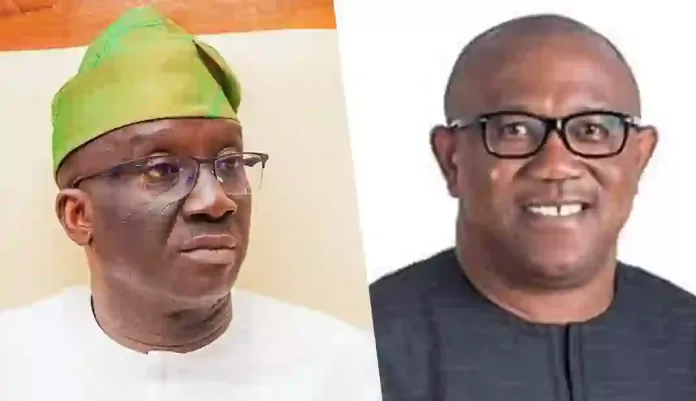
Senator Monday Okpebholo and Peter Obi

By Charles Igbo

The Governor of Edo State, Senator Monday Okpebholo,  has publicly threatened the life of Peter Obi. He said Obi must never step his feet into Edo State. He said if Obi must, it has to be with an express approval from him. Obi needed to tell Okpebholo first, and wait fir approval  Otherwise, he said, Obi would pay heavily for daring him.

Okpebholo said Obi should hold himself responsible if he dared disobey him. If Obi does, Okpebholo said he cannot guarantee Obi’s safety. To show how serious he is, Okpebholo added: “I’m not joking.’

Okpebholo did not say exactly what Obi did wrong. And why he banned Obi from Edo State. But he gave an inkling: Obi’s philanthropic activities. He wondered from where Obi is getting the money he is donating to good causes. And gave the impression that Obi’s visit to a school in Edo where he donated the sum of N15 million was responsible for the death of three people.

Said Okpebholo in a viral video where he addressed his supporters and threatened Obi’s life:

“This message is for the man who claims he has no ‘shishi’ (money).

“There is a new Sheriff in town. He cannot just come into Edo without informing me. His security will not be guaranteed. If anything happens to him here, he will have himself to blame. I’m not joking.”

Given Obi’s frequent contributions to charity, Church, health and educational institutions, Okpebholo wondered the source of Obi’s funds, and pointed out what he sees as the contradiction between Obi’s public statements and his financial  contributions to institutions.

Okpebholo: He came the other day and gave out N15 million. A man who claims he has no money, where did he get that from?

“After he left, there was unrest in Benin, and three people lost their lives. That’s why I’m saying this: tell Obi not to step into Edo State without telling me first.”

Okpebholo is the second State Governor who has threatened Obi’s life in the past few months. The first was Benue State Governor, Rev. Fr. Hyacinth Alia who stopped Obi from visiting the Camps of  Internally Displaced Persons in the his State.

Obi is a former two-term Governor of Anambra State and the Presidential Candidate of the Labour Party in the 2023 Presidential Election.

WAFCON 2024: Super Falcons Wallop Zambia, Zooms Into Semi Final

0
Super Falcons of Nigeria

By Akinwale Kasali

The Super Falcons of Nigeria has booked a place in the Semi-finals of the ongoing Women African Cup of Nations,  WAFCON,  Championship in Morocco with an outstanding performance against Zambia. The team handed its Southern African counterparts a 5-0 defeat.

The Super Falcons declared their dominance in the continent with a second minute strike from Osinachi Ohale.

Esther Okoronkwo added the second goal while Striker, Chinwendu Ihezuo, added a third goal to put the game behind the Barbara Banda-Captained Zambian team.

In the Second Half, the Super Falcons continued from where they stopped as they caged the duo of Banda and Marta Kundanijaji from threatening the Falcons defense.

Blessing Demehin, in the heart of the Nigeria Central Defense, added the fourth to put the game beyond the Zambians, while substitute, Folashade Ijamilusi added the fifth to give the nine-time Champion, a commanding win to Zoom to the semi finals.

Coach Justin Maduagu made some changes in the starting line up, introducing Esther Okoronkwo, Chinwendu Ihezuo and Ucheibe in the starting line up, dropping Asisat Oshoala, Rinsola Babajide and Toni Payne.

He, however, maintained Chiamaka Nnadozie in goal, the duo of Ohale and Demehin in the Central Defense, Michelle Alozie and Ashleigh Plumptre in the Right and left back.

Halimatu Ayinde, Rashidat Ajibade and Deborah Abiodun in the midfield.

With this victory,  the Super Falcons have revenged their 1-0 loss to the Zambians in the third place match at WAFCON 2022.

They now await the winners between Mali and Morocco in the Semi Finals.

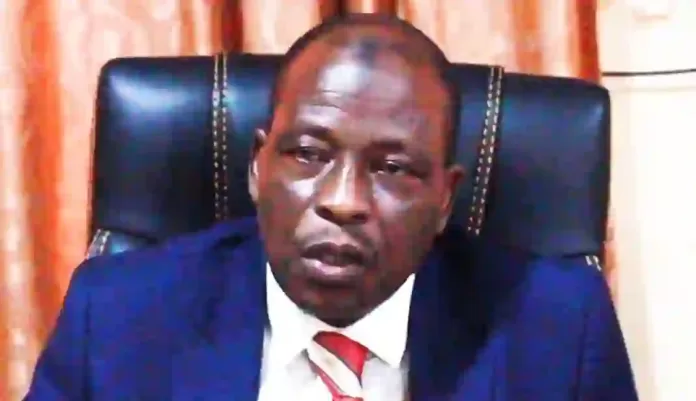
ICPC Arraigns Kano Electoral Commission Chairman Over N1.02Bn Money Laundering

0
Prof Sani Malumfashi Chairman KANSIEC

By Suleiman Anyalewechi

All appear set for the prosecution of some officials of the Kano State Independent Electoral Commission KASIEC, for alleged N1.02 billion money laundering.

The Independent Corrupt Practices and Other Related Offences Commission ICPC, baring any last minute change of mind, will on Monday July 21, 2025, be arraigning  KANSIEC Chairman, Professor Sani Malumfashi, the Secretary, Anas Muhammed Mustapha, and Ado Garba ,the Deputy Director of Accounts, before an Abuja Federal High Court on charges bordering on conspiracy, abuse of office, and large scale illegal cash transactions, contrary to the country’s anti-corruption and money laundering laws.

According to the facts of the case, the KANSIEC officials are being accused of illegally transferring the said sum of N1.02 billion from the Commission’s Unity Bank account to the account of a private firm- SLM Agro Global Farm in November 2024.

The anti-graft agency contended that as at the time of the illegal and suspicious transfer, SLM Agro Global Farm as a business outfit, was not having any contractual agreements with the electoral body to warrant such a haughty transaction.

According to the ICPC, the KANSIEC officials had, in their preliminary defence during investigations, claimed that the transaction was aimed at raising cash to pay adhoc field workers, and to also avoid the encumbrances of bank payments, which could affect its operations during the local council polls.

However, the anti-graft Commission argued that the reason adduced by KASIEC does not, in any way, align with the facts on the ground.

The ICPC stated that the said fund was returned in cash to the electoral body, thereby circumventing all due financial procedures.

The Agency cited a particular case in which the electoral Commission in a letter to the Unity Bank requested  N59.4 million payment to about 468 Electoral officers, and 42 Assistant Electoral Officers through standard and approved bank transfers.

The Bank, according to the ICPC, did not only honour the request, but did so promptly, a development which it said contradicts the Electoral body’s claim that bank payments tended to delay it’s operations.

“The explanation that bank transfers would have delayed payments was nothing more than a cover to mask illicit financial activities.

It was a calculated attempt to justify money laundering”, the ICPC’ argued.

Furthermore, the anti-graft Commission questioned KANSIEC claims that the sum of  N20 million was used in paying some field officers who conducted the screening exercises of candidates across the 44 local councils of the State.

According to the case file, the ICPC stated that it’s findings revealed that the screening exercise was carried out at the KANSIEC Head Office in Kano for allcandidates, with no exercise taking place at the Local Government level as claimed by the Electoral Commission’s officials.

The anti-graft agency averred that despite the fact that there were no screenings outside the Headquarters of the Commission, the third defendant, Garba. the Deputy Director of Accounts, still claimed that N20 million was paid out in cash to screening officers in the 44 local Councils and 484 Wards of the State.

Terrorism Charges: Nnamdi Kanu To Know Fate, October 10

0
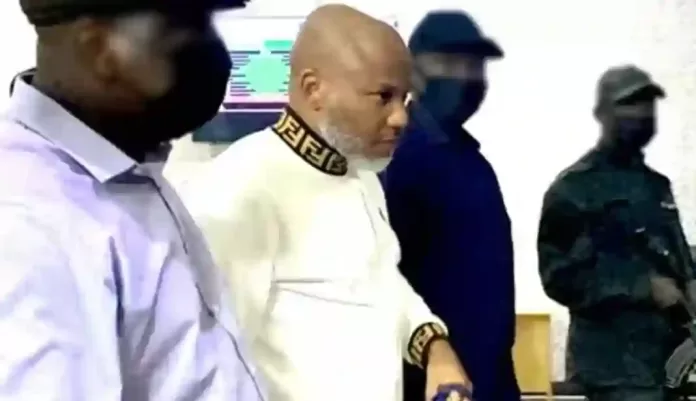
Nnamdi Kanu in Court

By Suleiman Anyalewechi

An Abuja Federal High Court on Friday, July 18, 2025, reserved judgment  for October 10, 2025 on the no-case submission made by the leader of the Indigenous Peoples of Biafra IPOB Mazi Nnamdi Kanu.

Kanu, who has been standing trial on charges bordering on  terrorism since 2021 on  Friday opened  his defence with a no-case plea through his counsel, Kanu Agabi, SAN.

The Federal Government which has been prosecuting the IPOB leader on alleged terrorist activities at the  Court sitting in June, closed its case after calling about five witnesses.

The Presiding Judge, Justice James Omotosho adjourned proceedings to October 10, after hearing arguments from  both parties.

The defence counsel in his submission urged the Court to discharge and acquit his client, Kanu, after challenging the validity of the prosecution’s charges.

Agabi, a former Attorney General, and Minister of Justice, argued that  none of the witnesses had testified that Kanu was responsible for inciting violence against the people as being argued by the prosecution.

Agabi further argued that all the five witnesses ( DSS operatives)  called by the  prosecution, apart from not blaming Kanu for the eruption of violence, also, admitted that their roles were limited to only obtaining statements from the IPOB leader.

The IPOB leader’s Counsel contended that no conclusive investigation was conducted on the statements allegedly made by Kanu, and that no investigative reports were also tendered before the Court in that regard.

Agabi, who further posited that Kanu only called on the people to defend themselves in the face of rampant killings, also, contended that he  was only merely being boastful when he was alleged to have threatened to “bring the world down”.

The defence Counsel was of the view that Kanu’s position that the people should defend themselves is a constitutional right which has been reechoed by many prominent Nigerians, including General Theophilus Yakubu Danjuma rtd.

He equally picked hole in the endless detention of Kanu, arguing that all extant laws, both local and international, are against solitary confinement of people.

The defence counsel was of the view that such mere piece of propaganda and boastful talk should not be cited as a veritable evidence of terrorism against the IPOB leader.

Agabi, in conclusion, argued that the terrorism charges preferred against Nnamdi Kanu by the Federal Government could not be proven during the trial.

Consequently, he urged the court to dismiss the charges, discharge and acquit his client as there are no sufficient grounds to continue with the trial.

Earlier, the prosecution’s legal team led by Adegboyega Awomolo, SAN, had prayed the court to dismiss the  defendant’s no-case submission for lacking in merit.

The prosecution insisted that the detained IPOB leader had made a broadcast on Radio Biafra, during which he openly called for the break-up of Nigeria as a country.

In addition, Awomolo contended that apart from threatening the existence of the country, Kanu also expressed the intention to establish the Republic of Biafra.

The prosecution counsel prayed the Court not to perceive Kanu’s position as just a mere and empty threat, but to view it as a deliberate and dangerous plot to disintegrate Nigeria ,as well as sow  seeds of violence and widespread fear among the citizens of Nigeria.

He argued that Kanu’s threat of ” bringing down the world” was not an empty one, but serious national security challenge which should not be handled with a kid glove.

Awomolo contended that the IPOB leader in his Radio Biafra broadcast directed his listeners/followers to target, and kill police personnel, security operatives, and their family members.

The Prosecution lead counsel argued that owing to Kanu’s message, over 170 security officials were killed.

“The defendant made a broadcast in which he proudly declared himself as the IPOB leader, even though he knew that the group had been proscribed.

He claimed that the world would come to a standstill. The Nigerian law prohibits inciting statements capable of making citizens live in perpetual fear.

“The threat to destroy Nigeria was not an idle talk. It was aimed at creating Biafra ,and there are consequences for such statements”, Awomolo argued.

To this end, the prosecution   contending, urged the court to dismiss Kanu’s  no-case-submission.

How Ondo Varsity Registrar Was Assassinated – Police

0
Ezekiel Adeniyan

By Ayodele Oni

Ondo State Police Command has revealed the reason for the sudden death of the Registrar of the University of Medical Sciences, Ondo, (UNIMED), Ezekiel Adeniyan who gave up the ghost on Thursday.

According to sources, the deceased, who was appointed over six months ago, was found dead in his house on Thursday morning, with nobody able to adduce reason for the sudden death.

The State Police Command on Friday confirmed that the deceased was assassinated.

The State Police Public Relations Officer, Mr Olayinka Ayanlade, confirmed that the matter was a case of assassination.

The PPRO said,  “The man died in the early hours of yesterday. I can confirm to you, this was reported at Fanibi Division. We are doing everything possible to unravel the lies surrounding this case. I mean, we are after those responsible for this case.

“I can confirm to you that the man was killed. From the information I have at my disposal, two men came out of the bush and they forced a substance into another person’s mouth.

“But I can’t confirm to you where it actually happened, but our area of interest is to unravel who is responsible for his death.”

The command’s spokesman urged that anybody with information concerning the assailants should, , “please feel free to come forward and share it to reach us.”

The school management also confirmed the incident, in a statement issued by the Head of Media and Protocol of the state government-owned institution, Mr Isaac Oluyi on Thursday.

The statement read, “The devastating news (of the registrar’s death) has thrown the university into mourning, as it was shocking! He was still at his duty post on Monday, 14th July, 2025.

“As at the time of writing this statement, the cause of his death is yet to be ascertained.

“Mr Adeniran assumed office as the third substantive Registrar of UNIMED on the 6th January, 2025 and remained so until his sudden demise today, 17th July, 2025.

“Our thoughts and prayers are with his immediate family and the entire University community in this trying moment. May God repose his soul!”

President Tinubu Appoints IBB Son, Others As Heads Of Banks, Federal Agencies

0
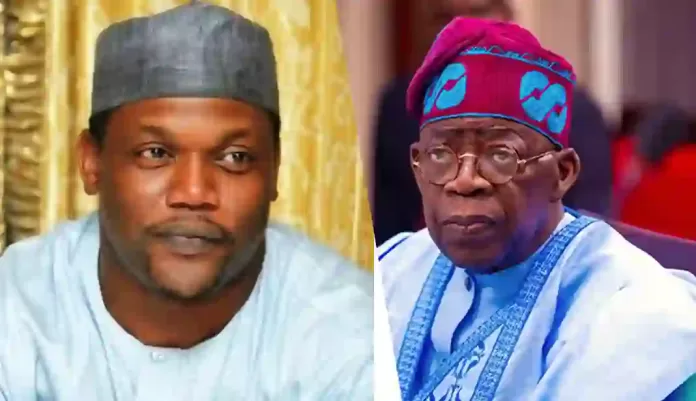
IBB Son and Bola Tinubu

By Ayodele Oni

President Bola Tinubu has approved the appointment of Muhammad Babangida as the new chairman of the Bank of Agriculture.

Babangida, who is the son of former military president, Ibrahim Babangida, is expected to oversee the bank’s operations following its recent restructuring.

The special adviser to the president on information and strategy Bayo Onanuga, disclosed this in a statement on Friday, along with the appointment of seven other individuals to various leadership roles across federal agencies.

The selected persons will serve either as chairmen or heads of agencies that handle oil and gas, education, standardization, peace building, trade, technical cooperation, electricity, and water resources.

Muhammad Babangida, aged 53, studied Business Administration and later obtained a master’s degree in Public Relations and Business Communication from the European University in Montreux, Switzerland.

He also completed a corporate governance programme at Harvard Business School in 2002.

Among the new appointees is Lydia Kalat Musa from Kaduna State, who is now the chairman of the Oil and Gas Free Zone Authority.

Jamilu Wada Aliyu from Kano State will serve as chairman of the National Educational Research and Development Council, while  Yahuza Ado Inuwa, also from Kano, has been picked to chair the Standard Organisation of Nigeria.

Sanusi Musa, a Senior Advocate of Nigeria from Kano, is to lead the Institute of Peace and Conflict Resolution.

Prof. Al-Mustapha Alhaji Aliyu from Sokoto State has been made Director-General of the Directorate of Technical Cooperation in Africa.

In addition, Sanusi Garba Rikiji from Zamfara State is the new Director-General of the Nigerian Office for Trade Negotiations.

Tomi Somefun from Oyo State has been chosen as Managing Director of the National Hydro-Electric Power Areas Development Commission, while Dr Abdulmumini Mohammed Aminu-Zaria from Kaduna will serve as Executive Director of the Nigerian Integrated Water Resources Management Commission.