

Home Blog Page 617

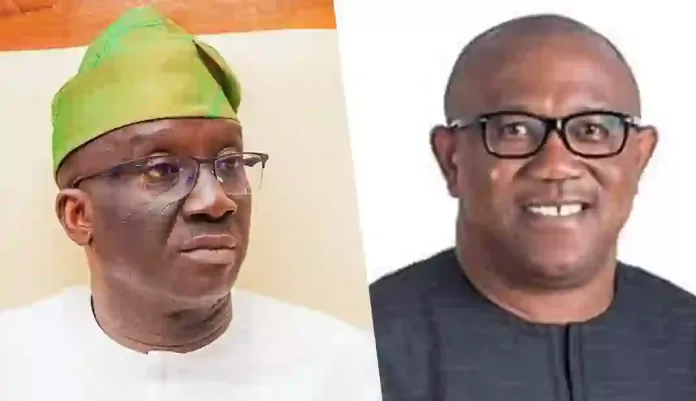
Ondo: Chief Magistrate Court Orders Remand Of Self Imposed Monarch, Two Chiefs

0
Adekolajo Aladeseyi - Self Imposed Monarch

By Ayodele Oni

Adekolajo Aladeseyi, who was parading himself as the Oba-elect of Ijare, and two chiefs, Fasore Lawrence and Adegbenro Akanle, were, on Thursday ordered to be remanded in custody by  a Chief Magistrate Court, Ondo State.

This followed their alleged role in the installation of a monarch without official approval, a move that sparked unrest in Ijare, Ifedore Local Government Area.

They were arraigned by the Police for, allegedly, conducting an illegal installation of Aladeseyi as the Olujare of Ijare, a first class traditional stool currently declared vacant.

The prosecution said their actions were likely to incite a breach of peace and violated the State’s  Chieftaincy Laws.

They were ordered to be remanded pending further hearing. The ruling was delivered by Magistrate Jayeola, who adjourned the case to Monday, May 12, 2025.

According to the charge sheet, the accused persons and others still at large, allegedly conspired in the early hours of April 15, 2025, around 1:00 a.m., in Ijare town, to commit a misdemeanor by engaging in conduct likely to cause a breach of public peace, an offence punishable under Section 517 (A) of the Criminal Code, Cap 37, Vol. 1, Laws of Ondo State of Nigeria, 2006.

In a second count, the defendants were accused of conducting themselves in a disorderly manner by unlawfully and falsely installing Adekolajo Aladeseye as the Olujare of Ijare without the authorization of the Ondo State Executive Council of Chiefs.

This, according to the prosecution, also constitutes conduct likely to cause a breach of public peace, contrary to Section 249 (d) of the same law.

The state police command had earlier announced the arrest of the accused persons on the order of the state government.

The stool of the Olujare, a first-class monarch, had been vacant since the demise of Oba Adebamigbe Oluwagbemigun, Kokotiri II, four years ago.

Some kingmakers in the town and the royal family had kicked against the installation, alleging that they were never part of the selection process as required by law.

“Our National Chairman Goes Mad Again,” LP Reps Counter Abure Over Purported Suspension

0
Julius Abure LP Chair

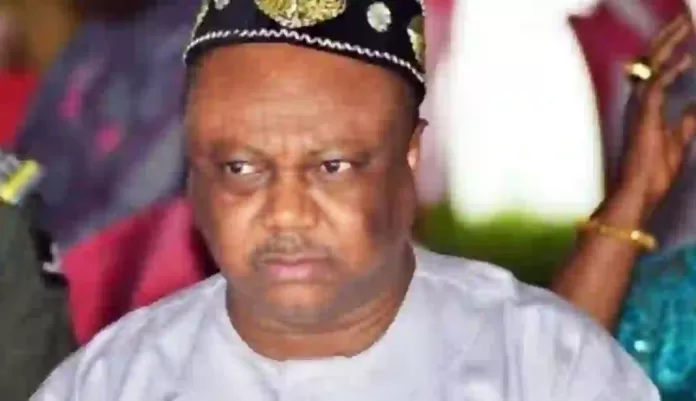
Three Labour Party members of the House of Representatives have dismissed their purported suspension from the party, describing it as “laughable” and a desperate attempt by a “dethroned emperor” to cling to power.

Barrister Julius Abure, former Labour Party chairman, who was ousted by a recent Supreme Court judgment, yesterday announced the suspension of the trio of Hon. Afam Victor Ogene, Leader of the Labour Party Caucus in the House of Representatives, Hon. Seyi Sowunmi, Deputy Leader, and Hon. Amobi Ogah, a prominent member of the caucus.

The embattled former chairman had also announced the suspension of the only governor elected on the platform of the party, Dr. Alex Chioma Otti of Abia State, Senator Ireti Kingibe and Senator Darlington Nwokocha, Secretary of the National Caretaker Committee of the Labour Party.

In a joint statement titled “Our Former National Chairman Goes Mad Again,” the three LP lawmakers expressed dismay that Abure, instead of working to improve the fortunes of the Labour Party, seemed focused on orchestrating its disintegration to appease external forces driving his actions.

They said further, “From yesterday’s overreach of himself and his band of jesters, it is now evidently clear to everyone who has followed recent events in the Labour Party, that our former national chairman, Barrister Julius Abure, has gone mad again, in a desperate move not to go down alone.

“It’s utterly absurd that Abure, who failed to demonstrate moral integrity during his tenure as national chairman, now claims the authority to sanction party leaders. Only in Abure’s distorted reality can those with questionable character judge others. In the real world, his Supreme Court-nullified leadership status has reduced him to a self-serving shameless impostor driven by personal gain.

“A political party is set up for the specific goal of participating in the democratic process, especially the contestation for power.
Since the Peter Obi effect of 2023, what has Abure and his gang of undertakers done to enhance the fortunes of the party? In fact, we challenge him and his cohorts to name one single individual of note that they have attracted to the party since 2023.

“From Kogi to Bayelsa, Ondo to Edo, what Abure has done is lead the Party to disastrous outcomes.

“All they have excelled in, is run the party as a criminal enterprise, fleecing aspirants of hard-earned cash in exchange for party ticket.

“Even in his native Edo, where he was dragged on the floor like a common felon because of disputations over misappropriated delegate funds, the over-bloated and egoistic Abure couldn’t even win his polling unit for the party.

“Pained of being kicked out of his lucrative position as national chairman, on account of abuse of official malfeasance, Abure and his gang of jesters have resorted to desperate antics in a bid to stay relevant.

“Which self-respecting national chairman of a political party busies himself running around media houses like a press boy? The last time around, it was announcing the sack and replacement of Hon. Ogene as caucus leader, but when that didn’t work, he has resorted to contriving a fake suspension order.

“Abure has appointed himself as a willing undertaker for the destruction of the soul of the Labour Party but ironically, he is only supervising the burial plan of his image and integrity as a public servant and political leader. We wish him well.”

Signed:

Hon. Afam Victor Ogene, Leader of the Labour Party

Hon. Seyi Sowunmi, Deputy Leader

Hon. Amobi Ogah, member

GTCO: Renowned World Chefs Dazzle Food Lovers With Flavorful Cuisines

0
GTCO Food Lovers

Celebrity chefs who showcased their skills at the recent GTCO Food and Drinks Festivals in Lagos, have proven what good food can do for a healthy living.

The three-day event, attended by many food lovers across the world also provided an opportunity for culinary lovers to hone their skills on how to prepare healthy meals and drinks for both domestic and family consumption.

The continental chefs did not only prepared good food to the admiration of their audience, one of the major takeaways is the cooking skills they learned from the chefs.

Day One of the event saw the award-winning Chef, Christian Duhalde at the Masterclass teaching the audience on how to make Kids Pizza, detailing every necessary rudiments to the ecstatic audience.

Tilewa Odedina, popular as Chef Tilly, a renowned nutrition chef and culinary expert, shared her expertise on preparing African dishes in a nutritious way.

She demonstrated how to create delicious and healthy African flavors without compromising on nutrition on Day Two of the Masterclass.

Odedina emphasized the importance of using the right ingredients and cooking methods to create nourishing meals that can aid healing. She highlighted the potential of traditional ingredients like agbo and moringa as medicinal remedies.

According to her, the GTCO Food and Drink Festival provides a platform for international chefs to showcase African cuisine and culture.

The session featured live demonstrations of traditional African dishes—such as moi moi, oil-free egusi with steamed vegetables, grilled suya-spiced chicken with quinoa, and a detoxifying zobo and hibiscus smoothie—all of which received applause from the audience.

Chef Tamra Patterson, who was voted the Best Chef in Memphis, United State Of America, USA, was on ground at the Masterclass to teach the audience how to prepare Jambalaya and Jollof.

Also, top Indian chef, Thomas Zacharias, gave a masterclass, paying tribute to the diversity and richness of India’s local cuisine.

Chef Zacharias, known for his commitment to reviving and celebrating India’s regional food heritage, demonstrated how simple, locally sourced ingredients can be transformed into gourmet experiences. The session featured the preparation of three distinct dishes, each highlighting a different aspect of Indian culinary diversity.

The menu was no doubt a healthy, revitalizing drink made from indigenous herbs and natural ingredients, aimed at showcasing the medicinal and nutritional values rooted in Indian traditions. Chef Zacharias emphasized the need to return to traditional wellness practices provided by good and healthy food.

The second dish was a creamy chicken preparation, inspired by regional Indian flavors and made with a smooth, spice-infused sauce. The dish demonstrated how local spices and cooking techniques can yield globally appealing results without losing authenticity.

Rounding off the session was a black rice-based dish, spotlighting this ancient grain, often referred to as a superfood. Native to various Indian regions, black rice was presented not just as a healthy alternative but as a flavorful centerpiece in modern cooking.

Throughout the session, Chef Zacharias shared personal anecdotes and insights into his culinary journeys across India. He spoke passionately about the importance of preserving indigenous food cultures and the role chefs can play in sustainability by promoting local produce.

For Lorenzo Cogo, his Masterclass Session is the Tradition reimagined Italian Cuisine, bringing into fore the Past, Present and the Future.

The 39 Year Old Italian whose Grand Father and Father are Chefs in Vicenza, Italy, is changing the narratives by bringing about the uniqueness in the history of Three Generation’s Cuisine.

At 25 Years of age, Cohoes became the youngest  Michelin Starred Chef in Italy through his work at El Coq, where he brings an expressive, deep passion to cooking.

Day Three of the event saw Lasheeda Perry sharing her expertise is Mastering Cream Puffs and Eclairs, while Hardette Harris shared her unique food culture of using homegrown ingredients in preparing her meals.

French Chef, Daniel Galmiche, also dazzled the audience during his Masterclass Session, by preparing his Cuisine with seasonal ingredients he produced, while Mexican Chef, Gabriel Rodriguez, whose expertise in preparing French- Mexican Cuisine was clearly noticed by food lovers.

Shalamar Lane, another renowned Chef thrilled the audience with her Soulful Southern Barbeque with Coleslaw, which was delicious, easy to prepare and appealing. She got her skills from her family,  who run a Smoke House in California, USA.

Rounding off the Masterclass Session for the GTCO Food and Drinks Festival 2025 was Hiroo Nagahara, who taught the audience the fundamentals of Japanese Cuisine, and prepared three delicacies.

The Masterclass was more than just a cooking demonstration; it was a call to action to rediscover and respect the bounty of India’s culinary landscape, culinary critics said.

Some of the Vendors applauded GTCO for the initiative and giving them the opportunity to showcase their product and services.

Ondo Election: Appeal Court Again Endorses Aiyedatiwa, Adelami, As Gov, Deputy, Throws Out Edema, NNPP Appeal

0
Governor Lucky Aiyedatiwa

By Ayodele Oni

The Court of Appeal sitting in Akure, the Ondo State capital, has dismissed the appeal filed against the victory of Governor Lucky Aiyedatiwa and his Deputy, Olayide Adelami, in the November 16 governorship election.

Plaintiff in the case is Olugbenga Edema, who was the New Nigeria People’s Party (NNPP) candidate for the November 16 governorship election.

The Court in a unanimous judgment read by Justice Oyebisi Omoleye affirmed the judgment of the Federal High Court which earlier dismissed the suit filed by the candidate of the (NNPP, which challenged the validity of the primary that produced Aiyedatiwa as the candidate of All Progressives Congress (APC).

The Court presided over by Justice Toyin

Bolaji Adegoke predicated her judgment on the refusal of the plaintiff, Olugbenga Edema, to obey the earlier order of the court.

Edema had, through his lawyer, Mr. Abayomi Ojo, sought the court’s order to compel the Independent National Electoral Commission (INEC) to withdraw the nomination and the publication of the names of Governor Lucky Aiyedatiwa of the All Progressives Congress (APC) and his deputy as candidates.

Edema, in a suit, asked the lower court to interpret the applicability of Section 15 of the Third Schedule to the Constitution of the Federal Republic of Nigeria 1999 (as amended) over the nomination of the APC candidates.

The suit had Edema and NNPP as plaintiffs, just as it had Aiyedatiwa, Adelami, INEC, and All Progressives Congress (APC) as defendants.

However, Justice Adegoke said striking out the name of the NNPP as one of the plaintiffs rendered the suit impotent and consequently dismissed it.

Displeased with the verdict, Edema appealed to the appellate court. He asked the court to invoke its power to assume jurisdiction as the trial court. He also asked the court to overturn the court’s decision that dismissed the suit.

At the hearing of the appeal, Ojo represented the appellant while

Prince Onwjeome stood in for the Independent National Electoral Commission (INEC), and Johnson Samuel was the counsel of the APC.

Similarly, Adesoji Adedoyin was the counsel of Governor Aiyedatiwa, and Dr Remi Olatubora SAN represented the Deputy Governor, and SK Idowu was the lawyer to the NNPP.

All the lawyers to the respondents challenged the appeal for lacking merit. They also asked the court to dismiss the appeal for lack of jurisdiction, and that the suit and appeal constituted an abuse of court process.

In the verdict, the three-man appeal panel unanimously resolved all the issues  against Edema and consequently dismissed the appeal for abuse of court process and for lack of merit.

The Court awarded a fine of one million in favour of each of the respondents.

Adesina, Onanuga and the Matter of Being Better Off

0
Azu Ishiekwene
Mr Azu Ishiekwene

By Azu Ishiekwene

The President of the African Development Bank (AfDB), Akinwunmi Adesina, ruffled presidential feathers on Monday when he said in a speech during the 20th Anniversary dinner of the financial services company, Chapel Hill Denham, that Nigerians were better off in 1960 than they are today.

The Special Adviser to the President (Information & Strategy), Bayo Onanuga, immediately disagreed, saying that Adesina used a narrow, perhaps one of the most contested metrics, to measure the country’s progress. Both Adesina and Onanuga were right and wrong.

What’s in a measure?

Gross Domestic Product (GDP), the most common measure of the size of an economy, measures the size of goods and services produced by that economy in a given period, usually annually.

For nearly 10 years after Nigeria rebased its economy in 2014 by including swathes of the economy previously excluded from the calculation, mainly IT, telecoms, and music, the country ranked as Africa’s largest economy.

We walked with a swagger and a spring in our steps. Until recently, when the tide turned and Nigeria slipped to number four, behind South Africa, Egypt and Algeria, any argument about the adequacy of GDP as an accurate measure of economic well-being would have been dismissed, especially in official circles.

One-handed economists

Yet, the GDP is accurate in what it measures, irrespective of Onanuga’s discomfort.Of course, economists, never one-handed as Harry Truman famously said, may disagree on the best model. Still, they have yet to find a more precise measure of a country’s total goods and services, a rough guide to economic status, than the GDP.

What Adesina did in his lecture, “Reimagining Nigeria by 2050,” was not only to compare Nigeria’s GDP in 1960 with what it currently is, but also to put that side by side with the performance of South Korea, which was at roughly the same position as Nigeria 65 years ago.

What he didn’t do, by the way, was to re-imagine what Nigeria’s GDP might have been today if he kept his promise as Nigeria’s Agriculture minister between 2011 and 2015, to popularise “cassava bread!”

GDP vs GDP per capita

The GDP per capita of all seven countries Adesina cited in his lecture were African, from Ghana ($2,260) to Botswana ($7,820), compared with Nigeria’s ($1,596). It’s not unusual that whereas Nigeria’s economy is the fourth largest on the continent, its GDP per capita is lower than Ghana’s, for example.

While the GDP measures the total volume of goods and services produced, GDP per capita divides the volume by the population. Regarding manufacturing, a key GDP component, Adesina mentioned Malaysia and Vietnam, which started in the same place as Nigeria, but have left us far behind. These examples are uncomfortable, but true.

The GDP is measured in the currency of the country in question, but converted to US dollars when comparing the value of the goods and services produced between or amongnations. That means after the naira devaluation by 250 percent, for example, Nigeria’s GDP ranking was bound to fall.

Low or high?

Are there countries with relatively high GDP per capita and yet a low standard of living? Yes. Equatorial Guinea and Gabon, for example, have relatively high GDPs due to oil wealth and small populations, but score low on most quality of life indicators because of poor governance and weak institutions.

And vice versa, low-GDP countries like Costa Rica and Portugal have a higher standard of living because of strong social programmes, good education and safety measures. Yet of the 20 countries with the highest GDP by the IMF 2025 projections, there is none with rampant poverty.

Beyond measure

Onanuga was right to contest the use of the GDP, because, to modify Albert Einstein, some things count that cannot be counted by the GDP – things like health, education, equality, governance, trust, and the quality of life. Onanuga listed a few things in his rejoinder, such as road infrastructure, which he said Adesina’s paper had omitted.

It did not. It emphasised GDP as a measure of performance, and we may disagree with the adequacy of this metric. However, the paper also strongly argued that aggressive and well-thought-out investment in infrastructure such as power, health, agriculture, seaports, and airports with a clear and transparent governance structure can guarantee Nigeria a secure future.

Are you better off?

With two years to the next general elections, I understand Onanuga’s concern that a portrayal of Nigeria’s long-gone past as better than its present is politically fraught. Elections have been lost and won on the fundamental question: Are you better off than you were four years ago?

However, Adesina’s views about Nigeria in 1960 will not matter to voters in two years because they will not hold the government of President Bola Ahmed Tinubu accountable for the time when Nigeria’s population was around 45 million and each of its three main regions enjoyed relative autonomy. Nor will they hold Tinubu responsible for 2050 because he would not be in office then.

In two years, Nigerians will ask themselves if their lives have improved in the last four years of the Tinubu government. It’s a question that strips economics of its jargon, whether GDP or HDI, and goes straight to bread-and-butter issues.

In the long run…

If President Joe Biden’s claim of a better life for Americans, even though essentially statistically correct, was insufficient to save him, then the Tinubu administration must roll up its sleeves.

GDP or not, Onanuga’s rejoinder will not avert the question of whether Nigerians feel better off. This government’s difficult decisions in the last two years should have been taken decades ago. The consequences of these decisions, however, especially the removal of the petrol subsidy and floating the exchange rate, not to mention the insecurity, have made many worse off.

Of course, Abuja can argue that the hardship is global and that the temporary difficulties will produce a better future. But as economists say, in the long run, we’re all dead.

Living it!

For the government to be rewarded for the courage of its tough decisions, the public, especially voters,does not need to be reminded that they now have more phone lines or road networks as a measure of progress. Many more must be able to live above the current misery of begging to recharge their phones, to pay fare for unsafe roads, or ransom for loved ones.

Nigerians are poorer today, not because comparative GDP figures from 1960 tell them, or because a more robust indicator could have made any difference. They live it.

The currency has been devalued by 250 percent in two years, the value of savings has depleted, the cost of essential services has risen by 113 percent, and the cost of borrowing has increased from 18.5 percent in 2023 to 27.5 percent because of the crowding-out effect.

White cat, black cat

Whatever the indicators, this is the reality Nigerians are living, the story Tinubu was voted to change. Governors are getting more money and should account for it. Still, with more of them defecting to the ruling All Progressives Congress (APC), the party will have much more to answer for what it is doing to lessen the collective misery. Also, the significant issues in the macroeconomy (primarily inflation) and security are squarely on the Federal Government’s plate.

There’s still some time to fix things, but like Deng Xiaoping said about dealing with an emergency, it’s not the colour or description of the economic indicator that matters, as long as the cat of our current misery catches mice.


Ishiekwene is the Editor-in-Chief of LEADERSHIP and author of the book, Writing for Media and Monetising It

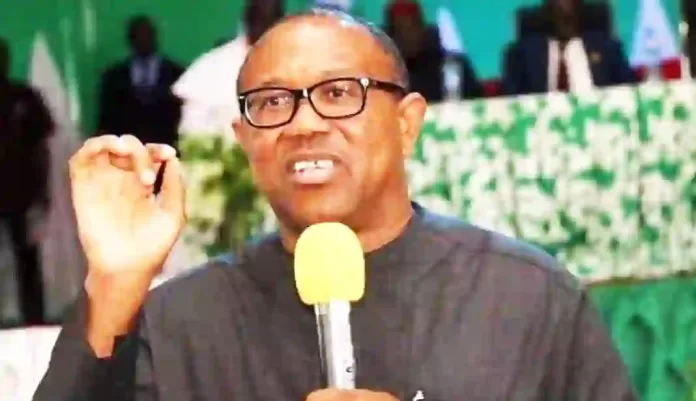
Peter Obi Replies Critics: “Saying The Truth Does Not Mean Demarketing Nigeria”

0
Peter Obi
Mr Peter Obi

By Akinwale Kasali

Following the criticism that trailed his recent submission at the John Hopkins University, United States of America, USA, Peter Obi, 2023 Presidential Candidate of the Labour Party has replied his critics.

Obi dismissed the recent criticism of his de-marketing Nigeria, and insisted that telling the truth  about the country’s challenges is essential to national growth.

In a post on X (former Twitter) on Thursday, Obi said his remarks about Nigeria’s economic and political realities are meant to strengthen, not tarnish, the country’s image.

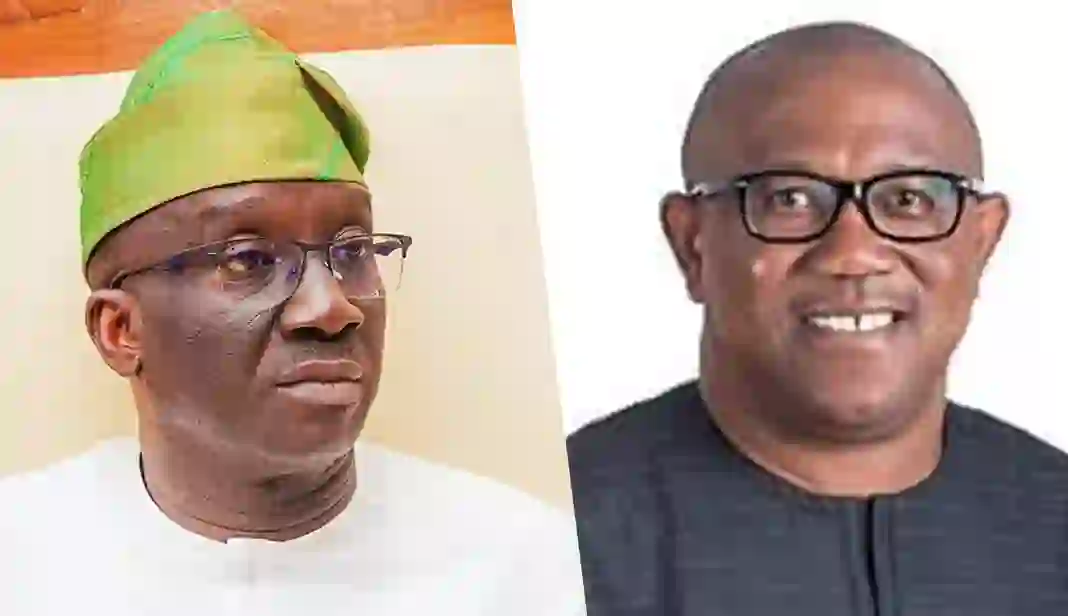
Though Obi failed to mention names of his critics, but it would be recalled that Lagos State Governor, Babajide Sanwo-Olu accused him of speaking negatively about Nigeria abroad.

“I tried reminding those who argue that I de-marketed Nigeria by telling the truth about its economic and social status vis-à-vis the rest of the World that truth does not in any way demarket a nation,” he said.

He added, “Rather, it refines and strengthens it. But the moment we begin to weaponise the truth for political convenience, we dishonour the legacy of those who came before us. We betray the very essence of their sacrifices, their struggles, their hopes, and their dreams.”

Obi made these remarks during the memorial lecture in honour of Elder Statesman, Chief Edwin Clark, alongside former President Goodluck Jonathan and ex-Head of State Yakubu Gowon.

In his address, the former Anambra State governor questioned the silence of once-vocal critics who had protested fuel and food price hikes under Jonathan, saying the situation has worsened today.

He stated, “I asked some very vital rhetorical and reflective questions, like what has suddenly happened to the protesting voices in this country, where are those who, in 2012/13, protested vigorously when increases in fuel, exchange rate, food and transport prices were moderate and manageable under President Jonathan.

“Where are those who called President Jonathan all sorts of names, “clueless, corrupt, ineffective and lifeless government”? Where are they now that the prices of everything have increased tenfold?”

He also decried Nigeria’s worsening insecurity, poverty and institutional decay.

“We are also losing innocent lives daily through insecurity, poverty, poor healthcare, and avoidable hardship. This is not the Nigeria our founding heroes envisioned.

“We must not reduce their sacrifices to mere ceremonial tributes. The best way to honour Chief Edwin Clark and others like him is to restore integrity in governance, rebuild trust in our public institutions, and ensure that truth and justice are the foundations of our national journey.

“Nigeria must work for all Nigerians, not just for a privileged few,” he said.

Free Speech Banned In Kano As Govt Censures Live Political Programmes, Others

0
Abba-Kabir-Yusuf-Kano-Governor (1)
Governor Abba-Kabir-Yusuf

By Ayodele Oni

Free speech which is one of the strengths of democracy, has been censored in Kano State as Government announced measures to scrutinize religious preachings and some media activities.

The State Commissioner for Information and Internal Affairs, Ibrahim Waiya, during a quarterly meeting with media executives, announced the state government’s intention to restrict certain activities of media outlets  and their practitioners in the state.

Waiya announced a ban on live political programmes across media outlets to prevent, what he referred to as “spread of inflammatory contents”.

As part of the new rules in the state, presenters are also banned from asking provocative questions or making suggestive gestures that could lead to statements capable of defaming individuals or damaging the image of Kano State.

The law also establishes that anyone appearing on media platforms for interviews must sign an undertaking to refrain from making abusive, defamatory, or culturally offensive remarks.

The Commissioner further added that it is the government’s commitment to preserving the state’s moral standards, disclosing that sensitization programmes have been organized for political programme presenters, media commentators, and the Council of Friday Imams.

These efforts, he noted, are designed to encourage responsible communication that conveys messages to the public without defamation or any act that could undermine the state’s reputation.

Waiya further clarified that the government’s stance is not to suppress political opposition, but rather to safeguard the sanctity of Kano’s cultural and religious values

Emefielegate: Ex-Federal Lawmaker Arrested For Allegedly Receiving N70m From Ex-CBN Gov For Salah Rams

0
Lawmaker Kazaure

The Economic and Financial Crimes Commission has arrested a former House of Representative member, Gudaji Kazuare for allegedly receiving N70 million from Godwin Emefiele, the embattled former Govern or of the Central bank of Nigeria, CBN, Daily Nigerian reports.

The lawmaker who represented Kano State in the 9th National Assembly was arrested on Wednesday by the anti-graft agency after a High court in the state, vacated a restraining order that had prevented the lawmaker from being arrested.

Emefiele is currently facing prosecution by the EFCC for alleged money laundry and terrorism.

The former lawmaker representing Kazaure, Roni, Gwiwa and Yankwashi Federal Constituency of Jigawa State, had allegedly received  millions of naira in tranches from Emefiele through a third party named Mr Eric, reportedly to buy “Sallah Rams.”

“Mr Kazaure received N20 million in two tranches through Mr Emefiele’s emissary named Mr Eric to buy ‘Sallah Rams’,” a source at the commission said.

The source further revealed that Mr Kazaure later received another N50 million from Mr Emefiele as a “donation” following a fire incident at his residence.

“Mr Kazaure subsequently received the sum of N50 million as ‘donation’ from Mr Emefiele, following a fire incident at the former lawmaker’s residence,” the source added.

The ex-lawmaker is currently being held at the EFCC office in Kano and may be transferred to Abuja to face formal charges, the source stated.

In December 2022, Mr Kazaure accused Mr Emefiele of corruption, alleging that N89.1 trillion in Stamp Duty charges had gone missing under the CBN governor’s watch.

Ondo Police Command Arrests Oba-elect, Four Others Over Illegal Installation Of Monarch

0
Adekolajo Aladeseyi

By Ayodele Oni

The Obaship tussle at Ijare in Ifedore local government areas of Ondo state has taken another dimension as Adekolajo Aladeseyi who has been parading himself as Oba elect, was arrested by the state police command.

He was reported to have along with some people, declared himself as the Olujare of Ijare.

Four other persons from the community that aided his installation process were also arrested.

The police and the Ondo State Government have declared the installation process illegal and fraudulent, as it did not follow the required laws and procedures.

The stool of the Olujare, a first-class monarch, had been vacant since the demise of Oba Adebamigbe Oluwagbemigun, Kokotiri II, four years ago.

Some kingmakers in the town and the royal family had kicked against the installation, alleging that they were never part of the selection process as required by law.

The Commissioner of Police, Mr. Olutokunbo Afolabi confirmed the arrest, stating that it was necessary to prevent a breakdown of law and order in Ijare.

He said the suspects would be charged to court in accordance with the law, following an order from the State Government to prevent violence in the area.

Tax Reform Bill: Senate Rejects Tinubu’s Plan To Hike VAT, Defund TETFUND

0
Godswill Akpabio - Senate President
Godswill Akpabio, Senate President.

The Nigerians Senate has rejected the 10 percent proposition in the Tax reform Bill sent to the Assembly by President Bola Ahmed Tinubu. The upper chamber insist that the current 7.5 percent must be maintained.

The senators rejected the 10 percent VAT proposed by the president after they  passed the Bill, sent to the National Assembly last December by the president.

The bill has been trailed with serious controversy as it has polarised the country. along regional lines, the major opposition came from the North which claimed that the region will be shortchange in the new tax regime.

The Senate however passed  the Tax Bill on Wednesday, containing four tax reform bills which are the Joint Revenue Board (Establishment) Bill, 2025 (SB. 583); the Nigeria Revenue Service Establishment) Bill, 2025 (SB. 584); Nigeria Tax Administration Bill, 2025 (SB. 585); and Nigeria Tax Bill 2025 (SB. 586).

Apart from the rejecting increase in VAT the Senate also rejected the idea of phasing out funding for Tertiary Education Trust Fund, TETFUND, National Information Technology Development Agency, NITDA, and National Agency for Science and Engineering Infrastructure, NASEN.

The Senate rather introduced a four per cent development levy to from which the Agencies will be funded, after it noted that the agencies are necessary for human development ans should not be scrapped.

Recall that the major Academic Unions in the country, had kicked against the scrapping of the TETFUND, saying the state of infrastructure in Nigeria’s Higher Institutions will worsen if the agency is scrapped as had been proposed by the president.

“These agencies of government are essential for human capital and overall economic development of the country,” the Senate said yesterday, adding that ‘phasing out their funding can lead to stagnation in education and the country losing out in technological evolution and advancement.”

The Senate: “The bill retained the funding of TETFUND, NASENI, NITDA, Cyber Security and NELFUND from the Development levy using the following sharing formula: Tertiary Education Trust Fund, 50%; Nigerian Education Loan Fund, 15%; National Information Technology Development Fund,- 10%; National Agency for Science and Engineering Infrastructure 10%; National Cybersecurity Funds – 5%; and Defence Security Funds,- 10%.”

On VAT, the Senate said,  “The Bill retains the current VAT rate of 7.5%, and proposes for VAT input to be allowable on all items such as: fixed assets, overhead cost and administrative services.”

The House of Representatives had earlier in March passed the Bill. Both Chambers will now have to meet for concurrence before the Bill is sent to the president for his assent.