

Home Blog Page 485

Ojudu: “Buhari Expressed Clear, Unequivocal Support For Osinbajo’s Presidential Ambition”

0
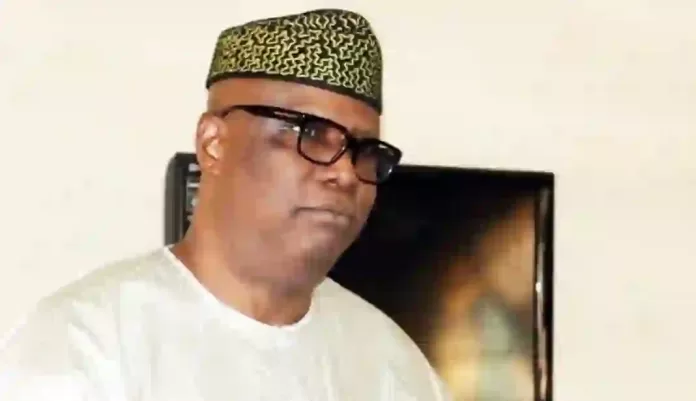
Babafemi Ojudu
Senator Babafemi Ojudu

By Ayodele Oni

The presidential ambition of the former Vice President, Yemi Osinbajo, was fully backed by the late President Muhammad Buhari from the onset.

Babafemi Ojudu, Special Adviser on Political Matters in the Office of the former Vice President, made the remark, while reacting to a book authored by Dr. Charles Omole, Muhammadu Buhari: From Soldier to Statesman.

The book, which purports to recount events and attitudes within the Buhari presidency, particularly as they relate to the presidential ambition of Vice President Yemi Osinbajo, had stated that the former president did not support Osunbajo’s presidential ambition.

Ojudu, in a post on his Facebook page, maintained that as an Aide in the office of the vice president, he was personally and professionally involved in the former vice president ambition.

Ojudu ‘s account : “Between 2016 and 2022, I served as Special Adviser on Political Matters in the Office of the Vice President, Professor Yemi Osinbajo. In that capacity, I was privy to several high-level engagements between President Muhammadu Buhari and his Vice President concerning the question of succession and the Vice President’s possible bid for the presidency.

“The record is clear and unambiguous.

The matter of whether Vice President Osinbajo should run for President was discussed directly and personally between him and President Muhammadu Buhari on no fewer than four separate occasions.

“On each of these occasions, President Buhari expressed clear, unequivocal support for the Vice President’s ambition.

“At no time—explicitly or implicitly—did President Buhari suggest that Professor Osinbajo should refrain from contesting. At no time did he indicate a preference that the Vice President should defer to, step aside for, or subordinate his ambition to any other aspirant, including the eventual nominee of the party.

“On the first occasion, President Buhari advised the Vice President to reflect carefully on the prospects of a presidential bid, make up his mind, and assured him that he would support whatever decision he took.

“By the third discussion, President Buhari went further. In his considered judgment, he stated plainly that Professor Osinbajo was by far the best person for the job.

“He emphasised continuity and stability, noting that after nearly seven years in office the Vice President had:

  • developed an intimate understanding of the workings of government,
  • worked diligently and loyally,
  • successfully acted as President on multiple occasions, and
  • demonstrated the steadiness required to lead the country forward.

“President Buhari reiterated more than once that he believed Vice President Osinbajo’s candidature was best for continuity and stability, and he assured him that he would do all he reasonably could to support him.

“The fourth discussion took place shortly before friends and associates obtained the presidential nomination forms on the Vice President’s behalf. Once again, President Buhari expressed his full support, leaving no room for ambiguity as to his position.

“This support was not confined to private conversations. During the primary season, President Buhari publicly remarked at a Federal Executive Council meeting that he observed how tirelessly his Vice President was campaigning across the country.

“He further advised him to consult widely—specifically encouraging engagement with state governors and the leadership of the National Assembly—before formally declaring his ambition. The Vice President followed this advice faithfully.

“Upon the Vice President’s declaration, President Buhari once again commended him and requested to see the declaration speech, which was duly presented to him.

“Furthermore, at least three governors met privately with President Buhari at different times to discuss the Vice President’s candidature. On each of these occasions, President Buhari told them, unequivocally, that Professor Yemi Osinbajo was the best man for the job.

“In any event, given the long-standing relationship of trust, confidence, and mutual respect that existed between President Muhammadu Buhari and his Vice President, it is both implausible and mischievous to suggest that Professor Osinbajo would have embarked upon a presidential ambition without the clear knowledge and approval of his principal.

“Indeed, all of us who were close to him understood one fundamental political reality: without a personal war chest or entrenched political machinery of his own, the Vice President could not realistically have contemplated a presidential run without the active backing of President Buhari.

“Any suggestion to the contrary ignores both political reality and the character of the men involved.”

FG Gets $500m World Bank Loan For SMEs

0
World Bank

The World Bank is set to approve a $500 million loan to Nigeria on Friday as part of efforts to expand access to finance for micro, small and medium enterprises across the country.

The proposed facility, titled the Fostering Inclusive Finance for MSMEs in Nigeria (FINCLUDE) Project, aims to mobilise private capital and promote innovative financial products for small businesses, according to information obtained from the World Bank.

Negotiations on the loan are ongoing, and approval by the World Bank Group’s board is expected on Friday. The approval, expected on December 19, 2025, will see the World Bank commit $500m to the project out of an estimated total cost of $2.39bn.

Of the World Bank financing, $400m will be provided by the International Bank for Reconstruction and Development, while $100m will come from the International Development Association.

The Federal Government will be the borrower under the arrangement, with the Development Bank of Nigeria serving as the implementing agency with overall responsibility for managing the funds. The remaining $1.89bn required for the project is expected to be provided by commercial lenders as unguaranteed financing.

According to the World Bank, the FINCLUDE project will leverage the platforms of the Development Bank of Nigeria and its subsidiary, Impact Credit Guarantee Limited, to deepen credit access for MSMEs.

“The proposed FINCLUDE Project leverages the platforms of the Development Bank of Nigeria and its subsidiary, the Impact Credit Guarantee Limited, to drive inclusive MSME finance,” a document from the World Bank read. “Through these catalytic institutions, the project will deploy a package of complementary, inclusive, and innovative instruments tailored to the diverse needs of MSMEs in Nigeria.”

The World Bank described DBN as “a partner well known to the World Bank with high implementation capacity and a proven track record in designing and executing complex, innovative projects,” noting that its role would be central to the success of the intervention.

The project is structured around three main components. These include the provision of inclusive and innovative MSME finance products, the de-risking and mobilisation of private capital through partial credit guarantees, and technical assistance aimed at modernising and digitising Nigeria’s MSME finance ecosystem.

Under the first component, the World Bank said the project would provide Tier 2 subordinated capital to eligible financial institutions and support the establishment of an MSME investment fund to deliver equity and long-term debt financing to small businesses. The bank said this approach would help “crowd-in private capital, test market innovations and promote financial sustainability” within the MSME segment.

Also, the project will offer targeted technical assistance to strengthen the capacity of financial institutions, improve regulatory oversight and modernise the MSME finance value chain linking DBN, lenders and entrepreneurs.

In its appraisal report, the World Bank highlighted Nigeria’s ongoing economic reforms, describing the country as being “in a critical transition.” It noted that the removal of fuel and foreign exchange subsidies, alongside the unification of exchange rates, had begun to stabilise the economy and restore investor confidence.

“These reforms have improved fiscal space, enhanced FX liquidity, and eased inflation to 18 per cent as of September 2025,” the report stated, adding that growth prospects were strengthening, with the International Monetary Fund projecting 3.9 per cent real GDP growth in 2025.

Despite these improvements, the World Bank warned that access to finance remained uneven, particularly for MSMEs, women and the agriculture sector. It noted that agriculture accounted for just over five per cent of total bank credit in 2024, while high interest rates and shallow credit penetration continued to constrain lending to smaller enterprises.

If approved on Friday, the FINCLUDE project will add to Nigeria’s growing portfolio of World Bank-supported programmes. As of June 30, 2025, Nigeria’s external debt stood at $46.98bn, according to the Debt Management Office.

The World Bank Group remains Nigeria’s largest single creditor, accounting for $19.39bn of the total, comprising $18.04bn from the IDA and $1.35bn from the IBRD. This represents 41.3 per cent of the country’s external debt, underscoring the bank’s dominant role in financing Nigeria’s development initiatives.

The PUNCH earlier reported that the World Bank loans to Nigeria between 2023 and 2025 are projected to reach $9.65bn by the end of this year as fresh approvals, ongoing negotiations, and disbursements gather pace across key sectors.

The Punch

Yuletide: NSA Urges Govs To Step Up Security

0
AbdulRahman-AbdulRazaq
Governor Abdulraham AbdulRazaq.

The National Security Adviser, Nuhu Ribadu has advised the 36 state governors in the country to step up security ahead the Yuletide.

The advice was contained in a letter the NSA wrote to the state governors, and shared by Chairman of the Nigerian Governors Forum, NGF, Governor AbdulRahman AbdulRazaq in a communique issued by the Forum and made available to journalists in Abuja, the nation’s capital at the end of its meeting on Thursday.

The NSA letter comes as Nigerians are preparing for the annual Christmas and New Year celebrations.

Not a few Nigerians have urged the National and sub-national governments to step up security in the wake of security challenges facing the country at the moment, saying criminals may be planning to foment trouble during the twin celebrations, adding that abduction, particularly, may be on the criminals’ playbook.

According to the NGF, the NSA urged the governors to step up security in their various state before the Yuletide because of the many activities during the period and the risks that are usually associated with the Christmas and New year festivities.

The Forum said it will ensure inter-agency cooperation and coordination, protection of critical infrastructure and provide tight security in “identified” hot-spots across the country during the period.

The NGF said, “Governors are committed to strengthening interagency coordination, protecting critical infrastructure, and maintaining a visible security presence in identified hotspots to ensure a safe, incident-free festive period nationwide.”

PDP To Tinubu Govt: It’s A Criminal Act To Doctor New Tax Law; Wants Execution Shelved

0
Taminu Turaki
Taminu Turaki

The Peoples Democratic Party, PDP has urged the federal government to postpone the implementation of the new tax law for at least six months, to give room for a through investigation of the reported doctoring of the document.

According to the PDP faction led by Taminu Turaki, the probe must ensure that the version of the Tax Law passed by the National Assembly, is the one signed by President Bola Ahmed Tinubu, and set to be implemented from January 2026.

The party made the demand in a statement issued by  Ini Ememobong, PDP National Publicity Secretary on Thursday, saying the allegation that two versions of the Tax Law are in circulation must be thoroughly investigated.

The PDP said allegation raised by a PDP member in the House of Representatives, Abdussamad Dasuki, must not be swept under the carpet, describing the allegation as a criminal act capable of eroding public interest in the government.

The party said the federal government must explain to Nigerians how the Tax Law gazetted by the APC-led government is different from the version passed by NASS.

“This disparity must be comprehensively investigated and not treated with the customary levity that this administration has shown toward very serious issues of governance.

“Nigerians are interested in knowing how the insertions and substitutions got into the gazetted copy,” the PDP said.

Adding, “The leadership of the House of Representatives must not attempt to sweep it under the carpet, as it has done with the now popular rumour that the country is operating two budgets within a fiscal year.

“This criminal act of inserting unenacted sections in laws can erode public trust in the enactments of parliament”, the party stated in a reaction though its National Publicity Secretary, Comrade Ini Ememobong, in Abuja on Thursday.”

The party stressed that the federal government must shelve it plans to start the execution of the tax Law from January next year, saying this will not only give enough room for a thorough investigation of the allegation, it will give the government ample time to educate Nigerians on the new tax law.

“Consequently, we demand that the commencement date of the tax Act be shifted from January 1, 2026, for at least six months to allow sufficient time for the investigation of this anomaly, publication and circulation of the enacted version, and more importantly, the mounting of sufficient enlightenment campaigns on the new Act.”

On Thursday, the House of Representatives empowered an adhoc committee to investigate the alleged discrepancies between the new tax law and the bill passed by the National Assembly.

The Speaker of the House Abbas Tajudden who announced the setting up of the Committee during plenary assured that all necessary action will be taken to unravel the actual circumstances surrounding the alleged discrepancies.

APC Now In Total Control Of North Central, As Gov Mutfwang Defects

0
Governor Caleb Mutfwang

Governor Caleb Mutfwang of Plateau state has defected to the ruling All Progressives Congress, APC . the governor dumped his former party, the Peoples Democratic Party, PDP after months of speculations that he was planning to move away from the embattled PDP.

No fewer than five PDP governors have dumped the party for the APC in the last few months.

With the defection of Governor Mutfwang, the ruling party has made a clean sweep of the entire north central zone of the country. The governor was the only PDP governor in the zone before he defected on Thursday.

Announcing Governor Mutfwang defection yesterday, the National Chairman of the APC, Nentawe Yilwatda said the zone is now under the total control of his party, noting that  Governor Mutfwang will further strengthen the ranks of the APC in the zone.

“With the defection of Governor Mutfwang, the entire North-Central region is now governed by the APC,” Yilwada said.

The magazine recalls that Governor Mutfwang had planned to leave the PDP for months due to the leadership crisis that has rocked the opposition political party for months.

The major fear of Mutfwang and other governors who dumped the party for the ruling APC is that their nominations for the 2027 governorship election may be quashed by the courts because of the factionalisation of the party.

Seven Imo Command Police Officers Face Orderly Room Trial

0
Nigerian Police

By Suleiman Anyalewechi

The Imo State Police Command has assured that the disciplinary process initiated against seven of its officers will be thorough, transparent ,and conducted in accordance with laid down Nigeria Police Force rules and regulations.

This is as the Commissioner of Police, Aboki Danjuma, said the outcome will also be made available to the public.

A statement on Thursday December 18, 2025, from its spokesperson, Henry Okoye informed that the  seven personnel were, allegedly,  involved in extortion, high-handedness and other unprofessional conducts.

According to Okoye, while some of the affected officers were arrested following a viral video highlighting their alleged misconducts,bothers were apprehended through public complaints, and investigations.

The personnel involved according to Okoye, include three Inspectors, one Sergeant and three Constables .

“The Imo State Police has commenced the orderly room trial of personnel involved in misconduct, including extortion, unprofessionalism and high-handedness.

” The trial followed the identification of the personnel by the complainants , leading to their arrest and investigation .

” Orderly Room Trial proceedings have therefore been initiated against the following seven (7) personnel: Inspector Eyo Udo- Anti-Vice Unit , Inspector Peter Nweke , Rapid Response Squad RRS , Inspector Ita Asuquo, Search and Flush , Sergeant Chukwuka Ekwueme ,Anti-Vice Unit , Police Constable Patchris David -Anti-Vice Unit , Police Constable Amos Sunny -Anti-Vice Unit , police Constable Onuwa Samuel -Anti-Vice Unit.

” Notably, some of the personnel were captured in a viral video depicting an alleged extortion incident involving operatives attached to a Joint Task Force JTF operation , including the other sister agencies at Seven-and-a half Junction ,Obowo , whose personnel have been handed over to their various agencies for disciplinary action”, the Police stated .

FG Orders Reopening Of Unity Schools

0
Folasade Boriowo

By Ayodele Oni

The Federal Government owned 47 unity schools earlier shut down due to security concerns have been directed to reopen.

The federal government, on Thursday announced the reopening of the  unity schools earlier shut down due to security concerns. This was disclosed in a statement by the Federal Ministry of Education.

It said that the decision to reopen the affected colleges across the country reaffirmed its unwavering commitment to safeguarding students and ensuring the continuity of education.

“After the strengthening of security architecture within and around the affected schools, academic activities have fully resumed.

Students have returned safely to their campuses, with many currently concluding their December academic programmes, while others have successfully completed their examinations.”

The statement, signed by the ministry’s Director of Press and Public Relations, Boriowo Folasade, partly assured parents, guardians, and the general public that the safety, welfare, and well-being of students remain a top priority.

The ministry explained that the government continues to work closely with relevant security agencies to sustain stability and restore normalcy within school environments nationwide.

“The federal government remains resolute in its responsibility to protect every Nigerian child and to uphold their fundamental right to education in a safe and secure environment.

“This administration places strong emphasis on human capital development and recognises education as a critical pillar for national growth and development.

“Accordingly, it remains determined to prevent any disruption to the academic calendar,” it stated.

It further noted that the safe return of students and the successful conduct of examinations in several unity colleges underscored the government’s resolve to keep learning on track despite prevailing challenges.

The federal government, on November 21, ordered the immediate closure of 41 Federal Unity Colleges over rising security concerns.

The directive was issued through a circular dated November 21, 2025, from the Federal Ministry of Education.

The circular asked principals of affected schools to enforce the closure without delay. The 41 schools are in states across the North-West, North-East, North-Central, and parts of the South.

Reps Set Up Committee To Probe Alleged Doctoring Of New Tax Law

0
Tax

By Suleiman Anyalewechi

The House of Representatives on Thursday December 18, 2025, empowered an adhoc committee to investigate the alleged discrepancies between the new tax law and the bill passed by the National Assembly.

The Speaker of the House Rt. Hon. Abbas Tajudden who announced the setting up of the Committee during plenary assured that all necessary action will be taken to unravel the actual circumstances surrounding the alleged discrepancies.

The Source reports that Hon Abdusammad Dasuki, PDP Sokoto State, had, on Wednesday December 17, alleged that the tax law as assented to and gazetted by the Executive Arm of Government is strikingly different from the one deliberated and passed by the Legislative body.

Standing on Order Six Rule Two of the House rules on a point of Privileged, Dasuki informed that his privileges as a Federal Legislator has been breached going by his discovery that what the National Assembly passed as tax bill ,is not what has been assented to and gazetted by the executive branch .

He noted that he took out three days to read copies of the assented and gazetted tax law, and regretted that when compared with the bill as passed by the Legislative organ, there is a lot of discrepancies.

According to him, it is imperative for the House to examine the issue at stake , with a view to finding a solution before it is too late .

In this regard, Hon Dasuki called for a review of all relevant documents, including the harmonized versions of bill  from  both chambers of the National Assembly , the votes,as well as  records of proceedings from both chambers ,and the gazetted copies presently in circulation  by the Committee of the Whole.

“Mr Speaker, I will be pleading that all the documents should be brought before the Committee of the Whole .

“The whole members should see what is in the gazetted copy ,and see what they passed on the floor so that we can make relevant amendment.

“Mr Speaker, this is a breach of the Constitution . This is a breach of our laws, and this should not be taken by this Honourable House”, Hon Dasuki submitted.

The Seven-member ad-hoc Committee which  is to be headed by Hon Mukhtar Aliyu Betara, has been mandated to thoroughly look into any observed discrepancies and report back to the House

Court Grants Order Halting The  Impeachment Of Eba, Cross River APC Chairman

0
Alphonsus Eba

By Suleiman Anyalewechi

A Federal Capital Territory, High Court on Thursday, December 18 ,2025, granted an interim injunction restraining parties in All Progressive Congress, APC, Cross River State, Chapter leadership crisis and the Independent National Electoral Commission, INEC, from giving effect to the purported removal from office of the Chairman of the party Hon Alphonsus Ogar Eba.

The Source reports that the crisis of confidence  which rocked the State APC on November 4 ,2025 came to a head with about 30 out of the 32-member State Working Committee SWC voting in Otufam Ojogu after impeaching Eba as chairman.

They alleged high-handedness, diversion of party funds, and anti-party activities as some of the reasons for removing Eba as the state chairman.

Ruling on an ex-parte application brought before the court, the Judge, Hon Justice J. E  Obanor, issued an interim order barring the APC, the newly elected chairman Ojogu ,and the INEC from removing ,or sidelining Eba from his position as the APC Chairman or the party’s activities pending the hearing and determination of the motion on notice.

Embattled Eba had in the application filed through his Counsel,Ayotunde Ogunleye, prayed the Court to grant him protection from what he described as illegal November 4, 2025 resolution purporting to have removed him from office as the Cross River state APC chairman..

He argued that the said unlawful resolution had sought to prevent him from exercising his legitimate duties as the APC Chairman in Cross River State .

Consequently, in granting the reliefs sought, the Court restrained the respondents either by themselves, their agents or privies, from giving effect to, or continuing to give effect to the said resolution, particularly any action that would prevent Eba from performing his responsibilities as the Chairman of the APC , pending the hearing and determination of the motion on notice before the court .

The Court also restrained the respondents from preventing the applicant from attending the APC, National Executive Council, NEC, meeting billed for Friday December 19, 2025, in addition to any other party activities during the subsistence of his tenure or any extension as may be granted by APC, NEC.

Justice Obanor similarly barred the respondents from engaging, initiating  or deliberating on, or taking any actions capable of adversely affecting Eba in performing his duties as the chairman of the APC in the state pending the hearing and determination of the substantive suit which has been fixed for hearing on January 22 ,2026.

OPINION: Ahmed’s Fall, the Dangote Challenge and a Rentier System

0
Azu Ishiekwene
Mr Azu Ishiekwene

By Azu Ishiekwene


It’s rare to find a multibillionaire who hasn’t had nasty battles. Yet, as battles go, the fight between Aliko Dangote, the founder of the Dangote Refinery, and the CEO of the Nigerian Midstream and Downstream Petroleum Regulatory Authority (NMDPRA), Farouk Ahmed, is among the most spectacular that Africa’s wealthiest man has had to fight in recent times.

It won’t be a surprise if the resignation of Ahmed (and the chief executive of the Nigerian Upstream Petroleum Regulatory Commission, Gbenga Komolafe) on Wednesday marks a pause, rather than an end, because the problems run very deep.

Dangote’s cement and noodle wars were rough. They earned him many scars and lifelong bitter enemies.Yet, in retrospect, they look like skirmishes compared to the battle to secure the refinery. This battle has pitted him against vested state interests that have enjoyed the vast pleasures of a rentier economy for decades.

Scalding like fire

In scalding press statements and advertorials signed by Dangote this week, he accused Ahmed of living above his means, with children attending elite Swiss schools that cost up to $5 million in fees. He challenged him to show how he could have afforded that from his legitimate income.

Dangote followed up on his press statements by filing a petition against Ahmed with the Independent Corrupt Practices and Other Related Offences Commission (ICPC), which is believed to contain even more damaging allegations than what was publicly disclosed.

The man who is usually microphone-shy is not only shaking the table but also calling out the regulator in a multi-layered war for self and country.

Not even when President Umaru Musa Yar’Adua revoked the sale of the Port Harcourt and Kaduna Refineries to Bluestar in 2007, after the Dangote-led consortium paid $670 million to seal the deal, was the fallout as bitter as it has been since the Dangote Refinery was commissioned.

Greasy as Oil Business

The reason is simple: Oil is not just a business; it’s political power. Unlike cement and noodles, oil does not just respond to history, it shapes and drives it.

Farouk Ahmed
Farouk Ahmed

Two great books that shed light on oil and political power are “The Seven Sisters: The Great Oil Companies and the World They Shaped”by Anthony Sampson (1975) and “The Prize” by Daniel Yergin (1990), with the latter, which won a Pulitzer, offering a riveting account of the battles between pioneers in the oil industry and the state actors they fought.

When John D. Rockefeller transformed the oil industry from a curiosity into a global industry through Standard Oil, for example, it began as a joke. The state was not interested. Coal was the primary driver of global energy supply at the time, and oil didn’t seem to have a promising future.

Rockefeller secured the supply chain from transportation and refining to the markets until the 20th century, when oil became a strategic military asset. The British navy converted its fleet from coal to oil, and Winston Churchill insisted on state involvement in the oil industry. That changed everything.

After two world wars fought with oil as a decisive factor, and producer states claiming to have defeated corporate dominance, new problems have emerged to show that oil pioneers almost always collide with entrenched power once they threaten the existing rent structure.

Ahmed’s fall

Ahmed has fallen, but he may have fallen to save the system. While the war raged, he not only represented a regulatory agency, but he was also the nexus where pioneer desperation and entrenched power collided.

The accusation that Ahmed’s children are in foreign schools that his legitimate income cannot afford will be sniffed at in many circles for at least two reasons: a) regulators’ income is usually set to match industry levels, which means that Ahmed’s income may be comparable to those in the oil industry, and b) leaving above means is the rule rather than the exception, especially in the public service.

An attempt to enact a law for public officers and their families to use only public schools and health institutions has been stalled at the First Reading stage in the House of Representatives since July. It may never progress, even at gunpoint.

In his over 38-year career, Ahmed has built a cosy relationship with petrol importers. At PPMC, the pipeline subsidiary of NNPC, he wielded petrol import licensing power like a commercial actor. Even when he later became a regulator requiring impartiality and fairness, he still behaved like a commercial actor, earning him a reputation as the standard-bearer of the rentier status quo.

The godfathers

The Nigerian godfathers of oil rent, to paraphrase Yergin, are putting up fierce resistance against the new dynamics Dangote’s entry is bringing into the industry. Ahmed is not the last stand, only a symbol of it. Just as Dangote often asks himself why he didn’t put his $20 billion elsewhere instead of a refinery, the state may occasionally regret why it gave him the licence in the first place.

It’s a struggle for market share and ultimately, profit, a struggle for “the world’s biggest and most pervasive business…” In this fight, the vested interests who have always hidden behind public bureaucracy for self-enrichment are suddenly aware that an independent player is changing the game, if not the rules.

In November, the NMDPRA hadadvised President Bola Ahmed Tinubu to shelve plans to ban imports of refined petroleum because local output could not meet the national demand, put by the regulator at 55 million litres daily.

Dangote countered the claim, arguing that the regulator was distorting the actual refining capacity by reporting offtake statistics instead of the true production data. He also argued that continued importation of petrol hurts jobs, investments, and undermines Nigeria’s energy security.

It’s the rent, stupid!

Incumbents rarely say, “We want to protect rents.” They say, “We’re protecting the system.” Yet, for decades, continued petrol importation has not only drained billions of dollars from the country, but also encouraged the importation of low-quality, vehicle-damaging products. Apart from that, an estimated N11.35 trillion (approximately $25 billion) spent on repairing the country’s state refineries has ended up in the pockets of freeloaders, unaccounted for.

Herein lies the state’s dilemma. Whatever the pretences of the managers of the state oil company and their godfathers in high places, state actors are not neutral. Ahmed’s fight is their fight; his fall may well be a strategic reset. NNPC is a centre of elite capture, and they know that reforms would dilute their discretion, make them vulnerable and dismantle their rent.

Monopolist at work?

Does Dangote aim to become a monopoly? Perhaps. Is his fight altruistic? Unlikely. But if the regulator had tried to be more like a regulator, rather than an antagonist, it would have done at least two things: a) addressed the moribund state-owned refineries and tackled refinery licencees who have been AWOL, and b) applied the relevant provisions of the Petroleum Industry Act for a fair and transparent pricing framework.

But rather than try to make a difference, Ahmed was too accustomed to the old ways – rents from fuel imports, foreign exchange arbitrage, subsidy-era patronage networks, and, not to mention,the political leverage built on scarcity.

Dangote must accept that Ahmed was only a symptom of a deeper, systemic problem. The only proof that Ahmed was not removed to save the system is that he should be investigated so that he can either clear his name or face the consequences.


Ishiekwene is Editor-In-Chief of LEADERSHIP and author of the new book A Midlifer’s Guide to Content Creation and Profit.