Home Blog Page 483

2027 Presidency: Atiku Promises To Support Younger Candidate

0
Atiku Abubakar

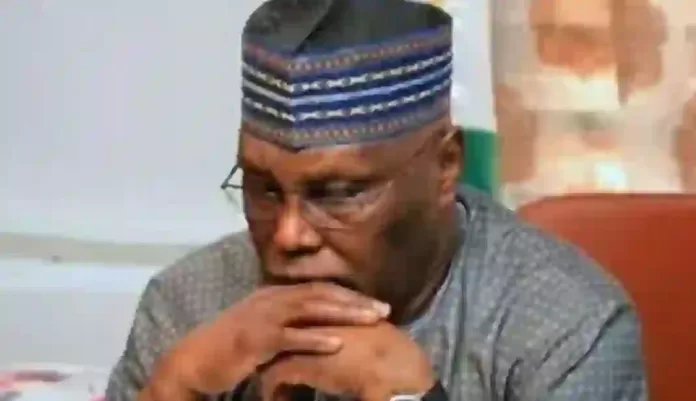
Presidential hopeful, Atiku Abubakar has promised to support a younger presidential candidate if such emerges as the candidate.

Abubakar,  the 2023 presidential candidate of the Peoples Democratic Party, PDP, made this known on Wednesday in an interview with the BBC Hausa Service, stressing that he’s prepared to fully back any younger presidential candidate who emerges from his party, the African Democratic Congress, ADC.

Not a few Nigerians insist that the former vice president should step down for a younger candidate, having contested the presidency five times and lost. Others say he’s too old to lead the country, that much younger Nigerians should be allowed to lead.

The former PDP presidential candidate has yet to officially join the ADC but close watchers of politic in the country insist that he’s planning contests under the party, which recently got the nod of key opposition leaders in the country, as a coalition platform to contest the 2027 election.

The former vice president, analyst say, is a leading aspirant in the coalition party. Abubakar however stated that he will throw his support for any aspirant who wins the party ticket, especially a vibrant younger candidate.

He urged the youths to take active part in politics, saying he’s  not desperate to lead the country.

“My being in the 2027 race does not prevent anyone from contesting. If a vibrant and widely accepted younger candidate emerges, I am willing to step aside,” Atiku said.

The magazine reports that other potential presidential aspirants in the ADC include former Governor Rotimi Amaechi, Peter Obi, the Labour Party, LP 2023 presidential candidate, among others.

How to Drink from a Poisoned Cup: Harold Smith Story and the Nigerian Story

0
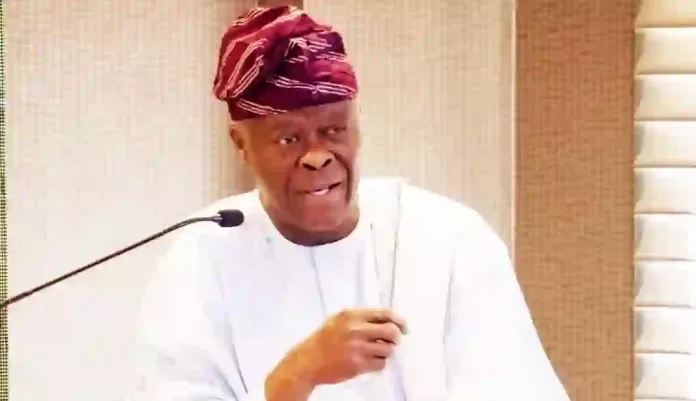
Azu Ishiekwene
Mr Azu Ishiekwene

By Azu Ishiekwene

On the eve of Nigeria’s 65th independence anniversary, I reflected on Harold Smith. He’s not widely known in Nigeria. And that’s probably to be expected for a man whom the British establishment ostracised for decades for daring to be different, before his death. He was everything the British colonial authorities didn’t want him to be, and he paid for it.

But for his book, The Harold Smith Story, published by Lawless Publications four years ago, Smith would have died with the knowledge of how a promising country was sabotaged by Britain, with consequences that would last for generations.

Sixty-five years after the Union Jack was lowered, many still speak wistfully of Nigeria’s “potential” for greatness, a potential that appears no less elusive today than it was when Smith arrived in Nigeria in 1955, fresh from Oxford and one year after he joined the British colonial office as a colonial officer.

Gone, but alive!

Smith is gone now. He died 14 years ago, but lived long enough to revisit Nigeria one year before the country celebrated its 50th anniversary. On that visit, he was quoted as saying, “My 20 years in Nigeria were certainly the best years of my life. Nothing I’ve done since has equalled that.”

This article is not mainly about him, even though he would have been more than worthy. It’s about Nigeria, about how Smith’s account of his Nigerian odyssey reveals many aspects ofthe country that we often overlook or underestimate, but which we must confront and overcome to make progress.

I’ll take a few of them – the system of government, the civil service, money politics, and corruption – all of which Smith covers extensively in his book, naming names and places and giving examples in many instances.

It’s the system, stupid!

Let’s start with the system of government. There are several accounts, of course, of how the British used and exploited indirect rule to foster division by promoting the domination of one section of the country over the other, using local rulers who were easier to manipulate. But not many of the accounts explain how this technique was implemented.

Here, in his own words, was what Smith said about the state of affairs in what was then, broadly speaking, Northern and Southern Nigeria: “When the British invaded the Moslem North and realised that a stable feudal and authoritarian system of government was already in place, they decided to rule through the Emirs…the basic idea was that the Northern rulers could do as they pleased so long as they did not offend the British.

“The restrictions placed on the Emirs were not as arduous, and so long as taxes were collected and there was no disorderly behaviour, the Emirs not only had a free hand but were assisted by the British administrators and, if necessary, by the force of the British army.”

Tax and spend

The taxes did not benefit the ordinary people; they were shared between the Emirs and the colonial authorities in such a brazen manner that, as of 1947, there was not a single secondary school in the North. Ignorance enabled feudal lordship. But as long as the Emirs and the British colonial authorities were happy, the system was preserved at all costs, including delaying self-government for as long as possible.

When it became untenable, according to Smith, the British government went to extraordinary lengths to rig elections. “The British government determined beforehand to whom it would be handing the keys of the Nigerian kingdom. They were the rulers of the North, who had long been favoured by the British.”

Crooked civil service

Another point is the civil service. A common fetish is that General Murtala Muhammed’s massive purge of the civil service in 1975 is to blame for the decline. That purge had its adverse effects, no doubt, but there were others after Muhammed’s, notably in 1984 and 1999. However, it is generally believed that Nigeria’s civil service was solid and incorruptible until 1975.

Smith’s book suggests that even though we may choose to look the other way, corruption in the civil service dates back to the colonial era, often portrayed as a time of innocence. And here, Smith names names without mincing his words.

When it dawned on the British that the squalid legacy of colonial rule was no longer sustainable, they began to identify Nigerians to groom for leadership roles in the civil service, the backbone of the colonial administration.

Naming names

One of such Nigerians, according to Smith, was Francis Nwokedi, who later became permanent secretary of the Ministry of Labour and Nigeria’s foremost civil servant.

Though Nwokedi (who would later play a significant role in Ironsi’s government) was an extraordinarily brilliant and self-assured man, Smith described him as “a stooge of the British” who not only betrayed his people during the shooting of the coal miners in Enugu but also as a conduit for the illegal funding of the National Council of Nigeria and the Cameroons(NCNC) using government funds. This practice is still rampant today.

If complicity in politics by civil servants dates back to the 1950s, the hijacking of state resources by politicians to enrich themselves remains a persistent issue. The British could neither trust Obafemi Awolowo nor stand his independent-mindedness.

They also suspected that, left to its own, the Northern Peoples Congress (NPC)would lose the federal election of 1959. So, they used politicians like Festus Okotie-Eboh to prop up the insolvent NCNC, whose leadership had wrecked the African Continental Bank,in an alliance with the NPC.

This quote by Smith might interest those hoping for a clean election, with transparent party financing and an impartial electoral arbiter: “In 1956…the British government opened a conduit which saved the NCNC from bankruptcy…the extent of British philanthropy, or extortion, is revealed in the following figures. Between January 1957 and July 1960, that is the period which included the federal election of 1959, the NCNC had spent approximately £1.2 million. During the same period, its income from all resources had not exceeded £500,000.’”

Okotie-Eboh, whose first appointment as Labour Minister was “like a child presented with the keys of a sweet shop,” sold government assets and pocketed the money without fear of a reprimand because he was as serviceable to British political interests as he was to his own. The British handed over the reins of power to a significant number of notorious politicians who, over the years, would make a fine art of notoriety.

That Cameron joke

I’ve often joked that when former British Prime Minister David Cameron told President Muhammadu Buhari that Nigeria was fantastically corrupt, a good response might have been from Smith’s story. “I suppose the most corrupt act of all is colonialism itself…Why had the Governor General (of Nigeria) chosen such corrupt politicians?

“Why did civil servants not refuse to cooperate with corrupt ministers? It was evident that the ministers could not carry out these corrupt deeds without cooperation from the civil service…It was clearly official policy to let the ministers be corrupt.”

Of course, it’s been 65 years since, and Nigeria is only one of the over 80 percent of present-day independent countries that were colonised. How and why did other countries with a similar legacy, including India, Singapore, Brazil, and Malaysia, manage to turn things around?

Looking forward

Colonised countries that overcame setbacks usually did so because they had better institutions, more diversified economies, visionary leadership, and stronger social cohesion.

In contrast, many African countries, including Nigeria, have inherited fragile states, extractive economies, and deep divisions, which have been exacerbated by global power struggles and internal governance failures. If the British handed Nigeria a poisoned cup, the flawed and bloated federal system has not helped matters.

Yet, the Harold Smith story is not a death sentence. What we do with it might be.


Ishiekwene is Editor-In-Chief of LEADERSHIP and author of the book Writing for Media and Monetising It.


CBN: Nigeria Spends Over N4.2trn On Debt Servicing

0
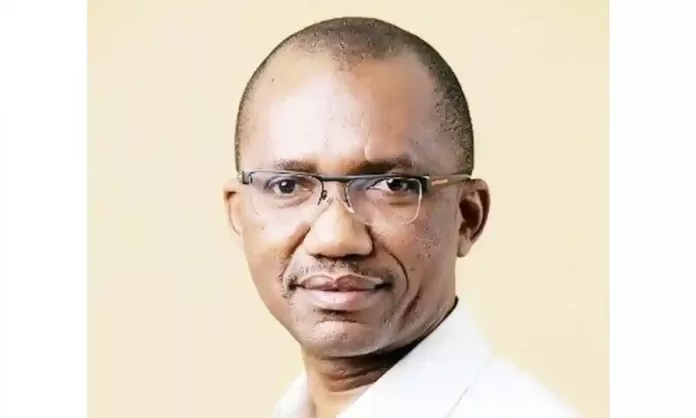
Wale Edun - Minister of Finance

Nigeria spent over N4 trillion or the equivalent of $2.86 billion servicing external debt in the first eight months of 2025, according to the international payment data from the Central Bank of Nigeria on Wednesday.

This accounted for 69.1 per cent of the country’s total foreign payments of $4.14 billion in the period.

In the same eight-month stretch of 2024, debt service stood at $3.06 billion, representing 70.7 per cent of total foreign payments of $4.33 billion. The figures show that while the absolute value of debt service fell by $198m between 2024 and 2025, the share of debt in overall foreign payments has remained persistently high, with about seven out of every ten dollars leaving the country used to meet debt obligations.

The monthly breakdown highlights the volatility of Nigeria’s repayment schedule. In January 2025, $540.67 million was spent compared with $560.52 million in January 2024, a fall of $19.85 million or 3.5 per cent. February 2025 recorded $276.73 million, slightly below the $283.22 million in February 2024, down by $6.49 million or 2.3 per cent.

March 2025 surged to $632.36 million against $276.17 million in March 2024, an increase of $356.19 million or 129 per cent. In April 2025, payments reached $557.79 million, which was $342.59 million or 159 per cent higher than the $215.20 million of April 2024.

May 2025 stood at $230.92 million, sharply lower than the $854.37 million in May 2024, a drop of $623.45 million or 73 per cent. June 2025 rose to $143.39 million compared with $50.82 million in June 2024, a rise of $92.57 million or 182 per cent.

July 2025 fell to $179.95 million, down by $362.55 million or 66.8 per cent from $542.5 million in July 2024. By August 2025, debt service climbed to $302.3 million, which was $22.35 million or 8 per cent higher than the $279.95 million of August 2024.

Month-on-month trends in 2025 further underline the erratic nature of the payments. The country began January with $540.67 million, which dropped by $263.94 million or 48.8 per cent to $276.73 million in February.

March then spiked to $632.36 million, up by $355.63 million or 128.5 per cent. April fell to $557.79 million, down by $74.57 million or 11.8 per cent from March. May dropped to $230.92 million, down by $326.87 million or 58.6 per cent. June slipped further to $143.39 million, a decline of $87.52 million or 37.9 per cent.

July rebounded slightly to $179.95 million, an increase of $36.56 million or 25.5 per cent, before August rose again to $302.3 million, which was $122.35 million or 67.9 per cent higher than July.

The dominance of debt service in Nigeria’s foreign obligations is clear. In the eight months of 2025, $2.86 billion of the $4.14 billion total foreign payments went to debt, giving it a share of 69.1 per cent. A year earlier, $3.06 billion of the $4.33 billion total foreign payments went to debt, accounting for 70.7 per cent.

These figures show that, despite spending nearly $200 million less on debt this year compared to 2024, debt still accounted for the overwhelming majority of foreign exchange outflows.

This high ratio of debt service to total foreign payments highlights Nigeria’s vulnerability, as nearly three-quarters of its international outflows are being channelled into debt repayment rather than critical imports or investments.

The Punch

Why Kano Gov Wants Police Commissioner Redeployed

0
Abba-Kabir-Yusuf-Kano-Governor (1)
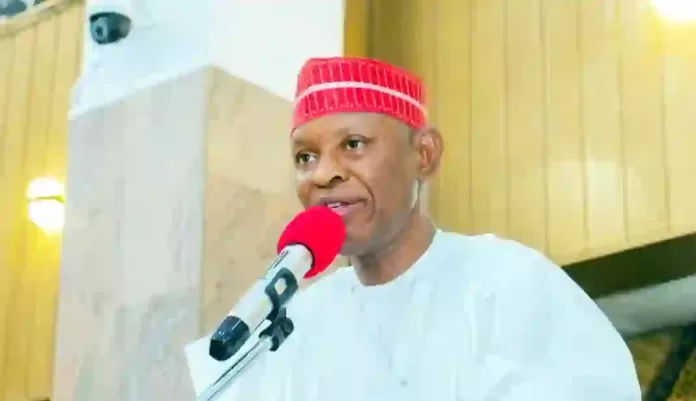
Governor Abba-Kabir-Yusuf

Governor Abba Kabir Yusuf has expressed his anger with the state Commissioner of Police, Ibrahim Bakori over his absence during the 65th Independence Day celebrations in the state.

For failing to show up at the elaborate ceremony to mark the nation’s statehood,  the governor has demanded his redeployment from the state, accusing the state police chief of being partisan as a law enforcement agent.

Yusuf spoke at the Sani Abacha Stadium during the march parade to commemorate the Independence Day celebrations.

The Police Service Commission, PSC, and the Inspector General of Police are the constituted authority responsible for deployment of police officers in the country.

According to Governor Yusuf, the people of the state are not happy with Bakori, who he also accused of  failing to deploy policemen to the venue of the Independence ceremony, describing his attitude to be “unethical’ and “partisan”  .

Speaking at the Sani Abacha Stadium, where he addressed the state, the governor expressed displeasure that the police commissioner and his men were nowhere to be found.

“As you can see, on this historic and independent anniversary of Nigeria, the Commissioner of Police decided to pull out of the parade along with his own personnel,” the governor said.

“This is for reasons pertinent to him and pertinent to his people. Let me say that Kano State’s Chief Security Officer, on behalf of the government, are not happy with this attitude of the Commissioner of Police.

“On this note, on behalf of myself as the leader of the Government of Kano, elected by you people, and on behalf of all the Kano people, we condemn(him)”.

“He was nowhere to be found with the other personnel. This is unprofessional. This is disloyalty to the Federal Republic of Nigeria. I now wish to take this opportunity to call on the President of the Federal Republic of Nigeria to remove the state Commissioner of Police,.

“Today, every Nigerian is happy to celebrate the independence of this country. And we insist it, because we know Kano is peaceful. The good people of Kano are peace-loving people.

“But security agencies in Kano, in particular, shouldn’t be involving themselves in partisan politics, which will do no good to all of us in Kano State and in Nigeria, of course.

“Let me say in particular that I would like to seize this opportunity as a Nigerian, as a Kano citizen, and as the Chief Security Officer of Kano State, to condemn the unethical and partisan attitude of the current Commissioner of Police in Kano State.

The magazine reports that the governor has consistently accused the Police Commissioner of taking side in the political crisis in the state. It’s therefore not a surprise that he’s insisting that Makori be transferred, those watching development in the state said.


PDP: Anyanwu Blocks NWC Dissolution Of Akwa Ibom Exco

0
Senator Samuel Anyanwu - Sam Daddy

The National Secretary of the Peoples Democratic Party, PDP, Samuel Anyanwu has blocked the dissolution of the Akwa Ibom State executives by the party’s National Working Committee, NWC.

According to Anyanwu, the state exco remain undissolved because there was no record to show that the party’s NWC had a meeting where the members were dissolved.

Anyanwu, in a counter letter to the sacked  Chairman of the state PDP exco, Aniekan Akpan said it should ignore a letter by the party’s National Publicity Secretary, Debo Ologunagba, earlier on Tuesday to the effect that his executives have been sacked.

Recall that Ologunagba had on Tuesday said the NWC appointed Igwa Umoren as the PDP Chairperson of the party’s caretaker committee chairperson in the place of Akpan’s exco.

But reacting, Anyanwu said there was not record to show that the NWC sat and made a decision on the issue, saying Ologunagba was on his own, and the press statement purporting to dissolve the Akpan-led executives cannot stand, adding that the dissolution is of no effect, null and void.

“For the purpose of clarity, that press release (by Ologunagba) should be discountenanced because there was no formal sitting of the National Working Committee (NWC) in which such decision was taken” Anyanwu said

“The State Committee of the Peoples Democratic Party (PDP) in Akwa Ibom State stands undissolved.”

“Please, consider this letter as the rightful authority for you to continue in your duties as provided in the PDP Constitution, 2017 as amended”, he stated.

Ologunagba had on Tuesday issued a statement purportedly dissolving the Akwa Ibom and Cross Rivers states Executives of the party, saying two caretaker committees have been appointed to take their place.

Below Ologunagba’s statement:

September 30, 2025


Press Statement


@OfficialPDPNig Dissolves Akwa Ibom State Exco, Constitutes Caretaker Committee for Chapter


The National Working Committee (NWC) of our great Party, the Peoples Democratic Party (PDP) has at its meeting today, Tuesday, September 30th, 2025, pursuant to its powers under the Constitution of the PDP (as amended in 2017) approved the dissolution of the Akwa State Executive of the Party.


Consequently, the NWC approved the composition of a Caretaker Committee to run the affairs of the Akwa Ibom State Chapter of our Party from today, Tuesday, September 30th, 2025 for a period not exceeding 3 months, or until such a time a new State Executive Committee will be elected in the State.


The members of the Akwa Ibom State PDP Caretaker Committee are;


1.Igwat Umoren – Chairman


2.Harrison Ekpo- Deputy Chairman


3.Borono Bassey – Secretary


4.Bar. Ewa Okpo- Publicity Secretary


5.Emman Mbong- Organizing Secretary


6.Hon. Aniekan Asuquo- Youth Leader


7.Mary Silvia Abara – Woman Leader


8.Barr. Enoch Enoch- Legal Adviser


9.Hon. Aniebiet Cornelius – Member


  1. Udim Peters – Member


11.Mrs. Ayanime Obot- Member


12.Hon. Ofon Michael- Member


13.Esther Bassey Effiong- Member


14.Hon. David Umanah- Member


15.Usenmfon Ibanga- Member


  1. Unwana Assam- Member


17.Obong Francis Akpan Ogbuji -Member


18.Ndianabasi Udom- Member


  1. Emibana Ubolum- Member


20.Hon. Gregory Ekpo Etim – Member


21.Iberedem Asamamnyie- Member


22.Barr. Mfom Ben- Member


  1. Iniobong Ukwak- Member


24.Hon. Emmanuel Umah- Member


25.Ekaette Philips – Member


26.Effiong Asuquo Bassey – Member


27.Barr. Ekpong Edem – Member


  1. Ime Matthew Okwong- Member


29.Kate Atabia – Member


30.David Ubanga – Member


  1. Ukoette Etukudo Ukoette – Member


The NWC calls on all leaders, critical stakeholders and teeming members of our Party in Akwa Ibom State to remain united and continue to work together for the progress of the Party

AMAC Election: ‘I Will Be On The Street With ADC Candidate, Dr MO’ -Peter Obi Declares

0
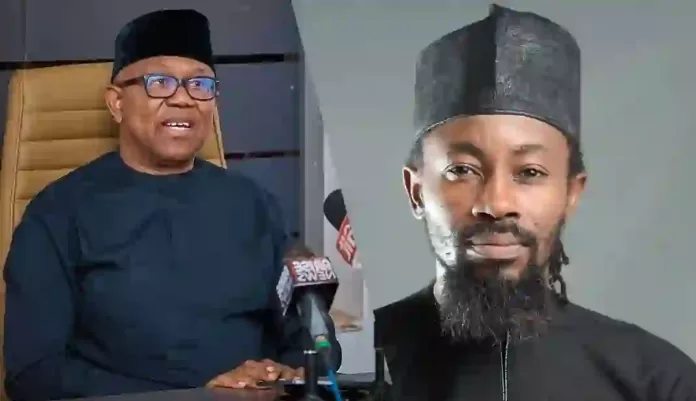
Peter Obi and Dr Moses Paul

The Labour Party Presidential Candidate in the 2023 general election, Peter Obi, has promised to be on the streets with the African Democratic Congress, ADC, candidate for the Abuja Municipal Area Council, AMAC, Dr Moses Paul.

Obi spoke in Abuja on Wednesday at the Merit House during a special Independent program organised by Dr MO and his councillor candidates to sensitise AMAC residents ahead of the official flag off of the campaign.

The former Anambra State Governor said he supports Dr MO’s Candidacy because he has been to many places with him and knows he will not disappoint.

Dr MO will not change, but because human beings can change, I will be shocked if he changes..

Local Government Area Council election in Abuja has been scheduled for February 2026, and Dr Moses Paul, popularly known as Dr MO, is the Chairmanship flag bearer for the ADC.

Dr MO, who is the National Secretary of the Obidient Movement of Nigeria, also received huge endorsement from the movement today.

The National Coordinator of the Obidient Movement Dr Yunusa Tanko announced the endorsement of Dr MO at the special program organised by the candidate themed ‘We Don tire’

In his remarks at the crowded occasion, Dr Moses Paul declared that AMAC has failed the people and outlined a bold vision to restore dignity, prosperity, and service to governance.

Speaking under the banner of “We Don’t Tire!”, Dr Paul said Nigerians are weary of broken promises, neglect, and leaders who abandon the people once in power.

“The bitter truth must be told: AMAC has failed,” Dr Paul stated. “Our markets are trapped in endless litigations, waste management has collapsed, schools were abandoned for months, our health centres are dead, insecurity is everywhere, businesses are strangled by multiple taxation, and infrastructure is practically non-existent. This is not governance. This is abandonment.”

Dr Paul, however, emphasised that his campaign is not about lamentation but about building a new AMAC as he pledged to restore dignity, prosperity, and service to governance in AMAC, demonstrating that good leadership is not an illusion but a practical reality that begins at the grassroots.

He promised that if elected Chairman, he would liberate and modernise AMAC markets into centres of prosperity.

Establish a transparent and job-creating waste management system.

Revive and equip schools to ensure no child is abandoned.

Restore primary health centres with drugs, staff, and community health programs.

Strengthen security through partnerships with agencies, traditional rulers, and communities.

Harmonise taxation to protect businesses while boosting revenue through innovation.

Deliver people-driven infrastructure across all 12 wards.

Dr Paul said he envisions AMAC as a model of governance in Nigeria, where jobs are intentionally created, businesses supported, youths skilled, women empowered, and the vulnerable protected. “If AMAC works, Abuja works. If Abuja works, Nigeria works,” he declared.

He said that his campaign strategy will be

anchored on three pillars:

People-First Governance – policies born from community consultation, not imposition.

  1. Accountability and Transparency – every naira accounted for, every voice heard.
  2. Innovation and Partnerships – leveraging technology, civil society, and private sector collaboration to deliver services that meet global standards.

The event, which attracted a large crowd of civil society groups and the Abuja members of the ADC, gave Abuja residents the opportunity to express their readiness to ensure that leaders with compassion, competence, character and capacity are elected into AMAC.

Rivers: Gov, Fubara Sacks Commissioners, Other Appointees

0
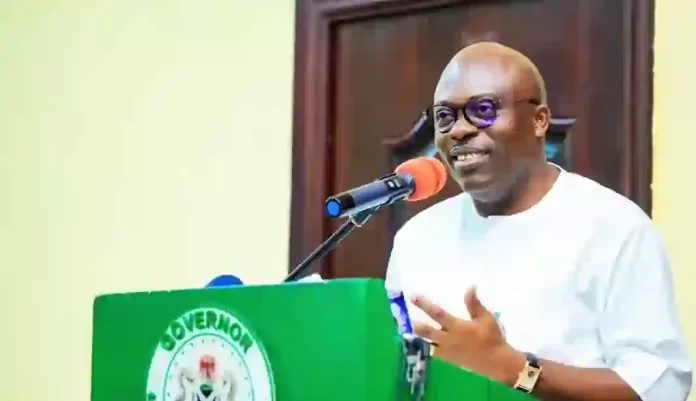
Siminalayi Fubara
Governor Siminalayi Fubara

By Ayodele Oni

Rivers State Governor, Siminalayi Fubara, has dissolved his cabinet, relieving all Commissioners and other Public Officers affected by the recent Supreme Court judgment of their appointments with immediate effect.

The dissolution was confirmed in a statement issued on Wednesday by the Chief Press Secretary to the Governor, Nelson Chukwudi.

According to the statement, the Governor held a private valedictory session with members of his cabinet at Government House, Port Harcourt.

The State House of Assembly had, a few days after reconvening from the six months emergency rule, requested the Governor to forward a list of Commissioner-nominees  for screening.

The dissolution may likely pave way for the inclusion of loyalists of the minister of the Federal Capital Territory (FCT), Nyesom Wike into the Cabinet .

The valedictory session also doubled as part of activities marking Nigeria’s 65th Independence Anniversary.

The statement stated that Governor Fubara used the occasion to appreciate the Commissioners for their contributions and dedication to the growth and development of Rivers State over the past two years.

While highlighting the significance of Nigeria’s Independence, the Governor called on all Nigerians to join hands with President Bola Tinubu in building a peaceful, secure, and prosperous nation.

He further restated his commitment to serve the people of Rivers State with renewed vigour, while extending his gratitude to citizens for their continued support, and wished Nigerians a joyful 65th Independence Anniversary.

Uzodimma Expresses Pride In Nigeria’s Resilience,  Progress @ 65

0
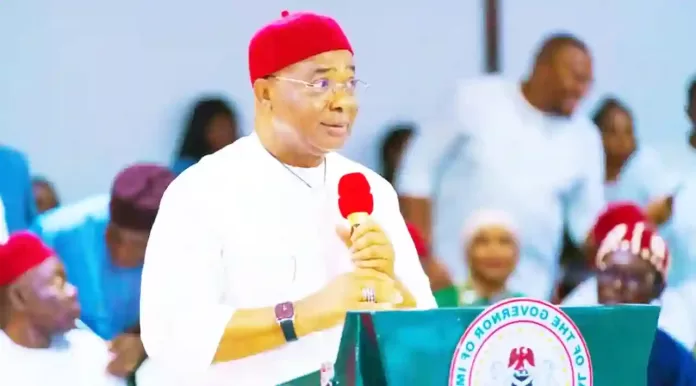
Hope Uzodimma- Governor of Imo State

As Nigeria celebrates her 65 years of Independence, the Imo State Governor,  Senator Hope Uzodimma has expressed pride in the nation’s resilience and progress over the past six and a half decades.

In a broadcast to commemorate Nigeria’s 65th independence anniversary, Governor Uzodimma acknowledged the challenges Nigeria has faced, and emphasized the importance of unity and collective responsibility in building a greater nation, aligning with this year’s theme: “Nigeria at 65: All Hands on Deck for a Greater Nation”

Reflecting on Nigeria’s journey since gaining independence in 1960, the governor highlighted significant advancements in various sectors, including education, healthcare, and infrastructure, noting the increase in universities from one in 1960 to over 200 today. This he said has contributed immensely to Nigeria’s status as one of Africa’s largest producers of skilled labor.

Governor Uzodimma noted recent economic reforms under President Bola Ahmed Tinubu, including the removal of the fuel subsidy and the unification of exchange rates, which have fostered transparency and boosted investor confidence.

He praised the ongoing improvements in agriculture and solid minerals, which have led to a trade surplus for six consecutive quarters.

The governor also underscored the progress made in Imo State, citing the delivery of over one hundred and twenty quality road projects and the establishment of the Imo Health Insurance Scheme, which provides affordable healthcare to thousands.

He emphasized the importance of digital infrastructure and skills development to prepare the youth for future job opportunities.

Governor Uzodimma reaffirmed his commitment to the welfare of workers and senior citizens, highlighting Imo State’s record-breaking minimum wage of one hundred and four thousand naira, well above the national standard.

He therefore assured the people of Imo of brighter days ahead and encouraged them to remain hopeful and dedicated to nation-building.

65th Anniversary: Jonathan Urges Nigerians Not To Lose Hope

0
Goodluck Jonathan

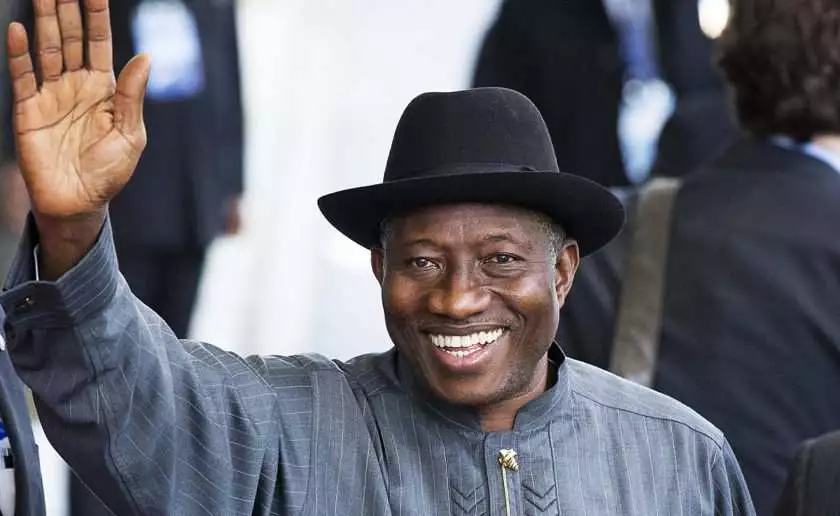
Former President Dr. Goodluck Jonathan has urged Nigerians not to despair despite the current challenges experienced in the land but continue to nurture hope in the possibilities of greatness within the country.

Dr. Jonathan stated this in his goodwill message to Nigerians on the occasion of the 65th Independence anniversary in which, he said, “offers us an opportunity to reflect on our collective journey of nation-building.”

The former President wrote: “Our nation marks another significant milestone in its journey to nationhood. As we celebrate 65 years of independence from colonial rule, this moment offers us an opportunity to reflect on our collective journey of nation-building; on the challenges we have faced, and on the vast possibilities that still lie ahead.

“It is true that we face challenges that could test our sense of hope; insecurity, economic disparities and institutions that often struggle to deliver on the promises of improved wellbeing, peace and security. Yet, as citizens, we must not lose faith. We must continue to nurture hope and sustain belief in the nation’s enormous potential and the resilience of the people.

Nigeria is a blessed nation, endowed with vast land, abundant natural resources, and, above all, the ingenuity and creativity of the people.

“Our cultural richness, our knowledge, and our wisdom have continued to distinguish Nigerians across every sphere of human endeavor, both at home and abroad.

“As we look to the future, let patriotism guide our actions. Let us hold firmly to optimism and faith, knowing that the greatness of our country is within reach if we remain united and steadfast. May our nation continue to rise in strength and purpose.”

Ikechukwu Eze
S.A. to H.E. Dr. Goodluck Ebele Jonathan

Nigeria at 65: Obi Decries Leadership Failures, Says “A Great Nigeria is Still Possible”

0
Peter Obi
Mr Peter Obi

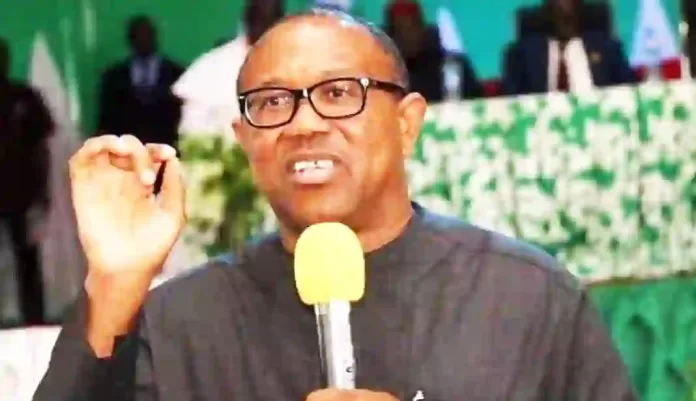
Labour Party’s presidential candidate in the 2023 elections, Mr. Peter Obi, has called on Nigerians to draw strength from the resilience of the past while demanding accountability from today’s leaders, as the country marks its 65th Independence Anniversary.

In a statement issued on Wednesday, titled “A Great Nigeria is Still Possible,” Obi reflected on the promise of October 1, 1960, when Nigeria emerged from colonial rule to global acclaim as an African power in the making. He recalled that Time Magazine once predicted Nigeria’s rise as a true African superpower, noting that the founding fathers fought for freedom with passion and determination to build a nation of prosperity and pride.

Obi lamented that decades of poor leadership derailed that vision, with the situation worsening under the current administration. “Today, the picture is bleak,” he said, citing Nigeria’s mounting debt of about N175 trillion—nearly 50 percent of GDP—without improvements in the productive sector. He noted that Nigeria has slipped to the fourth-largest economy in Africa, behind South Africa, Egypt, and Algeria, while its democracy is increasingly described as “undemocratic.”

The former Anambra governor criticised what he described as extravagant government spending amidst widespread poverty. He pointed to billions allocated for new jets, yachts, luxury cars, and renovations of official residences, contrasting them with meagre budgets for healthcare, education, and science. “Billions are spent on luxuries that outweigh the combined budgets of teaching hospitals and ministries essential for national growth,” Obi said.

Obi further highlighted the impact of reckless borrowing, crippling insecurity, and widespread corruption, which have deterred investment and deepened hardship. He warned that UNICEF and the World Food Programme project that 33 million Nigerians could face acute hunger in 2025, while over 150 million already lack access to healthcare, education, water, and sanitation.

Despite these challenges, Obi urged Nigerians not to lose hope, stressing that the vision of a great and prosperous Nigeria remains alive. “A society cannot survive on injustice, waste, and misrule. Yet, just as we overcame colonialism and dictatorship, so too can we overcome today’s failures. A great Nigeria is still possible—one built on justice, fairness, productivity, and the dignity of its citizens,” he concluded.