Home Blog Page 45

Anglican Bishop, Fagbemi, Tells President Tinubu: “There’s Worsening Economic Hardship, Rising Insecurity In Nigeria”

0
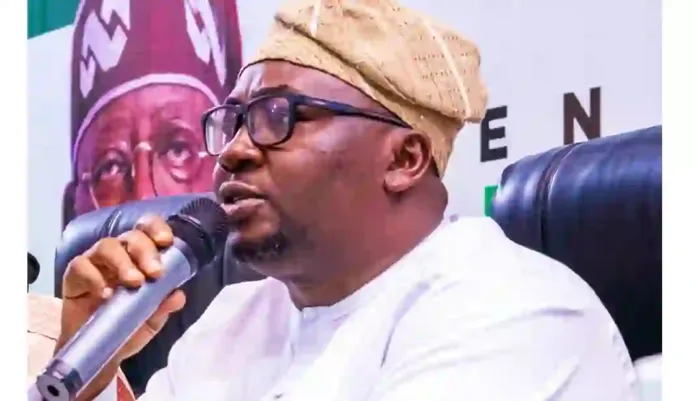
Rev Stephen Fagbemi

By Ayodele Oni


Again, another high profile Cleric, Bishop of Owo, Anglican Diocese, His Lordship, the Rt. Rev. Stephen Fagbemi, has expressed worries over Nigeria’s worsening economic hardship, rising insecurity and the declining standard of living.


The Cleric, has, therefore, called on governments at all levels to take urgent steps to restore hope and improve the welfare of citizens.


Bishop Fagbemi expressed his worries in his charge at the Second Session of the 15th Synod of the Diocese  held at St. Paul’s Church, Imoru, Ose Local Government Area of Ondo State.


He pointed out that Nigerians are facing enormous economic challenges, with the cost of living remaining beyond the reach of many families.


The Bishop noted that despite rising taxation and economic reforms, many Nigerians still struggle to afford basic necessities, while access to quality healthcare has become increasingly difficult due to high medical costs.


“Many citizens now resort to traditional herbs and other unconventional treatments because hospital services are beyond their reach, a development he described as dangerous”.


Bishop Fagbemi lamented the absence of adequate support for pregnant women and families grappling with the economic situation.


Looking ahead to the 2027 general elections, Bishop Fagbemi urged Nigerians to avoid making hasty political decisions driven by frustration.


Instead, he called on citizens to pray for the present administration to succeed in addressing the country’s economic and governance challenges.


On insecurity, Bishop Fagbemi described the situation as alarming, saying fear of kidnapping and violent attacks has made travelling by road increasingly unsafe across the country.


He expressed concern over the abduction of traditional rulers, security personnel and innocent citizens, citing the recent kidnapping of school teachers and pupils in Oriire Local Government Area of Oyo State as an example of the country’s security challenges.


While the victims have since regained their freedom, the Bishop said the incident underscored the urgent need for government to strengthen security measures and prevent future occurrences.


Bishop Fagbemi called on the Federal Government to declare a state of emergency on insecurity and adopt more proactive measures to combat criminality.


He advocated wider consultations with security experts, local security outfits, hunters and international partners, while recommending the deployment of drones and helicopters to strengthen surveillance and security operations nationwide.


The Bishop warned that insecurity was already affecting farming, commerce and social activities, as many people now avoid travelling or attending public gatherings for fear of attacks.

“Parents Enable Children’s Involvement In Exam Malpractice” – Fmr. JAMB Registrar, Prof Oloyede

0
Prof Ishaq Oloyede -JAMB registrar
Prof Ishaq Oloyede, Former JAMB registrar

By Suleiman Anyalewechi


Immediate past Registrar of the Joint Admissions and Matriculation Board, JAMB, Prof Ishaq Oloyede has  expressed serious concern and regret that parents are the greatest enablers of examination malpractices among their children and wards.


On an Arise Television Interview, Oloyede, a University of Ilorin Professor of Islamic Studies, noted that over 90 percent of children involved in the acts of cutting corners in examinations are goaded into such odious practice by their parents and guardians.


He described  the ugly development as his greatest challenge throughout his one decade sojourn at the Examination body.


According to him, experience has shown that most candidates are pressured by parents into indulging in fraudulent practices during examinations.


He lamented that parents, rather than encourage their children to subscribe to  principles of integrity, honesty and hardwork, resort to introducing them to short-cuts and fraudulent means of achieving results.


Oloyede expressed serious disappointment that parents by introducing their children early to the world of crime, are wittingly, or unwittingly, ruining the future of the next generation of the country.


“They are introducing their wards, their children, to the world of crime. Most of the candidates are not problematic. They are not the real problem. The problems are the parents.


“And every time I was confronted with the reality of what parents were doing, most of the time, I became very emotional .


“How on earth will people hate themselves and hate their future to this level? Even if you have deficiencies, you wouldn’t want to pass them to the next generation. But that is what many parents are doing?


“I must confess that the most painful period of my tenure at JAMB was coming to observe the involvement of parents and guardians in arranging examination malpractices for their children and wards”, Oloyede lamented.


According to the former JAMB boss, the celebrated case involving Nmesoma from Anambra’ State who inflated her scores  was one of the numerous cases of examination fraud handled during his tenure.


He emphasized that candidates like Nmesoma whose score was manipulated to fraudulently earn her the top spot, were, and still supported by their parents and guardians.


“Nmesoma’s case was just sensationalised by some people who felt they were defending that. We met more than 10 Nmesoma cases.


“Even last year, somebody still attempted something like that. We deal with such situations. It was a normal thing to us. Unfortunately, the sensation that came along with Mmesoma’s case made it unique to others who were outside the institution ( JAMB)


The Source reports that a couple years ago, Oloyede had announced the arrest and detention of father and son who were involved in examination malpractice at one of  the centres in Kaduna.


The father was said to have personally came to sit for the examination for the son, a development that left Oloyede wondering how the father, with his tight schedule, could be more prepared for the exercise than his son.

Desmond Elliott Returns To Acting After Failed Fourth Term Bid To Lagos Assembly

0
Desmond Elliot
Desmond Elliot

By Akinwale Kasali 


Desmond Elliott, Lagos State House of Assembly Lawmaker representing Surulere 1 Constituency, has returned to acting following his failure to secure the All Progressives Congress, APC, Ticket for the 2027 Election.


Elliot, who vied for a fourth term ticket to represent his Constituents lost to Barakat Odunuga-Bakare at Primary by a wide margin.


Following this development, the Actor cum Politician has returned to base.


He was captured in viral photos on social media,  on a movie set with his hair plaited with fellow actor, Ibrahim Chatta.

The two were seen talking during what appeared to be the filming of a new movie.


This move has been celebrated by fans, who welcomed the development, saying they were excited to see Elliot back in Nollywood after spending several years in politics. 


A video from the movie set has also been shared online, sparking reactions from fans who are looking forward to seeing Elliot on screen again.


Elliot made a name for himself in the Nollywood Industry, and earned  recognition and accolades as he was able to stand out in the crowd due to his superb interpretation of roles. 


He delved into politics and became a Lawmaker in the State House of Assembly in 2011 under the APC.


He has been in the saddle for three consecutive terms before he lost his fourth term bid due to his rift with his political godfather, Femi Gbajabiamila, Chief of Staff, CoS, to President Bola Tinubu.

Bishop Oyedepo To President Tinubu: “Stop The Pretence, Address Economic Hardship, Insecurity”

0
Bishop David Oyedepo

By Akinwale Kasali 


Bishop David Oyedepo, Founder and General Overseer, Living Faith Church Worldwide, popular as Winners Chapel, has urged President Bola Tinubu to stop his pretence, and address the economic hardship being experienced by Nigerians. 


He also urged him to address the worsening insecurity situation of the country, that has pushed Nigeria into its present state. 


The revered Clergyman made this call in a viral video on social media where he criticised the Federal Government’s failure to respond decisively to the country’s security and economic crises.


He lamented the continued attacks and killings in parts of the country, and warned that many Nigerians who have endured the situation for years may soon lose patience if urgent action is not taken.


He urged the FG to be more proactive and bring an end to the incessant killings and worrisome insecurity state of the nation.


The Bishop condemned those responsible for the killings of innocent citizens, insisting that victims should not be expected to sympathise with those behind such violent acts.

Bola Ahmed Tinubu - President
President Bola Ahmed Tinubu

According to him, the President should “act now and stop pretending.” He stressed that the government must demonstrate greater urgency in protecting lives and restoring public confidence.


Oyedepo, also, expressed concerns over what he described as the government’s apparent inability to effectively confront the security challenges facing the nation, and urged the administration to take concrete measures to reverse the trend.

FG Unveils Locally Developed Herbal Medicines For Treatment Of Cancer, Hepatitis B, Other Diseases

0
Herbal Medicine

By Ayodele Oni


As part of measures to encourage herbal medicines, the Federal Government has unveiled seven locally developed herbal medicines produced by the Nigeria Natural Medicine Development Agency (NNMDA) for the management of conditions including cancer, hepatitis B, hypertension and peptic ulcer disease.


The products were unveiled by the Minister of Innovation, Science and Technology, Dr Kingsley Tochukwu Udeh, during a visit to the agency in Lagos, where he highlighted the government’s commitment to promoting locally developed healthcare solutions.


According to the NNMDA, the herbal medicines were developed from indigenous medicinal plants using scientific research and standardisation processes aimed at improving the quality and safety of traditional medicine products.


The agency said the products were developed to support the management of several health conditions, including prostate cancer, colorectal cancer, ovarian cancer, peptic ulcer disease, hypertension, high cholesterol and hepatitis B.


Speaking during the unveiling, NNMDA Director-General Prof. Martins Emeje said the agency was focused on transforming Nigeria’s traditional medicine sector through research, documentation and product development.


He explained that the agency uses scientific methods to improve indigenous remedies, including ensuring proper formulation, dosage and quality control.


The Minister said Nigeria has a large number of medicinal plants that can be explored to develop healthcare solutions and create economic opportunities.


Udeh added that the government would support efforts to commercialise research outcomes from agencies such as NNMDA and strengthen the country’s natural medicine industry.


The NNMDA said it has developed more than 22 herbal products from indigenous plants since 2023 as part of efforts to promote natural medicine research in Nigeria.


However, the unveiling of the products does not mean they have replaced conventional treatments for serious conditions such as cancer and hepatitis B.


Health experts generally emphasise the importance of scientific validation, regulatory approval and medical supervision before herbal products are used for managing major diseases.


Patients diagnosed with chronic conditions are advised to consult qualified healthcare professionals before using herbal medicines alongside or instead of prescribed treatments.

IGP Bows To Court Order, Recalls AIG Igwe, Owohunwa, 473 others

0
Olatunji Disu - IGP
IGP Olatunji Disu


By Ayodele Oni


475 police officers whose reinstatement was ordered by the National Industrial Court have commenced six months induction programme at Police Staff College, Jos, Plateau state.


This followed their recall by the Nigeria Police Force after they were previously retired over the controversial “merger of service” policy.

According to reports, the directive was conveyed in a confidential letter dated July 31, 2026, signed by the Force Secretary, Assistant Inspector-General of Police Bode Akinbamilowo, on behalf of the Inspector-General of Police.


The communication was addressed to Assistant Inspectors-General across the 17 police zones, Commissioners of Police in all states and the Commandant of the Police Staff College, Jos.


According to the letter, the Police Service Commission (PSC), at its plenary meeting held on June 25, 2026, approved the regularisation of the affected officers’ dates of first appointment after the National Industrial Court reversed their compulsory retirement.


The officers had initially been retired following a PSC decision reached during its First Extraordinary Meeting of January 31, 2025, on the merger of service.


However, the decision was overturned in compliance with the judgment delivered in Suit No. NICN/ABJ/28/2025.


The Force Secretary instructed all zonal commands and state police commissioners to ensure that the affected officers are contacted and directed to report to the Police Staff College for the mandatory training programme.


He further instructed them to “locate and warn” the officers to report for the induction course.


Those affected span several recruitment and promotion courses conducted between 1992 and 2012 and include officers from the rank of Superintendent of Police (SP) up to Assistant Inspector-General of Police (AIG).


Among the senior officers listed are AIG Idowu Owohunwa, AIG Benneth Chinedu Igwe, AIG Uche Ifeanyi Henry and Deputy Commissioner of Police Simon Asamber Lough.


The induction programme has been scheduled in two phases. Documentation and arrival will take place between August 1 and August 16, 2026, while the six-month training will run from August 17, 2026, to February 16, 2027.


The Inspector-General also directed the Commandant of the Police Staff College to submit the list of all documented participants on or before August 24, 2026, stressing that “lateness will not be tolerated.”


Copies of the directive were circulated to the IGP’s Secretariat and the Deputy Inspectors-General overseeing Finance and Administration, Operations, Logistics and Supply, Investigation, Training and Development, Research and Planning, Information and Communication Technology, Intelligence, as well as the Assistant Inspector-General in charge of Police Accounts and Budget to ensure the smooth implementation of the induction exercise.


The list also includes several other senior officers across different cadres, with official records indicating their ages, dates of appointment and revised retirement timelines following the court-ordered reinstatement.

Bakare Blasts Nigeria’s Leaders, Calls Them ‘Termite Kings’

0

Pastor Tunde Bakare, the Serving Overseer of the Citadel Global Community Church, has launched a blistering attack on Nigeria’s political class, accusing many of the nation’s leaders of behaving like “termite kings” whose primary concern is consuming the country’s resources rather than building a prosperous future.
The fiery pastor made the remarks in Lagos on Sunday at the public presentation of his three-volume book, Strategic Intervention in Governance, a collection of 104 speeches delivered between 2008 and 2025 on governance, leadership and national development.
Painting a stark picture of Nigeria’s leadership crisis, Bakare urged political office holders to abandon selfish ambitions and adopt what he described as the “ant mentality” — a culture of hard work, cooperation, sacrifice and long-term planning that prioritises future generations over immediate personal gains.
He argued that meaningful nation-building can only thrive where there is sustained unity of purpose, lamenting that Nigeria’s present democratic structure has failed to inspire such collective resolve. Rather than embracing divisive calls for secession, he challenged the country’s leaders and constitutional thinkers to lay a stronger foundation capable of guaranteeing lasting national cohesion.
Bakare also decried the steady decline of Nigeria’s education sector, attributing the deterioration to years of poor investment and policy failures dating back to the Structural Adjustment Programme.

Reflecting on his personal journey, he noted that although he received all his education in Nigeria before earning international recognition, he was compelled to educate his children abroad because of the collapse of the nation’s educational system.
According to him, no nation can achieve sustainable development after neglecting its education sector, insisting that rebuilding public education must become a national priority.
Beyond criticism, the cleric called for practical solutions to Nigeria’s challenges. He advocated a new leadership culture driven by competence, integrity and innovation, while urging greater investment in youth development, vocational education, entrepreneurship and technology to unlock the country’s enormous human capital.
Addressing young Nigerians, Bakare encouraged them to take responsibility for the nation’s future, expressing confidence that their generation possesses the vision and capacity to restore the Nigerian dream and place the country on the path of lasting progress.

Osun Guber: Adeleke Rallies Voters For His Reelection

0
Osun Road Show for Adeleke3

Adeleke Rallies Osun Voters, Says Intimidation Won’t Stop Re-election Bid
Osun State Governor, Senator Ademola Adeleke, has called on residents of the state to resist intimidation and turn out en masse to vote for his re-election in the August 15 governorship election, where he is flying the flag of the Accord Party.

The governor made the remark on the heels of last week’s comment by the All Progressives Congress, APC National Chairman Prof Nentawe Yiltwada that the ruling was poised to win the governorship election in the state, saying nothing must stop the party.

But Governor Adeleke said the people have made up their minds to reelect him, and will not be intimidated.

A statement issued on Sunday by the governor’s spokesperson, Olawale Rasheed, said Adeleke made the appeal while addressing worshippers during a church service at Winners Church in Osogbo, the state capital.
The governor alleged that some opposition politicians were sponsoring violence to create fear among voters, insisting that such tactics would not deliver victory for the All Progressives Congress (APC).
According to Adeleke, the opposition had resorted to intimidation because it had lost the support of the electorate and was facing imminent defeat at the polls.
“Because the people have rejected them, because voters have endorsed me, and because defeat is staring them in the face, they have resorted to violence. We are not scared. Osun people are not afraid,” the statement quoted the governor as saying.

Meanwhile, the magazine reports that the 14 political parties, including Governor Adeleke’s party , Accord Party have signed a peace accord ahead the governorship election.

Xenophobic Attacks: Falana Urges Nigerians To Boycott South African Companies

0
Femi Falana - SAN

By Suleiman Anyalewechi


Senior Lawyer, Femi Falana, SAN, has advocated a total boycott of all outfits and products associated with South Africa as a befitting reciprocal gesture to the country’s festering xenophobic rhetorics and attacks on Nigerians and other African immigrants.


His call is coming on the heels of Nigeria’s efforts at rallying African countries to  condemn  the attacks which have so far claimed over 98 Nigerian lives since it began a couple of years ago.


The Nigerian authorities, only penultimate week, rounded off the repatriation of over 1,400 of their nationals displaced by the attacks .


But at an interactive session with the media at his Ilawe-Ekiti country home at weekend, Falana insisted that diplomatic engagements alone will not be enough to drive home Nigeria’s feelings against the unjust and inhuman treatment being meted out to its citizens by the people of South Africa.


He emphasized that it is high time Nigeria adopted a tough posture, with a view to compelling the South African authorities pinto taking adequate measures aimed at reining in their unruly citizens.


According to him, the Federal Government’s plans of enlisting the intervention of the African Union,or exploring other diplomatic options may not, in the end, yield the desired results.


Falana therefore, called on Nigerians to consider the option of stopping the patronage of all South African owned companies and their products.


While urging citizens to migrate from MTN to other networks, Falana maintained that such hardline reciprocal gestures will certainly force the South Africans to rethink their belligerent posture towards Nigerians and other Africans.


“Where there are alternatives, Nigerians should be encouraged to migrate from MTN because there are alternatives. That is one way South Africa will know that Nigeria is serious”, Falana stated .


This is as he berated the Nigerian authorities for their total failure in adequately protecting their citizens from intimidation, harassment and other inhuman treatments not just in South Africa ,but across Africa.


He emphasized that the Nigerian Government, through its refusal to recognise the jurisdiction of the African Court on Human and People’s Rights,  has wittingly and or unwittingly denied its citizens the opportunity of accessing an important legal institution to protect their rights.


“The Federal Government will have to employ diplomatic actions. But beyond that, it should also adopt economic measures against South African companies operating in Nigeria


” In the 1970s, because of apartheid in South Africa, Nigeria nationalised British Petroleum. It should also be possible today to nationalise some South African investments in Nigeria if necessary.


“There is the African Court on Human and People’s Rights in Arusha, Tanzania, established by the African Union to address human rights abuses in member states. Nigeria has refused to allow its nationals access to that court by failing to deposit the necessary instruments.


“If Nigerians  could approach the African Court in the same way citizens can approach the ECOWAS Court in Abuja, South Africa would have been dragged before the court by victims of xenophobic attacks”, he noted.


However, the senior lawyer in addition, called for the revocation of all mining licences granted to South African companies operating in the country.

When The Cassock Abandons The Pulpit: The Bisjops’ Partisan Mirage & Opposition Echoes

0
Sunday Dare
Sunday Dare

By Sunday Dare


History has never been kind to institutions that mistake political opportunism for moral clarity. When the leadership of the Catholic Bishops’ Conference of Nigeria (CBCN), led by Most Rev. Matthew Ndagoso, accompanied by Archbishop Emeritus John Cardinal Onaiyekan, stepped into the State House on July 28, 2026, Nigerians expected a high-minded, clinical, and ecclesiastical engagement.


Every religious leader who chooses to intervene in political debate assumes a delicate responsibility. The moral influence of the clerical office depends upon being seen as independent of every political tendency. The moment public interventions begin to resemble partisan commentary, that moral advantage inevitably diminishes.


We seem to have arrived at this diminishing point.

The nation anticipated a holy synod offering profound spiritual counsel, constructive statesmanship, and puritanical guidance to a leader steering a complex nation away from structural ruin.

Instead, what unfolded—and what Cardinal Onaiyekan subsequently magnified across television screens—was a disappointing spectacle of partisan posturing, cynical broadsides, and unpatriotic twitches. By abandoning the sacred detachment required of their revered offices to act as proxies for opposition political elements, the Prelates delivered a performance that was as superficial as it was banal.


When the Cassock Abandons the Pulpit


The cassock does not desert its wearer simply because he challenges the king.It begins to lose its unique moral force when conviction overtakes balance, when measured judgment yields to partisanship and when personal sentiment, longstanding disagreement or visible sympathy begins to cloud the discipline that the episcopal office requires.

The authority of the cassock has always rested on the perception that its wearer speaks above political passions, not from within them. In this instance, we see partisanship.


Nigeria benefits when respected clerics contribute to national debate. But their greatest influence comes not from taking political sides; it comes from remaining trusted moral voices whose authority rises above partisan contest.

But when you emerge from a room where power has spoken, tell the public what power said before telling them what you believe it meant.

That is not asking too much of a Cardinal.

It is asking exactly what the cassock demands.

For in the end, the cassock does not make the man truthful.

To reduce President Bola Ahmed Tinubu’s monumental, multi-sectoral transformation agenda to a narrative of failure is not merely an act of intellectual dishonesty; it is a scathingly uncharitable assault on a patriotic leader who inherited a crumbling, bankrupt estate in May 2023 and possessed the rare political courage to rebuild it from the foundation up.


The Tipping Point: The Inherited Bankruptcy of May 2023


To understand the weight of President Tinubu’s achievements, one must first measure the abyss Nigeria faced on the eve of his inauguration. In May 2023, the Nigerian nation was hovering on the precipice of total economic collapse and structural paralysis.

The unsustainable petrol subsidy regime was draining trillion-naira holes into the national treasury monthly, enriching a parasitic cabal of smugglers and middlemen while starving sub-national governments of basic infrastructure funding. A fraudulent multi-tiered foreign exchange system had turned the Central Bank of Nigeria into an arbitrage engine, crippling legitimate manufacturing, scaring off foreign direct investment, and burning through scarce external reserves.


The nation’s debt service-to-revenue ratio had spiraled to an unsustainable 97%, meaning Nigeria was literally borrowing money to pay interest on past loans while operational governance ran on fiscal fumes. This was the broken, bleeding nation handed over to President Tinubu. It required bold surgery, not diplomatic sedation. Yet, when the President applied the sharp scalpel of structural reform, armchair critics and political opponents decried the incision while ignoring the terminal tumor it removed.


A Record of Durable Transformation: Facts Over Partisan Rhetoric


While Cardinal Onaiyekan and his cohort choose the easy path of populist lamentation, the facts of President Tinubu’s administration reveal a relentless, methodical restoration of the Nigerian state. By courageously removing the petrol subsidy and unifying the foreign exchange windows within his first days in office, President Tinubu ended decades of economic illusion.

State and local governments now receive record-breaking monthly allocations from the Federation Account Allocation Committee (FAAC), enabling governors—including those in the Catholic heartlands—to pay salaries, fund local infrastructure, and service pensions promptly. The debt service-to-revenue ratio has been dramatically slashed to under 65%, pulling Nigeria back from the edge of default and restoring international credit rating confidence.


The administration did not merely reform numbers; it invested in human dignity. Through the landmark establishment of the Nigerian Education Loan Fund (NELFUND), millions of indigent students across tertiary institutions now access interest-free loans for tuition and stipends. Academic calendar stability has been restored, ending the agony of prolonged university strikes that once paralyzed national development.


To counter global inflation and local supply shocks, the Tinubu administration deployed emergency agricultural interventions that involves direct distribution of hundreds of thousands of metric tons of grains and fertilizers to small holder farmers nationwide, the multi-billion naira investments in dry-season farming, mechanization hubs, and irrigation infrastructure aimed at achieving permanent food self-sufficiency.


The long-awaited commercial activation of domestic refining capacity—anchored by aggressive crude supply support to local refiners—has redefined Nigeria’s energy landscape. Combined with the historic implementation of the Petroleum Industry Act (PIA) host community funds and massive infrastructure rollouts like the Lagos-Calabar Coastal Highway and regional rail corridor expansions, the physical spine of the economy is being systematically rebuilt.


The Bishops’ Failed Duty: Where is the Ecclesiastical Solution?


For a religious body as venerable as the Catholic Bishops’ Conference of Nigeria, pastoral duty requires more than compiling a list of national grievances. True spiritual authority speaks truth to power by offering moral wisdom, social cohesion, and actionable, puritanical solutions to complex human problems. Instead of bringing clinical policies or holistic strategic blueprints to the State House, the Bishops presented a manifesto that mirrored the talking points of defeated political factions.

When Cardinal Onaiyekan declared on national television that “when the nation is bleeding, you cannot expect a polite meeting,” he did not speak with the stoic, unifying voice of an Archbishop Emeritus; he spoke with the sharp, adversarial tone of a political operative seeking headlines.


Where were the Bishops ’ concrete alternative economic models during their presentation? What alternative frameworks did they offer for securing vast forest terrains or raising national revenues without tax reform? To criticize without hazarding a single workable solution is the ultimate mark of armchair commentary.


Electoral Integrity and the Myth of Institutional Neutrality


Equally uncharitable was the Bishops’ attempt to undermine confidence in the Independent National Electoral Commission (INEC) and cast shadows over the 2027 electoral landscape. To suggest that the administration is “bent on winning by all means” is to spread unfounded anxiety that discredits the democratic institutions the bishops claim to protect.

President Tinubu’s record as a titan of Nigeria’s pro-democracy struggle is indelible. He fought military dictatorship, risked life and liberty for the restoration of constitutional governance, and built political platforms on the bedrock of electoral competition.

To imply that a leader with such democratic credentials would undermine the electoral process is a baseless smear designed to provide cover for an opposition that has failed to present a coherent alternative vision to the Nigerian electorate.


Rising Above Partisan Mirage to Build a Resilient Nation


Governance is not a Sunday sermon; it is the difficult, often painful art of making hard choices for long-term national survival. President Bola Ahmed Tinubu did not seek office to court easy popularity or issue comforting platitudes while the nation decayed. He took the reins of power to confront structural rot, fix broken institutions, and lay a foundation for enduring national prosperity.

The Catholic Bishops’ Conference of Nigeria and Archbishop Emeritus John Onaiyekan possess a historic duty to serve as unifiers, moral anchors, and partners in national rebirth. By choosing instead to echo opposition talking points, downplay tangible national progress, and reduce complex economic restructuring to simplistic slogans, they diminish their own moral standing.


Nigeria is no longer at the tipping point. The dark tunnel of fiscal insolvency has been navigated, the foundation for stability has been laid, and prosperity is taking root. It is time for critics—clerical or political—to abandon the comfortable pulpits of cynicism, acknowledge the heavy lifting of national reconstruction, and join in the patriotic work of building a resilient, self-reliant Nigeria.


Sunday Dare is the Special Adviser to the President on Media and Public communications