

Home Blog Page 446

Gov Yusuf, Ganduje, Deputy Senate President Trade Words Over Unusual Terrorists Activities In Kano

0
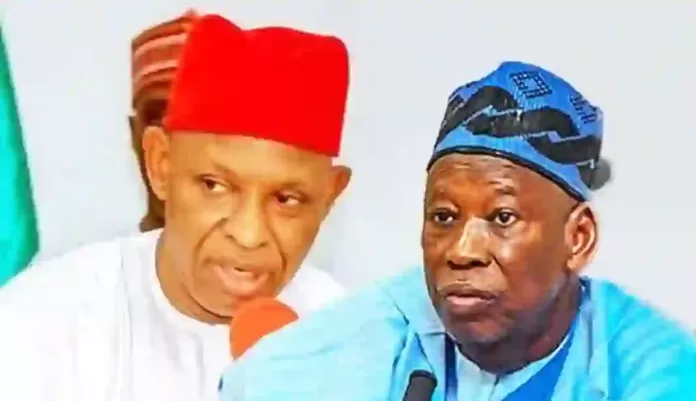
Abba Yusuf and Abdullahi Ganduje

By Suleiman Anyalewechi

The immediate past National Chairman of the ruling All Progressive Congress APC, Dr Abdullahi Umar Ganduje, has lashed out at the Kano State Government for calling for his arrest.

The Source reports that the State Government had, on Friday, November 28, 2025, after their Executive Council meeting, called on security agencies to effect the immediate arrest and questioning of Ganduje, over alleged incendiary and inflammatory comments amidst the unprecedented security challenges facing the State.

The State Commissioner for Information and Internal Affairs, Ibrahim Waya, while briefing the Media on the outcome of the Council Meeting, accused Dr Ganduje, who is also the immediate past Governor of the State of  escalating tension and promoting insecurity in the state through his inciting comments as well as insidious movies to create a 12, 000 strong militia in Kano.

Waya alleged that Ganduje indulged in some potentially dangerous rhetorics while reacting to last week’s unusual terrorists attack in some Communities in Tsanyawa Local Government where over 10 persons, including women, were abducted.

According to the Information Commissioner, security agencies should arrest Ganduje over his plans to establish a militia,  and also his links with some incidents of security breaches recorded of recent in some parts of the state.

“Council deliberated extensively over the recent inflammatory statements made by a former Governor of the State, Abdullahi Umar Ganduje and the Deputy Senate President, Barau Jibrin, who alleged that the state is vulnerable to banditry activities and further announced plans to recruit 12,000 individuals under a proposed religious police outfit named Khairul Nas .
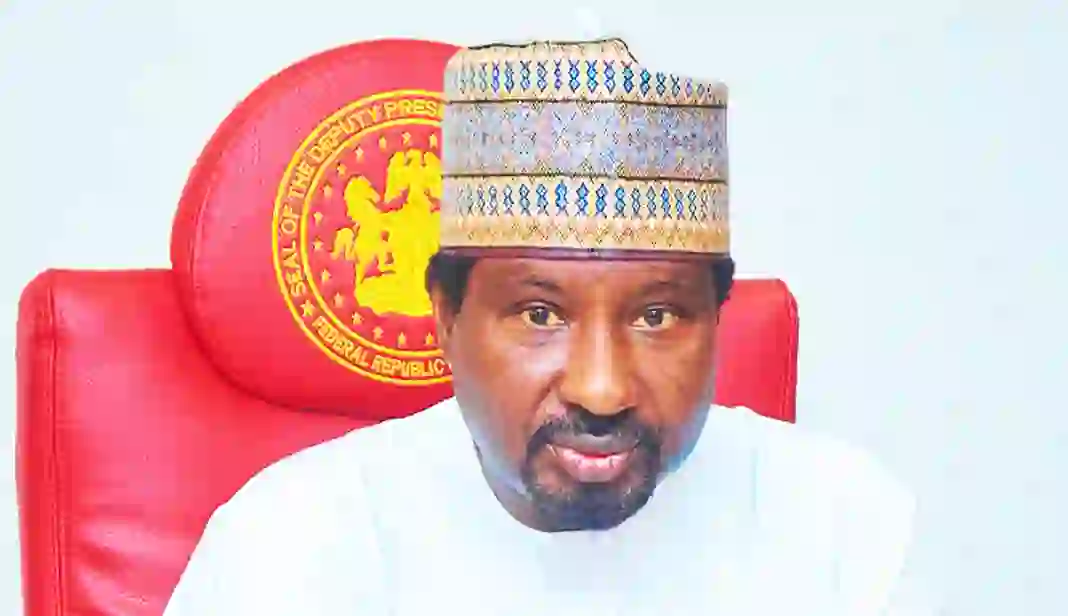
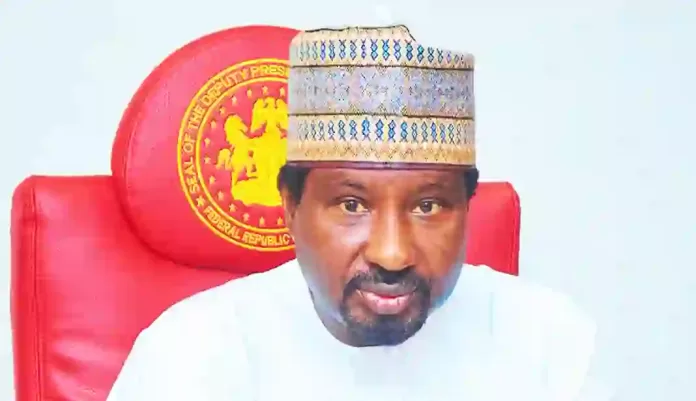
Deputy Senate President Barau Jibrin
Deputy Senate President, Barau Jibrin

“Council noted that the utterances were reckless and capable of undermining the security efforts of the Kano State Government and the President Tinubu-led administration which have demonstrated genuine concern for the plights of the citizens and had continued to work tirelessly to safeguard their lives and properties across the nation.

“That less than 48 hours after the statement, suspected bandits infiltrated some border communities in the State, raising concerns that the remarks might have been premeditated or linked to the assault”, Waya stated.

But reacting to the Kano state Government’s accusations, Dr Ganduje, on Saturday, November 29, 2025, in a statement by his media aide, Edwin Olofu, described the call for his arrest and questioning as most unfortunate ,and smacking of recklessness.

This is as he insisted that the position of the state Government is a stark reflection of desperation and incompetence.

According to the former Governor, the disposition of the Governor Abba Kabiru Yusuf’s administration in the face of the security challenges facing the State, tantamount to a disdainful abdication of responsibility and resort to blame game.

” It is deeply unfortunate that rather than addressing the escalating insecurity ravaging the state, Governor Yusuf has chosen to chase shadows, searching for scapegoats to conceal his glaring failures.

“At a time when communities such as Bagwai, Shanono and Tsanyawa, and other affected areas are living in fear, the Governor has neither visited, nor shown empathy towards the victims.

“His continued absence in moments that require leadership speaks volumes of his disconnect from the people he claims to serve”, Ganduje stated.

The APC former National Chairman emphasized that while in the saddle, Kano state was completely insulated from the criminal activities of bandits and other terrorists.

According to him, for eight years, Kano not only was able to keep at bay terrorist elements, but also enjoyed uninterrupted peace and stability, a development that earned it national commendation.

He urged Governor Yusuf to be humble enough to seek help on how to maintain peace and safeguard lives and properties of residents if he has run out of ideas on how to address the situation

Ganduje also called on the present Kano State authorities to indulge less in distractive politics  and concentrate on the task of governance, especially in this perilous and challenging.period .

In the same vein, the Deputy Senate President, while challenging the state Government to provide evidence of the purported incendiary statement made by him, lamented the slide in the fortunes of the State owing to lackluster leadership in.recent times .

In statement from his media aide, Ismail Mudashiru, at the weekend, the Senator denied the allegations from the Kano state Government, noting that contrary to the position of the State authorities, he has made tremendous contributions to the maintenance of peace and stability in Kano.

“The attention of the media office of the Deputy Senate President, Senator Barau Jibrin, has been drawn to false, reckless and malicious claims by the Kano State Government through the State Commissioner for Information, Ibrahim Abdullahi Waya, that His Excellency, the Deputy Senate President, made a statement capable of undermining the security efforts in the state.

“It is unfortunate that the State Government has relegated governance to this low by concocting ,and fabricating lies to tarnish the growing reputation of the Deputy Senate President.

“There was no time when Senator Barau uttered any statement capable of undermining security efforts. Instead, he has been at the forefront, collaborating with all stakeholders to address the security challenges in parts of Kano and other areas in the country.

“We challenge them (Kano state authorities) to produce the clip in which the Deputy President of the Senate made any statement that could undermine security efforts.

” Until governance was relegated to the background, our beloved state, Kano used to be very close to Lagos in terms of prosperity, but unfortunately, misgovernance has eroded that.

“We have everything necessary to restore the glory days of our State, but the Governor is not taking steps in that direction” Barau stated

ACF Chairman Blames 15m Out-of-School Children For Insecurity

0
Arewa

The Chairman of the Arewa Consultative Forum (ACF), Alhaji Bashir Dalhatu, has blamed the problem of insecurity in the north on the growing number of out-of-school children in the region.

According to him, there are over 15 million children in the region roaming the streets without education, saying they are responsible for banditry and terrorism affecting the region.

Dalhatu spoke  during an interview on Arise TV on Friday. The ACF chairman had earlier called on the federal government to grant amnesty to bandits and terrorists carrying arms against the country.

He said it is necessary to grant amnesty to the militants, the same way amnesty was granted to the Niger Delta militants by late President Umaru Yar’adua, he urged the government to apply both kinetic and non-kinectic method to address the problem..

Speaking on the insecurity in the region, Dalhatu said the story could have been different if the youths are educated, saying some of them took to criminality because they lacked formal education.

“We have fifteen million out-of-school children roaming the streets. If we had taken care of that, it would not have gotten out of hand,” he said

Why We Blocked Kanu’s Trial When I Was Lead Counsel

0
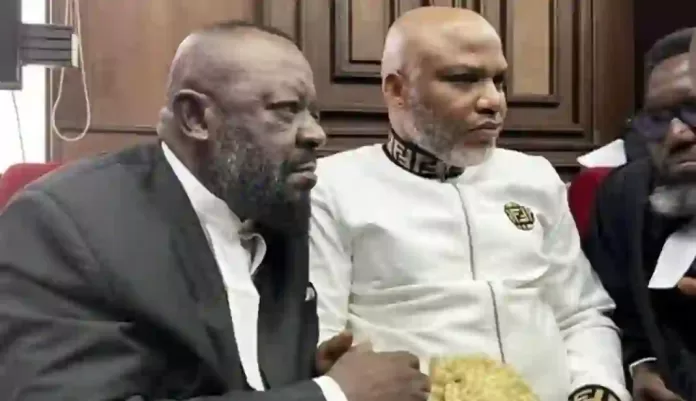
Aloy Ejimakor and Nnamdi Kanu

By Aloy Ejimakor

This article sets out the reasons why the legal team of Mazi Nnamdi Kanu had successfully blocked his trial when I was lead counsel between February 2024 and February 2025. They are the same reasons Kanu had also insisted that Justice Omotosho should ‘show him the law’ under which he was being tried. And going forward, they are the same reasons the Court of Appeal will most likely overturn Kanu’s conviction.

To begin with, the charge sheet indicated that all the terrorism-related charges against Kanu were predicated on broadcasts he made between 2018 and 2021 from locations outside Nigeria, presumably from Britain and Kenya. The charges were initially brought under the Terrorism Prevention (Amendment) Act 2013 (TPAA 2013), which granted the Federal High Court extraterritorial jurisdiction without a double criminality requirement, meaning that jurisdiction lies whether the act (broadcast) occurred in Nigeria or abroad, provided that it had impact in Nigeria.

In 2022, the TPAA 2013 was repealed and replaced by the Terrorism Prevention and Prohibition Act 2022 (TPPA 2022). Section 76(1)(d)(iii) of the TPPA 2022 introduced a double criminality test as a condition precedent before the Federal High Court can assert extraterritorial jurisdiction, stating clearly that the act (broadcast) must also “constitute an offence under the law of the foreign state” where the broadcast was made.

Recall that Kanu was extraordinarily renditioned to Nigeria in June 2021. While the Court of Appeal discharged him in October 2022 due to this illegality, the Supreme Court, in December 2023, upheld the validity of the trial on the charges, despite the rendition, and remitted the case for trial. Before Justice Murtala-Nyako, myself and the legal team had raised an objection to Justice Murtala-Nyako’s jurisdiction on the basis of two issues, namely: Whether the Court should apply the double criminality test under Section 76 of the TPPA 2022; and whether the failure to specify the foreign country from which the broadcasts were made constitutes a fatal jurisdictional defect. Justice Murtala-Nyako overruled our objection and we appealed to the Court of Appeal. But while the appeal was pending, Justice Murtala-Nyako was recused in February 2025 and the case was assigned to Justice James Omotosho for a trial de novo (anew). For avoidance of doubt, under long-standing Nigerian jurisprudence, a de novo trial post-repeal invokes the new law (Adegbenro v. Akintola (1963) 1 WLR 797 (PC).

When the case commenced anew before Justice Omotosho, I was no longer lead counsel and the new lead counsel decided that – instead of raising the same objection based on jurisdiction – it was smarter to allow the trial to proceed because of his assessment that the charges lacked evidentiary merit. But simmering in the background was this nagging feeling that the Court is bound to apply the double criminality test under Section 76 of the TPPA 2022; and that the prosecution’s stubborn reliance on the repealed TPAA 2013 smacked of sophistry aimed at avoiding this substantive safeguard in the new law.

It is conceded that the offences with which Kanu was charged were allegedly committed between 2018 and 2021 when the TPAA 2013 was still in force. It is also true that the TPPA 2022 did not repeal the TPAA 2013 into oblivion and it contains specific savings clauses in Sections 97 and 98 that preserved liabilities incurred, investigations and legal proceedings commenced and ongoing under the repealed Act. At first impression, this suggests that the trial itself can continue. However, the Supreme Court has held in many cases that repealed laws cannot sustain trials (Ifediora v. Idigo (1988) 2 NWLR (Pt. 76) 239). Section 98 TPPA (relied upon by Justice Omotosho) saves offenses allegedly committed pre-repeal (2018–2021) but not a jurisdictional issue like double criminality, a substantive precondition that must be met. In DPP v. Okocha (2004) 8 NWLR (Pt. 874) 186, jurisdictional hurdles were assessed under current law, not the repealed law, despite saving clauses. More reasons are as follows:

First, the double criminality requirement fundamentally alters the legal definition of an extraterritorial offence. Under the TPAA 2013, an act committed abroad was an offence only if it had an “impact in Nigeria.” Under the TPPA 2022, that same act is only an offence if it (i) has an impact in Nigeria, and (ii) is also a crime in the foreign country where it was committed.

Second, Section 76 acts as a legislative gatekeeper for the court’s power. Without satisfying the double criminality test, the court lacks the jurisdiction to try the accused for acts committed extraterritorially under the new legal regime.

Third, the double criminality provision affords a significant substantive right to an accused person: the right not to be tried in Nigeria for a conduct that was lawful in the jurisdiction where it happened. This is a core element of the principle of legality and fairness in international criminal jurisdiction and the Nigerian Constitution.

Fourth, the Supreme Court’s decision to allow the trial to continue was based on the existence of the charges, not a final determination on the applicable substantive law for the trial on the merits. Now that a trial de novo (anew) was ultimately underway, the court must determine the applicable law in use and that is exactly what Kanu had demanded in his preliminary objection which the court flatly refused to determine until the day it delivered the judgment which was wrong.

Fifth, reassignment after recusal restarts proceedings. In Military Governor of Lagos State v. Ojukwu (1986) 1 NWLR (Pt. 18) 621, judicial reassignment post-recusal nullified prior interlocutory acts, mandating fresh hearings. Thus, Kanu’s trial was not “pending” under Section 97 TPPA 2022 but a new proceeding under the TPPA 2022. This comports with Section 36(12) Constitution under which offenses are triable only under a “written law in force” at trial time.

Furthermore, the established principle of interpretation is that “all statutes are prospective unless expressly made retrospective.” The TPPA 2022 is not expressly retrospective. Therefore, while the proceedings (the trial) are saved, they must be conducted under the substantive law in force at the time of the trial, unless doing so would create a retrospective offence or penalty. Thus, applying the TPPA 2022 with the double criminality requirement does not criminalize a lawful act; it merely imposes a new, more protective condition that must be met before any current prosecutions could succeed.

Therefore, for the first issue (double criminality), Justice Omotosho was expected to have sustained Kanu’s objections by applying the TPPA 2022. To be sure, for the court to exercise extraterritorial jurisdiction, the prosecution should have been required to plead and prove that the Kanu’s alleged acts (broadcasts) constituted a criminal offence both in Nigeria and in the United Kingdom or Kenya, which were the places Kanu was domiciled between 2018 and 2021. The only reason the prosecution was dodgy on the law that applied was this: Given that the broadcasts were made from the UK (where Kanu is a citizen and thus a legal resident) and Kenya (where he was itinerant) and the content was political speech (geared to self-determination and calls for self-defense against terrorists), it is highly unlikely that such acts would constitute terrorism under the domestic laws of those countries.

Now, coming to the second question which is: Does the failure of the charges to state the specific foreign country from which the broadcasts were made rob the Federal High Court (Justice Omotosho) of jurisdiction? The short answer is: Yes, it does because this failure is a fundamental flaw that renders the charges incompetent, thus robbing the court of jurisdiction, especially in light of the double criminality requirement addressed in detail above. In FRN v. Usman (2019) 12 NWLR (Pt. 1687) 298, failure to specify offense location vitiated jurisdiction in cross-border fraud.

To be sure, the requirement for a charge to be specific and unambiguous is not a mere technicality; it is a cornerstone of the right to a fair hearing as guaranteed by Section 36 of the 1999 Constitution. The accused must be told, in clear and certain terms, the nature of the accusation against him to enable him to adequately prepare a defence, hence the reason Kanu was insisting: “Show me the law”, which meant that the court should first decide whether it was lawful to try the case under the harsher (and more prosecution-friendly) provisions of TPAA 2013 or the less harsh (and more defendant-friendly) double criminality provisions of TPPA 2022.

In other words, the failure to specify the foreign situs or country where the broadcasts were made was profoundly prejudicial to Kanu because it robbed him of his right to effectively raise these affirmative defenses, namely: That the said broadcasts are not considered a crime in either Britain or Kenya (where he was at the time); that the factual basis of the alleged “impact in Nigeria” from that specific location is suspect; and that even if perchance he was convicted, the court is bound to determine his sentence under the less harsh TPPA 2022 (I had analyzed this in a previous article which was widely published and circulated a few days ago).

Above all, this vagueness (as to location of the broadcasts) violated Kanu’s constitutional right to be informed of the nature of the offense, which is also hit by the fell consequences of Section 220 of the Administration of Criminal Justice Act 2015 (ACJA) that bars jurisdiction if the charge omitted a legally required information that could mislead the defendant on how to frame his defense. Thus, under the Constitution, TPPA and ACJA, this omission is fatal to jurisdiction.

To be sure, the identity of the foreign country is not just a detail; it is a jurisdictional fact. The court cannot even begin to apply the double criminality test if it does not know which country’s laws to examine. And it is the prosecution’s duty and burden to plead this essential element of the offence in the charge. A charge that fails to disclose every essential element of the offence is incompetent and cannot trigger the court’s jurisdiction. The Supreme Court in YAKUBU v FRN (2020) and other authorities has consistently held that a charge which fails to disclose an essential ingredient of the offence is void and confers no jurisdiction on the court.

In summation, I posit that the confluence of the new substantive law (TPPA 2022) and the defective charges presented a formidable legal barrier to the prosecution (and conviction) of Mazi Nnamdi Kanu. The double criminality requirement in Section 76 of the TPPA 2022 is a substantive provision that protects him from being tried for extraterritorial acts that were not criminal in the jurisdiction where they occurred.

Furthermore, the prosecution’s failure to specify the foreign country in the charges is not a minor oversight but a fundamental flaw that prejudices the defence and prevents the court from establishing a key jurisdictional fact. For these reasons, it is my firm belief that the Federal High Court lacked the jurisdiction to proceed with this trial on the incompetent charges and under the repealed TPAA 2013. Thus, a robust appeal on this ground alone would succeed without more.


Ejimakor, American-trained Lawyer, is Kanu’s Special Counsel

Kano: Deputy Senate President Rebuffs Plan To Arrest Him

0
Deputy Senate President Barau Jibrin
Deputy Senate President, Barau Jibrin

Nigeria’s Deputy Senate President, Jibrin Barau, has rejected calls for his arrest  by the Kano state government , describing the action as reckless and malicious.

Barua’s rebuttal was contained in a statement issued on Saturday by his media aide, Ismail Mudashir, saying the call for his arrest is false and capable of undermining the security and peace of the state.

On Friday, the state government, after a meeting of its State Executive Council, SEC called for the arrest of Barau and the immediate past governor of the state, Abdullahi Ganduje, accusing them of inciting violence in the state. Barau and Ganduje have denied the allegation.

The state’s government calls for their arrest came after the two politicians were said to have decided to recruit 12,000 persons under a religious police outfit named Khairul Nas, to combat the rising insecurity in the state. They have both accused Governor Abba Kabir Yusuf of not doing enough to address the menace.

Reacting, Barau surged the governor to focus on addressing the problem instead of chasing the shadow of trying to arrest him, and former governor Ganduje

He explained that he had never uttered any statement capable of undermining the security of the state, adding that the state government is just trying to tarnish his growing reputation, instead of focusing on governance for the people of the state..

The statement read, “The attention of the media office of the Deputy President of the Senate, Senator Barau I Jibrin, CFR, FCNA, has been drawn to false, reckless and malicious claims by the Kano State Government through the state Commissioner of Information, Ibrahim Abdullahi Waiya that His Excellency, the Deputy President of the Senate, made a statement capable of undermining the security efforts in the state.

“It is unfortunate that the state government has relegated governance to this low by concocting and fabricating lies to tarnish the growing reputation of the Deputy President of the Senate.

“There was no time when Senator Barau uttered any statement capable of undermining security efforts; instead, he has been at the forefront, collaborating with all stakeholders to address the insecurity challenges in parts of Kano and other areas in the country.”
“We challenge them to produce the clip in which the Deputy President of the Senate made any statement that could undermine security efforts.

“Until governance was relegated to the background, our beloved state, Kano, used to be a very close second to Lagos in terms of prosperity, but unfortunately, misgovernance has eroded this.”

Cardoso: Forex Reserves Surge Caused By Sustained Fiscal and Monetary Policies

0
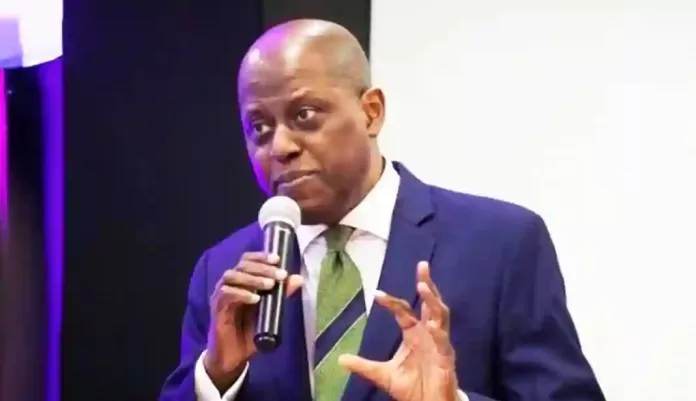
Yemi Cardoso - CBN Governor

Nigeria’s Central Bank Governor, Yemi Cardoso has described the recent surge in the nation’s external reserve as a product of deliberate monetary and fiscal policies of the federal government.

The CBN governor said it’s not as a result of external borrowing that the foreign reserve have increased in recent months, particularly after the firmed at close to $47 billion at the end of October.

Cardoso, stated this on Friday at the Chartered Institute of Bankers of Nigeria, CIBN, Annual Bankers’ Dinner, while commenting on the heath of the economy, as well as the impacts of the ongoing fiscal and monetary reforms of the Tinubu administration.

According to him, the nation’s external reserve, in the past had been a product of external borrowing, but the figure which currently stands at $46.7 billion, was drive by stronger market fundamentals, improved policy credibility and sustained reforms, noting that the Reserve has strengthened in the second and first quarter of 2025. .

He explained that the nation’s current account balance rose by more than 85 per cent to US$5.28 billion in the second quarter of 2025, up from $2.85 billion in the first quarter, strengthening the external sector and boosting confidence.

“Our foreign reserves reaching $46.7 billion by mid-November, providing over 10 months of import cover, is a clear indication of resilience. What is most important is that our FX reserves are being rebuilt organically, not by borrowing, but through improved market functioning, stronger non-oil exports and robust capital inflows,” Cardoso said.

The magazine’s checks indicate that Nigeria’s forex reserve stood at $34 billion when President Bola Ahmed Tinubu came to office in 2023.

Malami At EFCC, Interrogated, Released

0
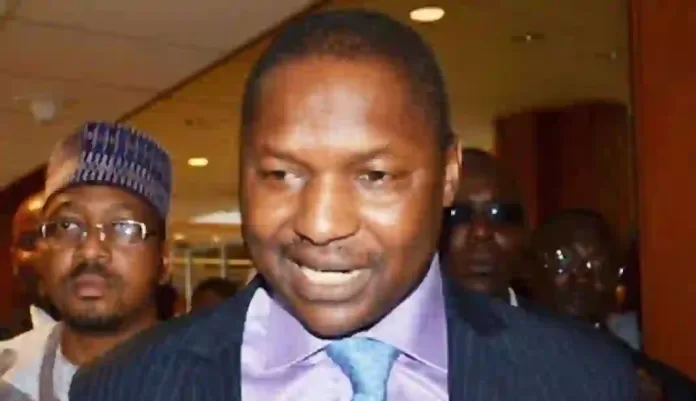
Abubakar Malami

By Adesina Soyooye

Abubakar Malami, SAN, former Attorney-General of the Federation and Minister for Justice under the late President Muhammadu Buhari Government, who was invited by the Economic and Financial Crimes Commission, EFCC has been interrogated and released.

The Commission had invited Malami to its Abuja Headquarters for interrogation over what was not stated.

On receipt of the invitation letter, the former Minister whose Ministry oversaw the activities of the EFCC, made it public,  promised to honour it, and update the public of interaction with the body in alignment with his belief in transparency and accountability.

He did. And even though he is not smelling of roses yet, since he has another appointment to keep with the Commission, he described his meeting with his interrogators as “successful”.

And true to his pledge to make public his “journey” to the Commission, he took to his X page, and posted: “In line with my undertaking to keep Nigerians updated on my invitation by EFCC, I give glory to Allah for his divine intervention. The engagement was successful and I am eventually releases, while on an appointment for further engagement, as the truth relating to the fabricated allegations against me continues to unfold.”

He did not however, reveal why he was invited or what he discussed with the Commission.

A founding member of the All Progressives Congress, APC,and an unapologetic Buharist, his relationship with the Party soured soon after Buhari left office, and worsened since his death.

He has since dumped the party for the African Democratic Congress, ADC, under which he has declared he would run for the Governorship seat of his State, Kebbi, in 2027.

OPINION: Understanding The New Wave Of Capital Inflows Into Nigeria

0
Abraham Amah
Abraham Amah

By Abraham Amah

Whenever Nigerians hear of a sudden surge in foreign inflows—whether the widely circulated twenty point nine billion dollar figure or the officially documented six point one billion dollars that entered the economy in October 2025—the instinctive reaction is often excitement, scepticism, or confusion. Some interpret such a surge as a sign that the economy is recovering and that foreign investors are regaining confidence in Nigeria. Others accuse political actors of exaggeration or argue that such figures mean little unless they translate into improved living standards for ordinary citizens. Beyond these reactions, one fundamental truth stands out. Nigerians must understand what these inflows actually represent, how they are composed, how they compare with previous years, and what they imply for the nation’s economic future.

Capital inflows are not a single category of money. They are made up of several components with very different implications for national development. Broadly, inflows fall into four main categories: external borrowing, foreign direct investment, foreign portfolio investment, and diaspora remittances. Export earnings also contribute, while in some cases aid, grants, and multilateral support enter the inflow statistics. Not all inflows reflect economic health. Some represent opportunities and long-term commitments, while others reflect risk, instability, or short-term speculation. Understanding the composition, quality, and sustainability of these inflows is far more important than celebrating the headline figure.

Borrowing is historically the largest contributor to sudden spikes in Nigeria’s inflow numbers. When the Federal Government raises Eurobonds, draws multilateral loans, or receives budget support, such proceeds are recorded as inflows. However, these inflows simultaneously increase the national debt and future repayment commitments. Borrowing is not inherently negative; it becomes harmful only when the funds are used for consumption rather than production. Nigeria’s history demonstrates that too often borrowed funds have been used to service recurrent expenditures instead of building long-term infrastructure or supporting manufacturing and agriculture. Any inflow figure that is significantly influenced by borrowing should therefore be interpreted with caution rather than celebration.

Foreign direct investment, the most valuable type of inflow, has consistently been the smallest in Nigeria over the past decade. FDI represents long-term investment into factories, manufacturing plants, farms, refineries, technology hubs, and infrastructure. It creates jobs, enhances skills, brings technology transfer, and strengthens productive capacity. Unfortunately, insecurity, policy inconsistency, unreliable electricity supply, and high operating costs have discouraged major foreign investors from committing long-term capital to Nigeria. When inflows rise sharply, FDI rarely contributes more than a small percentage. A country cannot industrialize, significantly reduce unemployment, or diversify its economy without strong FDI inflows. That is the crucial context Nigerians must bear in mind as they interpret the 2025 surge.

Foreign portfolio investment has historically been the dominant driver of inflow increases. Portfolio inflows are highly sensitive to interest rates, currency stability, political signals, and global risk sentiment. They move quickly into Nigerian Treasury Bills, government bonds, and equities when returns appear attractive, and they exit just as quickly when uncertainty emerges. These flows are often referred to as hot money because they are short-term, speculative, and extremely volatile. The 2017 experience remains instructive. After Nigeria introduced the Investors and Exporters FX Window in April 2017, portfolio inflows surged sharply, boosting foreign reserves and lifting the Nigerian stock market by over forty percent. Yet when the 2019 election cycle approached and investors anticipated policy uncertainty, a large portion of those inflows exited abruptly, putting pressure on the naira. The 2025 inflow surge shows similar characteristics, reinforcing the need for Nigerians to interpret these trends intelligently.

Diaspora remittances represent the most stable inflow Nigeria receives. These are the funds sent home by Nigerians abroad to support families, pay school fees, build homes, invest in small businesses, and contribute to community development. Remittances have consistently outperformed foreign direct investment and often rival or exceed oil revenues in several years. During the economic turbulence of 2020, when the global pandemic triggered a dramatic collapse of oil prices and led to widespread capital flight from developing countries, remittances remained resilient. Despite global hardship, Nigerians abroad sent home nearly eighteen billion dollars, providing crucial support that kept millions of families afloat. Remittances have a human face; they reflect the sacrifices and resilience of citizens abroad who continue to invest emotionally and financially in their homeland.

Nigeria’s export earnings, especially from non-oil exports, represent another important potential inflow. However, the country has not fully harnessed this potential. Nations with similar population sizes export refined petroleum, processed agricultural products, manufactured goods, and advanced technologies. Nigeria continues to rely heavily on crude oil, raw agricultural products, and a narrow range of manufactured items. Until Nigeria expands its productive base and moves into value-added exports, inflow surges will continue to be driven by borrowing and speculative capital rather than genuine economic productivity.

A clearer picture emerges when Nigeria’s inflows are compared across different years. The inflow surge of 2016 and 2017 came after Nigeria entered its first recession in decades following the collapse of global oil prices in 2014. Portfolio inflows dominated those years because Nigeria offered high interest rates and introduced policy reforms that briefly restored investor confidence. The country recorded an inflow increase of over one hundred percent in 2017, but more than seventy percent of that was portfolio investment. Foreign direct investment remained weak. When political uncertainty rose ahead of the 2019 elections, most of those inflows disappeared. The lesson is that inflow spikes without structural reforms produce only temporary relief.

The inflow patterns of 2020 provide another contrast. That year, Nigeria faced both the COVID 19 pandemic and a global market crash. Portfolio inflows declined sharply as global investors fled to safe assets. Nigeria relied heavily on emergency borrowing, including the three point four billion dollar IMF Rapid Financing Instrument, and on remittances from Nigerians abroad. These inflows helped the country survive, but they did not reflect renewed investor confidence. They represented crisis response rather than recovery.

The projected inflow patterns for 2026 suggest a range of possibilities. If Nigeria undertakes bold structural reforms in security, fiscal policy, foreign exchange management, and the business environment, FDI could gradually increase. If interest rates remain high, portfolio inflows may return in large numbers. If oil production stabilizes and non-oil exports grow, export earnings could strengthen the reserves. But none of these projections will produce lasting value unless Nigeria strengthens the underlying structures of its economy. Inflows alone cannot save a nation. Only governance, stability, productivity, and genuine reform can.

Against this historical and structural backdrop, the inflow surge of October 2025 must be understood clearly. Whether one references the officially published six point one billion dollar FX inflow or the circulated twenty point nine billion dollar figure, Nigerians must avoid simplistic interpretations. The key questions are straightforward. How much of the inflow is new borrowing? How much is speculative hot money? How much is foreign direct investment? How much came from diaspora remittances? How much will remain in the economy long enough to create jobs and stimulate production? Without answers to these questions, the mere announcement of large inflows means little.

The true concern is the quality, sustainability, and purpose of the inflows. Nigeria must begin to shift from celebrating statistics to interrogating their meaning. Borrowing should be tied to development, not consumption. Portfolio inflows should be seen as temporary liquidity rather than a foundation for planning. Remittances should be encouraged through secure and formal channels. Foreign direct investment must be prioritized by making Nigeria safe, stable, and predictable. Export earnings must grow through deliberate investment in agriculture, manufacturing, mining, technology, and the creative economy.

Ultimately, Nigeria’s future will not be shaped by the size of its inflows but by the quality of its institutions and the productivity of its economy. Inflows may rise and fall, but national progress depends on stability, policy clarity, infrastructure, and human capital. The inflows of 2016 and 2017, the crisis inflows of 2020, the surge of 2025, and projections for 2026 all point to one conclusion. Nigeria must build a resilient economic foundation that converts inflows into lasting development. Until then, inflow headlines will remain fleeting victories rather than engines of national transformation.

Elder Amah, a frequent commentator on current issues writes from Umuahia, Abia State

“Gunmen Told Policemen In My Convoy: You Are Serving Zoo Government” –  Ngige

0
Chris Ngige
Dr. Chris Ngige

By Charles Igbo

Dr Chris Ngige, a former Governor of Anambra State, has revealed that the gunmen who attacked his convoy on Thursday, told the Policemen attached to him that they were serving a  “Zoo Government”

The convoy of the immediate past Minister of Labour, was attacked at Umuoji, his home State. The attack resulted in a fatality and a number of injuries.

Giving an account of the ugly incident when Ngige’s Governor-successor, Peter Obi, visited him at his country home in Alor, Ngige said the woman who died was using her phone to record the attack when she was fatally shot.

He, also, said that one of the Policemen was shot on the leg, and his gun and uniform taken away from him.

He uses the opportunity to reassure friends and well-wishers of his safety.

Ngige: “As you can see, I’m alive, I’m not dead, so there should be no panic or fear.

“They attacked my convoy while they were coming back around Umuoji when they saw some vehicles racing towards them, and later reversed and chased after them, and started shooting.

“They were all dressed in police and army uniforms, so my convoy driver dribbled them until they ran into a shop and they caught up with my police security man who battled with them until his bullets exhausted.

“They took away his rifle and his uniforms and that was after they shot him in the leg.

“They told the two police men that they were serving a zoo government. So I think something is in the offing, they are seizing arms, mopping up police uniforms.

“I have spoken to the Governor of the State who assured me they will be tracked down, because if they are not tracked down, that can lead to potential danger and a sign of potential unruffling of the calmness we have enjoyed in the State for three months now.

“You know, we are entering Christmas season and our people will be coming home. They need to be tracked down because it is a gang with a modus operandi of operating in police uniforms.”

On whether he was targeted, Ngige stayed away from speculation but said: “My pilot driver is very well known and most people know that anywhere they see him, they know Ngige is there.

“He has driven me for 22 years. So on that basis, I may say they knew it was my convoy and decided to attack. On the other hand, I can say they do not know, they may have just seen a convoy with police men and decided to attack them.

“So I’m not talking about targeting me now, anyone who targets me is wasting his time.

“When they told the security men that they were serving zoo government and that they should tell their masters they are coming for them. You know what that means.”

Ngige Doubts Nnamdi Kanu’s Mental Health, Faults NMA

0
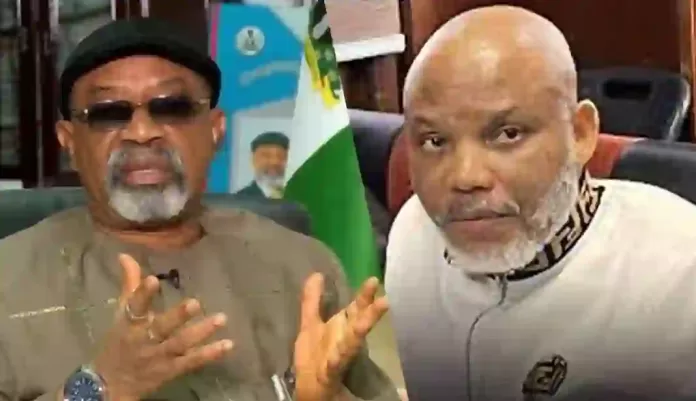
Chris Ngige and Nnamdi Kanu

By Charles Igbo

The immediate past Minister of Labour, Dr. Chris Ngige, has faulted the Nigerian Medical Association’s assessment of the health status of the

now-jailed Mazi Nnamdi Kanu.

Recall that during the trial of Kanu, the trial Judge, the Honourable Justice James Omotosho, had ordered the NMA, to set up a medical panel to evaluate his health to enable the Court determine if he was fit to stand trial, and if the medical facilities at the Department of State Services, DSS, were good enough to handle his health issues.

The NMA in its submission agreed with the DSS that Kanu was fit to stand trial and that the medical facilities at the DSS, as well as the Medical Staff, were good enough for Kanu.

But speaking in his country home at Alor Anambra State on Friday, Ngige, himself, a Medical Doctor, faulted the NMA’s assessment. He said the Panel ignored Kanu’s mental health. He doubted Kanu’s sanity. He said the IPOB Leader is “exhibiting bizarre symptoms”. He said: “I’m not a psychiatrist, but I know that something is wrong”.

He, also, made a strong case for Kanu to be released to his people(the Igbo) or Britain, which citizenship he has, because his case can only solved politically.

Ngige: “My own take is that Nnamdi Kanu’s case is for political solution. I met President Buhari on that.

“Governor Soludo has, also, said that he wants Kanu to be released to him, but even if they don’t want to release him to us, they can release him to Britain.

“Why I say so is because the symptoms he is exhibiting is a bizarre symptom. I’m not a psychiatrist, but I know that something is wrong. Even the NMA people that went to do medical evaluation on him were wrong. They should look at that other part of it. They should look at that other component, there is a mania there, and when you have such a situation, the Court normally discharges the person.

“That is my take, this is elementary psychiatry, and I’m a medical doctor.”

Insecurity: Obasanjo Slams FG, Supports Foreign Help,  Says Nigerians Tired Of Being Killed

0
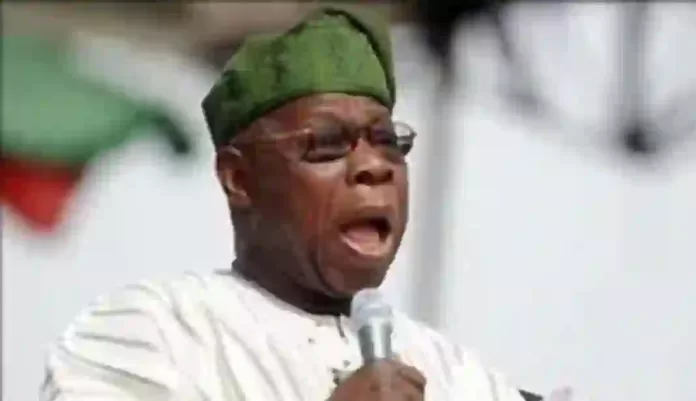
Olusegun Obasanjo
Chief Olusegun Obasanjo

By Gideon Njoku

Former President Olusegun Obasanjo has slammed the President Bola Tinubu Federal Government for its incapability to stem insecurity.

Nigeria, left, right, center, is buffeted by insecurity. Mass abductions in schools, Churches, communities, homes, highways, markets, farms. Nowhere is safe. Nobody is safe. And the country is bleeding.

It has become so bad that not a few Nigerians are calling for help from outside Nigeria.

One of those frustrated to the extent of saying that, yes, Nigerians need help, and that Nigerians are free to call for foreign help, foreign intervention, to save the people, is Obasanjo.

Speaking on Friday in Jos, at the Plateau Unity, Christmas, and Praise Festival, the former President said that the Tinubu Government has been incapable of protecting Nigerians.

His words:

“Nigerians are at liberty to seek international help if government fails.

“Nigerians are at liberty to seek help from outside the country when they feel they are not being secured by their nation.

“These days of technology, nobody should commit crime and escape justice. You can take them out.

“I believe that is nonsensical. We are being killed. We Nigerians, no matter what religion you belong to, no matter where you come from, no matter your profession, we Nigerians are being killed, and our government seems to be incapable of protecting us.

“We are part of the world community. If our government cannot do it, we have the right to call on the international community to do for us what our government cannot do for us.

“If we are being killed, it is the responsibility of government to do something about it.

“We should ask government to do what it has to do at all levels. We should ask our leaders to do what they have to do at all levels, in all walks of life.

“In these days of technology, there should be nobody hiding anywhere after he has committed a crime that cannot be seen with the present day satellite.

“Before I left government, I knew we had the capacity to pick up anybody in Nigeria. The capacity we didn’t have then was that, after we had identified and located such a criminal, we didn’t have the capacity to pick him up without moving on land or by air.

“Now, we have capacity with drones. You can take them out. Why are we not doing that?

“Why are we negotiating? And after government has paid these criminals, government denies!

“We should appeal to our government to do what needs to be done to stop Nigerians being killed.

“We are tired of being killed, and we want the killing of Nigerians, whether they are Christians or Muslims or pagans, they are Nigerians, and the life of every Nigerian matters. It should stop.”