Home Blog Page 445

How Kano Housewife, Six Children Were Wiped Out By Hoodlums

0
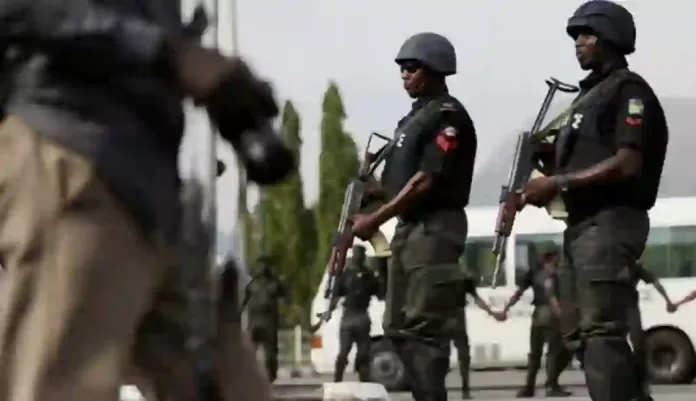
Police on Duty

By Suleiman Anyalewechi

The Kano State police  Command, on Saturday, January 17, 2027, informed it has launched a coordinated manhunt for those behind the dastardly killing of a Kano housewife, Fatima Abubakar and her six children.

The Source reports that some  yet to be identified armed men attacked  Fatima and her children at their Dorayi Chiranchi Quarters after breaking into their residence .

The  Police Command spokesperson, Abdullahi Haruna Kiyawa, informed that the victims were  assaulted by the hoodlums with dangerous weapons , leading to fatal injuries.

According to him, the State Police Command is leaving no stone unturned in their efforts to unravel those behind the unfortunate development.

Besides ordering a thorough investigation of the incident, the Police Spokesman explained that concerted efforts are underway to fish out and bring to justice  perpetrators of the heinous act

“The Kano State Police Command received a distress call at approximately 12:10 pm on January 17,2026 , reporting a brutal attack on the household of Haruna Bashir at Dorayi Charanchi Quarters .

“The victims,  Fatima Abubakar 35, and her six children were attacked by unknown hoodlums who broke into their house.

“The report indicated that the victims were attacked with dangerous weapons, resulting in fatal injuries. The Commissioner of Police, CP, Ibrahim Adamu Bakori, immediately mobilised a police team led by Deputy Commissioner of Police, DCP, in-charge of Operations,  Lawal Isah Mani, to the scene ).

“Bodies of the victims were evacuated and rushed to Murtala Mohammed Specialist Hospital Kano, where they were pronounced dead.

” A team led by ACP Wada Jarma, in-charge of Criminal Investigation Department, CID, was instructed to conduct a thorough investigation to bring the perpetrators to justice”, the police stated.

This is as the Command extended heartfelt condolences to the family, the inhabitants of Dorayi Chiranchi , Quarters and entire Kano residents over the unfortunate incident.

Insecurity: Gov. Okpebholo Donates Ten Patrol Vehicles, Salary For Personnel In Edo Central

0
Gov Okpebholo Donates Ten Patrol Vehicles

By Ayodele Oni

Edo State Governor, Monday Okpebholo has further boost Edo Central Security with Patrol Vehicles, new welfare package in a major step towards strengthening internal security and restoring peace across the district.

In the process, the Governor handed over ten brand new patrol vehicles to security agencies operating in the district, reaffirming his administration’s zero-tolerance stance on crime and criminality.

A statement on Saturday by Patrick Akhere Ebojele, Chief Press Secretary to the Governor, stated that the presentation ceremony, held at Irrua, Esan Central Local Government Area, attracted traditional rulers from across Esanland, security stakeholders, political leaders and community representatives.

The event also formed part of the Governor’s ongoing interactive security engagements designed to identify challenges, improve collaboration, and deploy targeted solutions across communities.

Okpebholo explained that the initiative was not symbolic but strategic, aimed at equipping frontline security personnel with the tools needed to respond swiftly and effectively to security threats.

“This is not just about handing over vehicles. It is about understanding what our security personnel are facing on the ground and responding directly.

“Security is the foundation of development, and we will not compromise the safety of our people.

“For it to be implemented, you need to cooperate with chairmen in the various local government areas. The names of your members (ESSC, Hunters, Anti-cultism) must be submitted for profiling and enlisting into the payroll as this is the only way to start receiving salaries. This will cut across the whole 18 local government areas.”

He said earlier his administration set up a Committee that trained 2,500 security Corps personnel, noting that these men be incorporated to the existing ESSC members and shared across 18 local government areas of the State.

“We earlier set up a Committee that trained 2,500 security Corps members and should be incorporated with the existing. With this number, we should have at least over 300 security personnel in each local government area”, he added

During the interactive session, representatives from Esan North East, Esan West, Esan Central, Igueben, Esan South East, the Esan Hunters Association and the Anti-Cultism Unit highlighted critical challenges confronting security operations.

These included logistics gaps, inadequate equipment, herdsmen-related security concerns, intelligence deficiencies, and the urgent need for improved mobility and communication tools.

Director of Operations, Edo State Security Corps, Mr. Richard Balogun, disclosed that salaries for security operatives have now been approved, ending months of uncertainty for personnel working in high-risk environments.

He commended the state government for its renewed commitment to crime fighting and the welfare of operatives.

“This is a clear demonstration that the government values the sacrifices of our men and women in uniform. Improved welfare and logistics will significantly enhance our effectiveness,” Balogun said.

Edo Central APC  Leader, Major General Cecil Esekhaigbe (rtd), urged the government to sustain the momentum by providing continuous logistical support, intelligence tools and operational funding.

He also called on traditional rulers and community leaders to intensify vigilance, including profiling suspicious persons and vehicles entering their communities.

“Our communities must become the first line of defence. If we work together, criminals will have no safe haven in Edo Central,” he said.

The Onojie of Uromi, His Royal Highness Anselm Aidenojie II, speaking on behalf of Enijie in Esanland, praised Governor Okpebholo’s hands-on leadership style and described the administration’s approach to insecurity as “practical, inclusive and results-driven.”

He announced that traditional rulers and Esan leaders in the diaspora are finalising plans to establish an Esan Security Trust Fund to mobilise financial and material support for security operations in Edo Central.

“This is a collective responsibility. Our people must be able to sleep with their eyes closed, knowing that their safety is guaranteed,” the monarch said

AFCON 2025: Super Eagles Defeat Egypt, As Nwabali Saves Salah, Marmoush Spot Kicks

0
Super Eagles
Super Eagles

By Akinwale Kasali

The Super Eagles of Nigeria have defeated the Pharaohs of Egypt in their third place match at the Casablanca Stadium in Morocco Via penalty kicks.

After 90 minutes of a tension soaked encounter, with the game tied 0-0, it took penalties to separate the two sides.

Goalkeeper, Stanley Nwabali saved Mohammed Salah and Omar Marmoush Spor Kicks to give the most populous Black Nation a 4-2 Penalty victory.

Coach Eric Chelle had started the game without Captain, Wilfred Ndidi, Vice Captain, Victor Osimhen, suspended Calvin Bassey, Ademola Lookman and Alex Iwobi.

Nwabali was in goal, with  Oluwasemilogo Ajayi, Igoh Ogbu, Bright Osayi-Samuel and Bruno Onyemaichi in defence.

Raphael Onyedika, Fisayo Dele-Bashiru and Samuel Chukwueze were in the heart of the midfield, while Moses Simon, Akor Adams and Paul Onuachu led the attack.

With the victory the Super Eagles have kept the record of not losing a Third Place Match at the African Cup of Nations Championship.

Kano Denies Administrative Lockdown Over  Gov Yusuf’s Defection Rumours

0
Governor Abba Yusuf

By Suleiman Anyalewechi

The Kano State Government has described as false, misleading and mischievous, insinuations suggesting administrative lockdown over the decision to temporarily bar Ministries and Parastatals from forwarding files to the office of the Governor.

This is as the Government insisted that the move is in tandem with routine control measures normally taken towards the end of every fiscal year to stem frivolous expenditures and leakages.

The Source reports that the office of the Secretary to the Kano State Government had directed Commissioners, Heads of Government Parastatals and other agencies to stop sending  files to the Governor for approvals pending further directives.

The directive was said to have been issued on Friday after an Executive Council meeting presided over by Governor Abba Kabiru Yusuf.

However, there have been  widespread concern over the directives, with various reports suggesting that the development may have led to the  grinding of the wheels of governance ,as many files have been returned to Ministries and parastatals from the Governor’s office untreated.

There have  been growing fears that such a development may have negatively affected both governance and the delivery of essential services in particular within the system .

The apprehension was somewhat accentuated by the ongoing tension arising from the rumoured defection of Governor Abba Yusuf to the All Progressive Congress , with his benefactor, the Leader of the Kwankwansia movement Senator Rabiu Musa Kwankwaso stoutly opposing the move .

But in a statement late on Friday January ,16, 2026, the Secretary to State Government SSG, Umar Ibrahim, noted that the directive is usually issued towards the end of the fiscal year , when the year’s Appropriation Law is nearing expiry, and the new budget still being processed by the appropriate authorities .

According to him, the directive was issued at a time when prudence, legality and respect for due process demand restraint in executive approvals, particularly those with financial implications.

The SSG emphasized that the policy is primarily targeted at preventing frivolous and unauthorized expenditures , illegal financial commitments and future audit queries.

Ibrahim noted that going by extant rules and regulations, no new expenditures should be incurred during the period of  interregnum between the old and new budgetary estimates.

This is as the SSG  debunked rumours claiming the grounding of administration in the State is as a result of the directive.

“Far from grounding public administration, the directive was a responsible administrative and fiscal control measure  taken to avoid illegal financial commitments and protect the state from legal and audit exposure” the Kano state Government stated .

According to him, the directive rather than leading to negative and unintended consequences, has assisted the Government in curbing the culture of rushed end-of-year approvals which, over the years, has tended to undermine accountability, transparency and fiscal discipline in public service.

However, Ibrahim noted that the policy only placed temporary embargo on files from Ministries while the parastatals continue to operate within the extant rules and regulations governing them.

While assuring of Government’s continued efforts at ensuring uninterrupted service delivery, the SSG expressed serious concern over the claims that the policy has resulted in the paralysis of Government activities.

The Source further reports that the controversy over the directive is coming at a time the State Governor is deeply involved in the process of defecting to the All Progressive Congress APC.

The Governor, amidst strident opposition from a section of the New Nigeria Peoples Party NNPP led by the 2023 presidential candidate of the party, Senator Rabiu Musa Kwankwaso, has been engaged in wide consultations over his planned defection.

Not a few believe that Governor Yusuf’s political activities may have taken precedence over governance, at least, in the last couple weeks.

Uzodimma Inaugurates Committee To Investigate Insecurity In Okigwe, Rebuild Zone

0
Inauguration of Committee To Investigate Insecurity In Okigwe

Governor Hope Uzodimma of Imo State has inaugurated a fact-finding Committee charged with the responsibility of investigating the prolonged insecurity and socio-economic devastation that have bedeviled Okigwe Zone for sometime now, reaffirming his administration’s commitment to rebuild the area and bring back peace, justice and enduring security.

Members of the Committee include : the Prelate Emeritus of the Methodist Church of Nigeria, Most Rev Dr. Samuel Uche (Chairman), foremost academic and legal luminary, Prof. Nnamdi Obiaraeri (Secretary), Anglican Archbishop of the Owerri Ecclesiastical Province, Most Rev. Dr. David Onuoha (member), Monsignor John Iwe (member) and HRH Eze Iheanaco Ndukwe (member).

Other members are the Commissioner of Police, Imo State, and a Representative of the Department of State Services ( DSS).

Speaking at the inauguration held at the New Exco Chambers, weekend, the Governor who described the situation in Okigwe as “deeply troubling,” regretted that “violence and deprivation have persisted for more than four years.”

“This area has been a theatre of unfair violence, where lives have been lost and property destroyed. The situation demands urgent and honest intervention.”

Uzodimma emphasised that reconstruction alone would not solve the problem without accountability. “We can rebuild houses and reconstruct roads, but without justice, our efforts will be in vain,” he stated, urging the Committee to uncover the root causes of the crisis to deter reoccurrence.

He charged members of the Committee whom he said were selected for their integrity and track record, to engage directly with affected communities and assess their needs in critical sectors such as healthcare, education, agriculture and housing.

“The era of silence and suffering in Okigwe  is over,” the governor declared and assured the Committee of full government support, including security backup where necessary.

While he advised the Committee to fish out those who worked both directly, indirectly and remotely to cause devastation in Okigwe, the Governor also encouraged residents to share information freely with the Committee members.

He was emphatic about youths who were drawn  into violence in the zone, and promised support for rehabilitation and reintegration.

The Committee is expected to submit its preliminary report within 30 days.

Governor Uzodimma said the report will form the basis for a comprehensive rehabilitation package and peace-building programme for Okigwe.

In his acceptance speech on behalf of the Committee, the Chairman, Most Rev Dr. Samuel Uche, assured that his members will swing into action immediately and deliver results swiftly.

He reiterated that his members are tested and trusted persons whose sense of character, work ethics and love for community are impeccable.

Dr. Uche congratulated Governor Uzodimma over his six years anniversary, and for the visible improvements in security throughout the State, especially in Okigwe zone.

“I drove home after Sunday Service in about 40 minutes. Everywhere was calm, unlike before. This shows that peace is gradually returning,” he had reflected on his recent trip to his Ihube community in Okigwe.

Describing his appointment as a significant privilege with serious responsibility, he emphasised the necessity for “wisdom, accuracy, diligence, and resourcefulness” in tackling the Committee’s challenges.

“We are here to serve the people and do what is right,” he affirmed.

The Prelate expressed gratitude for the Governor’s support, promising that the Committee will not shy away from seeking guidance when needed.

He announced plans to temporarily relocate to Imo State from Lagos to facilitate effective engagement.

“I will literally relocate and live close to the people so we can do this work properly,” he added, noting that improved security allows for the decision.

While reflecting on his own past security challenges, including a kidnapping incident, Dr. Uche thanked the Governor and the community for their support.

He further lauded the choice of Prof Obiaraeri as Secretary to the Committee and assured of members collaboration with local political leaders to ensure success.

“We have studied our terms of reference and will align our work strictly with the assignment given to us. By God’s grace, our work will be commendable and a reference point,” he concluded, reaffirming the committee’s commitment to delivering impactful results.

The Deputy Governor of Imo State, Lady Chinyere Ekomaru, the Senator representing Okigwe Zone, Sen. Patrick Ndubueze, Secretary to the State Government, Chief Cosmos Iwu, Chief of Staff to the Governor, Barr. Nnamdi Anyaehie, members of the Imo State Expanded Executive Council and other stakeholders from Okigwe attended the inauguration ceremony.

How Popular Nollywood Artist  Died In An Explosion On Set 

0
James Akaie

By Akinwale Kasali

The Nigeria Film Industry, Nollywood, has lost one of its popular special effects artist. James Akaie died in a frick explosion on set.

He died following an explosion during a film production in Abeokuta, Ogun State Capital.

Film Producer and Director, James Abinibi, disclosed that the incident occurred during a filming session.

He described the incident as tragic and deeply painful for the production team.

“It is with profound sorrow and heavy hearts that we confirm a tragic accident occurred on location in Abeokuta as filming was coming to a wrap, resulting in the death of our esteemed colleague and friend, James Akaie,” the statement read.

According to the production team, Akaie, a Special Effects and Pyrotechnics Artist, was involved in an unexpected explosion that happened in a designated effects preparation area outside the main film set.

“James succumbed to his injuries at the hospital. His two other assistants sustained some fire burns and were immediately taken to a specialist hospital where they received immediate attention and were later confirmed stable as they continue receiving treatment,” the statement added.

Abinibi said investigations have begun to determine the cause of the explosion, noting that the production team is cooperating with relevant authorities.

“The specific circumstances leading to the explosion are currently under a thorough investigation by the relevant authorities. We are cooperating fully with this investigation as we further conduct our own internal review.”

He added that the team would withhold further details out of respect for the victim’s family and the ongoing investigation.

Reflecting on Akaie’s contributions, the producer described him as a passionate professional whose work made a lasting impression on the production.

Abinibi also appealed for privacy for Akaie’s family and members of the production crew as they mourn the loss.

“We will remember him not only for his exceptional skill but for the vibrant presence he brought to our set every day. We ask that the privacy of James’s family and our crew be respected as they navigate this unimaginable loss,” the statement reads.

Ondo Judiciary Workers’ Strike,  Constitutional Crisis – SDP

0
Gbenga Akinbuli - SDP Chairman in Ondo

By Ayodele Oni

The Social Democratic Party (SDP) in Ondo State has described the ongoing strike by judiciary workers in the state, as a constitutional crisis triggered by the state government’s failure to grant financial autonomy to the judiciary.

In a statement by the State Chairman of the party, Barrister Gbenga Akinbuli, the SDP said the prolonged work boycott goes beyond an industrial dispute and strikes at the heart of constitutional governance.

“This isn’t just a labour dispute; it’s a constitutional crisis,” Akinbuli stated, noting that the party had earlier warned about the looming consequences of the government’s continued disregard for the constitutional provision on judicial autonomy.

According to him, the shutdown of courts across Ondo State has inflicted serious hardship on residents, particularly the poor and vulnerable.

He lamented that hundreds of citizens are currently languishing in police custody without access to justice, while commercial activities and dispute resolution mechanisms have been severely disrupted.

Akinbuli also warned that victims and survivors of violent crimes are left exposed, with no functional justice system to guarantee protection or redress.

He said the prolonged inaction of the government is steadily crippling the judiciary and eroding public confidence in the rule of law.

The SDP chairman further linked the strike to years of neglect of judicial infrastructure in the state, describing many court facilities as depleted, cramped and poorly equipped.

He argued that without financial autonomy, the Chief Judge lacks the capacity to initiate critical reforms, including court renovations and the introduction of modern technologies such as digital court interpreters to enhance accuracy and efficiency in legal proceedings.

Expressing disappointment at what he described as the silence of the Attorney General of Ondo State, Akinbuli stated that a more proactive response was expected from the state’s chief law officer given the gravity of the situation.

“Are we really waiting for a complete breakdown of the justice system?” he asked, stressing that the unfolding crisis reflects poorly on the priorities of the current administration.

He therefore called on the Ondo State Government to urgently engage the judiciary in constructive dialogue and address the issues responsible for the strike, insisting that the people deserve a functional, independent and effective justice system.

“We shouldn’t have to beg the state government to do what is right,” Akinbuli added, adding that safeguarding the judiciary is a collective responsibility critical to democratic governance.

FCTA Workers Set For Strike

0
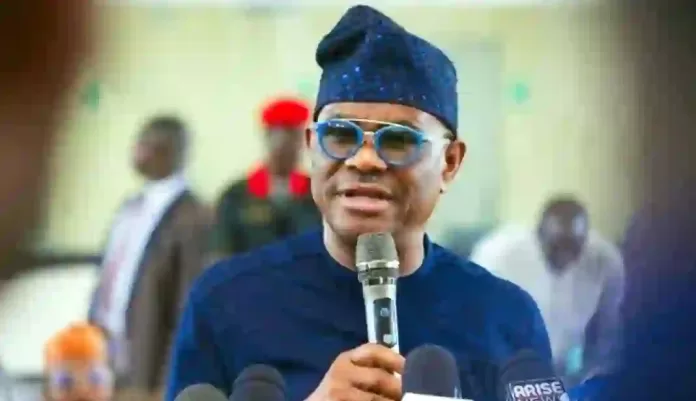
Nyesom Wike - FCT Minister
Nyesom Wike

By Ayodele Oni

Mass failure in 2024 promotion examination for workers under the Federal Capital Territory Administration (FCTA) is among issues which triggered the declaration of an indefinite strike by the workers.

They have declared an indefinite strike scheduled to begin on Monday, January 19, 2026, over other unresolved labour issues.

The workers had earlier given the FCTA Management a seven-day ultimatum to address this issue and others without any response.

The strike was announced by the Joint Union Action Congress (JUAC), which directed all categories of workers within the Federal Capital Territory to withdraw their services.

In a notice obtained by SaharaReporters, JUAC said the action will shut down activities across all FCTA secretariats, departments, agencies (SDAs), area councils and parastatals.

The unions said the decision followed the expiration of a seven-day ultimatum issued to FCTA management, alleging that the authorities failed to respond or take concrete steps to address workers’ demands.

Other grievances listed are the non-payment of outstanding wage awards, unpaid promotion arrears, delayed promotion exercises, and the continued elongation of tenure for retired directors and permanent secretaries.

JUAC also accused the administration of failing to remit pension contributions and National Housing Fund (NHF) deductions, as well as subjecting workers to poor working conditions and intimidation. The unions further decried what they described as neglect of staff welfare.

Another major concern raised was the outcome of the 2024 promotion examinations, which JUAC said recorded a “mass failure,” affecting about 77.5 per cent of candidates.

The strike notice, electronically signed by the JUAC Secretary, urged all FCT workers to comply fully with the directive until the listed demands are addressed.

As of the time of filing this report, the FCTA had not issued an official response to the strike announcement

APC: Gov Lawal Defection Letter Not With Us

0
Zamfara Governor Dauda Lawal
Governor Dauda Lawal

Zamfara state chapter of the ruling All Progressives Congress, APC has denied report that Governor Dauda Lawal wrote a letter to the party indicating that he’s defecting to the party.

The rumour had spread during the week that the state helmsman has formally written to the party, to the effect that he’s leaving his party, the Peoples Democratic Party, PDP.

Governor Lawal is among the only three state Governors left in the PDP amid its unending leadership crisis.

No fewer than three state governors defected to the APC from the PDP  last year citing instability, the Zamfara helmsman, sources close to him claimed is also planning to defect to the ruling party in a matter of time.

The APC, in a statement, signed by the state Publicity Secretary, Yufus Idris urged the people of the state to ignore the report, describing it as “misleading.”

The party, Idris said, has yet to receive such letter from Governor Lawal, and is not aware of any plan by him to defect from the PDP, saying the report is capable of causing tension in the state..

.

He said: “The Zamfara State chapter of the APC today came across a fabricated report purported to have emanated from Tambarin Gusau, claiming that Governor Dauda Lawal has sent a letter to the party expressing his desire to join the APC

“The party did not receive any letter from Governor Dauda Lawal as claimed, nor is the APC aware of any recent moves by the governor to defect from the Peoples Democratic Party (PDP) to the APC a product of imagination aimed at causing confusion.”

Not a few watchers of politics in the state insist that Governor Dauda’s defection is imminent in the face of the leadership misfortunes currently ravaging the PDP.

OPINION: The Igbo Blueprint For Equity In Nigeria

0
Senator John Azuta Mbata

By Sam Onuigbo

When the Global Igbo Foundation Initiatives invited me to deliver a keynote address recently, they framed a tricky, but simple title: “Igbo Yesterday, Today, and Tomorrow.”

The invitation came at a moment of quiet reflection.

However, as I got ready, I realised  that the title did not envisage a linear chronology, but a diagnosis of a persistent condition. Our yesterday is not a buried past; it is the bedrock upon which our present uncomfortably rests. Our tomorrow is not a distant prospect, but an urgent negotiation waiting to be honoured.

The venue was a modern conference hall in Abuja, Nigeria’s purpose-built capital, a city that often feels like a grand experiment in neutrality. Yet, there is no neutral ground when discussing the place of the Igbo in the Nigerian project. The December air was thick with Harmattan dust, blurring the sharp lines of the building. Inside, the atmosphere was different—clear, focused, charged with a collective understanding that we were about to engage in more than a ceremonial speech. We were to attempt an act of historical cartography, mapping the soul of a people onto the contested terrain of a nation.

I began with pleasantries, commending the organisers. Such gatherings are vital. But, civility must not become a cage for difficult truths. So, I stepped into the heart of the matter, a story that begins with a fundamental misunderstanding.

European colonialists, armed with the tidy logic of monarchies and centralised states, looked upon the intricate, republican societies of the Igbo and saw chaos. In their reports, they labelled us “stateless,” “argumentative,” and “ungovernable.” What they failed to comprehend was a civilisation that had perfected a demanding form of participatory democracy long before it became a global ideal. Our governance was woven through village assemblies (Ama Ala), councils of elders, robust age-grade systems, and powerful women’s councils (Umuada). Leadership was earned, debated, and constantly held to account. This was not anarchy; it was a sophisticated social contract.

This intrinsic resistance to autocracy is not an abstract concept. It has faces. One is King Jaja of Opobo.

Born MbanasoOkwaraozurumba in Amaigbo, sold into slavery as a youth, he rose through sheer will and commercial genius to found a powerful city-state, Opobo, and dominated the palm oil trade. His crime was refusing to let British trading interests dictate terms to African producers. For that defiance, he was lured onto a British warship under a purported truce, kidnapped, tried in Accra, and exiled to Barbados, the West Indies. He died in 1891 in the Spanish Island of Tenerife on his journey home. His story is not a footnote: it is a central parable of Igbo enterprise and the price of resisting injustice and exploitation.

Then came the women of Oloko, in what is now Ikwuano, my own local government area in Abia State. In 1929, tens of thousands of Igbo women rose in what was glibly termed the ‘Aba Women’s Riot.’ It was a profound, meticulously organised revolt against colonial taxation and the corruption of warrant chiefs.

It reshaped the political consciousness of southern Nigeria. To the colonial mind, however, it was further proof of an innate, troublesome rebelliousness. In truth, it was the logical eruption of a culture with a low tolerance for injustice. What was branded as stubbornness was, in fact, a deep-rooted ethos of communal accountability, best encapsulated in the proverb Onyeaghalanwanneya — “let no one abandon his brother.”

This philosophy would fuel our most remarkable transformation. Geographically insulated, the Igbo encountered Western education later than some coastal societies. But when we did, we pursued it with a ferocious, collective hunger. Families sold parcels of ancestral land; communities pooled resources to sponsor their brightest children. Education was not a private luxury but a communal investment. The returns were staggering.

Driven by this ethic, the Eastern Region under Premier NnamdiAzikiwe, conceived the idea of establishing a university–the law for the university was passed by the Eastern House of Assembly in 1955. It was not based on crude oil revenue. Under Premier Michael Okpara, the University of Nigeria, Nsukka commenced on 7th October, 1960–Nigeria’s first indigenous university, funded from the region’s agricultural revenues.

Before the dark clouds gathered, the Eastern Region was an economic dynamo. Some scholars, like Paul Anber argued, it was among the world’s fastest-growing economies in the mid-1960s, investing a staggering 45% of its revenue in education. The momentum was palpable, tangible.

Then, the deluge.

The Nigerian Civil War (1967-1970) was a cataclysm. The suffering and loss are well-documented. But the war’s true legacy for the Igbo was forged in the so-called peace that followed. The Federal Military Government’s promise of “Reconciliation, Rehabilitation, and Reconstruction”—the famous “3Rs”—proved, in our experience, to be a cruel phantom. Reconciliation was a hollow slogan. Rehabilitation was tokenistic. Reconstruction was deliberately selective.

The infamous policy of offering a flat £20 compensation to Igbo with bank accounts, regardless of their previous holdings, was not an act of economic policy; it was an act of engineered pauperisation. It was followed by the Indigenisation Decree of 1972, which transferred major commercial enterprises to Nigerian hands. A financially prostrate Igbo population could only watch from the sidelines as national assets were acquired by others.

Most crippling, however, was the geopolitical surgery that came later. The Justice Mamman Nasir Boundary Adjustment Commission of 1975 did not simply redraw administrative lines; it performed an amputation. It severed entire Igbo communities from their kith and kin, ceding them to neighbouring states. The deadly surgery eventually solidified the reduction of the Igbo-majority zone to only five states in a federation where other major zones had six, or in one case, seven. This was not an accident of demography.

It was structural marginalisation, engineered directly into the architecture of the Nigerian state. Our political weight was diluted, our access to the federation’s resources systematically constricted.

And yet, here we are!

Today, against every engineered obstacle, the Igbo are arguably Nigeria’s most potent entrepreneurial force. This is not a stereotype to be romanticised; it is a hard, observable fact of resilience. We rebuilt from ash. The bustling markets of Aba and Nnewi are engines of indigenous, often improvised, manufacturing. The IgbaBoi apprenticeship system remains one of the world’s most effective models of venture capital and commercial mentorship, seeding business empires across Lagos, Accra, and beyond.

Our contributions to the modern Nigerian identity are inextricable. From the foundational statesmanship of NnamdiAzikiwe to the global economic leadership of NgoziOkonjo-Iweala; from the literary universes of Chinua Achebe and ChimamandaNgoziAdichie to the cinematic revolution sparked by Living in Bondage; from the technological foresight of Philip Emeagwali to the sporting brilliance of KanuNwankwo and ChiomaAjunwa. We have invested, quite literally, in every corner of Nigeria, often at greater risk and with more tangible bricks-and-mortar commitment than any other group. Our belief in the Nigerian idea is demonstrated in commerce, infrastructure, and culture.

But, this belief is now a wearying faith, strained by a persistent, unignorably arithmetic of injustice. As I told the audience in Abuja, the South-East remains the only geo-political zone in Nigeria with five states. This is not a minor administrative detail.

It translates, daily and inexorably, into fewer governors, fewer senators, fewer members in the House of Representatives, fewer local government chairpersons, fewer federal appointments, and less voting power in constitutional matters. It is a concrete ceiling placed on a people’s political aspiration. How does one pledge full-throated allegiance to a union where one’s seat at the table is permanently, deliberately smaller?

This brings me to the core of my message, the blueprint for tomorrow. The Igbo future in Nigeria must be negotiated. It cannot be a plea. It must be a principled, clear-eyed, and strategic engagement for equity.

The recent establishment of the South East Development Commission (SEDC) by President Bola Ahmed Tinubu is a significant and welcome gesture. It is, at long last, a tangible mechanism to address the deferred “Reconstruction” of a region devastated by war and neglect. For this, we offer sincere appreciation to the President. But, it cannot be the final destination. It should be the first step on a longer road to redress.

The logical, necessary, and just next step is the creation of a sixth state in the South-East. This is not a request for special favour. It is a demand for the correction of a foundational anomaly that has poisoned the well of national unity for nearly five decades. It is the minimum prerequisite for a genuine sense of belonging.

During a recent family thanksgiving service that I hosted at St. Paul’s Methodist Church in Obuohia Obi-Ibere, Ikwuano Local Government Area, I publicly expressed my confident assessment that President Bola Tinubu will secure re-election in the 2027 presidential election.

This projection was based on the administration’s implementation of consequential policy decisions aimed at the structural repositioning of Nigeria for sustained prosperity, economic growth, and enhanced national security. While cognizant of prevailing national challenges, I maintain that the President has demonstrated capable stewardship in piloting the nation’s affairs during this initial tenure.

In substantiating this outlook, I referenced encouraging macroeconomic indicators, including the statistically documented decline in food prices, a reduction in the inflation rate, and the successful unification of foreign exchange windows.

Furthermore, the marked absence of fuel scarcity throughout the festive period was a tangible indicator of improved economic stability. Collectively, these positive trajectories form the foundation of my conviction regarding the administration’s electoral prospects.

Our blueprint for tomorrow rests on several pillars: transforming our legendary apprenticeship system into a formalised engine for youth employment and modern entrepreneurship; catalysing a technology-driven industrial revolution in our cities; a vigorous, deliberate revival of our language and culture, which are the vessels of our identity; and, most critically, intelligent pan-Nigerian coalition-building. Our politics must evolve beyond defensive reaction and into the art of strategic, bridge-building negotiation.

As I concluded my address, the room was silent, the weight of the recounted journey pressing down. The path forward is clear. The Igbo destiny is inextricably linked to Nigeria’s. We have done the hardest part: we survived, we thrived against engineered odds, and we contributed relentlessly to the national development. We did so through communal grit (igwebu-ike), through an unwavering belief in education, and through an entrepreneurial spirit that refuses to be extinguished.

Now, the contract must be renewed on fair terms. The Nigeria we have believed in, often against the evidence, must believe in us enough to rectify its own structural injustices. Our shared tomorrow depends on a Nigeria courageous enough to embrace true restructuring and equitable federalism. This is not an Igbo agenda; it is a Nigerian imperative. Only when this negotiation is honestly engaged can the full, formidable potential of the Igbo—yesterday’s republicans, today’s builders, tomorrow’s indispensable partners—be fully unleashed for the sake of one, just, and prosperous Nigeria.


-Onuigbo, is a former member of Nigeria’s House of Representatives