Home Blog Page 35

Labour Party  Felicitates Nigerians On Democracy Day

0
Labour Party


As Nigerians at home and in the Diaspora commemorate this year’s Democracy Day, the Labour Party has  extended its warm felicitations to all citizens and joins the nation in celebrating the enduring journey of democratic governance in our country.


In a statement issued by its  National Publicity Secretary, Ken Eluma Asogwa, the Party said:


“Today offers us yet another opportunity to reflect on the sacrifices made by our heroes past, especially the late Chief MKO Abiola and countless other patriots whose struggles, courage and ultimate sacrifices laid the foundation for the democracy we now enjoy. We must ensure that their labours were not in vain.


“While it is true that Nigeria’s democratic journey has been marked by unfulfilled aspirations and missed opportunities, we must not surrender to despair. Rather, we should remain hopeful and resolute, knowing that the future still holds greater possibilities than whatever may have been lost along the way.


“Democracy, despite its imperfections and occasional contradictions, remains the best form of government known to mankind. Not merely because it affords citizens the opportunity to periodically elect leaders of their choice, but more importantly because it remains the most participatory system of governance ever devised, one that places the people at the centre of public affairs.


“We urge those at the helm of affairs to do more to address the pressing challenges confronting Nigerians, including insecurity, economic hardship, hunger, unemployment and the deficit in critical infrastructure. The dividends of democracy must be felt by the ordinary citizen whose welfare remains the ultimate justification for government.


“As a political party, the Labour Party’s guiding principle of Equal Opportunity and Social Justice speaks directly to the very ideals upon which democracy is founded. A democracy that fails to guarantee a level playing field for all citizens and political actors is merely a distorted and pretentious version of democratic governance.


“As the nation gradually approaches another electoral cycle, the Labour Party enjoins Nigerians not to lose faith in the possibility of a better country. We remain committed to providing a credible platform through which the aspirations of the Nigerian people can be realised.


“From the legislative chambers to the presidency, the party has continued to entrust its mandate to men and women of proven character, competence and capacity, individuals capable of rewriting the Nigerian story and leading our nation towards greater prosperity, justice and national renewal.


“Happy Democracy Day, Nigeria!”

Rubber Stamp Legislature Is Big Threat To Survival Of Democracy – Saraki Fmr Senate President

0
Bukola Saraki
Dr Bukola Saraki

By Suleiman Anyalewechi


Former Senate President, Bukola Saraki, has insisted that a lame duck and subservient legislature remains the greatest threat to the survival of any democracy in the world.


Senator Saraki who spoke at the occasion of this year’s June 12, edition of “The Platform” organized by the Covenant Nation to mark the Democracy Day, emphasized that democratic arrangements can only flourish amidst an independent legislature, with the capacity to hold other branches of Government, especially the Executive accountable.


Saraki who presided over the affairs of the Nigerian Senate between 2015 and 2019 maintained that a vibrant and Independent legislature, with the requisite courage and institutional capacity to interrogate executive actions remains pivotal to the existence of true democracy.


The former Senate President argued that the constitutional roles of the legislature transcends the mere approval of budgets, bills and policy frameworks transmitted by the executive branch of Government.


According to him, a legislative chamber that does not have the courage to question executive proposals is no legislature.


“What I learnt during my four years at the National Assembly is that a legislature that cannot say no is not a legislature at all.


“A legislature that simply receives executive proposals, approves them without scrutiny, and goes home has failed in its constitutional responsibilities.


“It has merely performed a ceremonial function. It becomes an echo chamber and a democracy made only of echoes is only one election away from becoming something entirely different”, Saraki noted.


Saraki insisted that the most potent threat to any democratic order is not weak Government, but an unchecked authority.


Democracy and democratic institutions, according to him, become vulnerable and vanquishable, when political office holders are made to operate without constructive control, through criticisms, oversights and accountability.


“The greatest danger to a free people is not a weak Government, but an unchecked Government, authority that answers to no one, and cannot be questioned”, Saraki added.


While acknowledging that the three arms Government could collaborate to deliver good governance, the former Senate President, however, warned against a subservient legislature that has the potential to lead to abuse of executive power, leading to the imperilment of democracy.


He emphasized that the framers of the three arms of Government were guided by the need to prevent over concentration of power in one institution, with the primary aim of protecting the people from abuse.


Saraki, who is also a former Governor of Kwara state, strongly rejected claims suggesting that routine disagreements between the Legislature and executive arms of Government will lead to political instability.


He rather believes that such occasional institutional frictions are necessary both for the protection of the rights of the citizens, and democracy itself, adding that the checks and balances are indispensable ingredients for the survival of true democracy.


“People do sometimes ask why the executive and legislature are always in disagreement. The answer is simple: by constitutional design, they are meant to challenge each other so there can be accountability, and balance in governance.


“Institutional frictions are built into the system on purpose. It was not a mistake. That friction is not dysfunction: it is the very thing that guarantees citizens’ freedom”. Saraki noted.


The former Senate President, therefore, warned that any attempts to undermine, weaken and or transform the legislature into a subordinate institution will ultimately erode democracy ,and endanger the freedom of citizens.


Referencing ,the infamous annulment of June 12, 1993, presidential election, Saraki noted that such an ugly development is one of the unwholesome activities that can rear their heads when democratic institutions are too weak to defend the will and aspirations of the people.


“Nigerians lost democratic arrangement in 1993 not on account of failure to participate actively, but principally because of the complete absence of strong institutional frameworks to protect the people’s democratic mandate.


” On this June 12, the lesson is clear. We did not lose democracy in 1993 because the people failed. We lost it because the institutions that should have defended the people’s mandate were too weak to do so.


“The solution, therefore, is not less politics. The solution is stronger institutions, and the legislature occupies a central place in that process”, the former Senate President submitted.

Edo Reopens Schools Shut Over Security Concerns

0
Governor Monday Okpebholo

By Suleiman Anyalewechi


The Edo State Government has directed the reopening of schools shut in the wake of security alert last week.


The Source reports that the state Government had, on Tuesday, June 9, 2026, ordered the immediate closure of three schools in the Akoko-Edo Local Council Area, Edo North Senatorial District.


According to a circular from the Permanent Secretary, Edo State Ministry of Education, Enodolomwanyi Otamere, the affected schools were Ososo Grammar School, Ososo Comprehensive High School, and Makeke Secondary School.


The closure was sequel to a security intelligence from the Department of State Service, warning of imminent attacks on, and abduction of pupils and students by suspected terrorist elements.


The security advisory had indicated that suspected bandits and terrorists had planned  the abduction of  school children mainly in the Edo North, and had perceived the exercise as being more financially rewarding than the seizure of wealthy and influential figures.


But the Edo State Government in a counter notice issued, directed the affected schools to resume operations on Monday June 15, 2026.


The notice signed by Mrs Otamere, informed that the development followed a review of the security situation by the authorities in concert with security agencies.


According to her, enhanced security measures have been put in place to adequately monitor situation and protect the schools.


“The decision to reopen the schools followed a comprehensive review of the security situation by the state Government in collaboration with relevant security agencies and other stakeholders.


“Consequently, all public and private schools affected by the earlier closure order have been directed to resume normal academic and administrative activities from June 15″ 2026”, the statement reads in part.


This was as the Education Ministry directed school heads, proprietors and education authorities to equally make adequate preparations for the seamless resumption of students and staff .


They are also enjoined to work closely with security agencies, community leaders, Government officials and relevant stakeholders for the purpose of sustaining a secure and conducive learning environment.


The statement similarly, appealed to parents and guardians to ensure the return of their children and wards, assuring of the safety and protection of the returning students.

State Police Bill: Govs Have Limited Powers; Civil Society, NLC, NUJ To Provide Oversight 

0
Olatunji Disu - IGP
IGP Olatunji Disu
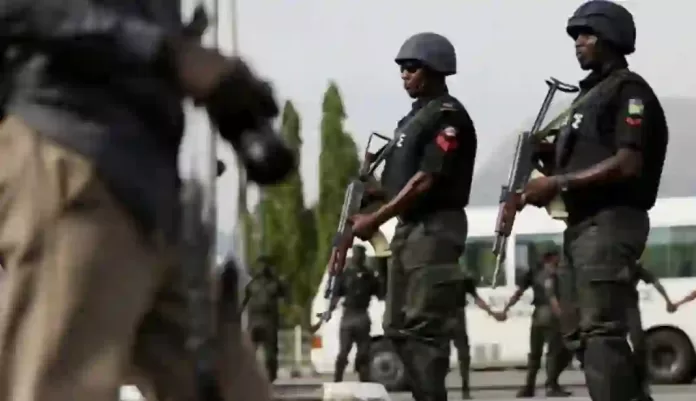
In line with Nigerians demand,  the House of Representatives passed the constitutional amendment bill seeking to establish state police on Thursday, June 11, 2026.
The bill, which intends to amend several sections of the 1999 constitution, provides a framework for the creation, funding, regulation and operation of state police services while retaining the federal police as a national institution.
Among other provisions, the bill gives governors the power to appoint commissioners of police, creates state police service commissions, limits federal interference in state policing, and allows the federal government to provide grants to state police.
Calls for the establishment of state police have been renewed following the recent nationwide spike in insecurity.
Here are some of the key provisions of the bill.
NATIONAL ASSEMBLY TO SET STANDARDS FOR STATE POLICE
Section 214 provides that the national assembly shall prescribe the structure, organisation, administration and powers of the federal police and establish guidelines for the establishment of state police.
A state police service will only become operational after a state house of assembly passes a law establishing it, and it is certified to meet national minimum standards.
Implication
This means state governments will not have unrestricted powers to establish police services.
States will be required to comply with nationally prescribed standards before their police outfits can begin operations, creating uniform benchmarks across the federation.
FEDERAL POLICE TO CONTINUE OPERATING ALONGSIDE STATE POLICE
The bill provides that even after state police become operational, the federal police will continue to perform federal policing functions and may assist state police when necessary.
The federal police will also continue to maintain public security throughout the federation to the extent provided by law.
Implication
The proposal does not abolish the existing police structure. Instead, it creates a dual policing arrangement in which federal and state police will coexist, similar to systems practised in several federal countries.
FEDERAL POLICE CANNOT INTERFERE IN STATES
Under section 214(6), the federal police cannot interfere in the operations or internal security affairs of a state except in limited circumstances.
These include situations in which there is a complete breakdown of law and order, when a governor requests intervention, or when a state police service becomes ineffective due to administrative or financial problems. Any intervention must first receive approval from the National Police Council.
Implication
The provision prevents arbitrary federal control over state police and requires the approval of the National Police Council before federal intervention can occur.
GOVERNORS TO APPOINT COMMISSIONERS OF POLICE
Section 215 provides that a state police service shall be headed by a commissioner of police appointed by the governor on the advice of the National Police Council and subject to confirmation by the state house of assembly.
Governors may also issue lawful directives relating to public safety and order.
However, where a commissioner of police believes such directives are unlawful or contrary to policing standards, the matter may be referred to the National Police Council, whose decision will be final.
Implication
The provision gives governors operational authority over state police while creating safeguards against political abuse.
Commissioners of police will have an avenue to challenge directives considered unlawful or inconsistent with professional standards.
PRESIDENT TO APPOINT INSPECTOR-GENERAL OF POLICE
The bill retains the existing structure at the federal level by providing that the president shall appoint the inspector-general of police on the advice of the National Police Council and subject to confirmation by the national assembly.
The IGP will remain the head of the federal police and command all federal contingents stationed across the states.
Implication
The federal police will continue to maintain a central chain of command, preserving the federal government’s authority over national security matters.
INSPECTOR-GENERAL, STATE CPs CANNOT BE REMOVED ARBITRARILY
Section 216 stipulates that the inspector-general of police may be removed only on grounds including grave misconduct, breach of regulations, conviction for fraud-related offences, bankruptcy, or mental incapacity.
Such removal must be recommended by the National Police Council and approved by a two-thirds majority of the national assembly.
Similarly, a state commissioner of police may only be removed by a governor upon the recommendation of the National Police Council and with the approval of two-thirds of the state house of assembly.
Implication
The provision seeks to protect police chiefs from arbitrary dismissal.
Governors and the president will not have unilateral powers to remove commissioners of police or the inspector-general without institutional checks.
FEDERAL GOVERNMENT MAY PROVIDE GRANTS TO STATE POLICE
Section 216A provides that the federal government shall provide grants or aid to state police on the recommendation of the National Police Council and subject to the approval of the national assembly.
Implication
This provision recognises that some states may struggle to finance policing.
It also creates a mechanism through which the federal government can support state police without taking over their operations.
STATES CAN ADOPT HIGHER STANDARDS
The amendment empowers state houses of assembly to enact laws relating to the organisation, funding and oversight of state police.
However, such laws cannot prescribe standards below the minimum standards set by the national assembly. States may adopt standards higher than those prescribed nationally.
Implication
States will enjoy flexibility in designing their policing systems, but minimum national standards will ensure consistency and professionalism.
FEDERAL AUTHORITIES BARRED FROM ROUTINE CONTROL OF STATE POLICE
The bill expressly provides that no act of the national assembly shall confer routine powers of command, deployment, appointment, transfer, suspension or disciplinary control over members of state police on any federal authority.
Exceptions are limited to constitutional provisions relating to federal intervention.
Implication
This provision is intended to preserve the autonomy of state police services.
It seeks to ensure that federal oversight does not translate into routine operational control.
NATIONAL POLICE COUNCIL TO HAVE BROADER MEMBERSHIP
The proposal replaces the Nigeria Police Council with a National Police Council and expands its membership.
The body will include representatives of the federal police, attorneys-general of the states, retired senior police officers, the National Human Rights Commission (NHRC), the Public Complaints Commission, the Nigerian Labour Congress (NLC), the Nigerian Bar Association (NBA), the Nigerian Union of Journalists and traditional rulers.
The council will also supervise both federal and state police to the extent permitted by the constitution.
Implication
The expanded composition is designed to provide broader representation and civilian oversight in policing matters. It also reduces the concentration of power in a few institutions.
STATE POLICE SERVICE COMMISSIONS TO BE ESTABLISHED
The bill creates State Police Service Commissions under section 197.
The commissions will include representatives of the NHRC, the Public Complaints Commission, the NLC, the NBA, the NUJ, and traditional rulers, as well as retired police officers.
They will recommend candidates for appointment as commissioners of police and exercise disciplinary powers over officers below the rank of assistant commissioner.
In recommending a commissioner of police, each commission will submit three qualified candidates to the National Police Council.
Implication
The provision introduces multiple layers of oversight and participation in appointments. It also aims to prevent excessive concentration of powers in governors by involving several institutions in the process.
STATES TO HAVE LIMITED POWERS OVER FIREARMS
The amendment to the exclusive legislative list permits the use of light arms for policing purposes.
It also allows state police services access to fingerprints, biometric data, forensic records and criminal information systems in accordance with federal laws.
Implication
The provision provides legal backing for state police to carry out modern policing functions while maintaining national coordination on intelligence and records management.
The Cable 

Power Belongs To Allah, Re-election  Not   DO-or-Die Affair —  Gov Abba Yusuf

0
Governor Abba Yusuf

By Lamara Garba


The Governor of Kano State, Alhaji Abba Kabir Yusuf, has declared that his political future, including the question of re-election in 2027, rests entirely in the hands of Almighty Allah, stressing that political power is neither a matter of life and death nor something that any individual can permanently give or take away.


Governor Yusuf made the remarks while addressing Kano pilgrims and Hajj officials in Makkah during a Sallah visit on Wednesday.


Speaking before hundreds of pilgrims, the Governor who quoted from the verses of the Holy Qur’an, reminding the faithful that ultimate authority belongs to Allah alone, who grants power to whom He wills and withdraws it whenever He pleases.


According to him, while politicians and their supporters often become consumed by political calculations and permutations, true believers understand that leadership is a divine trust bestowed by Allah at His own appointed time.


“Power belongs to Allah alone. He gives leadership to whom He wills and takes it away from whom He wills. No human being can stop what Allah has destined, and no one can impose what Allah has not ordained,” Governor Yusuf said.


The Governor noted that he remains completely submissive to the will of Allah regarding future political developments, including his possible re-election, insisting that his focus remains on serving the people of Kano State diligently rather than becoming distracted by political anxiety.


He stressed that elective office should never be viewed as a do-or-die affair, adding that public service is only meaningful when carried out with sincerity, fear of God and commitment to the welfare of the people.


“Leadership is not a matter of life and death. What matters most is to serve humanity, discharge one’s responsibilities faithfully and leave the rest to Allah. Whatever Allah decrees will surely come to pass,” he stated.


Governor Yusuf, however, urged Kano citizens to remain politically conscious and actively participate in the democratic process by ensuring that they possess valid voter cards ahead of future elections.


He called on those whose voter cards require renewal to do so promptly and encouraged eligible citizens who have not yet registered to take advantage of the registration window before it closes.


The Governor said voter registration remains a civic responsibility that enables citizens to exercise their constitutional right to choose leaders and contribute to the growth and development of society.


He also appealed to the pilgrims to continue praying for peace, unity, stability and prosperity in Kano State and Nigeria as a whole.


Observers believe Governor Yusuf’s remarks reflect growing confidence within his administration following what many regard as remarkable achievements recorded over the past three years in education, healthcare, infrastructure development, agriculture, human capital development, as well as women and youth empowerment.


The Governor maintained that while political debates and speculations may continue, the final decision on who occupies positions of authority remains with Almighty Allah, whose decree cannot be altered by any human effort.

Democracy Has Provided Us With Unifying, Collective Choices, Says Uzodimma

0
Hope Uzodimma
Governor Hope Uzodimma

As Nigeria marks 27 years of unbroken democratic practice, Governor Hope Uzodimma of Imo State has said that the system has provided the citizenry with choices that are not only unifying and collective, but has given rise to the achievements the country has recorded so far.


Uzodimma, Chairman of Progressive Governors’ Forum and Director General of Renewed Hope Ambassadors therefore invited Nigerians to keep faith in the Country’s democratic system in general, and the President Bola Tinubu’s administration in particular, by supporting his progressive ideals and reforms that have aided the promotion of national unity, stability and development.


Governor Uzodimma’s Democray Day message which he took to his social media handle to send to Nigerians said: “From a just system of governance to the practice of inclusiveness in the journey of our national development, democracy has presented us with choices that are unifying and collective, giving rise to the achievements we have recorded thus far.


“As a people, we have continued to strengthen the foundations of nation-building through participation, dialogue, and a shared commitment to progress.


“While enormous gaps remain to be filled in the development of our nation, we can not deny the fact that we have achieved greatness.


“We have built and sustained a system driven by the people, and with each passing day, we improve upon the efforts of the previous one.


“Our democratic journey has not been without challenges, but it has consistently demonstrated our resilience, determination, and capacity for growth.


“Under the #RenewedHope administration of President Bola Ahmed Tinubu, GCFR, a steadfast democrat and one of the heroes of the democracy we enjoy today, we have witnessed transformative reforms across various sectors. These reforms are focused on positioning Nigeria to offer hope, opportunities, and assurance of growth for every Nigerian.


“As we commemorate Democracy Day, let us keep faith alive in the system we are building and continue to support progressive ideals that promote the unity, stability, and development of our nation.


“Happy Democracy Day.”


Nigeria returned to democratic rule  27 years ago on May 29, 1999, after many years of political dislocations occasioned by military interventions.


The All Progressives Congress (APC) government under the leadership of the late President Muhammad Buhari had changed the date of Nigeria’s Democracy Day from May 29 to June 12 in honour of Chief MKO Abiola, the acclaimed winner of the annulled 1993 Presidential election believed nationally and globally to be free, fair and credible.

Tinubu Names University After Late Major General Yar’Adua, Finally Remembers Joe Igbokwe

0
Joe Igbokwe
Joe Igbokwe

By Akinwale Kasali


President Bola Tinubu has honoured the memory of the late Major General Shehu Musa Yar’Adua.


During his address to the Nation on June 12 to mark Nigeria’s Democracy Day, the President announced the renaming of the Institute of Petroleum Studies, Kaduna, to General Shehu Musa Yar’Adua University of Geological Sciences and Engineering Technology.


Yar’Adua died in captivity while serving a jail term under the late maximum Head of State, for a purported aborted coup aimed at removing him, Abacha, from office.


Among those awarded National Honours was Joe Igbokwe a staunch believer in President Tinubu and an All Progressives Congress, APC, Chieftain, who he seemed to have ignored since his presidency.  Igbokwe, to his relief, is among the over 50 people whose names were contained in the list of awardees.


President Tinubu had during his Democracy Day Broadcast conferred  National Honours on the aforementioned, that includes; Prominent media icons, pro-democracy activists, and retired military officers who fought against military dictatorship during the historic June 12 struggle.


This year Democracy Day marks 27 years of uninterrupted Democratic Rule, in which President Tinunu paid tributes to the late Chief M.K.O. Abiola, the winner of the annulled June 12, 1993 presidential election, and other icons.


He stated that while Nigeria’s democracy is not perfect, it remains the ultimate vehicle for national development.


Igbokwe alongside members of National Democratic Coalition, NADECO, chieftains Chief Ayo Opadokun, Chief Ralph Obioha, and Dr. Arthur Nwankwo (posthumous); media veterans Lade Bonuola, Femi Kusa, Sir Ademola Osinubi, and Dele Alake; and activists Dr. Joe Okei-Odumakin, Richard Akinnola, and Prof. Sylvester Odion-Akhaine.


The President, also, recognized “soldier-democrats” who opposed military junta regimes, including retired Colonels Sambo Dasuki, a former National Security Adviser during the President Goodluck Jonathan Government,  Lawan Gwadabe, Major-General Ishola Williams, the Etsu Nupe, Brigadier Yahaya Abubakar.


Addressing the nation’s security challenges, particularly recent student abductions in Oyo and Borno states, President Tinubu declared that democracy without security is a mirage, revealing that the 2026 budget commits a record 5.41 trillion Naira to defense alongside the recruitment of over 50,000 police officers.


He however warned bandits, kidnappers, and sponsors of terror to surrender or face the full force of the Nigerian State, andbthe wrath of the law, noting that windows of surrender will not remain open forever, though terror-related deaths have dropped by 81% since 2015 with over 13,000 terrorists neutralized in the past year.


Speaking on the economic situationof the country, the President defended his administration’s aggressive reforms as a necessity to salvage public finances, stating that the next phase of his administration is to ensure that democracy is felt in the pocket of everyday citizens by tackling inflation and boosting local production.


He stated that in resolving the chronic electricity crisis, the President announced that the Presidential Power Sector Task Force has been authorized to raise a 4 trillion Naira bond to clear legacy debts drowning the power value chain, adding that the Electricity Act, which decentralizes power generation to states, is already yielding results.

Reaffirming his commitment to grassroots development, while emphasizing his administration’s push for full financial autonomy for the 774 local government areas, attributing the rise in rural insecurity to the collapse of local governance.


He also urged the political class and institutions to protect democratic guardrails ahead of the upcoming Ekiti and Osun governorship elections, the President stated that while the generation of the nation’s founding fathers secured independence and the generation of June 12 secured democracy, the current generation must now secure prosperity.

Media Professionals, Activist Demand Inclusion Of More Names In National Honours List

0
Bola Ahmed Tinubu


By Ayodele Oni 


Again, Tinubu Shuns Dele Momodu


Nigerians have started to react to the list of beneficiaries of national Honours as contained in the June 12 national broadcast by President Bola Tinubu.


From men of the pen profession to pro democracy activists, they conclude that the list is incomplete.


Not a few people noted that, as was the case in previous years, the President again, shunned Chief Dele Momodu among  the list of Journalists honoured for their roles in the struggle for democracy.

Momodu was a close ally of Chief M.K.O Abiola, Nigeria’s symbol for democracy. He was forced into exile a situation which brought him closer to Tinubu, who was, also, in exile. Both men worked together while in exile. 


Activist particularly cited the omission of retired Colonel Bello Fadile from the list of military officers honoured by President Bola Tinubu, while men of the pen profession described journalists whose names appeared on the list as “only those from Lagos axis of the media.”


Reacting through his facebook page, Mr Dare Fasube stated that “Not a single Photojournalist like late Baba Adefunpe Ojelabi of Punch, late Dada Osasona of Sun, late Najeem Raheem of Guardian, late Felix Ademola of Sketch that went out to give on the spot coverage of the protests, riots and rallies that were splashed in  the Newspapers has not been recognize till date.


“Even the late Tunji Oyeleru of Vanguard, who died along with Chima Ubani in the same official car of Adams Oshiomole who was the NLC President then was also left out.”


Wale Ademowo, while congratulating his benefitting colleagues, insisted that ” the list is incomplete, it excludes those of Ibadan axis.”


Reacting to the announcement, concerned citizen and pro-democracy advocate, Chief Femi Olugbemi argued that Col Bello Fadile (rtd) deserves inclusion on the same list. 


He noted that Fadile was Accused No.1 in the 1995 alleged coup plot under the Abacha regime, was sentenced to death and later to life imprisonment, before receiving a state pardon in 1999.


The statement said: “In as much as Col Sambo Dasuki (rtd) is on the list with Col Olusegun Oloruntoba, the Olugbede of Gbede, then Col Bello Fadile (rtd) should be included, being one of the major military officers that fought for democracy, which was why he was sentenced along other military officers whose names are on the list.”


He urged the President to correct the omission, stating that doing so would encourage others committed to defending democracy in Nigeria.


 “Let the President correct the erroneous error to encourage others determined to fight for the overall success of democracy in Nigeria,” the statement added.


Col Bello Fadile, a retired Army officer and human rights lawyer, documented his experience in _Nine Lives: The Bello Fadile Memoirs_. 


During his Democracy Day address, President Tinubu noted that the conferment of national honours was “not foreclosed”, indicating that future updates to the list remain possible


President Tinubu had announced national honours for several pro-democracy activists, journalists, politicians, and military officers who played key roles in the struggle to validate the June 12, 1993 presidential election. 


Among the military officers named were Col Sambo Dasuki (rtd) and Col Olusegun Oloruntoba, the Olugbede of Gbede Kingdom.

June 12: Reminder Of People’s Role In Democracy – Conference Of States Assembly Speakers

0
Rt Hon Emomotimi Dennis Guwor

By Ayodele Oni


As Nigeria marks June 12 Democracy Day 2026, the Chairman of the Conference of Speakers of State Legislatures of Nigeria and Speaker, Delta State House of Assembly, Rt. Hon. Emomotimi Dennis Guwor, has observed that the celebration reminds Nigerians that democracy thrives only when the people’s voice is heard, protected, and acted upon.


He called on citizens and lawmakers across the 36 states to deepen accountability, transparency, and grassroots participation in governance.


In a statement issued by his Chief Press Secretary, Nkem Nwaeke, the Conference Chairman described June 12 as a defining moment in Nigeria’s democratic journey that reminds the nation that democracy thrives only when the people’s voice is heard, protected, and acted upon.


Guwor noted that State Legislatures, as the closest arm of government to the people, have a constitutional duty to make laws that reflect citizens’ realities, provide firm oversight, and ensure representation at the grassroots.


“33 years after June 12, 1993, and 27 years into the current democratic dispensation, our democracy has matured, but maturity must translate to results.


“State Houses of Assembly must continue to lead in enacting people-oriented laws, strengthening oversight, and promoting transparency in the management of public resources”, Guwor stated.


He stated that in Delta State, the 8th Assembly under his leadership and synergy with all critical stakeholders, has shown commitment towards prosperity and governance in the state.


The Chairman Conference of Speakers commended Nigerians for their resilience and dedication to democratic ideals despite challenges, and urged elected representatives to use the occasion to reflect on their mandate and renew their vow to serve.


Guwor reaffirmed the resolve of the Conference of Speakers to work with the Executive and other stakeholders to strengthen legislative institutions, improve lawmaking processes, and support policies that advance peace, unity, and prosperity across Nigeria.


“As we celebrate Democracy Day, let us remember that democracy is not just an election every four years. It is daily accountability, respect for the rule of law, and service that lifts the ordinary citizen”, he added.


The Speaker prayed for continued peace and progress in Nigeria and congratulated President Bola Ahmed Tinubu, Governors, Legislators, and all Nigerians on the 2026 Democracy Day celebration.

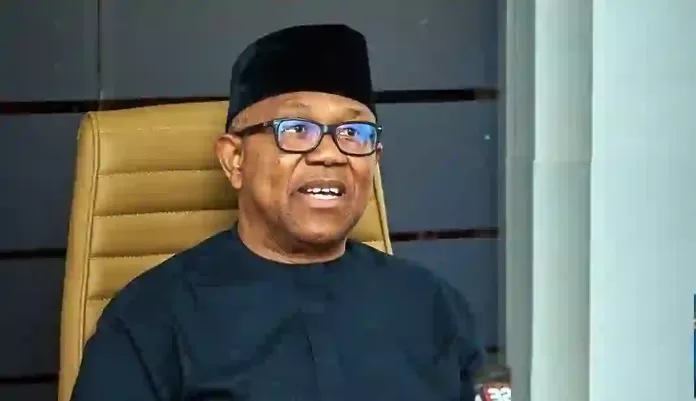
Let’s Repeat The 1993 Credible Election In 2027 — Peter Obi Requests On June 12

0
Peter Obi


Nigeria Democratic Congress (NDC), Presidential Candidate for the 2027 election, Peter Obi, has admonished Nigerians to let the June 12 they celebrate today be a critical assessment of the nation’s political landscape.

The 2023 Labour Party Presidential Candidate also wants a repeat of the 1993 credible election in 2027.

Writing on his X handle this morning, Obi said, “Today, we are observing a day that should mean a lot to us as a people who cherish democratic principles. Every year on June 12, the conversation inevitably turns to a critical assessment of the state of the nation. It serves as an annual baseline for asking: Are our current elections as transparent as they were in 1993? Is the social contract being honoured? Are the institutions of governance truly serving the people?


Ultimately, June 12 is a powerful blend of reflection and aspiration. It honours a fractured past while serving as a constant, foundational reminder of the immense power inherent in the collective democratic will of the Nigerian people.


For us in Nigeria, June 12 is not merely a date on the calendar; it is the emotional and structural bedrock of the modern democratic identity. Officially recognised as Democracy Day, June 12 carries deep historical, political, and social weight, representing both a monumental tragedy and the ultimate triumph of the collective citizen will.


To understand what June 12 means to Nigeria, one must look at its history, its evolution, and its ongoing symbolism. A New Nigeria of true democracy is possible.