


Home Blog Page 3

Reps Speaker Denies Rift With Gov Sani …Kaduna APC Unity Threatened

0
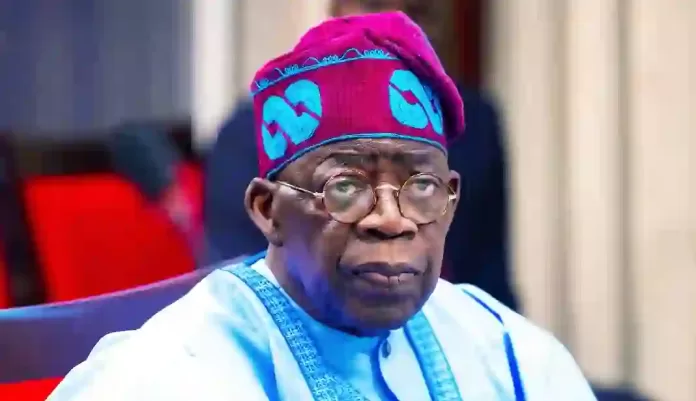
Abbas Tajudeen - Speaker House of Representatives

By Suleiman Anyalewechi


The Speaker of the House of Representatives, Rt Hon Tajudeen Abbas, has rejected claims  of  any political rift between him and Kaduna state Governor, Senator Uba Sani.


The Source reports that, of recent,there have been widespread speculations suggesting the existence of serious crack in the relationship between the two leaders of the All Progressive Congress in Kaduna. This has resulted in sporadic exchange of tirades, and a bitter acrimony between their supporters.


Reports indicate that in the last couple of months, the political temperature of both Zaria and the State has boiled over, with supporters and APC members sharply divided by the speculated frosty relationship between Abbas and Governor Sani.


The increasing level of acrimony between the followers of two has raised concern about the unity of APC in Kaduna State, especially the Speaker’s home base – Zaria


But while speaking at the weekend on the occasion of the distribution of over 60,000 bags of fertilizer to farmers under the auspices of the “Renewed Hope Fertilizer Distribution 2026, Abbas described reports of any disagreement as a mere rumour.


He emphasized that Governor Sani and himself have been enjoying an unprecedented cordial working and political relationships in the history of Kaduna state


He blamed the ongoing speculations suggesting the existence of a rift between the two on some detractors, and political opponents desperately looking for ways of sowing seeds of discord within the APC ahead of the 2027 polls.

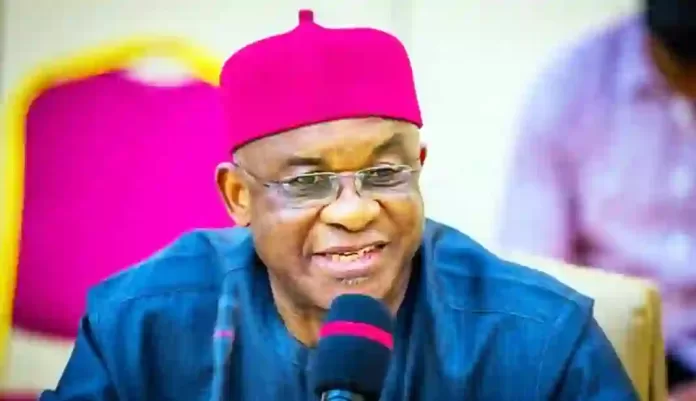
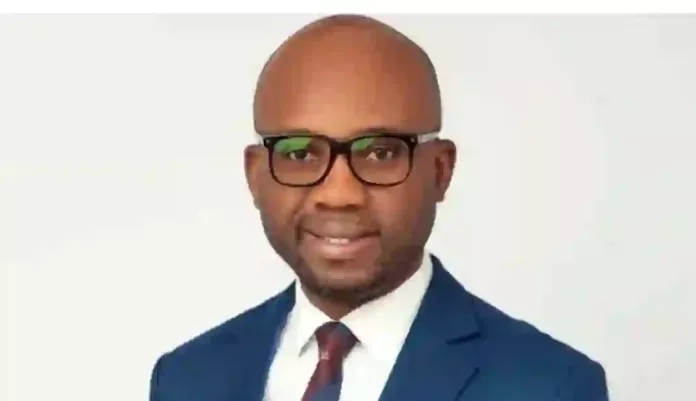
Uba Sani - Governor of Kaduna State
Governor Uba Sani

He urged members of the APC in the State, as well as supporters of both leaders to guard against orchestrated plots by political foes to use them to undermine the unity and stability of the party.


He underscored the urgent need for party members and supporters to shun rumour-mongering , gossip and actions capable of creating unnecessary divisions both within the APC and Kaduna state in general .


The speaker further cautioned against allowing routine political disagreements to snowball into a full scale war  with the potential to negatively impact the fortunes of the the party, as well as the over all interests of Kaduna state.


“There has never been a time the Executive in Kaduna State and members of the National Assembly from the State enjoyed the level of cooperation and understanding we have today.


“The Governor and I have a close relationship founded on trust and mutual respect” Abbas added.


But much as the Speaker appears to downplay rumours of any possible rift, his body language and speach at the Zaria fertilizer distribution event manifestly suggest that all may not be well after all.


In a statement issued on Saturday, by his media aide , Abdullahi Kirishi, the House of Representatives Speaker passionately appealed to his supporters to shield their sword and allow peace to reign.


“I would also like to use this moment to appeal to many members of APC and supporters to unite and avoid actions that could create discord among us.


” As a people, and as a party, we are indeed blessed. I encourage everyone to steer clear of gossip ,and anything that could lead to division within our party .


” Envy is foreign to us; jealousy is unknown; and denying others their rights is something we never do .


“The Almighty has granted us a rare opportunity in Zaria ,and I urge us not to take it lightly . Let’s engage in politics without bitterness . Let’s show respect to one another.


“Today, I wish to speak sincerely from my heart: there has never been a time when the Executive branch of our state and the National Assembly members from our dear state shared as warm ,

and friendly a relationship as we currently do .


“There is a great level of mutual understanding between us and His Excellency ,the Governor of Kaduna state .We share a bond of trust . There is no distrust between the Governor and me.


“So to those who believe that they can employ any tactics to sow discord among us, I assure you they will fail. Therefore, we must stay peaceful and united.


” I am sure the seat of Speaker of the House of Representatives is not just a blessing to Zaria or Zone 1; it is a blessing to Kaduna State as a whole . We strive earnestly to treat everyone with fairness and Justice” Abbas stated.

Anambra State Immortalises Chinua Achebe With Giant Status

0
Prof Chinua Achebe

By Suleiman Anyalewechi


Thirteen years after his passing, the Government of Anambra State, on Saturday, honoured literary icon Prof Chinua Achebe with the unveiling of his statue by Governor Charles Chukwuma Soludo.


According to Professor Soludo, the status erected at the Ugwunwasike Roundabout in Ogidi, Idemili North Local Council, the home town of one of the acclaimed giants of the literary world, is part of the State’s modest way of celebrating the great novelist.


Speaking at the unveiling ceremony, the  Governor described Achebe as a “global brand ,and symbol of excellence, whose immense and invaluable contributions to  literature have continued to shape literary and general intellectual discourse, as well as inspire generations of scholars.


He vowed to continue to pursue initiatives that aim to preserve ,and promote the ideals and literary legacies left behind by the author of the great work, “Things Fall Apart”.


The Anambra State Governor also promised that his administration will always support and market programmes and policies that have the potential to churn out more Achebes in the society.


“Achebe represents excellence and remains one of the world’s greatest literary figures. We will continue to support initiatives that inspire the emergence of more Achebes in Idemili North, Anambra state, and Nigeria generally”, Soludo stated


Besides preserving the legacies of the literary giant, Governor Soludo emphasized that the monument is expected to promote the cultural heritage and tourism potential of Ogidi town as well as add value to  its economy, and that of the State.


Professor Achebe who passed on in Boston, State of Massachusetts ,United States of America, USA, on March 21, 2013, was interred in his home town of Ogidi on May 23, 2013.


Before his death, a near fatal vehicle accident in Nigeria, had confined him to the wheelchair for some years.

OPINION: The Odd Quirks Of Peter Obi At Sixty-Five

0
Peter Obi
Mr Peter Obi

By Valentine Obienyem


The Greek biographer Plutarch, in the preamble to his “Life of Alexander”, observed: “I am writing biography, not history; and the most brilliant exploits do not always manifest a man’s virtue or vice so well as a slight thing, a word or a jest, which often tells us more of his character than a siege where ten thousand die.” He understood that greatness is often revealed not by monumental achievements but by seemingly insignificant habits and moments. Thus, in seeking to understand Alexander, he did not begin with his conquests but with the youthful prince taming the wild horse Bucephalus after discerning that the animal feared only its own shadow. It was a small incident that revealed an extraordinary mind.


The same approach is useful in understanding Mr. Peter Obi as he marks his sixty-fifth birthday. As I set out on this task, which I have rather rashly laid upon myself, I keep asking: Can this feeble brain that aches at a little calculus ever hope to comprehend the complex immensity of life that defines Obi? Much has been written about his public achievements, political journey, and philosophy of leadership. Yet the man is perhaps better understood, as Plutarch suggests, through his odd quirks – those quiet habits, amusing peculiarities, and seemingly trivial actions that illuminate his character far more vividly than speeches or public office. It is these little things, often overlooked, that reveal the principles by which he lives and the philosophy that has shaped both the man and the leader.


Those who know Obi only as the austere public figure of today may be surprised to learn that, as a young man, he embraced life with enthusiasm. He was reputed among his contemporaries to be one of the finest dancers at parties and clubs, and, like many of his peers, he also discovered the charms of women. Yet, even in those carefree years, one thing consistently took precedence over sentiment: business. The instinct to identify opportunities and seize them was already deeply ingrained. He began trading while still in primary school and has pursued it almost continuously ever since.


One story from those years illustrates this remarkably well. Obi was driving some friends, including his then-girlfriend, in his newly acquired Peugeot 505 when a group of admirers stopped to inspect the car and eventually asked whether it was for sale. Realising that the proceeds could finance a business venture he had been contemplating, Obi sold the car there and then. His astonished companions completed their journey by public transport, while Obi, within forty-eight hours, was on a flight to London to pursue the opportunity. When the venture succeeded, he simply bought himself a brand-new BMW. To him, an asset existed not to impress onlookers but to create greater value.


There is another memorable motoring episode. On one occasion, while attending the wedding of his cousin, Obi Uko, Obi was standing by the roadside trying to flag down a taxi to the wedding venue. As the convoy of the newlyweds passed by, it stopped out of respect to offer him a ride. Noticing that the vehicles were already full, he politely asked them to continue, assuring them that he would join them later. One of the young women in the convoy remarked that he looked like a poor man who probably did not appreciate their kind gesture. She was astonished when she later discovered that all three cars in the convoy actually belonged to him.


Feeling embarrassed by her earlier remark, the young lady later visited his hotel room, ostensibly to apologise for her indiscretion, though her real intention was to get to know him better – to woo him. Recalling the encounter years afterwards, Obi joked that her admiring gaze, the brandishing of deadly ogle,  was enough “to melt even an unloving heart.” They subsequently became friends.


His long-time friend, Mr. Benji Uba, recalls another revealing episode from the 1980s when both of them travelled to London on business. They stayed with a family friend who would often give them money to run errands and ask them to keep the change as young men struggling to find their feet and yet to afford the luxury of staying in hotels. Then came the surprise. Very soon, in 1987, Obi stunned everyone by purchasing his first house in London outright, without a mortgage. Around the same period, he also began investing in both the London and Nigerian stock markets, laying financial foundations that politics neither created nor enlarged.


This deeply ingrained discipline persists today, often to the bewilderment of those who travel with him. To journey with Obi is to undergo an education in prudence. If a flight lands at nine in the morning and the hotel’s check-in time is noon, the typical dignitary simply pays the premium for early access. Not Obi. He quietly approaches the reception desk, presents his high-tier membership card and politely requests an early check-in which some of the cards guaranteed him. More often than not, the request is granted. Turning to his aides, he explains that no one with a proper sense of economy should pay extra for just two or three hours. “Why should we pay for such a short time?” he asks. “We are not going anywhere until three pm. Sit comfortably in the lobby, answer your emails and phone calls. The hours are not worth the dollars.”


The same philosophy governs departure. Rather than allow everyone to pay for a late check-out, Obi negotiates for only one room to remain available until the afternoon. He then instructs his entourage to vacate their rooms at the stipulated time and move their luggage into that single room, where they all wait until it is time to leave for the airport. At first, one may wonder why a man of his means and standing would go to such lengths over what appears to be a small expense. Travel with him long enough, however, and the wisdom begins to dawn on you. What initially seems excessive gradually becomes a lesson in disciplined stewardship of resources.


His philosophy of the buffet table is no less revealing. Whenever he  travels, he prefers to eat buffet. However, he chooses it only when he is genuinely hungry. His reasoning is characteristically practical: if he is going to pay for a buffet, he believes he should derive full value from it. Watching me return with my usual modest plate, he often shakes his head in humorous mock despair and says, “Val, I regret paying for your buffet. You eat as if you ordered from the normal menu. You have ignored the juices, the pastries, the fruits and everything else. That is not the spirit of a buffet!”


I only hope Obi does not read this next revelation. He may never forgive me for exposing one of his best-kept travel habits. He knows, perhaps better than most frequent travellers, that hotels do not stock their minibars as an act of hospitality. Those attractive assortments of drinks and snacks are usually sold at prices many times magnified. Rather than patronise them, he would much rather buy whatever he needs from a supermarket or nearby shop. He invariably warns those travelling with him not to touch the hotel’s minibar unless they are prepared to pay the premium.


I learnt this lesson the hard way during my first trip to Italy with him in 2007. Out of curiosity, I opened the minibar, took out several drinks to examine them, and carefully returned them, unaware that in many hotels simply removing an item automatically registers it against the room bill. At checkout, those drinks appeared on my bill. Obi immediately refused to let the charge pass without question. He insisted that if I had consumed the drinks, I should pay for them from my own pocket. Fortunately, it was eventually confirmed that the drinks had been returned untouched, and the charges were reversed. Curiously, Obi seemed even more relieved than I was. I still remember Fr. Cosmas Ebebe, who was then studying in Rome, visiting us at the hotel and jokingly asking Mrs.  Margaret Peter-Obi, “How have you managed Peter’s strange ideas?” I laughed because Fr. Cosmas himself may not realise that he, too, is full of even stranger ideas – a convergence of greatness!


Behind such amusing episodes lies a remarkably consistent philosophy of consumption. Peter Obi is neither a miser nor a spendthrift. Once he concludes that an expenditure is justified, he believes it should be fully utilised. What he cannot abide is paying unnecessarily for convenience or wasting resources that could be put to better use. In his moral economy, waste is almost an offence against prudence. Resources, however abundant, are meant to be managed responsibly rather than consumed carelessly.


Another episode, which occurred on 6 July 2018 in Awka, illustrates this trait even more vividly. Obi had just arrived through Enugu Airport and asked me to buy bananas before joining him in Awka. Knowing that Agulu is renowned for selling some of the finest bananas in the country, I contemplated driving there to buy them before returning to Awka. When I casually mentioned my plan to him, he immediately stopped me.


When I eventually joined him, he spent the better part of thirty minutes lecturing me on the economics of the needless journey I had contemplated. How much fuel would be consumed driving from Awka to Agulu and back? How much time would be wasted? What exactly justified such an expense? “Why would anyone drive from Awka to Agulu because of bananas?” he asked. “Unless a doctor says that only Agulu bananas can save life, such a journey is sheer wastefulness.”


Then, in his characteristic style, he made the point even more practical. “Have you not noticed that I buy Agulu bananas only when I am passing through Agulu? If I am in Onitsha, I eat Onitsha bananas. Val, even if the President was coming and insisted on eating something close to bananas, go to the supermarket and buy “kpekele” (fried plantain) for him. You do not burn fuel and time chasing bananas.”It was vintage Obi. What began as a simple request for fruit became an enduring lesson on opportunity cost, prudent spending and the avoidance of needless waste.


When he ascended to the governorship of Anambra State, this private philosophy of economy naturally became public policy. He famously startled the political class by declaring that Government House was “not a restaurant.” At a time when Government Houses had become synonymous with endless banquets, the daily slaughtering of cows and extravagant entertainment, official residences dined like Lucullus. Readers may still remember the story of Lucius Licinius Lucullus, which I recounted in a “ThisDay” newspaper article I wrote in 2004 entitled, “My Colleague, My Friend and Our Profession.”


“Lucius Lucullus was noted for his dinners, which were culinary events of the Roman year. Cicero once sought to discover how Lucullus ate when alone. He asked Lucullus to invite him and a few friends to dinner that evening, with the condition that he should not send any warning to his servants. Lucullus agreed, merely stipulating that he be allowed to notify his servants that he would dine in the ‘Apollo Room’. When Cicero and the others arrived, they found a lavish banquet awaiting them. Lucullus had several dining rooms in his city palace, each designated according to the splendour of the feast to be served. The Apollo Room was reserved for meals costing the equivalent of over ₦300,000.”That was in 2004. Today, such a banquet would undoubtedly cost several millions of naira. By a strange odyssey that characterises philology, to dine “Lucullanly” has entered the lexicon of classics.


Obi was determined that Government House should cease to be a Nigerian version of Lucullus’ palace. He drastically reduced the number of habitual guests, insisting that public funds were meant for public service, not private hospitality. I recall hearing how some people joked that, during previous administrations, they freely drank some of the most expensive wines in Government House. Under Obi, they lamented, the finest they could hope for were “Four Cousins” and “Two Oceans.” The remark was made in jest, but it aptly captured the dramatic shift in attitude towards public expenditure.


The same philosophy informed his decision regarding government guest houses. Upon discovering that the state maintained about fifteen guest houses scattered across different parts of Anambra, he questioned the rationale for such an arrangement. What, exactly, were those guest houses maintained for? He eventually closed them, arguing that governors and other senior public officials should complete the day’s work and return to the warmth of their homes and families rather than maintain an expensive network of official residences. Government, in his view, exists to serve the people, not to provide unnecessary comforts for those in public office. This is why he remains one of the few governors whose tenure was not marked by scandals involving gallantry, intrigues, or liaisons. Every avoidable expenditure, he believed, represented resources that could instead have been invested in schools, hospitals, and other pressing needs of the people. The could be connected with his attitude towards birthdays.


Peter Obi’s attitude towards birthdays has always reflected his philosophy that life should be measured not by the years one has lived, but by the value one has added to society. Unlike many public figures who mark birthdays with lavish celebrations, he has consistently preferred quiet reflection and service. During his tenure as Governor of Anambra State, numerous institutions, associations and groups sought to celebrate his birthdays with receptions and ceremonies. More often than not, he politely declined, urging them instead to channel the funds into projects that would benefit the public.


As a result, many schools built libraries, equipped science laboratories, purchased computers, renovated classrooms and provided scholarships, while health institutions acquired medical equipment and improved their facilities. In Obi’s view, a birthday should leave behind a legacy rather than memories of a feast. To him, the greatest birthday gift is not praise or presents, but the knowledge that another year of life has inspired investments that improve education, strengthen healthcare and positively transform the lives of others.


He does not dress to impress anyone. His guiding principle is simple: let the clothes fit well and always be neat. He has little interest in fashion trends or designer labels. Indeed, he can sew five outfits in exactly the same senator style without the slightest concern that they all look alike. For him, clothing is meant to serve a purpose—to provide decency, comfort, and dignity—not to advertise wealth or social status.


What is the true value of a wristwatch? What is the real worth of a pair of shoes? These are the questions Peter Obi quietly compels those around him to ask. To him, the value of such possessions lies not in the prestige of the brand or the price paid for them, but in the purpose they serve. Once a wristwatch tells time accurately or a pair of shoes provides comfort and durability, their essential function has been fulfilled. That philosophy explains why, for years, he has been content with owning just one wristwatch and only two pairs of shoes at any given time.


Material possessions are, in his view, transient; they neither define character nor leave an enduring legacy. Unfortunately, many shallow-minded observers continue to debate the simplicity of his lifestyle without grasping the deeper philosophy behind it. They see only the watch and the shoes, missing the principle that resources are better invested in educating children, equipping hospitals, creating opportunities, and improving lives than in accumulating possessions that are ultimately fleeting and serve no lasting purpose beyond momentary gratification.


His simplicity in travel became almost legendary among the political elite accustomed to the privileges of office. He travelled light, often carrying his own bags, and for a man of considerable private means, many found it curious that he would frequently choose economy class, even when his wife was seated in business class on the same aircraft. Whenever questioned about this, he would laugh and ask his critics to calculate the difference in cost for a journey lasting barely forty minutes. After hearing the amount, he would pose a simple question: what meaningful comfort could justify such a premium for such a brief period? His conclusion was always the same – the savings were better directed towards something more enduring, such as supporting a school, a hospital or a person in need.


The attitude of many Nigerians who fly business class further illustrates the distinction Obi makes between utility and vanity. For some, the attraction lies not necessarily in the additional comfort but in the recognition that comes from being seen there. They often glance around the cabin, their eyes moving hither and thither, almost to ensure that economy-class passengers making their way to their seats notice them, because the privilege itself must be seen. Their satisfaction is sometimes derived less from the comfort of the seat than from the social message they think it conveys.


Obi’s approach is entirely different. He does not reject comfort; he rejects comfort pursued merely for display. To him, a seat on an aircraft is a means to an end, not a badge of importance. What matters is not where one sits on the plane, but what value is created after the plane lands. Yet this was never an obsession with discomfort or an exhibition of austerity. Obi understands the difference between necessity and vanity. On long and demanding intercontinental journeys, where proper rest is essential for effective engagements upon arrival, he has no hesitation travelling business or first class. For him, comfort has value when it serves a practical purpose; it becomes wasteful when it exists merely to satisfy status.


What makes this philosophy even more remarkable is that he did not impose on others the privileges he denied himself. His commissioners and senior officials were not permitted to fly business class on official assignments, regardless of the destination. His argument was straightforward: public office is a call to service, not an opportunity for personal comfort. If government could save on unnecessary privileges enjoyed by officials, those resources could be redirected towards education, healthcare and other areas that directly improve the lives of the people.


Obi is wisdom personified. His practical, ethical and political insights have made him, in many respects, the very definition of a sage. He represents a form of practical, worldly wisdom – one shaped not merely by books and theories but by experience, observation and a deep understanding of human behaviour. His influence on Nigerian political thought and governance rests on this triumph of reason. The same wisdom, and indeed the same economy of effort that governs his approach to resources, also defines his encounters with political adversaries. Where others respond with lengthy diatribes and emotional exchanges, Obi prefers the short, sharp rapier of wit. He does not expend energy where a carefully chosen sentence can achieve the desired effect.


When Professor Charles Soludo launched a lengthy academic critique against him, Obi brought the matter to a close with a single memorable observation. He noted that while he had done the work of a mere “trader” in Anambra, it was now left for Soludo to do the work of a “professor.” The people, he added, would ultimately be the final judges. It was a typically Obi response – brief, pointed and leaving the verdict where he believed it belonged.


When Engr. Dave Umahi, a man  driven by an insatiable desire to appropriate credit and often unwilling to allow broader humanitarian considerations to temper his actions, repeatedly sought to draw him into public exchanges over road infrastructure, Obi again refused to engage in a prolonged argument. Having patriotically pointed out a road that required urgent attention, and with Umahi subsequently acting by fixing it, Obi considered the matter/debate concluded. Any further debate, he remarked, would require the participants to be “qualified” for it – a subtle yet devastating observation that, as far as Nigerians were concerned, effectively brought the exchange to an end. Umahi, however, has continued to revisit the issue, bringing to mind the Igbo proverb: “Na ofeke amaghi mgbe ekeru nku ukwa” – the foolish person does not know when enough has been said.


Whether dealing with the combative rhetoric of Nyesom Wike, whose pertinacity in clinging to youthful romanticism baffles; or the persistent and puerile criticisms of Reno Omokri, the fountainhead of sycophancy; Bayo Onanuga, an instructive study in the senile aftermath of quality journalism; Kenneth Onuku Okonkwo, the double-mouthed hypocrite; Femi Fani-Kayode, the Agadi ekwe nka of the tribe, who, like Odysseus of old, can hardly speak without lying or act without treachery; or the recently added Dr. Joel Chukwudi Kpontus Okafor, the youthful Omasi-born sexual pervert of the “homosexual” category, Obi rarely raises his voice or allows himself to be drawn into endless battles. He delivers his responses almost in passing, but with remorseless logic, leaving his opponents to expend their energy against his calmness. His silence is not weakness; it is the quiet confidence of a man who understands that not every provocation deserves a war, and that sometimes the most powerful answer is the one delivered without noise.


While he argues for institutional efficiency and a more effective use of public resources, what he often encounters are attacks from those who seem unable to appreciate the deeper philosophy behind his approach. These “little demons without respect for holy water,” as one might humorously describe them, continue their assaults without pause. Yet, beneath the controversies lies a consistent principle: Obi’s preference is always for systems and institutions that have demonstrated the capacity to deliver results.


Nowhere is his aversion to waste more visible than in his preference for institutional efficiency. He often illustrates this with a characteristic comparison: if a sum of money is given directly to voluntary agencies to build a school or hospital, the project could already be at the roofing stage, while the same amount passing through government machinery might still be trapped at the foundation stage, with officials debating variations, procedures and, sometimes, the hidden interests that slow down execution.


His closeness to faith-based institutions is therefore not merely a product of personal piety. It is also rooted in a practical, managerial calculation. He sees many of these institutions as effective channels through which resources can reach the people directly, bypassing some of the inefficiencies, delays and leakages often associated with state bureaucracy. For Obi, the central question is not who delivers the service, but who can deliver it most efficiently, transparently and with the greatest benefit to the people.


To Obi, wealth is never a trophy to be displayed but a tool to be utilised. He has little patience for the ostentatious exhibitions of affluence that have come to define success in modern society. He does not measure prosperity by the size of a man’s garage, the number of houses he owns or the brands he displays, but by the number of lives lifted from hardship and the positive difference his resources create in the world. This philosophy naturally leads to what may be called the final expression of his simplicity.


On one occasion, we attended a funeral ceremony where more than thirty bishops were present. As often happens in our society, such gatherings can become occasions for displaying influence, social standing and the number of important people one commands. To many, the grandeur of one’s funeral becomes a final statement of one’s importance. Obi has always viewed such matters differently. During that occasion, he quietly confided in me that when his own earthly pilgrimage comes to an end, he would be perfectly content if only his parish priest officiated at his burial Mass. Indeed, if necessary, he would make his wishes known clearly beforehand.


To a society accustomed to elaborate funerals, endless tributes and posthumous displays of grandeur, such a request may appear almost unimaginable. Yet it is entirely consistent with the man. Just as he has repeatedly rejected unnecessary display in life, he intends to reject it even in death.


For Peter Obi, whether in the management of a state, the choice of a hotel room, the utilisation of public resources, or the final transition of the soul, the philosophy remains the same: reduce waste, maximise value, and allow one’s life to speak for itself. It is a philosophy rooted in discipline and the quiet satisfaction of doing what is right. This is why he has been able to achieve a tranquillity born of self-control – a serenity that neither praise inflates nor criticism diminishes.


History may record the great campaigns, electoral contests, and public achievements, the president he will soon become, but, as Plutarch understood, it is often in the quiet habits, the seemingly insignificant decisions, and the stubborn peculiarities that the true measure of a person is revealed. Long after the noise of politics has faded and the passions of the moment have subsided, it is these small, consistent acts that endure as the clearest testimony to character. They reveal the invisible principles by which a person lives and the moral compass that guides his choices when no audience is watching.


If future generations seek to understand Peter Obi, they will certainly study his speeches, policies, and public service. They may consult preserved written and spoken words of the likes of Prof. Chinyere Stella Okunna, Prof. Patrick Obi, Prof. Okey Ikechukwu, Barr. Joe-martins Uzodike and this humble writer and get their perspectives. Yet they may learn even more from his odd quirks, for it is through these seemingly insignificant habits that he demonstrates the importance of choosing simplicity over extravagance, prudence over waste, and virtues over vices. In the end, a life is measured not merely by the offices it occupies or the honours it accumulates, but by the values it embodies and the example it leaves behind. That, perhaps, is the enduring lesson of Peter Obi at sixty-five.

New NBA President Appreciates Husband, Says Her “Victory Belongs To Believers In Bold Bar That Works”

0
Mrs Oyinkansola Badejo-Okusanyo - NBA President

By Suleiman Anyalewechi


The newly elected 33rd President of the Nigerian Bar Association, NBA, Mrs Oyinkansola Badejo-Okusanyo, SAN, has appreciated her husband for his unwavering support in her success.


She has also stated her priority in leading the NBA – improvement of the welfare and professional development of legal practitioners in the country.


In a statement on Sunday, July 19, 2026, after she was declared winner, Badejo-Okusanya appealed for the cooperation and understanding of all, especially her rivals at the polls. She also  appreciated members for  their trust and confidence in her ability.


She described her electoral victory as a collective triumph for all lawyers in the country, and  promised to carry along all shields of opinions.


She said: “This victory belongs to all of us who believe in A BOLD BAR THAT WORKS FOR EVERYONE . Thank you to every member who supported this vision ,to my fellow contestants for enriching our democratic process, and to every colleague who participated in this election.


“The campaign is over. The work begins now. I pledge to serve every member of the Nigerian Bar Association with integrity, humility, courage and accountability.


“Together, we will build an NBA where lawyers can earn better, live better and practise better.”


Badejo-Okusanya similarly expressed immense gratitude to her husband, professional mentors and others, her campaign council, volunteers, coordinators, supporters, associates, and colleagues for their sacrifices towards her victory.


The source reports that the the election which for the past couple weeks was dogged by a plethora of disagreements and even court cases ,was initially marred by delay arising from a portal failure.


The systematic failure led to the election commencing about seven hours behind schedule on Saturday.


However, at end of the day, she scored a total number of 12,317 to defeat Lateef Omoyemi Akangbe, SAN, and Olumuyiwa Akinboro, SAN, who both of whom scored 7, 934 and 5, 855 votes, respectively, to place second and third.


Badejo-Okusanya, who was called to the Bar in 2002 ,will be taking over from the 32nd President of the umbrella body of Nigerian lawyers, Mazi Afam Osigwe, SAN.

Badejo-Okusanya Emerges New NBA President

0
Mrs Oyinkansola Badejo-Okusanya - NBA President
Mrs Oyinkansola Badejo-Okusanya

By Ayodele Oni


“Someday, the story will be told of how this election was, almost sabotaged” –  Afam Osigwe, SAN


After initial hitches and other challenges, Mrs Oyinkansola Badejo-Okusanya, SAN, has emerged as the 33rd President of the Nigerian Bar Association(NBA).


She defeated two other senior lawyers in the association’s 2026 national officers’ election held on Saturday.


The Chairman of the Electoral Committee of the Nigerian Bar Association, Aham Ejelam, SAN, announced the results at the NBA National Secretariat in Abuja on Sunday, following the conclusion of the election, which was delayed by technical challenges and a cyberattack.


Ejelam said Badejo-Okusanya polled 12,317 votes, representing 47.18 per cent of the total votes cast, to defeat her closest challenger, Lateef Akangbe, SAN, who secured 7,934 votes, representing 30.39 per cent.


The third presidential candidate, Olumuyiwa Akinboro, SAN, polled 5,855 votes, representing 22.43 per cent.


According to the ECNBA Chairman, a total of 26,106 votes were recorded in the election.


With her victory, Badejo-Okusanya will serve as the Association ’s President for a two-year tenure spanning 2026 to 2028.


Her victory also makes her the second female President of the Association, after Priscilla Kuye, who led the NBA from 1991 to 1992.


Other elected national officers include Oghenero Okoro, who emerged as First Vice-President with 11,024 votes; Afam Okeke, who was elected General Secretary with 8,478 votes; Aghogho Gladys, who won the position of Assistant General Secretary with 14,312 votes; and Chinelo Audrey Ofoegbunam, who emerged as Welfare Secretary with 14,911 votes.


Badejo-Okusanya was absent when the results were announced.


However, a member of her campaign team, Aminu Gadanya, SAN, attributed her absence to a flight delay and said the president-elect was committed to extending a “handshake of friendship” to all aggrieved candidates in the interest of unity.


Speaking after the declaration of the results, the outgoing NBA President, Afam Osigwe, SAN, noted that the election survived attempts to derail the process, including a cyber attack that forced the electoral committee to rebuild and migrate its ICT system to a more secure server.


“Our colleagues planned to truncate the election, but we stood firm. Every effort to derail this process failed.


“This is a trying time for the Bar. In the build-up to this election, many went to great lengths to rubbish the association.”


He urged the newly elected officers to be magnanimous in victory and called on unsuccessful candidates to support the new leadership.


“To those who won, be magnanimous in victory; for those who lost, there is always another day. The cyber attack shows that we must do more in data protection. Let us collectively do things in an acceptable manner.


“Someday, the story will be told of how this election was almost sabotaged.


“We must be able to promote the rule of law, and the NBA, made up of lawyers, should be able to determine the course of its electoral process. Where we made mistakes, I believe my successor will correct them.


“Winners should extend the hand of fellowship to those who lost and have a united front to move the Bar forward.


“The unity of the Bar cannot and should never be negotiated. As I now bow out, I wish the new EXCO all the very best in office.


“May we never see the day when those who lead us will be elected by people other than lawyers.”


Osigwe also disclosed that the Electoral Committee would conduct a comprehensive review of the electoral process, particularly the challenges encountered, with a view to strengthening confidence in future NBA elections and improving the association’s cybersecurity and electoral integrity.

2027: Makinde Will Revive Economy After Defeating Tinubu

0
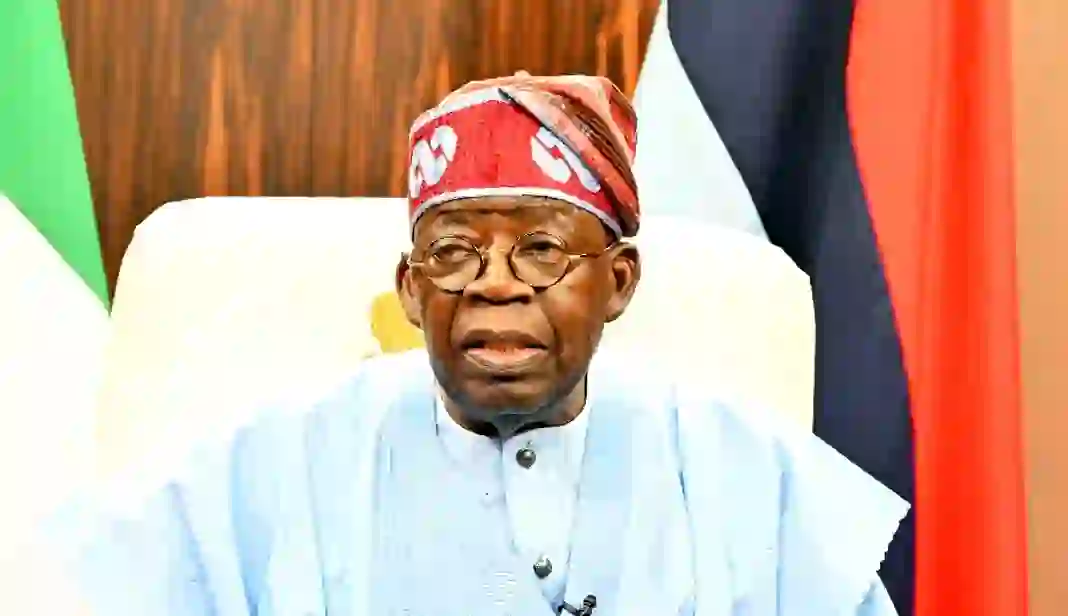
Bola Tinubu and Seyi Makinde
President Bola Tinubu and Governor Seyi Makinde

Governor Seyi Makinde of Oyo state and presidential candidate of the Allied People’s Movement, APM will defeat incumbent President Bola Ahmed Tinubu in next year’s presidential election, according to his party which said the governor possesses the leadership quality and national appeal to win the Nigerian Presidency.

According to The Punch, APM National Publicity Secretary, Abubakar Yusuf made the remark, saying the party was convinced that Governor Makinde has what it takes to defeat the incumbent in the 2027 election.

The APM’s spokesperson  said the party had intensified grassroots mobilisation across the country and was recording a surge in membership following the entry of prominent politicians into the party.

He explained that some of the qualities of its presidential candidates which have endeared him to Nigerians include prudent management of public resources, responsible governance and inclusive leadership, saying he will bring these to bear when he becomes president.

He stressed that the party has the solutions to the country’s current economic challenges, saying Nigerians are frustrated with the ruing All Progressives Congress, APC and President Tinubu in the manner he has handled the affairs of the country, adding that Governor Makinde has stood out among best-performing governors, adding that this has earned him public recognition and reposed Nigerians’ confidence in him that he has solutions to the myriads of challenges facing the country.

“The APM presidential candidate has the leadership capacity, commitment and competence to tackle Nigeria’s security challenges, revive the economy and deliver the dividends of good governance,” Yusuf said.

“Our candidate’s reputation for prudent management of public resources, responsible governance and inclusive leadership would shape an APM-led Federal Government. His blend of experience, youthful energy and ability to unite Nigerians across political, ethnic and religious lines gives us confidence that he has what it takes to win the 2027 presidential election.

“Across the country, citizens have expressed deep concerns about the rising cost of living, widespread insecurity, unemployment and declining economic opportunities. These are genuine concerns that require practical solutions and compassionate leadership, which only the APM can offer,” he said.

Presidency Accuses Obi Of “Desperation” Over Allegation That His Life Is In danger

0
Peter Obi
Mr Peter Obi

The Bola Ahmed Tinubu’s adminsitration has accused Peter Obi, the Presidential candidate of the NDP of raising false alarm, to the effect that his life is in danger, saying his plan is to cause violence in the country.

Daniel Bwala, Special Adviser to President Tinubu on Media and Public Communications made the allegation on Saturday in a post he shared on his verified X handle, noting that Obi’s life had never been in danger, rather, the NDC presidential candidate was just trying to steer up anger among Obidient, his political movement against the federal government.

Bwala’s remark comes on the back of a recent comment by the former governor of Anambra state that an attempt was made on his life during his recent planned visit to Benue state.

The presidential hopeful had also alleged that his life was put in danger, citing an alleged intimidation against him at the Nnamdi Azikiwe International Airport, Abuja, the nation’s capital.

But the presidential spokesman dismissed Obi’s claim, describing them as unfounded, false and “desperate” saying the allegation is a new political strategy by Obi to whip up sentiment against the government.

Bwala: “The desperation of Peter Obi is palpable. He recently travelled to Europe and was quoted to have alleged that the Governor of Benue wanted to kill him. Imagine lies from someone who said he wants to govern a country like Nigeria.

“The other day he falsely accused airport officials of threatening his life when in fact he violated airport traffic rules.

“Lately his newfound allegation on life may appear to be his strategy to use his Obidient movement to threaten people’s lives like they have been doing on us.”

What Obi said

Recall that the NDC presidential hopeful had alleged that he may not be alive to contest next years election, citing alleged intimidation against him by some agents of state and federal government, which he said has left him frustrated.

He said, “The way they are going…, not even a candidate. I might not even be alive.

“I’m telling you. Every single thing I do for a living, this government is frustrating it. Deliberately so. Everything. So, there is even a possibility that, if they have the opportunity, I will not be alive.

“It’s not an accusation. I know. I get frustrated every day. Because you do things that you think would be normal, it is not normal anymore.

“They won’t come directly and say, ‘Oh, we’re doing this,’ but you can see their hand in virtually everything.”

Peter Obi, _CON at 65: Extolling A Visionary’s Enduring Influence

0
Peter Obi at 65

By ike Abonyi


Today marks not merely the passage of another year, but a commemoration of the profound and lasting impact of a leader whose political philosophy and personal conduct have fundamentally reshaped the definition of leadership in contemporary Nigeria. As His Excellency, *Peter Onwubuasi Gregory Obi, reaches his 65th birthday having been born on July 19, 1961, I pay tribute to a friend, an individual of exceptional intellect, strong character, and unwavering dedication to public service.


 The Nature of a Change Agent

Peter Obi’s political trajectory has consistently been characterised by a drive to challenge and improve upon the existing order, rather than merely adhere to it. From his impactful governorship of Anambra State to his significant role as a catalyst for national reawakening, he has repeatedly demonstrated that governance can and must be conducted with accountability, fiscal prudence, and a genuine focus on the populace. He elevated frugality to a governing principle, underscoring the belief that a nation’s resources rightfully belong to its citizens, not its elite.


 Inspiring a New Generation

Beyond policy initiatives and economic data, Peter Obi’s most significant legacy may be the inspiration he has instilled in countless young Nigerians. At 65, his vitality remains undimmed, his foresight sharp, and his message consistent: the possibility of a revitalised Nigeria. He has successfully steered the national discourse from one of entitlement to one of merit, from a focus on consumption to one on production, and from a state of despondency to one of constructive hope.


He has redefined the benchmarks for leadership in Nigeria, proving that integrity is not a political liability, but rather the ultimate source of strength.


 A Milestone of Composure and Fortitude

Reaching sixty-five years signifies a period of accumulated wisdom, thoughtful reflection, and renewed commitment. Amidst a political arena often dominated by clamour, Peter Obi stands as a stable, composed, and meticulously reasoned voice. His leadership is demonstrated through his actions; his approach is marked by humility, and he consistently encourages us all to hold both our leaders and ourselves to higher standards.


I extend our warmest 65th birthday wishes to this great friend, a distinguished statesman, a forward-thinking economic advocate, and a leader truly devoted to the people. May the coming years be filled with continued strength, robust health, and the realisation of a vision for a just and prosperous nation.


_ike Abonyi, Editor @Large

Nigeria’s Tems Becomes First African Female Musician To Clinch Diamond Single In US

0


By Akinwale Kasali


Grammy-winning Nigerian singer, Temilade Openiyi, popular as Tems, has made history.


She became the first African female artist to earn a Recording Industry Association of America, RIAA, Diamond-certified single in the United States of America.


The Nigerian International act attained the milestone for the song “Wait For U”.


Tems acclaimed collaboration with American rapper Future featuring Canadian rapper, Drake, after the song surpassed 10 million certified units in the US.


The Global music monitoring platform Chart Data revealed on its X page that the song has sold over 11 million units in the U.S.


The platform wrote: “US Certifications (@RIAA): Future (@1future) Feat. @Drake & @temsbaby, WAIT FOR U 11x Platinum (11,000,000) ”.


The News Agency of Nigeria (NAN) reports that Tems now joins Wizkid as the only African artist to earn a Diamond single in the US.


Wizkid was the first African artist to receive a RIAA Diamond Certification through his collaboration with Drake on ‘One Dance’.


Tems’ achievement marks a major milestone in her international career and further underscores the growing global recognition of Nigerian music.


The “Love is a Kingdom” crooner has continued to break new grounds on the global music scene since gaining international prominence with her distinctive vocals and songwriting.


The singer has won two Grammy Awards and received nominations for several international music honours, collaborating with some of the world’s biggest music stars.


This feat has made her fans take to social media to celebrate her latest achievement, describing it as another proud moment for Nigeria and the African music industry.


Her feat reflects the increasing global acceptance of Afrobeats and the growing influence of Nigerian artistes on the international stage.

Self-styled Prophet, Onye Eze Jesus Bags Six Years In Jail, Fined N20 Million

0
Onye Jesus

By Suleiman Anyalewechi 


The Anambra State authorities in continuation of  their avowed commitment towards ridding the State of the activities of fake and fraudulent spiritualists , traditionalists, and other  criminal elements, on Friday, secured the  conviction of a self-acclaimed prophet, Onyebuchi Okocha.


Okocha, popular as “Onyeze Jesus”, was on Friday handed down a six-year prison term, and a fine of N20 million by an Anambra High Court sitting in Awka, the State Capital over charges bordering on alleged violation of the provisions of the Anambra State Homeland Security laws of 2026.


The law, which became operational in 2025, is primarily targeted at curbing the alleged unwholesome activities of fraudulent spiritualists, traditionalists, and enablers of other criminal activities such as armed robbery, internet fraud, and ritual practices for the purposes of wealth acquisition.


Delivering judgment on an application filed by the Anambra State Government, trial Judge, Honourable Justice Jude Obiora, held that individuals claiming to possess supernatural powers leading to economic and other fortunes, through some unlawful practices and who prepare charms outlawed by the Anambra Homeland Security law are liable to both imprisonment and financial penalties.


Consequently, the trial Judge  having found the defendant, Onye Eze Jesus guilty of contravening relevant Sections of the Anambra Homeland Security laws convicted and sentenced him to six years in jail, and a fine of N20 million.


The Source reports that since launching a state-wide crackdown on individuals and groups engaged in alleged ritual practices, fraudulent spiritual activities, and the use of charms for the facilitation of criminal activities such as kidnapping, and internet fraud in February 2025, the Anambra State Government have arrested and prosecuted a number of individuals.


The State Government, early June, arrested and arraigned no fewer than 10 alleged fake and fraudulent  Church pastors and prophets, including a former Nigeria Democratic Congress NDC Abia Central Senatorial District aspirant, Bishop Emeka Nwankpa whose Ministry is based in Onitsha.

u