The peace agreement between states in the South- west and Miyetti Allah Cattle Breeders, seems to have hit the rock less than 24 hours after it was signed.
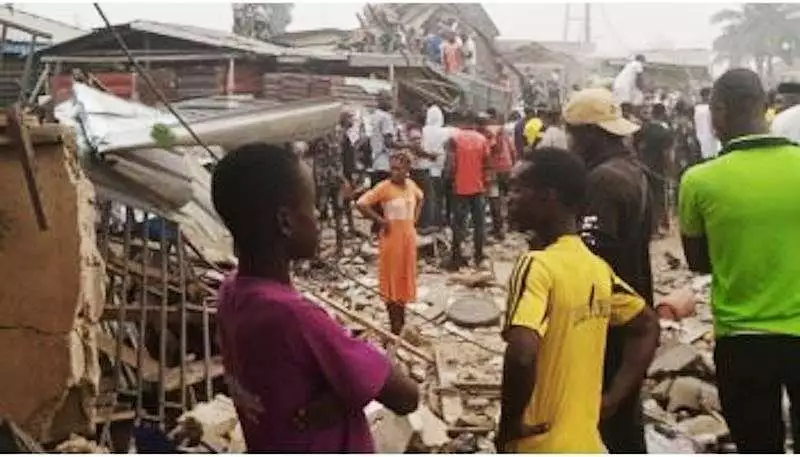
Maize Growers Processing Marketer Association of Nigeria (MAGPAMAN)in Ekiti state cried out over an alleged destruction of their multi million naira maize farm by suspected Fulani herdsmen.
The farm, located in Ado Ekiti, covers about 235 hectares of land, and is at the state forest reserve in Aduloju farmstead.
Secretary of the association, Mr Tope Emmanuel, disclosed in the state capital on Tuesday that the herders had been terrorising the farmers in the area for sometime, leading to the destruction of the maize farm.
According to him, the itinerant Fulani herdsmen stormed the farm at night with dangerous weapons and fed their cows with maize and cassava daring to kill anyone that stopped them.
Emmanuel disclosed that members obtained about N6.6 million loan from the Central Bank of Nigeria(CBN) under the anchor borrowers’ programme in September 2020 to plant the maize, adding that the 160 members had been left with nothing as profit from the expected proceed worth N10 million.
“Last year, we approached the CBN as a group to obtain loan worth N6.6 million for the maize farm and we planted the maize covering 235 hectares of land the farm.”
Akungba community in Ondo state has blamed the management of Adekunle Ajasin University, (AAUA) for contributing to the high casualty recorded in last Saturday’s accident.
Contrary to claims by security agents that only seven persons lost their lives in the accident, the community said 27 persons were confirmed dead.
Spokesman of Akungba community, Chief Bode Iwaloye, the Asiwaju of Akungba, disclosed this while briefing journalists on the incident.
Iwaloye pointed out that “we frown at the non-challant attitude of the University towards the most recent accident in front of its gate. Had the University made its water tankers available for use at the scene of the accident more lives could probably have been saved.
“We implore the University to be more concerned about what happens outside its protective walls, immaterial of their perception of the host community.
“We have also consequentially witnessed a gradual erosion of the cordial and celebrated relationship which once existed between the University and the Host community up to the Vice-Chancellorship of Prof. Femi Mimiko.
“This new relationship further buried the once existing valued concerns of the University about events and happenings outside its walls.”
Speaking on incessant accidents in the university community, Iwaloye stated that
“On 11th December 2020, three trailers a Dangote Cement, Cooling Van loaded with fish and Trailer loaded with container of electronics had accident in front of the University gate.
“While three people were killed in the accident, all the contents of the burnt vehicles were looted by identifiable miscreants in the community.
“The carcass of the burnt vehicle littered the gate of the University for over one month before it was cleared and evacuated, prior to the school resumption. The stench from the accident site was something a citadel of knowledge should not have condoned for a day!
“Most agonizing is the accident that occurred in front of the university gate on Saturday 23rd January, 2021. Another Dangote Cement Trailer ran into the frontage of the University gate killing 27 people, including Students, visitors, residents and passers-by.
“This accident took the life of former SUG President Sam Praise. There were also harrowing cases of three students of the same parents being killed in the accident.”
On ways to put an end to incessant accidents in the university community, the spokesman suggested “realigning the sections of road, widening and dualising the main road between Okerigbo hill and Etioro to give more space for vehicles that lost control and keep gatherings at distance from the main road.
“We are also appealing to the state Government to help facilitate the payment of compensation to the families affected by the recent accidents involving Dangote Cement Company, being isolated accidents involving only Dangote Cement trailers.
“The Akungba community would strive to abide by any safety measures put in place by the Government. We shall, on our own part, try to coordinate the affected families to seek reparations by providing legal aid.
“We shall, in addition, make the plight of the community known to the Federal Ministry of Works, being the owners of the Federal road passing through our community and call for their immediate intervention into the incessant road accidents.”
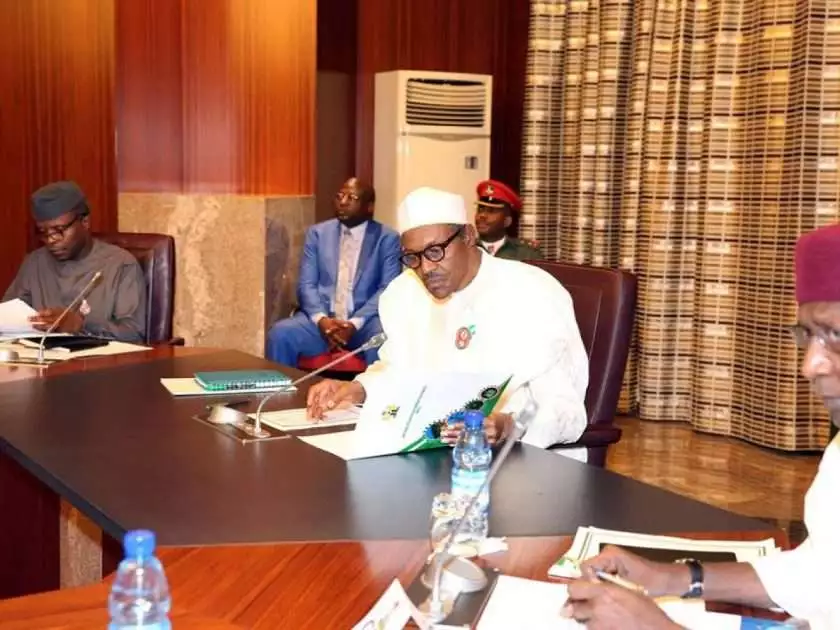
The South East Zone of Nigeria has again been excluded from the membership of President Buhari’s Service Chiefs.
The Zone has been complaining of its absence from Nigeria’s security leadership.
But it had hoped that one of its sons would be considered in the appointment of new Service Chiefs whenever the President decides to do away with his much criticised Chiefs he appointed in his first tenure, and had kept renewing their tenures, ignoring persistent outcrires from Nigerians, including the leadership of the National Assembly.
On Tuesday, the President dashed the hopes of the South -East. He found none of them capable, even though the zone parades many qualified officers.
Announcing the new Service Chiefs, main Presidential spokesman, Femi Adesina, in a statement, said:
“President Muhammadu Buhari has accepted the immediate resignation of the Service Chiefs, and their retirement from service.
“Those involved are the Chief of Defence Staff, General Abayomi Olonisakin; Chief of Army Staff, Lt-Gen. Tukur Buratai; Chief of Naval Staff, Vice Admiral Ibok Ekwe Ibas; and Chief of Air Staff, Air Marshal Sadique Abubakar.
President Buhari thanks the outgoing Service Chiefs for what he calls their overwhelming achievements in our efforts at bringing enduring peace to our dear country,” wishing them well in their future endeavours.
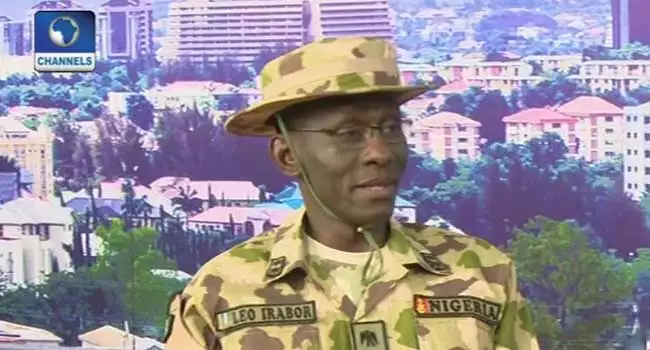
“The new Service Chiefs are: Major-General Leo Irabor, Chief of Defence Staff; Major-General I. Attahiru, Chief of Army Staff; Rear Admiral A.Z Gambo, Chief of Naval Staff; and Air-Vice Marshal I.O Alao, Chief of Air Staff.
“The President congratulates the new Service Chiefs, and urges them to be loyal and dedicated in the discharge of their responsibilities.”
President Muhammadu Buhari has appointed General Leo Irabor, former theater Commander Operation Lafiya Dole as the new Chief of Defence Staff, in a major shake up that also affected other Service Chiefs.
The President also appointed Attahiru, chief of army staff; A Z Gambo, chief of naval staff; and I O Alao, chief of air staff.
Femi Adesina, the Special Adviser to the president on media and publicity said the appointments took immediate effect, while the president wished the former service chiefs all the best in their endeavour.
The former service chiefs are the Chief of Defence Staff, Gen Abayomi Olonisakin; Chief of Army Staff, Gen, Tukur Burutai; the Chief of Naval Staff, Vice Admiral Ibok-Ete Ibas; and the Chief of Air Staff, Air Marshal Sadique Abubakar. They are proceeding on retirement having completed their mandatory years in the military.
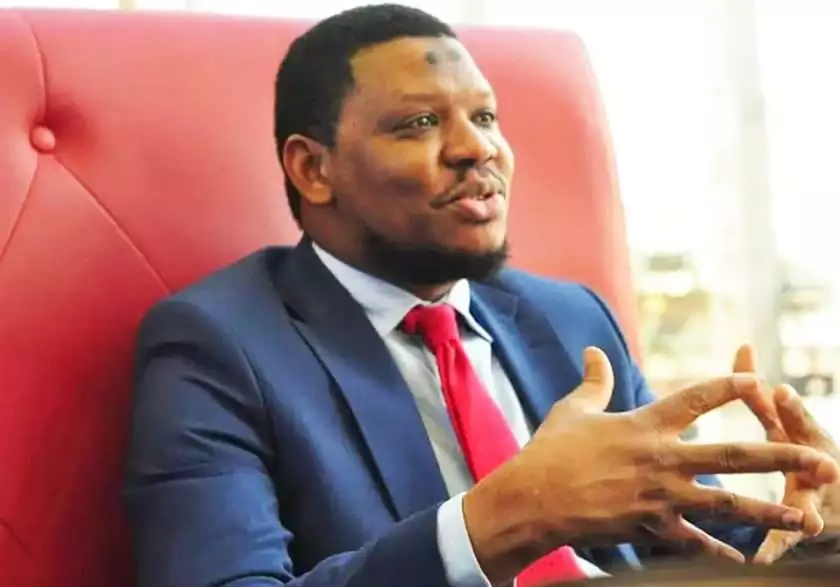
Fulani born former All Progressives Congress, APC, Presidential Aspirant at the 2019 Election, Adamu Garba, has condemned the heinous activities of the Fulani Herdsmen in the South West.
Garba, reacting to the ongoing rift between Sunday Adeyemo, popularly known as Sunday Igboho, his supporters and the Fulani residing in Igbangan, Oyo State, over the quit notice order given to the Fulani Herdsmen, in a tweet via his Twitter account on today, Monday, 25th January, 2021, said even though he is a Fulani man, he was totally against the idea of allowing cows to roam the streets in 2021.
He further revealed that by law, land can only be used through rent or purchase, adding that Government should step forward and resolve the dispute.
“I’m a Fulani man, but it actually doesn’t make sense for cows to be roaming the streets in 2021. Cows should be ranched on a land acquired or rented by the ranchers. Also, by law land can only be used through rent or purchase.
“I believe, to reconcile the raging herders crisis is to open proper communication where each knows the laws of the land. All lands in Nigeria, including forests belongs to some entity, FG, SGs, LGs, Company’s or individuals. Thus no land can be used without proper authorization.
“The problem of the Fulani herders is a betrayal from the city Fulanis, who decided, after moving to cities, acquiring wealth & power, but failed to carry the village brothers along, leaving them in a desperate situation.
“I would advise that the rich Fulanis should come together and acquire ranching lands while government step forward and dissolve this dispute.
“No state power can give land to anyone where the land is been identified with owners for generations, without purchasing or renting.
“Lastly, lack of proper communication to the herders in understanding the law of land use, by bringing the surrounding communities onboard isn’t good enough.
“It can as well be a breeding ground for conflicts and a very ripe situation for civil war. This must however be avoided AT ALL COST,” he said.
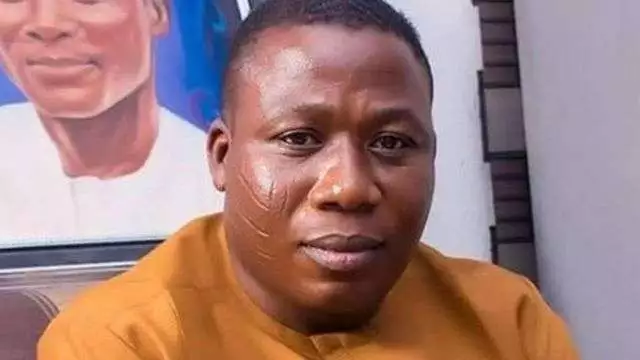
Yoruba warlord, Sunday Igboho gave a vivid account of his burnt property to Journalists on Tuesday saying he must have lost not less than N50 million valuables.
According to him “Around 3.30 am today, my younger ones residing at my old house rushed to my gate to wake me up, saying some bandits came to the house, fired gunshots, broke the gate, and set the house ablaze.
“The two persons at the house managed to escape. By the time I got there, the bandits had escaped. So, we called firefighters to help us put out the fire.”
On why he’s against the criminal herdsmen, Igboho said their atrocities in Yorubaland are preventing peace from reigning.
“These Fulanis are killing our brothers in our fatherland. They’re killing, raping, and kidnapping. All the things they are doing to us are not good.
“That’s why I’m trying to unite our people so that we can chase them away for peace to reign in Yorubaland.
“What I find surprising is that some Yorubas are in support of the herdsmen to set my house on fire. I’m saddened by it. For now, I do not suspect anyone.”
“When they knew they could fight, fire gunshots, and set a house ablaze, isn’t it where I stay that they are supposed to come?
“If they had come to the house where I stay, I would have had evidence for you people (journalists) because they won’t all escape.
“It’s either you meet their dead bodies or meet them with broken legs. I thank God that they applied wisdom by going to a house where they know that I don’t live and destroyed my properties and burnt my house down.”
“The worth of what was destroyed at my house cannot be less than N50 million.
“Those who were at the house are the ones who can give more explanation, because I wasn’t there. What they said was that they came with about five cars. I can’t tell for sure because I wasn’t there.”
Igboho explained further that the incident has been reported to the police and they have commenced investigation.
The house was set ablaze in a suspected reprisal attack. A couple of days back, the Seriki Fulani lost his house and properties, including cars in a blaze, allegedly carried out on Igboho’s behest.
“The Igboho phenomenon deserves some close attention. Sunday Igboho showed up in the fight against criminal herdsmen in Oyo State because of the shocking absence of leadership. The state Governor failed to defend the people’s interest. He did not stand up to the truth like Governor Akeredolu of Ondo state. He provided a vacuum which a Sunday Igboho decided to fill. The failure of leadership from the right quarters has its consequences and this is what we are seeing in Oyo State.”
In the past week, in the South Western part of Nigeria, we have been treated to stories of conflicts in Ondo and Oyo States between herdsmen, identified as Fulani, and the Yoruba owners of indigenous communities. In Ondo state, the issue at stake is the conversion of the state’s Forest Reserves into a criminal space by herdsmen who violate the integrity of the reserves and a hide-out for kidnaping, extortion and killings.
Governor Rotimi Akeredolu affirming his powers as the Chief Security Officer of the state gave a seven-day ultimatum to the herdsmen in the forest reserves to vacate the place immediately. He also directed that the open grazing of cattle on main roads and within the city has been outlawed. The Governor further asked for a proper registration of all herdsmen within the state.
Governor Akeredolu, a Senior Advocate of Nigeria, SAN, has been praised for his courage and assertiveness by Yoruba socio-cultural groups and leaders of thought. He has been condemned by groups and stakeholders from the North of Nigeria who classify his objection as a case of ethnic cleansing.
The Governor insists, however, that his directive is based on security considerations. His ultimatum expired yesterday, the same day that a meeting of South West Governors, their counterparts from Kebbi and Jigawa, and the leadership of the Miyetti Allah Cattle Breeders Association of Nigeria (MACBAN) was summoned by the Nigeria Governors’ Forum, to chart a path for peace and reconciliation.
In neighbouring Oyo State, the people of the South West were faced with a similar situation in areas identified as Ibarapa East, Ibarapa North, Igangan and the whole of the Oke Ogun area. Whereas in Ondo State, the Governor led the protest against the menace of the so-called Fulani herdsmen, in Oyo State, the state Governor, Seyi Makinde, sounded more accommodating.
Despite reports of wanton killings and destruction by herdsmen in parts of the state, the loss of valuable lives and properties, the Oyo State Governor chose to toe a safe, acquiescent path. He ignored the yearnings of those who asked the government – State and Federal- to stop the killings and come to the people’s rescue. He, in fact, was on record as having asked the authorities to arrest and sanction anyone who raised any objections to the situation in the troubled parts of the state.
With the State Chief Security Officer, from whom empathy and action was expected, behaving in such manner, the people of Oyo State found solace in a certain Chief Sunday Adeyemo, popularly known as Sunday Igboho.
Sunday Igboho
Igboho is from Oyo state, precisely from a community known as Igboho. He grew up in the Modakeke part of Ile-Ife. He was reportedly involved in the intra-ethnic conflict between Ife and Modakeke in the 90s, as a warrior on the Modakeke side. Over the years, he acquired quite a reputation as a very powerful man. His critics describe him as an able-bodied man for politicians as he once was for Alhaji Rasheed Ladoja, the bi-lingual former Governor of Oyo State, or they dismiss him as a land-grabber, a label he vehemently denies.
Igboho’s admirers regard him as an ethnic patriot, a defender of the Yoruba nation, a man of justice, an activist and a freedom fighter, who has chosen to stand up for the rights of the oppressed.
The Igboho phenomenon deserves some close attention. Sunday Igboho showed up in the fight against criminal herdsmen in Oyo State because of the shocking absence of leadership. The state Governor failed to defend the people’s interest. He did not stand up to the truth like Governor Akeredolu of Ondo state. He provided a vacuum which a Sunday Igboho decided to fill. The failure of leadership from the right quarters has its consequences and this is what we are seeing in Oyo State.
In Ondo state, there may be other Sunday Igbohos, with as much fire in their bellies, but they did not step forward in a similar fashion because they could see the man they voted into power making an effort to put the people’s interest first.
Akeredolu was challenged by the Federal Government, indeed the Presidency. In a statement, Garba Shehu, Presidential spokesman, tried to teach the Ondo Governor some elementary Constitutional Law. This was widely interpreted as an attempt by the Buhari Presidency to defend Fulani interests. Akeredolu stood his ground. In so doing, he got broad support, from lawyers, community leaders and major Yoruba stakeholders.
By the time his one-week ultimatum to those who had seized control of the Ondo forest reserves expired yesterday, the Oodua People’s Congress (OPC) already offered its services to help enforce the Governor’s directives.
Governor Makinde may well, in the long run, pay a heavy political price for his apparent cowardly mishandling of the current crisis in his state. He is perhaps being careful, but there are certain moments that demand sincerity. He failed the test.
Sunday Igboho took full advantage of the situation. On his own, he visited Igangan and Ibarapa East Local Government Area, without any governmental authority behind him. He had the support of the youths of the area, and also the backing of traditional rulers, one of whom had to pay a ransom to get his son released by kidnappers.
Igboho was reportedly shot at, but bullets we were told, could not penetrate his heavily fortified body. An axe was raised against him, but again, they said it had no effect. He confronted the Seriki Fulani in the community, and asked him to produce the herdsmen who were terrorizing the people so the law could take its course. He gave a seven-day ultimatum. If the criminals could not be produced, he expected the Fulani community to leave the territory. And he promised to return in seven days. And he did.
His demands were not met. The result was mayhem. The home of the Seriki Fulani was set ablaze. His vehicles were torched. He and his family ran into the bush. The Seriki is said to have fled all the way to Ogun State, where we are told a group of herdsmen backed by the military recently lined up recalcitrant traditional rulers and gave them the beating of their lives, for having the audacity to say they do not want Fulani herdsmen in their community.
Igboho, the latest strong man in Yoruba politics is a product of myth, history and the failure of the Nigerian state.
How on earth would any individual openly boast that nobody, not the Governor of the State, not the Inspector General of Police not even the State Commissioner of Police can arrest him, and get way with the temerity?
During the weekend, Garba Shehu using the platform of the Presidency, announced that the Inspector General of Police had ordered the arrest of Sunday Igboho. Igboho laughed it off. He said he was waiting for anyone to dare arrest him. In the end, nobody did.
In fact, the Oyo State Commissioner of Police who should have carried out the directive, ended up having a meeting with Sunday Igboho! He proved untouchable. This merely deepened his myth. The man and his supporters talk about Igboho’s formidable spiritual prowess. He even wears a coat of amulets to Church. He can command guns to appear and disappear at will.
Nobody knows how much of that is true or not, but Igboho has managed to capture the public imagination. He won’t be the first of his type. When the state fails the people, people like Igboho emerge to provide leadership. He is again a symbol of the mistrust at the heart of the Nigerian arrangement: like Isaac Adaka Boro in the Niger Delta in the 1960s, Odumegwu Ojukwu defending the interest of the Igbo in 1967 and beyond, Ken Saro-Wiwa leading Ogoni nationalism and the cause of environmental justice in the 90s, Dr. Frederick Fashehun and Ganiyu Adams of the Oodua People’s Congress (OPC), Nnamdi Kanu of the Independent People of Biafra (IPOB), and all the aggrieved persons from Southern Kaduna the Middle Belt, Adamawa and elsewhere who believe that they have been served badly by Nigeria, for both ethnic and religious reasons.
Of all the many ills that afflict Nigeria, the most prominent, recently, has been the conflict between indigenes and settlers, and specifically, between pastoralists and farmers, and the animosity between both over land and access to resources. It is an old, historical problem tied to ethnicity, religion, the politics of space and primordial sentiments. This conflict has caused so much mayhem in the past, exactly at those moments when the state was complicit in promoting one side against the other, and when the politics of proximity was privileged over the national interest or the objectives of peace and stability.
It is a double-edged sword, for those who end up playing the politics of proximity end up short-changing their own people.
The Fulani question which is now being played up is related to this. The people of Fulani stock have lived across Nigeria, in different communities for more than a century. Cattle rearing is not new. Cattle herders have lived amongst other Nigerians for as long as anyone can remember, and so attractive is the business that there are closet cattle owners among virtually every Nigerian group.
The real owners of the cattle are not the stick-wielding, now gun-wielding herders, who add banditry and kidnapping as side vocations, the real owners are the big men in high places – and they are not all Fulani- for whom the ownership of cattle is business, and a source of prestige.
How does this cross-ethnic elite class behind the modern mutation of the business fuel the conflicts? This is a question we need to interrogate. Who provides the arrogant and criminal-minded herdsmen with guns, or state protection or the kind of oxygen that blows into their heads and grants them the confidence to boast that they are in charge of Nigeria, every land and every resource?
Nigeria’s history has been one of constant tension between push and pull factors, centripetal and centrifugal forces which often threaten to tear the union apart. It will be remembered, no matter what government spokespersons say that the Buhari administration has managed to create an impression that it is pro-North, pro-Islam, and pro-Fulani and that anything to the contrary is not likely to attract the same empathy.
This is the crux of the matter. In Igangan, Sunday Igboho was told that only President Buhari can ask the herdsmen to leave Oyo state. In Ondo state, similar sentiments were expressed. To an average Yoruba audience, this is bound to throw up primordial attachments about the ownership of land.
The Yoruba have not forgiven the Fulani and Afonja, who betrayed the Yoruba race, for the implantation of a Fulani Emirate in Ilorin.
The battle of Osogbo (1840) which was where the Yoruba, led by the Ibadan army, put an end to Fulani incursion into Yoruba territory is still referred to as if the war was fought yesterday.
Any talk about the Fulani laying claims to space and authority in Yorubaland is bound to cause enormous tension. It should be understandable therefore why Sunday Igboho has received praise from key Yoruba figures, Governor Akeredolu has various socio-cultural groups behind him and, the Alaafin of Oyo has penned an open letter to President Buhari.
Those who criticize the Buhari administration for openly supporting the Fulani agenda have a lot to point to: the seemingly open and undisguised support for Miyetti Allah, the aborted RUGA settlement idea, the justification of grazing routes, which has now been countered afresh with a detailed reference to a 1969 judgement by late Justice Adewale Thompson of the Abeokuta Division of the High Court (as he then was) and the repeated failure of the government to bring errant herders involved in criminal conduct to book.
The arrogance of certain commentators has not helped matters either: how dare anyone claim so insensitively that every piece of land in Nigeria belongs to the Fulani? Perhaps there are certain elements out there stoking the embers of crisis for their own purposes. It is also not impossible that there are so many cattle herders out there, who are not even Fulani, but who hide under the ethnic label even when they cannot speak a word of Fulfulde. But when government fails to deal with the obvious challenges of poverty and criminality, and considers the defence of an ethnic group a major priority, this is what happens – it widens the gaps among the people, and encourages the kind of resort to self-help that is represented by the Igboho phenomenon.
It has been said that Sunday Igboho has political ambitions which probably explains the opposition to him by the incumbent Governor of Oyo state. And that is part of the problem: we play politics with everything in this country.
But those who lost their loved ones will not remember the politics of it. They will remember their loss and the pain that they now live with: the women who were raped, the children of late Fatai Aborode, Ph.D who have lost a father, the farmers whose farms were destroyed by cattle-rearers, the families that paid ransom and still had to pick up the corpse of their loved ones by the roadside, the many untimely widows and orphans in Ondo, Igangan, Imo, Southern Kaduna and elsewhere. Will they ever get justice?
Former Minister of Education and Presidential Candidate at the 2019 Election, Obiageli Ezekwesili has dismissed the administration of President Muhammadu Buhari and the leadership of the National Assembly as disturbing.
Ezekwesili in a tweet on her Twitter Handle said that she detests everything about President Buhari’s leadership style, noting that she is neither bitter nor harbor hate towards the President, but just hates his style, and what he has reduced Nigeria to.
“The congenital ethnic chauvinism and condemnable clannishness of Muhammadu Buhari as president of a multi-ethnic country like Nigeria has deepened the gullies of disagreement and disaffection among people, ethnicities, regions, religions, and classes. It is detestable leadership. SAD, she tweeted.
She described Nigeria as dangerously sitting on a tinderbox because the President lacks the minutest modicum of “The-Leader -as-Unifier” in his leadership style.
Ezekwesili also said she has little faith in the leadership of the National Assembly to call the President to order.
“They have proven themselves to be absolute lackeys and genuflecting sycophants of Muhammadu Buhari, she said.
She then urged citizens to get ready to take up responsibility for steadying the country, as the people in leadership positions have failed the citizens.
Former Deputy National Publicity Secretary of the All Progressives Congress (APC), Comrade Timi Frank, on Tuesday, described as irresponsible, the statement by the Information Minister, Lai Mohammed, that Nigeria is safer under President Muhammadu Buhari than it was before him.
Frank, in a statement in Abuja, dismissed the Minister’s claim saying Nigeria is today beset with the worst form of insecurity in its history.
He was reacting to a statement by the Information Minister, where he boasted at a news conference in Abuja, that ‘despite the rising security challenges facing the nation, that Nigeria is still safer under President Muhammadu Buhari than what he met on assumption of office in 2015.’
To the former APC spokesperson, the Minister’s claim is misleading, false and irresponsible.
The Bayelsa- born political activist insisted that the country is not only faced with threats from Boko Haram but that the killings, kidnappings and communal clashes orchestrated by killer herdsmen have worsened under Buhari.
He lamented that the APC government led by Buhari has unfortunately emboldened the herdsmen to continue their heinous crimes against innocent Nigerians by using the instrument of state to shield them from prosecution.
He noted that the “refusal by the security agencies to arrest and prosecute the killer herdsmen smacks of complicity.”
According to him, “How can you say, with such irresponsible effrontery, that a country whose people are being killed in hundreds on daily basis and their properties worth billions destroyed by a group named by the Global Terrorism Index as Africa’s number one and the world’s third deadliest terrorist group, is safer under Buhari?
“There is no region in the country where these herdsmen reside that there are no killings, raping of women, kidnappings and destruction of farm lands. The most recent is in the South West.
“Nigerians can recall what these murderous herdsmen did in Benue state, where they killed scores and declared war on the people. The kidnap of over 350 Kankara school boys in Katsina state and the payment of huge ransom by Government to secure their release is a recent memory.
“Is it the terrorist Boko Haram group that the Buhari Government has contained as promised? Was it not under Buhari that insurgents abducted 110 schoolgirls from Dapchi, Yobe State?
“Till date, killer herdsmen go about with weapons, killing people, raping women and destroying farm lands with their cattle and no action has been taken by Buhari to dissuade or stop them.
“What makes it even worse is that when some of them are arrested and handed over to the Police, they are soon set free. This shows that even the security agencies are complicit. They are apparently benefiting from the rising spate of insecurity in the country.
“I, therefore, call on the International Community to come to the rescue of Nigerians. I also urge State Governors to rise to the occasion and ensure that the lives and property of their people are secured.
“I call on Nigerians to take the security of their lives and property in their hands,” he declared.
Buhari had swept into office in 2015 with a promise to keep Nigeria safe. Sadly, that has not happened.
The B117 variant of COVID-19 found in the United Kingdom (UK) is in Nigeria, the Presidential Task Force (PTF) on COVID-19 Control has revealed.
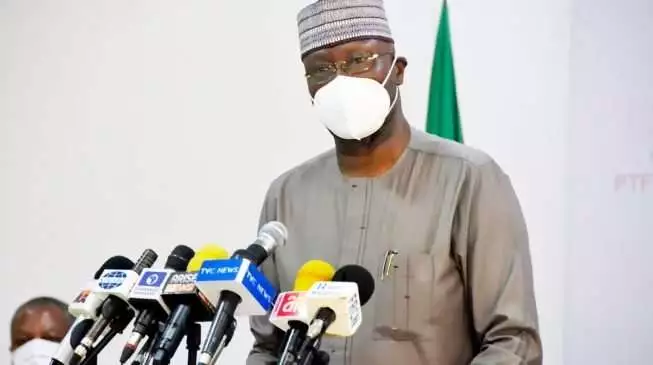
PTF Chairman and Secretary to the Government of the Federation (SGF) Boss Mustapha who announced this, expressed concerns on the increasing number of COVID-19 cases and deaths in the last one week.
According to him, the PTF has been monitoring developments around case management, infection, deaths and new trends.
Speaking on the strain in Nigeria, the SGF explained that four persons had been diagnosed with it, adding that while three were travellers from Nigeria to other places, the fourth cases was discovered in the country.
Mustapha said: “Our Scientists have been sequencing the variants of the virus.
“There have been reports of cases with the B117 variant strain, first reported in the UK, found in Nigeria. Three of these were in travelers out of Nigeria and one in a resident.”
He said the PTF plans to take further containment actions to slow down the spread of the virus, with special attention to be paid to high-burden council areas.
He said: “The daily statistics for Nigeria as at 24th January were as follows: Cases – 121,566; Tests – 1,270,523; Active Cases – 22,834 (19.4%); Discharged – 97,228;Deaths – 1,504.
“Looking back over the seven days ending 23rd January, I also wish to give you the following statistics: Tests – 58,974; Cases – 11,179; Test Positivity – 19.0%; Deaths – 62; Case Fatality Ratio – 0.6%; Active: 23,568; % Active – 19.4%
“All these numbers represent increases from the previous seven days and we are looking at taking further public health containment measures in Local Government Areas that are considered high burden.”
Mustapha explained that though the five weeks of observance for guidelines introduced for the third phase of the eased lockdown had expired, the set of measures assembled for the period would be sustained for another month, citing increasing numbers as reason.
Mustapha said: “The PTF is improving on the International Travel Portal to minimize the challenges passengers keep encountering. Similarly, it is reviewing the guidelines on the implementation of phase three of the eased lockdown which is due to expire today.
“In view of the fact that our numbers are not abating, all extant measures prescribed in these guidelines are (subject to some modifications) extended by a period of one month with effect from Tuesday 26th January, 2020.
“These measures, by way of reminder, include: advisory to the sub-national entities to enforce adherence to non-pharmaceutical initiatives already well publicised; sanctions against international passengers that failed to show up for day-seven post arrival testing.
“Implementation of the National Testing Week Strategy (450/774 tests); sustaining the hours of curfew; and the decision to direct government employees on GL 12 and below to work from home till the end of January.”
On the plans to acquire and distribute COVID-19 vaccines, he again assured Nigerians that there was no need for hesitancy as only trustworthy and safe vaccines would be allowed in the country.
He warned against patronising unverified sources for the vaccine.
He said: “The effort to access and deploy vaccines is progressing and as already announced by COVAX, the initial 100,000 doses Nigeria is expecting will now arrive in the early weeks of February.
“We wish to assure all Nigerians that the vaccines will be safe and effective when eventually it is deployed. We enjoin everyone to join in the campaign to eliminate vaccine hesitancy.
“I have to however, advise all Nigerians that the only source of vaccines that is safe and effective in Nigeria is through the channels of the National Primary Health Care Development Agency (NPHCDA).
“Please, do not patronise any one hawking or marketing vaccines. The Hon Minister of Health and the ED-NPHCDA will elaborate on the vaccines issue.”
He expressed delight in the gradual improvement so far observed with case management, even as he spoke of top gear preparations for the upcoming national testing week.
He spoke of plans to bring back some 600 Nigerians deported from Saudi Arabia.
Mustapha said: “Nigeria is currently working with the Government of the Kingdom of Saudi Arabia on the deportation of 600 Nigerians. The deportees are expected to arrive in two batches on the 28th and 29th January, 2021. All necessary arrangements to ensure that these Nigerians are properly received are being put in place.”