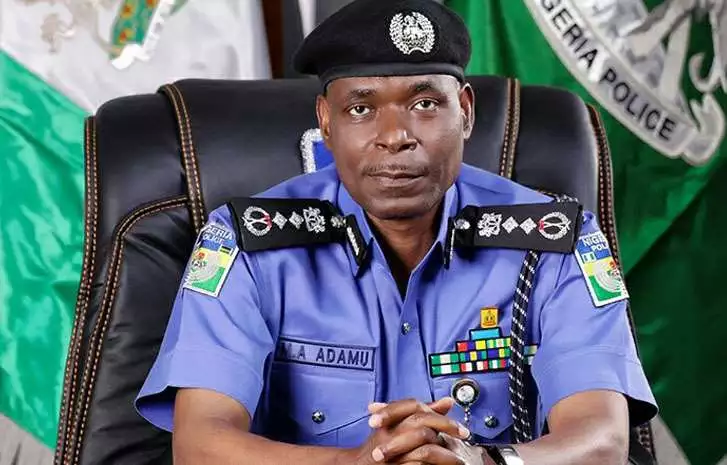
The Inspector General of Police, IGP, Mohammed Adamu, has instructed his lawyer to institute a legal action against an Online publication, SaharaReprters. The IGP said the publication not only lied against him, but libelled him by writing that he paid a whopping sum of two billion Naira, to secure an extension in office.
In a statement signed by its Spokesman, CP Frank Mba, yhe Police High Command described as untrue, unfounded, defamatory and libellous, the publication by Sahara Reporters, dated February 07, 2021, which alleged that the Adamu paid over two Billion Naira for the tenure extension.
Said Mba, “The Force wishes to state categorically that the extension of service of the IGP was strictly the prerogative of the President and was never paid for as maliciously reported in the publication.
“The insinuations also by Sahara Reporters that the IGP did not “celebrate” his extension smacks of ignorance and a pathetic misplacement of priority. The extension does not call for merry-making or celebration but a time for more work, rededication to duty and selfless service to the nation.
“The IGP, while assuring the nation of an unwavering commitment by the Force under his leadership, to improved service delivery, safety and security of the citizenry, enjoins members of the public to disregard and discountenance the publication by Sahara Reporters as evidently untrue and unfounded.
“The IGP is undistracted and the Force remains motivated and committed to delivering on its mandate, especially the task of neutralizing current and emerging internal security threats.
“Meanwhile, the IGP has directed his legal team to commence legal actions against the online publishers.”
President Muhammadu Buhari had extended the IGP’s tenure by three months to enable him, the President, according to the Minister of Police, make an appropriate choice for a replacement. Adamu was to have retired on February 1, the day he clocked 35 years in service.
A socio-political group, Oodua Action Movement (OAM), Monday, condemned the statement credited to an Islamic Scholar, Sheikh Ahmad Gumi, describing the groups agitating for Oduduwa Republic and Biafra as the same with Boko Haram terrorists.
OAM described Gumi’s statement as reckless saying “There is no going back on the demand for autonomy for Yoruba Nation which would allow the region to manage its resources and develop at its own pace.”
The renowned Islamic Scholar spoke in an interview with BBC pidgin on Saturday while reflecting on the insecurity situation in the country.
A statement by OAM Global Coordinator, Otunba Demola Edward, condemned what he called the provocative statement from Gumi.
“Gumi’s statement was nothing short of provocation because groups agitating for Yoruba independence or autonomy have nothing in common with Boko Haram and Fulani bandits.”
According to the group leader, Boko Haram is a world condemned terrorist group, responsible for indiscriminate killing, raping, and kidnapping of innocent people including women and children.
Edward emphasised that with the present spate of insecurity and maladministration of the affairs of Nigeria, there is no better alternative than Yoruba and other tribal groups to fight for autonomy in order to develop.
He stressed that Yoruba traditional rulers and leaders should all come together for the struggle, as unity among Yoruba is a sine qua non for success.
He, however, commended Chief Sunday Igboho for his efforts to clean our land of killer Fulani Herdsmen, saying that Yoruba leaders still have a lot to do as these Killers have already taken over some towns in the Oke Ogun area and driven away residents while some have been killed.
He expressed concern over the recalcirant posture of President Muhammadu Buhari, stressing that Nigeria is no more a united entity.
“How many Nigerians nowadays are committed to the one Nigeria agenda? People are fed up with the present marginalisation and we as a group, will continue to champion the breaking of the entity for peace to reign.
“We can never be miscreants as Gumi believed, no tribe is superior to others, our vision and mission do not tally with that of Boko Haram terrorists, we are not killers, we are fighting for our own rights, and no going back on the emergence of Yoruba Nation.”
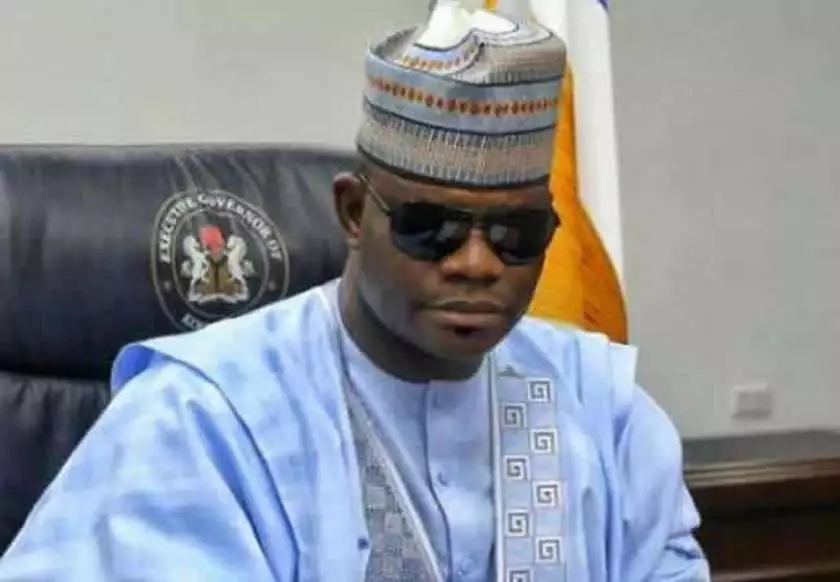
Governor Yahaya Bello of Kogi state has yet to declare his interest in the 2023 Presidential election despite the clamour by some groups in the country for him to run for the highest office in 2023.
However, from all indications, the youthful Governor has not left anyone in doubt that he’s among politicians in the ruling APC positioning themselves to succeed President Muhamamdu Buahri when he completes his term in two years time.
Bello first rode to the high profile office of a Governor while in his 40s in 2015. He became the Governor following the death of Abubakar Audu, the clear winner, before the final collation and announcement of the election result.
Bello, a former PDP governorship aspirant was later picked by APC as its candidate, in the bye election conducted by the Independent National Electoral Commission, INEC. He won in controversial circumstances. Many APC leaders in the state refused to support him.
Since he became the Governor of the Confluence State, as Kogi is called because it was the State that Nigeria’s most popular Rivers, Niger and Benue, met, the state’s helmsman has done his best to bring development to his people, sometimes in a way that draws criticism from members of his party and the public.
His comments on topical national issues have not helped matters, putting him on the spot many a time.
Therefore, when he recently told his people that the COVID 19 vaccines were meant to kill them, only a few Nigerians were surprised at his familiar tirade, more so, after he had earlier said the deadly virus does not exist.
The second wave of the virus is ravaging the country, with scores of infections recorded daily by the National Center for Disease Control, NCDC. As a way out of the viral infection, the Federal Government earmarked N400 billion for the purchase of vaccines from Pfizer and other approved drug manufacturing companies in the United States and Europe.
In order to boost the confidence of many Nigerians to take the vaccine, Governor Kayode Fayemi of Ekiti state and Chairman of the Nigerian Governors Forum, NGF said recently that President Buhari and the 36 state Governors will be the first to receive the vaccine jab. This, he said, will eliminate reservations by some persons about the safety of the vaccines.
Fayemi, who addressed journalists in Abuja after meeting with President Muhammadu Buhari, last month said the Governors will also take the vaccines on live television. “We too will like to demonstrate to our citizens that we believe that vaccines would work,” the NGF chairman said.
The Ekiti helmsman position, however, is different from that of Governor Bello who claimed that the vaccine is meant to kill Nigerians and has warned his people not to take the vaccine whenever it is rolled out by the Government. He said this recently during a rally held by his party in Lokoja, the state’s capital.
Rejecting the vaccines, Bello said covid 19 vaccines manufacturers were too hasty in developing the vaccine, therefore, they should not be trusted, adding that he found it unbelievable that vaccines could be produced for the virus, within a short period when there is no cure for Cancer, HIV and many other diseases troubling mankind.
Bello said “Vaccines are being produced in less than one year of COVID-19. There is no vaccine yet for HIV, malaria, cancer, headache and for several other diseases that are killing us.
They want to use the (COVID-19) vaccines to introduce the disease that will kill you and us. God forbid.We should draw our minds back to what happened in Kano during the Pfizer polio vaccines that crippled and killed our children. We have learned our lessons.
“If they say they are taking the vaccines in the public, allow them to take their vaccines. Don’t say I said you should not take it. But if you want to take it, open your eyes before you take the vaccines.”
The Governor, in his New Year broadcast, had said it would be irresponsible of his Government to see COVID-19 as a definer of 2020, in response to suggestions by some members of the Presidential Task Force, PTF that the country could shut down if Nigerians failed to live responsibly and follow safety protocols necessary to curb the rapid spread of the virus. Bello described the suggestion as a “mass heysteria’, and asked Nigerians to ignore the PTF under the leadership of Boss Mustapha, the Secretary to the Government of the Federation, SGF.
At the peak of the first break of the virus, last year, the Kogi Governor had shocked not a few Nigerians after he said the virus does not exist. To underscore his point at the time, he refused NCDC officials a visit to the state to ascertain the number of persons carrying the virus. He also did not allow the Government Agency to build a laboratory, where residents would be tested for the virus, as had been done in other states in the country, like Lagos where ultra-modern infectious disease laboratories had been built to test residents.
Bello had also rejected the N1.1billion support fund from the World Bank because of his belief that COVID-19 is a “glorified malaria. “I rejected the World Bank fund because I do not believe in COVID-19. Even the five cases reported in Kogi State is an NCDC creation, he said.
When the state’s Chief Judge, Justice Nasir Ajana died of covid 19, Governor Bello debunked the claim that the Judge died of the virus. At a point, the matter became a war between him and health workers in the state, who accused him of trying to destroy their work.
Lamenting the absence of NCDC laboratory in the state, in May, last year, the Chairman, Nigerian Medical Association, NMA, Kabir Zubair, said the situation has made it impossible to determine the number of positive or negative persons in the state, apart from exposing health workers to danger as there’s no way to determine whether a patient has contracted the viral disease or not.
Contrary to Governor Bello’s claim that nobody was infected in the state, the NMA chairman said doctors had been receiving suspected COVID-19 cases at the Federal Medical Centre in Lokoja.
Zubair said: “Although no confirmed case has been reported in Kogi State till date, a number of suspected cases have been attended to at FMC Lokoja and members of ARD are among the first set of people to attend to these patients and as such, they might be exposed to the highly contagious COVID-19.
“The NMA is aware that they have become agitated and apprehensive in the last few months due to the community spread of COVID-19 in Nigeria. As a Clinician, standard practice demands that the moment you have a clinical suspicion of infectious diseases, the ideal thing is to carry out laboratory confirmation.
“COVID-19 is a highly infectious disease responsible for the ongoing global pandemic. In Nigeria, new cases are reported daily and community spread is accelerating. This is the reason why members of ARD are agitated as testing for COVID-19 has remained a challenge in the state.”
On May 8, the NCDC eventually named the state among other states in the country that recorded new infections. Five persons, the disease centre said, had contracted the virus, even though infectious disease experts insist that more cases could have been detected, if the State Government allowed NCDC officials unfettered access to carry out tests among residents to determine their status.
The matter took another dimension when his colleague Governors rebuffed the Kogi helmsman, after his conspiracy theory that the vaccine was meant to kill Nigerians and Africans.
While responding to Governor Bello on the issue, Governor Fayemi warned his counterpart to stop making careless statements capable of rolling back gains recorded in the fight against covid 19.
“On the ill-fated pronouncement made by a member of the forum regarding the COVID-19 vaccine in a national daily, the forum totally and categorically dissociated itself from the statement. The forum emphasized that it will continue to be informed and guided by science and will ensure that every decision it takes will help retain public and professional trust and is not compromised by conflicts of interest,” the NGF chair said.
Just a few days ago, the NCDC flagged the state among 11 other highly infected states in the country, and advised Nigerians to be wary of visiting the State.
But, despite his controversial nature, Governor Bello is said to be among those that have the ears of President Buhari and his influence looms large in the ruling APC, the party in which he intends to achieve his presidential ambition.
Those in this school of thought cited a father and son relationship between him and the President. The Governor has severally described Buhari as his mentor and father.
The camaraderie between the Governor and the First Family had been further reinforced in 2019 when the First Lady, Aisha Buhari, boosted his campaign for re-election after many APC leaders refused to support him, analysts say.
His closeness to the President has, also, showcased him as a power broker in the ruling party, considering that he was recently appointed as the Chairman of the ongoing APC national registration process, by the party’s Caretaker Committee Chairman, Governor Buni of Yobe state, watchers of the state said.
“That he has the President’s ears gives him a huge leverage in the APC, and that goes a long way in a country where the President sneezes and others catch cold.
Governor Bello, his supporters say, is qualified to run for president notwithstanding his shortcomings. Already, a number of groups in the State are rooting for him, including the APC Senators from the State.
Said an APC, Governor Bello is qualified. It is left for Nigerians and members of our party to reject him or support him.”
The question is whether the controversial governor possessed the qualities required to lead the country, particularly in the face of his antecedents since he became governor over five years ago. What his critics are saying is that Governor Bello is the opposite of what a public servant should be, in his avowed quest to become an enforcer in Kogi and national politics. A pointer to this fact came to fore during his re-election campaign two years ago.
The state was almost turned into a war zone as the supporters of the governor, with alleged tacit support from him unleashed on the state untold violence. Those that witnessed the pandemonium said what happened has further cast a shadow on the governor as a peaceful politician, at a time that the country needs bridge builders that can bring everybody together.
For instance, his opponents cited the killing in cold blood of Salome Abuh, a PDP stalwart on November 16, 2019 by suspected supporters of Governor Bello while celebrating his victory in the governorship election. Abuh, 60, the PDP women leader of Ochadamu Ward in Ofu Local Government Area, was sleeping in her home when APC thugs set her building ablaze.
Ahead of that election Governor Bello’s supporters had unleashed violence on the state with many of them threatening his opponents with death if they stood on his way from being re-elected into office for a second term. Critics of his government said the political violence was inflamed by the utterances of the state governor and his refusal to tame violence tendency among his supporters.
For instance, a group of ladies in the governor’s campaign were noted for chanting violent songs throughout the period of the campaign. While this was on, the governor or his party did nothing to stop his supporters, thus reinforcing his belief that the election must be won by all means.
Delivered in a local dialect, the highly melodious song of the Kogi ladies had said, inter alia “Who is saying that Yahaya will not be Governor? Dem go hear am ta-ta-ta-ta-ta. What are you saying? What are you talking about? What a tyranny4+4. ‘Tatatatata’, according to those familiar with the songs, is the rhythm of a rifle.
Bello will further reinforce his belief in violence after he re-echoed the chant when he led his party campaign for the reelection of Governor Oluwarotimi Akeredolu of Ondo state a few months after.
“It’s Aketi that we want as governor. What are they saying? Clean dirty away. What are they talking about? if you don’t want him as governor, them go hear am ta-ta-ta-ta-ta-ta-ta,”the controversial governor chanted with supporters in Akure during campaigns to re-elect Akeredolu.
One prominent politician in the state, Natasha Akpoti is not likely to forget Governor Bello in a hurry. On November 12, barely 48 hours to the governorship election, the SDP governorship candidate was attacked by the governors supporters, allegedly led by a relation of Bello Chief of Staff, at a peace meeting organised for governorship candidates by the Independent National Electoral Commission, INEC. The irate thugs later went ahead to set the SDP secretariat ablaze.
“The state had not witnessed such violence since its creation many years ago. It’s unimaginable, the rate at which people were killed in the desperate means to win elections. Apart from prominent opposition politicians that were either killed or maimed, the security agencies are yet to give the exact number of innocent people that were caught up in the mayhem that reigned supreme during that infamous election, Saheed Adebambi, a PDP stalwart said.
Meanwhile, these ugly testimonies against Bello’s trajectory as Kogi governor appear not enough to deter his supporters who are asking him to make his bid for the highest office in the country. Some groups in the country have openly declared their support for his presidential ambition in obvious rebuff of those saying he’s not qualified to run for president.
Three weeks ago, a youth group, under the aegis of GYB2PYB gave the Kogi helmsman 14- days ultimatum to declare his interest in the race. While presenting a letter of their request to the governor, the National Coordinator of the group Oladele John Nihi, said their call was necessitated by the “exemplary leadership of the governor in Kogi State.”
Barr Aloy Ejimakor, the Special Counsel to the Indigenous People of Biafra, IPOB, in this interview with CHINEDU AROH, says the Eastern Security Network is formed to checkmate ‘terrorist herdsmen’ and not those doing legitimate businesses in Eastern Nigeria. The excerpts.
From your observations, is ESN against all kinds of grazing in the southeast?
From what I know as of Counsel, the ESN is not interested in law-abiding Fulani herdsmen. The distinction is clear. Their intention is to flush out violent-prone Fulanis and others that live in forests. When you come into a community to graze on their land, if your intention is pure, you will not live in forests. Come out in the open so that people can know who you are. Even if you want to live in forests, why not go to traditional rulers, local government chairmen, vigilante leaders and youth leaders to state your reasons. But here, the herders excommunicate themselves and become hostile to their host communities. What do you want the people of that area to do? They have to take action. In my understanding, that’s what ESN is all about. In theory, it may be misunderstood but in practice, it is merely a confluence of local vigilantes, all geared to the making of a regional outfit that caters to Eastern Nigeria under a central command.
In my time as a child, I have seen Fulani herdsmen grazing in my community and mixing peacefully with people. They were all well known to their hosts. They have families and don’t live in forests. As we speak, cattle are still being moved across Nigeria. Let us not pretend that we don’t know the segment of Fulani that is causing the problem. There are good and bad ones. And the North itself has said that the bad eggs amongst or the terrorist elements are mostly foreigners from the upper Sahel. ESN, Amotekwu, and other regional security networks are only concerned about the terrorist elements. So, I think such initiatives deserve commendation instead of the hostility that you see coming from the authorities.
Many people miss this important point that a substantial number of these herdsmen are not from Nigeria. What happens to our sovereignty as a people? They probably moved into Nigeria without a visa. They are therefore illegal immigrants that forcibly or surreptitiously breached our borders. Not just that, they graze on somebody’s land without permission, and are prepared to kill their host if he dares resist such brazen criminal trespass, and then they think they must live in your backyard forest and you are not supposed to say anything. All these transgressions just because the federal government of Nigeria chooses to say nothing, do nothing! I have not seen any targeted policy of the federal government to help these farmers that are the victims of these terrorists. But if herders get in trouble with local communities, that is when you hear the FG say something, and it’s often in favour of the terrorist herders. That’s unfair because you are stoking a situation where communities in Nigeria are propelled to constitute themselves into self-defence groups. That is exactly what ESN has done even without legislation, which was not forthcoming. Yes, in the West they have legislation, but legislation or not, both are the same because they are aimed at the protection of their vulnerable communities and locales. So, to this extent, ESN should not be perceived as an offensive outfit.
Eastern Security Network
What is the position of the law on open grazing?
I speak from the standpoint of what is extant. Before you can graze, it means one must be a cattle rearer or a herdsman. The herdsman would have to enter another person’s land. If the herdsman is grazing on his own land, it does not implicate any legal issues because it is his land. But when you go upon another man’s land to graze or do anything without his permission, you are committing trespass, in which case open grazing is not an exception. There is no provision for herders to enter into another man’s land without permission. And trespass can either be civil or criminal. Many think that trespass is only a civil matter where you go to a civil court to claim damages, and have the trespasser expelled from the property. It is much more than that. And because these herdsmen are coming from northern Nigeria, I will give you the specific law of Northern Nigeria on point. Section 342 of the Penal Code, that is applicable to all the states of northern Nigeria from where these Fulani herdsmen came, provides as follows: ‘Whoever enters into or upon property in the possession of another with intent to commit an offence or to intimidate, insult or annoy a person in possession of that property, or, having lawfully entered into or upon that property, unlawfully remains there with intent thereby to intimidate, insult or annoy such person or with intent to commit an offence, is said to commit criminal trespass’.
Criminal trespass is punishable by arrest, arraignment, prosecution and imprisonment. This is northern Nigeria where these herders are coming from. There are other laws that border on malicious destruction of property or those that speak to disorderly conducts that can be enforced as a check on open grazing.
Additionally, people have cited the 1969 ruling by Justice Adewale Thompson. That ruling, as far as I know, was never set aside or varied, hence it is still the law of the land. The ruling was made in the context of farmer-herder crises. That is what we used to have then. What we have now is herder-terrorism. Anybody calling it crisis is downgrading it. Adewale’s court heard that it is the custom of the Fulani to move cattle from place to place, and graze openly. The judge ruled that if that is the custom, it is a bad one because it is against public policy; that the custom has the tendency to lead to breach of law and order and unconscionable destruction of another’s property.
That judgment is sound because it is consistent with the common law of Nigeria that says that any custom that is against public policy shall be set aside. A custom is not cast in stone. Nigerian laws only allow good customs. Bad customs like killing of twins are no longer allowed. That something is a custom does not automatically make it legal.
In the Fulani herders’ case, the judge ruled that the custom is repugnant because they are not grazing on their land, but on another man’s land, and it is causing problems between them and the owners of the land. That is a judicial pronouncement against open grazing and it still good law.
I have not seen any situation or news around Nigeria where police went into a land where herders were grazing without permission and expelled them from there. That is why citizens are now inclined to what the law calls ‘self-help’. Everybody in Nigeria has a right to self-defence. It is a universal right, including in Nigeria where it codified in our laws.
If a herder is in the process of attacking you, or your loved ones, or destroying your property, you have the right to use equal force to expel that person from your land. That right is inalienable. The law does not expect you to sit and be killed by your assailants. If he is assaulting you with a gun, the law gives you the right to repel him with a gun if you have one. The law didn’t tell you to stay, pray and die.
Most cases where herders got killed happened in an atmosphere of self-defence. In general law, there is what is called causation: what led to the violence in the first place. They call it farmer-herder crises. That is a lie. The farmer does not go to the herder; it is the herder that goes to the farmer. My point is that if the herdsman did not leave his location from wherever and came to the farmer’s land, there won’t be any Fulani herdsmen’s terrorism. It is terrorism because their activities have made the world declare them the fourth deadliest terrorist organisation in the world even though the Nigerian government is not following up to do that.
But if they stay in their locale and graze upon their own land or upon the land allowed by the government or individual owners of the land, there won’t be any crises. The crisis is fed by herders leaving their territory and breaching upon another person’s land, either in northern Nigeria or southern Nigeria. The moment they stop doing that, there won’t be any more crises.
What is the way out?
The solution is simple. If the government wishes, it can step in just like it is already giving help to the agricultural sector or it can leave it to be regulated by the free market. It can create ranches for the herders. Think of the Obudu Cattle Ranch built by Dr Michael Okpara way back in the 1950s. Herders can ranch in northern or southern Nigeria if they want. They should buy land or seek allocations from state governors for ranching. Lands in Nigeria are either bought, leased or allocated by state governments under the Land Use Act. When the government is not telling or forcing them to do that, but allows them to roam wild, it creates a situation where citizens would assert their right of self-defence. People that do genuine businesses do not live in forests. They rent places and conduct their businesses with the appropriate leave and licence. Herders should not be an exception.
Respected Islamic cleric, Sheikh Ahmad Abubakar Gumi, has lately been mounting campaigns for amnesty for murderous bandits. He has also been meeting with them in their forested hideouts. This past weekend, the Sheikh went beyond the bandits; he looked south and labeled Yoruba and Igbo youths demanding security, equity, restructuring and true federalism as secessionists who are no better than Boko Haram. The cleric grouped those southern activists with the Boko Haram while bandits, to him, were “insurgents” with “genuine concerns and grievances.” Gumi told BBC pidgin that southern people protesting marginalization are miscreants who “are all the same group of people with Boko Haram.” He submitted that “Yoruba leaders and Igbo leaders should take care of their miscreants as we are handling herdsmen and Boko Haram which are miscreants in the north.”
The credentials of the man who said the above interests me. This Sheikh Gumi is not your run-of-the-mill Northern Nigeria preacher. He is a well-prepared man built on solid education. He was at the Ahmadu Bello University (ABU), Zaria, to read medicine. He was at the Nigeria Defence Academy (NDA), Kaduna; he left the army as a Captain. He was at the Umm al-Qura University, Saudi Arabia where he studied Islamic Jurisprudence. His records say he is an ethnic Hausa. I have followed his latest interventions in the insecurity wracking the north west. The offerings he is giving the nation worries me – considering the stature of his credentials.
He is tasking Nigerians – the victims – to “embrace peace” and allow the bandits “to have a share of the national cake.” Murderous bandits are the focus of the Sheikh. I have not heard his word for the victims.
In the closing months of 2018, my primary school teacher lost his police-officer son in a Zamfara forest. The officer from Osun State was drafted to the north-western state as part of a police squadron battling banditry there. I was with my teacher in January 2019. It was supposed to be a happy reunion of teacher and pupil but it was a condolence visit. “The bandits of Zamfara shot him in the head,” he told me, pointing at the right side of the head. “We buried him in his new house over there. He didn’t sleep a day in that house.” Police authorities gave the parents a hundred thousand naira, the old couple said they added a hundred thousand more to bring the corpse of their son home for burial. My teacher spoke as if he wanted to say more but the sorrow of a father choked the words from coming out. I changed the topic. The old man did not survive the trauma; we lost him a few months later. As I looked at the bandits turning out in full regalia, meeting Sheikh Gumi last week, my mind’s eyes scanned the faces in search of the murderers of my teacher’s son. My teacher sweated and struggled to educate and train his son to a responsible, useful adult but that son was shot by children of those who did not see any need to educate their own.
The Chinese are very wise people. Their ancestors taught them how to dominate the world using the values of corn, trees and knowledge in proverbial terms. When planning for a year, they were told to plant corn; when planning for a decade, they were taught to plant trees; when planning for life, educate the people was the counsel. There is no society that followed the above advice that has failed to conquer the world around it. Again, every people in history who chose ‘corn’ and scorned education has ended up as a curse to its era. Northern Nigeria is a super spreader of sorrow and tears across the country. I have just told you of my old teacher’s share of what the north does daily. There are millions of others grieving silently in their homes in the north, in the south. I remembered my teacher and his slain son when I saw the bandits of Zamfara in their full regalia of death as they met Sheikh Gumi. If you didn’t notice what I saw, go look at the photographs again; look at their dress, their blood-stained palms and teeth, their guns and their RPG bullets. Whoever chose the venue of that meeting was poetic in rebellious sarcasm. The Sheikh met with them in a decapitated classroom – it has no roof – the sky is the roof; there is a doorway with the frames savagely torn off; the walls have equally suffered violence from either the elements or from the bandits themselves. But for the inscription “ZSUBEB/UBEC 2nd quarter project, 2006,” on the wall, the structure would have passed for any of the savage buildings in war-destroyed Syria.
Gumi was heard asking us to start calling them ‘insurgents’ and not ‘bandits.’ I found that quite funny and insulting. These are common felons without any mission outside money, and no vision beyond their cows. Why should we stop calling them bandits? A bandit is an outlaw operating with his likes in a lawless area. An insurgent is a person fighting against a government, a member of an invading force. That is what the dictionary says. So, which of those words aptly captures the murderers and kidnappers of the north west? When did they claim to be fighting the government? At least, we know the poor people they kill or kidnap for ransom have no relationship with government. Gumi must not be allowed to clothe them with the patriotic, nationalist fervor of the Mau Mau of Kenya. Gumi said they had “legitimate concerns and grievances.” What concern or grievance drives people who kidnap for ransom? Our respected cleric also compared them with Niger Delta agitators, people who protested against the exploitation of their oil-bearing communities by the Nigerian state. Hear him: “Since the Niger Delta militants were integrated by the Federal Government and are even in the business of pipelines protection, the Federal Government should immediately look into how something like that will be done to the Fulani to provide them with reasonable means of livelihood including jobs, working capitals, entrepreneurship training, building clinic and schooling.” Sad submission. Why is justice afraid of going for the Fulani bandits? Did Niger Delta militants turn their guns against their own people? The Okahs of MEND, accused of bombing Abuja on October 1, 2010, were they not promptly arrested and taken to justice? Why would a well-schooled somebody like Sheikh Gumi choose that dubious line, singing joy in front of death?
What do armed robbers do that the bandits of the north west don’t do? The British Broadcasting Corporation (BBC) did an insightful report on these bandits in July last year. I recommend it to Sheikh Gumi and all like him who see the bandits of Katsina, Zamfara, Sokoto and Kaduna as freedom fighters. The report was on what the BBC described as “Motorcycle-riding armed bandits operating out of abandoned forest reserves” who “are ransacking communities in Nigeria’s north-west.” While saying that the groups were the latest to join “Nigeria’s lucrative kidnap-for-ransom industry,” the BBC noted that the bandits “are quite brazen in their operations,” citing two separate occasions when they targeted villagers who had received food handouts from the government during the coronavirus lockdown. “They were about 200 on motorbikes, each bike rider carried a passenger and they all carried AK-47 guns,” Bashir Kadisau, an eyewitness, told the BBC. He said he climbed to the top of a tree when he saw the large number of motorcycle riders coming into Kadisau village, and saw the attackers loot shops, steal cattle and grain, and shoot people who were fleeing. The herders are mostly nomadic and can be found on major highways and streets across the country herding their cattle…The report identified the bandits as armed groups within Fulani communities. Significantly the BBC quoted a security analyst as saying that “the herders now see kidnapping and pillaging as more lucrative than the herding. The biggest cow would go for 200,000 naira but one kidnapping would fetch millions. This report should be enough light on the mission of the felons. Now, let me ask the Sheikh if he is still saying the bandits he met with in that forest have “genuine concerns and grievances”?
It is a misfortune to share same space with strange people whose entire lives are built on strange ideas. I also heard Sheikh Gumi declaring that what the bandits needed was education. But is it not too late for these wild men already? How do you train people who grew up sipping blood to be well and responsible again? The time to mould people who chose to be bandits and who profit from banditry is past. Those ones we saw with Gumi wrapped up in taliban turbans with unimaginable weapons of death are too far gone. They cannot be saved. What we need to work on is how to be safe from them and from the violence that will come tomorrow from their descendants.
The solution for today is a firm, responsible government that is willing to give them what they deserve which is justice. The solution for tomorrow is education in the right measure for the kids of the north. We were taught very early in life that work is the antidote to poverty (Ise l’ogun ise). We were also told that education is the only stairway to greatness (eko nii so nii d’oga). J.F. Odunjo, in the old Alawiye series, warns the children of Yorubaland to run away from those mocking education. He tells us that education makes one the boss. He adds strongly that we must acquire it very well. He goes on: Bi o si ri opo eniyan (And if you see a multitude of people); Ti won nfi eko s’erin rin (who are mocking education with laughter); dakun ma f’ara we won (please do not keep their company); Iya n’bo f’omo ti ko gbon (suffering will soon come for the unwise child); Ekun n’be f’omo to nsa kiiri (wailings and tears are for the truant child); Ma f’owuro sere ore mi (do not play with your early years, my friend); Mura si ise, ojo nlo (work hard, time waits for no one).” That was the philosophical foundation that framed every Yoruba child of my generation. We went to school but our neighbours far north mocked (and still mock) education. Now, because of them, our schooling and all we acquired are almost useless. Worse is, we can no longer sleep. And their leaders say we are not allowed to call them criminals.
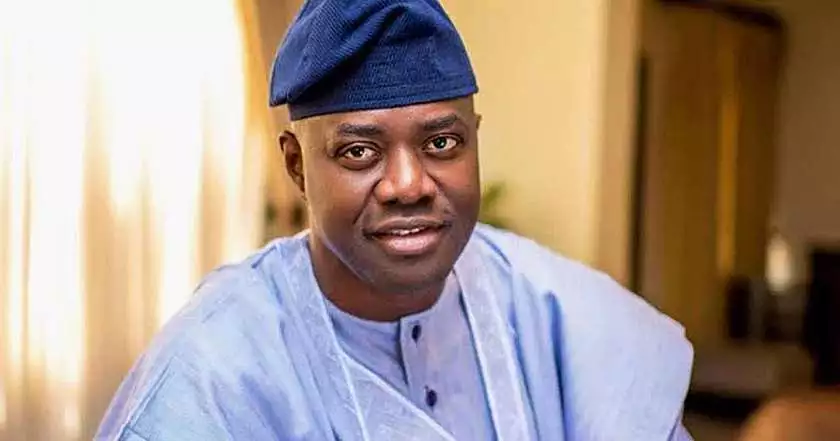
There are speculations that Governor Seyi Makinde of Oyo State may soon dump the Peoples Democratic Party, PDP, for African Democratic Congress, ADC, due to some executive issues.
For months now, Governor Makinde have been having issues within the Oyo State PDP and the South-West PDP, especially, former Ekiti State Governor, Ayo Fayose.
The rift between both PDP Political gladiators over the leadership of the party in the zone, has further polarised the Party in the South-West with the loyalty of members in the Party divided.
Also, Governor Makinde is having issues with his Deputy Governor, Rauf Olaniyan, which is affecting Governance in the State.
The Oyo State Governor has, however, been dilly-dallying with the ADC in recent times, prompting speculations that the Governor may soon quit the PDP that brought him into power.
Over the weekend, this magazine confirmed from a PDP Chieftain in the State claims, making the rounds that the Governor wants to go to ADC ahead of 2023 due to some disagreements.
The PDP Chieftain who pleaded anonymity said that Governor Makinde will join ADC immediately after the forthcoming Local Government election in the State.
He added that the governor was not satisfied with the current leadership of the PDP in the State, hence his decision to dump the party for ADC.
Governor Makinde has been engaging ADC Chieftains among whom are Monsurat Sunmonu, a former Speaker in the State, to have a smooth defection to ADC.
It was gathered that Sunmonu is one of ADC chieftains that have been holding forth for Makinde in ADC.
The PDP Chieftain said; “Yes, you will see, he will soon leave the party. He is going to ADC. I am telling you, he will leave the PDP soon.
“He has been talking to those in ADC. I am telling you that he will soon leave PDP. After the Local Government Election, he will leave PDP”, he claimed.
But a reliable source, close to the Governor dismissed the speculation as nonsence. Laughing heartily, he asked: ” How in the world would you believe that Governor Makinde will leave a National party like the PDP, and join an unknown ADC?
“Do you think the PDP at the National level will allow their only foothold in the South-west, to slip through its hands over Fayose and an ungrateful Deputy Governor? The PDP would rather sacrifice both men than lose Governor Makinde.
“Fayose wants to be the PDP leader in the South-west when he is no longer a Governor. He is a rabble rouse who talks without thinking. He wants to destabilise the party. We will not allow him. Even in his own State, Ekiti, he had destabilised the party, because he does not want work with Senator Olujimi.
“Forget it, Makinde is going nowhere. That speculation is a lie planted by the party’s enemies. It will not work.”
Will the ruling All Progressives Congress, APC, still remain intact before the next election year, 2023? That is the question members ask behind closed doors.
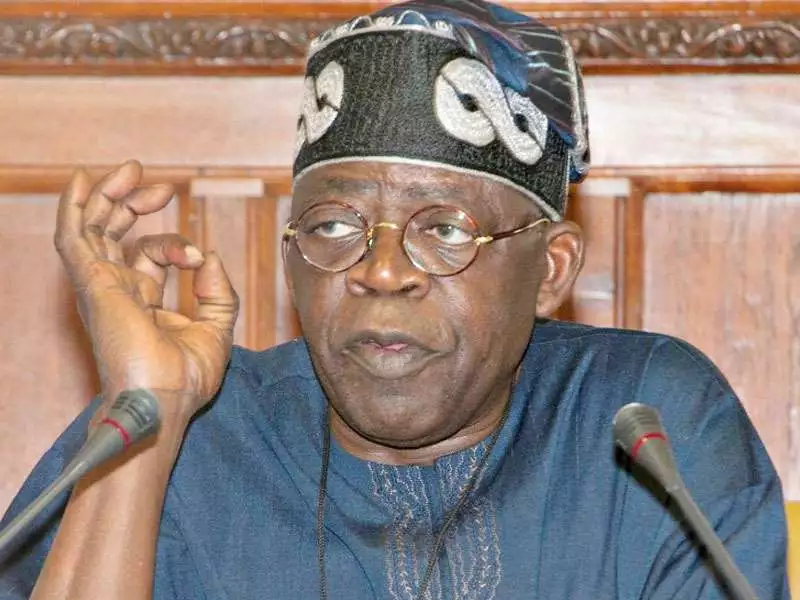
But not everyone in the party will readily give a yes answer to the question, at least, not some die- hard loyalists of Asiwaju Ahmed BolaTinubu across the country who are insistent that the party as presently constituted, is heavily skewed against their Principal’s alleged 2023 presidential ambition.
The loyalists, this magazine understands, are currently mulling exiting the APC and forming a new party that will be built around Tinubu, a former Lagos state governor and National Leader of the ruling party.
The idea, according to credible sources, is for Tinubu to take a shot at the Presidency on the platform of the new party.
Oshiohmole: Was he axed to spite Tinubu?
Though this magazine cannnt confirm whether the former Lagos state governor is in league with those canvassing a divorce from the APC, and formation of a new party, he appears not happy with certain happenings in the APC.
Few days after one of his staunchest loyalists and former Osun governor, Chief Bisi Akande, descended heavily on the party over its ongoing membership revaluation exercise, Tinubu himself was to also fault the exercise.
Formidable Forces Are Against Asiwaju in the APC
One of the former Governor’s supporters told this magazine: “I can authoritatively tell you that forces arrayed against Asiwaju in the APC are formidable. They are scared of him. They know he is a formidable politician with countrywide grassroots appeal, they know that in a free contest, the APC presidential ticket will be his for the asking.That’s why they have distorted the party and skewed its structures heavily against him.
“But they will be shocked soon. We are working towards taking the soul of APC from them.We will leave the impotent carcass for them to do whatever they wish”
The Oshiohmole/ Edo Guber Election and Buni Connection
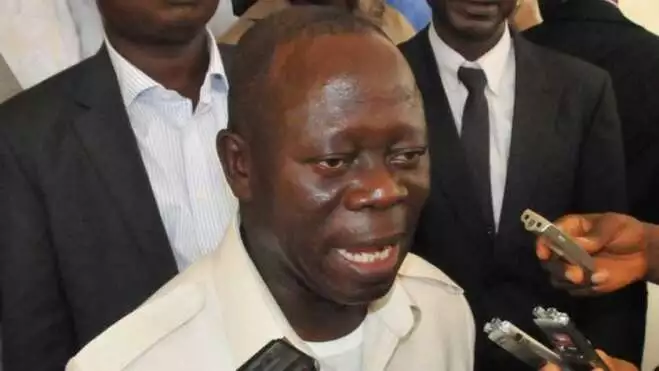
This magazine learnt that the ouster of Adams Oshiohmole as the National Chairman of the APC, his replacement with Yobe state governor,Mai Mala Buni as National Caretaker Committee Chairman, and the party’s defeat in the September 19, 2020 Edo gubernatorial election were seen by Tinubu supporters in the party as clear indicators of orchestrated plots to weaken him politically.
And these, according to them are how:
Oshiohmole: He is Tinubu’s man. Those who plotted his sack knew that with his exit, the Asiwaju would have lost a strong ally and insider in his drive to corner the 2023 APC Presidential ticket.
Edo election: Forces against Tinubu prevailed on the Presidency and the APC, as a party, to allow a free and fair election, knowing that with that, Governor Godwin Obaseki, who had just defected to the People’s Democratic Party, PDP, could easily win.
The calculations were that Obaseki’s win would amount to a crushing defeat for Oshiohmole and Tinubu while the reverse would mean handing Edo on a platter of gold as a political outpost to the APC national leader.
Mala Buni’s National Caretaker Committee: Alien to the APC constitution, a National Caretaker Committee was primarily constituted to undo most of Oshiohmole policies and introduce new ones targeted at certain blocs within the party. Example, the ongoing revalidation exercise.
It was gathered that shortly after the Edo election, several chieftains of the party sympathetic to Tinubu met, reviewed the situation, and thereafter took the decision to pull out and form a new party if the forces in the APC undermining their principal do not draw back.
A Northern Agenda?
Multiple party sources told this magazine that the APC is definitely ceding its 2023 ticket to the South, and most probably to the South west but not to Tinubu. A dark horse is reportedly in the offing as APC’s Presidential candidate. “He is someone who is unstained by the baggage and corrupt tendencies of those angling for the position”, one of the sources confided.
However, a party chieftain from the South west who pleaded not to be named has accused a Northern cabal within the APC of plotting to field a weak candidate of Southern extraction ” so as to hand the presidency back to another Northerner after Buhari via the PDP which will be fielding a Northern candidate”
“This is pure self succession agenda of the North. For them, party does not matter as long as another Northerner succeeds Buhari”, he further stated.
Cards on the Table
Meanwhile, the Tinubu camp is weighing so many options including:
*Outright formation of a new party or merger of like minded parties to form a new party
*Revival of the defunct Action Congress of Nigeria, ACN ( a Southwest dominated party with Tinubu as its arrowhead and leader which in 2014, along with other fringe parties, collapsed its structures to form the APC)
*Adoption and rebranding of the Alliance for Democracy, AD (which held sway in the South-west at the dawn of democracy in 1999).
Whichever way, whatever happens, the 2023 Presidential race will be interesting.
Facts are, gradually, emerging on the thinking behind the Central Bank’s ban on Cryptocurrency trading in Nigeria, a decision that has generated uproar and heated debate since it was found out to be the easiest way the younger generation is making lots of cash under the present economic conditions in the country.
Sources talked to over the weekend told this magazine it has much to do with capital flight, money laundering, and more.
Indications are that due to the fear over the collapse of the economy, poor economic policies, and excessive borrowing, many foreigners-and foreign firms are poised to repatriate their money out of the country. Besides, many government officials allegedly are moving their money out of the country. This runs into billions of dollars which will further weaken the economy and send inflation into overdrive.
“Most of the ransom allegedly paid by the Government are being repatriated out to some other African countries who are complicit in the spread of ethnic dominance of the country by certain groups.
The CBN has resisted the level of an unprecedented capital flight being witnessed in Nigeria”, a source told this magazine. With the hardline stance of the CBN, they are resorting to Cryptocurrency conversion to move such monies. This has mostly increased the volatility of Deposit money banking.
Recall that during the #endsars protest, the CBN attempted to freeze the accounts of the sponsors, but they moved fundings to cryptocurrencies. this was difficult or near impossible- to monitor. this is because Cryptocurrencies are operated outside the Central
ng system because it is a people-based virtual currency that is not bank regulated as such.
But the current issue allegedly comes from attempts to block the diaspora donations to the activities of Sunday Igboho, who has been fighting the cause of the Yoruba race against herdsmen occupying h ancestral lands.
Attempts to block such donations into his accounts and alleged threats to him on this issue resulted in reports that he declared that he does not need diaspora funds to fight the case. but the donations were moved to cryptocurrencies when the Government crackdown increased.
But a far more global worry is the issue of money laundering of global proportions. Scammers have been having a field day with bitcoin, the most popular and arguably oldest of the cryptocurrencies, to divert stimulus packages from the united states to Nigeria.
This is made possible because the regulation on cryptocurrency is weak currently, and centralized banking is having sleepless nights over it.
The President of the European Union Central Bank , Christine Lagarde, recently lamented the issue of weak regulation of the currency.
“It’s a highly speculative asset that has led to some reprehensible activity, including money laundering and any loopholes need to be closed.
“There has to be regulated. This has to be applied and agreed upon at a global level because if there is an escape that escape will be used”, she was quoted to have said recently.
The cryptos are commodity-backed, and the commodity of most choice is gold. It is said that over $300 million is being remitted to Nigeria on weekly basis through a bitcoin wallet, making Nigeria the second biggest user of cryptocurrency in the world.
Recall that the Central Bank had instructed deposit money banks and others to stop bitcoin transactions. In a circular to banks, the CBN said:
“Further to earlier regulatory directives on the subject, the Bank hereby wishes to remind regulated institutions that dealing in cryptocurrencies or facilitating payments for cryptocurrency exchanges is prohibited.
“Accordingly, all DMBs, NBFIs and OFIs are directed to identify persons and/or entities transacting in or operating cryptocurrency exchanges within their systems and ensure that such accounts are closed immediately.
“Please note that breaches of this directive will attract severe regulatory sanctions. This letter is with immediate effect,”
Unfortunately, the directive may have little impact on the transactions using bitcoin and other cryptocurrencies. It is only when a transaction is labeled as a crypto transaction that it will be tracked. This is because the transactions are encrypted end to end in a complex movement of virtual cash and commodity.
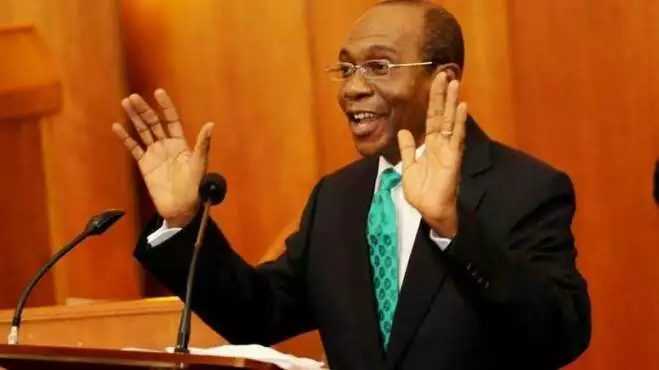
The Central Bank of Nigeria, CBN has disclosed that no going back on the ban on commercial banks and other financial institutions from trading in cryptocurrency, in line with its argument that the digital currency promotes terrorism and fraud. Last week the Godwin Emefiele-led apex bank issued a statement warning Deposit Money Banks, DMBs and others to expect sanctions if they violate the directive.
The CBN said in a circular that “Further to earlier regulatory directives on the subject, the Bank hereby wishes to remind regulated institutions that dealing in cryptocurrencies or facilitating payments for cryptocurrency exchanges is prohibited.
“Accordingly, all DMBs, NBFIs and OFIs are directed to identify persons and/or entities transacting in or operating cryptocurrency exchanges within their systems and ensure that such accounts are closed immediately.
“Please note that breaches of this directive will attract severe regulatory sanctions. This letter is with immediate effect.”
The directive has, however, attracted divergent views from Nigerians such as a former Vice President Atiku Abubakar who urged the CBN to take a second look at the ban, after reports filtered in that the apex bank has started beaming searchlight on account owners, trading in digital currency with the aim of closing such accounts.
Atikun said “The number one challenge facing Nigeria is youth unemployment. In fact, it is not a challenge, it is an emergency. It affects our economy, and is exacerbating insecurity in the nation. What Nigeria needs now, perhaps more than ever, are jobs and an opening up of our economy, especially after today’s report by the National Bureau of Statistics indicated that foreign capital inflow into Nigeria is at a four year low, having plummeted from $23.9 billion in 2019, to just $9.68 billion in 2020. Already, the nation suffered severe economic losses from the border closure, and the effects of the #COVID19 pandemic.
Emefiele: Bans Cryptocurrency to Protect National Security
This is definitely the wrong time to introduce policies that will restrict the inflow of capital into Nigeria, and I urge that the policy to prohibit the dealing and transaction of cryptocurrencies be revisited.It is possible to regulate the sub sector and prevent any abuse that may be inimical to national security. That may be a better option, than an outright shutdown. There is already immense economic pressure on our youths. It must be the job of the government, therefore, to reduce that pressure, rather than adding to it. We must create jobs in Nigeria. We must expand the economy. We must remove every impediment towards investments. We owe the Nigerian people that much
A newspaper, at the weekend claimed that the clamp down on suspicious accounts came on the heels of intelligence report from the Federal Bureau of Intelligence, FBI that cryptocurrency accounts are being used by terrorists and fraudsters to funnel illegal funds to promote their activities.
In the report by THISDAY, the federal government and CBN were said to have received intelligence report from FBI on the activities of fraudsters using cryptocurrencies to bring into the country hundreds of millions of US Dollars illegally obtained from the USA and other western economies. The CBN insist that the restriction regime is to protect Nigerians and the financial system.
Moghalu: Describes Ban As a Knee-Jack Approach
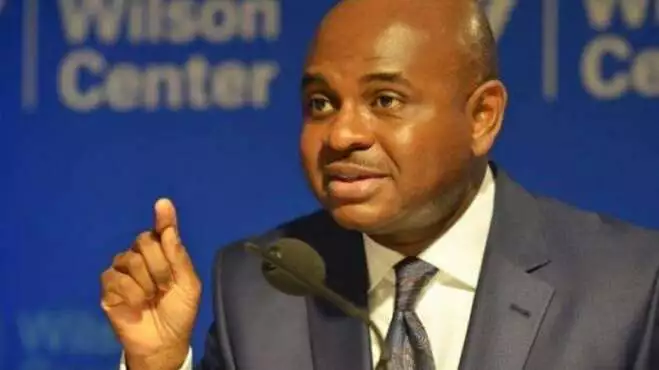
Nigerians are not taking the CBN action lightly, particularly traders who insist that the ban was a knee jack approach on the part of the regulator. For instance, a former CBN Deputy Governor and Presidential candidate, Kingsley Moghalu, said the apex bank has destroyed the livelihood of many Nigerians. According to him, digital currency trading is what many Nigerians are using to eke a living, and that such people have now been thrown under the bus as a result of the reckless regulation. He said the CBN should introduce Central Bank Digital Currency, CBDC as has been done by other countries such as China and others.
He further explained that Nigeria is among the top 10 countries with digital currency usage, a point he said should make the apex bank to retrace it tracks over the ban. He said the argument by CBN, that it took the action to protect National security is untenable, adding that all medium of exchange have their attending risks.
He described the ban as a “declaration of war by third world countries” when developed economies are trying to find a way around it. “Many central banks are not comfortable with the cryptocurrency, but they are trying to find a way around it so that it will not bring down the financial system. We are in depressed economy many Nigerians are making a living from trading in digital currency. CBN should take a risk management approach” rather than an outright ban. He noted that the CBN should not embark on a popularity contest with other countries that have taken similar action.
Meanwhile, analysts insist that terrorism and fraud cannot be used as the basis for destroying the potentials of digital currency trading. What the CBN should do, according to digital currency experts, is to ensure that cryptocurrency does not replace the naira as the nation’s legal tender.
On his part, Senator Iheyen, President Blockchain Technology Association of Nigeria, SiBAN said the CBN took a right decision on the issue.
Others insist that the clamp down constitute a minus for the country at a time that a former Finance Minister, Ngozi-Okonjo Iweala is set to become the Director General of the World Trade Organisation, following her endorsement at the week end by the United State President Joe Biden.
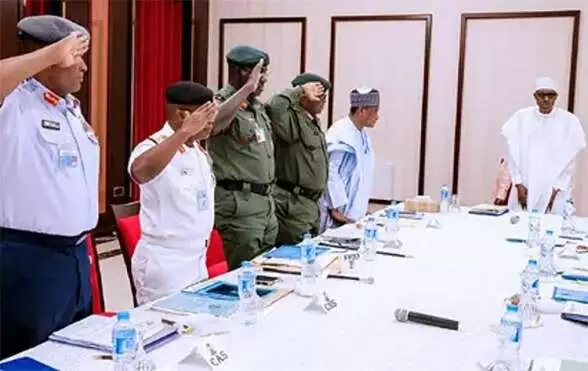
On Thursday, 4th, February, 2021, President Muhammadu Buhari stunned most Nigerians. He nominated his immediate past Service Chiefs as non- career Ambassadors. Mr President had removed them a few days earlier, appointed their replacements, on the grounds that he needed fresh hands with fresh ideas, to fight the worsening insecurity in the country.
Ordinarily, what the President did was his simple constitutional duty. But these appointments are neither simple nor ordinary. Most Nigerians are agreed that as far as controversial appointments go, the President has broken his own record in the instant case.. Uproar and Outrage, at once, reign.
You already know the beneficiaries from this stunning appointments. But for the purpose of this write-up, a short brief is necessary.
So, stand up for the President’s ambassadorial handshake, General Abayomi Olonisakin, the immediate past Chief of Defence Staff, Lt. General Tukur Buratai, the immediate past Chief of Army Staff; Vice Admiral Ibok -Ete Ibas, the immediate past Chief of Naval Staff, Air Vice Marshal Sadique Abubakar, the immediate past Chief of the Air Staff and, Air Vice Marshal Mohammed Usman, of the Military Intelligence. All, now, retired Military officers.
The guys are lucky. In the history of Nigeria, they take the cake as the longest serving Service Chiefs. Appointed by President Buhari soon after he was sworn into office in 2015, he allowed them to serve, and serve and serve.
Years after they ought to have retired from service, Mr President kept extending their tenures in office. He turned a deaf ear to all entreaties to let them go. Almost every stakeholder asked the President to remove them from office.
The reason was glaring.
The state of insecurity was worsening everyday. But the President thought otherwise. He did not only ignore entreaties from “ordinary people”, and some retired military officers, but he also ignored the National Assembly.
On about three occasions, the National Assembly – both the Senate and the House of Representatives, had asked Mr President to remove them from office. He played deaf.They passed a resolution to that effect. Mr President did not as much as acknowledged the resolution.
Presidential aides defended what one angry Cleric, I forget his name now, described as “the President’s abnormal stubbornness.” But Aides said nobody could stampede the President into changing his Service Chiefs. They said they were serving at the pleasure of the President. But of course.
Public officers in Nigeria serve at their own pleasure, or that of their bosses. They never serve at the pleasure of the public, or the good of the country.
Mr President’s Aides reminded us that nobody changes a winning team. Nigerians disagreed on the use of the word, “winning.” Their assessment was depressingly different. They said insecurity is worse than ever. It spread from the North to the South, no longer restricted to a particular zone. Nigeria became one of the world’s most dangerous countries to live in, or visit.
The activities of Boko Haram increased. The number of Internally Displaced People, IDP, tripled. Boko Haram got younger brothers to help in the blood letting. Bandits. Rogue Fulani herdsmen. Kidnappers. Cultists. All baying for our blood. All slaughtering innocent Nigerians.
Our gallant military officers and men, and other security personnel, were being killed and, atimes, over-ran and overwhelmed. Nigeria became one huge slaughter field under the watch of the Ex- Service Chiefs.
President Buhari and Ex-Service Chiefs
But the Presidency said we had a winning team.
We are better off than when the Buhari Government arrived, they sang everyday. They cite two examples.
“There was a time bombs were going off in Abuja”. No longer, they told us. “When we came in, Boko Haram was in control of 18 Local Government Areas in Borno State.” True?
Of all the claims of successes, that of Borno is the most confounding.
Here is why.
Elections were held in the State during the 2015 General elections. From records, the All Progressives Congress, APC, won in all the LGAs. Meaning that elections were held in all the LGAs.
Questions then: If Boko Haram was in charge of 18 LGAs, how did APC win in all the LGAs in Borno State? Who conducted the Elections? How did the then Prof Attahiru Jega’s INEC, do it? Did Boko Haram conduct the elections on INEC’s behalf, and submitted the results, thereafter? Or did some people sit down somewhere, as we see now and then, to fabricate the results and submitted to INEC?
Truth, however, till date, is: Borno state has never been free of Boko Haram since the Buhari Government. The claim, everytime, by the immediate past Army Chief, Buratai, and some elements in Government that Boko Haram has been cleared, or to use their word, decimated, in the state, and all that area, is false. The claim that no LGA in the state is occupied by the insurgents is false. A number of LGAs in the State are under the sect.
Recently, the Speaker of the Borno Stare House of Assembly, Abdulkarim Lawan, put a lie to that claim. He said his LGA is fully occupied by Boko Haram. He has not been able to go home in the past two years, he revealed.
He is not the only one.
Many Borno indigenes have not been able to go home in years. And it is not only Bornu. Yobe, Adamawa, Sokoto, Zamfara, and even President Buhari’s Katsina State, have not fared any better either. There are, also, Benue and Taraba states. And, this insecurity is spreading from State to State. From region to region.
From North to South. Nowhere is safe.
Insecurity, especially terrorism, is not a thing to celebrate. Or to throw blames around. It is just that before the Buhari administration, the then opposition party, APC, made it look as if it will be as easy as ABC to wipe terrorism off Nigeria once they came in. It was made to look like “Once we come in, it is over.” But like they say, talk is cheap. They have been in power since 2015, and the story is worse.
It is because the security situation was worse than ever that most Nigerians kept asking the President to change his Service Chiefs. It got so bad it became the subject of sermons in Mosques and Churches. But the President ignored the calls, and resisted every pressure to do that.
Obviously, the President was seeing something most Nigerians were not seeing. He was seeing something, not even the Leadership of the National Assembly and other members were not seeing. Which is not impossible. As the President and Commander-in-Chief, he is in a position to get privileged security briefings not available to others.
Which must be why he ignored the negative perception the public had of his immediate past Service Chiefs.
Where the people saw incompetence, Buhari saw competence. Where they saw inefficiency, he saw efficiency. Where they saw tiredness, he saw the strength of an angry lion. Where Nigerians scored their performances an “F”, the Commander-in-Chief scored them an “A.”
No doubt, the immediate past Service Chiefs did their best. But their best was not enough, given the scary insecurity situation in the country which has, gradually, but steadily, produced warlords in the country. It has forced different ethnic regions in the country to form their own security outfits. They go by all kinds of names, and have different designations.
In the South-west, there is the red-attired Amotekun. And of course, there is the newest rave, quickly dubbed freedom fighter, Sunday Igboho.
In most parts of the North, there is the CJTF. In Kano state, there is the Government-backed Shariah Police, Hisbah, an outfit, which has garnered such powers, that a couple of days ago, its members arrested a police officer, for daring to drink alcohol. See!
Aside from this illegal arrest, both the Federal and Kano state Governments turn a blind eye to the destruction of people’s businesses worth hundreds of millions of Naira, because “they are selling alcohol.” Yet, the Kano State Government, shamelessly, partakes in the sharing of VAT derivable from alcoholic products.
In the South-South, individual states have set up different Security outfits. Delta state launched its own recently, and so has Cross River State.
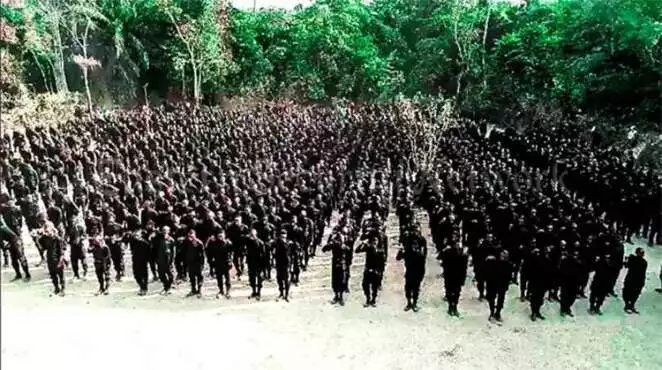
And, in the South-east, after waiting, on end, for the Governors to do something about the worsening insecurity in the region, particularly, the atrocities by rogue herdsmen, Nnamdi Kanu’s IPOB took the initiative to set-up its own Security outfit, the black-uniformed Eastern Security Network, ESN.
For good measure, Kanu warned the Governors that IPOB would not allow any other security outfit set up by them to operate anywhere in the region.
This is total madness. There is total confusion in the land. If anybody was in doubt of how explosive these outfits and individuals have become, what went on in Oyo and Ogun States where Sunday Igboho held sway for days, or where Amotekun had killed a couple of people, including a policeman, or the mayhem in Orlu, Imo State, where the ESN squared-off with Soldiers and Policemen, should give an inkling to what the future holds.
In deed, the President, himself had, at least, on one occasion told the ex- Military Chiefs that their best was not enough.
The question, not a few people are asking, is:
On which basis then did the President nominate the Ex-Service Chiefs as Nigeria’s Ambassadors?
That is what the uproar is about.
For the records, the President has the right to appoint anybody he pleases to any office of his choice. His aides have so emphasised. But what is that saying about the voice of the people being the voice of God?
In the opinion of the people, these appointments do not gell. They see them as inappropriate. They see them as hasty. They see them as insensitive. They see them, according to the Senate Minority Leader, Enyinnaya Abaribe, as rewards for poor performance.
The most provocative, many point out, are the nominations of Olonisakin and Buratai, the Chiefs of Defence Staff and Army, respectively.
The Army, under them, has been accused of many human rights abuses. Many petitions have been written to the effect, especially, since the sad, and yet to be resolved, incident at the Lekki Toll Gate during the #EndSARS protest by angry youths. The role, allegedly played by soldiers under Buratai is still being looked into by a Panel set up by the Government.
There are documented petitions against Buratai lodged with the International Criminal Court, ICC. Fatou Bensouda, ICC Prosecutor, has since acknowledged it, and said “Buratai is under investigation.”
So, the question: what was the hurry in nominating them Ambassadors? They have just retired, Having worked so hard, they have not even had the time to rest and bond again with their wives and children, land they are being saddled with another responsibility, as if Nigeria is barren of qualified men and women.
It is the haste associated with their nominations that Nigerians find uncomfortable and obscene. It is why Dr Junaid Mohammed has described the nominations as an insult on Nigerians.
Others rightly say it is an affront on the National Assembly, especially, the Senate, which had noted they were incapable of securing Nigeria and, on more than one occasion asked for their sack.
It is why not a few people think something is fishy, and meant to cover-up something. It is why a few Nigerians think that appointing them Ambassadors is meant to confer on them diplomatic immunity from any arrest and prosecution by the ICC, if any merit is found in the petitions before the body.
However, all hope is not lost.
Having sent their names to the Senate for “urgent confirmation”, all eyes are now focused on the Senate.
Will the Senate confirm men they had dismissed as tired and incapable of securing the country as Ambassadors.? Will they confirm, as Ambassadors, men they had asked the President to sack as Service Chiefs? If they were not able here, how able will they be outside the country? Will the Senate go back to its vomit. Will the Senators shun partisanship, and focus on Nigeria’s pride and integrity? Or, will Mr President have a rethink, and withdraw their names from the Senate as has been suggested in some quarters?
The chorus out there is: That will be the day. As you know, the Nigerian big man and woman hardly accept mistakes. They carry on without a second thought!