Home Blog Page 2514

FG Flags Off Airborne Geophysical Survey In 19 States

0
Ministry of Mines and Steel

By Ayodele Oni

The Federal Ministry of Mines and Steel Development will commence airborne geophysical survey in 19 states of the Federation, starting with Kwara state on June 21.

The survey is expected to cover seven local government areas of the state, with the aircraft deployed for the mission flying at low altitudes.

The programme, is being organised through the Mineral Sector Support for Economic Diversification Project (MINDIVER), a World Bank-assisted project.

These facts were made known during a courtesy visit to Deputy Governor of Kwara state, Kayode Alabi, by the Director General of the Nigerian Geological Survey Agency (NGSA) Dr Abdulrazaq Garba.

According to him, the first phase of the project would commence at the Ilorin International Airport, saying the Airborne Geophysical Survey is designed to generate information about potential mineral resources in a particular area which could hasten investments.

“The mission will take place in Asa, Ilorin West, Moro, Oyun, Irepodun, Offa, and Oke Ero. The information to be generated would be beneficial because mining sector depends on geo-science information.”

He urged residents of the state not to panic either as a result of the loud noise of the aircraft due to the low flying altitude to be maintained by the aircraft or the pattern of movement of the aircraft.

“The Federal Ministry of Mines and Steel Development is one of the key Ministries which the present administration intends to use to diversify the Nation’s economy.

“The Ministry is supposed to generate geoscience information to promote the mining industry.

“In recent time, the Ministry has carried out some geochemical activities in the state.

“The Ministry has invested in the National Integrated Mineral Exploration Project through which some surveys have been carried out in somewhere at Lafiagi Gbugbu axis; so a team of experts will be coming to the state to determine sub-surface extension of the potentials of mineral resources in the state.

“Our mission here is to essentially notify you of the intention of the Federal Government to carry out Airborne Geophysical Survey and solicit for your support in the areas of security and information dissemination.”

Deputy Governor Kayode Alabi said the project aligns with present administration’s vision of diversifying the state economy and change its narrative from civil service state to an industrialised one.

A statement by the Chief Press Secretary to the Deputy Governor, Mr Joel Modupe, stated that Mr Alabi assured the team of the State Government’s support to ensure the realisation of the project.

He appealed to the people of the state to remain calm and go about their business wherever they notice the commencement of the exercise.

Again Eyitayo Jegede’s Appeal Lacks Merit, Appeal Court Rules

0
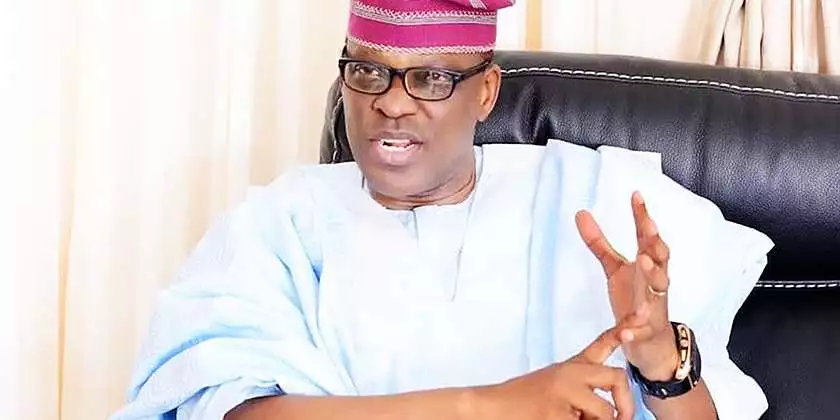
Eyitayo Jegede

By Ayodele Oni

The Court of Appeal in Akure, Ondo state, on Wednesday, dismissed the petition filed by Mr Eyitayo Jegede (SAN), the Governorship candidate of the Peoples Democratic Party (PDP) in the October 10, 2020 Governorship election against the election of Governor Rotimi Akeredolu of the ruling All Progressive Congress (APC), as the Governor.

The Appellate Court, which delivered its judgement virtually began sitting at 3.00pm.

Reading the lead judgment, Justice Theresa Ngolika Orji-Abadua, said the case filed by Jegede lacks merit.

The Election Petition Tribunal had earlier upheld the victory of Governor Akeredolu of the All Progressives Congress, (APC) in the election.

Mr Jegede had challenged the victory of the APC candidate, citing irregularity in the party primary that produced him and his Deputy.

Perhaps, Jegede’s next destination will be the Supreme Court.

INEC Fixes Dates For Ekiti, Osun Governorship Election

0
INEC Logo
INEC Logo

By Ayodele Oni

The Independent National Electoral Commission (INEC), Nigeria’s election umpire, has fixed Ekiti and Osun Governorship elections for Saturday June 18 and Saturday July 16, 2022 respectively.

The Commission made the announcement in Abuja on Wednesday.

INEC Chairman, Professor Mahmood Yakubu, said the detailed timetable and schedule of activities for the elections have been uploaded on the Commission’s website and social media platforms.

Details of the time table, as listed on the INEC portal, indicate as follows :

Timetable and Schedule of Activities for Ekiti State Governorship Election dated 10 June 2021 and signed by INEC Secretary, Mrs. Rose Oriaran-Anthony.

The timetable outlined the schedule of activities in the build up to the election, starting from the publishing of the Notice of Election on January 11, 2022.

The tenure of the Governor of Ekiti State will expire on the 16th October, 2022.

Pursuant to the provisions of Section 178 (1) and (2) of the Constitution of the Federal Republic of Nigeria, 1999 (as amended) and Section 25 (7) and (8) of the Electoral Act, 2010 (as amended), the earliest date for the Election into the office of the Governor, Ekiti State, shall be the 18 May, 2022 and the latest date for the Election shall be 17 September, 2022.

By virtue of the provisions of Section 178 (2) of the Constitution and Section 25 (8) of the Electoral Act, Election into the office of a State Governor shall hold not earlier than 150 days and not later than 30 days before the expiration of the term of office of the last holder of the office.

The Commission is by virtue of Section 30 (1) of the Electoral Act, expected to issue Notice of the Election not later than 90 days before the date of the Election.

This is in exercise of the powers conferred on INEC by the Constitution of the Federal Republic of Nigeria, 1999 (as amended) and the Electoral Act, 2010 (as amended) and of all other powers enabling it in that behalf.

The notice also listed February 18, 2022 as the date for the publication of Personal particulars (EC9) and 12 March, 2022 as the last day for the withdrawal/replacement of candidates by political parties.

While it listed 19 March, 2022 as the last day for the submission of nomination forms (EC13B) by political parties; the notice also stated 20 March, 2022 as the date for the commencement of campaigns by parties.

Alleged Assault: Baba Ijesha Remanded In Prison, As Court Reject Bail Application

0
Baba Ijesha

By Akinwale Kasali

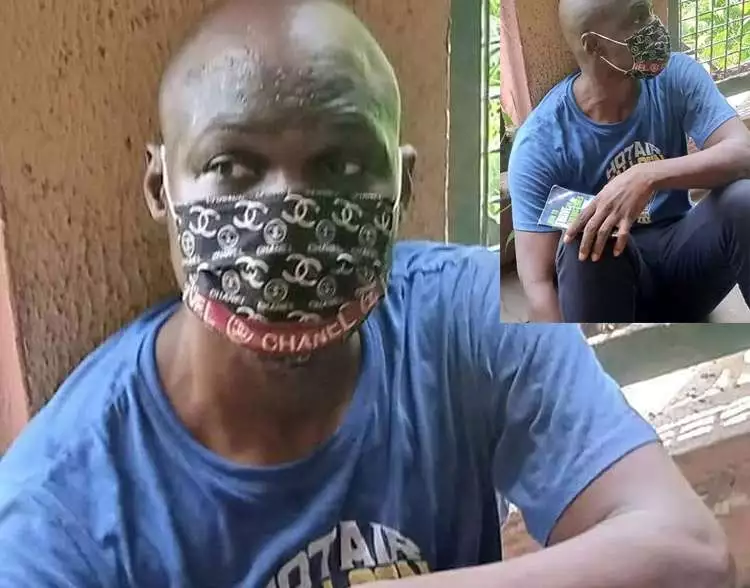
Clutching a Motivational Book, tightly, Nollywood Actor,  James Omiyinka, popularly known as Baba Ijesha, watched and listened as a Magistrate Court sitting in Yaba, Lagos, rejected his bail application.

This was made known to Journalists by the lawyer to the embattled actor. He said  the Magistrate has no jurisdiction  as regards the bail because the Lagos State Government has filed the case at the High court.

With this development, the Nollywood Actor will remain in custody awaiting trial at the High Court.

Baba Ijesha has been enmeshed in crisis over allegations of assault and sexual molestation of a minor levelled against him by Comedienne, Princess.

Baba Ijesha a regular caller at Princess’ house was said to have assaulted the minor and was caught on CCTV camera in a compromising position with the said minor.

The matter has since been taken up by the Department of Public Prosecution Lagos State, and Baba Ijesha was arraigned in Court following the resumption of judiciary workers who had been on strike for several weeks.

At the Court, Baba Ijesha was seen clutching tightly to a Motivational Book titled “How To Thrive In Perilous Times”.

Indeed, his times has become more perilous as his hope was dashed following his bail denial by the Magistrate.

He will be  remanded in prison custody till July 21, 2021,  when he will  appear at the High Court.

Ahead 2023 Polls: INEC Adds 56,872 More Polling Units Across The Nation

0
Independent National Electoral Commission

By Akinwale Kasali

With less than two years to the 2023 General Elections in the country,  the Independent National Electoral Commission, INEC, has announced the addition of 56,872 more polling units in various parts of the country.

Making the announcement, Tuesday, at the Commission’s Headquarters in Abuja, the nation’s Capital,  the INEC Chairman, Professor Yakubu Mahmood, noted that the move was in line with the resolve to expand voters’ access to polling units.

According to him, “After wide-ranging consultations with stakeholders and fieldwork by our officials, the 56,872 voting points and voting point settlements were converted and added to the existing 119,974 Polling Units.

“Consequently, the Commission is glad to report that 25 years since the current polling units were created in 1996, the hard nut is finally and successfully cracked after several unsuccessful attempts. Nigeria now has 176,846 full-fledged polling units,” he said.

He added that creation and expanding of the polling units have been in the offing for several years, but the adequacy and accessibility, in terms of number and location across the country, were some of the challenges that had to be addressed in the interest of credible elections.

The INEC boss said before 2010, the electoral umpire operated on a round figure of approximately 120,000 polling units.

Yakubu added that a census undertaken by the commission before the 2011 general elections arrived at the precise figure of 119,973 polling units.

He further disclosed that INEC has also made efforts to relocate many polling units from inappropriate places to public buildings accessible to voters, polling agents, observers, and the media during elections.

He, however, listed some of the locations to include private residences and properties, palaces of traditional rulers, and places of worship.

Attributing the establishment of voting points and voting point settlements across the states and the Federal Capital Territory (FCT) to the several unsuccessful attempts to create additional polling units, he said, “The voting points were tied to the existing polling units and voting point settlements. The number of registered voters in a polling unit and the voting point settlement in the FCT, was used to determine their voting points, based on the upper and lower thresholds of 500 and 750 voters respectively,” he said.

South West Farmers Loses $1Billion To Armed Herdsmen

0

By Akinwale Kasali

Within the past three years, no less than $1Billion worth of farm produce have been lost by Farmers in the South West, no thanks to heinous activities of armed bandits and Herdsmen, who either kill, main, rape or Chase farmers from their farms, it has been disclosed.

Following this, several Pan Yoruba Groups staged a peaceful protest in Lagos calling for an end to the siege on indigenous communities by armed groups in all the South West states.

The Groups who staged the peaceful Protest under the aegis of Omoodua Ronu, saw thousands of protesters occupied the Beko Memorial Park in Lagos.

The protesters who dared heavily armed policemen  stormed the venue of the Protest but failed to stop the protesters from showing their grievances and making  their demands.

The organisers said some of the participants at the protest came from the six South West States including Kwara, Kogi and Itsekiri areas of Delta State.

They  displayed several placards calling on the Federal Government to put an end to terrorism in Yorubaland or risk further mass protests.

Speaking at the protest ground, Hon. Wale Osun, leader of the Afenifere Renewal Group, ARG, said, “The basis of this protest is to register the grievances of Yoruba people across the country on the prevailing state of siege and violence across the South West territories. Our people are tired of the state of terror in the land. The least we can do is to register our grievances through peaceful protest”.

Some of the displayed placards read ‘End Terrorism or Risk Public Uprising’; ‘We support Yoruba Autonomy’: ‘State Police Now’; ‘Fatherland or Death’; ‘United Nations Supports Self-Determination,’ ‘Yoruba Self Determination Now.’

Tunde Akin-Ariyo representing the Apapo O’odua Koya, AOKOYA, said   Yoruba farmers lost close to $1billion due to the destruction of their farmlands, killings amidst armed invasion of Yoruba forests.

He said the June 12 speech by  President Muhammadu Buhari failed to address the growing atmosphere of violence especially few days after some 20 people were killed in Iganna by suspected herdsmen.

Ariyo said the people of the South West must never allow themselves to be used to start attacking Igbos or any tribe in the Yoruba areas.

“We shall work to unite Igbo and Yoruba and all ethnic groups fighting for justice in Nigeria. Gone are those days that Yoruba will be set against our Eastern brothers.

“We did a research that confirms that Yoruba farmers have lost farm produce in the range of $1b in the past three years. Economic trees are being destroyed, farmers are killed or kidnapped and harvests are completely destroyed by cows. There is the loss of genetic resources running into billions in cash. The destruction and burning of Yoruba forests by the bandits has brought ruin to many farmers”.

Ariyo stressed that the said cash collected from Yoruba people by kidnappers in the past 10 years is more than N1 Billion.

President of Agbekoya, Kunle Oshodi, said the people of the South West are being pushed to the extreme, warning that if nothing is done to deal with terrorism, most people will be left to resort to self-defence in order to protect themselves and their livelihood.

Some members of the coalition are Agbekoya, O’odua Liberation Movement, (OLM), O’odua Nationalist Coalition, (ONAC), Apapo O’odua Koya, (AOKOYA), O’odua People’s Congress, (OPC), Covenant Group, Network of Yoruba Alliance, (NENA), South West Youth Development Council, (SWYDC), National Council of Itsekiri Youths, (NCIY) amongst others.

Opinion: South East: Before Buhari Commits Genocide

0
Geofrey Onyema

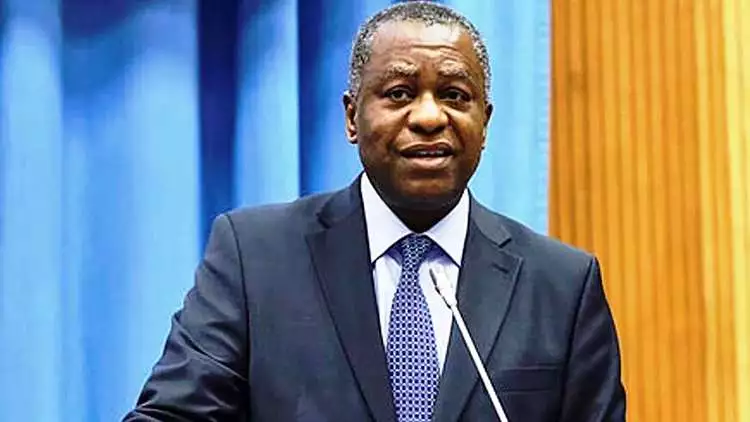
In this open Letter to the Minister of Foreign Affairs, Geoffrey Onyema, ‘Igbo Scholars’ warn of the consequences of federal government’s military clamp down on the South East.

By Rudolf Ogoo Okonkwo and Chido Onumah

We chose to write you instead of President Muhammadu Buhari because it is apparent from the president’s two most recent media outings that his cognitive impairment has greatly deteriorated, even though that is no justification for his murderous and genocidal rhetoric. From his utterances, the gap between things his innermost mind conjures and what his mouth utters has been completely erased. We also chose to write you because you are the most senior Biafran in Buhari’s government.

Is the tensions between The WitcherWe know that in your world, Biafra is the worst tag that anyone could put on you. Unfortunately, the people you work with, in and around Aso Rock, see you as a Biafran. You can keep running away from it, but in the deepest corners of their eyes, Biafra is like a shell on you. And like a snail, you cannot cast it off.

Over the last six years, we are aware of your hard work on the international stage to rescue this government’s reputation. As this government squandered both at home and abroad the enormous goodwill it received in 2015, you have worked hard to reassure the international community that the wheel of the Nigerian vessel had not come off and would not come off. Based on recent events, you do not need a soothsayer or us to tell you that the wheels came off a long time ago. What the international community was telling you in private weeks ago, they have made a tiny bit of it public following the debacle that is Buhari’s reaction to Twitter’s sanction of his genocidal tweet against the people of the South-East.

Clearly, the government that you champion abroad is set to re-enact at home another genocide against the people of South-East Nigeria which had its opening act during the unfortunate Nigerian Civil War of 1967 to 1970. We think we should have you and the international community on notice. Even your late father, the great Justice Charles Dadi Umeha Onyeama, who was a judge at the International Court of Justice in The Hague, would have told you that in this unfolding moral crisis, you are not just going to be an accomplice in the killing of your own people, already in progress in several parts of South-East Nigeria, you are going to be remembered by history as a man who played a supervisory role in the senseless carnage.

As the blood of young men and women who knew nothing about the activities of a few Biafran activists seep into the red soils where your forefathers are buried, President Buhari would send you abroad to crisscross the world and lie for him. You would be lying that there were no killings of innocent young men and women in the South-East by security agencies. Your talking point would be that the security agencies were quelling the violence perpetrated by Biafran activists. You probably can sell it to the world, but you cannot sell it to your conscience or to the memories of your forefathers who have sacrificed enough for Nigeria.

At this juncture, maybe we should peep through the course of the Nigerian Civil War, a repeat of the genocidal memory of which your boss, Muhammadu Buhari, now threatens the Igbo population of Southeastern Nigeria with. A retrospective view of that war crime should point you to the frightening possibilities of poetic justice for the soul-destroying lying mission you are about to be sent abroad to whitewash. As the world reacted with anger to the massacre of able-bodied Asaba men and boys in October 1967 while their wives, mothers, and sisters, were forced to dance for the sadistic pleasure of trigger-happy soldiers who carried out the slaughter, General Yakubu Gowon, then head of Nigeria’s military junta, sent his spin doctors abroad for a lying offensive.

Among the propaganda team sent abroad was Philip Asiodu, an Asaba indigene and a Permanent Secretary in the Gowon regime. Asiodu was reported to have told a press conference in Germany that reconciliation was the irrefutable goal of the Gowon administration. He was quoted as saying inter alia, “there is no question of massacring Ibos in the captured areas.’’ At the time of the morally reprehensible propaganda mission, Asiodu had no idea that his younger brother, Sydney Asiodu, an Olympic athlete, was one of the victims of anti-Igbo massacre he had finished lying to an international audience did not happen. On his return to Nigeria, instead of savoring the satisfaction of a successful lying mission, he was faced with the mourning of his younger brother, killed by the agents of the same government he had gone abroad to lie for.

As we write this, you are aware that the hordes of Nigerian security agents shipped to the South-East are taking their cue from President Muhammadu Buhari’s often-expressed odium for the people of that region. They are reading the president’s body language that calls for maximum force “in the language they understand.” Knowing the history of Nigeria’s military in Asaba during the Civil War, and later in Odi, Bayelsa State, in 1999, Zaki-Biam in Benue State, in 2001, and in Zaria, Kaduna State, in 2015, where they massacred civilians in their hundreds, and carried out a litany of human rights abuses, nobody would be surprised at the news of young people being massacred after enduring torture in the hands of security agents in the South-East.

No matter how you disguise it, the United Nations, Amnesty International, and other reputable world bodies have unimpeachable documentations of ugly patterns of abuses anywhere the Nigerian military went for any form of intervention. It is why successive American governments have refused to sell arms to Nigeria out of fear that the government would use it against its people. In a brazen show of indifference to what the world thinks, the Inspector General of Police, Mr. Usman Alkali Baba, recently ordered his officers to ignore any demand to respect human rights in their operations, thus setting the stage for what is shaping up to be an all-out genocide in the South-East.

With you an earshot away, President Buhari vowed to reenact in the South-East the kind of carnage he and Nigerian soldiers carried out during the 1967-1970 Nigeria-Biafra War. He mockingly invoked the obnoxious theory of “starvation as a weapon of war” that killed hundreds of thousands of women and children when he reminded the South-East people that they were “a dot in a circle.’’ As if that was not enough, he aroused the painful “abandoned property” saga when he reminded them that they had houses and businesses around the country and officially pronounced every Igbo man and woman a Biafran. The president went into the darkest chambers of his heart to spew hatred, all because a group of youths fed up with the state-sanctioned dehumanization of Southeasterners rose to demand justice.

While we condemn the mindless violence that has gone on under any guise in the South-East in the last few months, we must note that it is the lack of leadership of your principal and his blatantly bigoted response that has sustained the violence. In our view, as far as President Buhari is concerned, the Nigeria-Biafra War has not ended. You can then understand why for many young people who did not witness the war, to use President Buhari’s choice words, the cheque of “No victor, no vanquished” issued at the end of the war in January 1970 was indeed a dud cheque.

Since your principal has no sense of history, we need to remind you that Nigeria was built on and has been sustained through injustice. Well before the civil war of 1967-70, there was the Tiv crisis of 1960 and 1964 which has lingered up until today in different forms. More than a year before the civil started in 1967, Isaac Adaka Boro, a minority rights activist, was crying for justice for his people in the Niger Delta, where Nigeria’s oil wealth comes from, the same people President Buhari pandered to in his Arise TV interview when he reminded Biafrans, your people, that the Niger Delta youths and elders had assured him there would be no access to the sea.

Fifty-four years before the #EndSARS movement, which President Buhari said was aimed at removing him for office, on February 23, 1966, out of frustration with Nigeria, Adaka Boro, at the age of 28, declared the Niger Delta Republic, an independent state for Ijaw people suffering environmental degradation of their land and plunder of their oil resources. Brazenly, President Buhari, who was sworn in as president of Nigeria, finds it convenient to share these resources with his kinsmen in Niger Republic. The Twelve-Day Revolution, as Adaka Boro described his exploits, happened before a series of pogroms in 1966/67 against the people of the old Eastern Region, Igbos and non-Igbos, which ultimately led to the declaration of the Republic of Biafra on May 30, 1967.

The poor leadership and discriminatory policies of the Buhari administration are today fueling the clarion call for secession across Nigeria, including prominently, in the South-West. Clearly, the people of the South-East were not the first group to demand a country of their own due to the failure of the Nigerian state to protect them and give them a fair shake in the country. Nor are they the only group making such a demand in present day Nigeria. But somehow, it is the people of the South-East who receive Buhari’s bitterest venom each time some elements in the region, fed up with injustice, resort to self-help.

Dear honourable minister, in 1990, while you were at the World Intellectual Property Organization (WIPO), Major Gideon Okar, a Nigerian military officer, staged a coup in which he excised Buhari’s home state of Katsina and other states in the North from Nigeria. It is this same part of the North that initiated Sharia Law in 2000, in defiance of the constitution. And it is the aftermath of the Sharia Law that led to the emergence of the Boko Haram insurgency in 2002. In 2009, following the extra-judicial killing of Boko Haram founder, Mohammed Yusuf, a more militant leader named Abubakar Shekau emerged.

The Shekau insurgency has lasted over twelve years, killed more than 30,000 Nigerians—Muslims, Christians, men, women, children—as well as international aid workers, in dastardly acts of terror, and attracted well-financed international terrorist organisations like ISIS and Al Qaeda into West Africa. At various times, Boko Haram took control of sections of the North-East, declared a caliphate, mounted their flags as a separate nation and were collecting taxes from Nigerians within their “territory.” They posted videos of gruesome execution of their victims, including Nigerian military officers. On at least two occasions, they had attempted to assassinate Governor Babagana Zulum of Borno State. We did not witness the kind of genocidal fury and righteous indignation that propel President Buhari’s scorched-earth response when it comes to the people of the South-East. Daily, across the nook and cranny of Nigeria, we witness calls for secession in different forms, including expulsion orders, without as much as a whimper from the man you serve so diligently, except, of course, the call comes from Biafrans.

If President Buhari can talk glibly in public about what he plans for Biafrans, imagine what he says during security council meetings or when he is with his kitchen cabinet! Of course, we feel it. From Mr. Danladi Umar’s “Biafran boys” incident, to the Minister of Justice, Abubakar Malami, comparing open grazing to selling of spare parts—a position Buhari has vowed not to contradict—to the shoot on sight order given to security operatives in the South-East, everyone that matters in the Buhari regime is reading the president’s mind and body language correctly.

All right-thinking men and women in the South-East condemn the killing of security agents and innocent citizens and the destruction of the country’s vital infrastructure in the region. The way out would have been a measured government response to arrest the ugly development, but not when you have as president, whose allegiance is more to his cousins in other countries than fellow Nigerians who do not share his ethnicity. You would agree, Sir, that whatever excesses Biafran activists exhibit pale in comparison to the activities of well-armed, long-established northern-based groups, most of whom are from the president’s ethnic stock. And this is not to compare whose terrorism is more vicious, but the carnage these extreme groups—be they herders or those who want to propitiate heaven—have visited upon Nigeria through kidnappings, wanton destructions, and surgical hit on the little threads that keep Nigeria one, has placed them among the top terrorist groups in the world and thereby placed Nigeria on the top of every list of failed nations around the globe. Somehow, these abysmal records do not keep President Buhari up at night. From what we see, what wakes him up from his slumber is any mention of Biafra.

As the sense of Nigeria’s failure and unjust structure spreads, some people in the South-West have also joined the demand for an independent nation of their own. Despite their vigorous pursuit of Oodua nation, they have not received the same kind of vituperation from Buhari. The president has not spoken about the activists in the South-West as representatives of all the people of the region. He has not made them the scapegoat for his colossal failures the way he takes delight in making the people of the South-East. Why is that, Mr. Onyeama?

Allies of the government that you serve now demand that Igbo people daily profess their loyalty to Nigeria before they receive basic citizenship rights. Igbo people who live in Northern parts of Nigeria are daily inundated by pronouncements of one Northern group or another, who have warned that the lives and property of Igbo people are fair game in the ongoing crisis. They have an ally in your boss, President Buhari. These groups openly send signals that they have been holding their youths from unleashing a Rwanda-style genocide against the Igbo in their region. The government you serve, and its accomplices, have declared all Igbo men and women guilty by association. They even had the audacity to announce that they had foreclosed the possibility of any Igbo person becoming president of Nigeria until all Igbo people go on their knees and make a public denunciation of the advocates for Biafra. The president you serve obediently recently amplified these absurd demands.

Let us jog your memory, Mr. Onyeama. At the outset of the Boko Haram insurgency in the North-East, your principal, President Muhammadu Buhari, who was then leader of the opposition, defended the group against what he tagged their “extra-judicial killings by Nigeria’s security forces,” the same forces he is now deploying to the South-East with orders to “treat them in language they understand.” At one point, Boko Haram terrorists picked him as the man to negotiate for them with the previous government of President Goodluck Jonathan. None of these caused anyone or a group to demand his disqualification from contesting for the presidency in 2015. At no point did any part of Nigeria label every northerner a Boko Haram member or demand that the North be excluded from Nigeria’s leadership until they crushed the Boko Haram insurgency.

Today, President Buhari and his allies are blackmailing Ndigbo and generalizing on their character based on the activities of Biafran activists. Mr. Onyeama, think for a moment what would be of you and your career if Biafran activists announce today that you would be the man to negotiate for them with the federal government. Think of it. Would that earn you the presidency of Nigeria in 2023?

For the avoidance of doubt, Nnamdi Kanu, the leader of the Indigenous People of Biafra, is a product of Buhari’s incompetence. Buhari’s paranoiac frenzy about anything Biafra turned what was Nnamdi Kanu’s agitation for justice and fairness into what it is today. The president, in effect, made Nnamdi Kanu a hero by locking him up and disobeying court orders to free him. Buhari should therefore not be surprised at the formidable opponent he has created as a result. Buhari’s mismanagement of a complex and diverse country mixed with blatant nepotism is Nnamdi Kanu’s fuel. If Buhari has any desire to deescalate the tension he created, he has a slew of options on his table. But as we have seen, again and again, Buhari must exhaust all bad options before he chooses a good one staring him in the face.

We know that as a minister, you have not been working with other leaders of the South-East to address matters pertaining to the region. You have been so afraid of annoying Buhari and his clique or making them question your loyalty that you have relinquished leadership and auctioned off the leverage you should have had in the South-East. Before you, the task is to go back to the South-East, not as a man with his tails between his legs, but as the most senior Biafran in Buhari’s government. Go and engage your people in an honest conversation. If you do it well, working together, you can come up with the proverbial right channel to direct the grievances of your people to the government that you serve.

Dear honorable minister, the alternative is what we are witnessing now. In the South-East, the hawks are in, picking up the chicks one after another. The hen is crying out not for the monster that is killing its chicks to let go but for the world to hear its voice. Your forefathers used to say that we must chase away the hawks before we caution the hen. On your part, as the minister of external affairs, you will soon be sent abroad to walk up podiums around the world to commit the most abominable act against God and man—justify the shedding of innocent blood. You either uphold the ofor of your forefathers, as your middle name commands, or you soil it on the altar of loyalty to the president of a crumbling edifice. The choice is yours. Time is running out!

Dear honorable minister, if you ever have the chance of talking with President Buhari, tell him that Biafra is not the problem of Nigeria. Nigeria is not the first or only country to fight a civil war. Let him know that Nigeria is collapsing under the weight of injustice in the East, West, North and South. In a sentence, we are all Biafrans! Rather than being fixated on a ‘‘dot in a circle,’’ let him know it is time to go back to the drawing board or sit at the table of nationhood and draw a genuine non-discriminatory circle that accommodates every group, no matter how small, on equal terms. This is the irreducible expectation in a country that prides itself on being a federal republic.

We will end this letter by paraphrasing Edwin Madunagu’s admonition to the Nigerian Left in his latest essay, “Birthday greetings in lieu of responses.” He may well be speaking to you, the most senior Biafran in the Buhari regime: “Wherever you are today, use all your intellect, use whatever levers you have, as individuals and as groups, to prevent Nigeria fully enacting a second edition of the (1966-1970) tragedy.”


Wike Drags Buhari As Commander-in-Chief

0
Nyesom Wike

By The Source

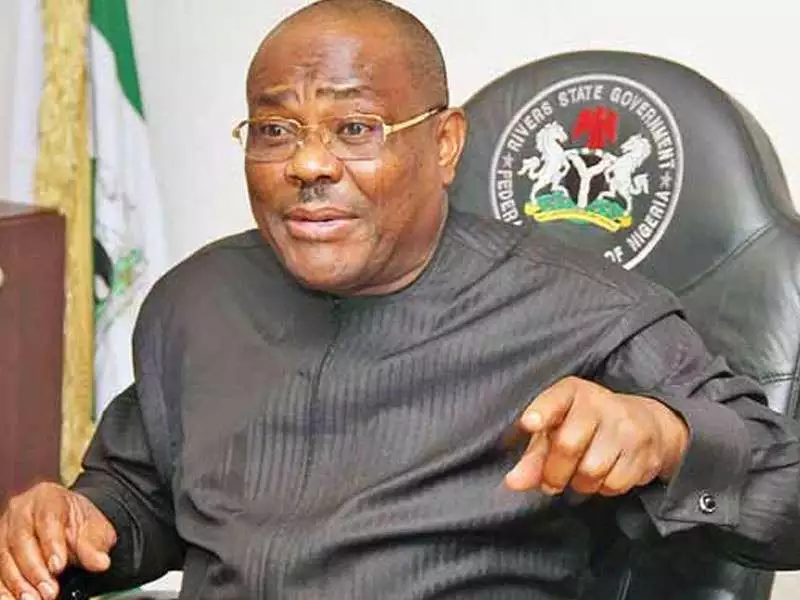
Governor of Rivers State,  Nyesom Wike says President Muhammadu Buhari should not pass his role as Commander in Chief of the Armed Forces of the Federal Republic of Nigeria to state governors.

Wike, an unrepentant critic of the president said it would be wrong to blame the governors for insecurity in the country, noting that the president appoints all the security chiefs in the country, who do not answer to the governors.

The Rivers state helmsman’s made the comment after President Buhari, said last week, that the 36 states governors are not doing enough to rein in insecurity in their states.

But speaking on the issue, Governor Wike said Buhari has the Constitutional role to tackle Insecurity and should not pass the buck on the governors who have no control over security apparatus.

Wike, who spoke at the inauguration of the 21-kilometre Odufor-Akpoku-Umuoye Road in the Etche Local Government Area of the state on Tuesday, said such a position suggested that the All Progressives Congress-led Federal Government lacked strategies on  how to tackle insecurity in the country.

He stated, “Mr  President, you are the Commander-in-Chief of the Armed Forces of the Federal Republic of Nigeria. You appoint Inspector General of Police. You appoint the Chief of Army Staff, Chief of Naval Staff, the commissioners of police, the Director of Department of State Services and other heads of security.

“Which one do we appoint? How can people appointed by Mr. President be under me?”

“It is not only to borrow money for Nigeria that you’re in charge. You must, also, be in charge of other things including security. Who signed order 10? Is it the governors?  It is not when things are going bad concerning security, and you say you’re not in charge, and it becomes governors’ responsibility,” he stated.

Wike said the APC-led Federal Government has failed to fulfil  promises made to Nigerians, adding that Nigerians should  begin to compare the performances of the Peoples Democratic Party governors  with their APC counterparts.

He said, “Mr President was short of calling names of those governors who run to Aso Rock when they are supposed to stay in their states to see the needs of their states and people.

“Mr President should have come out openly and said, ‘my APC governors, stop worrying me. Go back to your states and do your work.’ On that, I support him.

“Thank God, Mr President knows that I am not one of those that go to visit him over one problem or the other. I,  as the governor of Rivers under the PDP, you’ll never find me there,” Wike said.

Nigeria Gas Firm Generates $114bn

0
Muhammadu Buhari

By The Source

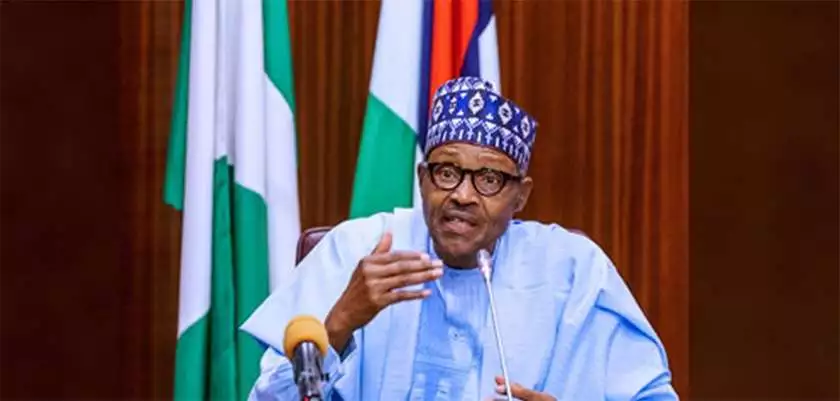
Nigeria Liquefied Natural Gas, NLNG has generated over $114 billion since it was first established in 1978, President Muhammadu Buhari has said.

Buhari disclosed this at the inauguration of NLNG train 7 project in Rivers state on Tuesday, charging the company to ensure its timely completion.

Buhari was the Minister of Petroleum when NLNG was inaugurated in 1978 and still combines the office with his role as the president of the Federation Republic since he became a civilian leader in 2015.

Buhari who did the ground breaking virtually from Abuja said the early completion of the project located in Bonny Island, Rivers State, would pave the way for the commencement of Train 8.

He urged the Board of Directors, management and staff of NLNG, the Rivers State Government, host communities and other agencies of the Federal Government to close ranks so as to ensure completion and eventual commissioning of the Train 7 project.

Buhari said, “As we flag off the Train 7 project today, I look forward to the development and execution of more gas projects by the International Oil Companies and indigenous operators, and more trains from Nigeria LNG to harness the over 600 trillion cubic feet of proven gas reserves we are endowed with.

“Let me use this opportunity to commend the shareholders of NLNG, the Federal Ministry of Petroleum, the Nigeria National Petroleum Corporation and the Nigerian Content Development and Monitoring Board and other stakeholders for very exemplary collaboration which has culminated in this great opportunity for Train 7.

“I want to thank the foreign investors for the confidence reposed in Nigeria, and assure all Nigerians and potential investors in the oil and gas sector that the Federal Government will continue to create the enabling environment in order to develop the sector and bring the full benefits of gas closer to our people.”

“As Minister of Petroleum Resources, I kicked off our first foray in LNG Business in 1978. At that time, it was already apparent that Nigeria was mainly a gas-rich country with a little oil.”

The NLNG has generated over $114 billion in 42 years, the president said.

According to him ‘’NLNG has generated $114bn in revenues over the years, paid $9bn in taxes; $18bn in dividends to the Federal Government and $15bn in feed gas purchase.

“These are commendable accomplishments by the company’s 100 percent Nigerian Management Team.”

Twitter Suspension: Federal Government Still Open To Dialogue – Lai Mohammed

0
Lai Mohammed

By Ayodele Oni

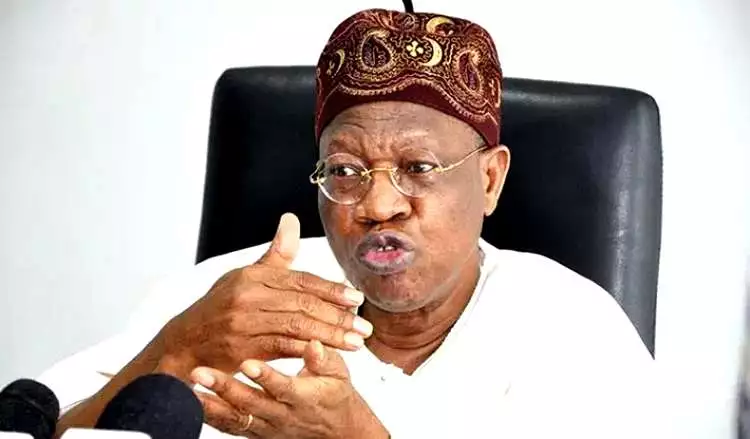
The Minister for Information, Alhaji Lai Mohammed, announced on Tuesday that the  social media handle, Twitter, has written to the Federal Government on the way forward over the current suspension of the international online media.

Speaking on a phone in Radio programme, of the FRCN, the Minister explained that the Federal Government, too, has set its own rules which the Management of the online media must adhere to before it operates in the country.

He stated: “I can confirm that Twitter has written to the Federal Government that they are ready to talk.

“As we have always maintained, the door is not locked and we are open-minded but Twitter must work towards it.

The Minister reiterated that among other conditions for Twitter to resume operation in Nigeria, there must be an agreement as to what contents it could post.

According to him, Twitter and other platforms must also register as a Nigerian company, obtain license from the National Broadcasting Commission (NBC) and be guided by the rules of the licensing as well as pay taxes, adding that regulation of social media platforms is becoming a global practice.

He said most countries were just waking up to the fact that the platforms were becoming more powerful than even Government and needed to be regulated.

The News Agency of Nigeria, (NAN) which also monitored the programme from Abuja, quoted the minister as saying that regulation of social media platforms is becoming a global practice.

He pointed out that most countries were just waking up to the fact that the platforms were becoming more powerful than even Governments and needed to be regulated.

“Singapore, Algeria, Pakistan, Turkey regulate the social media, Australia has done so. Even EU that does not have particular laws on social media has made recommendations in a white paper.”

The Minister said that the UK initiated a new law that would make social media companies be fined up to 18 million pounds (about N10.8 billion) if they failed to stamp out online abuses.

He said Google was fined 220 million Euros (about N110 billion) on June 7 by French Competition Regulator for abusing its dominance in the online advertising market in France.

Similarly, the minister said the Federal Cabinet of Pakistan had approved a new set of rules to regulate social media.

In the rules, according to the minister, companies such as Facebook, Twitter, YouTube, and even TikTok were to register and open offices in Pakistan.

He said in compliance with the new online broadcasting rule of Turkey, Netflix and Amazon Prime Video had obtained licenses from that country’s broadcasting authority.

Alhaji Mohammed noted that regulation of the social media was not synonymous with stifling press freedom, stressing that “We must not confuse press freedom with irresponsibility.

“How can you stay in your country and allow your own platform to be used to propagate war in another country?

“The suspension of Twitter is to ensure that no particular platform is used to cause war in Nigeria. Secondly, to ensure that whoever is making money in Nigeria must be made to pay tax.

“Our appeal to Nigerians is that they should understand where we are coming from.

We have no intention to stifle people’s freedom or to cut off the source of livelihood of anybody.

“There must be a country devoid of war before we can talk of freedom and a source of living.”