Home Blog Page 2507

Emir Of Gaya, Abdulkadir Dies At 91

0

By Akinwale Kasali

Governor Abdullahi Ganduje led Kano State Government and the Entire Kano Emirates have been thrown into mourning following the death of the Emir of Gaya, Alhaji Ibrahim Abdulkadir.

The Emir, who has been bedridden for some time joined his forebears in the early hours of Wednesday in Kano.

He was 91-years-old.

Media Aide to Governor Ganduje, Abubakar Ibrahim, confirmed the development in a Facebook post  Wednesday morning.

The official, however, did not give detail.

However, sources said the Emir died in his Palace Wednesday morning, following a brief illness.

His death followed that of the Emir of Rano, Abubakar Illa Tafida, who died on May 2, 2020.

The two were among the Emirs installed by the Governor, Mr Ganduje, in 2019, after he split the Kano Emirate into five. The new emirates are Gaya, Rano, Bichi and Karaye.

Until the creation of the four new emirates, Kano, like Sokoto, had one Emir.

The passage of the Emir has been confirmed by a Government House source who said that a Government delegation was making arrangements to depart to the Emirate to attend the funeral later today said the  incident occurred this morning at the Emir’s palace following a protracted illness that had kept the Monarch away from public view.

Funeral arrangements for the deceased are to be announced by the Palace in due course, but he would be buried today according to Islamic Rites.

The deceased will become the second of the four newly appointed Emirs to die His colleague, the then Emir of Rano had died last year during the pandemic lockdown period.

2023: Igbo Group Says Two Presidents Would Emerge; Frowns At Northern Presidency

0
Coalition of South East Youth Leaders

By Akinwale Kasali

The statement made by Hakeem Baba Ahmed, Spokesperson for the Northern Elders Forum, NEF, has generated controversy and condemnation, especially in Southern Nigeria.

Igbo youths under the aegis of the Coalition of South East Youth Leaders, COSEYL, has slammed NEF Spokesperson.

The Youth Group said the South East will produce its own President if the North is bent on retaining power in 2023 as said by Baba Ahmed.

It would be recalled that Baba Ahmed had made the comment while speaking at the Maiden Maitama Sule Leadership Lecture Series organized by the students wing of Coalition of Northern Groups (CNG) at the Ahmadu Bello University (ABU), Zaria.

He stated that anyone who doesn’t want a Northerner as President in 2023 can leave the country when it happens.

A statement by the President General of COSEYL, Goodluck Ibem,  described the utterance by the Northern statesman as unfortunate and disapointing.

“It is unfortunate that a man of his standing who the youths look up to for better direction and guidance will hold such view on such important and sensitive issue. We are totally disappointed that he will make such statement.

“It is a well known fact that the North cannot produce Nigerian President without the support of the Southern Nigerians. President Buhari had the full support of the North and he contested in 2003 and he lost.

He contested again in 2007 and 2011 and lost. He won the election in 2015 when he aligned with the Southern part of the country who voted for him and he emerged as president. It is wrong for the hen to forget the one  that assists her in drying up her wet feathers during the rainy season, as the saying goes. It was the support of the South that made President Buhari to win his elections in 2015 and 2019.

“We are very surprised that Hakeem has suddenly forgotten so soon how President Buhari emerged as president. History doesn’t lie, he should go back to history to refresh his memory.

“We, as the Youth Leaders of South East geopolitical zone stand by the decision of the Southern Governors that the office of the Nigerian President be zoned to the South for equity and justice. Enough said.” Ibem stated.

Ekiti APC Crisis: Group Slams Ojudu, Warn Him Against Throwing Stones At House He Belongs

0

By Akinwale Kasali

The crisis rocking the Ekiti State All Progressives Congress, APC, is yet to abate.

Former Senator Babafemi Ojudu has been at loggerheads with Governor Kayode Fayemi over the structure of the Party in the State and other issues.

This had led to the suspension of Ojudu by the leadership of the APC months back, but, the crisis between the duo has escalate.

A political Group, JKF Forward Champion, has frowned at the alleged politics of calumny and hatred being played by Ojudu, cautioning the Senior Special Assistant to President Muhammudu Buhari, to stop attacking Governor Fayemi with derogatory and unfounded statements.

The Group said the criticism of the Fayemi administration by Ojudu was uncalled for, saying it further shows the unpopularity of Ojudu among Ekiti People.

The National Coordinator of the Group,  Honourable Olu Okeya explained that Governor  Fayemi should be appreciated and applauded by politicians and residents of Ekiti State for bringing tremendous growth to the state.

Honourable Okeya noted that the first and second term of the Governor brought unprecedented development to Ekiti State in terms of infrastructure and other social amenities.

According to him, “during the first term of the Governor, five kilometers road were constructed in all the sixteen local governments, prompt payment of workers salaries, stipends to the aged and other vulnerable persons in the Society.”

His word “The second term has also given another look to the state by turning it from Civil Servants state to industrial hub through the resuscitating of Ikun Dairy Farm for large production of milk, rehabilitation of Ire Burnt  Brick, completion of Civic Centre in Ado Ekiti, ongoing construction of  new Ado-Iyin road as well investing in the Technical Education.”

He pointed out that the present administration led by Governor Fayemi was committed to prompt payment of workers salaries and releasing of one hundred million naira monthly to offset the outstanding gratuities of pensioners in the state, compared to his predecessor.

“I’m not expecting any right thinking person because of selfish interest to attack this present administration that has performed excellently and brilliantly virtually in all sectors.

“Governor Fayemi is a blessing to Ekiti people and deserves to be commended by his political associates rather than attacking him with unfounded and derogatory Statement.He that  comes to equity must come with clean hands”.

He called on  Ojudu to point to his achievements when he served  as a Senator and now a Senior Special Assistant to the President.

The Group added that Senator Ojudu only used all his political opportunities to enrich himself asking him to stop throwing stone into the house he belongs to.

He said if Senator Ojudu is not busy, he should engage himself in something meaningful, rather than attacking the present administration in Ekiti State.

Honourable Okeya said that Governor Fayemi is well accepted within and outside Ekiti hence, the need for all political gladiators in Southwest to support his next political ambition in the interest of all Nigerians.

Ekiti Varsity ASUU Invades Council Meeting As Concerned Parents Flay Underfunding

0
ASUU

By Ayodele Oni

An Attempt by members of the Academic Staff Union, (ASUU) Ekiti State University chapter to storm the meeting of the Governing Council, to table their demands was stopped by security agents.

The Council was having its meeting when the ASUU members mobilized and invaded the venue.

This is coming just as some aggrieved parents of students at the university rose and condemned the failure of the State Government to adequately fund the institution, which has led to incessant strike by Unions.

Among demands by ASUU are restoration of monthly subvention of the university to its initial rate of N260 million naira by the state government, and Governing Council failure to take necessary action on the issue of alleged portal fraud perpetrated by some staff.

ASUU representatives told Journalists that the State  Governor, Dr Kayode Fayemi has been given two weeks ultimatum to restore the full subvention or they would shut down the campus.

Chairman of ASUU, EKSU chapter, Dr Kayode Arogundade, said Government was yet to fulfil its promise after the expiration of three months, saying the refusal has subjected workers to hardship as Management could no longer meet up with payment of salaries and deductions.

He said the Institution was owing about 14 months cooperative deductions, 26 months pension deductions, arrears of salaries and bonuses.

He pointed out that Ekiti State Government has been receiving its monthly Subventions as at when due with a significant increase since April this year, but failed to meet demands of the university.

The Vice Chancellor of the university, Professor Edward Olanipekun during a news conference, said ASUU members were prevented from entering venue of the meeting of the Council because their action did not follow due process.

Prof Olanipekun condemned the action of the ASUU members, saying the Council had actually deliberated over their petition and would do everything possible to ensure that their agitations were attended to.

The concerned parents in a statement in Ado Ekiti stated that “The attention of concerned parents of EKSU- students have been drawn to various agitations, worries fear and state of hopelessness of lecturers and entire workers in the University over inability of the Management and Governing Council to meet their financial obligations to workers and other statutory commitments.

“It is very disappointing that the very first conventional Ekiti state owned University had been bedeviled with financial inadequacies, very unfortunate and saddening.

“We parents , who are not only stakeholders but majority of us who are members of the Alumni Association of the university for the fact that we finished our academic programme in the University are not happy with bad image the university is attracting in recent time.

“It is high time the Governing Council seek honest audience with the visitor to the university-Dr kayode  Fayemi to address and increase the issue of finances ( subversion) to EKSU.

“We concerned parents want to say it loud and clear that it will be a great disservice to humanity and future generations of Ekiti State for anybody to play politics with the future of Ekiti Youths. The Spirit of these students will not forgive the exploiters and the wicked.

“We are aware that majority of those in the saddle of governance in Ekiti State today enjoyed scholarship and grants of various types for their tertiary education . Why are they now heartless?”

Deficit Financing: Nigeria Raises $4 Billion Through Eurobonds

0

By Uche Mbah

The Debt Management Office Tuesday said the Federal government has successfully raised over $4 billion to help finance the N5.6 trillion deficit budgeting accumulated over time through Eurobond.

Surprisingly, the bond was oversubscribed as investors were angling to pump in $12.2 billion as against the $3 billion offer.

The Government had to increase the offer by an extra $1 billion.

“This exceptional performance has been described as ‘one of the biggest financial trades to come out of Africa in 2021 and an excellent outcome,” the DMO said, equating the size of the order and quality of investors to the level of confidence in the Nigerian economy.

But analysts believe it may rather be a factor of shrewd investment resulting from panic as the global financial system wobbles, and commodities gradually replace fiat currency.

The bonds were in seven-year, 12-, year and 30-year tenor.

The debt management office raised $1.25 billion for seven years at a yield of 6.125%; $1.5 billion from the 12-year bond at 7.375% and $1.25 billion was sold or the 30-year tenor at 8.25%.

The bond will be listed on the Nigerian Stock Market.

The settlement would take place on September 28 for the bond which would be listed on the London and Nigerian Stock Exchanges.

North Can Survive Without VAT From Lagos and Rivers

0
Northern Elders Forum

By James Orji

The Northern Elders Forum, NEF has declared that the North is boyant economically and does not need the Value Added Tax, VAT from other regions to survive.

The northern elders said this in response to suggestions that VAT from the south is used to develop the region.

Some state governments in the southern part of the country have recently enacted laws that gives them powers to collect VAT in their jurisdiction.

Apart from that, Rivers and Lagos states are currently in court with the federal government as to who has the power to collect VAT.

Speaking on the issue, the NEF spokesman, Dr Hakeem Baba-Ahmed said the VAT controversy has the potential to reset problems arising from the country’s federation, and that the court should be allowed to settle the matter.

Baba-Ahmed said when the matter is finally settled it will address all issues relating to the restructuring of the country, adding that the President Muhammadu Buhari administration has refused to address the issue.

Baba-Ahmed who spoke on Arise Television said he “ will advise that we wait to hear what the court says. However, even the fact that it has become an issue suggests that we really do need to address the fundamentals and the manner in which the federation works.

“We have always supported restructuring. We have always asked that a major and genuine shift initiative either by groups or the National Assembly so that matters like this be addressed properly.

“If we don’t do that now, then we should get a leader that would do that in 2023. This administration appears not to understand the importance of restructuring; we do in the north, we recognise the fact that we need to change the manner in which we generate wealth and allocate (it).”

He said the north wants the country to restructure as soon as possible, noting that the region does not depend on other regions to survive economically.

According to him “The thing about is: the north wants restructuring; the north wants fiscal federalism. We are a rich region and we can live on what we have, even if we don’t have the billions that accrue to others states. Our poverty is not a kind of problem that we would break this country over.”

He said the VAT debacle is a wake-up call to northern governors who need to recognise the fact that VAT or no VAT, they need to develop their resources and develop the human capital of the north.

“North, you said you have many people but you are under-developing your own people – the biggest liability of the north is that we have a huge population that is under-developed. You need to develop the human capital that you have.

“We need leaders, the current governors don’t recognise this. Otherwise, they won’t be involved in this argument; allow the court to decide.

“But for goodness sake, (they should) begin to think — what else can we do if the court decides now that Rivers State is right, Lagos State is right, and they won’t be getting all these billions coming in from VAT? What happens?”

Baba-Ahmed urged northern leaders to develop the area using enormous agricultural  and other resources available in the region. He said “sitting on wealth, we have massive resources in this country, we have to fight insecurity first, and the Federal Government has to help us, we need to clear the bushes, the forests and all the criminals that are there and we need to go back to farming.

“Agriculture is a major asset; we have land, we have water, we have livestock, we have minerals that are literally begging to be picked from the ground but our governors are too focused on the pittance that they are getting. This is wrong.”

Why My Father Died of COVID-19 – General Ukpo’s Son; Mailafia, Too

1
General Anthony Ukpo’s son

By Gideon Njoku

The University of Abuja Teaching Hospital, UATH, has hinted that former Deputy Governor of the Central Bank of Nigeria, Dr Obadiah Mailafia died of the  COVID-19 pandemic.

This was as a son of former Military Governor of Rivers State, Brigadier-General Anthony Ukpo revealed that his father, the General, died of COVID-19.

Ukpo, also, a former Minister for Information. died two weeks ago.

The young man, in an emotional but courageous video recording said his father’s death was unnecessary, as it was avoidable.

He lamented that his father fell victim to false conspiracy theories, like the 5G signal, surrounding the COVID-19 Vaccine,  propounded by Pastors, friends and family.

But for that, he bemoaned, his father, who he described  as  a brilliant giant of a man could have been alive today.

The younger Ukpo said watching his father battle  for a month with the disease, was the most painful experience he has had to endure.

His words:

“My dad died from COVID two weeks ago today. And  watching his month-long battle with the disease was the most painful thing I have ever had to endure.

“And the most upsetting thing about it is that it was totally unnecessary. It was the fake conspiracies and lies from the very beginning of the pandemic. Stuff about 5G signals and plandemics and   a lot of those conspiracies carried over once the Vaccine became available.

“If people are given bad information from trusted sources like your Pastor your friends and your  family, those people will make bad decision just based on false information,  and the consequences are immense.

“My dad was a beautiful brilliant giant of a man who should still  be here today.

“But he believed the people he trusted. Those people turned out to be bad teachers, and he paid the price for his life.”

In Mailafia’s case,  UATH said it tried everything to keep him alive, but at the time he was brought in at about 3.00pm on Saturday, his condition was already bad, and his oxygen saturation was 60 percent.

The Hospital, speaking through its Ag. Public Relations Officer, Michael Atiga, said contrary to the claims of shabby treatment made against its personnel, Mailafia was given a VIP treatment, as he was being expected, and kept at the VIP Isolation wing.

He vehemently denied that anybody asked him for a kobo before treatment, and that the question of money came after his death. He said that once told that the CBN would settle the bill, no other question was asked.

It is not known, yet, if Mailafia took the COVID-19 Vaccine or not before he contracted the disease.

Buhari Makes More (New) Appointments

0
Muhammadu Buhari

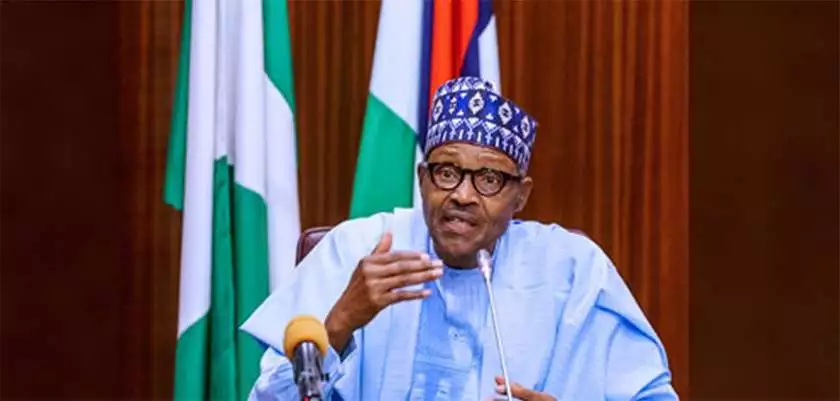
President Muhammadu Buhari has written the Senate to confirm appointments of the Secretary and Board members of the Economic and Financial Crimes Commission (EFCC); Chairman, Chief Executive and Executive Commissioners for the Upstream Regulatory Commission; and Chairman, Chief Executive and Executive Directors for the Nigerian Midstream and Downstream Petroleum Regulatory Authority.

He has written to the Senate  asking for the confirmation of the nominees.

Femi Adesina, Media and Publicity Adviser to the President, in a statement dated September 21, confirmed the Appointments.

Part of the statement reads:

“In letters to President of the Senate, Ahmad Ibrahim Lawan, the President said he was acting in accordance with the provisions of the different laws governing the establishments.

Nominees for the EFCC Board are; George Abang Ekpungu, Secretary of the Commission (Cross River); Lukman Muhammed, (Edo), Anumba Adaeze (Enugu), Alhaji Kola Raheem Adesina (Kwara), and Alhaji Yahaya Muhammad (Yobe).

“For the upstream Regulatory Commission, Isa Ibrahim Modibbo is nominated as Chairman; Engr. Gbenga Komolafe, Chief Executive; Hassan Gambo, Executive Commissioner, Finance and Accounts; and Ms Rose C. Ndong, Executive Commissioner, Exploration and Acreage Management.

“Chairman nominee of the Nigerian Midstream and Downstream Petroleum Regulatory Authority is Idaere Gogo Ogan; Engr. Sarki Auwalu, Chief Executive; Abiodun A. Adeniji, Executive Director, Finance and Accounts; and Ogbugo Ukoha, Executive Director, Distributions Systems, Storage and Retail Infrastructure.

“President Buhari urged the Senate to consider and confirm the nominees in an expeditious manner.”

Airport: Governor Umahi Stuck, Begs Buhari for N10b

0

By Charles Igbo

Ebonyi State Governor, Dave Umahi, is in pains. His plans to bequeath the State with an Airport is being frustrated. He had planned to be through with its building before leaving office in May 2023. His plan, really, was to finish it by May 2022.

But it is being frustrated over funds. Desperate, he is begging Buhari for money. A whopping N10 billion. And not sure what Buhari’s response will be, he is forced to write a letter to the Minister for Aviation, Hadi Sirika, appealing to him to help convince Mr President to help him with the money.

In the letter dated 7th September 2021, and titled Re-Notification of my letter to Mr. President seeking his financial assistance  to purchase  our airport equipment”,  Governor Umahi describes the project as huge, but bemoans that the State had no money to buy the required equipment to make the Airport functional.

The airport will not belong to the State, as Umahi has promised to hand it over to the Federal Government.

Part of the letter to the Minister reads:

“We are building one of the largest airport (sic) in Nigeria using concrete to build our runway.

“We intend to complete this project by May 2022 but we do not have money to buy the airport equipment hence our appeal to Mr President for Ten Billion Naira (10,000,000,000,00) to purchase the equipment.

“We shall handover the airport to the Federal Government on completion to concession and supervise.”

Many have criticised Umahi for committing huge sums of money to the airport in the face of the State’s dwindling finances. They insist it is not a priority, decrying the seeming competition between some States to waste money on building airports which are not viable.

One of them asked: “Why do you start an airport when you cannot equip it? Why waste money? How viable will the airport be when the Enugu International Airport is just a stone throw away?”

Only the Governor can answer the questions.

OPINION: CSOs, NGOs and Their Discontents

0
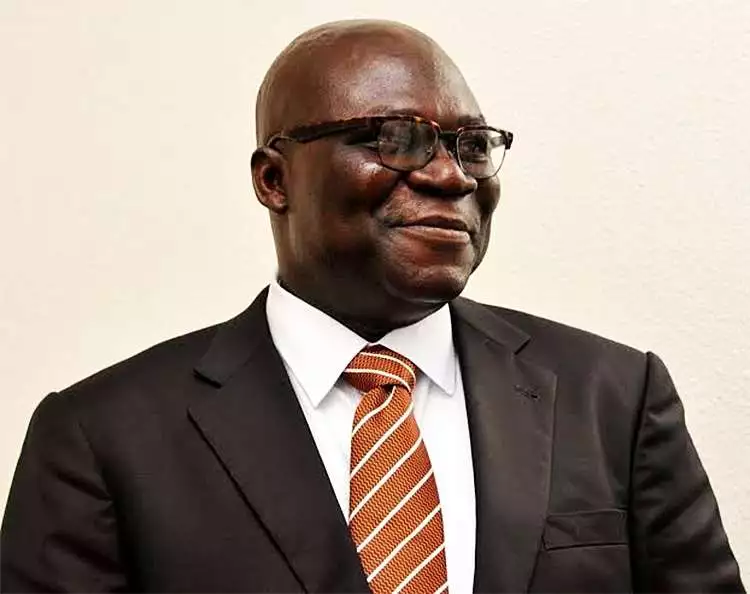
Reuben Abati

By Reuben Abati

Civil society groups, including Non-Governmental Organisations are a positive force for change and progress in society, oftentimes helping to bridge the gaps of alienation between government and the people. In developed parts of the world, CSOs and NGOs have been in the forefront of making our world a much better place by helping to fight injustice, man’s inhumanity to man, environmental abuses, global health challenges, gender discrimination and the evolution of a rules-based international system. Ordinarily, power figures succumb to the temptations of power, they get carried away, they trample on the people’s rights, they subject everything and all things to the caprices of politics, civil society organisations help to pull such delusional figures back to the real world of blood and flesh. The academic distinction that is often drawn between CSOs and NGOs may well be quite frankly a matter of nomenclature and the fine distinctions quite blurry, for both are linked by the service that they offer, rather than profit, and their devotion to the common good, and the fact that both are outside the state, working in the interest of the community.

In developing and underdeveloped countries, civil society organisations have similarly helped to advance common causes, and in Africa, they are as old as the communities themselves. Since the 70s however, there has been an explosion of those groups that go by the name NGOs, a label that seeks strictly to differentiate the activities of such groups from the state and business. Most of these NGOs are described as charity organisations, or not-for-profit, or philanthropist efforts. They rely on donations, mostly foreign and are meant to be seen as voluntary organisations making a contribution to the human community. Nigeria certainly has a positive history of CSOs and NGOs role in its development.

I can attest to that having had an insider view of the CSO/NGO community in Nigeria. I was once a consultant for an international agency where my job was to help rewrite and review proposals from Nigerian NGOs. I also worked for other international agencies on public communication processes, change projects and development ideas. At a time, I was co-founder and director of an NGO. I also co-wrote the political agenda of a major NGO. I later sat on the board of an International NGO which decided funding for many projects in Nigeria. I travelled around the world attending conferences on health, population, environment, women empowerment issues, democracy and good governance. I cannot disclose the identities of these groups, but there was no doubt about the quality of the NGO community in Nigeria and how that construct called “the third sector” could propel societal development for good. Nigeria has indeed been a major beneficiary of the efforts of men and women who stepped away from the state and business and tried to give back by devoting time and energy to key issues of our time.
Within the general civil society community, churches, community-based groups, professional associations, labour unions, volunteer groups have also done so much in the making of Nigeria. For anyone who may have forgotten, the Nigerian civil society led the struggle against military rule in this country, and fought valiantly to demand a return to civilian rule. Many died. Lost their loved ones. Hundreds of persons fled into exile. Many more were hauled into detention and jails on trumped up charges. The Nigerian media was courageous. Journalists stood at the barricades along with human rights activists and resisted oppression, at great risk to their lives. At a time in this country, it was a crime and an attempt at suicide to write or tell the truth, yet many spoke the truth. Nobody thought of profit or gain. The only gain was the common good. Many persons and groups went to the streets and shouted “Never Again”. Of course, there were opportunists who profited from the people’s anguish, but my point is that in the 80s and 90s, the Nigerian civil society had its golden moments. We are all beneficiaries of the heroism of those who made the sacrifice in the political arena, regardless of what ails us today.

So, where is that same civil society today? Its complexion has changed. And that is a source of concern. With return to civilian rule in 1999, civil society, praised for its commitment to the major task of saving Nigeria, more or less relaxed. The explanation we offered at the time was that having won the battle over the authoritarianism of the military and the violation of the people’s rights, it made sense for civil society to catch its breath and allow the new democrats to settle down as Nigeria’s Fourth Republic began. This new phase in national development coincided however with an explosion in the number of Non-Governmental Organisations in the country. Having seen the power of civil society, setting up an NGO became a special kind of enterprise. There is nothing wrong in anyone electing to help promote the frontiers of law, human rights and democracy but the lines became strikingly blurred: between NGOs that were truly non-profit and an emergent phenomenon known as NGIs: Non-Governmental Individuals: special purpose, one-man organisations with neither structure nor organisation, but a fanciful name, a business card, an indeterminate address and a fancy-dresser who goes by the name of Chief Executive with a talent for peripatetic conduct in NGO circles and the larger society. In due course, someone took the trouble to prepare a directory of NGOs in Nigeria. Our finding: Many states in Nigeria have more NGOs than companies and direct investments. Each NGO looks for funds from international agencies and local donors. Most of them are vehicles for gaining access to government departments and agencies.

The result was the emergence of the NGO chief as an entrepreneur. And some of the guys really live it up. Loud fashion. Big cars. Opulent quarters. Like everything Nigerian, the NGO community, once a haven of good, became a vehicle of access to the good life. The legacy of the early heroes has since been overtaken by many who are out there to make a quick buck, or offer special services to the highest bidder, no matter how shady the deal may be. It is perhaps not surprising therefore that the Nigerian Government has been trying to control the NGO community, has been very suspicious of it, and continues to attack the civil society community. The contempt is mutual. Between 2015 and 2016, the National Assembly proposed three different bills to regulate CSOs and NGOs viz: A Bill for the Registration and Coordination of NGOs in Nigeria and for Connected Purposes (2015), the Civil Society Commission of Nigeria Bill (2016) and A Bill for the Establishment of the Non-Governmental Organisations, Civil Society Organisations in Nigeria and for Related Matters (2016). The sponsors of these Bills argued that the objective was to ensure transparency and accountability in the NGO sector to the extent that while freedom to act on behalf of the people was important, such freedom must come with responsibility. The big problem was that the phrasing of the bills was adversarial. Most of the provisions sounded like a deliberate attempt to shut down “the third sector” and free speech. In September 2017, 23 NGOs went to court to demand that the Bills should be declared unconstitutional. The hashtag #NoNGOBill dominated Nigerian social media. The Bills died a-borning.

The matter of the NGOs in Nigeria came up again last week when the Federal Inland Revenue Service speaking through one of its directors, Temitayo Orebajo announced that Civil Society Organisations in Nigeria that are involved in “trade and business” must pay tax, obtain a Tax Identification Number (TIN) or get sanctioned in accordance with the law. This has generated mixed reactions among stakeholders. There is nothing new really. The relevant laws for NGOs are the Companies and Income Tax (CITA) 2007, the Personal Income Tax Act No 104, 1993; the Value Added Tax 2007 (as amended). Under the extant law, NGOs in Nigeria are required to pay the PAYE tax, Withholding Tax on goods and services, Local taxes and fees such as parking and garage levies, Capital Gains tax where applicable and Income Tax on passive income. I do not see what the furore is all about. It is not every NGO that is non-profit in the real sense of it. Every NGO is required to be registered by law. The tax exemption that is enjoyed by an NGO is conditional. It is not absolute. Any NGO that wants an exemption can apply to the Minister of Finance through FIRS.

Once an NGO begins to engage in “trade and business”, it must be prepared to pay taxes. This includes those churches and places of religious worship that run travel agencies, schools, bakeries and that manufacture water and other items, including anointing oil, from which they make huge profits. Some of the most lucrative businesses in Nigeria today belong to churches. In God’s name, people are cashing out and claiming that they are NGOs. I am of the firm view that some level of regulation, accountability and transparency is required. There are too many NGOs out there that are merely fronts for other businesses. Nigerians are too busy trying to break or evade the law. Too many individuals parading as non-profit organisations. The usual tendency is to see every attempt at control or regulation on civil society groups as an assault on the civic space. While it is true that the Nigerian government has been complicit in this regard, it is also true that civil society in Nigeria is problematic and cannot be placed above scrutiny.

I recall two instances and with the following illustrations, I will rest my case. I was shocked when during the crisis involving the Niger Delta Development Commission (NDDC), a member of the Professor Kemebradikumo Pondei-led interim management committee, Dr. Cairo Ojuogboh appeared on international television to claim that the civil society community in Nigeria, so-called CSOs and NGOs were part of the problem because these were groups on the payroll of the NDDC. At the time, the NDDC had come under heavy fire from persons who justifiably condemned how a development agency had been turned into a rent collection point by those who were expected to use provided resources to develop the Niger Delta and improve the people’s lot. Cairo Ojuogboh argued spiritedly that if anybody collected contracts, most of them were lawmakers in Abuja and NGOs from the Niger Delta Community, including groups that offered media services. It may be argued that these may have been phantom groups created by the thieves within the system as vehicles for self-enrichment. But they went by the title of NGOs nonetheless, claiming to be non-profit entities! They collected contracts and funds! In Nigeria, anybody can set up an NGO and buy newspaper space and make all kinds of claims. Half of the NGOs out there are not even registered. Just grab a name, design a logo and recruit an online team, generate a fanciful title and you are in business. Nobody double-checks.

I was also particularly alarmed when recently an NGO known as HEDA Resource Centre and its Chairman, Olanrewaju Suraj wwere both accused by the Police ,in a report, of having made false accusations against Mohammed Bello Adoke, former Attorney General of the Federation in the OPL 245 case involving Malabu Oil and Gas Limited. Suraj and his NGO accused Adoke of using an email address belonging to a company owned by a certain Aliyu Abubakar to engage in corrupt activities. Adoke was also accused of having had a phone conversation with an Italian journalist in 2017 where he admitted that the OPL 245 deal was a scam. Adoke has since denied the claims made against him by HEDA. He petitioned the Nigeria Police and asked for an investigation. The Police investigated Olanrewaju Suraj’s claims and wrote a report stating clearly that this was a case of blackmail, and that the information shared on social media against Adoke was unverifiable. Suraj responded by saying the Police Report was fake. The Nigeria Police Headquarters has since responded with the rebuttal that its report is authentic. To worsen matters, we are told that Olanrewaju Suraj’s Human and Environmental Development Agenda (HEDA) is “an unregistered organisation.” The Police invited Olanrewaju Suraj but the police in their report said “he feigned sickness, jumped bail and resorted to issuing press statements maligning the Police, writing frivolous counter petitions and filing suits in Court against the IGP Monitoring Unit, Force Headquarters and the Police…” Olanrewaju Suraj, the report states, has foreign partners!

I have cited these two examples to show just how in our context, “the third society” is very much like government and business – the two other major societies in Nigeria. The NDDC Audited Report has shown the extent of the rot in that body, over 13, 000 abandoned projects and N6 trillion down the drain over the years, with nothing to show for it. The Board that Dr Ojougboh defended may not be innocent, but why would NGOs be part of the loot-sharing at the NDDC? Does the NDDC Audit report include an opinion on these NGOs turned contractors and rent collectors over the years? As for HEDA and Suraj, Mohammed Bello Adoke was maligned. His reputation was dragged in the mud of social media. Although the Italian Court threw out the entire Malabu/ENI trial, Bello Adoke, who was not on trial in Italy, was continuously maligned by HEDA, trying to influence the Nigerian Courts. Our people believe the worst about anyone who ever served in government. NGOs are supposed to be change agents not tools for untruths and blackmail. The Nigerian Government however overstretched the argument when in the wake of the #EndSARS protests in 2020, it made an attempt to descend on the civil society groups in that protest. That was a clear case of lumping the pigeons with the chickens. The main spirits behind the #EndSARS protests meant well, they wanted the good of all, but their ranks were infiltrated by a group of “chicken” forces in civil society who changed the colour of the protest.

The time has come for soul-searching within the Nigerian civil society community. It is not everyone that carries placards that means well. It is not every loud-mouthed, fist-clenching character that is a revolutionary. It is sad that the Nigerian Revolution is a gathering place for anyone at all who can shout loud or bold enough to show up at the barricades. Not even NGOs should be above reproach or the law. But who will guard the guardians? Quis custodiet ipsos custodes?

Abati, PhD, a TV personality, is a regular commentator on national and current issues