

Home Blog Page 2461

OPINION: Echoes from Afghanistan

0
Reuben Abati

By Reuben Abati Ph.D

One of the first things I picked up very early in this business of public affairs analysis is something senior colleagues referred to as Afghanistanism. If you were told a column, story or essay, you had submitted for publication reeked of Afghanistanism, it was clearly a subtle kind of condemnation. It meant dabbling into a remote subject that was not of immediate consequence whereas you could have chosen a better topic of greater local value and relevance. In other words, the phrase “Afghanistanism”, was not a compliment.  It was a label for absent-mindedness, an obsession with far-away places and events, sounding eloquent about other people’s issues while overlooking the same problems at one’s doorstep.

Afghanistanism was thus projected as a perfect exemplification of parachute journalism.

But here we are, at this time, in the past two weeks, and in the past few days, Afghanistanism is now suddenly no longer a flight of fancy. It has become the symbol and the very definition of much that is wrong with our world. It is the news of the moment, not so distant anymore, but a source of worry for the entire world. I guess it is now possible to indulge in Afghanistanism without being accused of an idle journey to distant places.

Over the weekend, Afghanistan imploded. Its President, Ashraf Ghani abandoned the Presidential Palace and fled towards the direction of Tajikistan. The Vice President went in another direction. Security agents, including the police and the military, dropped their weapons and fled too. Ordinary citizens headed towards every available border to become refugees in neighbouring countries.

The United States which had been involved in the politics of Afghanistan since 1999 is also on the run out of the country, as it shuts down its embassy in Kabul, burning down sensitive documents, and rushing to airlift its citizens out of Afghanistan.

The British, and NATO soldiers who had both supported the US in Afghanistan, are also on the run. It is an unfolding chaos and tragedy, the exact end of which no one knows, and that is precisely what makes all of this a sad day for the rest of the world.

The fate of the people of Afghanistan hangs in the balance. Their future is uncertain. Their government has collapsed. A bunch of radical extremists, terrorists, ideologues and tribal warlords, known as the Taliban, are now in charge. They have taken over the Presidential palace and the entire country.

In the 1990s, they were in charge of the country. The people of Afghanistan have just been taken back to the 20th Century. That country has turned full cycle to the age of fundamentalism, the oppression of women, disdain for education and abuse of human rights. Tragic.

The crisis in Afghanistan speaks to the failure of American diplomacy and specifically of US foreign policy.  Diplomatic relations between the United States and Afghanistan dates back to 1935. In the course of that relationship, the United States was responsible for setting up in that axis, a bunch of extremists known as the Mujahideen as part of the Cold War with the Soviet Union and China, two countries with which Afghanistan shares borders.

The Mujahideen would later become the Taliban. They gained control of Afghanistan. If America thought it was exporting its Western style democracy to Afghanistan, a majorly Muslim country with strong ethnic cleavages, and that the people would adopt American ideology, it was grossly mistaken. The Muslims of Afghanistan were not willing to abandon their religious and ideological beliefs, and many resented the Western way of life. It did not take long before Afghanistan became the home of religious fanaticism and the headquarters of the Al Qaeda.

Matters later took a turn for the worse when the UN Security Council adopted Resolution 1267 which created the al-Qaeda and Taliban Sanctions Committee, and the classification of both groups as terrorist groups with sanctions over their funding, travel and activities.

Osama Bin Laden in the face of this rose to the top. In 2001, Ahmad Massoud, Commander of the Northern Alliance, an anti-Taliban coalition was assassinated by the al-Qaeda, which by then had grown in strength and scope. As it happened, later, on September 9, 2001, terrorists struck in the United States, in the tragedy now known as 9/11. The US and its allies promptly launched a retaliatory offensive: Operation Enduring Freedom, and later, Operation Freedom’s Sentinel against the Al-Qaeda.

The Taliban and its totalitarian government fell in the face of this offensive and hence resorted to a guerrilla warfare against the West and the Government installed by the US in Afghanistan. Over 2, 400 US soldiers have died in the war against the Taliban. Over 20, 000 were wounded.

Washington has spent over a trillion dollars.  The British have also lost over 450 soldiers to the battle. But even with the negotiations over the years, and America’s training of Afghan soldiers to keep the Taliban at bay, the intervention in Afghanistan by the US and NATO has proved futile and unwinnable.

With the return of the Taliban to Kabul, the war against terror in Afghanistan has proven to be a colossal failure. America has been humiliated. What we are witnessing is two decades of bad judgment and miscalculations.

In July, President Joe Biden boasted that Kabul would not fall and the day would not come when the Taliban will overrun the country. It took the Taliban just ten days to overrun the entire country. America and its allies were overwhelmed.  The now deposed Afghan government and the US have been trading blames. But after the initial denial that this is not another Saigon in South Vietnam, 1975, it is interesting to see American diplomats eating their own words.

Anthony Blinken, the US Secretary of State, and other Washington policy wonks, have now come to the realisation that this is a failed mission for the United States as was similarly the case in Vietnam, Sudan, Somalia, Yemen, Sudan, Iraq, and Libya.

America did not need to stay in Afghanistan forever. It is simple and direct logic that the Afghans would have to clean up their own mess, at some point, but the leaders of Afghanistan failed to govern properly, and America’s hasty withdrawal plan was a mistake. America misread the politics of Afghanistan. It underestimated the Taliban. It also overestimated the Afghan National Defence and Security Forces (ANDSF).

The US spent loads of dollars training what became known as the Afghan Special Forces. It was thought that they had received enough training to be able to secure their own country against the terrorists. But that was pure fiction. The ANDSF lacked real capability. The Forces were mismanaged by the local authorities. When the Taliban launched an onslaught, the ghost army that the US and other nations thought they had set up took to its heels.

The disaster that has now occurred was long in coming. It was a disaster foretold.

In February 2020, the US struck an agreement with the Taliban in Doha. That has failed too, in part because even the Afghan leaders were excluded from it.

The regional warlords who both the US and the Afghan government thought would resist the Taliban did not raise a finger as The Taliban overran the provinces all the way to the Capital. The US thought Pakistan would help. Instead, Pakistan became a sanctuary for the Taliban. The US may well claim in the end that in 20 years it helped to reduce the scope of terror and the growth of terrorism in the world, but the failure in Afghanistan, spanning about four US administrations, looks ironically as a reinforcement of terrorism.

The return of the Taliban is bound to embolden terrorist groups across the world. It will grant them confidence and hope that they can also achieve the same kind of triumph. Twenty years later, the US may have lost so much but it is the entire world that is at risk. The thinking that the US and its allies can save humanity, or that any country at all can rely on the omnipresence or the “indispensability” of the United States has been exposed as one of the biggest lies of the century.

When it suits its purpose, the US will review its own priorities and it would not matter to the average American taxpayer whether you sink or float.

And it is at this point that the prompt intervention by Nigerian President, Muhammadu Buhari becomes relevant.

In an article published in the Financial Times of London, the same day Kabul fell to the Taliban, Buhari placed his fingers rightly on the threat that the fall of Kabul poses to Africa. He referred to Africa as “the new frontline of global militancy” and called for global action to fight terrorism. He says: “We must not complacently assume that military means alone can defeat the terrorists. If Afghanistan has taught a lesson, it is that although sheer force can blunt terror, its removal can cause the threat to return.” Indeed, there are many lessons to learn from the Afghan debacle.

He would go on subsequently to say that “a lack of hope is the chief recruiting sergeant for the continent’s new brand of terrorism.”

This commentary was on point in every regard. I am tempted to suspect they just recruited someone with a sharp brain into the Nigerian Presidency. When the President returned from the UK, we were told he and his delegation would go into isolation in line with official regulations. And then from isolation, the President has just signed the Petroleum Industry Bill (PIB) into law. I digress.

The big point about Afghanistan is the need to realise its implications for the global war against terror, US Foreign policy, and the balance of power in the world. Professor Bolaji Akinyemi on Arise TV, analysing the dilemma that the world faces spoke about the “clash of civilizations” (an apt reference to Samuel P. Huntington) and the likely emergence of “a new world order.” But is Africa prepared?

The failure of US policy in Afghanistan has occurred under the watch of President Joe Biden, even if it is an inherited crisis. Will it affect his rating? Is the average American bothered about whatever happens to the people of Afghanistan? What does the future portend for Afghanistan?

The international community would probably make the usual noise about the need to protect human rights and refugees and the rule of law, and perhaps the UN Security Council would threaten to impose sanctions, but in the end, it is only the Afghans that can determine their own future.

There is no way the Taliban can overrun Afghanistan, chase away a sitting government and seize power without the people’s tacit compliance. America must learn not to dictate ideological choices to others, in a diverse and complicated world.

Hichilema: Zambia Shall Be Free

As a secondary student, one of the compulsory literature texts that my set read for the West African School Certificate Examination (WASCE) was a book titled Zambia Shall Be Free by Kenneth Kaunda. Our teacher had a funny way of pronouncing Zambia. He would turn Zambia into “Zam-bi-u Shar-lll -Be Friii” by Kerr-nnerthi- Kar uuun dar”. Till today, some of my old classmates in that literature class still refer to Zambia as “Zam-bi-u”.

Fond memories of those old days.

Kenneth Kaunda, the author of that literature text, in which he documented the independence struggle in his country, died recently at 97. He was Zambia’s President from 1964 – 1991. There have been six Presidents in Zambia since 1964.

The seventh was elected this past weekend, August 12, and it was the third time power has shifted peacefully from a ruling party to the opposition since independence.

It is unfortunate that Zambia, like other African countries, gained flag independence from colonial rule, but the dream of concrete freedom articulated by Kaunda and other African leaders has not yet been realised.

Zambia, in particular, has been unfortunate. Rich in copper but poor in leadership. I see the election that was concluded on August 12 as an attempt by Zambians to take back their country.

They made a powerful statement about people power. They resolved that Zambians deserve to be free from the grips of corruption, nepotism, neo-colonialism and the forces of retrogression. The just-concluded Parliamentary and Presidential elections in Zambia offer an indication that the people’s voices and choice should matter most in a democratic process.

It was a referendum on President Edgar Lungu’s languid leadership. When Lungu succeeded Michael Sata in 2015, he promised to put an end to nepotism and inefficiency. He was hailed as a reformist but he ended up as a hypocrite. As recently as last month, when he went to London for a Global Education Summit, he had three members of his immediate family in his entourage, and he shamelessly tried to defend himself. He even forced an amendment of the Constitution to allow him have a third term in office.

He is leader of a Pentecostal Assembly with a Ph. D in Theology but he ran Zambia like the chief priest of a local cult. He readily boasts about the infrastructure that he has provided, but Lungu sold the soul of Zambia’s commodity sector to the Chinese. He incurred debts. The country went into recession. Ahead of the August 12 elections, he deployed the military to intimidate the opposition. He shut down the internet. He threatened to jail Hakainde Hichilema, Presidential candidate of the main opposition party, the United Party for National Development (UPND).

In 2016, Hichilema lost the Presidential contest to Lungu by a mere 100, 000 votes.

Last week, and as announced yesterday by the Zambian Electoral Commission, this time around, Lungu lost to Hichilema, 1.8 million votes (39%) to 2.8 million votes (59%).

The defeated incumbent President is now saying the election was not “free and fair” and that his supporters were intimidated. The same Lungu is condemning an election that he controlled by every means possible.

Zambia has a registered voter population of 7 million out of a total population of 19 million citizens. Voter turn-out was 70% on election day, mostly youths who have now sent a strong and clear message that Lungu has overstayed his welcome.

Hichilema, 59, has his job cut out for him: to ensure the freedom of Zambia from the forces of neo-colonialism, economic failure, nepotism, cronyism, incompetence, COVID-19, and elite stupidity. Above all, he must learn from the mistakes of Edgar Lungu.

Abati, PhD, TV presenter on Arise,  is a weekly commentator on current and National issues.
Brewing Crisis In Stallion Group, As Workers Strike Over Lack Of Benefits, Poor Remuneration, Non Remittance Of Pension

0
Stalion Group Workers Strike

By Akinwale Kasali

There is palpable tension in the Automobile Department of Stallion Group of Companies. Workers have embarked on a strike action.

The reason is, allegedly, a result of the failure of the Company to give its workers a conducive and enabling work environment, lack of benefits, Non Remittance of Pension for the past Six months, Poor Healthcare Facilities (HMO) and the Non payment of their 13th month salary since 2015.

The affected workers who are embittered about the maltreatment they are going through, said they had to keep mute till this moment because of fear of being sacked and victimized, due to absence of job.

Unemployment is high, leaving the workers with no choice than to adapt to the conditions.

According to the workers who craved anonymity , “Since 2015, we haven’t been paid our 13th Month Salary. Since January, our pension money has not been remitted.

“The workshop staff in the Automobile department have gone on strike over this issue. The benefits we are entitled to have not been given to us. We are denied of every rights and privileges

“Our well-being is secondary to the company. When we were employed, there were lots of promises made to all the staff as regards welfare but till date we are yet to enjoy the dividends of working with Stallion Group of Companies”.

At the Gbagada Office, there are placards placed at the entrance with different inscriptions bothering on poor welfare, poor medical facilities, non payment of pension, poor remuneration and other issues.

They were also displayed on Nissan Social Media handle of the Company.

To get the reaction of the company, a call was placed to the Human Resource Manager of the Company, Sunday Idoro, who said he was not in the position to comment on the issue.

A call was also put to the Manager, Alhaji Tajudeen Olalere, for his reaction and the position of the Company over the allegation, but he did not pick his call.

A message was sent to him to respond, but he also failed to reply.

“Good morning Sir, I am Akinwale Kasali, a journalist, working with The Source. I called you earlier in respect of the crisis brewing in the Automobile Department of Stallion Group leading to the workers embarking on strike over allegation bothering on Lack of benefits, poor remuneration, non remittances of pension for over six months and other issues, but you did not pick your call. Will like to hear your view on this issue before going to press”.

As at the time of filing this report, the Comapny failed to respond. The crisis is continuing.

World: Buhari Warned Not To Recognise Talibans

0

By James Orji

President Muhammadu Buhari must not recognise the new government of the Taliban in Afghanistan, Kingsley Moghalu a former presidential candidate of the Young Progressive Party, YPP, has warned.

The Taliban militants designated as a terrorist organisation, on Sunday swept into power after the president of the country fled amidst chaotic situations, as many Afghans are desperately trying to flee the country to escape reprisal from the militants who have now declared an Islamic Caliphate.

The Taliban has assured the international community that no reprisal attacks against the citizens of the country. It has called for a smooth transition of power from the former administration.

It has also called on the civil servants to go back to work after declaring a general amnesty for all. But some reports claimed that the militants have invaded and looted homes, amidst growing fear that those designated as opposition are being killed

Speaking on the issue, Moghalu, a former Deputy Governor of the Central Bank of Nigeria, CBN said Nigeria must learn serious lessons from the way Taliban swept to power, particularly at a time when the nation’s security forces are battling Boko Haram and ISWAP in the north east.

He said the situation in Afghanistan is an important lesson for Nigeria, noting that religious fundamentalism, as seen in the activities of Boko Haram and the Islamic State in West Africa Province (ISWAP), does not bode well for the nation.

According to his Twitter posts, the banker turned politician said Taliban are a designated terrorist organisation and as such, must not be recognised by the federal government as a legitimate government.

Moghalu said: “Recent events in Afghanistan, where the fundamentalist and terrorism-incubating Taliban has taken over the country, carries important lessons for Nigeria. Religious fundamentalism is dangerous and tends to verge into terrorism as we see with BH, ISWAP etc.

“We must stop cuddling so-called “repentant” Boko Haram. Which serious country absorbs erstwhile terrorists into its armed forces

“Nigeria and its @NGRPresident and @NigeriaGov must never recognize or deal with the Taliban. We can never be a theocracy. What has happened in Afghanistan is possible only because of its monolithic religious makeup.

“The Government of a multi-religious country that is constitutionally a secular state must never tolerate some of its members harboring and expressing sympathy for globally recognized terrorist groups, while political dissenters are very quickly branded terrorists.”

He explained that various political interests in Nigeria must resolve their differences, so as not to plunge the country into civil war, adding  that the people of Nigeria must work out their destiny as a sovereign nation.

If Nigeria is thrown into civil war, he warned, no world power will come to the rescue.

He said “The other lesson from this is that the destiny of any country will ultimately be decided by its own people. Clearly, many Afghans are quite comfortable with the Taliban, while a minority are opposed to them.

“American intervention in 2004 that dislodged them from power was clearly unpopular with the locals, and Washington has decided to leave the Afghans to their fate. If Nigeria breaks down into civil war and violence, no one is coming here to save anyone. We will ALL suffer the consequences,” he added.


“A word is enough for the wise on all sides of our political divides, whether “this” or “that”. Violence destroys, does not pay, and is destructive. It is only permissible in self-defense.

“The characteristic of a failing state is when non-state actors use it without consequence. That is Nigeria today. Can we turn this ship around? Certainly. But not without Nigerians citizens taking their destiny in their own hands and voting massively for democratic change to a competent government that can protect our territory and our citizens.

Meanwhile, President Joe Biden of the United States of America, USA said he stand by his decision that Afghans should resolve the problems facing their country. He made the comment on the heels of criticism against his government for withdrawing troops from the troubled nation.

Former Deputy Senate President, Ibrahim Mantu Is Dead

0
Ibrahim Mantu

By Akinwale Kasali

Ibrahim Nasiru Mantu, the former Deputy Senate President, who represented Plateau Central Senatorial District at the Red Chamber, is dead. He died in the early hours of Tuesday 17th August, 2021.

The cause of the death of the late Senator was not disclosed.

Born in Chanso village, Gindiri District, Mangu Local Government Area of Plateau State on February 16, 1947. He attended the Gindiri Demonstration Primary School from 1955 – 1961 and obtained the First School Leaving Certificate.

He worked with the Public Works Department (PWD) Jos, as a Stores Requisition Clerk from 1962 – 1963 before proceeding to the Gindiri Teachers College in 1964. On leaving Gindiri in 1967, he joined the Nigerian Tobacco Company Zaria in 1968 as a Quality Checker. He moved to BEAM, a Division of UAC Nigeria as a Kalamazoo Specialist Salesman in 1971.

Mantu studied on his own to obtain O’ level GCE and Diploma in Professional Salesmanship which facilitated his movement to John Holt Ltd. in 1973 as a Trainee-Manager. He was later confirmed as a substantive Manager. In 1976 Mantu became the General Manager of John Holt Ltd. Maiduguri Venture.

In 1977 he was promoted and transferred to Lagos as Deputy General Manager, Building Materials Division, John Holt Ltd. He resigned in mid 1977 to join Plateau State Supply Company Ltd. as its first Commercial Manager.

Mantu holds a B.A. (Hons.) degree in Political Science from the Washington International University. He was awarded Honourary Doctorate Degrees of Federal University of Agriculture, Makurdi, University of Jos, Madonna University, Okija and University of Applied Sciences and Management Port Novo, Benin Republic.

Senator Mantu joined politics in 1978. He was elected Deputy State Chairman of NPN in Plateau State in 1980.

He was a founding member of the Liberal Convention. Mantu’s overwhelming popularity saw him contesting the National Chairmanship of the N.R.C. in 1990 but was edged out in a surreptitious power play. In 1993, Mantu was the Director General of National Republican Convention Presidential Campaign Organisation. In 1998, he was elected the National Publicity Secretary of the defunct UNCP and was later elected Senator on the platform of the same party.

The election was truncated by the Military regime. In 1999, Mantu was re-elected in a fresh contest as Senator representing Plateau Central Senatorial district on the platform of the PDP.

Secondus Salutes Zambian Opposition Leader; Says Victory Good For Africa’s Democracy

0
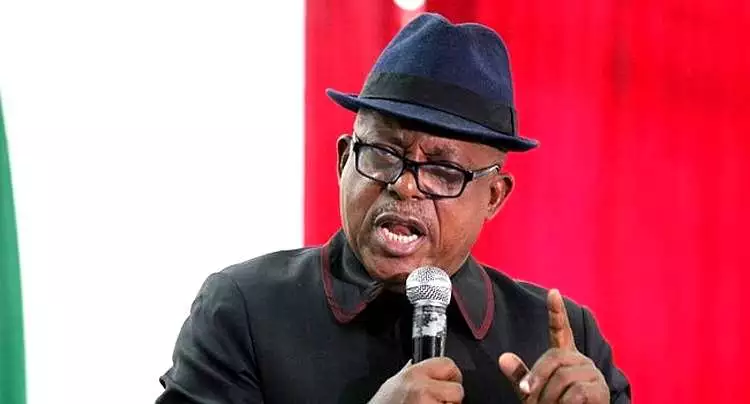
Uche Secondus

The National Chairman of the Peoples Democratic Party, PDP, Prince Uche Secondus, has congratulated the Zambian opposition leader, Hakainde Hichilema,  on his deserving victory at the nation’s Presidential election.

The opposition leader, Hichilema, was pronounced  winner by the country’s Electoral body after a landslide victory, with over a million votes more than the incumbent President Edgar Lungu.

Hichilema got his victory on the sixth attempt having presented himself in five previous Presidential elections in the country.

Reacting to Hichilema’s victory through a statement from his Media Office released, on Monday, in Abuja, Prince Secondus, the leader of the main opposition party in Nigeria said that ‘it’s a sweet victory that will help to deepen democracy in Africa.’

Prince Secondus praised the Zambian Electoral Commission and the Security Agencies in the country for allowing the will of the people to prevail.

He also commended the rare democratic posture of the defeated President in accepting defeat and promising a seamless transition to the opposition.

“This is how it should be, PDP did it in Nigeria in 2015 and stabilized our democracy.

The PDP leader noted that what differentiates African democracy and the rest of the World is in the  conduct of elections pointing that once African countries start getting it right, sky will be their limit.

Finally, Prince Secondus called on other Africa countries to take a queue from the good news coming out of Zambian democracy.

OPINION: The President is Back

0
Lasisi Olagunju

By Lasisi Olagunju

Twenty-four hours after paying an inter-infirmary visit to his co-Londoner, co-APC founder, comrade and power-sharer, President Muhammadu Buhari came back last week to meet his Nigeria as dying as he left it.

Nigeria’s definition under him has remained sorrow, tears and blood. In his absence, unremitting mass murders continued casting very long shadows here and there and everywhere. Then he came back.

And, on Saturday, 25 travellers were killed in cold blood in Plateau. Beyond issuing a knock-kneed statement, what else has the president done to still the war? The old man spent 18 days and 18 nights in London in peace and comfort while the nation burned. Only powerful people who are in government and in power do that without counting the costs.

You and I, of course, know that the journey, his presence abroad and the absence at home were at no personal cost to him and all around him. The cost and the loss are for Nigeria to count.

While the president was away, a Commissioner was abducted in Niger State. The very day the President came back, the man got his freedom from the kidnappers. He spent just five days in captivity, paid no ransom and was not rescued by anyone. He said he was, just like that, freed miraculously by his abductors. He said it was divine intervention, that it was his God that freed him.

But before the president travelled, 134 students of an Islamic school in Tegina, in same Niger State, were abducted – and marched at gunpoint into the forest by bandits. That was on May 30, 2021 – seventy-eight days ago. They are still there in rain, in sunshine – like monkeys in the wild. Could it be that those children do not have God? That they are unworthy of divine intervention – unlike the powerful Commissioner who just found himself in freedom. Or why is no one, spiritual and temporal, interceding for the children?

The kids didn’t know that the president travelled, they still do not know that after 18 sunny days in Queen Elizabeth’s country, their parents’ beloved President is back. The President is not aware that 78 days and still counting, some parents have been weeping day and night, mourning children who are not dead.

While the president was away, the BBC, without permission, interviewed parents of the Tegina kids. One of them is Hadiza Hashim who had five children among the abducted kids. She said the two youngest, Walid and Rahama, who were just two and three years old were soon let go by the abductors because they were too fragile for the great trek into slavery.

But Hadiza said the kids three elder siblings, the eldest just 13 years old, were still in captivity. She told the BBC that her children were being forgotten because they were poor.

“People have ignored what has happened because they are the children of nobodies. If they were the children of somebody, they wouldn’t be left in the wilderness for weeks with no news. It wouldn’t be allowed,” Mrs Hashim said.

She was right, poverty has politics; the poor are not citizens. Think about the fact that the Commissioner spent just five days in captivity and Hadiza’s kids will soon mark their third month in Nigeria’s forest of a million demons.

Nigeria is a country of death. It breeds demons and pampers them. Just before the President came back, the Army said Boko Haram terrorists were surrendering in droves to Nigeria’s superior firepower. The army posted photographs of the surrendered; it showed them begging for mercy and for forgiveness. Felons who said western education was sin were shown holding placards with English inscriptions. One of the placards read: “Borno State remains the home of peace.” And I ask: Since when? Another read: “Nigerians, please forgive us.” Again, I ask: Who is fishing for mercy for terrorists?

By putting (or allowing) those placards in the hands of the terrorists, the Buhari Government is already setting itself up as complicit in the campaign of death. The President’s Government is carousing these people, it calls them repentant terrorists. The Government is talking of de-radicalising and reintegrating them. The President’s Nigeria wants to reintegrate the terrorists into a society where they murdered more than 350,000 and displaced over three million people in their 12 years of bloody campaign.

In 12 years, the insurgents murdered 13 district heads; they killed scores of ward heads across Borno State alone. Why is the government pursuing reintegration of these terrorists with unusual seriousness? When a regime makes the comfort of surrendered murderers a project, it invites more than furtive glances. Abuja and its agencies say they chose that route because they were sure it would lead to peace. But will there really be peace?

The President and his strange government sure know more than we do.

Mid-July, before the President travelled, the army announced the release of 1,009 cleared suspects to the civilian authorities for reintegration into the society. It is not funny. Their victims were shocked and are asking questions. Even the Shehu of Borno, Abubakar El-Kanemi, is leading traditional and religious leaders in Borno to say no to having murderers embedded in their homes. “It is easy to forgive for the destruction of many lives and property, but difficult to forget the wanton loss of lives in the various communities of my chiefdom. Many people were killed with their property destroyed for 12 years. And you people and the media expect us to forget and forgive the repentant terrorists?” the Shehu of Borno asked.

It is said that true repentance can atone for the worst of crimes but is that the case in this case? Or is it that what we have as government is Geoffrey Chaucer’s cynical Pardoner who “sells indulgences” and plies ecclesiastical forgiveness of unpardonable sins?

Igbo people say if the oracle that eats seven fold has not eaten seven fold, it won’t rest. Unless the demon of Boko Haram is fed blood which it is used to, it won’t stop hunting for the heads of innocent people to cut.

The bandits of the North West that were sensationally photographed for repentance, did they not go back to their kidnap-for-ransom vomit? Has our Government, with its armed forces, asked itself if it is really possible for mass murderers to suddenly have a sincere change of heart? How about Boko Haram’s mass-surrender being another phase in the terrorists’ plan to overwhelm the sub-region? The ones surrendering and smiling, will they not end up as the nuclei of diffused terror networks in far and near places?

The Republic of Ghana, for instance, is ringing the alarm bell already. Ghana’s National Peace Council (NPC) last week said it had credible intelligence that terrorists were targeting key coastal cities in West Africa. It listed our Lagos as one of them. Speaking in an interview with Starr News, the NPC’s Executive Secretary, Ali Anankpieng, said: “The terrorists have voiced their intention to reach coastal West Africa. It is one of their avowed aims. We’ve heard they want to be in cities like Accra, Cotonou, Lagos, Abidjan, et cetera. That is their aim because these are the economic centers in the coastal countries within West Africa. Lagos is the economic center of Nigeria. Accra is the economic center of Ghana. I think Cotonou is the same for Benin. If they are coming to Ghana from Burkina Faso, they can do that through our borders here in the Upper East Region as one of their routes…”

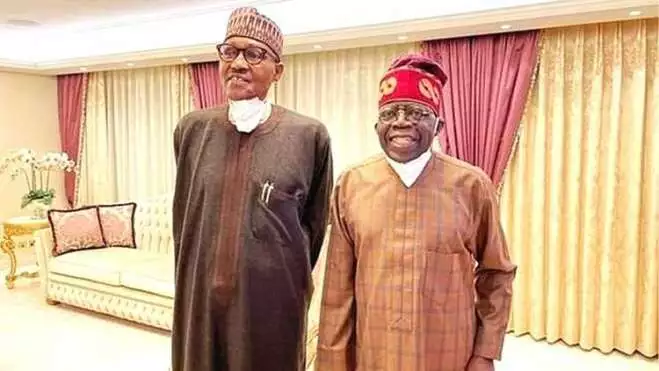
Bola Ahmed Tinubu and Muhammedu Buhari in London
Bola Ahmed Tinubu and Muhammedu Buhari in London.

From which pool will these terror groups get their soldiers?

Katsina State Governor, Bello Masari, provides a frightening insight. He told the News Agency of Nigeria (NAN) at the weekend that ISWAP (Islamic State’s West Africa Province) was planning a ‘family’ base in Nigeria’s North West. He said: “We have infiltration from Niger Republic, and Mali which have very large ungoverned spaces and you know the problem in Libya has unleashed arms and ammunition on sub-Saharan Africa. And we have to accept that within these areas, Nigeria is the richest and an attraction for all forms of criminality and kidnapping. Even ISWAP will want to, at least, stay in the North West to institute family here…”

This casual comment from a State Governor should be very bad news for the Nigerian state. ISWAP that he coldly referenced has an unbounded capacity for mischief. The International Crisis Group, in a 2019 report, said ISWAP operates by filling gaps in governance and service delivery.

“Displacing ISWAP will not be easy. Although the group’s methods are often violent and coercive, it has established a largely symbiotic relationship with the Lake Chad area’s inhabitants. The group treats local Muslim civilians better than its parent organisation did, better than its rival faction, Jama’tu Ahlis Sunna Lidda’awati wal-Jihad (JAS), does now, and in some ways better than the Nigerian state and army have done since the insurgency began in 2009.

“It digs wells, polices cattle rustling, provides a modicum of health care and sometimes disciplines its own personnel whom it judges to have unacceptably abused civilians. In the communities it controls, its taxation is generally accepted by civilians, who credit it for creating an environment where they can do business and compare its governance favourably to that of the Nigerian state.” That is part of the report of the security group.

The world all around us is sick and sad. But our Buhari has renewed his own health in London and is back, very happy in Abuja. The President is back to attend to another very important state matter – the wedding of his son.

Shakespeare’s Julius Caesar said “what touches us ourself shall be last served.” Not all leaders do that – or can do that. But at least, if the affairs of state won’t be the first to be served, let it, for God’s sake, be on the to-do list. That is the job that pays the bill for the state weddings and the off-shore medical tours of the leader.

We, therefore, seek the president’s help in getting back home the poor, abducted kids in the forests of northern Nigeria. My people say the journey may be long and tortuous and the distance very far, but the slave certainly is not without a father.

Those abducted kids have dreams too and their poor parents want them to live and grow and also do weddings – like the president’s son. I also join the Shehu of Borno to beg our president to stop exchanging handshakes with ‘repentant’ terror and rupturing peace where fear is receding.


Olagunju, PhD. is a commentator on Current & National. He is a Columnist with the Nigerian Tribune

Ondo Gov Akeredolu, PDP, Mourns Death Of House Of Rep Member Omolafe

0
Adedayo Omolafe

By Ayodele Oni

Putting aside political differences and party affliation, Ondo State Governor, Mr Oluwarotimi Akeredolu, SAN, joined numerous mourners to mourn Mr Adedayo Omolafe, a member House of Representatives, who died on Sunday.

Until his death Mr Omolafe a member of the People’s Democratic Party, (PDP) was a former Local Government Chairman and represented Akure North and South in the Green Chamber.

He was reported to have slumped at his Akure residence on Sunday and died before medical help could come.

A statement by the Governor’s Chief Press Secretary, Mr Richard Olabode, stated that the Governor received the news of the death of a Member of the House Representatives with a heavy heart and rude shock.

Describing the news of the death as devastating, Governor Akeredolu pointed out that the reality was too difficult to accept, considering that no news of illness was heard about the late lawmaker before his sudden death.

The Governor while recalling his interactions with Adedayo as one of the members of the Green Chamber from the Sunshine State, noted his candour and urbane character.

“Like every mortal, Expensive, as he was Popularly called, is gone in fulfillment of the mankind’s inescapable debt.

“It is painful that such a bright star is gone too soon. For our dear State, this is a big blow dealt by the ugly sting of death. It is a devastating tragedy.

“The late Adedayo was committed to the service of his people, having served as an elected Executive Chairman of Akure South Local Government Area in 2004 and subsequently achieving his desire to represent his people at the National Assembly.

“He was renowned for his generosity, touching lives and making people smile with his act of giving. Adedayo has a track record of service to his people. He was a grassroot politician. His death is a great loss to Akure kingdom and the State in general.

The Governor commiserated with the National Assembly, the people of Akure, and the Peoples Democratic Party (PDP) in the state.

“Even with a heavy heart, the Governor particularly condoles the immediate family of the deceased while urging them to take solace in the legacy of his good deeds, especially his philanthropic gestures while he was here.

“May the Almighty God grant him eternal rest and keep him in his bosom.”

The state PDP, in a statement by its spokesman, Mr Kenedy Peretei, said that “Everyone will die one day or another. But some departures are too much to bear. The sudden and tragic demise of Hon. Omolafe Adedayo, popularlly known as Expensive is difficult to accept, especially when he was not sick.

“Expensive had been a constant political star since he was elected as Executive Chairman of Akure South Local Government Area in 2004 under the platform of Peoples Democratic Party (PDP).

“He was the State Co-ordinator of Sure-P program under former President Goodluck Jonathan. His dream to represent Akure South/ Akure North Federal Constituency at the House of Representatives did not come to fruition since 2007.

“Now that he became elected in 2019, on the platform of PDP, the cold hand of death has extinguished this bright star at the middle of his tenure.

“The Peoples Democratic Party, Ondo State Chapter is pained. We cannot find the exact words to convey the extent of our grief.

“The exit of Expensive is a collosal and irreparable loss to our party in Akure Federal Constituency and the entire PDP in the State.

“Hon. Omolafe Adedayo is a household name in Akure. His footprints on the sands of time are indelible.

“Our party commiserates with his wife, children, and indeed the extended family. May God in His infinite mercies grant him bliss in the world beyond.”

Finally, President Buhari Signs PIB Bill Into Law

0
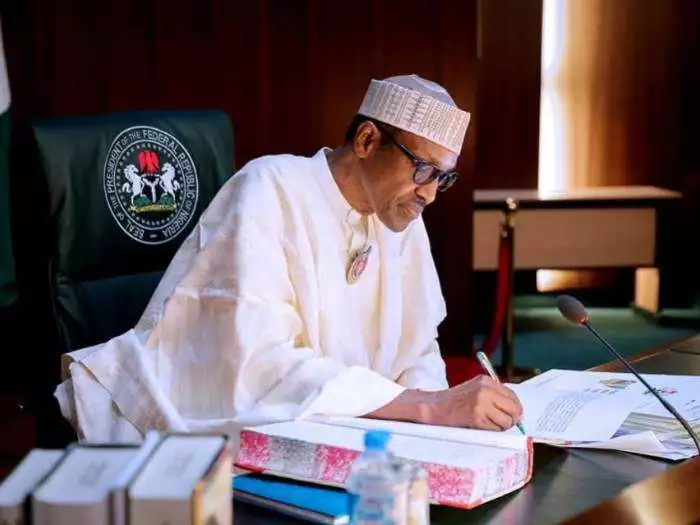
President Buhari
President Buhari

By Ayodele Oni and Akinwale Kasali

After a long wait and several deliberations, President Muhammadu Buhari finally signed the Petroleum Industry Bill 2021 into law.

President Buhari who recently returned from an Educational Summit in United Kingdom, and working from home because he is on self quarantine, as required by the Presidential Steering Committee on COVID-19 assented to the Bill Monday August 16.

The ceremonial part of the new legislation will be done on Wednesday, after the days of mandatory isolation would have been fulfilled.

The Special Adviser to the President on Media and Publicity, Femi Adesina, made this disclosure.

The Petroleum Industry Act provides legal, governance, regulatory and fiscal framework for the Nigerian petroleum industry, the development of host communities, and related matters.

The Senate had passed the Bill on July 15, 2021, while the House of Representatives did same on July 16, thus ending a long wait since early 2000s, and notching another high for the Buhari administration.

Bandits Abduct 15 Students, Four Staff Of Agric College, Zamfara; Three Escape, Return

0
Kidnappers
Kidnappers

By Ayodele Oni

Again,  Bandits invaded Zamfara State College of Agriculture and Animal Science, Bukara, early Monday and abducted 15 students and four staff members. Two guards in the school and a Policeman were also killed.

However, hours later, Two staff members and a student escaped and returned, according to the College’s Deputy Provost.

The bandits, according to Police reports, who were in large numbers, came to the school at about midnight with intent to abduct large number of students and staff.

They were, however, confronted by Police Operatives, who were alerted and responded to the scene on time.

In a shoot out with the bandits, a Police Inspector and two  civilian guards lost their lives while 15 students and four staff were abducted by the bandits.

A statement by the Command spokesman, Mohammed Shehu, in Gusau, explained that the State Commissioner of Police,  Ayuba Elkana, accompanied by senior officers, visited the College following attack.

“The Police operatives, while on extensive bush combing at the surrounding areas, rescued three staff,who will be debriefed and medically examined before being reunited with their families.

‘The Commissioner of Police while at the school, held an emergency meeting where he assured the management and the relations of the victims that the Police Command in collaboration with other security agencies especially the Military are deploying various search and rescue strategies in order to ensure the safe rescue of the abducted students and staff.

“The CP further went round the school and assessed the existing security arrangements to enable more reinforcement be provided against further invasion.

“The Provost of the school while briefing the Commissioner of Police commended the resilience of the Police operatives for standing their ground despite  the abduction of  15 students  and  four staff.”

Banks In Afghanistan: Taliban Bans Women Workers

0
Afganistan Bank

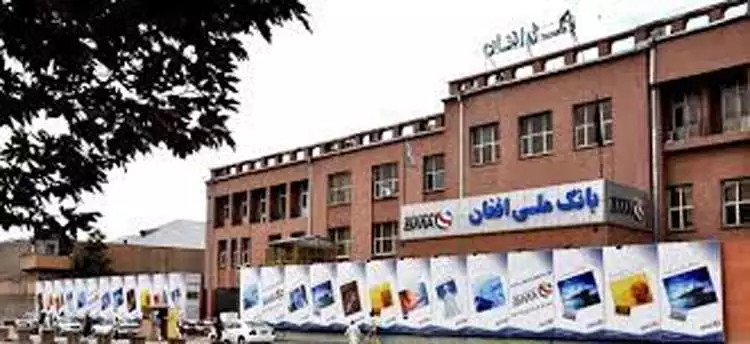
In early July, as Taliban insurgents were seizing territory from government forces across Afghanistan, fighters from the group walked into the offices of Azizi Bank in the southern city of Kandahar and ordered nine women working there to leave.

The gunmen escorted them to their homes and told them not to return to their jobs. Instead, they explained that male relatives could take their place, according to three of the women involved and the bank’s manager.

“It’s really strange to not be allowed to get to work, but now this is what it is,” Noor Khatera, a 43-year-old woman who had worked in the accounts department of the bank told Reuters.

“I taught myself English and even learned how to operate a computer, but now I will have to look for a place where I can just work with more women around.”

The incident is an early sign that some of the rights won by Afghan women over the 20 years since the hardline Islamist militant movement was toppled could be reversed.

The Taliban have steadily overrun the country since U.S. troops began withdrawing in May and the insurgents entered the capital on Sunday.

When they last ruled Afghanistan from 1996 to 2001, women could not work, girls were not allowed to attend school and women had to cover their face and be accompanied by a male relative if they wanted to venture out of their homes.Women who broke the rules sometimes suffered humiliation and public beatings by the Taliban’s religious police under the group’s strict interpretation of Islamic law.

During hitherto fruitless talks over a political settlement in recent years, Taliban leaders made assurances to the West that women would enjoy equal rights in accordance with what was granted by Islam, including the ability to work and be educated.

‘THE WORLD SHOULD HELP US’

Two days after the episode at Azizi Bank, a similar scene played out at a branch of another Afghan lender, Bank Milli, in the western city of Herat, according to two female cashiers who witnessed it.

Three Taliban fighters carrying guns entered the branch, admonishing female employees for showing their faces in public. Women there quit, sending male relatives in their place.

Taliban spokesperson Zabihullah Mujahid did not respond to a request for comment about the two incidents. Spokespeople for the two banks did not respond to requests for comment.

On the broader question of whether women would be allowed to work in banks in areas it controls, Mujahid added that no decision had yet been made.

“After the establishment of the Islamic system, it will be decided according to the law, and God willing, there will be no problems,” he said.

The United States and others Western powers fear that the Taliban will roll back many of the freedoms won by women.

Gains made in women’s right have been touted as one of the biggest accomplishments during the 20 years that U.S.-led forces have been deployed in Afghanistan, although they have mostly been made in urban centres.

Afghan women working in fields including journalism, healthcare and law enforcement have been killed in a wave of attacks since peace talks began last year between the Taliban and the U.S.-backed Afghan government.

The government blames most targeted killings on the Taliban, who deny carrying out assassinations.

“The Taliban will regress freedom at all levels and that is what we are fighting against,” an Afghan government spokesperson said.

“Women and children are suffering the most and our forces are trying to save democracy. The world should understand and help us.”

Scores of educated Afghan women took to social media to appeal for help and express their frustration.

“With every city collapsing, human bodies collapse, dreams collapse, history and future collapse, art and culture collapse, life and beauty collapse, our world collapses,” Rada Akbar wrote on Twitter. “Someone please stop this.”

Curled from Reuters