Home Blog Page 2440

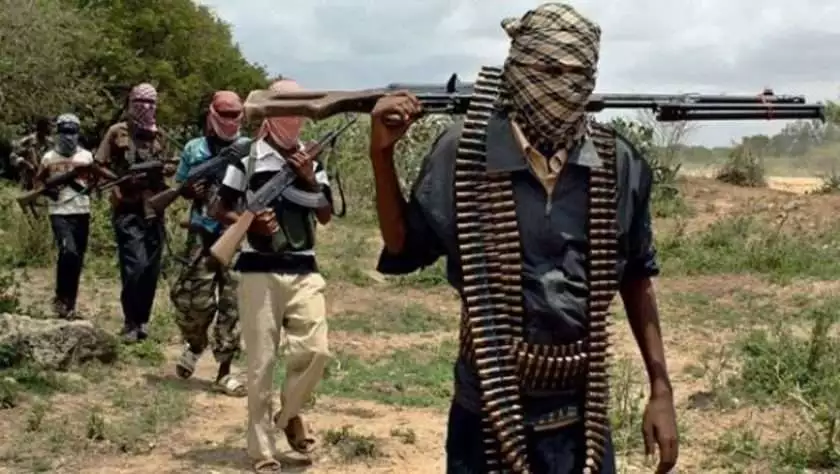
Six Days after, Terrorists Free Katsina SSG’s Brother, Invades College Of Education

0
Kidnappers
Kidnappers

By Uche Mbah

78 years old Kabir Muhammed, a brother to the Secretary of the Katsina State government, Dr. Muhammed Inuwa, has been released by his abductors.

This is as they also invaded the Katsina College of Education, Dutsinma, and abducted the three sons of the Deputy Provost. Reports say four heavily armed bandits stormed the College  on September 6, around 11.30pm, broke into the home of Dr. Isma’ll Ado Funtua, and abducted his three sons.

Reports indicate that the Katsina SSG’s elder brother may have been released on a trade off as the leaders of the abductors was known to security agencies, who, sources said, also abducted the father of the ring leader and sent a message to the abductors that the father of their leader was abducted.

Muhammed was abducted Wednesday while working on his farm in Damsu Council Area of Katsina state, President Buhari’s home state.

Only recently, a retired top Security officer, had alleged that the sponsors of Boko Haram are known, and belong to the highest places in the country, including the National Assembly and even the Presidency.

Recently, also, reports showed that the United States Government said it  would expose the names of Boko Haram sponsors.

Coincidentally, there appears to be more positive activities in the fight against terrorists after the said US statement. Almost soon after, the Federal Government wrote the Telecom companies through the Nigerian Communications Commission, and asked them to shut down Telecom activities in Zamfara state.

The Companies complied,  resulting in  network downing in the State and other neighboring states.

Unfortunately, this has an adverse effect that parents of kidnapped students, and other relatives of kidnapped victims can no longer communicate with their abductors, thereby keeping them in the dark.

The brighter side is that the abductors cannot negotiate again for ransom, unless they leave the zone.

Meanwhile, the spokesperson for the Secretary to the Katsina State Government, Kabir Yar’Adua, has confirmed the release of his brother, saying that no dime was paid as ransom. It was learnt that the abductors capitulated when their informers were arrested including the father of the ring leader, who was released in exchange for the abducted.

Sceptics believe that if the abductee was an ordinary person, the release could not have been this quick.

Qatar 2022: Onyema, Air Peace Chairman, Gives Super Eagles N20m; Team Defeats Cape Verde

0
Super Eagles of Nigeria

By Akinwale Kasali

A 78th Minute own goal from Kenny Santos was all the Super Eagles of Nigeria needed to record a 2-1 win in the tension soaked encounter with the Blue Sharks of Cape Verde in the Group C qualifying match for the FIFA World Cup in Qatar.

Dylan Tavares had given the Indian Ocean nation the lead in the 19th minute, beating Super Eagles goalkeeper, Maduka Okoye, with a right footed volley.

The Ahmed Musa captained team put themselves together and mounted pressure on their host, leading to the much needed equalizer courtesy of Napoli Football Club of Italy striker, Victor Osimhen in the 39th minute.

The first half ended 1-1 apiece with Coach Gernot Rohr introducing Henry Onyekuru and Terem Moffi in the second half for Ahmed Musa and Moses Simon.

The substitution paid off, as the new players mounted pressure on the Cape Verdeans leading to panic in their defense resulting into the own goal.

In the space of two minutes, Maduka Okoye, Henry Onyekuru and Kenneth Omeruo were booked by the Moroccan referee for time wasting and for an infringement.

As the referee signaled the end of the encounter, the excited players hugged themselves happily for a job well done.

With this victory, the Super Eagles have an 100 percent record in the qualifiers garnering Six points from two matches.

Liberia has three points following their 1-0 victory over the Central African Republic in Bangui.

Cape Verde and Central African Republic have One point apiece.

The Super Eagles will have a double header with the Central African Republic in Lagos and Bangui in October 2021, for Day 3 and 4 of the qualifiers.

For the feat, Super Eagles, smiled home with a whopping N20 Million promised them by Air Peace Chairman, Allen Onyema.

Onyema had promised the players the sum if they record a victory in Praia, Cape Verde Capital, as they boarded the Airline enroute Cape Verde for this match.

Onyema had said, “If you win this match, I am going to give the team N20 million on arrival. I’ll bring the cash and hand it over.

“This will serve as a stepping stone in unifying our Nation. Go there and die for the country.

“You won your first match resoundingly, and we expect that the one happening in Cape Verde in 24hours time will not be different.

“You’re carrying on your young shoulders the aspirations and the hopes of a Nation. You must help us in restoring hope to this country.

“Nigeria is a great country with so much potentials to achieve. We are yet to get there. We may have our differences but we love ourselves.

“We knew some of our players have to leave after the match and they had to do well before leaving because they cannot go to Cape Verde.”

The Super Eagles played without Eight of their regulars who had to return to their Clubs due to the Covid-19 restriction by the United Kingdom authority on Countries regarded as Red Zone Alert for the deadly pandemic.

I know The Bandits, They Are Fulani – Katsina Governor, Masari

0

By Gideon Njoku

Just in case anybody was in doubt about the identity of those who have reduced Nigeria to one of the World’s most dangerous nations to live in, Katsina State Governor, Aminu Masari, has wiped it out. And if you are one of those who insist that an ethnic group – Fulani – has wrongly been categorised as  majorly responsible for the tragic situation, perish the thought. You have the truth from the horse’s mouth.

Governor Masari has let the cat out of the bag. In his most candid interview so far, Masari said the Bandits are Fulani.

He spoke on Monday on a Channels Television interview programme, People and Politics.

Asked by his interviewer about the bandits, Masari said he knows them, and who they are. They are  Fulani, he submitted.

Masari: “They are the same people like me; who speak the same language like me, who profess the same religious beliefs like me.

“So what we know about these bandits, they are not aliens, they are people we know. They are people who have lived with us for hundreds of years.

“The infiltration we have from some West African countries and North African countries, are also people of Fulani extraction.

“Majority of those involved in this banditry are Fulanis, whether it is palatable or not, but that is the truth. I don’t say 100 per cent of them are, but majority of them are.

“And these are people who live in the forest and their main occupation is rearing of cattle.”

He said that climate change and lack of access to education whether Islamic or Western education aggravated the situation.

The Governor had, before now, met with a number of the bandits and tried to reach an agreement with them, but banditry has not abated in his state or neighbouring states. It has, instead, worsened, even after Governments, including the Katsina State Government, had spent hundreds of millions of Naira, either to “appease” them or to pay ransome.

President Muhammadu Buhari is Fulani. And so is Governor Masari. For the records, both are from Katsina State.

Guinea: ECOWAS Moves To Return Democracy After Coup D’etat

0

By Ayodele Oni

The Economic Community of West African States (ECOWAS), will hold an Extraordinary Summit on Guinea on Thursday according to a staff memo shared with Reuters.

Special forces soldiers ousted long-serving President Alpha Conde and dissolved his cabinet on Sunday, prompting ECOWAS to demand a return to constitutional order and threaten to impose sanctions.

The leaders of the Military coup promised on Monday to set up a transitional Government of National Unity after ousting President Alpha Conde and dissolving his Cabinet.

Sunday’s Coup, during which Conde and other top politicians were detained or barred from travelling, is the third since April in West and Central African countries, raising concerns about a slide back to Military rule in a region that had made strides towards multi-party democracy since the 1990s.

The takeover was widely condemned by international powers, placing pressure on the new military leaders to offer a plan beyond the toppling of the old order, and to reassure investors that Guinea’s significant ore exports would not be cut.

“A consultation will be carried out to define the major framework of the transition, then a government of national unity will be put in place to lead the transition,” coup leader Mamady Doumbouya, a former French legionnaire officer, told a meeting of Conde’s ministers and senior government officials.

Doumbouya did not say what the transition would entail, or give a date for a return to democratic elections.

His seizure of power was buoyed by widespread disaffection with Conde, 83, who promised stable democracy but once in power violently silenced opponents, failed to reduce poverty and last year decided to run for a third term in power – a move many said was illegal.

The Coup was welcomed by many, but spooked the mining sector. Guinea holds the world’s largest bauxite reserves, an ore used to produce aluminium.

Prices of the metal shot to a 10-year high on Monday, though there was no sign of supply disruptions.

In an effort to quell fears, Doumbouya said sea borders would stay open so mining products could be exported. A nightly curfew now in place does not apply to the mining sector, he said.

“I can assure business and economic partners that activities will continue normally in the country. We are asking mining companies to continue their activities,” he said.

Light traffic resumed, and some shops reopened around the main administrative district of Kaloum in Conakry that witnessed heavy gunfire throughout Sunday as the special forces battled soldiers loyal to Conde. A military spokesman said on television that land and air borders had also been reopened.

Still, a crackdown was evident. Doumbouya prohibited government officials from leaving the country and ordered them to hand over their official vehicles.

The politicians who attended Monday’s meeting were later escorted by soldiers in red berets through a jeering crowd to the army unit’s Conakry headquarters.

Two diplomatic sources said Prime Minister Ibrahima Kassory Fofana, Presidential Affairs Minister Mohamed Diané and National Assembly Speaker Amadou Damaro Camara have been arrested.

Amnesty International, in a statement on Monday, called on the coup leaders to clarify the legal basis for Conde’s detention, and to free those Conde had arbitrarily detained in the months surrounding last year’s election.

Regional experts say however that unlike in landlocked Mali where neighbours and partners were able to pressure a junta there after a coup in August 2020, leverage on the military in Guinea could be limited because it is not landlocked and also because it is not a member of the West African currency union.

OPINION: Kaduna And Electronic Voting: Lessons for Nigeria

0
Reuben Abati

By Reuben Abati

“We don’t believe in cheating or rigging elections but also we don’t want other parties to cheat us, and that was why we encouraged the Kaduna State Independent Electoral Commission to come up with a fool-proof voting process.” – Nasir el-Rufai

The prefatory statement above belongs to Nasir el-Rufai, the Governor of Kaduna, one of the few Governors who have consistently demonstrated faith in the deployment of technology to protect the integrity and credibility of the electoral process in Nigeria. He is the only one who has given effect to his conviction.

In 2018, Kaduna state under his watch, conducted elections with an electronic voting system. This was the first time anyone in Nigeria would adopt electronic voting, and the second case of electronic voting in Africa, after Namibia. That year, the then extant law, namely the Kaduna State Independent Electoral Commission Act No. 10 of 2012, was amended to establish electronic voting in Section 16 (3) thereof.  There were allegations of multiple voting and other challenges. But this did not deter Mallam Nasir el-Rufai.

On September 4, 2021, his administration repeated the same “offence”, if the adoption of modern technology by African electoral umpires can be so described, by ensuring that the Kaduna State Independent Electoral Commission (KADSIECOM), again conducted elections in the state’s Local Government Areas in line with Section 16(3) of the KADIESCOM Act.

At the end of the exercise, it was reported that the challenges observed in 2018 had been addressed. Multiple voting was no longer possible. The software had been upgraded to deny any voter an attempt to vote a second time. About 18, 000 ad hoc staff were deployed whose main assignment was the verification of the voter’s register. The Electronic Voting Machine (EVM) was a computerized box with simple Cancel and OK buttons that could be used even by the illiterate and the elderly.

You select the logo of the party you want to vote for, and simply tap either OK or Cancel – a simple Yes or No choice. The Cancel button in fact allows you to change your mind. Each EVM was powered by a battery that could last up to 16 hours. KADIESCOM worked in collaboration with the telecommunication companies to provide the network for the immediate transmission of results. Voting took less than a minute.

The LGA election in Kaduna State on Saturday, September 4 was by no means perfect however. About 11 electronic voting machines were vandalised by suspected hoodlums. This should not be surprising. Violence is part of the sociology of Nigeria’s electoral process. Those who do not trust the system would always find a way to violate it. No matter how fool-proof a measure may be, Nigerians would always find a way to disrupt it. Oftentimes, out of raw scepticism.

In the course of the elections in 19 LGAs, 41 EVMs were snatched across Kaduna State. Should anybody be surprised? The EVMs looked like boxes. In regular, manual, elections, the ballot box is the main victim in the hands of those who want to manipulate results. The only difference with an EVM is that it is electronic and has a digital footprint. Stealing or snatching it is pointless. The Kaduna State LGA elections have now ended.

The APC won in 15 area councils. But the more interesting outcome was the disclosure that the Governor, Nasir el-Rufai lost to the Peoples Democratic Party (PDP) in his Ungwar Sarki Polling unit in Kaduna North Local Government Area. It is a major dent for a politician to lose in his own polling unit! It makes no difference if his party wins across the entire state. He will be constantly reminded that he could not even get the endorsement of his own immediate neighbours.

With electronic voting, it may be difficult to manipulate results, stuff ballot boxes or thump-print multiple ballot papers. It should be noted however, that voter turn-out in the Kaduna Local Government elections of September 4, 2021 was very low. This is a nationwide pattern, and it is one of the ills that must change to properly deepen participatory democracy not just in Nigeria, but across Africa.

The big gap between inputs and outcomes in the electoral process in Africa has alienated the people from the system and from democracy itself. Why go out to vote when there are no guarantees that your vote will count or translate into improvements in your circumstances? Why vote for people who will get into positions of privilege on the wings of your efforts and end up forgetting you? The biggest threat to democracy in Africa is this trust deficit and the disconnect between the people and the actual value of elections.

This however should not discount the value of credibility, integrity, transparency and accountability in the electoral process. This is the objective of those who support the idea of electronic voting and the electronic transmission of results.

Twice now, in 2018 and 2021, the El-Rufai administration has shown that it is doable. There may be hitches and challenges but these can be identified and fixed in subsequent elections. It may be argued that Kaduna state is relatively small (population – 6- 1 million) compared to Nigeria with a population of over 200 million and 774 local councils). But we have it on record that should Nigeria decide to adopt electronic voting, the Independent National Electoral Commission (INEC) can deliver on that score.

The GSM operators in the country have also openly said that they can provide the necessary services. There are certainly lessons that can be learnt from the Kaduna experience, and from other countries including Namibia and the West. The only problem we have in Nigeria is the refusal of Nigerian lawmakers at the Federal level to see the value of electronic voting.

The adoption of electronic voting by Kaduna State sends a strong message to those members of the National Assembly who conveniently rushed to the toilet, or were absent, or lied shamelessly that there was no mobile telephony in their village when the National Assembly voted on the proposed Electoral Act (Amendment) Bill 2021.

Getting the right electoral framework for elections in Nigeria has been a major concern since the return to democratic rule in 1999: the 2001 Electoral Act, 2002 Electoral Act, 2006 Electoral Act and the 2010 Electoral Act.

It has been majorly a trial and error process. In 2018, ahead of the 2019 general elections, the 8th Assembly passed a Bill which was forwarded to the President for his assent. The President rejected the Bill, four times, on the grounds that the proposed amendments to the law could not come into effect due to time constraints. We held the 2019 elections, which again expectedly threw up issues about the integrity of the electoral process and the need to modernise elections in line with global best practices.

When the 9th National Assembly assumed office in June 2019, its Chairman, Dr. Ahmed Lawan promised Nigerians that the Electoral Amendment Bill would be treated as a priority assignment. Indeed, Lawan kept his word, as he did also with the Petroleum Industry Bill. But it is one thing to make a law. It is another thing to do so in public interest.

What was meant to be an opportunity to provide Nigerians with a progressive, forward-looking electoral framework ended up as a farce. In the second week of July, a bewildered electorate watched as Nigerian lawmakers created an ugly scene over Section 52 (2) and (3) of the Electoral Act Amendment Bill which stated that INEC “may transmit results of elections by electronic means where and when practicable.”

The Senate passed the bill on July 15. The House of Representatives did so on July 16. Both Chambers of the National Assembly later resolved that the electronic transmission of results would be allowed only with the express clearance of the National Communications Commission (NCC) and the National Assembly.

Thus, Nigeria’s lawmakers took away the independence of the country’s electoral body, a blatant violation of Section 78 of the 1999 Constitution, and a brazen attempt to sabotage the law.

It was most disgraceful that even opposition politicians in the National Assembly could not vote in the people’s interest. There were other concerns: the decision to increase campaign expenses: to become President, you would need a minimum of N15 billion, Governor – N5 billion; Senator N1.5 billion, House of Representatives member N500 million and State House of Assembly member N50 million.  In other words, you have to be wealthy to aspire to any important elective position in Nigeria.

If this bill becomes law as proposed, only armed robbers and internet scammers would probably end up in high places in this country. President Buhari should not sign the Electoral Act Amendment Bill 2021. It takes the country backwards, not forwards. It is the handiwork of cowards and a backward National Assembly.

In Kaduna State, Governor El-Rufai has shown that it is possible to try new options and possibilities, and deploy modern technology to leap-frog the process. The navel-gazing lawmakers in the National Assembly should be called out. One of the errant ones has since apologised to her constituents for going AWOL when she was most needed, but there are others, so pompous and confidently ignorant, they just don’t get it.

Alpha Conde and the Coup in Guinea

On Sunday, September 5, 2021, President Alpha Conde, 83, of Guinea Conakry was deposed by a team of former elite military forces led by Lt. Col. Mamady Doumbouya.

Conde does not deserve anyone’s sympathy and that does not necessarily amount to an endorsement of the military coup in that unfortunate country.

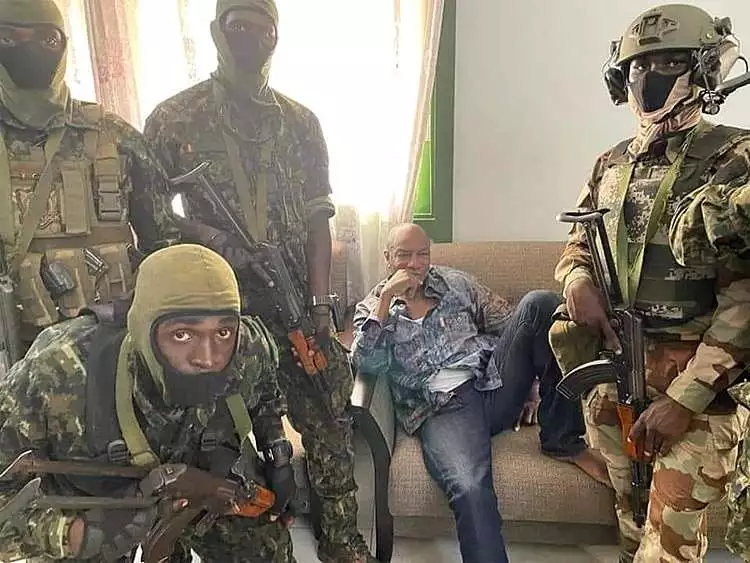
Indeed, Conde is the architect of his own misfortune, a greedy African leader who thought he was invincible, untouchable and supreme. The photos that were released on Sunday showing him in a humiliating position, surrounded by the same soldiers who used to protect him was a loud reminder of the ephemerality of power and the unpredictability of human circumstances.

The once great Alpha Conde looked very sober. The leader of the coup used to be his bodyguard.  He used to hold an umbrella over his head. Today, Conde is at the mercy of Lt. Col. Dambouya. One wrong move, he, Conde could lose his life.

He wanted to remain in office for life. He denied the people of Guinea Conakry the opportunity to make their own choice. What the people of Guinea could not do, the military have done it for them. Except that the unconstitutional take-over of power in Guinea is completely unjustifiable.

The people of Guinea may have trooped out unto the streets of Conakry and other parts of the country to celebrate the downfall of a man who held them down, but that is no justification for a return to military rule.

Many of them removed their shirts and screamed: “Doumbouya! Freedom.” But what next for Guinea?

In the 70s, African political scientists pushed the idea of the strong man as leader and messiah, and hence accommodated militarism as a vehicle of development. But by the 80s, the wave of democratisation led by the ideological politics of the United States created a new momentum.

By the 90s, democracy was the new sing-song in most African states. The challenge however has been how to consolidate the gains of democracy and its value chain. It is most unfortunate that in recent times, rather than have a consolidation, Africa is beginning to experience a backward trajectory.

The coup in Guinea fits into this pattern.

Before now, since 2010, there have been coup attempts in Niger (2010, 2011), Guinea Bissau (2010, 2011) Madagascar (2010), DR Congo (2011, 2013), Sudan (2012, 2019), Benin (2013), Libya (2013), Egypt (2013), Gambia (2014), Gabon (2019), Ethiopia (2019) Central African Republic (2021) and successful coup attempts in Niger (2010), Mali (2012, 2020, 2021), Sudan (2019), Burkina Faso (2015), Egypt (2013) and now Guinea-Conakry (2021).

Military interventions in African politics constitute a major setback for democracy.

The coup in Guinea Conakry can only add to the instability in the Sahel region of West Africa and provide further stimulus for the agents of destabilization – the Jihadists and the terrorists operating in the Sahel. ECOWAS Presidents Nana Akufo Addo of Ghana and Muhammadu Buhari of Nigeria, and the UN Secretary General, Antonio Gueterres have condemned the coup but the international community must go a step further and ask Doumbouya and his gangsters to hand over power immediately to civilian authorities.

They have suspended the Constitution and all institutions as part of an attempt to launch a transitional government.

It should be made clear to them that their rebellion violates the ECOWAS protocols on Democracy and Good Governance and the Constitutive Acts of the African Union.

ECOWAS and AU need not worry too much about what France thinks. The relationship between France and its former colonies in Africa is at best opportunistic. The direct victims are the long-suffering people of Guinea.

Guinea is one of the most blessed countries in the world in terms of natural resources: the biggest iron ore deposit in the world, gold, diamond, bauxite but in typical African fashion, this has not translated into prosperity for the people.

Guinea is effectively one of the poorest countries in the world.  And the problems are not far to seek: corruption, nepotism and bad leadership.

Alpha Conde spent his early career as a radical, progressive, opposition politician. He challenged the Government of Lansana Conte in 1993 and again in 1998. In 2010, Conde led the RPG to victory and was thus elected President of Guinea for a first term of five years.

He was re-elected for a second, final term of another 5 years in 2015. In 2020, when he was supposed to step down from office, Conde chose to amend the Constitution to enable him extend his stay in office.

Despite spirited opposition to this gamble, Conde imposed himself on the people. He was 82 at the time. He even increased the Presidential term from five years to six.

In October and November 2020, there were protests on the streets of Conakry. Still, he held the election, which he won of course, and began a six-year term in office, illegally and unconstitutionally.

That gamble came to an end on Sunday with the coup in Guinea-Conakry. It would have been better if he was removed by the people themselves in a democratic process. He promised to be Guinea’s Mandela. He was Guinea’s Caligula.

Nonetheless, the cowboys looking like they don’t know their left from their right must not be encouraged to remain in power and office. The creeping collapse of the democratic ethos as seen in Chad, Mali and Guinea-Conakry is an ugly burden for the whole of Africa.

Other African leaders who are tempted to sit-tight in office should learn from the disgrace of Alpha Conde.


Abati, PhD, a TV personality, is a regular commentator on current and  national issues.

E-Registration, PDP Targets One Million Members In Edo State

0

By Ayodele Oni

As the opposition People’s Democratic Party, (PDP) commences e-registration of members nationwide, Edo State chapter of the party has said it has a target of one million members to register.

The Chairman of the PDP e – registration committee, Mr Kabiru Adjoto, explained in Benin city that the target was based on reality on ground and not just a mere projection.

Speaking during the launching ceremony of the exercise at the party’s State Secretariat, the Chairman stated that “The party has resolved to digitalize the process of its membership by leveraging on Information and Communication Technologies(ICT) for safer and more efficient preservation of data.

“Therefore, the party’s technical team has come up with a software designed to aid data capturing either through self registration or field registration on the website.

“The party’s technical committee has taken into cognizance the low technological penetration in most areas across the country; hence the importance of the field registration, which will be coordinated by trained party agents in the 192 wards that make up Edo State.

“The party has put all machineries in place for the training of these agents who will be deployed to their various wards to drive the exercise.

“Edo State is among the few pilot states where the exercise is expected to kick-off in earnest and our performing governor, Godwin Obaseki is the National Chairman of this exercise, as such, Edo is expected to set the pace.

“Our target is to register at least one million (1,000,000) Edo people in the course of the exercise.

“The Peoples Democratic Party (PDP) is keenly determined to take power back to the people come 2023 in order to offer purposeful leadership for Nigerians as against the crass inept leadership disposition of the APC led federal government.”

In his response, the Chairman of the PDP in Edo State, Dr Tony Aziegbemi, stressed the need for the e-registration exercise in the state to be the best amongst the lot as the state governor is the national chairman of the exercise.

Ondo Govt Goes Tough On Insecurity, Closes Two Hotels

0
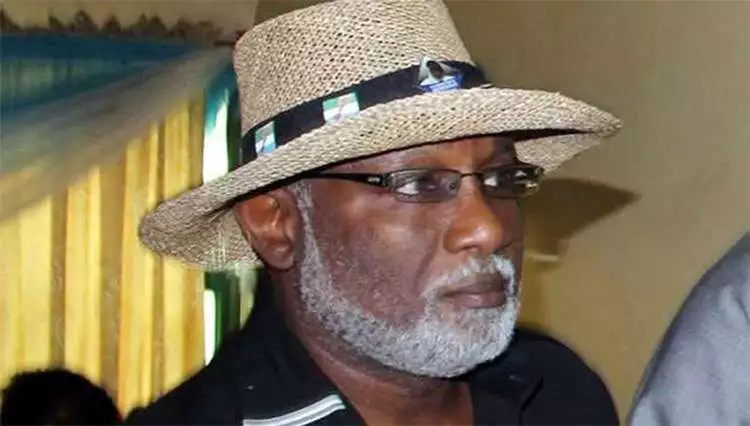
Rotimi Akeredolu - Ondo Communal Clash

By Ayodele Oni

Two hotels in Ondo state came under Government hammer as they were closed down for alleged security breaches.

In recent times, there have been reported cases of cultists terrorizing residents of Akure, the state capital, while clashes between various cult groups left behind casualties.

There has also been an increase in the number of armed robbery incident, which has forced people to retire to their various homes to avoid falling victims.

The State Government had introduced various measures to check activities of the cultists, including ban on commercial motorcyclists from operating beyond 8.00 pm.

Following security report on the activities of  two relaxation joints located in Akure, the State Government decided to seal the premises.

Already, a High Court in Akure has granted request of the State security network, Amotekun, to seal up the premises of the relaxation centres till further notice.

One of the affected hotels, is located at Ilaje Street, Ijapo Estate in Akure, while the second one, a nite club is at Oyemekun area also in the State capital.

The Senior Special Assistant to Governor Rotimi Akeredolu on Special Duties,  Dr Doyin Odebowale, explained that the decision became imperative as the two centers have become security risk.

According to him, the State Government would not allow hotels or night clubs to use their facilities as den of criminals, threatening that more hotels or night clubs would be shut down for operating against the law of the land and for constituting security threat to the people.

The Governor’s Aide said the State Government would not watch on and allow some elements to destroy the future of youths in the State and continue to breach the law.

Nigerians Carpet Umahi Over His Buhari’s ‘Good Heart’ Comment

0
By James Orji
Not a few Nigerians have descended on Governor Dave Umahi of Ebonyi over his comment that the country’s next president should be like the incumbent, Muhammadu Buhari.
Umahi is a staunch supporter of the president and has shown this through his several comments and actions. He, last year, defected to the APC from PDP, the party for which he was a strong member for many years, citing the need to rally round President Buhari to succeed in his quest to reshape the country.
Many however insist that the reason why he dumped the PDP is to take a shot at the presidency under the APC banner.
The nation is poised for another presidential election in 2023, and many Nigerians believe that the election would be a referendum on President Buhari and the ruling party, the All Progressives Congress, APC performance.
The president many insist, have not delivered on its election promises, even though his supporters say otherwise.
As the president will not be seeking office again, as the Constitution will not allow that, Governor Umahi said his desire is for President Buhari’s successor to have “a good heart ” like him.
The Ebonyi helmsman stated this in Abuja after a meeting with the president, in Aso Rock, Presidential Villa.
The governor who highlighted President Buhari’s achievements in the south east in six years to include the Second Niger Bridge, the award of eastern corridor of the railway line, and others said his wish is that the next president should inherit the attributes of the incumbent.
He said Buhari’s investments in infrastructure will fast track development across the country.
The Governor seems to be alone in his positive comments for the president, as some Nigerians have taken to the their Facebook page to criticize him, insisting that he’s not being truthful about the situation of things in the country.
Reacting to the issue @David Oki Abiodun said
“Until politicians elected into various offices shun the issue of partisanship, collectively considering all the electorates in their campaign promises,  shunning their egocentric nature and speaking truth to power, Nigeria can never build a good democratic structure, Me; Umahi trying to pacify the immaterial president to avoid being probed.”
Also, @Ibrahim Sabo Yunusa said
“Good Nigerians both home and abroad are solidly behind President Muhammadu Buhari 100 percent…
Nigeria best President ever…
Ride on President Muhammadu Buhari with your massive infrastructural development to Nigerians in all the nooks and crannies of Nigeria for a better tomorrow…
Your enemies shall continue to be in severe pain…
In Shaa Allah….”
According to @Minabo Ekine
“The high percentage of Nigerians praying for a good leader not a leader like Buhari is more than you, so God must not honor your prayers.”
While @Real Sent wrote that
“David Umahi may your children have the heat of Buhari toward you in Jesus name”, @Cistus Ngene stated that
“May God treat you and your family the way buhari is treating Nigerian citizens”.
Others who.took the Ebonyi Governor to the cleaners over the issue include @Samuel.Duke who spoke sarcastically that “Yes he has done well Nigeria Economy is the best in Africa, the country is so peaceful people are enjoying & life is good. Continue lying to ur self becos of selfish interest,” and @Uchendu Ikec hukwu Kingsley who said “the greatest problem of Nigeria may not just be the leader in power but the pathetic sychophants surrounding him who doesn’t tell him the truth about the impact of wrong policies on the entire masses. Dave Umahi of Ebonyi State is one of them”.
@Ayoade Olanipekun said “i think it is high time we start testing our so called politicians before they get into office because I think it is not all of them that are normal, especially this so called umahi, he is psychologically imbalanced
On his part @Henry Eluu said “Efulefu, Nigerians will never commit the blunder that brought Buhari to power again. 2023 strategy but for the heartless governor, Umahi is worst than Buhari”.

FCMB Emerges Best SME Bank In Africa

0

Nigeria’s leading lender, First City Monument Bank, FCMB, has emerged the Best SME Bank in Africa and Best SME Bank in Nigeria at the Asian Banker Middle East and Africa Regional Awards on the 27th of August 2021.

The SME friendly bank beat all other Nigerian and African banks to win the national and continental honours. The Mrs Yemisi Edun-led bank emerged as Best SME Bank in Africa for the second time at the rigorous, prestigious, and transparent country-level honour programme for consumer financial services and technology in the Middle East and Africa.

Commenting on the awards, the Managing Director of FCMB, Edun, said, “We are excited to win two awards this year, especially the Best SME Bank in Africa, for the second year. This shows that we are meeting the specific needs of customers in this segment and are on a growth trajectory.

The awards will inspire us to further expand the frontiers of our innovation and go the extra mile to provide solutions that consistently enhance customer experience.”

Thanking the Asian Banker for the awards, Mrs Edun dedicated them to the Bank’s SME customers. She added that First City Monument Bank would continue to offer exceptional services, including funding and capacity building to small businesses.

Remarkably, the Bank has taken the lead in digitisation by automating its lending process for SMEs through the FCMB Quickloans platform. Through this channel, the lender has disbursed over N100 billion in loans to entrepreneurs. It processes over 25,000 digital loans, with disbursements hitting N9 billion in a month in the third quarter of 2021.

In addition, the Bank provides market intelligence and technical assistance support to small businesses, access to intervention funds in partnership with Development Financial Institutions, as well as provision of credit facilities to mitigate the credit risk and collateral gaps experienced in lending to SMEs.

So far, the Bank has provided over N23 billion loan guarantee support to SMEs with inadequate collateral or those in the start-up stage.

Over 30 financial institutions and technology companies from 10 countries in the Middle East and Africa historically send in entries for adjudication at the annual Asian Banker Middle East and Africa Regional Awards. Apart from its panel of international assessors, the judging process is supplemented by BankQuality, a premier rating site for financial service providers and customers.

FCMB is the most diversified financial holding company with subsidiaries that are market leaders in their respective segments. The Bank has built a strong base in various sectors of the nation’s economy by consistently offering cutting-edge solutions to its customers across segments.

Having transformed successfully into a retail banking and wealth management-led group, FCMB is poised to deliver exceptional services to its numerous customers at all times.

State Govts Slam Commercial Banks Over Tax Evation

0

By Tosin Olatokunbo

State governments in the country are clamping down on commercial bank in the country over their refusal to pay tax. Deposit banks, sources say, are owing state government several billions of naira which they have refused to pay up.

Last month, Kaduna state sealed some commercial banks after they cumulatively owe the state over N300 million. The state said then that it had to take the decision in order to force the recalcitrant banks to meet their tax obligations.

In spite of this, according to checks by the magazine the banks are yet to clear the tax arrears, and are still discussing with the state on how to get a soft landing, even as other states have started taking similar measure against the banks.

The latest is Niger state which have also wielded the big stick on eight banks for failure to perform their tax obligations.

The state listed Polaris Bank Limited, Stambic IBTC and six others as perpetual tax defaulters who have refused to pay what they owe despite several pleadings for them to do so. The state has therefore shut down the commercial banks branches in the state until they pay up a cumulative N446 million.

Other banks who have entered the black book of the state are  UBA, N68.9 million; Union Bank, N47.1 million; First Bank, N45.7 million; Heritage Bank, N31.5 million; Unity Bank and GTB were charged for owing N14 million and N8.2 million respectively. Also, Stanbic IBTC Bank, is owing the state N113.2 million AND Polaris Bank, N74.8 million, tax arrears.

Speaking on the issue, the chairman of the state revenue Board, Mohammed Madami Etsu, said the state government had no other option.  According to her the exercise was carried out in line with the provisions of the relevant tax laws.”

Recall that the Kaduna State Internal Revenue Service, KSIRS sealed the head offices and other branches of four banks in Kaduna in August over N300.5 million unpaid taxes.

KADIRS Executive Chairman, Zaid Abubakar, listed the debtor banks as First Bank, Access Bank, Guaranty Trust Bank and Sterling Bank.

Abubakar told journalists after the exercise in Kaduna that the money was arrears of taxes payable on masts, towers, and Very Small Aperture Terminals from 1999 to 2020.

He said that the tax liability of First Bank was N132.6 million; Access Bank N84.1 million; GTB N23.5 million and Sterling Bank of N60.3 million.

He explained that the state government took the action based on the power vested on KADIRS by Section 104 of the Personal Income Tax Act.

“We have sent demand notices several times as required by law, but the banks refused to come forward to pay taxes due to the state. For example, we have sent six notices to First Bank, four each to GTB, Access Bank and Sterling Bank.

“KADIRS is left with no choice than to seal up the banks’ branches. There is, however, a positive response from the affected banks. They have made part payment and signed commitments to settle the outstanding,’’ Abubakar said.

Meanwhile, close sources in some commercial banks informed the magazine that the banks are facing hard times and are just recovering from the COVID 19 headwind. The problems, some banks complained, is also worsened due to multiple taxations from all levels of governments.

“We pay tax to Federal Government, State Governments apart from other informal peoples who collect taxes from us. I think these taxes needed to be streamlined so as not to be too burdensome to the business owners,” an Executive Director in one of the tier one banks, told the magazine even though he pleaded anonymity because he dosent what his bank to be ‘profiled’ by the authorities.