

Home Blog Page 2423

OPINION: CSOs, NGOs and Their Discontents

0
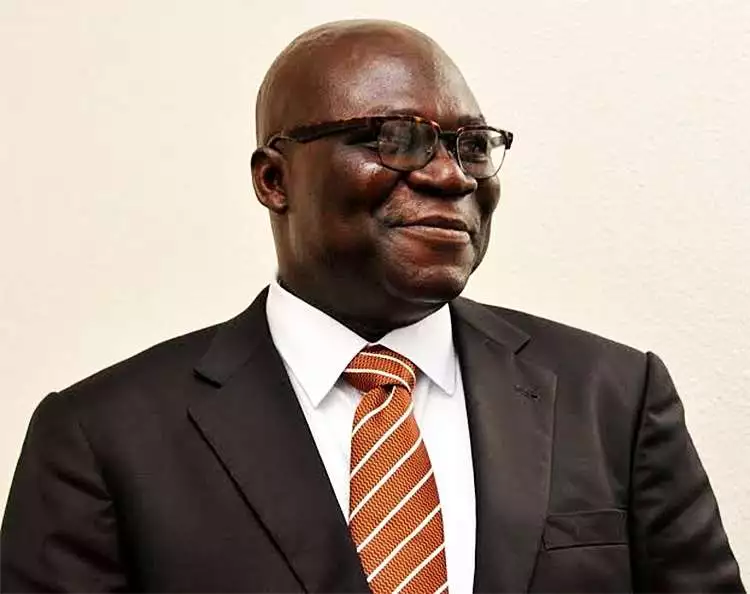
Reuben Abati

By Reuben Abati

Civil society groups, including Non-Governmental Organisations are a positive force for change and progress in society, oftentimes helping to bridge the gaps of alienation between government and the people. In developed parts of the world, CSOs and NGOs have been in the forefront of making our world a much better place by helping to fight injustice, man’s inhumanity to man, environmental abuses, global health challenges, gender discrimination and the evolution of a rules-based international system. Ordinarily, power figures succumb to the temptations of power, they get carried away, they trample on the people’s rights, they subject everything and all things to the caprices of politics, civil society organisations help to pull such delusional figures back to the real world of blood and flesh. The academic distinction that is often drawn between CSOs and NGOs may well be quite frankly a matter of nomenclature and the fine distinctions quite blurry, for both are linked by the service that they offer, rather than profit, and their devotion to the common good, and the fact that both are outside the state, working in the interest of the community.

In developing and underdeveloped countries, civil society organisations have similarly helped to advance common causes, and in Africa, they are as old as the communities themselves. Since the 70s however, there has been an explosion of those groups that go by the name NGOs, a label that seeks strictly to differentiate the activities of such groups from the state and business. Most of these NGOs are described as charity organisations, or not-for-profit, or philanthropist efforts. They rely on donations, mostly foreign and are meant to be seen as voluntary organisations making a contribution to the human community. Nigeria certainly has a positive history of CSOs and NGOs role in its development.

I can attest to that having had an insider view of the CSO/NGO community in Nigeria. I was once a consultant for an international agency where my job was to help rewrite and review proposals from Nigerian NGOs. I also worked for other international agencies on public communication processes, change projects and development ideas. At a time, I was co-founder and director of an NGO. I also co-wrote the political agenda of a major NGO. I later sat on the board of an International NGO which decided funding for many projects in Nigeria. I travelled around the world attending conferences on health, population, environment, women empowerment issues, democracy and good governance. I cannot disclose the identities of these groups, but there was no doubt about the quality of the NGO community in Nigeria and how that construct called “the third sector” could propel societal development for good. Nigeria has indeed been a major beneficiary of the efforts of men and women who stepped away from the state and business and tried to give back by devoting time and energy to key issues of our time.
Within the general civil society community, churches, community-based groups, professional associations, labour unions, volunteer groups have also done so much in the making of Nigeria. For anyone who may have forgotten, the Nigerian civil society led the struggle against military rule in this country, and fought valiantly to demand a return to civilian rule. Many died. Lost their loved ones. Hundreds of persons fled into exile. Many more were hauled into detention and jails on trumped up charges. The Nigerian media was courageous. Journalists stood at the barricades along with human rights activists and resisted oppression, at great risk to their lives. At a time in this country, it was a crime and an attempt at suicide to write or tell the truth, yet many spoke the truth. Nobody thought of profit or gain. The only gain was the common good. Many persons and groups went to the streets and shouted “Never Again”. Of course, there were opportunists who profited from the people’s anguish, but my point is that in the 80s and 90s, the Nigerian civil society had its golden moments. We are all beneficiaries of the heroism of those who made the sacrifice in the political arena, regardless of what ails us today.

So, where is that same civil society today? Its complexion has changed. And that is a source of concern. With return to civilian rule in 1999, civil society, praised for its commitment to the major task of saving Nigeria, more or less relaxed. The explanation we offered at the time was that having won the battle over the authoritarianism of the military and the violation of the people’s rights, it made sense for civil society to catch its breath and allow the new democrats to settle down as Nigeria’s Fourth Republic began. This new phase in national development coincided however with an explosion in the number of Non-Governmental Organisations in the country. Having seen the power of civil society, setting up an NGO became a special kind of enterprise. There is nothing wrong in anyone electing to help promote the frontiers of law, human rights and democracy but the lines became strikingly blurred: between NGOs that were truly non-profit and an emergent phenomenon known as NGIs: Non-Governmental Individuals: special purpose, one-man organisations with neither structure nor organisation, but a fanciful name, a business card, an indeterminate address and a fancy-dresser who goes by the name of Chief Executive with a talent for peripatetic conduct in NGO circles and the larger society. In due course, someone took the trouble to prepare a directory of NGOs in Nigeria. Our finding: Many states in Nigeria have more NGOs than companies and direct investments. Each NGO looks for funds from international agencies and local donors. Most of them are vehicles for gaining access to government departments and agencies.

The result was the emergence of the NGO chief as an entrepreneur. And some of the guys really live it up. Loud fashion. Big cars. Opulent quarters. Like everything Nigerian, the NGO community, once a haven of good, became a vehicle of access to the good life. The legacy of the early heroes has since been overtaken by many who are out there to make a quick buck, or offer special services to the highest bidder, no matter how shady the deal may be. It is perhaps not surprising therefore that the Nigerian Government has been trying to control the NGO community, has been very suspicious of it, and continues to attack the civil society community. The contempt is mutual. Between 2015 and 2016, the National Assembly proposed three different bills to regulate CSOs and NGOs viz: A Bill for the Registration and Coordination of NGOs in Nigeria and for Connected Purposes (2015), the Civil Society Commission of Nigeria Bill (2016) and A Bill for the Establishment of the Non-Governmental Organisations, Civil Society Organisations in Nigeria and for Related Matters (2016). The sponsors of these Bills argued that the objective was to ensure transparency and accountability in the NGO sector to the extent that while freedom to act on behalf of the people was important, such freedom must come with responsibility. The big problem was that the phrasing of the bills was adversarial. Most of the provisions sounded like a deliberate attempt to shut down “the third sector” and free speech. In September 2017, 23 NGOs went to court to demand that the Bills should be declared unconstitutional. The hashtag #NoNGOBill dominated Nigerian social media. The Bills died a-borning.

The matter of the NGOs in Nigeria came up again last week when the Federal Inland Revenue Service speaking through one of its directors, Temitayo Orebajo announced that Civil Society Organisations in Nigeria that are involved in “trade and business” must pay tax, obtain a Tax Identification Number (TIN) or get sanctioned in accordance with the law. This has generated mixed reactions among stakeholders. There is nothing new really. The relevant laws for NGOs are the Companies and Income Tax (CITA) 2007, the Personal Income Tax Act No 104, 1993; the Value Added Tax 2007 (as amended). Under the extant law, NGOs in Nigeria are required to pay the PAYE tax, Withholding Tax on goods and services, Local taxes and fees such as parking and garage levies, Capital Gains tax where applicable and Income Tax on passive income. I do not see what the furore is all about. It is not every NGO that is non-profit in the real sense of it. Every NGO is required to be registered by law. The tax exemption that is enjoyed by an NGO is conditional. It is not absolute. Any NGO that wants an exemption can apply to the Minister of Finance through FIRS.

Once an NGO begins to engage in “trade and business”, it must be prepared to pay taxes. This includes those churches and places of religious worship that run travel agencies, schools, bakeries and that manufacture water and other items, including anointing oil, from which they make huge profits. Some of the most lucrative businesses in Nigeria today belong to churches. In God’s name, people are cashing out and claiming that they are NGOs. I am of the firm view that some level of regulation, accountability and transparency is required. There are too many NGOs out there that are merely fronts for other businesses. Nigerians are too busy trying to break or evade the law. Too many individuals parading as non-profit organisations. The usual tendency is to see every attempt at control or regulation on civil society groups as an assault on the civic space. While it is true that the Nigerian government has been complicit in this regard, it is also true that civil society in Nigeria is problematic and cannot be placed above scrutiny.

I recall two instances and with the following illustrations, I will rest my case. I was shocked when during the crisis involving the Niger Delta Development Commission (NDDC), a member of the Professor Kemebradikumo Pondei-led interim management committee, Dr. Cairo Ojuogboh appeared on international television to claim that the civil society community in Nigeria, so-called CSOs and NGOs were part of the problem because these were groups on the payroll of the NDDC. At the time, the NDDC had come under heavy fire from persons who justifiably condemned how a development agency had been turned into a rent collection point by those who were expected to use provided resources to develop the Niger Delta and improve the people’s lot. Cairo Ojuogboh argued spiritedly that if anybody collected contracts, most of them were lawmakers in Abuja and NGOs from the Niger Delta Community, including groups that offered media services. It may be argued that these may have been phantom groups created by the thieves within the system as vehicles for self-enrichment. But they went by the title of NGOs nonetheless, claiming to be non-profit entities! They collected contracts and funds! In Nigeria, anybody can set up an NGO and buy newspaper space and make all kinds of claims. Half of the NGOs out there are not even registered. Just grab a name, design a logo and recruit an online team, generate a fanciful title and you are in business. Nobody double-checks.

I was also particularly alarmed when recently an NGO known as HEDA Resource Centre and its Chairman, Olanrewaju Suraj wwere both accused by the Police ,in a report, of having made false accusations against Mohammed Bello Adoke, former Attorney General of the Federation in the OPL 245 case involving Malabu Oil and Gas Limited. Suraj and his NGO accused Adoke of using an email address belonging to a company owned by a certain Aliyu Abubakar to engage in corrupt activities. Adoke was also accused of having had a phone conversation with an Italian journalist in 2017 where he admitted that the OPL 245 deal was a scam. Adoke has since denied the claims made against him by HEDA. He petitioned the Nigeria Police and asked for an investigation. The Police investigated Olanrewaju Suraj’s claims and wrote a report stating clearly that this was a case of blackmail, and that the information shared on social media against Adoke was unverifiable. Suraj responded by saying the Police Report was fake. The Nigeria Police Headquarters has since responded with the rebuttal that its report is authentic. To worsen matters, we are told that Olanrewaju Suraj’s Human and Environmental Development Agenda (HEDA) is “an unregistered organisation.” The Police invited Olanrewaju Suraj but the police in their report said “he feigned sickness, jumped bail and resorted to issuing press statements maligning the Police, writing frivolous counter petitions and filing suits in Court against the IGP Monitoring Unit, Force Headquarters and the Police…” Olanrewaju Suraj, the report states, has foreign partners!

I have cited these two examples to show just how in our context, “the third society” is very much like government and business – the two other major societies in Nigeria. The NDDC Audited Report has shown the extent of the rot in that body, over 13, 000 abandoned projects and N6 trillion down the drain over the years, with nothing to show for it. The Board that Dr Ojougboh defended may not be innocent, but why would NGOs be part of the loot-sharing at the NDDC? Does the NDDC Audit report include an opinion on these NGOs turned contractors and rent collectors over the years? As for HEDA and Suraj, Mohammed Bello Adoke was maligned. His reputation was dragged in the mud of social media. Although the Italian Court threw out the entire Malabu/ENI trial, Bello Adoke, who was not on trial in Italy, was continuously maligned by HEDA, trying to influence the Nigerian Courts. Our people believe the worst about anyone who ever served in government. NGOs are supposed to be change agents not tools for untruths and blackmail. The Nigerian Government however overstretched the argument when in the wake of the #EndSARS protests in 2020, it made an attempt to descend on the civil society groups in that protest. That was a clear case of lumping the pigeons with the chickens. The main spirits behind the #EndSARS protests meant well, they wanted the good of all, but their ranks were infiltrated by a group of “chicken” forces in civil society who changed the colour of the protest.

The time has come for soul-searching within the Nigerian civil society community. It is not everyone that carries placards that means well. It is not every loud-mouthed, fist-clenching character that is a revolutionary. It is sad that the Nigerian Revolution is a gathering place for anyone at all who can shout loud or bold enough to show up at the barricades. Not even NGOs should be above reproach or the law. But who will guard the guardians? Quis custodiet ipsos custodes?

Abati, PhD, a TV personality, is a regular commentator on national and current issues

Nigeria Refuses To Name Terrorism Financiers

0

By Akinwale Kasali

After so much boasts, the Nigerian Government has shied away from naming alleged financiers of terrorism and banditry in Nigeria. It says it would neither name them nor shame them.

Femi Adesina, Special Adviser to President Muhammadu Buhari on Media and Publicity,  disclosed that the Federal government was not interested in naming or shaming financiers of terrorism in the country.

Adesina made this disclosure while reacting to a list of terrorism financiers sent to Nigeria by the United Arab Emirates.

The UAE had named and prosecuted six Nigerians and 32 others for allegedly financing terrorism.

However, Adesina said the Buhari Government is only interested in bringing the suspects to justice.

Adesina: “Naming and shaming would not be the motive, rather bringing malefactors to justice would be it.

“Nigeria is not interested in naming and shaming anybody, rather it wants to bring them to justice.

“The United Arab Emirates has brought some names and the Attorney General of the Federation has responded to that matter, saying that in due course, all these people would have their days in court.

“Rest assured that these people (terror financiers) would be tried before justice and justice would have its way.

“Investigations are going on about it differently, at the level of the EFCC, at the level of the National Intelligence Agency, all security agencies would be working at it so that when those people eventually appeared in court, there would be prima facie case against them.”

Adesina’s comments came days after EFCC Chairman, Abdulrasheed Bawa, said that Nigerians would know the identities of terrorism financiers in the country at the right time.

Opinion: What Emefiele’s ‘fight’ With AbokiFX Really Means For The Naira

0

By Mayowa Tijani

April 23, 2013, the verified Twitter handle of Associated Press (AP), one of the biggest news agencies in the world, tweeted 12 words that cost the US economy about $140 billion. Yes, 140 billion dollars. The 12 words were: “Breaking: Two Explosions in the White House and Barack Obama is Injured.”

In a few minutes, AP told Reuters that its Twitter account had been hacked, and the tweet was bogus. It also tweeted with its APstylebook account that the tweet was false. The market immediately began to recover. The hack was claimed by a group of hackers from Syria. The US did recover, but some $140 billion changed hands in a few minutes. That is arguably the biggest example of how “information is power”.

Let’s bring it home. In April 2015, right after President Muhammadu Buhari won the elections, the Nigerian Stock Exchange began to rally. On April 1, 2015, the NSE became the best-performing stock market in the world. Why? Information had gone to foreign investors that the man who can change Nigeria had just won an election. The news of the peaceful transition of power in Nigeria had also fuelled the rally.

In actual figures, the NSE gained nearly N2 trillion the week Buhari won the election. The naira for the first time in a long time firmed up to N180 per dollar at the parallel market. In fact, the parallel market sold at a better rate than the interbank, which traded at N197 per dollar — before both markets merged at N197 per dollar. The Nigerian economy was on a great path.

In essence, news can translate to billions of dollars or trillions of naira. To gain or to lose.

EMEFIELE VERSUS ABOKIFX

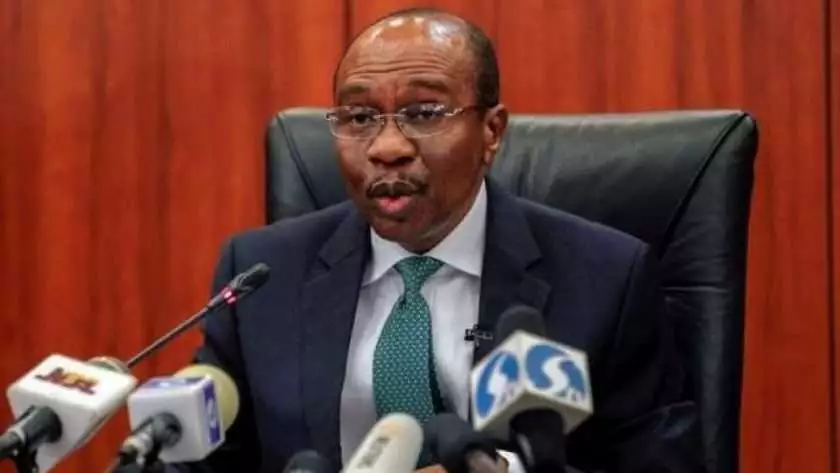
On Friday, Godwin Emefiele, the governor of the CBN, made it clear that the monetary policy team he leads wants to shut down speculative trading of foreign exchange at the parallel market. Emefiele has shown this in more ways than one. But the latest way is by pushing for a crackdown on abokiFX, a website that publishes daily parallel market rates.

I do not know the exact date the idea of abokiFX was conceived, but its digital footprint shows it’s been around since 2014. And recently renewed its subscription until March 2022. The website is hosted in Arizona, US, and its core IP history shows a lot more details over a seven-year period (not needed in this article).

Point is, abokiFX has been here before President Muhammadu Buhari was elected, and before Emefiele was appointed in June 2014. In that time, the platform has built such a following that it is now one of the top 50 most visited websites in the country. And this has consequences.

It took AP over 150 years to build the kind of trust and following that a tweet from its account could trip the most advanced economy in the world and cause a loss of $136 billion in less than six minutes. It took abokiFX seven years to become the authority on parallel market rates in Africa’s biggest economy. Emefiele seems to believe that Oniwinde Adedotun, the founder of abokiFX, is milking that influence to trade millions of dollars to his advantage.

To curb that influence, Emefiele’s CBN opened an investigation into Oniwinde and abokiFX’s 25 bank accounts in Nigeria. The website, in turn, stopped publishing rates from Monday. The battle between both parties is still too young for a conclusion.

WHAT DOES THIS MEAN FOR THE NAIRA?

On the first day abokiFX did not publish rates, many Nigerians were asking — ‘what is the dollar-naira rate?’ Someone said it was now N450 per dollar. Some others said the naira appreciated to 560 against the greenback. Many said things had gotten worse. The clear message is: there is a vacuum, no central authority on parallel market rates.

As a journalist who has covered this market for years, I called my sources in the Lagos forex parallel market to get a sense of what was happening, and I found them giving various rates — with a differential as high as N18 per dollar. Put simply, some traded for N560 per dollar, some did for N578 per dollar. Only last week, most of the traders I know quote the same price — which was always the same as what abokiFX publishes.

The success of Emefiele’s move also seems to be the failure of it: Some are trading dollars cheaper than they did last week, but some are doing the opposite.

The power abokiFX wields is also slightly unhealthy — at least for the naira. If naira trades at N550/$1 on Monday, and they buy $1m, the platform administrator(s) can decide to publish N580 per dollar on Tuesday, and go to the market to sell its $1m dollars for N580 million, making a profit of N30 million in a day for just running a trusted reference website.

I have no evidence to show they have done such or that they do such. But Emefiele suggested it when he said abokiFX sells tens of millions in FX to companies in Nigeria.

If the CBN succeeds in shutting down abokiFX, a number of other platforms will try to fill that void, but with little success initially. The shutdown will lead to various naira-dollar quotes across the country. But it would be temporal and would not solve the actual demand and supply problem we have with forex in Nigeria, which needs more structural, long-term solutions.

It would have the fast news effect like the AP-Obama tweet or Buhari election victory-NSE rally,  but the status quo is very likely to return quickly.

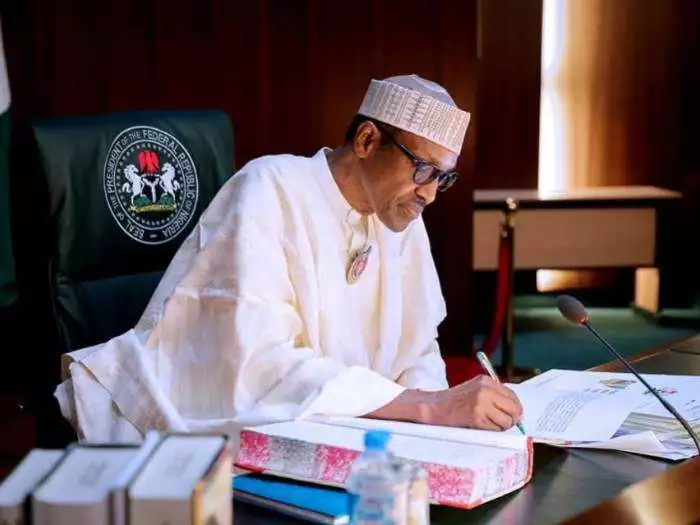
Buhari Seeks Amendment Of Petroleum Industry Act, Writes Senate

0
President Buhari
President Buhari

By Ayodele Oni

President Muhammadu Buhari has sought the approval of the Senate to amend the recently passed Petroleum Industry Act, (PIA).

The PIA, which has received both applauds and condemnations was recently signed into law and only just last week, the President named members fort the board of the Nigerian National Petroleum Corporation, (NNPC).

It was announced at the Senate on Tuesday that a proposed amendment to the Administrative Structure of the Petroleum industry Act 2021, has been received from President Muhammadu  Buhari for its Consideration and approval.

The proposed amendment was communicated through a letter addressed to the President of the Senate, Ahmed Lawan and read on the floor of the parliament .

According to the letter, “The amendment intends to change the appointment of two non executive Board members to accommodate more members  in line with the principle of a balanced geopolitical representation of the country.

“President Buhari believes this change will provide a sense of participation and inclusion in every section of the country in the decision making of strategic institutions in the oil industry.

“This proposal will also  increase the membership of the board from nine to thirteen which represents a 44% expansion.

“It will also remove  the ministries of Petroleum and Finance from the Board of the two institutions, as well as exempt serving public officers from the established confirmation process for political appointments.

“Mr President believes these amendments will lay sound administrative structures governed by simple operational laws that will ensure a smooth take off and growth of the institutions.”

Kanu: Case Adjourned as FG Snubs Court

0

By Uche Mbah

A High Court in Abia state has been forced to adjourn the hearing in the case involving the leader of the Indigenous Peoples of Biafra, IPOB, Mazi Nnamdi Kanu, and the Federal Government of Nigeria and others to October 17.

IPOB, has been proscribed and declared a Terrorist Organisation by the FG. This designation, however, has not been recognized by the International Community. In Nigeria too, many are asking the rationale behind the declaration of IPOB as a Terrorist Organisation when the murderous Bandits who are kidnapping pupils and children in hundreds, killing hundreds and shooting down Military Aircraft has not been designed a Terrorist Organisation.

Kanu, through his lawyer, Aloy Ejimakor, on September 7, 2021, had filed a case against the respondents, seeking the award of N5bn as damages to him for the breach of his fundamental human rights inflicted on him in the 2017 extrajudicial attempt on his life, his escape to exile, his abduction in Kenya, and his extradition to Nigeria.

The vacation judge, Justice K. C. J. Okereke, Tuesday, adjourned the case as the Federal Government of Nigeria and five other respondents appear to deliberately delay the filing of their responses to the suit.

The respondents are the Federal Government of Nigeria (1st), Attorney General of the Federation (2nd), Chief of Army Staff (3rd), Inspector General of Police (5th), Director General, State Security Services (7th), and three others.

His prayers are that his torture, arrest, and detention are unconstitutional, while the military invasion of his home and his abduction from Kenya contravene the Law.

Recall that in 2017, the Military, under the guise of Operation Python Dance, invaded Kanu’s country home at Afaraukwu, Abia state, killing some IPOB members and his dog. He, however, escaped to the UK.

But the Federal Government, in collaboration with Kenyan Government, abducted and brought him back to Nigeria and into the custody of the Department of State Security, DSS.

Only the DSS in Abuja and Umuahia have filed their responses, though it was filed out of time. They, however, were absent in Court, while other respondents failed to file their defense. The Judge, therefore, adjourned the case to October 17 to give others enough time to file their defense.

According to the Judge, Kanu is entitled to specified reliefs against any party that next fails to respond to the suit.

Last week, a High Court in Ibadan, Oyo State, granted the sum of N20b to Yoruba Nation agitator, Sunday Igboho, against the FG for an invasion of his home.

The FG through the Attorney General of the Federation and Minister for Justice, Abubakar Malami, SAN, is appealing the judgement.

Juju Maestro, King Sunny Ade Loses Wife, Risikat, To Cancer

0
King Suny Ade and His wife Risikat

By Akinwale Kasali

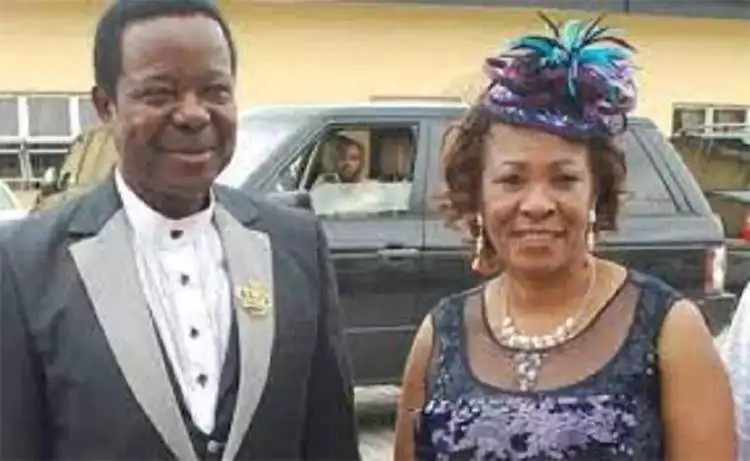
Legendary Juju Maestro, Sunday Adeneye, popularly referred to as King Sunny Ade, KSA, has lost his amiable wife of decades, Hon. Risikat Ajoke Adeneye.

The late wife of the Musician was a Politician, and a former member of the Lagos State House of Assembly, who represented Amuwo Odofin II Constituency between 2003-2011. She died in the early hours of today, Tuesday September 21, 2021, allegedly,  after a courageous battle with cancer.

It was gathered that the death of the late APC loyalist had battled with the disease for a long time before she succumed finally to death.

However, Mr George Folarin Olawande, confirmed the death on behalf of the family in a statement on Tuesday.

The statement read in part:

“We wish to formally inform, friends, well-wishers, political associates, and the general public that Hon Risikat Ajoke Adegeye passed on after a brief illness during the early hours of Tuesday, 21st September 2021.

“Hon Risikat Ajoke Adegeye was a Honourable Member in the 6th Assembly of the Lagos State House of Assembly.

“She will be greatly missed not only by her immediate family but also by her political associates and followers. Further information in respect to her burial ceremony will be announced later after extensive consultations with the family.

“Thank you as we pray that she continues to rest peacefully and eternally with the Almighty God.”

Her remains has since been deposited at the TOS Funeral Homes, Lagos.

She is survived by her grieving husband and son, George Folarin.

OPINION: Debts, VAT And States’ Gold Mines

0
Lasisi Olagunju

By Lasisi Olagunju

“I watched Ebonyi State Governor, Dave Umahi on Channels TV on Friday morning practically repudiating everything the Southern Governors agreed on the previous day in Enugu, especially on VAT as tax to be collected by states for the benefit of their people. Umahi, Chairman of South East Governors Forum, said he is opposed to it because his State would be poorer for it. What a man!”

The National Assembly, last Tuesday, received a presidential request for yet fresh foreign loans. This time, it is $4billion and €710million (N2trillion) to finance ‘critical projects’ in the 2021 budget. Our lawmakers will approve the loan request without asking any question. It is not the first loan request this year and it won’t be the last. The more the loans, the bigger their fortune. But, if we borrow so much to finance this year’s budget, how much more are we going to borrow to finance next year’s budget, and the next and the next? The borrowing binge holds us out as either suicidal or dizzy-minded fraudsters. I said suicidal because the debts will certainly kill us. We already spend over 90 percent of our revenue to service debts. I said fraudulent, because, maybe we have no intention of paying back. Either way, our country is on a road that won’t end in praise. There is a linear link between unguided borrowing and sorrowing.

For over two hours last Wednesday, I was with Dr Omololu Olunloyo, first class mathematician and former governor of the old Oyo State. I go to him whenever I look into space and I am tired of everything I see. As usual, I found him sitting among old books, new books, newspapers and journals and monographs. At almost 90, he remained sharp and alert – but has refused to write his autobiography. We discussed people, places and politics. At a point, I asked him what he thought about Nigeria and its poverty. He asked if I thought Nigeria was truly poor. He said a foremost geologist once told him that every bit and part of Nigeria sat on one precious mineral or the other. Which means every square foot of the Nigerian soil is rich and wealthy. But what have we done with ourselves? “You know how Jos became one of the very first places where electricity was generated and used in Nigeria?” He asked me but provided the answer himself: the presence of Tin on the Plateau was exploited by the British to bring unprecedented development to the place. He reminded me of how the Nigerian Electricity Supply Company in 1929 near Jos built an hydro-electric plant at Kura to power the mining industry. Then I remembered B.W. Hodder, a lecturer in the Department of Geography, University College, Ibadan, in the 1950s. In an April 1959 article, he gave a picture of what that Jos’ beginning was: “At the beginning of the present century, the plateau was one of the most backward parts of Nigeria.

Today, it is one of the most developed with roads, railways, towns, dams, and hydroelectricity power installations…” That was the picture of Jos in 1959, a year before independence. And what have we done with that leap since the white man left?

I told Olunloyo that we have regressed; he disagreed and stressed that what has happened to Nigeria is bad drivers who have put it firmly in the reverse gear. We have everything to make a rich, successful nation of happy people but what we lack is the sense to do what normal people do. The VAT war is intense because it is part of a scramble for the flesh of a fallen elephant. We agreed that Nigeria is resource-rich but has very ragged, bad-behaving leaders. The sub-national states are very poor and struggling -and will continue to suffer and sweat unless they question why they are miserable amidst plenty. The Federal Government can toy and trade with our sovereignty by borrowing every poisonous dollar everywhere it lurks. If the states are better run while the center runs amok, dismantling the country, the people may still survive the holocaust.

I watched Ebonyi State Governor, Dave Umahi on Channels TV on Friday morning practically repudiating everything the Southern Governors agreed on the previous day in Enugu, especially on VAT as tax to be collected by states for the benefit of their people. Umahi, Chairman of South East Governors Forum, said he is opposed to it because his State would be poorer for it.

Umahi said his State and some others would collapse should VAT collection move from the Federal to the States. Then he fired on: “When they (Southern governors) say that this VAT collection is part of true restructuring, I say I never believe in total restructuring; I believe in administrative restructuring.”

What a man! Warri people say “Awoof dey run belle.” People who rejoice in reaping where they did not sow or who sow little and beg for plenty are negative minds. I am from Osun State and I know that my State’s monthly collection from VAT is more than what it contributes to it. Same with Ekiti, Ondo and Bayelsa. But the governor of Osun State was at that meeting and I have not heard him say his State would collapse if the rational, fair and legal thing was done. Ironically, I heard Umahi on that Channels Television interview admitting that his state had so much natural resources, including solid minerals, which had remained untapped. But Umahi is the Governor and I felt like asking him who would do that tapping job for him.

Sometime last year, I wrote about a part of Osun State where at dawn every day, hundreds of Hausa/Fulani young men file out of their village shelters, shovels in their hands, pickaxes on their shoulders, daggers hidden somewhere in their bodies. They snake into the cool thickets of farms and are not seen again until dusk. They are illegal gold miners devastating lives and lands; the same people blamed for the unending deaths and banditry in Zamfara, Sokoto and Katsina states. There was a gold rush in that area in the 1940s which attracted what the colonial government described as “footpads, rogues, and an assortment of vagabonds” … “crowds of Hausa labourers” whose illegal mining activities did extensive damage “both to subsistence and cash crops…” (See ‘An Ounce is Enough’ by Toyin Falola, 1992, at page 42). The year 1940 was some eighty-one years ago. That part of Nigeria has remained resource rich and existentially poor. Why?

In 2006, fifteen years ago, former Governor Olagunsoye Oyinlola got very poor Osun State to register a solid minerals exploration and mining company with the name Livingspring Minerals Promotion Company Limited. With that company, the state bidded for, won, paid and got ten solid minerals exploration licences and seven mining licences from the Federal Government. Seven of the exploration licences are for Gold fields in Osun and in two far northern states; two of the licences are for Lead and Zinc exploration in identified fields in Eastern Nigeria and in a north central state. The tenth exploration licence is for Feldspar and Quartz, Marble and Granite Gneiss exploration in a north central state covering an area of 200 square kilometers. Three of the mining licences are for Gold mining in Osun State while the remaining four are for Feldspar and Quartz in the north – all covering 233 square kilometers.

But it is not enough to get the exploration and mining licences. They are a means to an end. You need to get the fields worked on. But you cannot do that without the needed expertise and partnership of people of means. And, again, no investor will listen to the licence owner without exploration reports that would show that the minerals truly exist and validate what the licences claim. For the assets to work, the licencee must produce what experts call Geological Exploration Reports (GER) and Geochemical Reports in addition to core drilling of the licence areas. These processes were followed in Osun State and carried out between 2006 and 2010 across all the fields in the five states covered by the licences. Hopes were very high that the state would, at last, shed its shameful hand-to-mouth toga of unviability. Then the Oyinlola government had to leave office suddenly in November 2010 and the great expectations from those fields appeared dead. It has taken the Gboyega Oyetola government, which came eight years after, to rebirth the process and sweat the assets for the good of the state. The state-owned company, in partnership with an investor, has established what has been described as Nigeria’s first gold refinery. A lot of sane activities are going on in that area now which give informed people and the stakeholders in Nigeria’s solid minerals sector reasons to cheer. Those of us who were part of the original dream in 2006 through 2010 are proud of what is happening and may still happen to the assets. If things are allowed to continue to work well, the poverty of Osun State may soon be shaken off. I asked some officials of the state last week what the next plans were. They said the value chain was being worked on, that they had got investors for two of the licences while also working on the other exploration and mining licences across the country. So, instead of attacking his colleagues for asserting their rights over VAT collection, the Ebonyi State Governor and his government may visit Osun State and replicate the solid minerals policy there. After all, he confirmed that his state is very rich in minerals.

No man, institution or state progresses without a push. My people say no one gets rich without a helper. There is a state called California in the United States. Some two hundred years ago, it was as back-water and poor as my state. Today’s net worth of that State is recorded as over $6 trillion (about $160,000 per resident). Records say “the state holds 17 percent of the United State’s national net worth while making up only 12 percent of the U.S. population.” But California did not climb that tree from the top. Like we are seeing in Zamfara and Osun States, it started with a gold rush there in January 1848, the frenzy calming down sometime in 1855. California’s reputation then gradually started moving up beyond the fortune-hunting for gold to very big farming, to movie making (Hollywood), to airplane building and to dot-com and micro-chip revolution. For that state, gold provided just the initial push; today, the boom there is about big tech and about all the best in its past.

There is another US state called Nevada. Its capital is the popular Las Vegas. In the first quarter of this year, 2021, the United States’ Bureau of Economic Analysis said Nevada led the nation in Gross Domestic Product (GDP) increase at 11%. But it is not on that mountain top by a sudden flight. Nevada is in a desert area with a history of toil and struggle and of sensible leaders. David Strow of Las Vegas Sun in a January 2000 piece said that at its birth in 1864, the economic fortunes of that state were firmly rooted in the mining industry. He noted that when new veins of gold, silver and copper were struck, the state’s economy soared. Then the gold veins ran dry and fewer buyers sought the precious metals and the economy of Nevada crashed. By the beginning of the 20th century, people started running away from it. Historians add that when the downturn festered and won’t heal, suggestions were made that the United States should “revoke Nevada’s statehood and return it to territorial status, or merge it with another state.” Then the leaders there woke up and looked beyond the ‘awoof’ of gold and silver and copper. They used their brains. They legalized what their state had comparative advantage on: Gambling. Through and around that ‘sin’, they created a tourism and leisure-reliant economy and their boomtowns came back. By the turn of the 21st century in year 2000, Nevada had become the United States’ “fastest-growing state for 14 straight years.” From people running away from Nevada and having only 42,000 residents remaining in 1900, its population grew to 1.8 million in 2000 and, this year, its very proud residents are 3.2 million.

Nigeria and Nigerian states can learn from these histories. We are as endowed as America. The difference is in the kind of leaders we choose to run our lives. We’ve had our own boomtowns which we lost to mismanagement. We had the oil boom and the billions that came with it and we lost everything. If we remain stuck in that past, our own states could have all the VAT money; they could mine all the gold and silver in their soils, but if they have leaders who mismanage the proceeds, the giant of Africa will remain right in the sink hole of poverty. That is why I say leadership matters. If we recruit good leaders, we will live well.


Olagunju,  a commentator  on current and national  issues writes for the Nigerian Tribune

Senate Sympathizes With Ondo Communities Over 14 Years Blackout, Urges NDDC To Speed Up Work

0

By Ayodele Oni

As communities in Ondo state groan for 14 years over lack of electricity supply, the Senate on Tuesday urged the Niger Delta Development Commission (NDDC) to complete the installation of a transmission power substation in Okitipupa Local Government.

The completion of the substation is expected to restore electricity to communities in Ilaje, Ese-Odo, Okitipupa, Irele and Odigbo Local Governments areas of Ondo State.

The Lawmaker representing Ondo South, Senator Nicholas Tofowomo, had in a motion on Tuesday at the red chamber on the urgent need to restore electricity supply to the affected councils before the end of the year, urged the NDDC to complete the outstanding work on the transmission substation so that electric power supply would be available before the end of the year.

The Peoples Democratic Party (PDP) Senator pointed out that the Senatorial District of Ondo South is hosting the Omotosho Power plant in Okitipupa Local Government with a capacity of 512.8MW and 451MW Net since 2005 without the people from the Local Government and a large percentage of people from the Senatorial District benefiting from the distribution of electricity from the power plant.

While expressing dissatisfaction about the 14 years blackouts in his Senatorial District at Senate plenary, Senator Tofowomo described the situation as embarrassing and despicable.

“The situation is embarrassing and despicable because I continue to wonder if Ondo South is part of Nigeria because suffering from electricity blackout for about 14 years has grounded many economic activities in the district.”

“Ninety percent of my people have been deprived of electricity power supply since 2007 which is about 14 years of uninterrupted darkness.

“The District is hosting the Omotosho Power plant in Okitipupa Local Government with a capacity of 512.8MW and 451MW Net since 2005 without the people from the Local Government and a large percentage of people from Ondo South benefiting from the distribution of electricity by the power plant.

“The Intervention came in 2012, about nine years ago by Niger Delta Development Commission (NDDC) when a contract of 132KV transmission and 132KV/33KV substation and line was awarded in Okitipupa Local Government.

“As of today, 85 percent of the job has been completed and all the 145 Transmission Line Towers from Omotosho Power Station to the Sub Station has been completed.

“The Substation outstanding works remain 15 percent which can be accomplished without delay if all the necessary types of machinery are put in place, the substation can be ready for transmission to the federal feeders in Irele, Odigbo, Ilaje, Ese-Odo and Okitipupa Local Governments within the shortest possible time so that electric power supply would be available before the end of the year.”

The Lawmakers in their responses, appreciated the Niger Delta Development Commission (NDDC) for taking up the responsibility of installing a transmission substation in Okitipupa Local Government that would supply electricity to the affected areas.

They however urged NDDC to complete the remaining 15 percent work on the transmission substation within the shortest possible time so that electric power supply would be available before the end of the year 2021.

CBN Warns Business Owners Not to Reject e-Naira

0
Godwin-Emefiele-CBN-Governor

By Tosin Olatokunbo

The Central Bank of Nigeria, CBN has directed business owners and merchants in the country to accept e-naira as a mode of payment.

The apex bank is set to launch the e-naira, also known as Central Bank Digital Currency, CBDC on October 1 amidst skepticism among Nigerians on whether the currency will be widely acceptable to a wide spectrum of the business establishment.

The Godwin Emefiele-led CBN had earlier said that the currency will stabilise the Naira and help to combat money laundering problems.

The government bank has therefore directed businesses in the country not to reject the CBDC for transactions.

The CBN Director, Payment System Management, Musa Jimoh, said this during an interview on the ‘Business Morning’ programme on Channels Television on Monday.

Jimoh said, “Today, anywhere you present naira to pay, compulsorily it must be accepted because that is our fiat currency. So, the same way naira is accepted that you can’t reject it, is the same way e-naira must be accepted.

“Anywhere in this country where e-naira is presented, it must be accepted. So, merchants must accept e-naira as a means of payment.”

He advised Nigerians to open e-naira wallets which could be downloaded on their phones from October 1, adding that CBN bears all liabilities.

“The liability of the e-naira money is directly on CBN which is similar to the cash you hold. The liability of the cash you hold today rests with the CBN. So, it gives Nigerians the opportunity to bank with CBN,” Jimoh said

On whether Nigeria was ripe for the e-naira due to the technological challenges in the country, Jimoh said he didn’t expect it to be a major problem.

Folashodun Shonubi, CBN Deputy Director, Operations had two weeks ago disclosed that the bank has put everything in place to ensure the smooth take off of the e-naira, adding that the bank will make sure that “e-Naira feeds our economy and provides greater value.

“The central bank digital currency offers all the benefits of cash but in digital form. Every single digital currency is an electronic version of the cash, the legal tender. When you make a cash payment, settlement is done instantly; digital currencies entail the same promises and even more.”

According to him, “CBDC offers a safer option from the privately issued cryptocurrency which have been based on the possibility to enable cheaper transactions but have now been used for investment.

“The intention is not to eliminate other forms of payment but to complement the current areas of payment options, thereby ensuring the stability of the payment system in the long run. I expect in the coming days we will see rapid inclusion rates.

“For banks in developing nations, it will enhance their liquidity, efficiency in national remittances and challenge the high cost of remittances as the world rebounds in the post-pandemic.

“I am of the view that the era of CBDC promotes greater opportunities, and the central bank must be aware of the risks and mitigate them,” he said.

SSSCE Examinations: Good News For South East

0
Students back to school

By Ayodele Oni

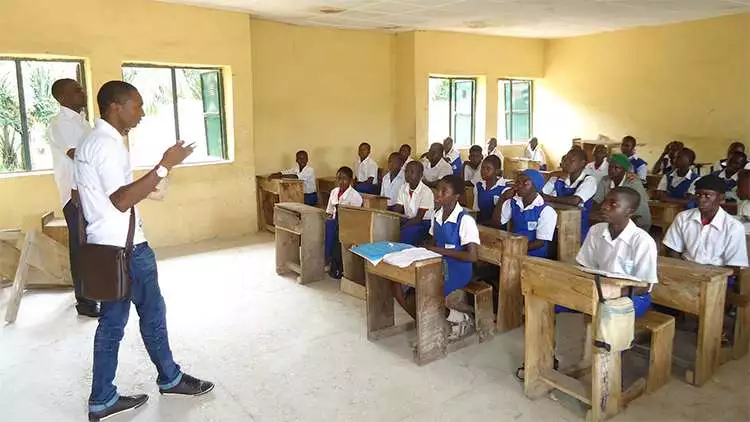
There is hope for the Senior Secondary School students from the South East who were prevented from writing their final papers recently.

The Independent People’s of Biafra, (IPOB) foot soldiers while enforcing the sit-at- home order in some parts of the region had prevented the final year secondary school students from writing one of the final papers.

The Federal Ministry of Education has, now, assured that candidates who missed the 2021 West Africa Senior School Certificate Examinations (WASSCE) in the South East, will be given another opportunity to write the examination.

The Permanent Secretary of the ministry, Mr Sonny Echono gave the assurance in Abuja on Monday, but frowned at the Sept. 13 disruption of examination centres in the South East.

The official, who spoke while monitoring the conduct of the examination in some parts of the Federal Capital, expressed satisfaction with the conduct  across the country, which was written by over 1.57 million candidates.

According to Mr Echono, the Ministry would put modalities in place to ensure that the candidates who missed the examination in the South East are given other opportunities to write the examination.

“We are very pleased that all around the country; examinations are going on peacefully as we have a total of over 19,000 exams centres across the country with over 1.57million registered candidates.

“Besides the disruptions we had on Sept.13 in the South East where some candidates were stopped from doing the exams, it is a peaceful examination.

“We are complying with all the standards and ethics of examinations, we are pursuing very hard more cases, incidence or possibilities of examinations malpractice because we have a zero-tolerance for examinations malpractice.

“We shall punish any person found culpable and ensure that sanity is restored in our system.”

Mr Echono further said that the ministry did not encounter challenges in preparing students for the examinations aside from the COVID-19 pandemic, saying that all COVID-19 safety protocols are being strictly adhered to in centres across the country.

He stated further that although some schools were closed in states due to the COVID-19 pandemic, alternative arrangements were made especially for exit classes to take the examination.

On the possibilities of examination malpractices, Mr Echono said that cases of examination malpractices were usually collated at the end of the examination, pointing out that the culprits would also be brought to book.

He said that the Ministry was collaborating with relevant examination bodies and Non-Government Organisations, (NGOs) to fish out candidates involved in examination malpractices.

“This is because we have a lot of miscreants who are perpetrating and deceiving people. We are going to undertake a general overhaul for all those offering so-called services to candidates.

“We didn’t see much of malpractices in internal examinations like this because these are students who are already in school.”