

Home Blog Page 2353

Again, OAU Sacks Lecturer Over Sexual Harassment Of Female Student

0

By Ayodele Oni

The Obafemi Awolowo University, (OAU) Ile Ife, has dismissed another lecturer for alleged sexual harassment of a female student.

A statement by the Public Relations Officer of the university, Mr Abiodun Olarewaju explained that the decision was taken in the avowed determination to rid the University of any form of sexual intimidation, harassment and, or coercion.

The statement reads “The Governing Council of Obafemi Awolowo University, Ile-Ife, has dismissed another lecturer who was found guilty of sexual misdemeanor against a female student.

“The decision to dismiss Dr. Adebayo Mosobalaje, of the Department of English Language, in the Faculty of Arts, was taken by the University Council at its last sitting on Monday 7th September, 2021.

“Having exhaustively deliberated on the report of the Joint Committee of Council and Senate, which investigated the case of sexual harassment against Dr Mosobalaje, the University Council, unambiguously declared  its zero tolerance to sexual harassment in any form or guise and, accordingly,  applied the appropriate University sanctions for such an offence as contained in the University regulation.

“It would be recalled that almost two weeks ago, the University Management formally inaugurated an “anti – sexual harassment policy” where their excellencies, Erelu Bisi Fayemi (the wife of Ekiti State Governor) and Alhaja Kafayat Oyetola (the wife of Osun State Governor) presented papers while a former Vice Chancellor of Tai Solarin University of Education, Ijagun, Professor Yemisi Obilade, was the main speaker.

“At several fora, the Vice Chancellor of Obafemi Awolowo University, Professor Eyitope Ogunbodede, had reiterated the commitment of his administration to uphold the “Zero tolerance policy” for Sexual harassment and other social vices.

“The Council of the University, Chaired by Owelle Oscar Udoji, has also pledged to support policies that promote mutual co- existence between all the members of the University Community.”

Just less than two years ago, there was a celebrated case of a female student who accused one of her lecturers of scoring her with low marks for refusing his sexual advances.

After a Committee set up by the University found the lecturer guilty, he was dismissed.

Leave Ondo Or Obey Our Laws, Government Replies Miyetti Allah Cattle Breeders

0

By Ayodele Oni

Ondo State Government has again reminded members of the Miyetti Allah Cattle Breeders, (MACBAN) of the need to steer clear of the State forests if they are not ready to obey laid down rules.

Ondo State has joined the league of those that have signed into law, the anti grazing bill. MACBAN, specifically, threatened that the law would not work.

The State Government described a statement credited to the Secretary of the association, Alhaji Saleh Hassan as “uncouth, uncultured and, evidently, deracinated vagrant, left no one in doubt as regards the level of support certain criminal elements, like him, enjoy, deplorably.”

In a statement, Special Assistant to Governor Rotimi Akeredolu on Special Duties, Dr Doyin Odebowale stated that “This man admits, without qualms, that members of his association have been frustrated to the point of taking to banditry and other forms of criminality to “fight poverty”.

“He makes too much weather of a cultural practice associated with an ethnic group and expects all other ethnic groups to accept such backwardness and adjust, accordingly, or be ready to face the ceaseless onslaught of the denizens of the forests, even those from other countries, who must rape, rob, maim, kill and despoil in response to “climate change”.

“They claim to be above the law of any State in the Federation. They warn of the imminent breach of peace and promotion of pervasive anarchy, if they are not allowed to ravage the sweat and toil of the long-suffering farmers who, apparently, don’t count for much in the scheme of things in their estimation.

“They thank the Federal Government and ask its functionaries and the National Assembly to ensure that they continue to kill, maim, rape and dispossess the indigenous owners of their land.

“Any ethnic group, truly indigenous to the geo-political space known as Nigeria, should not be desperate to appropriate other people’s lands to assuage banditry, rape and robbery.

“It is indulgence taken too far for a group of private businessmen to seek to take over people’s lands because of the mistaken belief of support for banditry.

“There is no ethnic group which does not parade an array of professionals in all walks of life. There is no ethnic stock bereft of sound and principled agents of advancement in a transitional society.

“No cultural practice permits criminality. Banditry, rape and armed robbery should not be attributes of a people. Personal businesses must not become the prime occupation of a Government of a geo-political space with multi ethnic groups.

“Various communities live with painful memories and indelible scars. We refuse to become slaves in our land. We defeated treachery and unbridled arrogance.

“We are not prepared to cede any part of our ancestral heritage to enjoy “peace and progress” offered by associations of bandits, robbers, kidnappers and rapists.

“Saleh and his sponsors should be content with the resources within his local environment if he is indeed indigenous to Nigeria.

“No part of our land will be given to foreigners who cling to a dubious regional protocol as an instrument validating dispossession.

“Let him practice his cultural practices on his father’s land. His likes will not be permitted to operate with impunity in Ondo State. We will defend our land.

“Ondo State has a law which prohibits open grazing. The Government has a responsibility to implement the law for the benefit of the people of the State and those, who may share in their aspiration for development of their God-given space.

“The people of Ondo are hospitable. They will, however, be unable to tolerate and condone invasion of their lands. No bandit will operate in Ondo State under any dubious guise.”

ACF Loses Head Of Administration

0
Mohammed Sani Soba2

By Uche Mbah

The Head of Administration, Arewa Consultative Forum, ACF, Alhaji Mohammed Sani Soba, reportedly, slumped and died while he was in his office, on Saturday, September 4, 2021.He was 72.

A statement to that effect has been issued by the National Publicity Secretary of the Northern Sociocultural groups, Emmanuel Yawe.

Soba was a retired Permanent Secretary with the Kaduna State Government before he took up the job with ACF as Head of Administration on a contract basis.

Born in 1949, he left primary school in 1964 after which he went further to obtain additional qualifications both at home and outside Nigeria in various fields especially administration and legislative studies.

He was once the Clerk of the Kaduna State House of Assembly.

“His death was grieved by all at the secretariat of ACF where he held sway as an Administrative Head until his sudden death,” the statement said.

There Is Need To Make Nigeria Liveable; Nigerians Live In Fear – Ondo Gov, Akeredolu

0
Rotimi Akeredolu and Ambassador Godknows Igali

By Ayodele Oni

Ondo State Governor, Mr Oluwarotimi Akeredolu, SAN, has emphasized the need to make the country livable for the people so as to harness their talents for national growth.

Governor Akeredolu said in order to achieve Nigeria’s goals for Science and Technological advancement; the country must be made conducive for living, particularly for the young ones.

A statement by the Chief Press Secretary to the Governor stated that he spoke on Tuesday, while receiving members of the Governing Board of the Federal University of Technology, Akure (FUTA) led by the Chairman, Ambassador Godknows  Igali, and the Vice Chancellor, Professor Joseph Adeola Fuwape, in Akure.

Speaking on the growth of Science and Technology in the country, Governor Akeredolu said: “For us in science and technology, we need to do more. Japanese, Chinese and other developed countries send people to where science is the best.

“We have heard of countries that send their people to the USA to train on Science and Technology.

“They didn’t stay there. They went back to their country to develop it. Commitment to one’s country is key. But we need to make this country a livable place so that the young ones will be confident and have hope to live in this country.”

Governor Akeredoku, who stressed that the people are living in fear, noted that something must be done urgently to address the situation and restore hope to the minds of the people.

“Look at what is happening in Zamfara. They try to clothe it and call them bandits. They are terrorrists. So, the growth in science can not be based on just your charge but the conducive environment in the country,” he said.

He emphasised the need for the country to embrace modern ways of animal husbandry, describing open grazing as old and now illegal in the state.

“Today, I can say there are modern ways of animal husbandry and we have to take the bull by the horns. We are not afraid to take decisions.

“Modernity has taught us that you can extract more milk from cows in a modern way better than when you take them from one place to another. It is about science. People have developed that science.

“I’m happy when I see Mr President go to Katsina and visit his cows. They are well kept. Technology of animal husbandry, we must embrace it.”

Governor Akeredolu described FUTA as one of the leading Universities in the country, particularly in terms of research.

“We take pride in FUTA and its achievements over time. And I have had serious connections with FUTA not only as a Governor.

“We have strong relationship with FUTA. FUTA for us is one of the leading universities of technology in Nigeria if not the leading. One of our lecturers won the best researcher award in the country.

Earlier, the Chairman of the Governing Council of the institution, Ambassador Godknows Boladie Igali, lauded the strides of Governor Akeredolu, adding that the state is poised to get to the top place in the country.

“Seeing the transformation, especially the urban renewal, it is tremendous. Your focus on education, we know what you are doing on Olusegun Agagu University of Science and Technology, Okitipupa (OAUSTECH).

“Since you assumed office, you have done a lot and you have shown yourself to be a friend of the university. You helped us established the tech hub. You have helped the University in terms of some external works.

“Thank you for the efforts that were put in to get the approval for the medical college. We will be able to get serious research into the medical science.”

He reiterated the commitment of President Muhammadu Buhari to the growth of Science and Technology in the country.

Strike: Only Illegally Recruited Doctors are Owed – Ngige

0
Chris Ngige

By Uche Mbah

The Minister of Labour and Employment, Dr. Chris Ngige has denied owing the striking members of the Nigerian Association of Resident Doctors, NARD, or other health workers in the country, saying only those who were illegally recruited are not receiving salaries.

Health workers have been on strike to press home a coterie of demands, a situation the Minister  described as unfortunate.

The fallout of the strike is the mass exodus of Nigerian Doctors to Saudi Arabia. The Gulf country had cashed in on the strike to organize interviews at Sheraton Hotels and Towers, Abuja. Crowds of medical doctors who were seeking to leave the  Nigeria besieged the recruitment centre.

Saudi Arabia moved the recruitment to its online portal, thereby accentuating the brain drain.

Speaking during the opening session of the meeting of the Presidential Committee on Salaries with the leadership of the Joint Health Sector Unions in Abuja Tuesday, Ngige said those not paid were those not captured by the Office of the Head of Service of the Federation.  Therefore, their payments were not provided for by the Budget Office. But due to the Presidential waiver, he said the doctors will have their appointments regularised.

“NARD (National Associations of Resident Doctors), goes about telling Nigerians that Government owes them salaries and that Government is not taking the problems in the health sector seriously. But this is not true. It is incorrect”, Ngige said.

“No doctor, nurse, pharmacist, or any other health worker, including the drivers, is owed monthly salary; the Government pays as and when due.

“The truth is that NARD doctors fail to tell Nigerians that their colleagues who are owed salaries are the ones illegally recruited and were, therefore, neither captured by the Office of the Head of Service of the Federation nor were their payments provided for by the Budget Office of the Federation.

“Monthly salaries are done as and when due for those legitimately employed by the Federal Government but not to those illegally employed and who need their appointments regularized and captured in the finances of government for payment. This takes a process which is not accomplished overnight.”

Part of what is being owed Doctors are their Covid 19 allowances and minimum wave adjustments, which the Minister said efforts to settle them are ongoing.

According to him, Federal Government has already budgeted N37.5billion for hazard allowance.

On his part, The Minister of State for Health, Senator Olorunnimbe Mamora, condemned the strike action by the health workers, referring to harsh economic realities under which the Government is operating.

The Minister of State for Finance, Budget, and Planning, Clement Agba, lamented that the budgetary expenditure of the Government is increasing while revenue continues to decrease.

Six Days after, Terrorists Free Katsina SSG’s Brother, Invades College Of Education

0
Kidnappers
Kidnappers

By Uche Mbah

78 years old Kabir Muhammed, a brother to the Secretary of the Katsina State government, Dr. Muhammed Inuwa, has been released by his abductors.

This is as they also invaded the Katsina College of Education, Dutsinma, and abducted the three sons of the Deputy Provost. Reports say four heavily armed bandits stormed the College  on September 6, around 11.30pm, broke into the home of Dr. Isma’ll Ado Funtua, and abducted his three sons.

Reports indicate that the Katsina SSG’s elder brother may have been released on a trade off as the leaders of the abductors was known to security agencies, who, sources said, also abducted the father of the ring leader and sent a message to the abductors that the father of their leader was abducted.

Muhammed was abducted Wednesday while working on his farm in Damsu Council Area of Katsina state, President Buhari’s home state.

Only recently, a retired top Security officer, had alleged that the sponsors of Boko Haram are known, and belong to the highest places in the country, including the National Assembly and even the Presidency.

Recently, also, reports showed that the United States Government said it  would expose the names of Boko Haram sponsors.

Coincidentally, there appears to be more positive activities in the fight against terrorists after the said US statement. Almost soon after, the Federal Government wrote the Telecom companies through the Nigerian Communications Commission, and asked them to shut down Telecom activities in Zamfara state.

The Companies complied,  resulting in  network downing in the State and other neighboring states.

Unfortunately, this has an adverse effect that parents of kidnapped students, and other relatives of kidnapped victims can no longer communicate with their abductors, thereby keeping them in the dark.

The brighter side is that the abductors cannot negotiate again for ransom, unless they leave the zone.

Meanwhile, the spokesperson for the Secretary to the Katsina State Government, Kabir Yar’Adua, has confirmed the release of his brother, saying that no dime was paid as ransom. It was learnt that the abductors capitulated when their informers were arrested including the father of the ring leader, who was released in exchange for the abducted.

Sceptics believe that if the abductee was an ordinary person, the release could not have been this quick.

Qatar 2022: Onyema, Air Peace Chairman, Gives Super Eagles N20m; Team Defeats Cape Verde

0
Super Eagles of Nigeria

By Akinwale Kasali

A 78th Minute own goal from Kenny Santos was all the Super Eagles of Nigeria needed to record a 2-1 win in the tension soaked encounter with the Blue Sharks of Cape Verde in the Group C qualifying match for the FIFA World Cup in Qatar.

Dylan Tavares had given the Indian Ocean nation the lead in the 19th minute, beating Super Eagles goalkeeper, Maduka Okoye, with a right footed volley.

The Ahmed Musa captained team put themselves together and mounted pressure on their host, leading to the much needed equalizer courtesy of Napoli Football Club of Italy striker, Victor Osimhen in the 39th minute.

The first half ended 1-1 apiece with Coach Gernot Rohr introducing Henry Onyekuru and Terem Moffi in the second half for Ahmed Musa and Moses Simon.

The substitution paid off, as the new players mounted pressure on the Cape Verdeans leading to panic in their defense resulting into the own goal.

In the space of two minutes, Maduka Okoye, Henry Onyekuru and Kenneth Omeruo were booked by the Moroccan referee for time wasting and for an infringement.

As the referee signaled the end of the encounter, the excited players hugged themselves happily for a job well done.

With this victory, the Super Eagles have an 100 percent record in the qualifiers garnering Six points from two matches.

Liberia has three points following their 1-0 victory over the Central African Republic in Bangui.

Cape Verde and Central African Republic have One point apiece.

The Super Eagles will have a double header with the Central African Republic in Lagos and Bangui in October 2021, for Day 3 and 4 of the qualifiers.

For the feat, Super Eagles, smiled home with a whopping N20 Million promised them by Air Peace Chairman, Allen Onyema.

Onyema had promised the players the sum if they record a victory in Praia, Cape Verde Capital, as they boarded the Airline enroute Cape Verde for this match.

Onyema had said, “If you win this match, I am going to give the team N20 million on arrival. I’ll bring the cash and hand it over.

“This will serve as a stepping stone in unifying our Nation. Go there and die for the country.

“You won your first match resoundingly, and we expect that the one happening in Cape Verde in 24hours time will not be different.

“You’re carrying on your young shoulders the aspirations and the hopes of a Nation. You must help us in restoring hope to this country.

“Nigeria is a great country with so much potentials to achieve. We are yet to get there. We may have our differences but we love ourselves.

“We knew some of our players have to leave after the match and they had to do well before leaving because they cannot go to Cape Verde.”

The Super Eagles played without Eight of their regulars who had to return to their Clubs due to the Covid-19 restriction by the United Kingdom authority on Countries regarded as Red Zone Alert for the deadly pandemic.

I know The Bandits, They Are Fulani – Katsina Governor, Masari

0

By Gideon Njoku

Just in case anybody was in doubt about the identity of those who have reduced Nigeria to one of the World’s most dangerous nations to live in, Katsina State Governor, Aminu Masari, has wiped it out. And if you are one of those who insist that an ethnic group – Fulani – has wrongly been categorised as  majorly responsible for the tragic situation, perish the thought. You have the truth from the horse’s mouth.

Governor Masari has let the cat out of the bag. In his most candid interview so far, Masari said the Bandits are Fulani.

He spoke on Monday on a Channels Television interview programme, People and Politics.

Asked by his interviewer about the bandits, Masari said he knows them, and who they are. They are  Fulani, he submitted.

Masari: “They are the same people like me; who speak the same language like me, who profess the same religious beliefs like me.

“So what we know about these bandits, they are not aliens, they are people we know. They are people who have lived with us for hundreds of years.

“The infiltration we have from some West African countries and North African countries, are also people of Fulani extraction.

“Majority of those involved in this banditry are Fulanis, whether it is palatable or not, but that is the truth. I don’t say 100 per cent of them are, but majority of them are.

“And these are people who live in the forest and their main occupation is rearing of cattle.”

He said that climate change and lack of access to education whether Islamic or Western education aggravated the situation.

The Governor had, before now, met with a number of the bandits and tried to reach an agreement with them, but banditry has not abated in his state or neighbouring states. It has, instead, worsened, even after Governments, including the Katsina State Government, had spent hundreds of millions of Naira, either to “appease” them or to pay ransome.

President Muhammadu Buhari is Fulani. And so is Governor Masari. For the records, both are from Katsina State.

Guinea: ECOWAS Moves To Return Democracy After Coup D’etat

0

By Ayodele Oni

The Economic Community of West African States (ECOWAS), will hold an Extraordinary Summit on Guinea on Thursday according to a staff memo shared with Reuters.

Special forces soldiers ousted long-serving President Alpha Conde and dissolved his cabinet on Sunday, prompting ECOWAS to demand a return to constitutional order and threaten to impose sanctions.

The leaders of the Military coup promised on Monday to set up a transitional Government of National Unity after ousting President Alpha Conde and dissolving his Cabinet.

Sunday’s Coup, during which Conde and other top politicians were detained or barred from travelling, is the third since April in West and Central African countries, raising concerns about a slide back to Military rule in a region that had made strides towards multi-party democracy since the 1990s.

The takeover was widely condemned by international powers, placing pressure on the new military leaders to offer a plan beyond the toppling of the old order, and to reassure investors that Guinea’s significant ore exports would not be cut.

“A consultation will be carried out to define the major framework of the transition, then a government of national unity will be put in place to lead the transition,” coup leader Mamady Doumbouya, a former French legionnaire officer, told a meeting of Conde’s ministers and senior government officials.

Doumbouya did not say what the transition would entail, or give a date for a return to democratic elections.

His seizure of power was buoyed by widespread disaffection with Conde, 83, who promised stable democracy but once in power violently silenced opponents, failed to reduce poverty and last year decided to run for a third term in power – a move many said was illegal.

The Coup was welcomed by many, but spooked the mining sector. Guinea holds the world’s largest bauxite reserves, an ore used to produce aluminium.

Prices of the metal shot to a 10-year high on Monday, though there was no sign of supply disruptions.

In an effort to quell fears, Doumbouya said sea borders would stay open so mining products could be exported. A nightly curfew now in place does not apply to the mining sector, he said.

“I can assure business and economic partners that activities will continue normally in the country. We are asking mining companies to continue their activities,” he said.

Light traffic resumed, and some shops reopened around the main administrative district of Kaloum in Conakry that witnessed heavy gunfire throughout Sunday as the special forces battled soldiers loyal to Conde. A military spokesman said on television that land and air borders had also been reopened.

Still, a crackdown was evident. Doumbouya prohibited government officials from leaving the country and ordered them to hand over their official vehicles.

The politicians who attended Monday’s meeting were later escorted by soldiers in red berets through a jeering crowd to the army unit’s Conakry headquarters.

Two diplomatic sources said Prime Minister Ibrahima Kassory Fofana, Presidential Affairs Minister Mohamed Diané and National Assembly Speaker Amadou Damaro Camara have been arrested.

Amnesty International, in a statement on Monday, called on the coup leaders to clarify the legal basis for Conde’s detention, and to free those Conde had arbitrarily detained in the months surrounding last year’s election.

Regional experts say however that unlike in landlocked Mali where neighbours and partners were able to pressure a junta there after a coup in August 2020, leverage on the military in Guinea could be limited because it is not landlocked and also because it is not a member of the West African currency union.

OPINION: Kaduna And Electronic Voting: Lessons for Nigeria

0
Reuben Abati

By Reuben Abati

“We don’t believe in cheating or rigging elections but also we don’t want other parties to cheat us, and that was why we encouraged the Kaduna State Independent Electoral Commission to come up with a fool-proof voting process.” – Nasir el-Rufai

The prefatory statement above belongs to Nasir el-Rufai, the Governor of Kaduna, one of the few Governors who have consistently demonstrated faith in the deployment of technology to protect the integrity and credibility of the electoral process in Nigeria. He is the only one who has given effect to his conviction.

In 2018, Kaduna state under his watch, conducted elections with an electronic voting system. This was the first time anyone in Nigeria would adopt electronic voting, and the second case of electronic voting in Africa, after Namibia. That year, the then extant law, namely the Kaduna State Independent Electoral Commission Act No. 10 of 2012, was amended to establish electronic voting in Section 16 (3) thereof.  There were allegations of multiple voting and other challenges. But this did not deter Mallam Nasir el-Rufai.

On September 4, 2021, his administration repeated the same “offence”, if the adoption of modern technology by African electoral umpires can be so described, by ensuring that the Kaduna State Independent Electoral Commission (KADSIECOM), again conducted elections in the state’s Local Government Areas in line with Section 16(3) of the KADIESCOM Act.

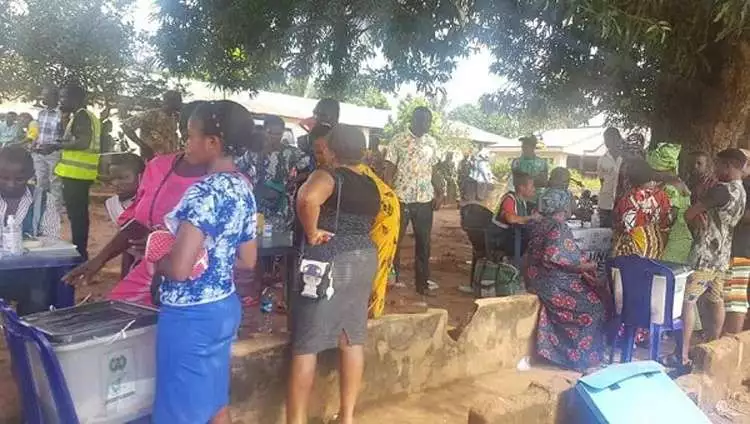
At the end of the exercise, it was reported that the challenges observed in 2018 had been addressed. Multiple voting was no longer possible. The software had been upgraded to deny any voter an attempt to vote a second time. About 18, 000 ad hoc staff were deployed whose main assignment was the verification of the voter’s register. The Electronic Voting Machine (EVM) was a computerized box with simple Cancel and OK buttons that could be used even by the illiterate and the elderly.

You select the logo of the party you want to vote for, and simply tap either OK or Cancel – a simple Yes or No choice. The Cancel button in fact allows you to change your mind. Each EVM was powered by a battery that could last up to 16 hours. KADIESCOM worked in collaboration with the telecommunication companies to provide the network for the immediate transmission of results. Voting took less than a minute.

The LGA election in Kaduna State on Saturday, September 4 was by no means perfect however. About 11 electronic voting machines were vandalised by suspected hoodlums. This should not be surprising. Violence is part of the sociology of Nigeria’s electoral process. Those who do not trust the system would always find a way to violate it. No matter how fool-proof a measure may be, Nigerians would always find a way to disrupt it. Oftentimes, out of raw scepticism.

In the course of the elections in 19 LGAs, 41 EVMs were snatched across Kaduna State. Should anybody be surprised? The EVMs looked like boxes. In regular, manual, elections, the ballot box is the main victim in the hands of those who want to manipulate results. The only difference with an EVM is that it is electronic and has a digital footprint. Stealing or snatching it is pointless. The Kaduna State LGA elections have now ended.

The APC won in 15 area councils. But the more interesting outcome was the disclosure that the Governor, Nasir el-Rufai lost to the Peoples Democratic Party (PDP) in his Ungwar Sarki Polling unit in Kaduna North Local Government Area. It is a major dent for a politician to lose in his own polling unit! It makes no difference if his party wins across the entire state. He will be constantly reminded that he could not even get the endorsement of his own immediate neighbours.

With electronic voting, it may be difficult to manipulate results, stuff ballot boxes or thump-print multiple ballot papers. It should be noted however, that voter turn-out in the Kaduna Local Government elections of September 4, 2021 was very low. This is a nationwide pattern, and it is one of the ills that must change to properly deepen participatory democracy not just in Nigeria, but across Africa.

The big gap between inputs and outcomes in the electoral process in Africa has alienated the people from the system and from democracy itself. Why go out to vote when there are no guarantees that your vote will count or translate into improvements in your circumstances? Why vote for people who will get into positions of privilege on the wings of your efforts and end up forgetting you? The biggest threat to democracy in Africa is this trust deficit and the disconnect between the people and the actual value of elections.

This however should not discount the value of credibility, integrity, transparency and accountability in the electoral process. This is the objective of those who support the idea of electronic voting and the electronic transmission of results.

Twice now, in 2018 and 2021, the El-Rufai administration has shown that it is doable. There may be hitches and challenges but these can be identified and fixed in subsequent elections. It may be argued that Kaduna state is relatively small (population – 6- 1 million) compared to Nigeria with a population of over 200 million and 774 local councils). But we have it on record that should Nigeria decide to adopt electronic voting, the Independent National Electoral Commission (INEC) can deliver on that score.

The GSM operators in the country have also openly said that they can provide the necessary services. There are certainly lessons that can be learnt from the Kaduna experience, and from other countries including Namibia and the West. The only problem we have in Nigeria is the refusal of Nigerian lawmakers at the Federal level to see the value of electronic voting.

The adoption of electronic voting by Kaduna State sends a strong message to those members of the National Assembly who conveniently rushed to the toilet, or were absent, or lied shamelessly that there was no mobile telephony in their village when the National Assembly voted on the proposed Electoral Act (Amendment) Bill 2021.

Getting the right electoral framework for elections in Nigeria has been a major concern since the return to democratic rule in 1999: the 2001 Electoral Act, 2002 Electoral Act, 2006 Electoral Act and the 2010 Electoral Act.

It has been majorly a trial and error process. In 2018, ahead of the 2019 general elections, the 8th Assembly passed a Bill which was forwarded to the President for his assent. The President rejected the Bill, four times, on the grounds that the proposed amendments to the law could not come into effect due to time constraints. We held the 2019 elections, which again expectedly threw up issues about the integrity of the electoral process and the need to modernise elections in line with global best practices.

When the 9th National Assembly assumed office in June 2019, its Chairman, Dr. Ahmed Lawan promised Nigerians that the Electoral Amendment Bill would be treated as a priority assignment. Indeed, Lawan kept his word, as he did also with the Petroleum Industry Bill. But it is one thing to make a law. It is another thing to do so in public interest.

What was meant to be an opportunity to provide Nigerians with a progressive, forward-looking electoral framework ended up as a farce. In the second week of July, a bewildered electorate watched as Nigerian lawmakers created an ugly scene over Section 52 (2) and (3) of the Electoral Act Amendment Bill which stated that INEC “may transmit results of elections by electronic means where and when practicable.”

The Senate passed the bill on July 15. The House of Representatives did so on July 16. Both Chambers of the National Assembly later resolved that the electronic transmission of results would be allowed only with the express clearance of the National Communications Commission (NCC) and the National Assembly.

Thus, Nigeria’s lawmakers took away the independence of the country’s electoral body, a blatant violation of Section 78 of the 1999 Constitution, and a brazen attempt to sabotage the law.

It was most disgraceful that even opposition politicians in the National Assembly could not vote in the people’s interest. There were other concerns: the decision to increase campaign expenses: to become President, you would need a minimum of N15 billion, Governor – N5 billion; Senator N1.5 billion, House of Representatives member N500 million and State House of Assembly member N50 million.  In other words, you have to be wealthy to aspire to any important elective position in Nigeria.

If this bill becomes law as proposed, only armed robbers and internet scammers would probably end up in high places in this country. President Buhari should not sign the Electoral Act Amendment Bill 2021. It takes the country backwards, not forwards. It is the handiwork of cowards and a backward National Assembly.

In Kaduna State, Governor El-Rufai has shown that it is possible to try new options and possibilities, and deploy modern technology to leap-frog the process. The navel-gazing lawmakers in the National Assembly should be called out. One of the errant ones has since apologised to her constituents for going AWOL when she was most needed, but there are others, so pompous and confidently ignorant, they just don’t get it.

Alpha Conde and the Coup in Guinea

On Sunday, September 5, 2021, President Alpha Conde, 83, of Guinea Conakry was deposed by a team of former elite military forces led by Lt. Col. Mamady Doumbouya.

Conde does not deserve anyone’s sympathy and that does not necessarily amount to an endorsement of the military coup in that unfortunate country.

Indeed, Conde is the architect of his own misfortune, a greedy African leader who thought he was invincible, untouchable and supreme. The photos that were released on Sunday showing him in a humiliating position, surrounded by the same soldiers who used to protect him was a loud reminder of the ephemerality of power and the unpredictability of human circumstances.

The once great Alpha Conde looked very sober. The leader of the coup used to be his bodyguard.  He used to hold an umbrella over his head. Today, Conde is at the mercy of Lt. Col. Dambouya. One wrong move, he, Conde could lose his life.

He wanted to remain in office for life. He denied the people of Guinea Conakry the opportunity to make their own choice. What the people of Guinea could not do, the military have done it for them. Except that the unconstitutional take-over of power in Guinea is completely unjustifiable.

The people of Guinea may have trooped out unto the streets of Conakry and other parts of the country to celebrate the downfall of a man who held them down, but that is no justification for a return to military rule.

Many of them removed their shirts and screamed: “Doumbouya! Freedom.” But what next for Guinea?

In the 70s, African political scientists pushed the idea of the strong man as leader and messiah, and hence accommodated militarism as a vehicle of development. But by the 80s, the wave of democratisation led by the ideological politics of the United States created a new momentum.

By the 90s, democracy was the new sing-song in most African states. The challenge however has been how to consolidate the gains of democracy and its value chain. It is most unfortunate that in recent times, rather than have a consolidation, Africa is beginning to experience a backward trajectory.

The coup in Guinea fits into this pattern.

Before now, since 2010, there have been coup attempts in Niger (2010, 2011), Guinea Bissau (2010, 2011) Madagascar (2010), DR Congo (2011, 2013), Sudan (2012, 2019), Benin (2013), Libya (2013), Egypt (2013), Gambia (2014), Gabon (2019), Ethiopia (2019) Central African Republic (2021) and successful coup attempts in Niger (2010), Mali (2012, 2020, 2021), Sudan (2019), Burkina Faso (2015), Egypt (2013) and now Guinea-Conakry (2021).

Military interventions in African politics constitute a major setback for democracy.

The coup in Guinea Conakry can only add to the instability in the Sahel region of West Africa and provide further stimulus for the agents of destabilization – the Jihadists and the terrorists operating in the Sahel. ECOWAS Presidents Nana Akufo Addo of Ghana and Muhammadu Buhari of Nigeria, and the UN Secretary General, Antonio Gueterres have condemned the coup but the international community must go a step further and ask Doumbouya and his gangsters to hand over power immediately to civilian authorities.

They have suspended the Constitution and all institutions as part of an attempt to launch a transitional government.

It should be made clear to them that their rebellion violates the ECOWAS protocols on Democracy and Good Governance and the Constitutive Acts of the African Union.

ECOWAS and AU need not worry too much about what France thinks. The relationship between France and its former colonies in Africa is at best opportunistic. The direct victims are the long-suffering people of Guinea.

Guinea is one of the most blessed countries in the world in terms of natural resources: the biggest iron ore deposit in the world, gold, diamond, bauxite but in typical African fashion, this has not translated into prosperity for the people.

Guinea is effectively one of the poorest countries in the world.  And the problems are not far to seek: corruption, nepotism and bad leadership.

Alpha Conde spent his early career as a radical, progressive, opposition politician. He challenged the Government of Lansana Conte in 1993 and again in 1998. In 2010, Conde led the RPG to victory and was thus elected President of Guinea for a first term of five years.

He was re-elected for a second, final term of another 5 years in 2015. In 2020, when he was supposed to step down from office, Conde chose to amend the Constitution to enable him extend his stay in office.

Despite spirited opposition to this gamble, Conde imposed himself on the people. He was 82 at the time. He even increased the Presidential term from five years to six.

In October and November 2020, there were protests on the streets of Conakry. Still, he held the election, which he won of course, and began a six-year term in office, illegally and unconstitutionally.

That gamble came to an end on Sunday with the coup in Guinea-Conakry. It would have been better if he was removed by the people themselves in a democratic process. He promised to be Guinea’s Mandela. He was Guinea’s Caligula.

Nonetheless, the cowboys looking like they don’t know their left from their right must not be encouraged to remain in power and office. The creeping collapse of the democratic ethos as seen in Chad, Mali and Guinea-Conakry is an ugly burden for the whole of Africa.

Other African leaders who are tempted to sit-tight in office should learn from the disgrace of Alpha Conde.


Abati, PhD, a TV personality, is a regular commentator on current and  national issues.