

Home Blog Page 23

Former CCT Chairman, Umar, Remanded In Kuje Prison Over Alleged Bribery Scandal

0
Danladi Umar

By Akinwale Kasali


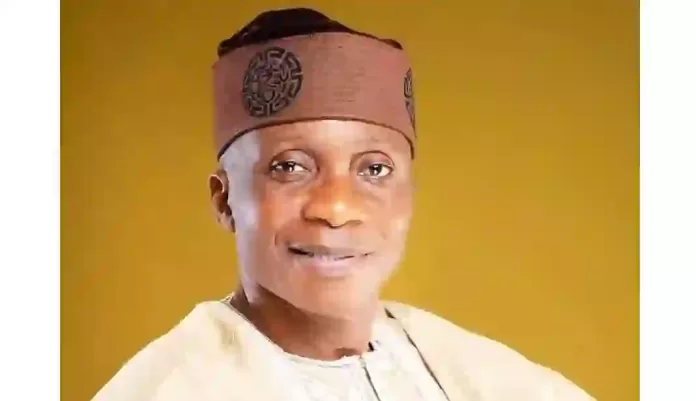
Danladi Umar, former Chairman, Code of Conduct Tribunal, CCT, has been remanded in Kuje Correctional Centre, Abuja, by the High Court of the Federal Capital Territory, FCT, sitting in Maitama, Abuja over alleged bribery scandal.


He is expected to remain in the Correctional Centre pending the hearing and determination of his bail application.


The former CCT boss was arraigned by the anti graft agency, Economic and Financial Crimes Commission, EFCC, on Thursday, on a four-count charge bordering on conferring undue advantage on himself while serving as the Chairman of the CCT, abuse of his office by allegedly using his wife’s bank account to receive illegal payments from contractors handling projects at the tribunal.


His prosecutors alleged that in 2021, Umar received N5.5 million through his wife’s account from a contractor who was awarded the contract to paint the headquarters of the Code of Conduct Tribunal in Abuja.


He was also accused of collecting another N6 million on January 25, 2024, through the same account from a contractor responsible for the digitization of the tribunal’s records.


In another count, the former tribunal chairman was accused of directing a contractor to pay N2.43 million as tuition fees for his Daughter at Baze University, Abuja.


The alleged offences are said to contravene Section 19 of the Corrupt Practices and Other Related Offences Act, 2000, which prohibits public officers from using their positions to confer corrupt or unfair advantages on themselves or others.


Though Umar pleaded not guilty to the charges preffered against him by the anti-graft agency, the not-guilty plea prompted the prosecuting counsel, Christopher Mshelia, to pray that the Court should set a day for the commencement of trial and that the defendant be remanded at the Correctional Centre.


Counsel to the defendant, informed the Court of the bail application filed on behalf of his client and urged the court to take the application


The prosecuting Counsel told the Court that, they had just been served with the bail application and would need time to respond.


This led to him been remanded in prison pending the hearing of his bail application.


Recall that Umar was the one who, while in office, humiliated a former Chief Justice of Nigeria, Walter Onnoghen, when he insisted the CJ appeared before him over an alleged untidy declaration of assets. That case caused the forced resignation of Onnoghen from office. A superior Court has since cleared him of any offence and ordered compensation for him.

“I Am The Most Hated Government Official” – Wike

0
Nyesom Wike
Nyesom Wike. Minister of the Federal Capital Territory,

By Suleiman Anyalewechi


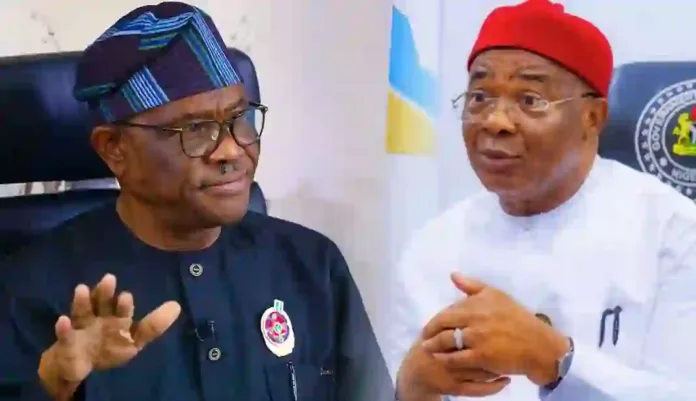
For daring to plug all revenue leakages, as well as avenues for the diversion of public funds into private pockets, the Federal Capital Territory, FCT; Minister Nyesom Wike says he is the most hated Government official  by civil servants.


At his monthly media chat, Wike disclosed that before his coming on board as the head of the FCT administration, resources meant for development projects were either misappropriated or sighoned by individuals.


According him, since mounting the saddle, he has blocked all known conduit pipes, including the culture of  using funds earmarked for the execution of projects for the organization and attendance of domestic and foreign conferences and other mundane issues.


He emphasized that his insistence on minimizing wastages, culture of prudence, and the prioritisation of infrastructural renewal, and execution of capital projects have inevitably earned him the wrath and hatred of most civil servants who are yet to come to terms with the philosophy of his regime.


“We waste our resources on frivolities. Some people are expecting me to approve funds for them to attend conferences in the United States of America, USA, on such issues as land administration.


“Go to Lagos and Rivers states, study how their own works, or did not work and make comparison here in the FCT, instead of going to as far as the USA and other foreign countries to understudy what can conveniently be done here.


“How do you encourage me to approve N20 million for a conference of one week on land administration?


“Such funds can be better channeled into infrastructural provisions and necessary projects”, Wike stated.


The FCT Minister stated that for years, senior civil servants hid under the canopy of conferences to fleece the treasury, noting that his only offence was to halt such monumental regime of waste.


“Some people say conferences for corruption and I say what is that? You are going for conferences to do what? These are ways Government funds are being diverted. I say put this money in this road here, and the people will get the impact.


” And that is why I can’t be popular with the civil servants. If you ask anybody today one Minister they don’t like, it is me. They won’t like me”,  the FCT Minister added.

OPINION: Another View on the Matter of Akara

0
Azu Ishiekwene
Mr Azu Ishiekwene

By Azu Ishiekwene


The feisty debate over First Lady Oluremi Tinubu’s comment on akara, roasted corn, and kulikuli,while discussing the Federal Government’s economic programme,is still stirring up a strong aroma, much like the smell of any of these popular local snacks.

The thing won’t just go away, especially after her husband, President Bola Ahmed Tinubu, jokingly stirred the pot at a public event by calling her Iya Alakara, meaning the akara seller.

At an event at the State House on June 23 to flag off the Renewed Hope Initiative (RHI) Economic Empowerment Programme for Women Petty Traders, with business recapitalisation grants of N50,000 each to 37,000, 1,000 from each of the 36 states and Abuja, the First Lady had suggested the beneficiaries could re-invest the grants in selling akara, roasted corn, or kulikuli.

Eating cake

The suggestion has sparked a firestorm, mainly between those who say the First Lady was insensitive and out of touch, and those who disagree. It reminds me of the Austrian-born duchess,Marie Antoinette, the last French Queen before the French Revolution and her curious association with Jean-Jacques Rousseau’s book,Confessions.

Of all the interesting things Rousseau wrote in the book about his own personal life – the ups and downs and the struggles in a society going through very difficult times – one of the most talked-about expressions from Confessionslinked to the French Queen is “Let them eat cake.”

Antoinette had not been born at the time, so it was improbable that she said that.Yet, a mix of fact and legend from Rousseau’s book suggests that on the eve of the French Revolution, amidst hunger protests over the scarcity of bread and other staple foods, Antoinette’s chaperons told her that Paris was boiling.

The legend suggests that she sashayed to the window, looked out from the pomp of the palace, and was genuinely puzzled that hunger for bread could lead to protests.

“Let them eat cake,” she purportedly said, a statement that has, over generations, come to represent the epitome of elite disconnectedness.

It takes more than cake

Oluremi Tinubu didn’t put it that way; she didn’t say, “Let them eat cake,” even though a section of the outraged public has given her comment quite a monstrous twist.

In a country with a large rural poor and a growing number of urban poor piling up, people need all the help they can get, however small it may appear.Stories abound of people in whose lives such little interventions have made a difference.

Mexico, Brazil, and Bangladesh are examples of countries where small, targeted and sustained efforts (often a combination of direct cash transfers, skills training, education and mentoring) have liftedmillions out of poverty.

I’m not sure that, in offering a token to support akaraor kulikuli sellers, the First Lady wanted to achieve what Maryam Babangida’s Better Life for Rural Women could not, or that she was aiming for her own improved, pet version of Patience Jonathan’s Women of Change.

She just wanted to reach out, and her heart was obviously in a good place. She must have been genuinely puzzled by the controversy, as she made further clarification in Jigawa a few days later, when she announced more grants.

Our mama…

Unfortunately, the timing was wrong. And worse still, the context for many outside the gilded halls where her speeches were delivered carriedan eerie sense of pain, hardship, and frustration reminiscentof pre-revolutionary France. It was not what Remi Tinubu said; it was what was heard that has become the problem.

In March last year, for example, the First Lady gave away thousands of professional kits (scrubs and Crocs) to nursing students in Delta State, an extraordinary act of charity, over which the Master of Ceremonies raised “Na our mama bi this o, we no get another one…”, a song in Pidgin to celebrate Oluremi Tinubu. Rather than singing responsively, the audience, mainly youths, heard something different and responded in a chorus that not only turned the song on its head but also weaponised it.

When the First Lady said she would give away N50,000 to beneficiaries of the RHI petty trader scheme, I can imagine that those in the hall applauded her. But what was heard outside was different.

Age of rage

And the hearers, many of them Gen Z, could not relate. How can a former two-term senator (an elite political group notorious for being widely regarded as amongst the highest-paid political officeholders in the world) offer a token to petty traders? What was akara in the scheme of the serious difficulties facing Nigerians, from insecurity, worsening material poverty, poor access to healthcare and education?

My akara story

I used to stay in line late at night or very early in the morning at the road junction in Okoya, Ajegunle, waiting for my turn to buy akara, dodo, or dun dun from the Iya Alakara, and perhaps the First Lady still has such memories from her past as well. But that was a world in which my parents were sure I would go out and return home safely.And even though the four of us (including my parents) lived in one room, the government paid my school fees, and healthcare was free. We managed on the meagre income of mum, a cook, and dad, a storekeeper at the ports’ authority quays.

I agree that even today, there are still some exceptions to the rule, including my favouriteboliseller along CMD Road, Lagos, who once told me sales from the business largely paid her son’s University of Lagos fees. But the world has changed – and Nigeria has become tougher, with an increasingly large army of young people who, for good or ill, won’t give their leaders an easy pass.

American version

When Bill Clinton or Barack Obama extols hot dogs or stops over on the hustings for a drink and apple pie at McDonald’s, their credentials are hardly in doubt. US voters can relate to them not only because some of these politicians have worked odd jobs before, but also because, apart from the notableexception of President Donald Trump, these folks live modestly and often leave the office poorer.

The First Lady should not be discouraged from well-doing. She’s in a different world from that of the Iya Alakara of old. This chill-less generation would not only welcome the Good Samaritan but also demand authenticity and scrutinise him.

Finally, in today’s Nigeria, Marie Antoinette might not even have seen what was happening outside the palace. The chaperons won’t let it happen.


Ishiekwene is the Editor-In-Chief of LEADERSHIP and author of the book, Writing for Media and Monetising it.

Locals Collaborate With Kidnappers Against Their People –  Gov. Okpebholo

0
Governor Monday Okpebholo

By Ayodele Oni


Edo State Governor, Senator Monday Okpebholo has described traditional rulers as critical stakeholders in the fight against crime because of their close relationship with their communities.


The governor has, therefore, sought stronger collaboration with traditional rulers across Edo State’s 18 local government areas to tackle insecurity and other criminal activities.


He was speaking while receiving traditional rulers from Edo Central and Edo North Senatorial Districts on a courtesy visit to Government House in Benin City.


“There are so many security challenges, and the best people to help me fight insecurity are the traditional rulers. You know your communities because you know those who live there and those coming into the area,” he said.


The governor noted that several recent kidnapping cases involved local collaborators who were familiar with the movement and financial status of residents.


“Our people know those who are wealthy and those who are not. They know the movement of people within the community. If we must stop insecurity in Edo State, we must work together to achieve this purpose.”


He urged traditional rulers not to encourage or shield criminal elements, stressing that young people should be discouraged from engaging in crime.


“Let nobody encourage crime. Our children should not be involved. They should understand that crime is dangerous. The President is not happy about the security situation in the country, and I am not happy as well,” he added.


The governor also appealed to the royal fathers to mobilise support for President Bola Tinubu ahead of the next presidential election, expressing confidence that Edo State could deliver substantial votes for the President.


Responding on behalf of the visiting monarchs, the Ojuromi of Uromi, HRM Anslem Edenojie II, passed a vote of confidence in the governor, describing his development efforts across the state as commendable.


The monarch assured Governor Okpebholo of the continued support and cooperation of traditional rulers in promoting peace, security and development across Edo State

State-sponsored Harassment Of Peter Obi And The Unacceptable Presidency’s Tenuous Reaction

0
Peter Obi

The Peter Obi Media Office has carefully studied the response of the Presidency to Peter Obi’s justifiable alarm on his life and businesses and takes serious exception to the tenuous and uncultured words used in the response.


The Presidency’s insubstantial response is compelling the Peter Obi Media Office to urgently inform the Nigerian public and the international community of a disturbing and escalating campaign against Mr Peter Obi, marked by intimidation and threats.


We raise this alarm not from fear, but as a duty to safeguard our democracy from descending into authoritarianism.


Recent actions by the government, which are underscored by their flimsy reaction to Obi’s interview, have crossed from typical political friction to a concerted effort aimed at undermining Mr Obi’s resolve, restricting his freedom, and thwarting his advocacy for a reformed Nigeria. With engineered bureaucratic obstacles, invasive surveillance, and hostility from state forces, the government’s interference is stark.


 Equally troubling is the pattern of actions directed at businesses and investments associated with Mr Peter Obi. Whether by coincidence or design, these developments have created the perception of a calculated attempt to undermine his legitimate personal and business interests. Such perceptions are corrosive to investor confidence and have no place in a constitutional democracy.

Obi’s Media team have been moving around with him across the country and can attest to the harassment being meted out to him and to his supporters. There has been a noticeable

 and increasingly hostile political environment around Obi.

For instance, some security agencies, including the EFCC, ICPC and DSS, have had issues with Obi’s supporters. We recall the attack on Obi at the home of the former Governor of Edo State, Chief John Oyegun, and the case of Justice Crack, a prominent civil society activist widely known for supporting Obi. His abduction in Abuja under circumstances that generated widespread public concern, followed by his eventual arraignment on charges many considered questionable. It took sustained public pressure from patriotic Nigerians before his whereabouts became publicly known.

Democracy does not require citizens to agree with those in power. It requires governments to tolerate dissent without weaponising state institutions, resorting to intimidation, or attempting to silence opposition voices. Under President Bola Ahmed Tinubu, political intolerance has increasingly become a defining feature of governance.


Mr Peter Obi’s concerns regarding his personal safety and the increasingly hostile political climate should not be dismissed with childish insults. The foremost responsibility of any government is the protection of lives and property. That constitutional obligation extends to every Nigerian, regardless of political affiliation, and certainly includes the country’s foremost opposition leader.


Peter Obi supporters want to make it clear that he is not just a political figure but a leader who embodies the hopes of countless Nigerians yearning for good governance and prosperity. Therefore, any attempts to silence or harm him are attacks on the Nigerian people.


“We will not stand by while those who have failed Nigeria misuse state power against the single voice that speaks truth to power.”


We demand an immediate halt to hostilities against Obi and an end to the obstruction and intimidation he faces. The federal government will be held accountable for any harm that befalls Mr Obi or his associates.


If the goal is to silence him, know that you cannot intimidate a man whose strength comes from the collective will of a nation longing for change.


Using police state tactics will neither alleviate our economic struggles nor secure our nation. We urge the government to redirect its efforts toward addressing the rampant insecurity and hunger afflicting Nigeria rather than fixating on the movements of a man dedicated to national progress.

A word is enough for the wise.


Signed,

Idris Zekeri Jnr 

The Peter Obi Media Office  

July 9, 2026

US Lists 124 Nigerians For Deportation 

0
Donald Trump
The United States has released the latest list of Nigerians to be deported. The list include 124 Nigerians who the US State Department described as worse criminals operating in the country.
The State Department made this known in a statement issued on Wednesday, saying those in the list have been on US watch-list for a long time.
The photographs and names of the listed individuals have been made public, even though the Department has yet to disclose when they will be deported, nor did the government provide details about their offences.
The statement read, “The U.S. Department of Homeland Security is highlighting the worst of worst criminal aliens arrested by the U.S. Immigration and Customs Enforcement (ICE).
“Under DHS leadership, the hardworking men and women of DHS and ICE are fulfilling President Trump’s promise and carrying out mass deportations – starting with the worst of the worst – including the illegal aliens you see here.”
The list include, “Sunday Adediora, Sunday Kunkushi, Mkpouto Etukudoh, Marcus Unigwe, Olaniyi Ojikutu, Boluwaji Akingunsoye, Ejike Asiegbunam, Emmanuel Mayegun Adeola, Bamidele Bolatiwa, Ifeanyi Nwaozomudoh, Aderemi Akefe, Solomon Wilfred, Chibundu Anuebunwa, Joshua Ineh, Usman Momoh, Oluwole Odunowo, Bolarinwa Salau, Oriyomi Aloba.”
Also, included are Oludayo Adeagbo, Olaniyi Akintuyi, Talatu Dada, Olatunde Oladinni, Jelili Qudus, Abayomi Daramola, Toluwani Adebakin, Olamide Jolayemi, Isaiah Okere, Benji Macaulay, Joseph Ogbara, Olusegun Martins, Kingsley Ariegwe, Olugbenga Abass, Oyewole Balogun, Adeyinka Ademokunla, Christian Ogunghide, Christopher Ojuma, Olamide Adedipe, Patrick Onogwu, Olajide Olateru-Olagbegi and Omotayo Akinto.
“Kenneth Unanka, Jeremiah Ehis, Oluwafemi Orimolade, Ayibatonye Bienzigha, Uche Diuno, Akinwale Adaramaja, Boluwatife Afolabi, Chinonso Ochie, Olayinka A. Jones, Theophilus Anwana, Aishatu Umaru, Henry Idiagbonya, Okechukwu Okoronkwo, Daro Kosin, Sakiru Ambali, Kamaludeen Giwa, Cyril Odogwu, Ifeanyi Echigeme, Kingsley Ibhadore, Suraj Tairu, Peter Equere, Dasola Abdulraheem, Adewale Aladekoba and Akeem Adeleke.
“Bernard Ogie Oretekor, Abiemwense Obanor, Olufemi Olufisayo Olutiola, Chukwuemeka Okorie, Abimbola Esan, Elizabeth Miller, Chima Orji, Adetunji Olofinlade, Abdul Akinsanya, Elizabeth Adeshewo, Dennis Ofuoma, Quazeem Adeyinka, Ifeanyi Okoro, Oluwaseun Kassim, Olumide Bankole Morakinyo, Abraham Ola Osoko, Oluchi Jennifer and Chibuzo Nwaonu.”

Fake Agency: Gbajabiamila Is Innocent; I Know Him Very Well

0
Nyesom Wike - FCT Minister
Nyesom Wike

 
The Minister of the Federal Capital Territory, Nyesom Wike, has disclosed that those who wanted to bring down the administration of Bola Tinubu targeted  his Chief of Staff, Femi Gbajabiamila in the Presidential Foreign Intervention Promotion Council, PFIPC saga.
The FCT minister said the CoS is a man of integrity, and could not have been involved in the scam.
Wike spoke during his monthly media chat with select journalists in Abuja, the nation’s capital, saying the allegations against Gbajabiamila were false, adding that the target is to embarrass the government.
 
Recall that Gbajabiamila was accused by one Adedeji Matthew, the purported Director General of the PFIPC of facilitating his appointment, after allegedly collecting N400 million from him, through an intermediary who’s is now dead.
The Presidency has however declared the agency as non- existent, accusing Adedeji as a scammer.
Speaking, Wike described the allegations against the CoS as tissues of lies, saying “l know the Chief of Staff very, very well. Without prejudice, I know him very well,” and it’s “illogical” to link him to the scam. 
 
“There are people who target those in government just to give a bad name to their boss. If you want to embarrass any government, the first person you target is the Chief of Staff because people believe that once you get to him, the government will be embarrassed,” he said.
 
Adding “Does it make sense that an agency that does not exist he will ask somebody to give it such an amount of money? It is madness. The Chief of Staff cannot create a budget. It is simply not possible.”
 
President Tinubu has directed that the alleged scam be probed by the Independent Corrupt Practices Commission, ICPC.
 
Also, the House of Representatives, on Wednesday set up an adhoc committee to probe the allocation of over N27 billion to the Phantom agency in the 2026 budget. The committee is chaired by Yusuf Gagdi, the lawmaker representing Plateau state in Nigeria’s lower chamber of the National Assembly.
 

Peter Obi To Deliver Keynote Address At African Union Diaspora Conference In New York

0
Peter Obi African Conference

The presidential candidate of the Nigeria Democratic Congress (NDC), Mr. Peter Obi, will deliver the keynote address at the 2026 African Diaspora Conference and Awards Ceremony scheduled to hold on Friday, July 10, at Mandela Hall, African Union Permanent Observer Mission to the United Nations, New York.


The high-level conference, organised by the African Union Permanent Observer Mission to the United Nations in collaboration with the Permanent Mission of Liberia to the United Nations, the African Trade Centre, Team 54 Project International, and the Global Initiative for the Education and Literacy of African Girls (GIFTED), is a side event of the United Nations High-Level Political Forum on Sustainable Development.


The conference, themed “Diaspora Engagement in Sustainable Development in Africa,” will bring together policymakers, diplomats, business leaders, development experts and members of the African diaspora to explore strategies for harnessing the continent’s global human and economic resources for sustainable development.


Obi will deliver the High-Level Keynote Address titled “The Role of the African Diaspora in Sustainable Development Across Africa.” His presentation is expected to highlight the vital role Africans in the diaspora play in driving investment, innovation, education, entrepreneurship and economic growth across the continent.


Known for his consistent advocacy of good governance, fiscal discipline and investment in human capital, Obi has repeatedly argued that Africa’s greatest asset is its people and that sustainable development depends on making  education a priority, healthcare and productive investments while creating an enabling environment for the diaspora to contribute meaningfully to national development.


The event will also feature an awards ceremony recognising outstanding individuals and organisations within the African diaspora whose contributions have significantly advanced development across Africa.


The conference is expected to attract diplomats, government officials, development partners, academics, entrepreneurs and diaspora leaders from across the world, reinforcing the importance of global African collaboration in achieving sustainable development.

Martin Agbaso: A Man With No Bitterness, Craving To Render Service

0
Martin Agbaso
Martin Agbaso

By Victor Okey Okwarugo


A few days ago, I was having a conversation with a friend.


In the middle of our discussion, he asked me a simple question.


“Victor, what do you really know about Chief Martin Agbaso?”


I paused.


Like many people, I had heard countless stories.


Some admired him.


Others criticized him.


Some spoke about the 2007 election.


Others remembered his business empire.


But when I was honest with myself, I realized I knew very little about the man beyond what people had chosen to tell me.


That conversation stayed with me.


A few days later, I came across a recent public message from Chief Martin Agbaso.


What caught my attention wasn’t why he wrote it.


It was the tone.


There was no bitterness.


No anger.


No attempt to reopen old political wounds.


Instead, I found a man talking about sacrifice, service, faith, patience, and hope. A man who wrote that he chose not to allow disappointment to become bitterness, but instead allowed experience to become wisdom. A man who believed that while circumstances may delay a journey, they cannot stop a destiny ordained by God.


That was the moment I decided to dig.


What I discovered was far more remarkable than I expected.


I discovered that Martin Agbaso’s story did not begin in politics.


It began in Emekuku, where he was raised on the values of faith, integrity, humility, compassion, and hard work. Those who knew him as a young man spoke about his character long before they spoke about his achievements.


As I kept digging, I became even more fascinated.


From a humble beginning in Imo State, he travelled to Rome, Italy, where he became the first African elected Secretary General of the International Students Committee at the Pontifical University.


From there, he proceeded to the United States, earning degrees in Finance from the State University of New York, receiving academic honors, and distinguishing himself as a young African among his peers.


Then came his corporate journey.


Rather than chasing titles, he deliberately started as a Management Trainee at Prudential in New York. Within a short time, he earned the respect of one of the world’s most competitive financial environments, became a member of the New York Stock Exchange, and built an impressive career in international finance.


Then I asked myself another question.


Why would someone who had achieved so much abroad choose to return to Nigeria?


The answer became obvious.


He believed his knowledge, experience, and success should benefit his own people.


He returned home and built businesses in construction, commodities, oil and gas, and several other sectors. He transformed Nathan’s into Nigeria’s largest dry cleaning chain and created employment opportunities for hundreds of Nigerians.


Long before politicians began talking about job creation, he was already creating jobs.


Then I dug into the political chapter of his life.


This was where the story became even more compelling.


Politics did not come looking for a man seeking wealth.


He had already achieved success.


Politics came looking for a man whose people believed could lead.


One of the discoveries that surprised me most was that, while still in his 30s, Martin Agbaso was elected Senator for Imo East Senatorial District under the platform of the Democratic Party of Nigeria (DPN) in the National Assembly elections conducted on 25 April 1998.


Sadly, history took an unexpected turn.


Before the elected senators could be sworn into office, General Sani Abacha died on 8 June 1998. The new Head of State, General Abdulsalami Abubakar, dissolved the five political parties created under the transition programme and cancelled every election conducted under that transition programme.


Despite being elected by his people, Martin Agbaso never had the opportunity to represent them in the Senate.


As I continued digging, another chapter completely captured my attention.


The 2007 governorship election.


The more I examined the events surrounding that election, the more I understood why, nearly two decades later, people still speak about it with emotion.


On 14 April 2007, Martin Agbaso won what many still regard as one of the freest governorship elections ever conducted in Imo State.


Then came the twist.


INEC cancelled the election, citing violence in five locations, and ordered a fresh election on 28 April 2007.


The more I dug, the more questions I found.


If the alleged violence occurred in only a handful of locations, why was the governorship election across all 27 local government areas cancelled?


Why were the House of Assembly elections, conducted in the same polling units, with the same electoral officials and the same ballot boxes, allowed to stand while only the governorship election was cancelled?


Martin Agbaso refused to walk away.


For four years, he fought in court, believing that the mandate freely given to him by the people deserved judicial protection.


Justice, in his view and in the view of many of his supporters, never came.


Many still regard that episode as one of the worst political injustices in Imo State’s democratic history.


Then I remembered the letter that started this journey.


Suddenly, one sentence made perfect sense.


“I chose not to allow disappointment to become bitterness. Instead, I allowed experience to become wisdom.”


After digging into his life, I understood those words.


They were not written for applause.


They were written by someone who had lived them.


The more I dug, the more I discovered another side of Martin Agbaso that rarely makes headlines.


His philanthropy.


His support for widows and orphans.


His contributions to churches and communities.


The countless acts of kindness carried out quietly, without cameras or publicity.


Perhaps that is why people call him Ochoudo, “The Peacemaker.”


Not because it is a political slogan.


But because it reflects the life he has lived.


By the time I finished digging, I had learned something important.


Leadership is not built in a season.


It is built over a lifetime.


It is revealed through character, resilience, sacrifice, compassion, and an unwavering commitment to serve others.


When I started digging, I thought I was trying to understand a politician.


When I finished, I realized I had uncovered the story of a man whose life has been shaped by service, tested by adversity, and defined by resilience.


Whatever anyone’s political views may be, I believe we owe ourselves one duty.


Before we form an opinion about anyone, we should first know their story.


I’m glad I took the time to know him.


Okwarugo writes from Isiekenesi, Ideato South Local Government Area, Imo State.

One Week, After, MULAN Chieftain Barr. Abdullahi Still Held By His Abductors

0
Barr Hashim Abdullahi

By Suleiman Anyalewechi


Seven days after, Kebbi State-born legal practitioner, Barr Hashim Abdullahi, has remained in the custody of his kidnappers as family members, relations and friends are kept in suspense about his fate.


The source reports that Abdullahi was, on Thursday, July 2, 2026, abducted by suspected banditry elements while returning to his Kebbi State base after attending the yearly National Conference of the Muslim lawyers Association of Nigeria MULAN held in Kano.


His abduction was made public by the National President of the umbrella body of Muslim legal practitioners Sa’idu Muhammad Tudun Wada .


According to the MULAN President , the kidnappers who initiatially made a ransom demand of N200 million ,later reduced it to N100 million , with N50 million, and five Boxer model motorcycles agreed as the final pre-conditions for Abdullahi’s release.


However, seven days down the line, the fate of Abdullahi still hangs in the balance. His abductors are yet to set him free .


It is is not yet known if the delay in securing his freedom is as a result of the inability of the family, relations ,and associates  to meet his ransom valuation, or the kidnappers playing hard to please.