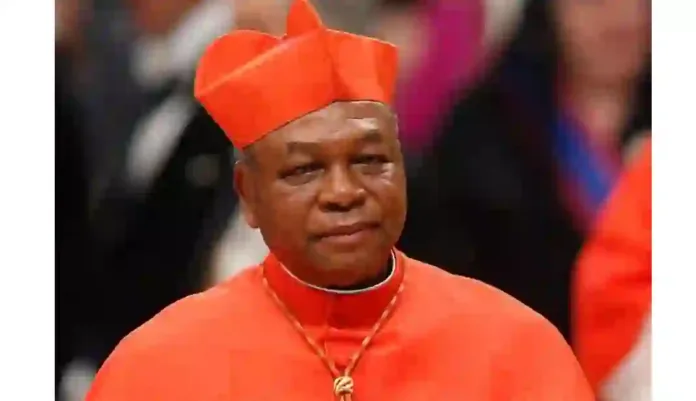
By John Cardinal Onaiyekan
I am sincerely grateful to the Nigerian Guild of Editors for not only inviting me to take part in this year’s All Nigeria Editors Conference, but to also deliver a keynote address on the theme of the conference, namely “The Ballot, the Media and the Task of Keeping Democracy Alive.”
I am all the more grateful because I am not in any way a specialist in the matters under discussion. I will speak, therefore, more or less as a layman in the field, but also on two counts: First, as an 82-year-old Nigerian who has seen this nation going up and down with hopes of greatness that have continued to elude us. And secondly, I speak as a Cardinal, Archbishop Emeritus, a religious leader of the Catholic faith in this country of ours that is so notoriously religious. It is only on the basis of this that I dare to stand before you to share my thoughts.
I have decided to address the theme that you have assigned to me, but I will do it in three steps:
First, I will talk about democracy in Nigeria.
Secondly, I will share some reflections on the ballot in Nigerian democracy, namely about elections. And finally, more pertinent to you, I will venture to say a few things about the role of the media.
That way, I hope to have covered the theme: “The Ballot, the Media and the Task of Keeping Democracy Alive.”
PART A:
DEMOCRACY IN NIGERIA
It is often said that democracy means the government of the people, by the people, for the people. This is a great ideal of government, and which it seems extremely difficult to achieve in reality. Even the ancient Greek Republic that is said to be the origin of the concept of democracy was never really the government of all the people of Greece for all the people of Greece, by all the people of Greece. It was the government of a small elite of rulers over the rest of the Greek Republic. And it has been the same thing, more or less, down to the ages.
We need to remind ourselves that humanity has been ruled in different ways. There have been other forms of government, other than democracy. Let me mention a few:
First, there is theocracy, meaning ruling by God, either directly or indirectly through God’s agents. This has been very common in the history of humanity, where either priests took the role of rulers, or kings were assigned priestly duties, or at least whoever ruled was under the control of religious leaders who claimed to speak in the name of God. This is the basic element of the king in ancient Israel, where the king was chosen by God to rule over his people following the laws given by God himself, a law that is interpreted by priests and prophets.
In our traditional cultures, there was quite a bit of theocracy. Among the Yorubas, for example, the Oba was a vicar of the Olodumare himself, Oba ikeji Olodumare. And the traditional rulers were also leaders of the religious rituals of the tribe. This was theocracy of some form.
To some extent, Islamic regimes that claim to be ruled according to the Shariah, are a form of theocracy, ruled by divine injunctions. A contemporary example would be the regime in Iran with the non-elected Ayatola as Supreme Leader of the nation.
Then there is monarchy, probably the most well-known, where a king rules over the people, often not by force, but because the people decide that they will be ruled by a king. Generally, monarchy is also hereditary; going from father to first son. But monarchy also did change when one ruling house is overthrown and replaced by another. In whatever case, the king rules because he is a king. Sometimes, there is an element of theocracy in the monarchy, when the king rules in the name of God. We have cited the example of this in ancient Israel.
Then there is ruling by dictatorship. This terminology sounds very distasteful to us today. But in terms of human history, it has been also a respectable form of government. A strong man takes control of power, rules the people, takes care of them, and they accept him as their ruler. That is the dictator. It can be said that the Greek Empire from Alexander the Great onwards and the Roman Empire under the Caesars were all dictators who took over power, but were respected and obeyed by their people.
Contemporary China seems to be a form of dictatorship of the Chinese Communist Party under its Chairman. It seems to be working well for the Chinese.
Similar to the above, there is military dictatorship, with which we are familiar because we have seen it in this country for almost 30 years—namely, a dictator takes power by force of arms. In a way, the Greek and Roman dictators also relied heavily on their armed forces to keep them in power. In all this, the important thing is that the people are governed, and they are protected against foreign enemies, and to some extent, they enjoy a minimum of security and prosperity.
Today, there are still in our world theocracies, monarchies, and dictatorships. In Nigeria, we have chosen democracy, which, as we said above, is high on ideal, but very low on practicality. It is the most fashionable form of government today, and my church believes that it is so far the best form of government available—that is, if its rules are obeyed and its checks and balances respected.
Democracy is not entirely new to us in our nation; our traditional governance was a form of indirect democracy. The king ruled with the assistance of the representatives of the people, generally of family heads. And somehow, even though he theoretically has absolute powers, he was careful to exercise this power with due consultation with those who matter. If he ignores consultation, he does that at his own risk.
During colonial rule, we were put under some kind of limited democracy by the colonial powers who took control of our nation by sheer force, not with our agreement. The irony was that Britain that claims to be democratic, was spreading dictatorship all over the world.
Eventually, Nigeria became independent, and we expected then to be finally in a position to rule ourselves in a democratic way. We inherited a very weak democracy, despite the Constitution that we drew up for ourselves under the guidance of the colonial masters who gave us independence, as the expression goes. That the democracy we inherited was weak becomes clear when we realize that it collapsed under military rule soon after it started.
The military rule in Nigeria, which started in 1966, continued with only one brief interval of the Shagari regime from 1983-1987, until 1999, when we returned to democracy. Nigerian democracy since 1999 can be described as a democracy sui juris. There are many who say we should not complain if democratic practices in Nigeria are not following the normal pattern we see in some so-called civilized nations. We are told that democracy depends on the environment in which it is practiced.
Whatever we may say about this, we cannot get away from the fact that, like every other form of government, democracy must be governance for the good of the people. The leaders must be serving the interests of the governed, and people must be at the center of governance—what we call the common good, all to the glory of God. This is the kind of democracy that Nigerians have been dreaming about. There are those who say it is utopian, it is not possible, we just manage with whatever we have. But we are many who believe that it is not necessarily so, that we can indeed work towards a democracy that respects the wishes of the people and works for the common good of the nation.
In a democracy, leadership is chosen by the people through elections. And this brings us to the question of elections.
PART B:
ELECTIONS IN NIGERIA
Elections are meant to choose leaders at all levels and to assess their performance. In Nigeria, our elections are guided by laws, by the constitution of the Federal Republic of Nigeria, by the electoral laws that have been passed by the National Assembly and also by INEC rules and regulations. The purpose is to ensure free, fair and credible elections, to make sure that the will of the people is correctly ascertained. We must insist on the primary position of the people who cast their votes. Electoral institutions are umpires that conduct elections among candidates who contest.
The candidates present themselves to be voted for, and for this reason, their role is passive, not like the role of the people who cast the votes. Political parties are very important in Nigeria because, by our own law as of now, it is a necessary vehicle for
political contest. Political parties are generally driven by political ideologies, which they present to the people as options for their choice in the elections.
In Nigeria, we have had several elections since 1999. It is difficult to believe that we have been making progress. In fact, it seems that the quality of the elections has been reducing from one election to the other, and this is not good news at all.
There are critical issues about elections in Nigeria, among which are the following:
There is the conduct of politicians who have an attitude of do-or-die, to win at all costs. This is because they see elections as a struggle for power, which brings wealth and influence. In all this, the people hardly count at all. Rather, they are just pawns on the political game.
Our Constitution has many provisions about Federal Character and State of Origin, meant to ensure equity and inclusivity in our national affairs. But its implementation in many cases has led to injustice and exclusion of Nigerians. This rears its head often during elections, when quality is sacrificed to ancestral place of origin. The growing system of zoning is also a cause of great concern, which is more for elite rivalry than for the good of the people at the grass roots in the zones. Our Nigerian citizenship is crying to be given greater value and recognition.
Then the state institution, INEC, that is supposed to conduct the elections has its own issues and problems, mainly because it is set up by government and controlled by the government, which itself, during elections, is no longer only government, but also a contestant in the electoral struggles. The INEC is supposed to be independent by definition, Independent National Electoral Commission. But it is doubtful how independent it is or can be. And this is linked also to how transparently it can perform.
INEC is often under pressure from politicians who try to force it to play in their favour. But when the politicians are themselves the government in power, it becomes very problematic for INEC to be truly independent and transparent.
Another issue is the challenge of government neutrality during elections.
We often hear about the factor of incumbency during elections. Regimes in. power at both national and state levels have found it difficult to allow a level-playing field for other political contestants with whom they are competing. State resources are blatantly captured and deployed for partisan political activities, with little or no qualms. We see this when a state governor can boast of delivering 100% of the votes in his state to his preferred presidential candidate. If it is a joke, it is very bad taste. Where is the freedom of the people of the state to vote according to their individual consciences?
Or does the governor intend to vote for everybody in his state?
We must also raise concern about the security agencies, which are supposed to secure the environment and give people the space to freely cast their votes.
They are supposed to work with professionalism, no intimidation, no harassment of the people. But when security agents, with their paraphernalia of force, are all over the place with sirens blaring everywhere, people are intimidated and many are even afraid to come out to vote. The overwhelming presence of security agents during elections is not a good thing for our nation. We can borrow a leaf, from other countries who conduct their elections quietly, without declaring public holidays or curfews across the nation.
I have personal experience of several elections when I was a student in Rome. We hardly knew the days when elections took place. Italians left their offices and their homes at their leisure, went to the polling stations, cast their votes, and returned home, and waited for the results. There are no soldiers and police all over the place. We have to review our own habit of turning election days into a nation at war. It seems too that because the security agencies are over-deployed, they tend too often to misbehave, as they lend themselves to very unprofessional practice.
Finally, there is the judiciary, which is supposed to be the last stage in the electoral process. It should be stressed that the judiciary is not to determine elections about who wins, but rather to adjudicate disputes when they arise. If elections were well conducted, there ought not to be any need for judicial cases. The tribunals were supposed to be there just in case. But our experience in the recent past has almost become that we have been witnessing a situation where our elections are being determined not at the polls, but in the courts by the tribunals. And this gives a field day for high-class lawyers with high-level fees, doing their best to manipulate issues on technicalities. There are allegations that are difficult to deny of unjust judgments by some judges in election tribunals. The performance of the judiciary in recent elections has seriously dented the image of this hallowed institution. I do hope that efforts are being made to regain the trust of the people in the courts in these matters.
On the whole, therefore, we need an improved legal framework for our elections. There have been frequent demands for improvements in this regard.
Our National Assembly, which ought to make sure that this is done, so far has shown scarce interest for serious change in this matter. There are allegations that the present members of the National Assembly prefer to retain the porous system that we now have so that they can take advantage of it for their own selfish reasons. It seems that politicians have studied all the loopholes in our system and have perfected the art of taking advantage of those loopholes to win elections by hook or by crook, by whatever means. If that is the case, it would not be in their interest to plug those loopholes. But it is certainly in our own interest so to do.
For the 2027 elections, just around the corner, there is not much we can do to change the rules on ground. We therefore have to work with what we have now in terms of the legal frameworks. But I do believe that even with our deficient electoral laws, we can still conduct free, fair, and credible elections if the rules are followed with sincerity of purpose. We can only hope that this will happen.
However, as we go for the 2027 election, we still need to start thinking about working for an improved framework with the next National Assembly, which we hope will be peopled with better caliber of legislators who will have the will of the people as priority.
What are the areas of improvement? Let me list some here.
*1. We need to review the method of appointment of the INEC, the Chairman and the commissioners. They should not depend on Mr. President and the governors, who are themselves contestants in elections. The approval of the legislature, which is supposed to provide checks and balance, has become mere routine. This is more blatant at the level of the State Electoral Commissions, where they routinely fill the state houses of assembly with the governor’s boys and girls. We need to borrow a leaf from other nations where formulae have been designed to ensure an independent electoral commission that does not depend on the government in power.
*2. We need to set up a special election tribunal whose duty will be to do nothing else but to settle all election cases with minimum delay. In such a special tribunal, the onus of proof should now be squarely on INEC where charged. As at now, INEC hardly ever needs to prove anything. Whatever INEC says is taken as the authentic position of things. The candidates that contest and are complaining against INEC are told that they have no legal right to present issues about how the election was conducted. We saw this playing out so blatantly in the last 2023 election, with disastrous outcomes.
*3. Our laws should make provision for the citizen as citizen and as electors to challenge results of the election at tribunals. As at now, only candidates have locus standi to challenge election results. But we who cast the votes and whose votes are at stake have no room to complain. This must change. While the candidates have a right to complain in the tribunal, we too should have the right to present our case if we believe that the votes we cast have not been properly counted.
*4. More seriously, we must do all that is necessary to dispose of all tribunal cases before swearing in any candidate. A situation where a candidate has been declared a president still going to tribunal to defend his position using state means and state resources to defend himself against his opponents is not serious as far as natural justice is concerned. It is surely possible to dispose of all cases before swearing in. This is what is happening in many countries. And as we mentioned earlier, if the elections were properly done and the politicians have the right attitude to accept victory or defeat, as the case may be, there will be little or no need for any prolonged election cases. Whatever the situation, a special election tribunal should be able to give itself a time limit during which all cases are disposed of. There should be no room left for clever lawyers to play technical delay tactics in this matter.
*5. Can we make provisions for independent candidates, finally? It had been mentioned several times, even in the National Assembly, but nothing seriously has been done. I believe firmly that independent candidates will be useful for our nation, if not at the level of the presidential election certainly at the local level, lower-level elections. For example, at the local government level, a local community can decide on somebody whom they respect who doesn’t belong to a political party, and they want him to be their local government chairman. He should be able to stand election and be voted in, without having to start looking for a political party that will adopt him or her. It is about time we curb the tyranny of the political parties and their ruthless godfathers
*6. For the presidential election, we should insist on at least 50% of all votes cast before declaring any victory. In the absence of 50% at the first vote, a second vote should be called among the first two highest scorers to determine the winner. A situation where a candidate is declared a winner and our president with only 30% of the votes cast, puts doubt on the authenticity of the victory. It is a victory by minority votes. A 50% minimum would ensure that whoever becomes our president has a traceable margin of endorsement by the Nigerian people. We saw this playing out in the last presidential election in Turkey, where President Erdogan had to present himself for a second round of voting, which he narrowly won by about 51% of the votes.
*7. Finally, there is need for more stringent rules to control frivolous and selfish cross carpeting in the parliament , both national and state. A legislator who wishes to change his/her political party to another different from the party under which he/she was elected to the house by his constituency should be obliged to go back to his constituency to seek re-election under his new party in a bye-election. It is not fair for the constituents to watch their legislator changing the party they voted for without their consent.
I repeat that all the above seven points are for the consideration of the new National Assembly to be voted into the house in the next 2027 elections.
PART C:
THE ROLE OF THE MEDIA
Finally, we come to the third point, which is more directly related to you people here, the role of the media.
It is often said that the media is to inform, to educate, and to entertain. It is also called the fourth estate of the realm with specific rights and duties. I believe it is called the fourth estate of the realm because it is in addition to the other three estates of the realm, namely the executive, the legislative, and the judiciary. It means, therefore, that the media has specific rights and duties in how the nation is governed.
The media has an important role in upholding democracy, to keep the people informed about the true state of the nation. It means reporting on actions and policies of government, positively where they are considered so and critically when they need to be reviewed. They should also operate with professional autonomy. They should resist pressure from those who are funding them, whether it is the state or it is private organizations and corporate bodies. And all this should be for the common good of the nation. This is not an easy task, as all of you know very well. But it is not impossible for any high caliber journalist or media person.
A free press is necessary for a genuine democracy. From this point of view, I think we can say that the situation in our country Nigeria is not so bad. We see this in the diversity of printed newspapers every day, the wide range of radio and television stations, and then most recently the social media that has made an irruption onto the media space in a way that we are still to see how far it is going.
The latest arrival, of course, is Artificial Intelligence, AI. It is already working wonders in the communication space, though not without its dangers if it is allowed to spin out of human control.
Pope Leo XIV has some serious wise warning on this matter in his recent encyclical Magnifica Humanitas.
So, there is a diversity of modern media. All are technologically interconnected. Since they are technology-driven, they require knowledge, skill, and commensurate costs. In all this, there are challenges as well as opportunities.
CONCLUSION.
It is not for nothing that the media is called the fourth estate of the realm, after the three areas of executive, legislative, and judiciary. The relatively good margin of freedom, which the Nigerian Media now enjoys, should be used with responsibility and professionalism, to rescue democracy in our nation, to uphold and to nurture it for a great nation under God.
Permit me to summarize, by way of conclusion, my key message to this august audience as follows:
Democracy, as a form of government is very attractive, even though it is not the only form of government in the experience of human history. In our days, however, it happens to be the preferred form of government, and our nation Nigeria claims to have adopted it. We must live up to our claims and we do well to hold our leaders accountable in this regard.
In reality, however, democracy is difficult to fully achieve, despite all retorics about it. Even the so-called models of contemporary democracy can bring forth a strange anomaly, like the Trump phenomenon.
We should, therefore, be patient with ourselves as we struggle to install and uphold a minimum level of good democracy in our land. But we must never give up our efforts to keep pushing for a government of the people, by the people for the people. Nor can we accept the specious argument that democracy has taken centuries to build in some nations, and that so we should wait for hundreds of years to achieve our own. We have the experience of history, and we cannot be re-inventing the wheel.
The ultimate objective is to install a government that is freely chosen by the people and that works for the common good of the people.
A key element is the moral quality of the persons who emerge as leaders – by whatever means. They must be persons with a minimum of social values and character: honesty, concern for the common good of citizens as priority of governance, absolute respect for the rule of just laws.
In political terms, we say that power belongs to the people. By that, we mean that it does not belong to the political leaders and office holders. Ultimately, power belongs to God, the Creator and Controler of our individual and communal destiny.
Therefore, all those who hold power do so in the name of God and must exercise always with this in mind.
Fortunately, both the Christian and Muslim faiths in their best expressions agree in this great principle of governance. All religious leaders should be preaching this to their congregations on Fridays and Sundays, instead of currying favours or seeking patronage form partisan political office holders, with fake holy excuses. If they prioritize preaching the religious values of good governance, then religion in Nigeria can, and will become a positive asset for a good government for our people, under One God.
Thank you very much.
Archbishop John Cardinal Onaiyekan delivered this keynote address on Thursday, September 24, at the All Nigeria Editors Conference holding in Enugu from September 23 to September 26, 2026




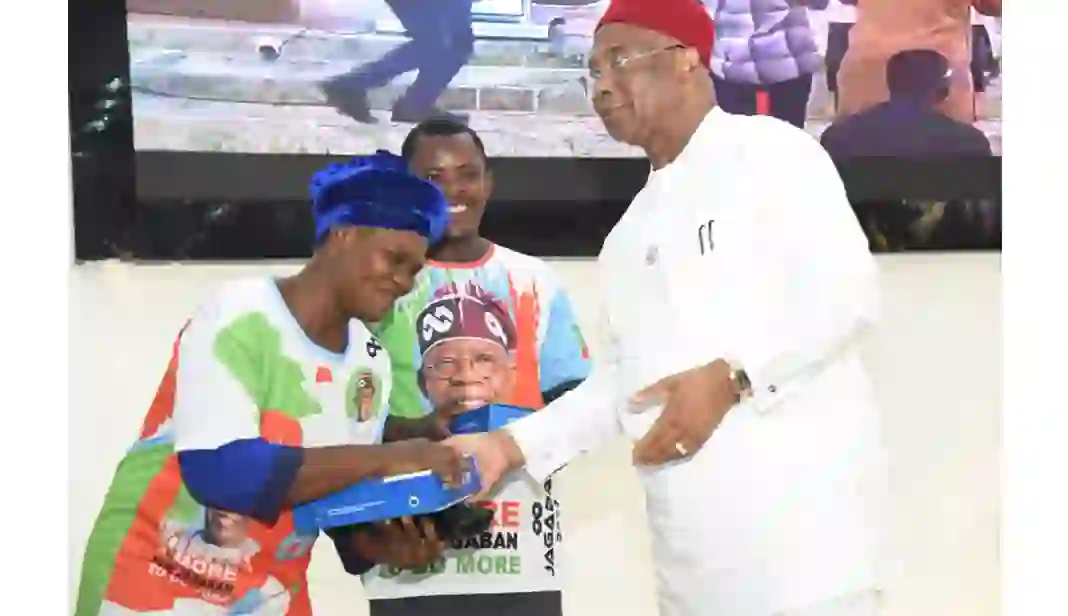
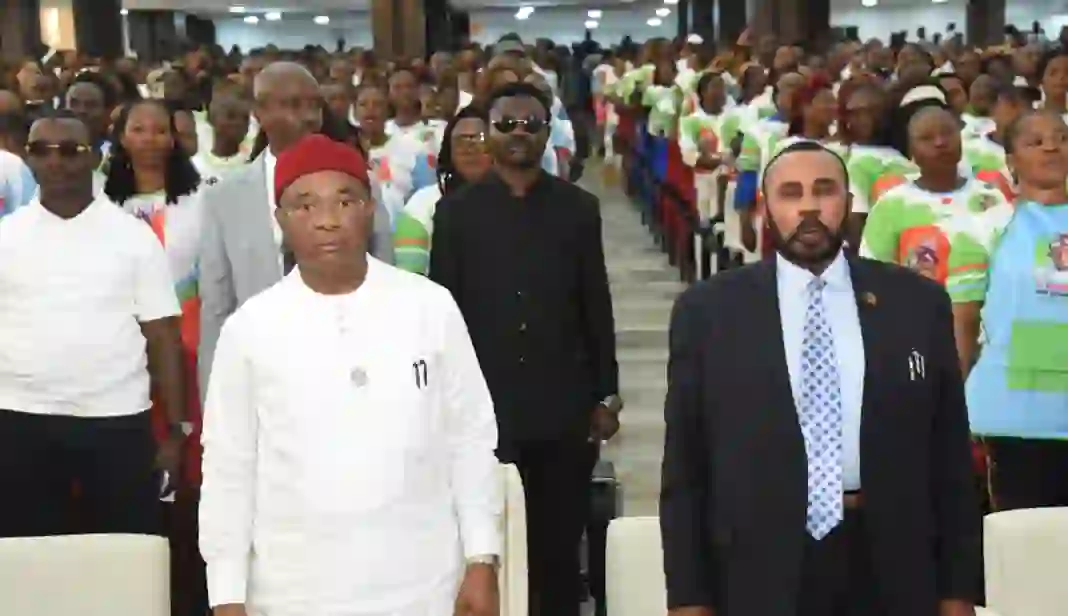 Gov Uzodimma, guests and beneficiaries.