Home Blog Page 2077

Kuje: FG Had Pre-knowledge Of Attack By Terrorists – Aregbesola, Minister For Interior

0

By Ayodele Oni

The Nigerian Government knew about the attack on Kuje Correctional Centre, Abuja, by terrorists before it took place. This was confirmed on Thursday by Rauf Aregbesola, Minister for Interior, whose Ministry supervises Correctional Centres.

Terrorists, in their numbers, last month,  brazenly stormed the prison in an attack that, at once, shocked and shook the nation. A number of high profile prisoners, including dangerous terrorists, are inmates

During the attack which lasted for almost three hours, their operations went unchallenged. They freely used explosives and superior gunfire. At the end, tragedy was wrought on the country.

Over 800 inmates were released by the terrorists, including 65 Boko Haram fighters who were in custody. Weeks after the attack, over 300 inmates are still at large. Five people were killed, including a Security personnel and four inmates.

It has always been strongly suspected that the Federal Government was in the know before the attack but inexplicably did nothing to stop it, fuelling a ridiculous but strong allegation that it must have been an arranged mission to release detained Boko Haram elements at the Centre.

A former Minister for Aviation, Femi Fani-Kayode, had in a video recording which went viral, revealed that the Department of State Services, DSS, duly informed  the Military of the would-be attack. He regretted that the Military did nothing until the tragic incident.

And, even though the leadership of the Military denied Fani-Kayode’s allegations, Aregbesola on Thursday confirmed that yes, the Federal Government  had pre-knowledge of the attack.

Speaking to the State House Press Corp after a meeting of Security Chiefs, the Minister admitted to what has now become obvious: that there was an intelligence report available to Government before the attack. Aregbesola regretted that there was no will to act on the information.  He did not reveal those who failed to act on it.

He, however, disclosed that the report of preliminary investigation into the incident is ready, and has been handed over to the President, Muhammadu Buhari. Those who went deaf and dumb in their responsibilities will be punished, he said.

Fani-Kayode had heaped praises on the DSS for giving intelligence information before the attack, as well as before the attack on the Abuja-Kaduna bound train about three months ago, but indicted the leadership of the Military for alleged dereliction in their duties. He asked for their sack.

FG Mulls To  Ban Okada Business In A Move To Cripple Bandits

0

By Ayodele Oni

The end may be near for those that use motorcycles as means of survival as the Federal Government is mulling an idea to put an end to the use of motorcycles in the country.

Motorcycles became means of transportation in the country to fill the gap created by buses, especially in the remote areas where there are no motorable roads.

Also, following a surge in unemployment, some graduates resort to the use of motorcycles for commercial purposes to eke out a living.

But, Nigeria’s Attorney General and Minister of Justice, Abubakar Malami, SAN,  said the use of motorcycles has gone beyond that.

According to him, bandits now use motorcycles to raise funds for their activities, as well as a means of transport during their activities.

Rising from a meeting of Security Chiefs on Thursday, the Attorney General announced that the Federal Government is considering placing a ban on the use of motorcycles, popularly known as okada.

Briefing State House reporters after a meeting of National Security Council (NSC) presided over by President Muhammadu Buhari at the Presidential Villa, Abuja, Malami explained that motorcycles are used for mining activities across the country and the ban could cut off sources of funds of terrorists and bandits.

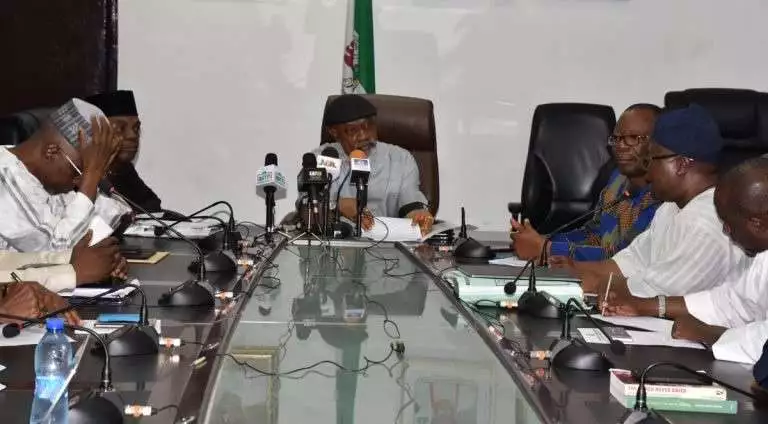
The Minister, who was flanked by his Interior and Police Affairs counterparts, Rauf Aregbesola and Mohammed Dingyadi, said the meeting deliberated on the logistics used by the terrorists in a bid to stop their activities.

He said the Government needed to act because terrorists have moved from the conventional ways of funding their activities to mining and ransom taking.

Malami said the motorcycles were used by the bandits for movement, while mining provides them the money to fund their arms supply.

The Minister pointed out that Government is not unmindful of implications of the ban of motorcycles and mining activities on ordinary Nigerians and the economy, but that national interest should be above that of individuals.

While speaking, Aregbesola confirmed that Government had intelligence report before the recent attack on Kuje Correctional Centre but regretted that there was the absence of will to act on it.

The Minister, who revealed that preliminary report of investigation on the attack had been submitted to the President, assured that detailed report would be made available at the end of the probe.

He said those found to have abandoned their responsibilities would be punished.

Imo: Uzodimma Dissolves Imo Interim Management Committee Chairmen

0
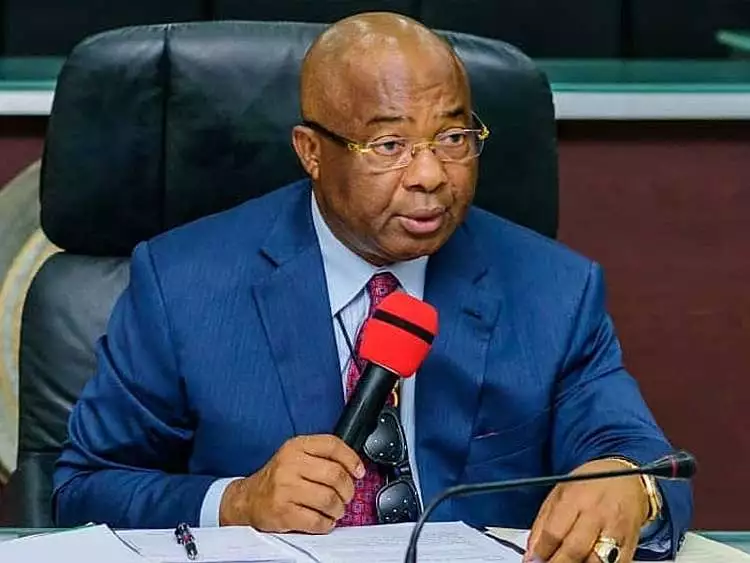
Hope Uzodimma

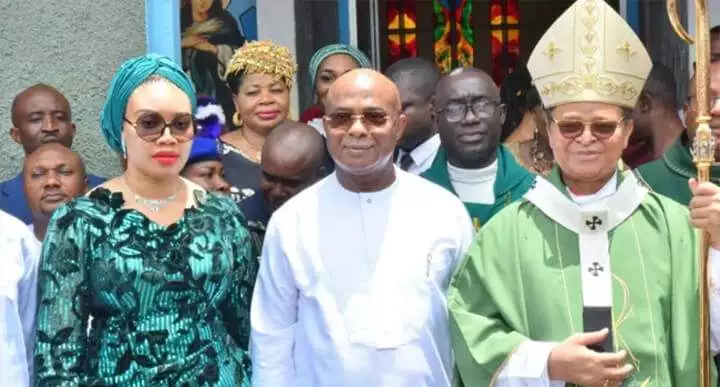
Governor Hope Uzodimma has dissolved the 27-man Interim Management Committee Chairmen of Imo State.

He did so on Thursday after a closed door meeting with them at the Sam Mbakwe Executive Chambers, Government House Owerri.

At the meeting, Governor Uzodimma thanked them for the services they rendered in their different  Local Government Areas since their appointment about two and half years ago and for their loyalty.

He also reminded them of his resolve to hold the Local Government Area election in Imo State any moment from now and the need for him to appoint Sole Administrators who will oversee the coming election.

Governor Uzodimma also told the dissolved IMC Chairmen that his Government will not hesitate to engage their services in other areas they are found capable as APC members.

In their response,  Chairman of ALGON in Imo State,  Mr Willie Okoliogo, who is also the Chairman of Oru West Council, the IMC Chairmen promised to remain loyal to the Governor and the APC.

Ogun: APC Governorship Aspirant, Paseda Dumps Party

0
Otunba Rotimi Paseda

By Akinwale Kasali

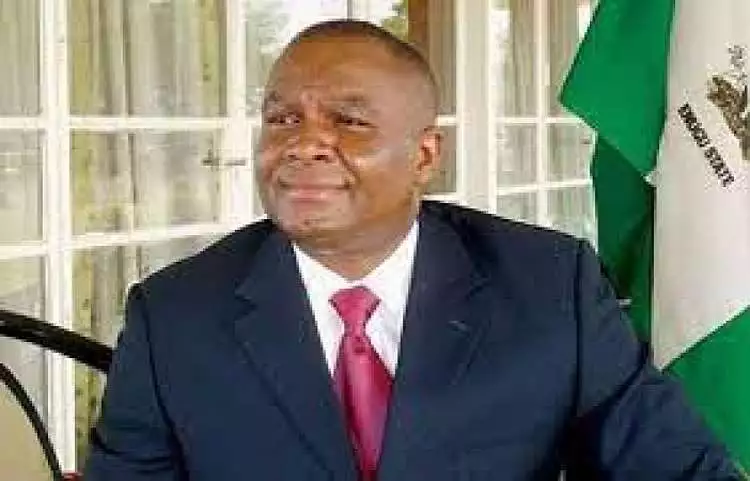
The gale of defection rocking the ruling All Progressives Congress, APC, has continued, as two-time governorship candidate in Ogun State, Otunba Rotimi Paseda has dumped the party.

In a letter addressed to the National Chairman of the party, Senator Abdullahi Adamu, Paseda, cited the decision of the party to chose Prince Dapo Abiodun, the incumbent Governor as its  governorship candidate, for his action.

Paseda, the 2015 Unity Party of Nigeria, UPN, governorship candidate in the state, said he has lost interest in the party, which he claimed has abandoned its core democratic values.

He added that the choice of Governor Abiodun as APC governorship candidate   for the 2023 election will cost the party dearly.

“Sir, the decision to terminate my membership of this great party was borne out of my personal conviction, having x-rayed the event that led me into joining the party, and having worked for the party, particularly with our collective efforts that lead to the winning of for the 2019 governorship election in the state,” he said.

According to him, “I am of the strong opinion that it would be unwise, in my usual character, to remain in the party with a faulty, faulted and erroneous choice of the party governorship candidate that will not earn the party the needed electoral victory at the 2023 poll.

“Though, it is a painful decision, considering the vacuum which my exit will create with my various groups of APC card carrying members in the state, 6000 Reformed OPC members, 2000 Ijebu Youth Association members and thousands of various Paseda Movement loyalists, as the National resuscitator, sole financier and 2015 Governorship candidate of the Unity Party of Nigeria (UPN) and the 2019 Governorship Candidate of the Social Democratic Party (SDP). Having made extensive consultations it has become necessary that I make this move.

“Mr. Chairman sir, no doubt, I’ll be missing some of my colleagues with whom we have worked together within the period of my stay in the party. I’m however left with no option than taking the decision which I have just done.

“I, however, want to believe and hope that we all will surely meet again at a better and more rewarding platform that will catapult us towards achieving our political goal.”

The exit of Paseda from the APC is coming days after former APC Chairman in Rivers State, Magnus Abe left the Party.

Earlier this week, Theodore Georgewill,  the Campaign Director General to APC’s Governorship Candidate in the 2019 Election, Tonye Cole  tendered his resignation letter to the party.

Georgewill in a letter dated July 18, 2022, formally resigned from the party citing  Personal reasons.

Ibim Semenitari, the former Commissioner for Information and Communication of Rivers State had also left the APC.

Others, who announced resignation  from the APC in their letters to their respective wards chairmen were Dawari George,

Marvin Yobana (former Africa’s Representative at the World Youth Assembly), Nkemka Amadi and Robinson Elechi.

Cross Rivers: Ayade Tackles Igini Over Senatorial Ticket

0
Mike Igni

By Stanley Ekpenyong

Cross River state Governor, Prof. Ben Ayade has described as personal opinion, comments by the Akwa Ibom State Resident Electoral Commissioner (REC), Mike Igini, on the recently conducted Senate primary for Cross River Northern Senatorial Zone.

Ayade who spoke through his Deputy Chief Press Secretary, Linus Obogo, insists that Igini’s comments do not represent the position of the Independent National Electoral Commission, INEC.

According to him, Igini’s attempt at interpreting Section 115(D) of the Electoral Act 2022 as amended, amounts to a perverse and unwholesome meddlesomeness and a cheap usurpation of responsibility assigned only to a spokesperson.

“I beggars belief that Igini who is a staff of  INEC, an agency of the executive arm of government, would brazenly meddle in the duty of the judiciary as well as playing the role of a spokesman to INEC.”

“No doubt, Igini’s feverish attempt to offer judicial interpretations to Section 155(D) of the Electoral Act, is clearly a reckless exercise in executive rescality” Obogo said.

Further taking a swipe at the Akwa Ibom REC, Obogo stated:  “In Igini’s usual hysteria, “he sought to conflate the presidential and constituency primaries as one and the same, and in doing so, he attempted to set Governor Ayade up against the Electoral Act, by giving contrary interpretations to what the law says about double nomination forms.

“There is no doubt that Ayade bought a form and equally participated in the March 26 APC presidential primary, but at no time did he obtain a form to contest another political party’s presidential primary, which was what Igini would want the public to believe during his ill-tempered outing on one of the national television stations recently. The governor neither took part in multiple presidential nor constituency primaries.”

Obogo said further that  his boss’ participation in the July 14 primary was the outcome of the previous ticket holder withdrawing from contesting the 2023 senatorial election, culminating in the vacancy of the ticket and subsequent conduct of a fresh primary. He said the governor’s participation in the fresh primary held on July 14 was within the ambits of the Electoral Act.

He accused Igini of “trying to lay legal ambush against Ayade by seeking to disingenuously smuggle into the Electoral Act what the framers of the Act never intended.

“The Akwa Ibom REC cannot be allowed to go on brewing the storm everywhere he goes, especially as the sun is about to set on his turbulent reign as INEC Commissioner.”

Obogo wondered why Igini usually displays overly partisanship towards candidates of the Peoples Democratic Party, PDP, who took part in similar fresh primaries, citing Bauchi State governor, Bala Mohammed and his Sokoto counterpart, Aminu Tambuwal who participated in a similar exercise a few days after losing the bid for the PDP presidential ticket.

He said, “In spite of his posturing as Mr. Integrityof INEC, Igini cannot hoodwink us that he is not sympathetic to the PDP, by maintaining tight lips when Governors Bala Mohammed and Aminu Tambuwal had  fresh primaries conducted for them barely a few days after losing out in their party’s presidential primaries.

“Besides, why is Igini pretending not to be aware that the electoral umpire, INEC, which he is a REC, monitored the fresh primaries, which was in any case a validation of the exercises he is dissipating energy to malign?”

Entreating Igini to leave his boss alone, Obogo said: “Please, Mr. REC, in your less than one month to your exit, leave Ayade alone and focus more on ending the confusion you have created in Akwa Ibom APC. You have enough on your hands already, even as you try to do the job of Mr. Festus Okoye, as the curtain draws on your chequered and troubled REC stewardship.”

Why The Opposition Is Celebrating The Awo Omamma Incident – Imo Govt

0
Hope Uzodinma

The Imo State Government has accused the opposition of celebrating the Awo Omamma incident because of their mischievous vested interest in the security breaches in some parts of Orlu zone.  Their hasty conclusion on the incident, the Government said, has further exposed them as the  sponsors and perpetrators of violence in the area

It noted that the ferociousness with which they jumped to blame and condemn the Government , even when the Department of State Services, DSS, has admitted carrying out the operation, should leave no one in doubt as to those behind security breaches in the State.

In a statement he issued in Owerri, the Commissioner for Information and Strategy, Honourable Declan Emelumba, expressed surprise that those accusing the Government of killing wedding guests in Awo Omamma on Sunday, have refused to listen to the explanation of the DSS that those killed were bandits who were planning to attack innocent  citizens the next day to enforce their sit-at- home order.

He recalled that the same opposition elements who did not condemn the not-too- distant incident of random beheading of people, and the displaying of their heads in market squares as well as the discovery of a dungeon where hundreds were buried and cannibalism practiced, have suddenly become rabid crusaders against the shedding of blood as if the blood of those other people was ordinary water.

The Commissioner said the fact that these same elements could also not find the voice to condemn the burning of the country home of the Governor and that of members of his Government, in the same zone, equally comfirm their complicity  otherwise  “why should they condone blood letting and criminality in the same Orlu axis only to hurry to condemn the Government for a crime it did not commit in the same area?

He said both those arrested during the DSS operation and the Pionter who took the security agencies to the venue where the non-state actors were meeting have confessed that the shoot out occurred at the camp of criminals who were planning how to violently enforce a sit- at-home order the next day

Emelumba said  because these opposition elements have refused to interrogate the submission of the DSS, they failed to notice that  only young boys attended the traditional wedding in question, leaving out women and elders and even children, which is curious.

“They also failed to confirm the fact that the shoot out occurred only at the meeting camp and that those caught in the cross fire were those at the meeting venue. Of course this is only because they are jaundiced with a mindset that finds the government guilty before the outcome of investigations” the statement declared.

The Commissioner argued that the refusal of those pillorying Government  of complicity, to listen to the explanation of the DSS suggests that they are collaborators in the security crisis in the area.

According to him, “why are they in a hurry to accuse the Government  of any killing even when the DSS claimed responsibility and gave reasons for their actions?”

He wondered why those who are rushing to condemn the operation never deemed it fit to speak out against the earlier killings by hoodlums in the State.

Said he,” we were here when hoodlums were beheading people, slaughtering traditional rulers and even eating the flesh of human beings, but these people never condemned the atrocities. We were here when hoodlums burnt the houses of the governor and government officials, there was no whimper from these latter day crusaders. But now that the war is being taken to the hoodlums, they have suddenly found their voices’

The Commissioner was saddened by the fact that now that the security agencies were succeeding in routing the criminals, there appear to be a coordinated campaign of calmuny against it.

He noted that for sometime, the State has been relatively peaceful as a result of the gallant efforts of Security agencies  and wondered why the outcry against their legitimate activities.

Emelumba reiterated Government’s position that the security challenges were politically motivated to make it appear that the Governor was not popular.

“Just take a look at the pattern of the insurrection and concentration of criminal activities. They are in Orlu zone, especially Orlu, Orsu, Oru East and Oru West, giving the false impression that the governor is not wanted even by his own people. Can’t you see that this is a well planned script of the opposition? ”

He, however, assured that there is no where that the Government will condone the killing of any innocent citizen in the state.

” It is absurd for anyone to accuse Government of killing its own youth. That is pure madness. Government is awaiting details of investigation from security agencies. But what has been established so far is that those who died were those at the camp. Once investigations are concluded and there is evidence of any innocent victim, government will take appropriate steps to mitigate the loss”, he submitted

Will Machines Replace Journalists, Too?

0
Azu Ishiekwene

By Azu Ishiekwene

The advent of any significant changes in technology has often triggered concerns about the fate of journalism. Even at the infancy of social media, TIME covered one of its editions of February 5, 2009, with concern about the imminent death of journalism. To drive home the point, the graphic was illustrated with a copy of the New York Times wrapping a tilapia.

The profession went through similar bouts of self-doubt and anxiety, after the introduction of the movable type and printing press. This same thing happened following the introduction of the telephone, radio and television. In hindsight, it would seem that journalism’s death was slightly exaggerated.

But can the survival of journalism as we know it today be taken for granted in the midst of the extraordinary changes in technology and ICT? In 5, 10 or 20 years, will there be any dots to connect between technology and journalism or would the profession be submerged in a sea change?

In Artificial Intelligence: A Modern Approach, Stuart J Russell and Peter Norvig’s groundbreaking, expansive study on AI, first published in 1995 and released in its fourth edition in 2020, the computer scientists and scholars offer a sharp and comprehensive introduction to the foundations of artificial intelligence. The book covers a diverse range of fields from philosophy to mathematics, neuroscience and psychology, and linguistics.

In a particularly memorable passage, the authors said,“We don’t want machines that are intelligent in the sense of pursuing their objectives; we want them to pursue our objectives.”

The extent to which this goal is achievable, and whether it should be desirable in the first place, has, of course, been a subject of vigorous and prolonged debate.

There are those rightfully concerned that the oncoming waves of automation would exacerbate existing inequalities between workers whose backgrounds have afforded them education and other social privileges that put them at the higher ends of well-paying tech jobs and those who depend on jobs that would most likely be phased out by automated systems.

The stats may not amplify these fears but they do not allay them either. A report from Mckinsey studying skill shifts in the workforce in Europe and the United States says that between 2016 and 2030 the demand for technological skills would increase significantly compared with the demand for manual and basic cognitive skills. The prospects may be slower in Africa, but they are creeping up.

Mass media have long ceased to be the sole domain of professional journalists. That is, not only have established assumptions about the authority of the journalist to witness, record and disseminate news been severely undermined, established assumptions about audience’s expectations in journalists have also been challenged.

When I joined PUNCH in 1989 the dominant way of collecting the news from offices outside Lagos, the headquarters, was by radio. We had a few telephone lines alright, but they were congested and unreliable. Reporters filed in a few copies from the states by telex, but the bulk was by radio. The compugraphic machines, galleys and cow gum did the rest of the prepress job. That was over three decades ago.

We deployed reporters in Sheraton Hotels, Lagos, where they spun war stories from Baghdad by watching the TV at the reception over a bottle of coke taken for hours. Somehow, through improvisation and compelling designs, the paper became a hit.

What happened in PUNCH was emblematic of the crises that the industry faced after the prosperous seventies and eighties.

There were significant changes in the operating environment, partly as a result of ownership and politics, but fundamentally as a result of poor economics and the inability of the industry to forecast where changes in technology might lead and to leverage them.

As production costs increased and infrastructure deteriorated, however, the response of the press, in particular, was not necessarily to find smarter, more efficient ways of distributing content. Instead, media owners embarked on a binge of buying fleets of distribution vans and producing multiple editions, with very little returns on inventory.

This massive investment in a blackhole worsened their already precarious financial positions after General Ibrahim Babangida’s controversial “structural adjustment programme”.

With advertising naira shrinking, advertisers began to insist on data, forcing the opaque newspaper industry to begin to face its own demon. Adoption of new practices, improvements in internal methods to make them more efficient and customer-centric – including deployment of new technologies – became not a matter of choice, but of survival for the industry.

Today, a number of media houses (print and broadcast) have strong social media platforms and even web-first news policies, while strictly online brands such as Sahara Reporters, Premium Times, The Cable and Peoples Gazette, to name a few, have become significant players, using extensive degree of new technologies to collect, process and share content and earn revenue.

However, of all these developments, the arrival of citizen journalists on the one hand and the AI-powered robots on the other, are perhaps the most significant occurrences in journalism.

It seemed OK when technology led to mechanized farming, brought changes in the mode and speed of transportation and even transformed the textile and culinary industries. Journalists were happy to herald these changes.

As soon as technological changes arrived at the doorsteps of the profession, however, with the distinct possibilities that non-journalists could use and deploy them in everyday life, the alarm bells were set off, sounding like a tribal call against the invasion of aliens: AI was The Beast!

Yet, by focusing on more routine and menial tasks, it is believed that automation frees journalists up for more comprehensive, in-depth reporting, significantly improving the quality of journalistic work.

Sharing examples of how journalism and robots are connecting and finding common grounds elsewhere raises the natural question: where does that leave the Nigerian journalist?

Incursions by bloggers, influencers and corporates using non-traditional news channels to share valuable content have challenged the mainstream media. Also, the increased entry into the profession of persons with non-formal-media background has improved the profession both in its diversity and deepened its adoption rate of new technologies.

Through hackathons, collaboration of media and non-media persons, for example, robotics have been deployed in sourcing data that shine the light on community problems on access to healthcare, education and job-creation.

Media organisations either working collaboratively on independently also deploy drones in previously inaccessible communities, to gather content, especially in conflict situations. Although this practice is still not sufficiently widespread because of costs, inertia – and even grey regulatory areas sometimes – an increasing level of training and collaboration might see improvements in the years ahead.

It is true that the role of the journalist is changing, and I believe future developments in the field will give journalists more power and responsibility, not less.

Once, we suffered from not knowing nearly enough. Now, we may be entering an era in which we know too much. Even if we could guarantee responsible use of AI and similar technologies – which we can’t – we would still bear the heavy burden of knowledge in a world that has become more predictable but no less dangerous.

But what is also true is that there are more of us now than there have ever been, citizen and career journalists alike, with significant resources at our disposal, to decide not only what the news is, but what it should mean and what responsible actions it should spur.

A number of media houses in Nigeria are currently battling a range of problems from low, irregular pay to poor training, infrastructure and low trust rating as a result of poor ethics. My anecdotal experience does not suggest that displacement by bots is a serious concern in the face of these current existential crises.

The media is still a long way from where AI may be regarded as a clear and present danger to jobs. Yet, globalisation, which has narrowed boundaries, made travels cheaper and increased connections, has also exposed consumers of media content in Nigeria and across the continent to higher standards.

With greater penetration of smartphones and other home devices (embedded with such bots as Siri, Bixby, Alexa) at lower costs and the expansion of Internet services, my guess is that the demand for more AI services amongst Nigeria’s media consumers would also increase.

And hopefully journalists who are in this business for the long run would have little or no option but to raise their game. The question is not whether the dots are connecting, but how quickly, responsibly and efficiently journalists can connect them in the service of the craft of storytelling.

The future belongs to man and machines.


This is an abridged version of a paper on “Cybernetics, robotics and journalism: Connecting the dots”, by Ishiekwene presented at a seminar at the Department of Mass Communication, Bingham University, Abuja on July 14

National Grid Collapse: Sowore Blames Obasanjo,  Atiku

0

By Ayodele Oni

Atiku Abubakar, the presidential candidate of the People’s Democratic Party, (PDP) Atiku Abubakar and publisher turned politician, Omoyele Sowore, have clashed over Wednesday’s collapse of the national grid.

The Transmission Company of Nigeria, (TCN) had announced the collapse of the facility, which led to power outage in many parts of the country.

Even though TCN said the fault has been rectified, many parts of the country are still in total darkness as businesses continue to suffer.

Reacting, Atiku wrote on his Facebook page that “I am reliably informed that there was a total National Grid Collapse at precisely 12:23pm today.

“This is one collapse too many. It is the 6th time this is happening this year alone.

“Due to the priority that I place on the power sector upon which the successes of other sectors are hinged, I am proposing innovative financing of infrastructure that will involve the facilitation of a review of the financial, legal, and regulatory environment to promote private investment in power, among other sectors.

“I’ll promote the incentivisation, with tax breaks, a consortium of private sector institutions to establish an Infrastructure Debt Fund (IDF) to primarily mobilise domestic and international private resources for the financing and delivery of large infrastructure projects across all the sectors of the economy.

“The IDF will have an initial investment capacity of approximately US$20 billion. In addition, I’ll cause the creation of an Infrastructure Development Credit Guarantee Agency to complement the operation of the IDF by de-risking investments in infrastructure to build investor confidence in taking risks and investing capital.”

Sowore, who is one of the many netizens who reacted to Atiku’s post said, “The National electrical grid collapse started when you and Obasanjo invested $16 billion to procure darkness for Nigeria.

“The @MBuhari regime came to gazette grid collapse as a law. Alhaji @Atiku don’t pretend that you care about the national grid.”

2023: Ortom Says Obi Has Impeccable Credentials For The Job; Meets With Him

0
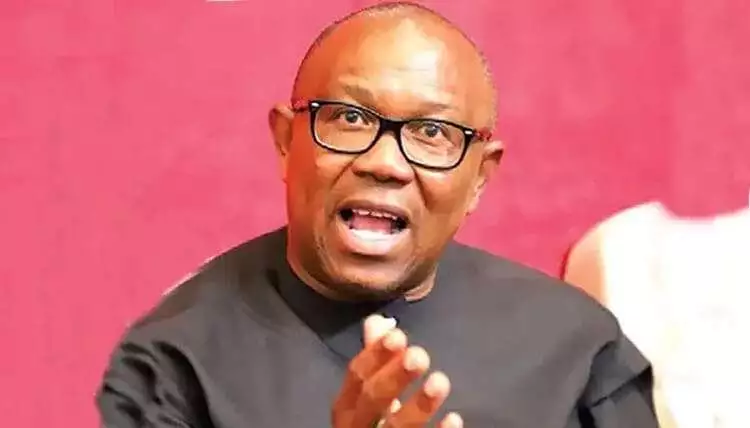
Peter Obi and Samuel Ortom

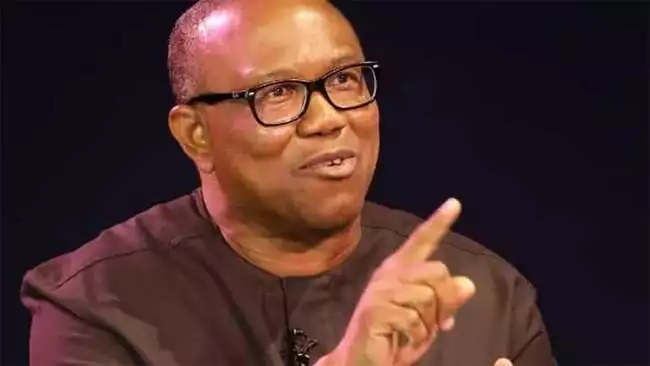
The Governor of Benue State, Dr Samuel Ortom, has described the Labour Party, LP, Presidential Candidate, Mr Peter Obi  as a man with impeccable credentials to run the affairs of Nigeria.

Governor Ortom’s lavish eulogies on Obi came after the Labour Party flagbear paid him a courtesy call at his private residence in Makurdi where the two leaders met behind closed doors before jointly addressing Journalists.

The PDP Governor said Obi was one among those qualified Nigerians that the people were looking forward to lead this country as he wished him well.

The Governor said that the situation in this country calls for all to be careful and pray to God for leaders who mean well for the survival of the country

He challenged Presidential Candidates of the various political parties in the coming general elections to put Nigeria above personal interests.

According to him, Nigerians were in dire need of people with “commitment and competence” that would fix the leadership crisis that had plunged the country into outright chaos noting  that the Labour Party’s presidential candidate, Obi was one among those qualified Nigerians that the people were looking forward to having to take the country out of the leadership conundrum.

He commended the decision of the former Anambra Governor to engage Nigerians, especially major players in the country’s politics, irrespective of political leaning on his desire to serve as the country’s next President.

He said: Even though I am a major stakeholder of the Peoples Democratic Party, PDP, the candidate considered me as a Nigerian to consult on his aspiration.”

The Labour Party Presidential candidate also spoke about the reason why he visited the Governor saying that the visit was to show respect to his former political ally in the PDP,.

Obi noted that though they were now in different political parties, their friendship as citizens of the country was most important.

In his response to the question that he did not have the needed structures to win elections, Obi reiterated that the millions of Nigerians who had been impoverished by bad leadership over an extended period  are his political structures.

Currency  Collapse: CBN Moves To Monitor Politicians’ Accounts In Bid To Save Naira

0
Godwin Emefiele

Aftermath of the apparent dwindling  National currency, the Naira, and the possible concerns recently expressed by the Labour Party Presidential Candidate, Mr Peter Obi, on the continued spending of foreign currency by public officials, the Central Bank of Nigeria, CBN, has moved to check the mopping up of dollars at forex market.

The CBN says it is monitoring the Foreign Exchange Market to prevent politicians planning to buy dollar and other foreign currencies to fund their campaigns.

Recall that Presidential Candidate of the Labour Party, LP,  Mr Obi in some of his media interviews decried the brazen use of foreign currency particularly the Dollar by politicians and government officials.

Obi had said that every country’s economy is measured by the strength of its currency and described as a deviation from international standard, government officials and politicians blatantly spending foreign currency boldly and without shame.

Apparently in response to Obi’s public denouncing of the situation, the CBN Governor, Godwin Emefiele on Wednesday announced that the apex bank is monitoring forex and warned politicians mopping up dollars to fund their 2023 election to note its illegality.

According to Emefiele, such action is illegal and could warrant a clampdown from security agents as he warned “those who want to take Naira from their account to buy dollars because of election should desist”

The CBN boss threatened to freeze any bank account found to be involved in illegal transaction of dollars as Post No Debt, (PND) will be placed on accounts caught in the act.

But economic watchers who welcomed the CBN move as a good development has the LP party Presidential Candidate to thank for crying out and drawing attention to such illicit act that is affecting the economy greatly.

“We have Obi to thank for raising the timely  alarm, the  CBN watched and even aided politicians in the two main political parties, the APC and PDP as they rained dollars freely during their National Conventions last month here in Abuja”

The declining currency is already taking a heavy toll on the nation’s economy with many industries in critical areas like the aviation shutting down.

Aero Cotractors, the oldest privately owned Airline in the country, a few days ago,  shut down its operations until further notice. And, on Wednesday, the NCAA shut down the operations of Dana Airline. The troubles of  both Aero and Dana are linked to financial crisis.