
Home Blog Page 203

Abducted Kano Wedding Guests Rescued By Nigerian Army

0
Soliders on Duty

By Akinwale Kasali

Troops of 3 Brigade, Nigerian Army, have recorded another breakthrough in its fight against Insecurity, as it rescued eight of the 10 persons abducted by suspected terrorists at a wedding venue on Wednesday, in Dabawa, Shanono Local Government Area, Kano State.

It was gathered from the Army Headquarters on Thursday that an unconfirmed number of gunmen reportedly dressed in military camouflage invaded the ceremony and whisked away the victims.

The Nigerian Army however deployed troops, who laid an ambush along the Yankwada River line swiftly advanced to the general area upon receiving the distress report and made contact with the fleeing assailants at Garu Village in neighbouring Katsina State.

The Troops  pursued the bandits up to the Katsina–Gidan Mutum Daya road axis before contact was broken.

”During the operation, eight of the abducted girls were successfully rescued and have since been reunited with their families, while efforts are ongoing to track and rescue the remaining two victims.”

The operations in the general area have continued to ensure the safe return of the remaining victims and prevent further attacks.

Arewa Consultative Forum Raise Alarm Over Worsening Insecurity, Poverty

0
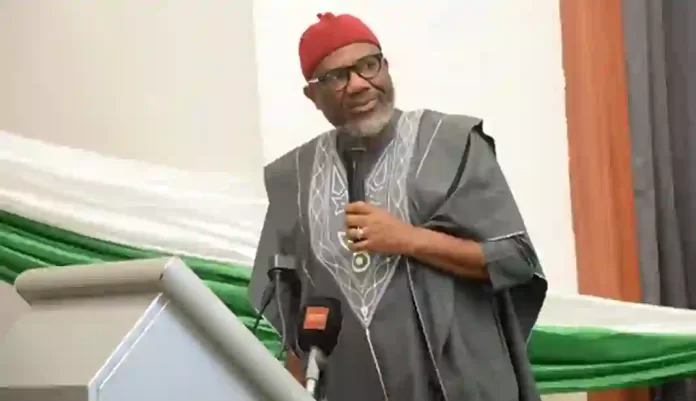
Mamman Mike Osuman - ACF Chairman

By Akinwale Kasali

The worsening insecurity and poverty in the North has led to the Arewa Consultative Forum, ACF, into expressing its deep concern over the situation.

The ACF stated that the North is also facing humanitarian challenges, and warned that terrorism, banditry, and kidnapping are increasingly displacing communities and disrupting livelihoods.

Mamman Mike Osuman, ACF Chairman, made this remark while delivering his welcome address at the Forum’s 79th National Executive Council (NEC) meeting held at the ACF Secretariat in Kaduna.

The Senior Advocate of Nigeria, SAN, said the region has continued to face grave difficulties since the last NEC meeting in August 2025, citing natural disasters, loss of lives, and harsh living conditions as factors compounding the plight of residents.

“Terrorism, armed banditry, insurgency, and kidnapping are on the rise, as witnessed in Kwara, Southern Kaduna, Katsina, Benue, and other locations. The consequences have been devastating, with families and communities violently uprooted and displaced,” he said.

He added that these displacements have led to overcrowded camps and informal settlements with limited access to essential services, heightening the risks of malnutrition and mortality among survivors.

He added that repeated attacks and the prevailing climate of fear have disrupted education through school closures, strained rural economies, and discouraged access to farming, healthcare, and travel.

Osuman noted that the scale of insecurity has become so severe that external military assistance has been required, underscoring the urgency for coordinated action.

“Our existence as a socio-cultural organisation must not be merely ceremonial or rhetorical; it must be principled, sincere, sacrificial, and action-driven,” he stated, urging state chapters to engage constructively with governments at all levels in pursuit of peace, stability, and civil rehabilitation of affected communities.

He also cautioned against political distractions ahead of the 2027 elections, observing that some emerging groups appear more focused on electoral strategies than on pressing issues such as out-of-school children, hunger, poverty, and persistent attacks.

He further urged the ACF to cooperate with relevant authorities as the country approaches another election cycle, emphasizing the need to ensure peaceful and credible polls while educating citizens on their civic responsibilities.

Forfeiture Of 57 Properties: New Judge, Justice Egwuatu Withdraws

0
Abubakar Malami in Court
Abubakar Malami

By Suleiman Anyalewechi 


Justice Obiora Egwuatu of an Abuja Federal High Court, on Thursday, February 12, 2026, recused himself from the handling of the two legal proceedings filed against the immediate past Attorney General of the Federation and Minister of Justice Abubakar Malami, by the Economic and Financial Crimes Commission EFCC.


The Source reports that the two cases bordering on alleged money laundering, corrupt practices, and unlawful acquisitions of about 57 Properties were recently transfered to Justice Egwuatu, by the Chief Judge of the Federal High Court Honourable Justice John Tsoho.


A vacation Judge, Honourable Justice Emeka Nwite had on January 6, issued an interim order for about 57 properties  allegedly linked to Malami, his wife and son to be forfeited to the Federal Government of Nigeria.


The court also directed that the interim order of forfeiture be published in a national daily requesting interested persons to within 14 days of the said publication show cause why the said properties should not be permanently forfeited to the Federal Government of Nigeria.


The order was sequel to a motion ex-parte filed by the EFCC seeking the forfeiture of the said properties on the grounds that they reasonably suspected to be proceeds of unlawful activities.


The said properties are with an estimated value of over N213 billion, according to the anti-graft Commission are scattered across three states of Kano, Kaduna, Kebbi and the Federal Capital Territory FCT.


However,  between Monday January 2,2026, and last week, Malami, and two other applicants- namely Muktaka Usman Junju ,and Rayjaan Bustan and Agro Allied LTD had filed separate applications asking the court to  remove properties listed as Nos 1,9,18,28,29, 30,31,32 ,40 and 48 from the schedule of properties attached to the forfeiture order.


The applicants separately and collectively are seeking an order of the court nullifying and discharging the earlier interim order of forfeiture placed on the said properties , having been duly acquired through legitimate means.


The applicants also contended that the EFCC did not not comply with all the statutory and constitutional requirements governing interim forfeiture proceedings, particularly, as they relate to the Evidence Act, and the Advance Fee Fraud ,and Other Fraud Related Offences Act.


The new trial Judge, Justice Obiora, who had scheduled Thursday February 12, for the commencement of hearing into the applications , however   , announced his withdrawal from the Interim forfeiture case and another bordering on alleged money laundering and corrupt enrichment against the former Attorney General of the Federation, citing personal reasons, and the need to ensure justice as major reasons for his action.


The announcement of his withdrawal was made immediately the suit for the forfeiture of the 57 properties was called for hearing.

Ondo Commissioner Faces Backlash Over Allegation Of Receiving Double Salary

0
Prof Igbekele Amos Ajibefun

By Ayodele Oni

Ondo State Commissioner for Education Prof Igbekele Amos Ajibefun, is entangled with allegations of collecting double salary from the state government purse.

Ajibefun, a former vice chancellor of the state owned University, is allegedly drawing salaries from two public institutions as a commissioner and a University don— a claim he denied.

Speaking on the issue, the Commissioner described the double salary allegation as “false,” insisting that he does not earn a salary from the University of Medical Sciences,(UNIMED), Ondo. However, he acknowledged that he receives payments in the form of sitting allowances.

He admitted collecting sitting allowances from the UNIMED, Ondo, while simultaneously serving as a cabinet member of the state government, amid growing controversy over alleged double remuneration.

Ajibefun explained that what he receives from the state University is statutory allowances as a member of the university’s Governing Council.

“I do not collect salary from UNIMED. I am not a staff member of the university. I only attend council meetings,” he said.

When asked directly whether he collects sitting allowances, the Commissioner responded in the affirmative.

“Yes, all members of the council collect sitting allowances,” he said, adding that the payments are made during official sittings of the council.

He further disclosed that council meetings typically hold about three times annually, aside from emergency sessions.

Though he insisted the payments are backed by law, he declined to state how much he has received since assuming office.

“I don’t have the figures off-hand. You can ask the universities from their records,” he said.

On whether he receives similar allowances from other state-owned tertiary institutions where he sits on governing councils, the Commissioner did not give a categorical breakdown, but maintained that his membership is statutory.

“As Commissioner for Education, I am a member of the council by law. If the law changes, I will not attend,” he stated.

The Commissioner, however, maintained that the payments are lawful and part of the statutory framework guiding university governance.

“It is part of the law establishing these universities,” he said.

Despite defending the legality of the payments, the Commissioner’s refusal to disclose the total amount received is likely to fuel further calls for transparency.

As pressure mounts, stakeholders are urging the state government to clarify the remuneration structure for political appointees serving on governing councils of public institutions.

“I Feel Ashamed When I Remember Ribadu Was Once My Friend” – El-Rufai

0
Nasir El-Rufai and Nuhu Ribadu

By Ayodele Oni

National Security Adviser, (NSA), to the President, Nuhu Ribadu, has been accused of overstepping his line of duties, following his, alleged, acquired power to order any security agency to arrest anybody.

Former Kaduna State governor, Nasir El-Rufai, who made this allegation, pointed out that Ribadu’s duty as NSA is just advisory but insisted that Ribadu has now extended it to ordering the arrest of anybody without proper investigation.

El-Rufai made the allegation during a chat with DCL Hausa, where he claimed the NSA oversteps his constitutional responsibilities.

“Nuhu Ribadu just picks his phone and calls any security outfit to arrest anybody without any form of investigation,” he alleged.

The former governor was, however, quick to distance President Bola Tinubu from the claims. “I am not saying President Tinubu makes the call,” El-Rufai stated.

According to him, the NSA’s role is strictly advisory. “It is not the NSA’s job to call EFCC, directing them to arrest this person or that. His job is to advise the President on security issues.

“If he sees a person that is a threat to security, his job is to draw the attention of the President, and he would order an investigation,” he said.

El-Rufai further alleged that Ribadu interferes in Judicial proceedings by influencing bail decisions.

He claimed the NSA pressurises Judges not to grant bail to suspects who, according to him, were not properly investigated in the first place.

“I feel ashamed when I remember he was once my friend,” El-Rufai said.

“Nobody is as wicked as Nuhu Ribadu in Tinubu’s administration,” he added.

The former governor also referenced the reported arrest of former Director-General of the Nigerian Maritime Administration and Safety Agency (NIMASA), Bashir Jamoh, by the Independent Corrupt Practices and Other Related Offences Commission (ICPC) in Kaduna State.

“He is lying, they have not stopped. Even last week, they arrested Bashir Jamoh. What did he do?” El-Rufai queried.

He alleged that Jamoh remains in detention, contrary to constitutional provisions requiring that any arrested person be charged to court within 48 hours.

Aliko Dangote University Embarrasses Amaechi, Cancels Lecture

0
Rotimi Amaechi
Rotimi Amaechi

By Adesina Soyooye 


A chieftain of the African Democratic Congress, ADC,  Rotimi Amaechi, was given more than he could chew by the Aliko Dangote University, Kano. He was embarrassed by the Management of the University.


The former two-term Governor of Rivers State and Minister for Transportation during the late President Muhammadu Buhari Administration, was invited by the Students Union of the University to deliver the Lecture. It was billed for Wednesday, February 11.


He prepared for the lecture, packed his bag, left Abuja, and arrived Kano. But a shock awaited him.


Two hours to the time of the lecture, it was cancelled by the Management of the University which cited security concerns. For the records, according to reports, the University Management had earlier approved of the lecture, a baby of the leadership of the Students Union. 


An embarrassed Amaechi alleged that the sudden cancellation was politically motivated. He put it on the door steps of the President Bola Tinubu Government which he said is afraid of the views of opposition. He added that he was surprised by the action of the University Management.


“I was informed only two hours before the programme that the lecture had been cancelled”, he said.

The facts have spoken on the Natasha versus Senate saga

0
Natasha Akpoti and Godswill Akpabio
Natasha Akpoti and Senator Godswill Akpabio

By Eseme Eyiboh

The facts have spoken on the Natasha versus Senate saga: By upholding the disciplinary actions of the Senate as lawful and procedurally sound, the Court has robustly reinforced the doctrine of separation of powers, a cornerstone of our constitutional democracy. The ruling confirms with unmistakable clarity that the authority of the Senate to regulate its internal proceedings and discipline its members is firmly rooted in the Constitution and its Standing Orders

The judgment of the Court of Appeal delivered on Monday, February 9, 2026, represents a consequential affirmation of the constitutional principles that sustain Nigeria’s democratic order and the orderly functioning of its institutions.

By upholding the disciplinary actions of the Senate as lawful and procedurally sound, the Court has robustly reinforced the doctrine of separation of powers, a cornerstone of our constitutional democracy. The ruling confirms with unmistakable clarity that the authority of the Senate to regulate its internal proceedings and discipline its members is firmly rooted in the Constitution and its Standing Orders. This authority is neither incidental nor ornamental; it is an essential responsibility entrusted to the legislature to preserve order, decorum, and institutional integrity in the discharge of its duties on behalf of the Nigerian people.

The Court of Appeal has further enriched our constitutional jurisprudence by clearly delineating the proper limits of judicial intervention in the internal affairs of a coordinate arm of government. While reaffirming the judiciary’s vital role as guardian of fundamental rights, the judgment recognises that the legislature must retain the autonomy necessary to enforce its rules and maintain discipline, provided it acts within the province of the law. This equilibrium is indispensable to effective governance and democratic stability.

The circumstances that gave rise to this litigation are regrettable.

Parliamentary democracy rests on respect for established rules, collective responsibility, and due deference to the authority of the Chair. Persistent refusal to comply with lawful directives of the Presiding Officer — including the reallocation of seating arrangements within the chamber — as well as failure to appear before the statutory Committee on Ethics, Privileges and Public Petitions, runs counter to the ethos of parliamentary conduct. Such actions risk undermining institutional authority and distracting from the Senate’s higher obligations of legislation, oversight, and representation in the national interest.

While the Court of Appeal set aside the contempt proceedings and the associated fine on procedural grounds, it is significant that the core findings affirming the Senate’s disciplinary powers and the validity of its actions remain undisturbed. This distinction reinforces both the primacy of due process and the legitimacy of institutional self-regulation under the Constitution.

As the Senate moves forward, it remains steadfast in its constitutional mandate to foster robust debate, exercise rigorous oversight, and enact legislation that advances the peace, order, and good governance of the Federal Republic of Nigeria. In keeping with the spirit of reconciliation and institutional maturity that must guide democratic leadership, the Senate looks ahead with restraint, goodwill, and an abiding commitment to collective purpose rather than past grievance.

In this spirit, the Senator concerned, who has since resumed legislative duties, is expected to continue her duties with renewed adherence to parliamentary rules, mutual respect, and the shared responsibilities that bind all members of the National Assembly.

The strength of our democracy ultimately lies in the strength of its institutions, each operating responsibly within its recognised constitutional remit. The judgment of the Court of Appeal fortifies that foundation and renews the resolve to build a disciplined, stable, and forward-looking legislature in service of the Nigerian people.

The facts have spoken for themselves

God bless the Federal Republic of Nigeria.


Rt. Hon. Eseme Eyiboh,
MNIPR, is the Special Adviser, Media/Publicity and official spokesperson to the President of the Senate

Rivers Governor, Fubara, Sacks Cabinet

0
Siminalayi Fubara
Governor Siminalayi Fubara

By Adesina Soyooye

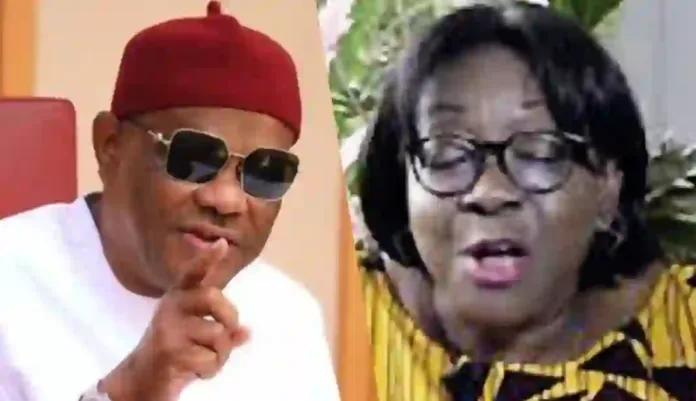
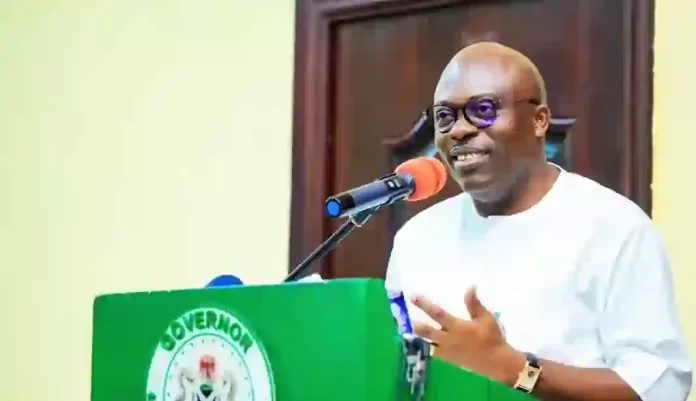
A couple of days after Rivers State Governor, Siminalayi  Fubara, reached a peace agreement with his estranged political godfather, Minister of the Federal Capital Territory, Nyesom Wike, the Governor, on Wednesday, dissolved his Cabinet.

President Bola Tinubu had, on Sunday, at a meeting with Fubara, Wike and a few other stakeholders, including the Speaker of the House of Assembly, Martin Amaewhule, made peace between the feuding Fubara and Wike.

Even though details of the meeting are not still public, Wike, in his characteristic manner, said that he believes that the Governor would stick to the position of the President. He also said he had told Members of the House of Assembly to work with Fubara. That is the second time the President intervened in the crisis which brought the State to its knees.

One of the very obvious fallouts is that the impeachment of Governor Fubara and his Deputy, Professor Ngozi Odu, has come to nought. The House of Assembly had, about a month ago, embarked on a process to impeach the two which got entangled in legal disputes.

There was, also, the speculation that Fubara should be able to present the names of his Commissioner- nominees to the State Assembly, something he has not been able to do since the crisis began in 2023, and since his first set of Commissioners were cleared for him before the crisis.

Fubara confirmed the speculation when he dissolved his Cabinet in anticipation of the quick clearance of the new names he would present to the State Assembly.

The Governor, also, in fresh appointments, elevated five senior civil servants to the rank of Permanent Secretaries.

A Government statement named the new Permanent Secretaries as:

  • Dr Wachukwu Vincent Worgu.
  • Eke Cordelia Uwuma.
  • Ogboma Ifeanyi Anthony.
  • Dr. Jim-Jaja Mina Gogo.
  • Uzor Henry.

Ecobank Nigeria Boosts Confidence with 50 Percent Early Eurobond Repayment

0
Ecobank Busienss APP

Ecobank Nigeria Limited confirms the success of its ongoing tender and exit consent solicitation in respect to its U.S.$300 million 7.125% Senior Notes due 2026 (the “Notes”).

On July 8, 2025, the bank demonstrated strong liquidity and financial resilience by repaying 50% of its Eurobond ahead of the scheduled maturity in February 2026. As of July 11, 2025, the bond traded near par at $99.00, reflecting strong investor confidence in the bank’s ability to repay at maturity.

The early repayment was necessitated by improved liquidity position, backed by collections from loan repayments and early redemption of its promissory notes from its parent. The bank has firm liquidity plans in place to ensure the remaining 50% of the Eurobond is repaid in full at maturity. Additionally, the bank used the opportunity to require bondholders’ consent to remove the capital adequacy ratio from its Eurobond covenant.

In 2024, the bank’s capital adequacy ratio (CAR) declined to 7.65%, slightly below the 10% regulatory requirement for a national bank. This drop was driven by the depreciation of the Naira, which impacted its loan portfolio with significant foreign currency exposure. However, the bank has come up with measures aimed at restoring the CAR to its regulatory limit.

Notably, Ecobank Nigeria is undergoing a transformation aimed at boosting revenue, fast-tracking impairment provisions to support loan write-offs, strengthening asset quality, and aggressively cutting operating expenses through improved efficiency. Discussions with key bank stakeholders revealed that the transformation program is starting to deliver positive results.

Preliminary H1 2025 results show a 30% revenue growth, rising to ₦113.7bn from ₦87.6bn in H1 2024. Gross impairment charges surged by over 200% in H1 2025, reaching ₦32.8bn compared to ₦10.7bn in H1 2024, due to improved revenue. Unaudited profit before tax for H1 2025 rose by 90% to ₦13.5bn, up from ₦7.1bn in H1 2024 and the liquidity ratio has remained sufficiently above the required 30%.

A key pillar of the transformation program, the asset quality war room, has driven a more aggressive push in loan collections and recoveries. Also, the improvement in oil production, driven largely by the current administration’s initiatives, has significantly strengthened the bank’s recovery prospects, particularly given its large exposure to oil and gas loans, and has improved obligors’ ability to meet restructuring terms.

Consequently, in 2025, the bank recovered $6 million (over ₦9bn) from a long-standing delinquent obligor. Additionally, stage 2 loans totaling over ₦170bn have been successfully reclassified to stage 1, reflecting consistent performance over the past 12 months.

The parent company (Ecobank Transnational Incorporated -ETI) remains committed to supporting the bank. The parent had injected over $10million in 2024 to enable the bank to meet the CBN’s requirement of ₦200billion for a national bank. However, additional capital injections, alongside measures like loan portfolio reduction, accelerated impairment provisioning, and improved profitability, are underway to restore the bank’s capital adequacy ratio (CAR) to regulatory levels.

The Bank remains committed to complying with the CBN’s forbearance directive and will not issue dividends or management bonuses, ensuring that retained earnings are preserved to strengthen its capital base.

An analyst noted that while the Bank faces challenges in meeting its Capital Adequacy Ratio (CAR), “he remains confident that the ongoing transformation will steer the Bank out of the woods. He added that if investors lacked confidence in the bank’s ability, the bond would be trading at a discount — not near par”

Reps Sports Committee, DG NIS, Decry Poor Funding Of Institute

0
Philip Shaibu - Edo Deputy Governor

By Ayodele Oni 

The Director-General of the National Institute for Sports (NIS) Philip Shaibu, and Chairman of the House of Representatives Committee on Sports, Kabiru Amadu, have decried the poor funding of the sports institute.

Shaibu renewed calls for increased funding to reposition the institute and advance sports development in Nigeria.

He made the appeal on Wednesday during a budget defence session at the National Assembly in Abuja.

The NIS Boss reaffirmed the institute’s commitment to fulfilling its mandate of training manpower for the sports ecosystem and promoting grassroots sports development, stressing that inadequate funding remains a major constraint.

“Our mandate is to train manpower for the sports ecosystem and promote sports from the grassroots. But we cannot achieve this without adequate government funding. We need a budget that reflects our vision and mission to improve sports in Nigeria.”

The immediate past Deputy Governor of Edo State commended President Bola Tinubu and the House Committee on Sports for their continued support, but urged the speedy constitution of the board of the National Sports Commission, noting that it would play a critical role in revitalising the sector.

According to him, a properly constituted board would provide strategic direction and institutional stability necessary for long-term sports development.

Describing the NIS as the lifeline of sports development in the country, Shaibu therefore called for premium attention to the institute to enable Nigeria attain greater heights in local and international competitions.

He attributed the institute’s limited visibility across states of the federation to persistent underfunding, which he said has hampered its expansion and outreach programmes.

Earlier, the Chairman of the House Committee on Sports, Rep. Kabiru Amadu, described the institute as a critical pillar in national sports development.

Amadu emphasised the need for increased budgetary allocation to enable the NIS discharge its responsibilities effectively and pledged the committee’s commitment to working with relevant stakeholders to improve its funding for optimal performance.

The National Institute of Sports, established in 1974, serves as Nigeria’s premier training and research centre for sports development, with a mandate to produce qualified coaches, sports administrators, and technical personnel to drive excellence in the sector.